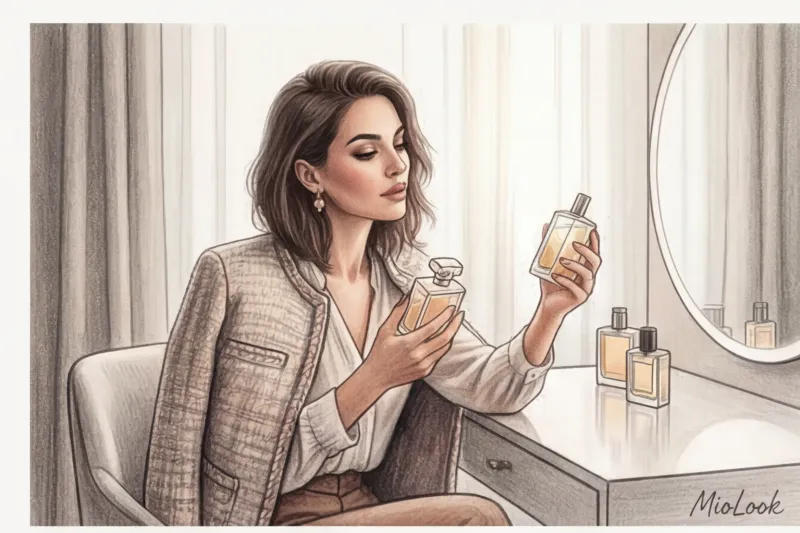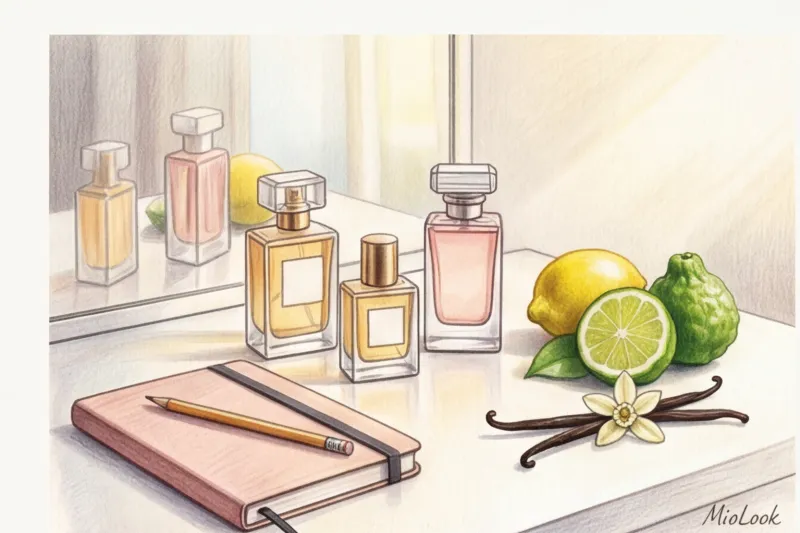
Last month, a client came to me for a wardrobe review with an unusual request: "Katarzyna, please help me. My husband gave me Baccarat Rouge 540, and it's suffocating me. I hate to throw it away, and I can't wear it to the office." Sound familiar? Instead of re-gifting the €300 bottle, we went to the nearest H&M, bought a basic vanilla body lotion for €8, and applied the perfume over it. Gone were the heavy medical bandages and iodine, leaving behind a soft, expensive, and cozy caramel. That's it. layering of aromas in action.
We talked about finding your perfume base in more detail in our complete guide. How to Find Your Scent: Secrets of the Perfumery Self But today I want to go further. Unlike esoteric perfume articles where people choose fragrances based on their zodiac sign, we'll approach the matter as pragmatic stylists. We'll apply the "base + accent" formula, learn how to mix budget mass-market with high-end niche, and make your unsuccessful perfume purchases work for you.
What is fragrance layering and why does your wardrobe need it?
Leering (from English layering Layering is the art of creating a unique fragrance profile by using multiple fragrance products simultaneously. This could be two different perfumes, a perfume plus a scented body lotion, or even a shower oil paired with an eau de toilette.
Over 12 years of working as a personal shopper, I've come up with a simple rule: a perfume wardrobe is no different from a wardrobe. If you buy 10 complicated, statement dresses, you'll have nothing to wear. If you buy 10 complicated, niche fragrances, you'll spend a fortune and still not find the perfect scent for every day.
Let's do the math. Three carefully chosen bottles (base, freshness, accent) when mixed correctly give you seven completely different olfactory impressions. In the morning, you apply a crisp citrus scent for the office. In the evening, without rinsing off the morning base, you add a drop of heavy amber or leather—and you get a deep, complex evening trail. This is pure economy and smart consumption.
Access to MioLook for €0.99 — one-time payment
A smart AI stylist will select the perfect look.
Get access — €0.99 onceThe Stylist's Key Rule: How to Layer Fragrances Without Smelling Like a "Perfume Shop"
The philosophy of blending fragrances was popularized by Jo Malone London in the early 2000s (the concept of Fragrance Combining). But to successfully do this with any brand, you need to understand basic physics—the principle of the olfactory pyramid.
Molecules have different weights. Citrus and green notes are light and volatile, evaporating in 15-30 minutes. Woody, musky, and resinous notes are heavy, lingering on the skin for days. If you apply a light fragrance and then top it with heavy oud, the citrus will simply suffocate, leaving you with a muddled mess.
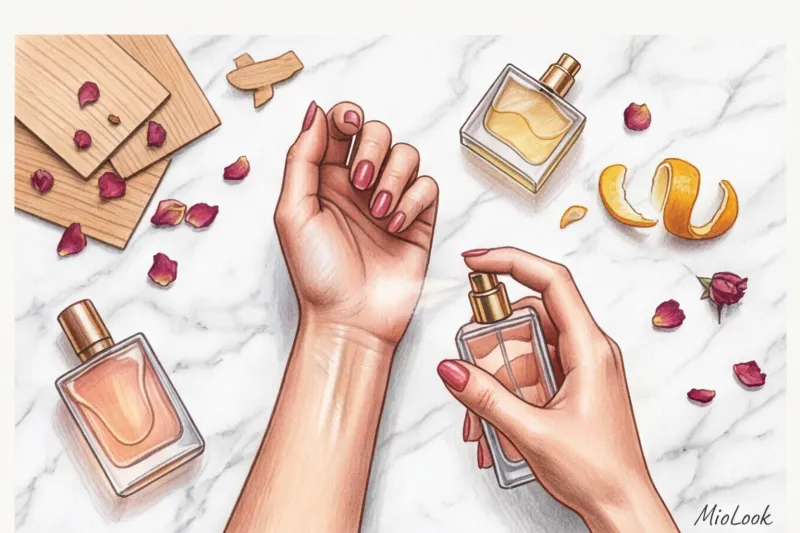
The golden rule of leering: Always apply the heaviest, densest scent first. Let it settle on the skin for 2-3 minutes. Then spray the lighter scent. Regarding dosage, use a 1:2 ratio: one spray of a heavy base (such as patchouli) to two sprays of a light accent (such as bergamot).
Win-win combinations for beginners
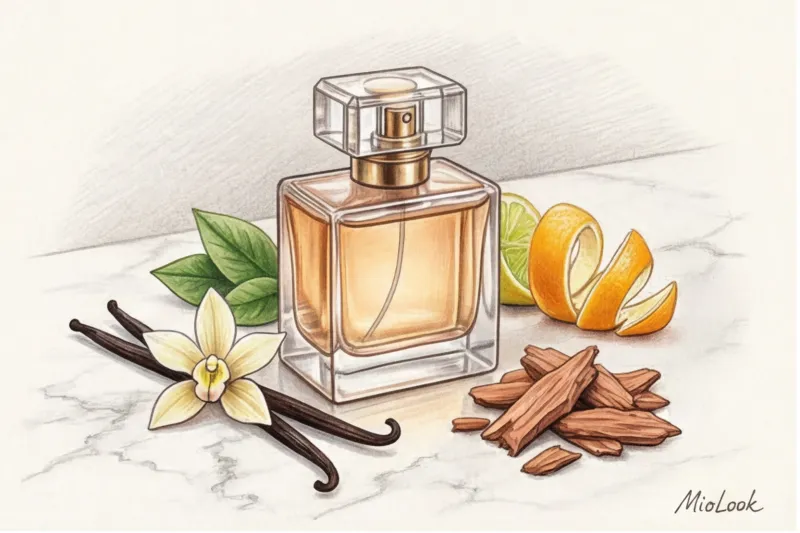
- Citrus + Wood: Ideal for interviews. Lemon or grapefruit provide energy, while sandalwood or cedar convey status and reliability.
- Vanilla + Spices: Pink pepper or cardamom are great at cutting through the vanilla's excess confectionery sweetness, making it dry and rich.
- Rose + Patchouli: A modern classic. Earthy patchouli prevents the rose from becoming too "grandmother's chest," transforming it into a gothic, stylish accord.
The Myth of Expensive Perfume: Why I Mix Zara with Heavy Luxury
There's a snobbish myth that only selective perfumes from the same brand can be layered. It's a marketing ploy to get you to buy more expensive bottles. In practice, the best layering of fragrances occurs when you take a simple, inexpensive single-scent fragrance and use it as a "canvas" for a complex niche.
According to research company Givaudan (2023), approximately 80% of commercially successful fragrances are built on a combination of just 5-6 base accords. There's no point in overpaying for a base.
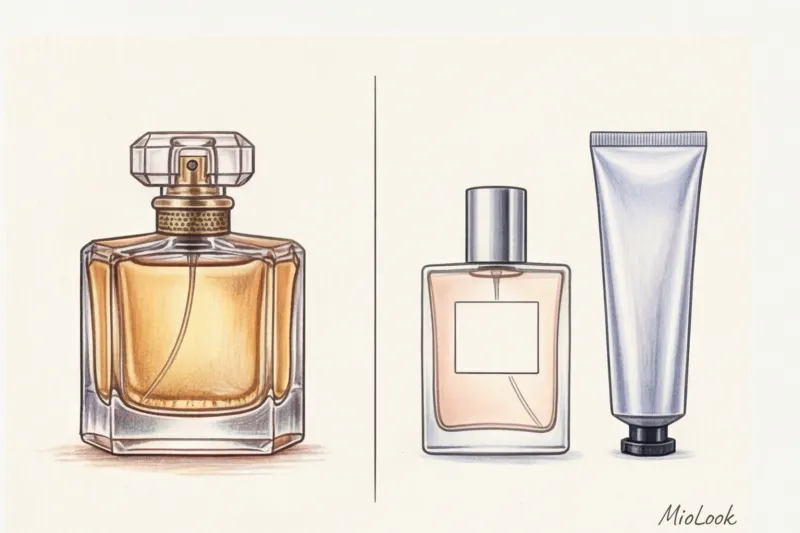
I have a secret trick in my personal arsenal. I adore the complex, thick Tom Ford Tobacco Vanille, but it's too pretentious for daytime in Europe. What do I do? I pick up the budget-friendly Vetiver Pamplemousse from Zara (around 20 euros)—it's a completely straightforward, pure grapefruit-vetiver scent without any complex opening. I apply it generously to my shoulders and wrists, while Tom Ford uses just one micro-spray on the back of my neck. The inexpensive vetiver "pulls apart" the dense layers of the expensive perfume, letting air in. The result smells like an exclusive fragrance worth 500 euros.
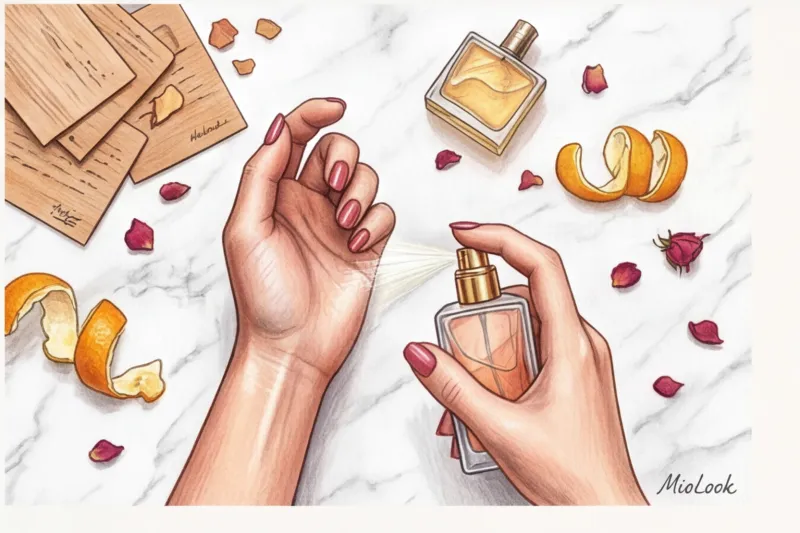
Brands like Zara, H&M, &Other Stories, Massimo Dutti, and COS produce excellent, straightforward fragrances. While they may not boast longevity on their own, they work flawlessly as a base for luxury fragrances.
Your ideal image begins Here
Join thousands of users who look flawless every day with MioLook.
Get access — €0.99 onceStep-by-step instructions for layering fragrances
If you're ready to experiment, here's a clear algorithm I give my clients after shopping assistance.
- Skin preparation (critical step). Research in Cosmetic Chemistry (Journal Cosmetics & Toiletries (2023) confirm that perfume lasts 30-40% longer on moisturized skin. Dry skin literally "eats" aromatic oils. Start layering immediately after a shower.
- Selecting a base layer. Apply the thickest scent of your pair to your pulse points (wrists, elbows, jugular notch).
- Applying an accent. Wait a couple of minutes. You can apply a light fragrance directly over the base, or you can layer it spatially: apply the base to your wrists and a light citrus scent to your hair or the back of your neck. This way, you'll create a multidimensional trail as you move.
- Paper testing. Never mix two unfamiliar perfumes at once before an important event. Test them on a paper blotter or a regular napkin, let them sit for an hour, and only then make a decision.
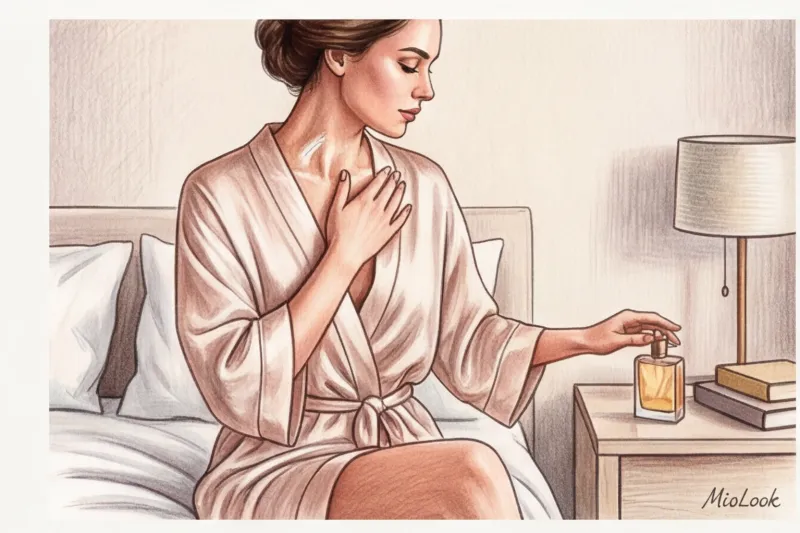
Perfume Primers: The Role of Body Creams and Oils
You don't need to buy two bottles of perfume. A scented body lotion is the perfect first layer. If you have a favorite but short-lasting perfume, buy a regular, fragrance-free drugstore body cream (like CeraVe Basic). Mix a small amount of the cream with two sprays of your perfume in your palm and apply to your body. The lipids in the cream will lock the scent in for the entire day.
Layering Mistakes: Which Notes Should Never Be Mixed
I have to be honest: layering doesn't always work. Some combinations are physically repulsive. One of my clients decided to mix two of her most expensive gift perfumes—the classic Chanel No. 5 and the gourmand Mugler Angel—to "smell as expensive as possible at the office party." The result had to be washed off with wet wipes right in the taxi—it was pure olfactory chaos.
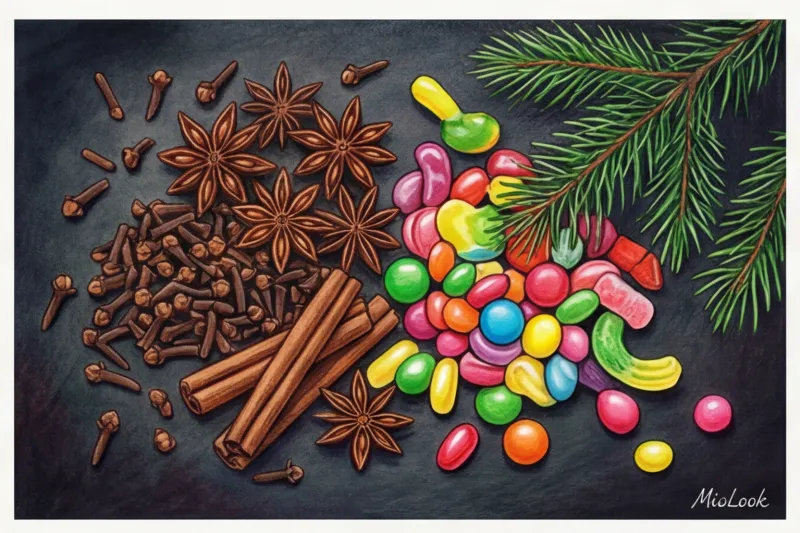
Here are three taboos that I forbid you to break:
- Aquatica + Heavy gourmand. Marine notes (the calone molecule, the scent of ozone, and watermelon) combined with caramel, praline, or chocolate create the effect of a "spoiled dessert forgotten on the beach." It's nauseating.
- Two complex selections at the same time. If a fragrance already has 15 stages of development (like many creations by Amouage or Roja Dove), adding a second one will create "mud." Mix complex with simple.
- Powder overdose. Iris plus violet plus musk—it's beautiful in theory, but in practice, the two powdery scents create a choking effect, like swallowing a spoonful of talc.
Perfume Layering for the Office: How to Create a Status Trail
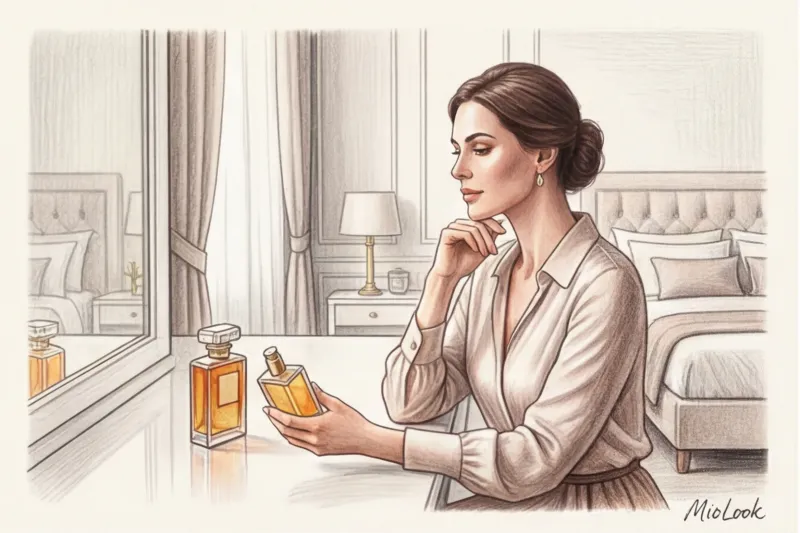
The office dress code dictates not only clothing but also perfume. A work fragrance should be long-lasting, so you don't have to reapply it every two hours, but it should also sit close to the skin, not intruding on your colleagues' personal boundaries.

Last year, I was putting together a wardrobe for a lawyer client. Her favorite scent was a light, girlish peony. But it felt too childish for the courtroom. We stuck with it. We added a molecular fragrance (Iso E Super—the scent of cleanliness, fresh paper, and light cedar) as a base. The molecule worked like a formal jacket worn over a chiffon dress: it "collected" the peony, making it dry, formal, and incredibly classy.
For negotiations, I recommend layering notes of black tea, fig, or vetiver with light white flowers. It sounds sophisticated and expensive.
Your Perfume Construction Kit: Assembling the Basic Capsule
In the appendix MioLook We teach users how to build a smart wardrobe, where every item is 100% worth its cost. The same principle applies to beauty. You don't need glass shelves. You need a construction kit.
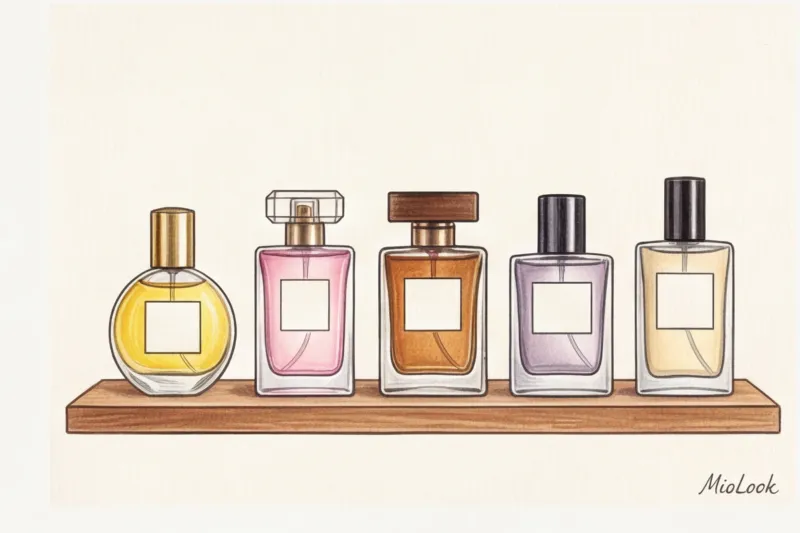
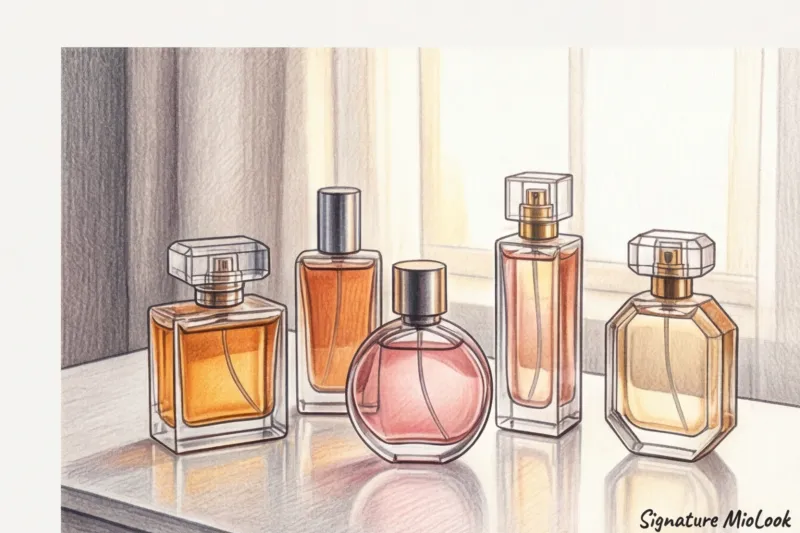
For a full capsule, 3-4 bottles are enough:
- One molecular or "pure" aroma (Similar to the scent of a freshly washed white shirt or skincare cream). This is your all-purpose primer.
- One citrus or greenery (bergamot, basil, mint). This is your tool for adding freshness to any heavy perfume.
- One tree or skin (sandalwood, cedar, suede). This is your "weighting agent" to transform a daytime perfume into an evening one.
- One favorite solo scent (flowers, fruits or gourmet) - something that reflects your mood.
"Leering isn't a way to fix a bad perfume. It's a way to adapt a good perfume to your current day, the weather, and your mood," says Katarzyna Nowak.
Don't rush to buy a new perfume if you feel like you're tired of your old one. Tomorrow morning, take your most boring office scent, spray it on your wrists, and top it off with a drop of the sweet evening scent you've been saving for special occasions. You'll be surprised at how this pairing will work.