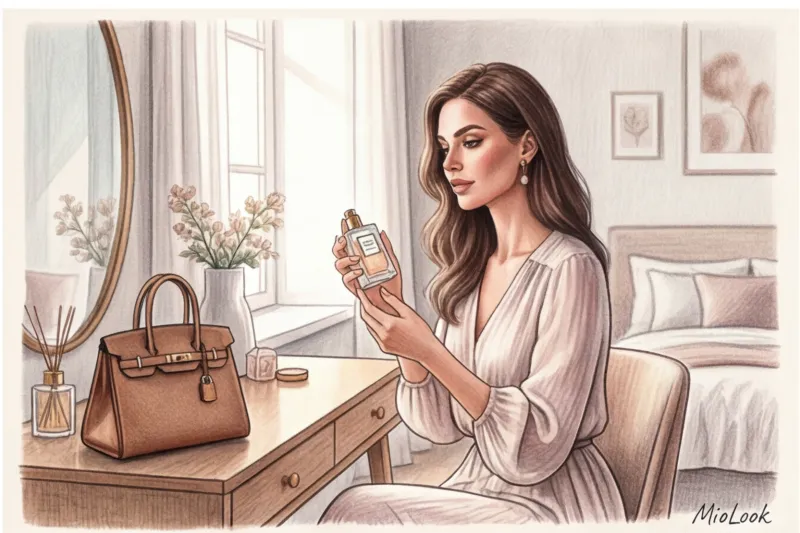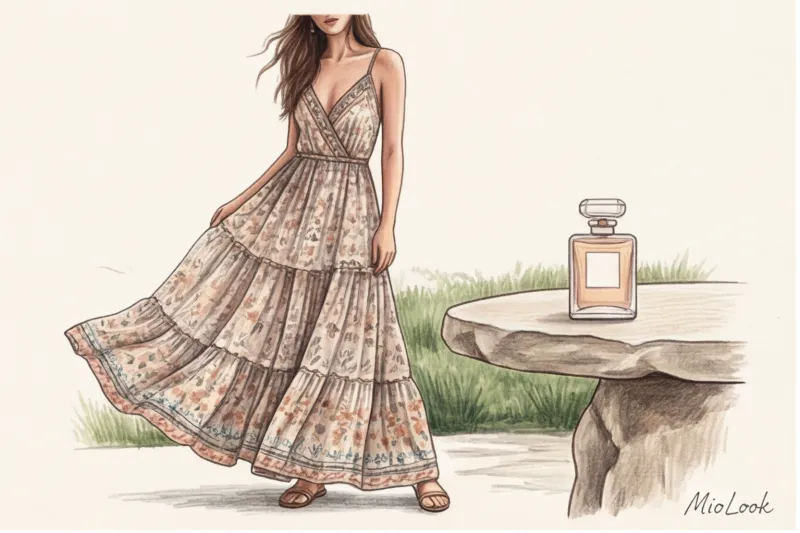
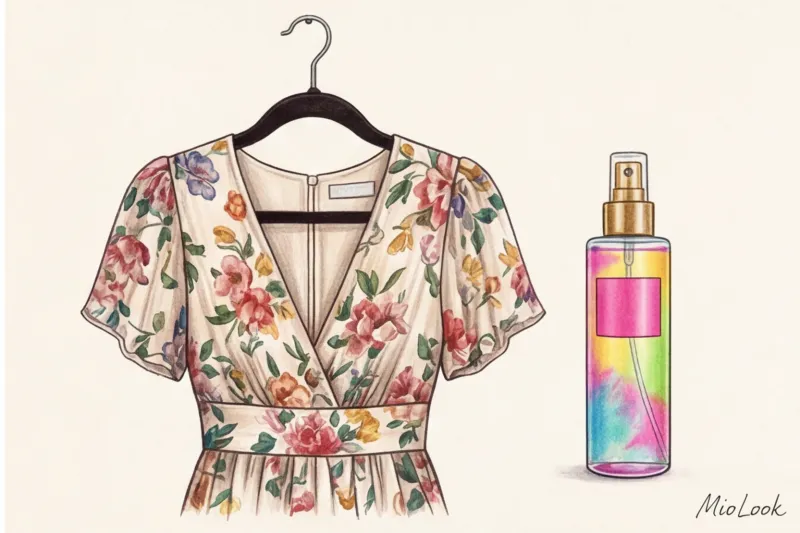
A couple of years ago, one of my clients almost ruined her impression of a stunning Zimmermann dress, costing around $2,000. We'd chosen the perfect flowing silhouette of silk chiffon with a subtle floral print, adding suede ankle boots for texture. But just before she stepped out, she generously sprayed herself with a popular fruity-floral body mist scented with peach and vanilla. Instantly, the sophisticated, expensive boho look transformed into a high school prom outfit. The expensive fabric clashed visually with the flat, downright cheap scent.
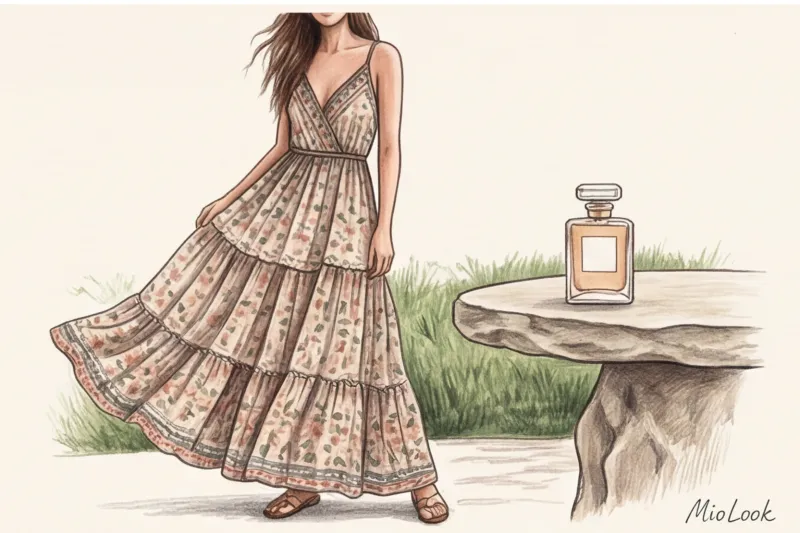
That's when we sat down to sort through her perfume shelf. To choose perfume for a romantic look — it's not just about grabbing the first bottle you come across with a rose on the label. It's a subtle play on contrasts, where the scent works as an architectural element of the design. I discussed the basic principles of this work in more detail in our A complete guide to choosing a perfume to match your clothing style , but today we'll talk about the most difficult thing: boho and romance.
Anatomy of Style: Why Romantic Perfumes Are More Than Just Sweet Flowers
The biggest misconception I encounter among women is the attempt to literally duplicate the visual code with an olfactory one. You put on a floral dress and apply perfume that smells like a spring garden. Seems logical, right? In fact, this straightforwardness creates a "sugar syrup" effect.
The luxury interpretation of boho aesthetics (think Chloe or Etro shows) isn't childish. It's free, intellectual, and effortlessly aristocratic. The visual lightness of fabrics in such collections is always offset by sophisticated foundations: chunky belts, chunky jewelry, or, in our case, the right perfume.
A 2023 study by Swiss perfume company Givaudan on the neurobiology of odor perception revealed an interesting finding: the human brain evaluates contrasting combinations (for example, a weightless fabric with a complex, deep scent) as more intellectual and prestigious. Literal matches are perceived as predictable and therefore less valuable.
Access to MioLook for €0.99 — one-time payment
A smart AI stylist will select the perfect look and help you build a wardrobe based on contrasts.
Get access — €0.99 onceThe Rule of Contrast: How to Ground a Flying Silhouette
There's a golden rule in styling: if the fabric doesn't hold its shape, an accessory should. When you're wearing a flowing dress that flutters at the slightest breeze, you need a "heavy anchor." Otherwise, you risk looking like you're going to a children's party.
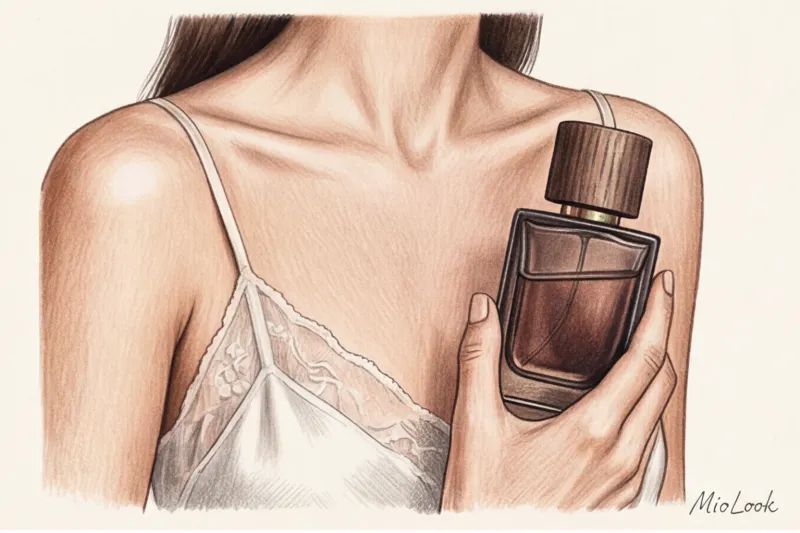
Base notes of perfumery—patchouli, leather, tobacco, moss, or dry wood—act as such an anchor. They create a rigid olfactory framework around a soft visual silhouette. This is the secret that distinguishes a woman with an innate sense of style from one who simply bought an expensive dress.
Silk slip dresses and predatory white flowers
Smooth textures like flowing silk or satin have a cool sheen and often look like lingerie. To avoid a slip dress look from feeling too homey or overtly provocative, I recommend indolic white flowers.
Tuberose, jasmine, and gardenia in niche versions have a subtle animalic, predatory undertone. They sound dense and sexy, but not vulgar. The key is to avoid compositions where the white flowers become soapy and smell like expensive body lotion. We're looking for drama, not bathroom associations.
Cotton macrame and woody floral chypres
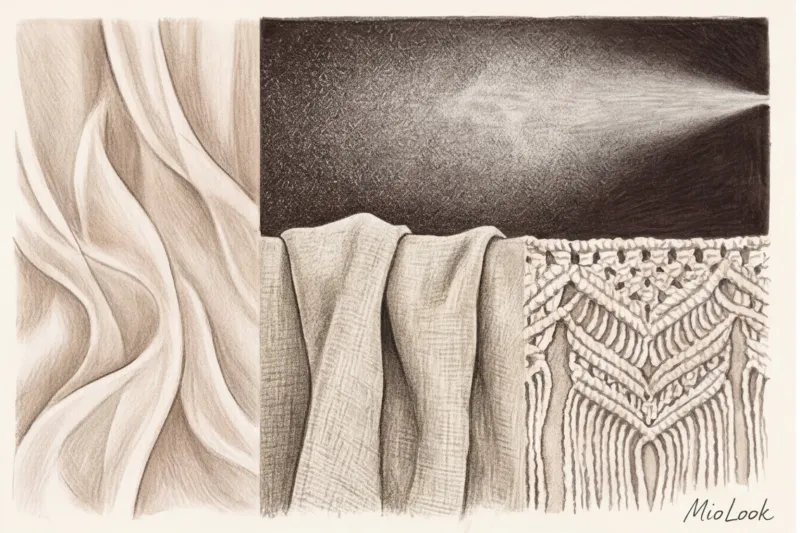
A completely different story begins when we work with textured, matte fabrics: large lace, embroidery, and thick linen. This is where chypre fragrances come into their own.
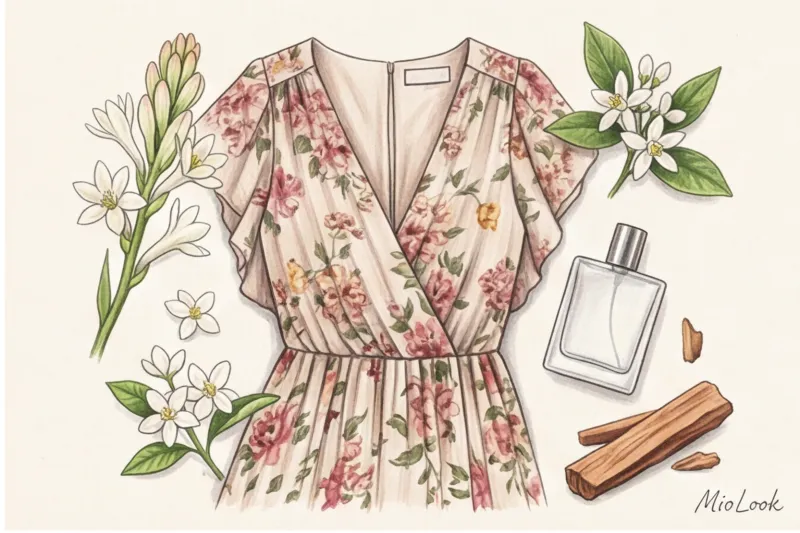
A classic chypre (bergamot, oakmoss, patchouli) with the addition of dried rose or vetiver perfectly accentuates the roughness of the fabric. This combination exudes purity. Imagine a natural-toned linen midi dress, leather sandals, and a scent trail that hints of crushed herbs and dry wood. It's a surefire fit for the "quiet luxury" aesthetic with a bohemian edge.
Choosing a Niche: Floral Accords That Sound Expensive
If we look at Michael Edwards's Fragrance Wheel, created back in 1992 but still relevant today, we see a clear division within the floral family. Mass-market fragrances most often exploit "soft floral" and "fruity-floral" notes, making them as straightforward and sweet as possible. Niche fragrances, on the other hand, focus on undertones and dissonances.
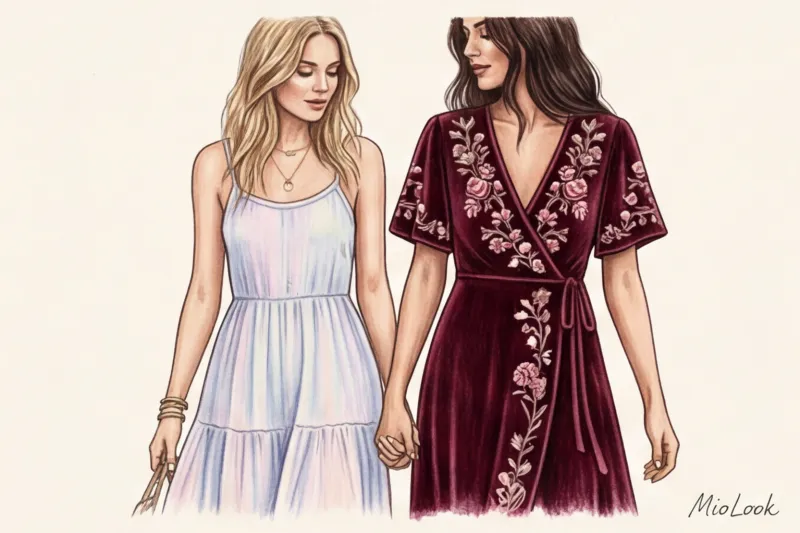
- Iris: It imparts a powdery, slightly dusty elegance. It adds a touch of detachment and aristocratic charm to any romantic look. Perfect with pastel-colored dresses.
- Rose with oud or black pepper: How do you get rid of the "grandmother's chest" effect from a rose? Add some tough, masculine notes. This rose becomes gothic and deep. It works great with flowing fabrics in dark shades (burgundy, emerald, black).
- Wild herbs and chamomile: Intelligent boho in the style of Loewe or Jil Sander. The scent of chamomile, hay, and bitter herbs combined with white cotton looks incredibly stylish and modern.
Your perfect look starts here
Join thousands of users who look flawless every day with MioLook. Upload your items and get ready-made looks.
Get access — €0.99 onceOlfactory Physics: How Boho Fabrics Interact with Perfume
In 12 years of working as a stylist, I've learned one important lesson: perfume is chemistry, and clothing is physics. The scent's performance is directly dependent on the surface it's applied to.
Natural silk, chiffon, and linen are porous. According to perfume manufacturers' technological tests, natural silk can retain base notes (sandalwood, musk, amber) up to three times longer than synthetic polyester. Synthetics, on the other hand, cause the fragrance to fade faster, often distorting the top notes beyond recognition.
Important warning: Never spray alcohol-based perfume directly onto delicate silk or chiffon. You risk creating permanent oil stains and damaging the fabric fibers. My personal life hack: apply perfume to the inner lining (if present and not made of delicate fabric), to your hair (using special hair mists), or the classic method, to your pulse points, 15 minutes before putting on your dress.
Daytime vs. Evening Boho: Scent Transformation
The same style requires a different approach depending on the time of day and lighting. You don't need to change your aesthetic; just change your olfactory filter.
Morning Breeze: Watercolor Flowers for Light Linen
For daytime strolls, brunches, or relaxed gatherings on the veranda, choose watercolor-inspired scents. Notes of green tea, bergamot, freesia, and young peony. They are transparent, leave no lingering sillage, and create a feeling of purity. This is a case of perfume that whispers rather than shouts.
Bohemian Evening: Dark Rose, Incense, and Velvet
Evening boho is all about adding texture. Velvet kimono capes, chunky silver jewelry, and plunging necklines are making an appearance. Watercolor would be lost here. Switch to fragrances with notes of cherry pit, tobacco leaf, dark rose, and resins. They envelop and create that very magic that makes this style so special.
Common mistakes: what instantly cheapens a romantic look
To be fair, the "heavy perfume" rule has one strict limitation. It doesn't work if it's 35°C (95°F) and 90% humidity outside—in such tropical weather, a complex woody-resinous base will suffocate you and everyone around you. Otherwise, avoid three key mistakes:
- Overly sweet gourmand notes with ruffles. Praline, caramel, and cotton candy combined with flounces and frills transform a grown woman into a walking dessert. It looks comical.
- Synthetic fruity fragrances. Chemical peach, raspberry, or green apple (hello, 2000s) against a backdrop of expensive natural silk creates cognitive dissonance. The fabric says, "I'm expensive," while the train screams, "I bought it on sale at the supermarket."
- Overdose. A flying silhouette implies air. If you reek of perfume from five meters away, the magic is lost. The scent should only be noticeable when your personal space is violated.
Checklist: Creating the Perfect Boho Look with Perfume
To avoid standing in front of your closet at a loss, I recommend my clients to use smart wardrobe feature in the MioLook app You can create capsules in advance and even add matching fragrances to your outfit notes. Here's the process:
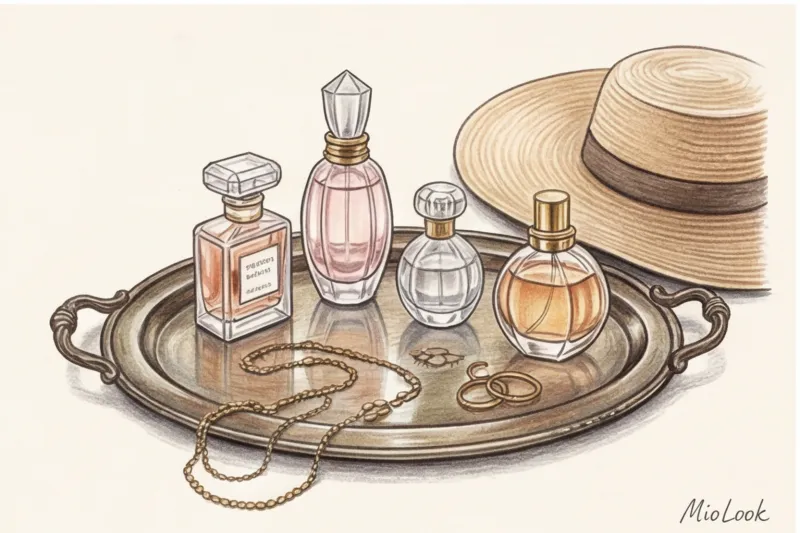
- Determine the texture of the fabric: Smooth (silk) calls for predatory white flowers. Rough (linen, macrame) calls for dried chypres and herbs.
- Play on the contrast: For a light, translucent dress, choose a dense, woody or leather scent.
- Assess the context and temperature: Save resins and incense for cool evenings, and tea and citrus notes for hot days.
- Apply delicately: Take care of your precious fabrics. Spray a cloud of fragrance over yourself or use perfumed hair mists.
Remember the most important thing: perfume isn't a finishing touch; it's a full-fledged element of your look. And sometimes it's just a drop of the right, slightly rough scent that makes a romantic, flowing dress truly yours.