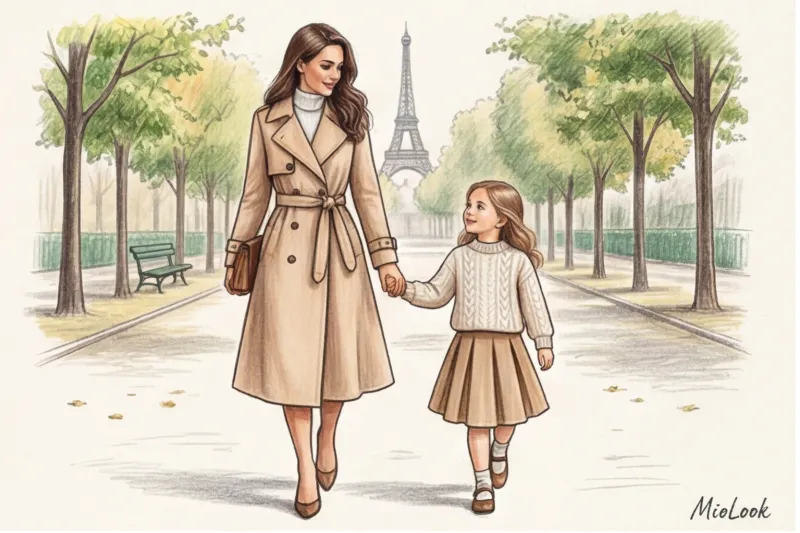
One of my clients once confessed during a consultation: for a single New Year's photo shoot, she spent almost €500 on four identical red plaid shirts. The photos turned out cute, but do you know how many times they were worn afterward? None. Her husband's shirt didn't fit into his office wardrobe, her daughter flatly refused to wear the "itchy" fabric, and the client herself realized that this shade of red made her face look tired. It's a classic trap that 80% of families fall into: buying things specifically for family look images , we often acquire dead weight.
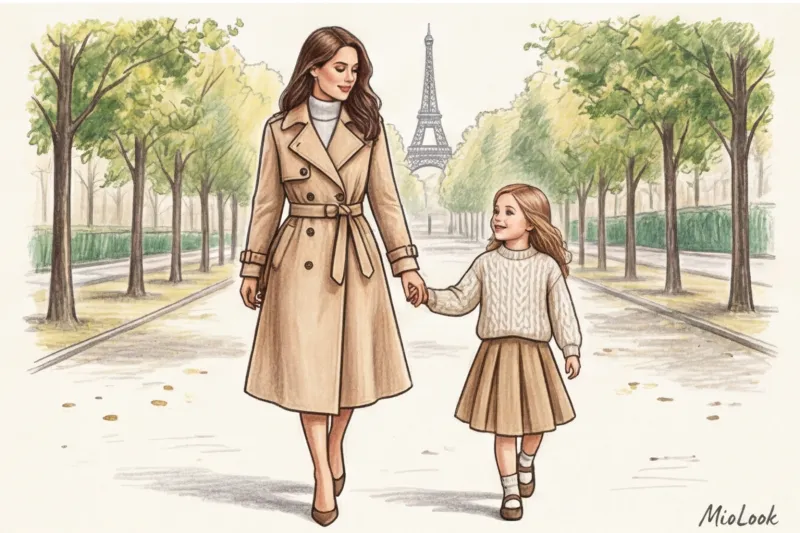
Working as a stylist on glossy photo shoots, I developed an ironclad rule: no duplication of clothing. Identical sweatshirts deprive family members of their individuality, turning them into a uniformed squad. True stylistic harmony is built on completely different principles—contrasts, color temperatures, and smart closet management. We've shared more about how to organize everyone's belongings in our A complete virtual wardrobe guide for the whole family.
Today, we'll explore how to create a subtle stylistic DNA for your family and use virtual tools to make your outings look luxurious and your pieces last for years.
From Lanvin to the Present Day: Why Classic Family Looks No Longer Work
A common misconception is that family looks are identical garments (copy-paste). This is fundamentally wrong. The "Mini-Me" concept in haute couture was pioneered by Jeanne Lanvin in 1908. When creating a children's line for her daughter, Marie-Blanche, Lanvin didn't create scaled-down versions of women's corsets. She took the aesthetics, color palette, and decoration, adapting them to children's proportions. The designs overlapped, but remained distinct.
A hundred years later, mass-market fashion has simplified this brilliant idea to banal, identical T-shirts with the slogan "King" and "Princess." Why does absolute identity seem unnatural today? The psychological aspect is no less important than the visual. "Uniforms" blur personal boundaries. Your husband may adore relaxed grunge, you may adore minimalism, and your child may love bright prints. By forcing everyone to fit into the narrow confines of a single style, you're killing personal style.
Moreover, the same cut simply cannot fit equally well on an adult man and a five-year-old girl.
The DNA Rule: How to Create Harmonious Family Looks Without the Uniform Effect
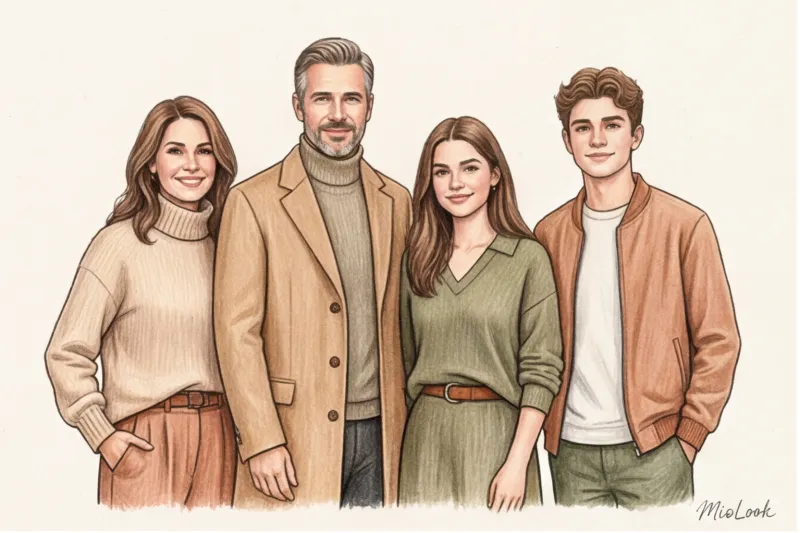
The secret to expensive couples and family outfits lies in creating a stylistic DNA. It's about choosing a common theme. You don't wear matching jeans; you embrace a common aesthetic: for example, Scandinavian minimalism (clean lines, no logos, natural colors) or old-money aesthetics.
A single accent pattern can serve as a unifying element. Take stripes, for example. You might wear a voluminous Breton top, your husband a dark blue pinstripe jacket, and your child socks or a scarf with a wide graphic print. The motif is the same, but the scale and execution are different. This creates that invisible connection between you.
Playing with palette: temperature method instead of identical colors
Forget about clichéd color blocking. To create complex combinations, I always use Johannes Itten's color wheel. Instead of dressing the whole family in the same blue, try the rule of uniform temperature and saturation.
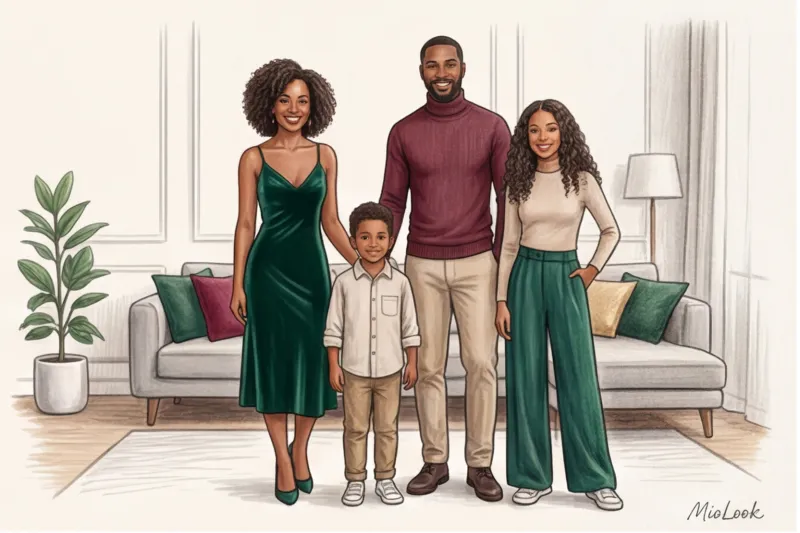
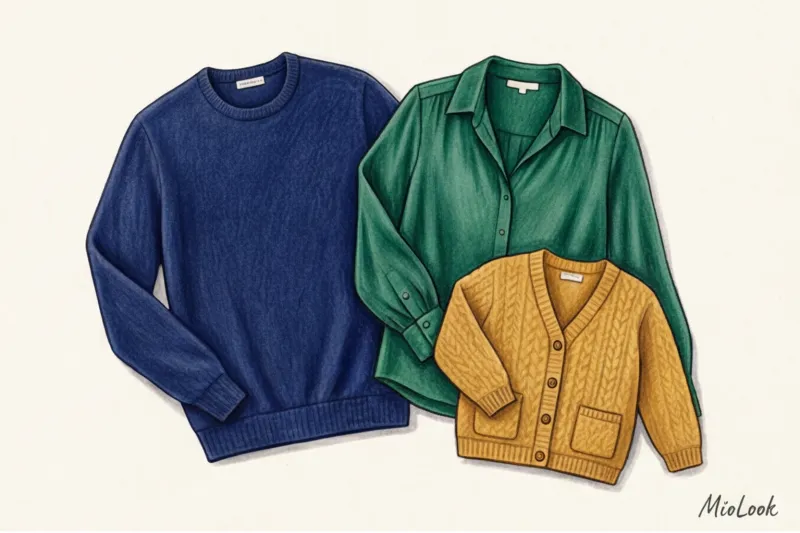
- Deep autumn tones: Rich wine, deep emerald, and warm mustard. The shades are different, but they share the same richness and warmth.
- Pastel range: dusty rose, pistachio and lavender.
- The 60-30-10 formula on a family scale: 60% is the base color (for example, beige in everyone’s different elements), 30% is the additional color (khaki for the father and son), 10% is the accent color (the mother’s terracotta scarf).
Your perfect look starts here
Join thousands of users who look flawless every day with MioLook. Create a harmonious palette for the whole family in just a few clicks.
Get access — €0.99 onceTextures and silhouettes: subtle connections in paired looks
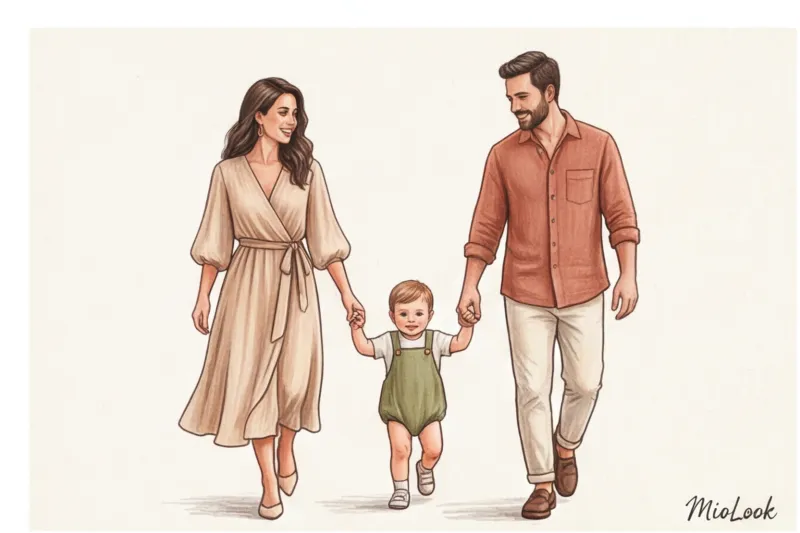
Another professional trick is to unify through texture. If you choose linen (at least 180 g/m² for good drape), have your husband wear linen trousers, you a linen vest, and your child a Panama hat made of the same material.
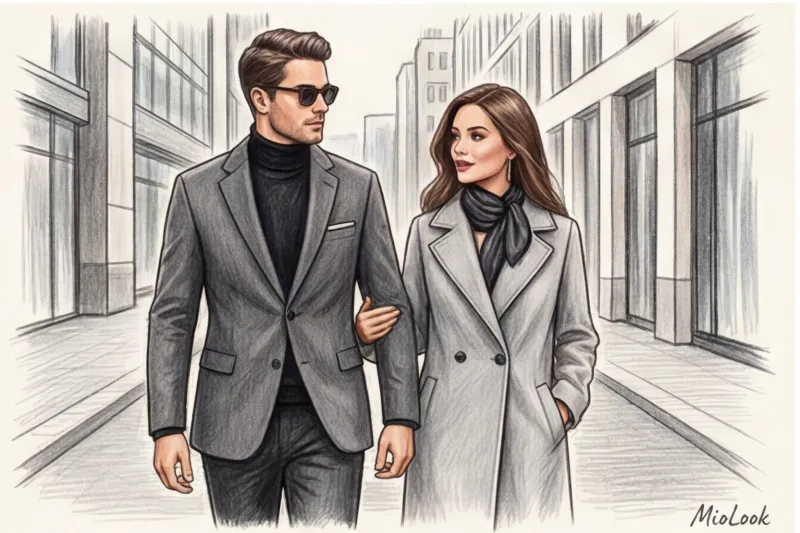
Cross-gender borrowings work brilliantly in paired looks. When a woman wears a masculine jacket from a man's shoulders, and a man walks alongside in a soft cashmere polo shirt, it's a subtle contrast of shapes that visually connects the couple better than any matching sweatshirts.
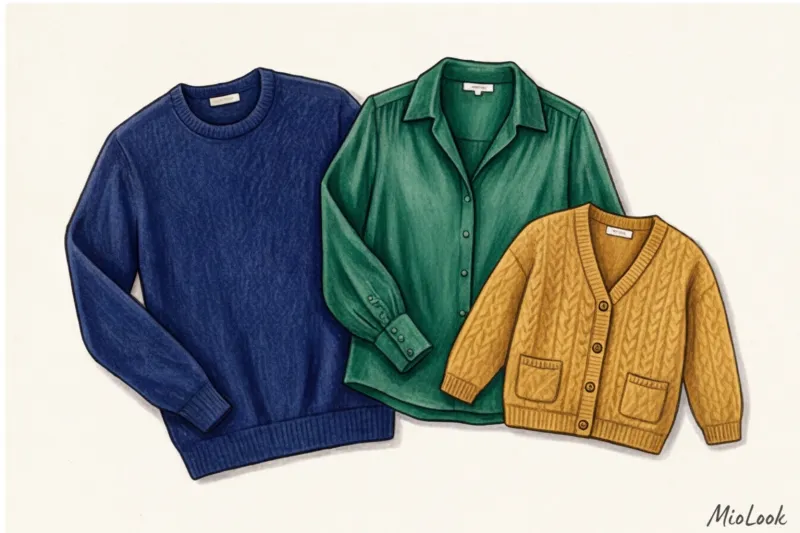
Digitizing Your Family Wardrobe: Why You Should Use an App to Collect Looks
Have you ever noticed how often we buy new things simply because we've forgotten about the old ones? Our closets are in disarray, and we're faced with the problem of our own "blind spots."
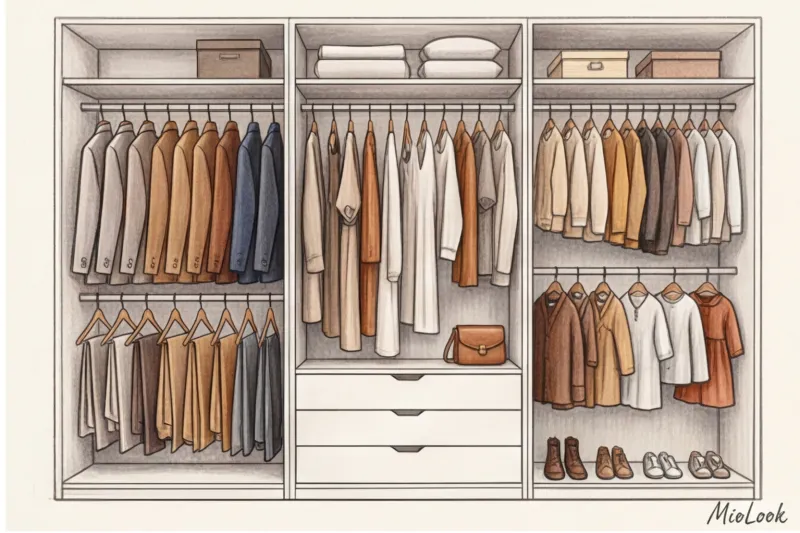
According to a large-scale study by WRAP (2023), the average family actively uses only 20-30% of their clothing. The rest is dead weight. Disposable items for family celebrations become a real budget black hole. Purchasing a single evening outfit in the mid-range segment will cost at least €150-200.
This is where a virtual wardrobe comes to the rescue. By adding items to MioLook app , you'll be spared the hassle of dumping mountains of clothes on your bed. An AI stylist analyzes your husband, wife, and children's digital clothes, spotting subtle color and style overlaps. Furthermore, when planning your purchases, the algorithm will suggest which one A detail (for example, a terracotta belt) needs to be purchased additionally to tie disparate wardrobe items into a single stylish ensemble.
Stylist Secrets: Putting Together Family Looks for Different Scenarios
The key to a successful family look is the adaptability of clothing. Every item should easily integrate into everyday life after going out together. Let's look at two common scenarios from my experience.
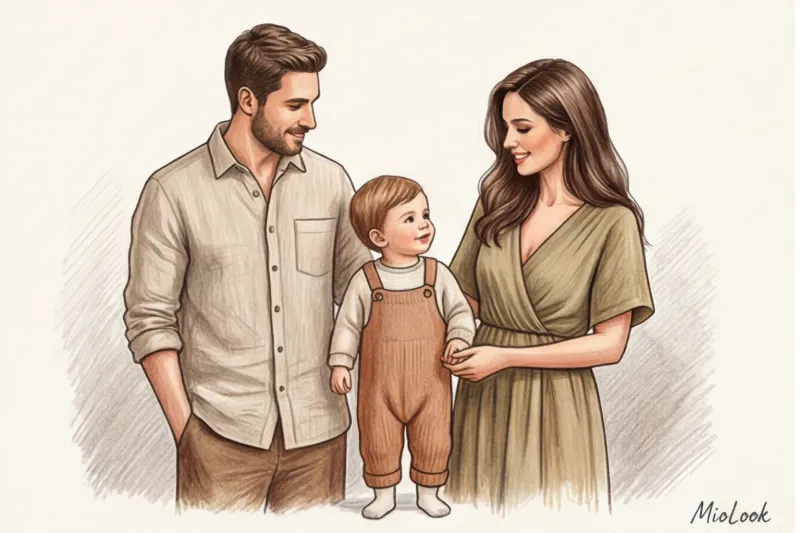
Urban casual for the weekend
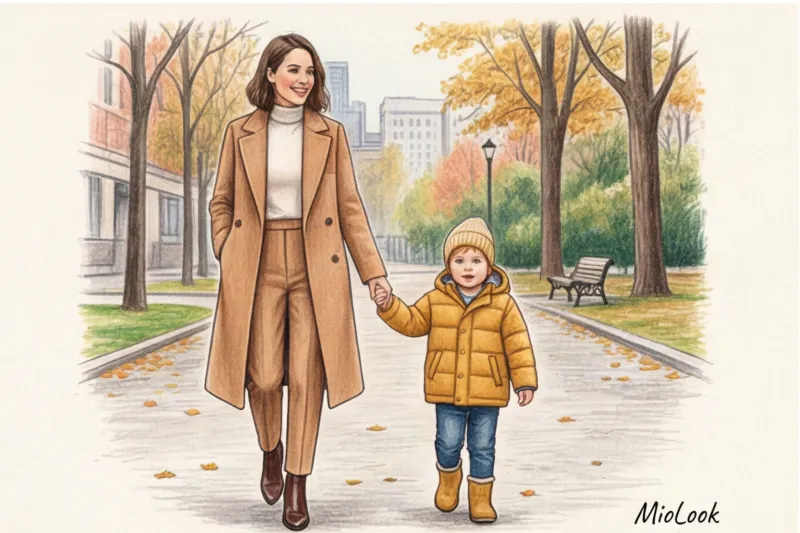
Layering is ideal for Sunday brunch or a stroll in the park. The basic formula: quality denim for everyone (in different shades and styles) plus different shades of the same color for the top layer. Shoes are often the unifying element. For example, white leather sneakers with a minimalist design for all three.
Family photo shoot looks without cliches
Whenever I see a studio shoot with a "white top, denim bottom" look, I want to cry. It's the most overused cliche of the last ten years. A perfect shot requires a multi-layered composition. Use different textures that play well with the light: suede, silk, chunky knits.
Be sure to consider the location's backdrop. If you're shooting in an autumn forest, you can use the app to pre-assemble a collage against the golden foliage, adding deep wine and chocolate tones.
Top 5 Common Mistakes When Creating Family and Couple Outfits
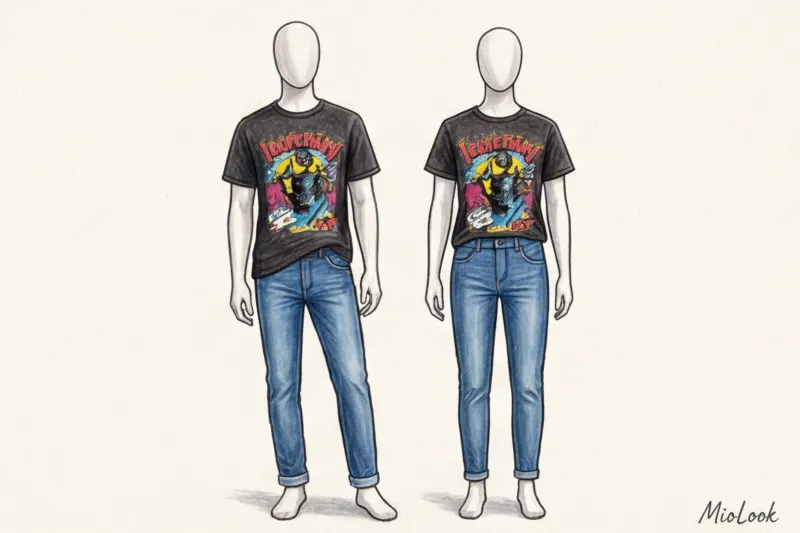
Over 12 years of work, I've compiled a collection of classic mistakes couples make when preparing for events:
- Buying one-day items. Buying a T-shirt with a funny slogan for €30, which after washing will become pajamas.
- Ignoring color types. If your husband's warm complexion suits ochre, and your cool complexion suits fuchsia, don't force both of you to wear ochre. One of you will look unhealthy. Keep the clashing colors at the bottom of your silhouette (pants/skirts).
- Sacrificing children's comfort for the sake of an "adult" look. Important limitation: Strict, classic suits made of stiff wool only look cute on three-year-olds for the first five minutes. Then the tears start. Choose a thick knit that mimics suit fabric.
- Too many prints. If Mom is wearing a floral dress, Dad is wearing a plaid dress, and Son is wearing a striped dress, the photo will be too noisy. Leave the bold print to one person.
- Lack of fitting "in assembly". Judging items individually on hangers is a recipe for failure.
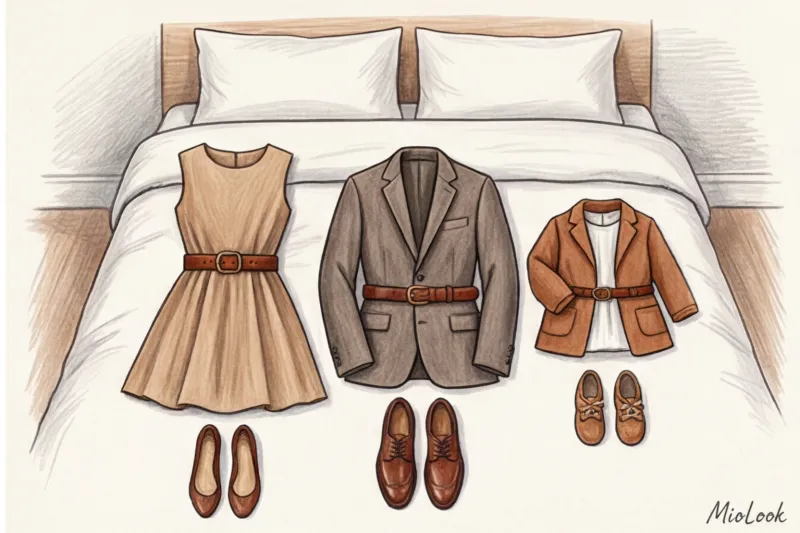
Checklist: A Step-by-Step Guide to Creating the Perfect Family Look in MioLook
Want to try putting together a stylish outfit for the whole family this weekend? Follow this algorithm in the app:
- Step 1: Digitize the basics. Add 5-7 key items (pants, jackets, dresses) for each family member to the database.
- Step 2: Selecting an anchor. Identify a unifying element. This could be a uniform color temperature (everything in warm autumnal tones) or texture (an accent on corduroy).
- Step 3: Assembling the collage. Place your selected items on the app's virtual canvas.
- Step 4: Identifying the missing links. Look at the collage as a whole. What's missing? Perhaps a mustard-colored scarf for the child, costing only €15, would be needed to match the color of Dad's expensive sweater.
- Step 5: Wearability analysis. Ask yourself: "What will my husband wear with these pants to the office next Tuesday?" If there's no answer, look for a replacement.
Ready to get started?
Digitize your family's wardrobe and create stylish combinations without breaking the bank. Try the free plan—no commitments.
Get access — €0.99 onceConclusion: A conscious approach to family style
A stylish family look today isn't about military uniformity, but rather a subtle sense of unity. Clothing should highlight the unique character of each family member, while conveying your shared bond through nuances: textures, color temperature, and the rhythm of prints.
Smart wardrobe management with digital tools allows you to look like you're right on the cover of Vogue without multiplying items or wasting money on disposables. Spend a weekend digitizing your closets in an app, and you'll be surprised at how many ready-made, stylish, matching outfits you already have hanging on your hangers. You just need to pair them correctly.