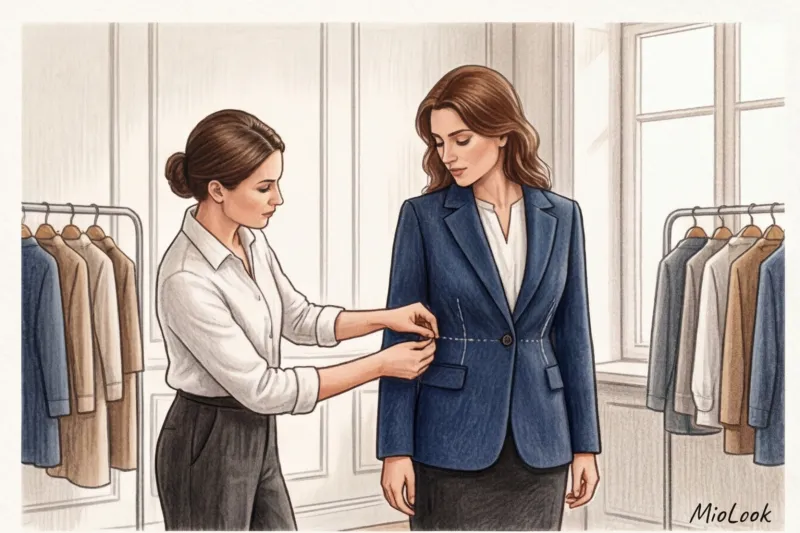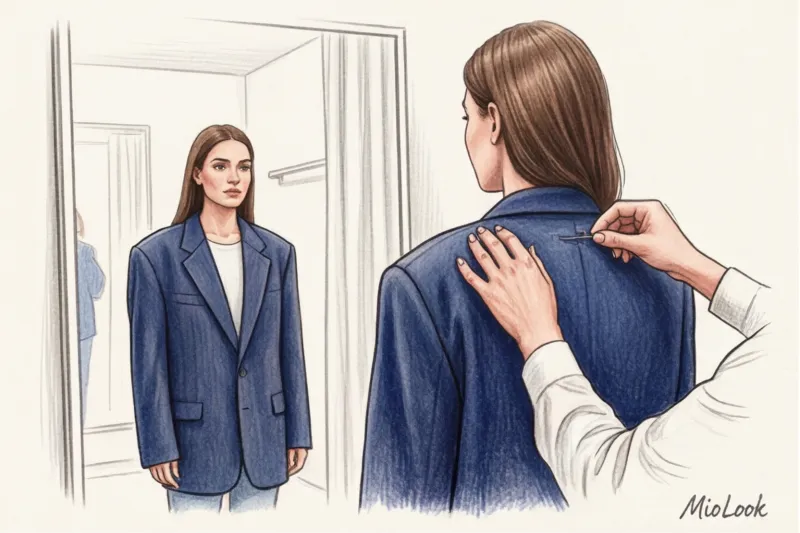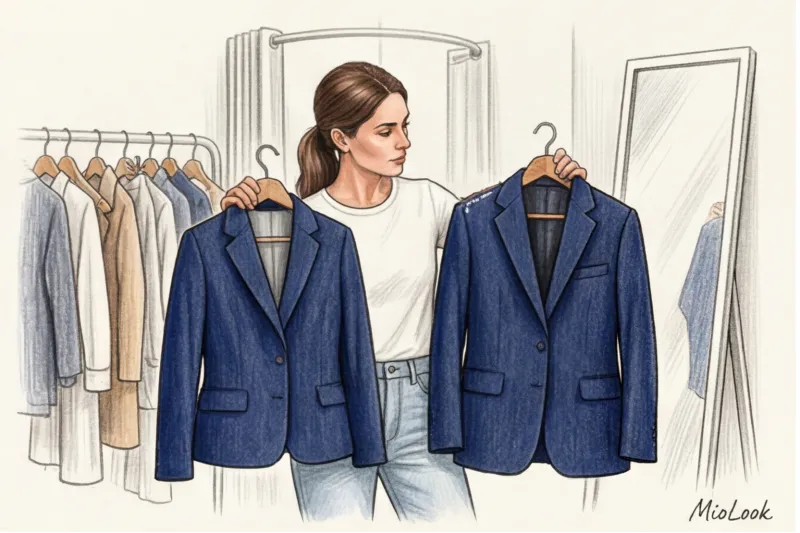
Last week, one of my clients, a senior executive, came in for a wardrobe review completely frustrated. She'd just purchased a classic wool suit from a renowned Italian house for €1,800, but felt awkward in it at an important presentation. The back was bunching up, and the shoulders were stubbornly sagging. Meanwhile, her colleague was garnering compliments in a Massimo Dutti suit for €150 that fit like a glove. The secret? She'd taken her jacket to a tailor.
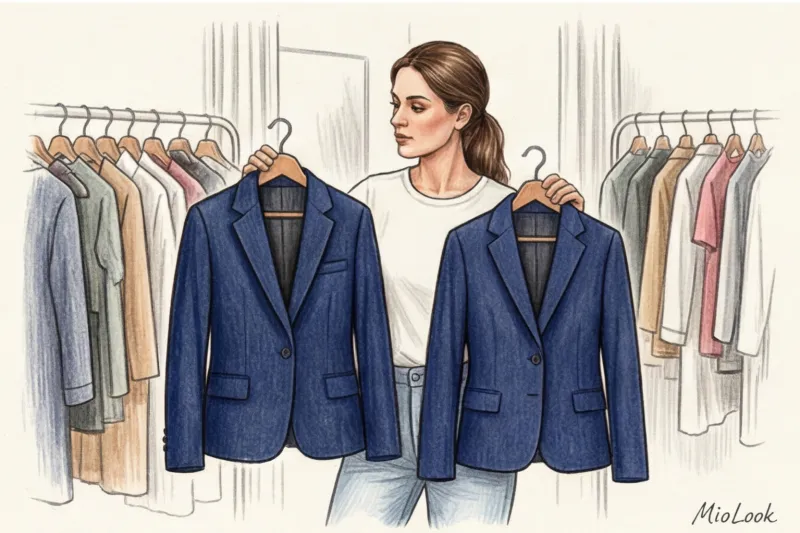
We're used to thinking that a high price guarantees a flawless cut. This is one of the biggest misconceptions in the fashion industry. Perfect fit of clothes It's not sold in ready-to-wear boutiques—it's created with pins, chalk, and a precise understanding of your anatomy. We've already covered the architecture of the silhouette in more detail in our The complete guide to looking expensive as you age , and today let's look at the physics of cutting.
Perfect Fit: Why Even Expensive Brands Won't Fit You
Buying luxury goods solely for the sake of "magic patterns" is a mathematical and stylistic mistake. Whether it's a Chanel jacket, a Max Mara coat, or a Zara blazer, they're all cut to average standards. In the industry, this is called working with a fit model—a living person with perfectly symmetrical measurements who is used to test samples before they go into production.
The problem is that, according to anthropometric studies, barely 15% of women fit these rigid standards. Over 12 years of working as a stylist, I've conducted hundreds of fittings and can confidently say: perfectly symmetrical people don't exist. Eight out of 10 of my clients have their right shoulder lower than their left (hello, habit of carrying a heavy bag on one side), and the difference in the circumference of their right and left legs can be as much as half a centimeter. A luxury brand sells you premium Loro Piana fabric and status, but it's physically incapable of predicting your hip height.
"Every untailored item from the store is just a semi-finished product. You don't wear raw dough expecting it to taste like a croissant. Likewise, you shouldn't expect a factory-cut garment to become your second skin."
Access to MioLook for €0.99 — one-time payment
A smart AI stylist will select the perfect look based on your individual characteristics.
Get access — €0.99 onceThe Mathematics of Style: Logo Cost vs. Customization Cost
Let's translate the emotions of shopping into hard numbers. The key metric for a conscious wardrobe is Cost Per Wear (CPOW). This is what truly represents the value of an item.
Scenario one: You buy a premium blazer for €800. It's beautiful, but the armholes are a bit tight, and the sleeves are a couple of centimeters too long, making your wrists feel heavy and your rings and expensive watches getting lost in the folds of the fabric. Due to minor discomfort, you wear it five times a year. The actual cost per wear is €160.
Scenario two: You buy a high-quality but basic blazer made of a thick wool blend from a mid-market store (like COS or Arket) for €150. You then invest another €35 in a tailor's tailoring: the tailor raises the sleeves and removes the bubble in the back. Now the blazer fits like a second skin. You wear it every week—50 times a year. Total budget: €185. Cost per outfit: €3.70.
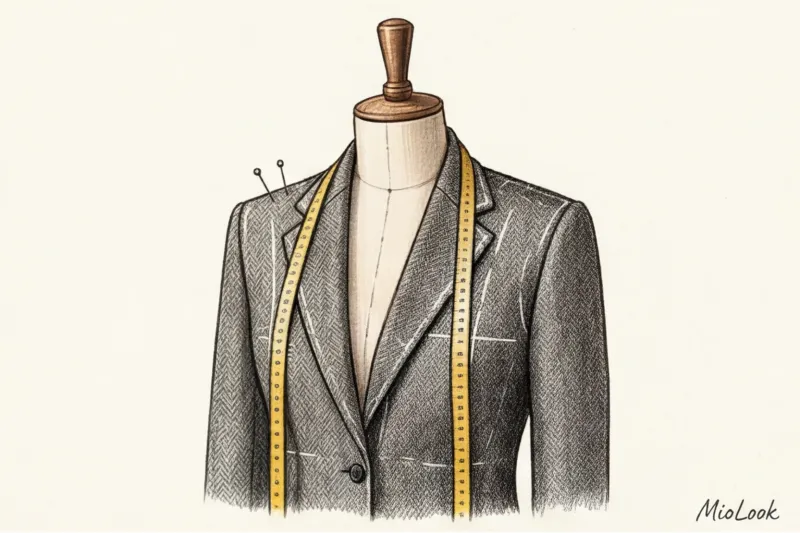
The hidden cost of a "cheap" look isn't the lack of a logo. A creased crotch or a crooked shoulder seam instantly devalues the look, even if you're holding a €3,000 bag.
Silhouette architecture: what really gives away an expensive item
The analytical agency WGSN introduced the term in its report on trends for 2024 visual calm In the context of clothing, this means the absence of unnecessary folds, tension, and distortion of the fabric when moving. It is this calmness that our brain interprets as an "expensive look."
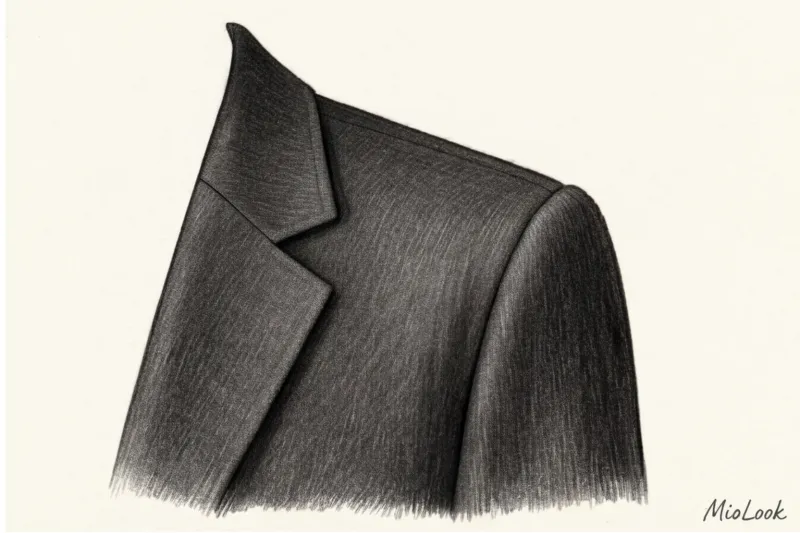
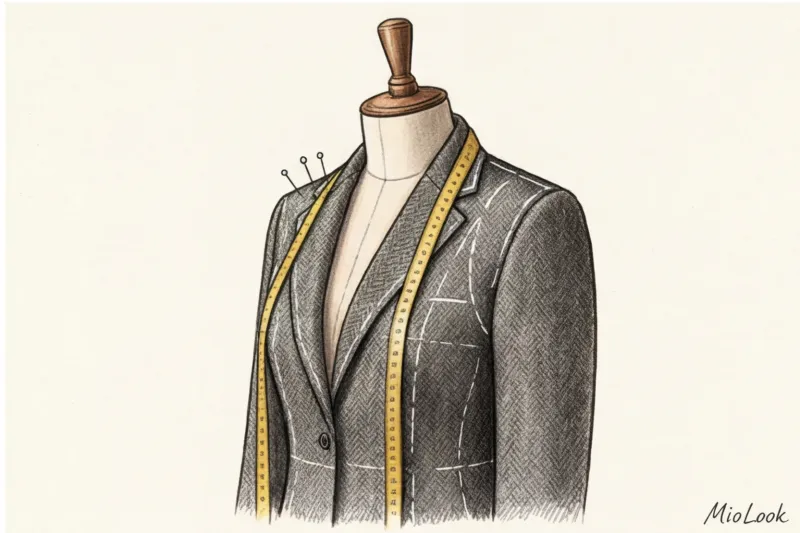
The foundation of this architecture is the shoulder line and armhole. If the shoulder seam hangs down (unless it's intended by the oversized cut), the entire structure slumps. The jacket begins to look like it was taken off someone else's shoulder, and the chest visually drops a few centimeters. A skilled tailor, creating the perfect fit, works with the garment like an engineer: they construct a framework that will hold up even after 10 hours at a desk.
Balance of the garment and the direction of the thread (a textile expert's view)
As a fabric specialist, I often see one fatal mistake in factory cutting. A quality garment is always cut strictly along the warp. But mass-market garments, in an attempt to save every millimeter of fabric during production, often lay out their patterns at a slight angle. The result? Crooked side seams on T-shirts and jeans after the first wash. Remember: if the side seam has shifted forward, it's a problem with the balance of the cut, not the iron. No tailor in the world can fix this.
Your perfect look starts here
Join thousands of users who look flawless every day with MioLook's digital wardrobe feature.
Get access — €0.99 onceAn Insider's Guide: What a Tailor Can Fix and What's a Waste of Money
The most important rule for a stylist: always buy a garment based on the widest or most complex part of your body. If you have broad shoulders but a narrow waist, choose a jacket that fits your shoulders. You can add waist darts for €20, but it's impossible to enlarge your shoulders without completely ruining the design of the garment.
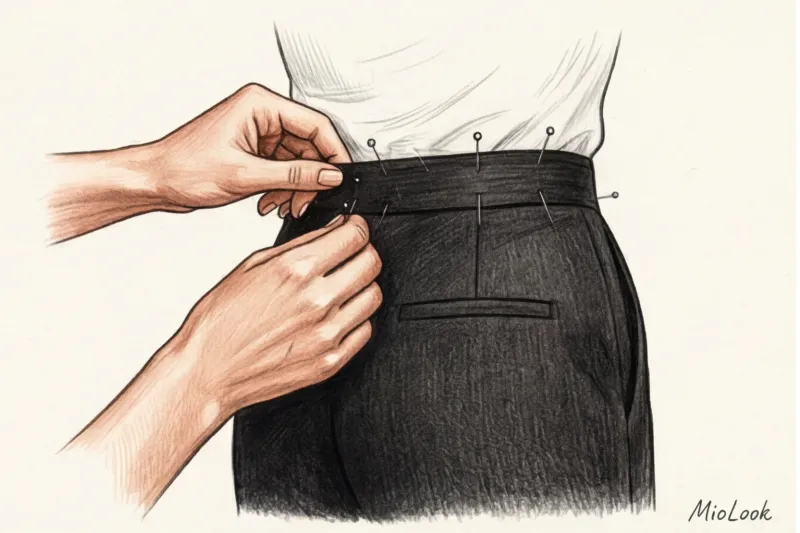
Green Light: Simple and Effective Adjustments
- Shortening the length. Jacket sleeves (if they don't have complex buttonholes), skirt hem, or pant legs. The optimal sleeve length should reveal 1.5 centimeters of the shirt cuff or just reach the wrist bone.
- Sewing at the waist. A real lifesaver for pear-shaped women. Taking away excess fabric in the center waist seam of jeans costs about €15–20, but it will permanently eliminate that treacherous gap in your lower back when you squat.
- Replacement of fittings. It's not exactly a fit, but it's a powerful stylistic upgrade. Cut the cheap plastic buttons off a €40 cardigan and sew on horn or high-quality metal ones—the garment instantly elevates its visual appeal.
Red light: when it's best to leave an item in the store
But there are situations when I directly forbid clients to bring an item to the studio. This doesn't work , If:
- The jacket is too small in the shoulders or the armhole cuts into the armpit. There's simply no extra fabric (seam allowance) to allow for the bulk.
- You are trying to size up an item more than one size.
- The model has a complex cut with numerous functional details (for example, a trench coat with complex yokes and waterproof seams). Alterations will cost more than the item itself.
Fabrics and Fitting: What the Atelier Works Best With
Not every material can handle the needle. As a textile expert, I divide fabrics into "pliable" and "vengeful."
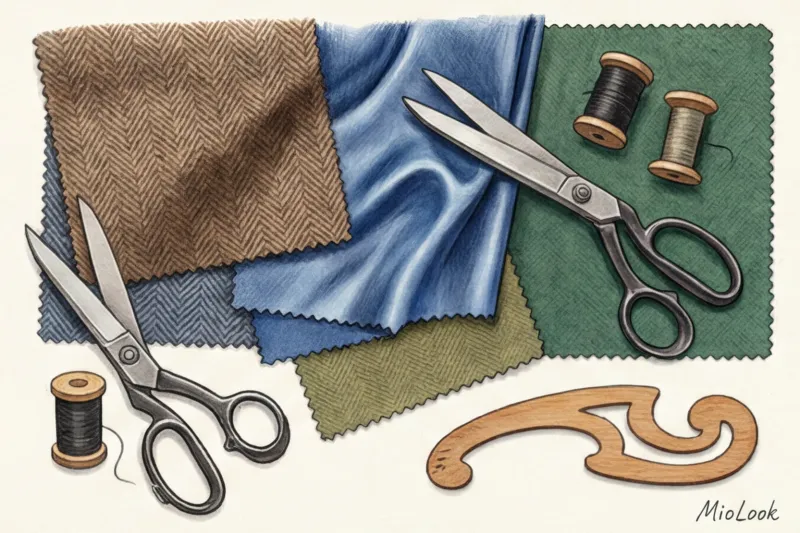
Ideal candidates for a tailor are dense suiting wool (110s to 130s), cotton with a weight of 180 g/m² and above, and linen. These materials can be pressed (reshaped with steam). A tailor can literally sculpt the perfect shape of your chest and shoulder blades from high-quality wool.
"Vengeful" fabrics include thin viscose, faux leather, and cheap polyester. If you rip a seam on a polyurethane skirt, it will be permanently marked with holes from the previous stitching. Bias-cut silk, used to make popular slip dresses, is so capricious that the slightest change in the thread tension in the side seam will cause the hem to ripple. Cheap fabric won't look like Loro Piana, even with the help of a brilliant tailor.
Wardrobe Ecology: How Perfectly Fit Clothes Save the Planet
We rarely talk about planting through the lens of sustainable development, but we shouldn't. According to a large-scale study by the British organization WRAP (Waste and Resources Action Programme) in 2024, extending the life of an item by just nine months reduces its carbon, water, and waste footprint by 20–30%.
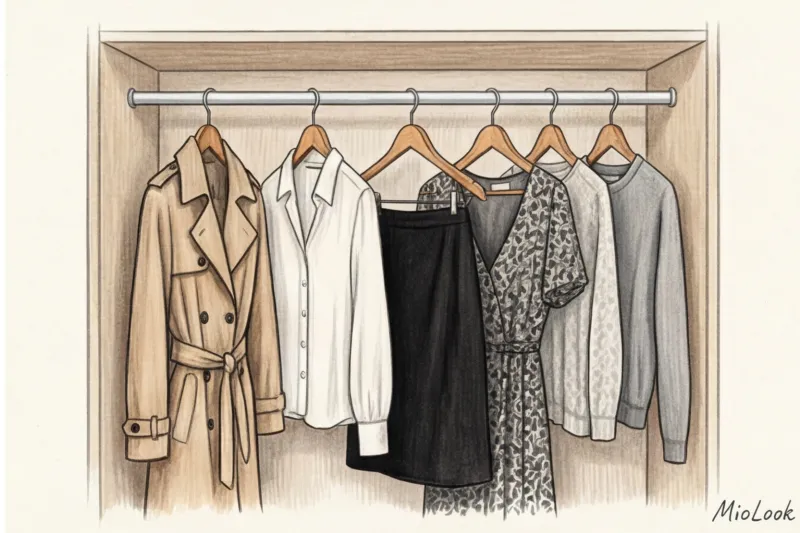
Why do we throw away or donate clothes? More often than not, it's not because they're worn out, but because they're uncomfortable. Pants that need constant tugging or a shirt that's splitting at the chest end up at the bottom of the closet. By investing €20-€40 in a local tailor, you're not only saving a specific item from the landfill but also supporting small businesses in your city. This is the most honest and practical approach to ecology.
Ready to get started?
Try the MioLook plan for free—no commitments required. Digitize your wardrobe and discover new combinations.
Get access — €0.99 oncePre-Style Checklist: A Stylist's Guide
To avoid ending up with a "standing" mannequin-like fit, you need to properly prepare for your visit to the studio. Here are three rules I insist all my clients follow:
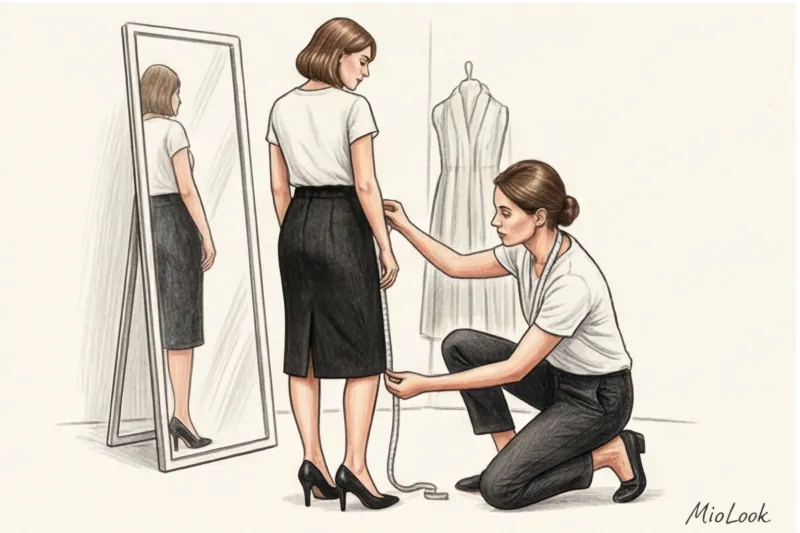
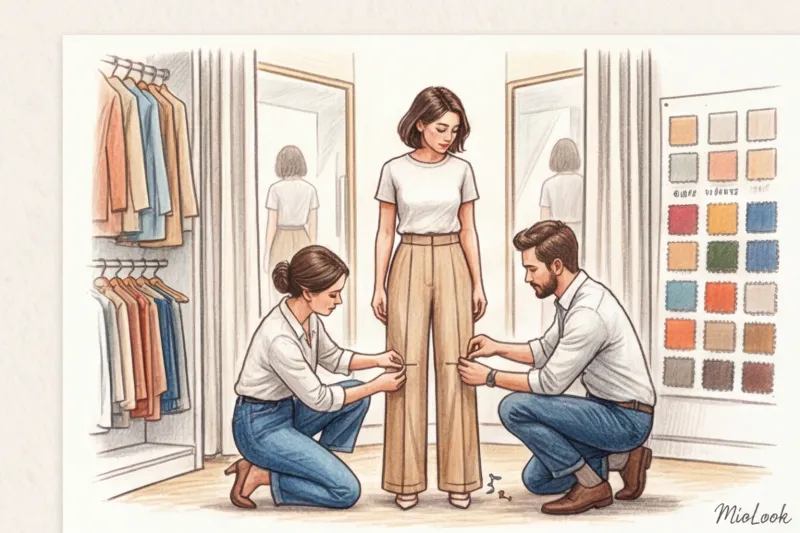
- Always take your own shoes. It's impossible to try on trouser lengths barefoot or in the worn-out shoes from the corner of the fitting room. If you're shortening palazzos for the office, bring the same loafers or heels you'll be wearing them with. One centimeter of error can turn elegant trousers into clown pants.
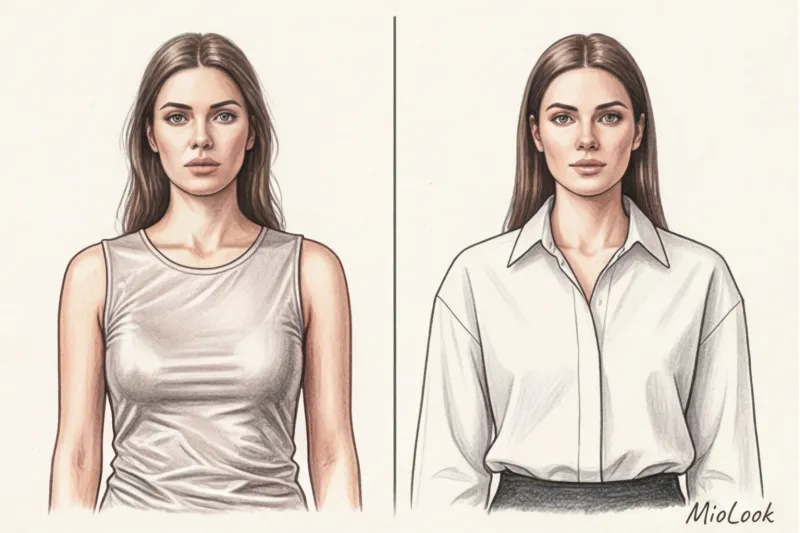
- Wear the right underwear. A push-up bra and a soft bralette create completely different bust heights. If a tailor creates a bust dart for soft bras, and the next day you put on a molded cup, the dart will end up 3 centimeters lower than intended, creating an unsightly bubble.
- Move around during the fitting. While the tailor is pinning your clothes, don't stand at attention with your stomach sucked in. Sit on a chair (the trousers shouldn't cut into your waist), raise your arms (the armhole shouldn't pull the entire jacket down), and hug your shoulders (there should be some room in your back for a loose fit).
Expensive clothing isn't just a six-figure price tag. Expensive clothing is something that respects your body's contours and makes you forget you're wearing it the moment you leave the house. Find your tailor, start with a fitting for one basic item, and you'll physically feel the difference in your posture and confidence.