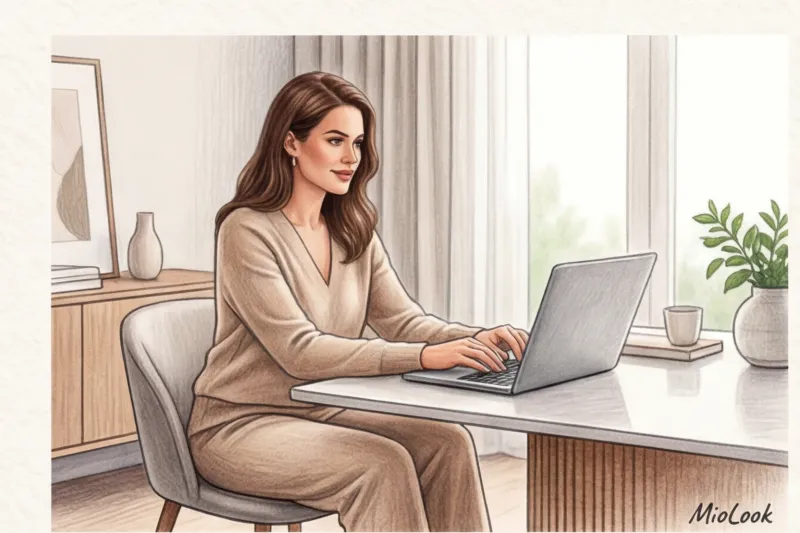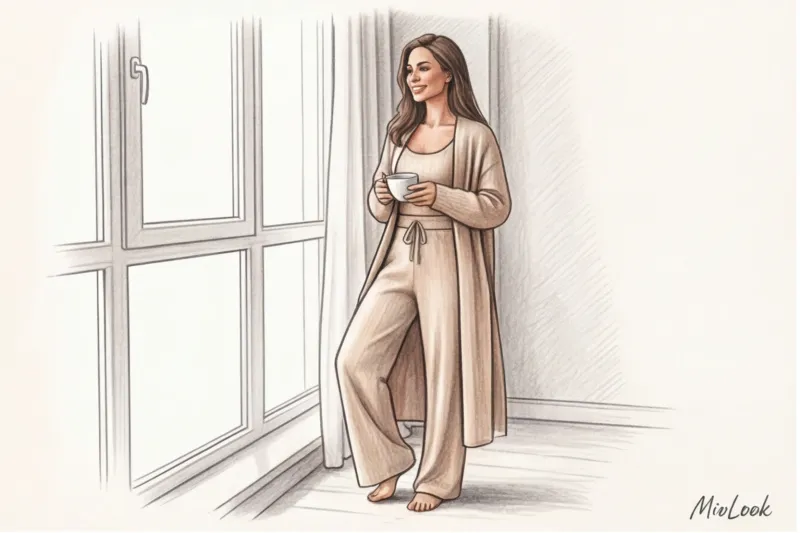
"Katarzyna, I'm working remotely and by Wednesday I'm completely exhausted, even though I haven't even been outside"—I hear this phrase at every third styling consultation. When I ask a client to describe what she's wearing right now, sitting at her laptop, the answer is predictable 90% of the time: "My favorite flannel pajamas."
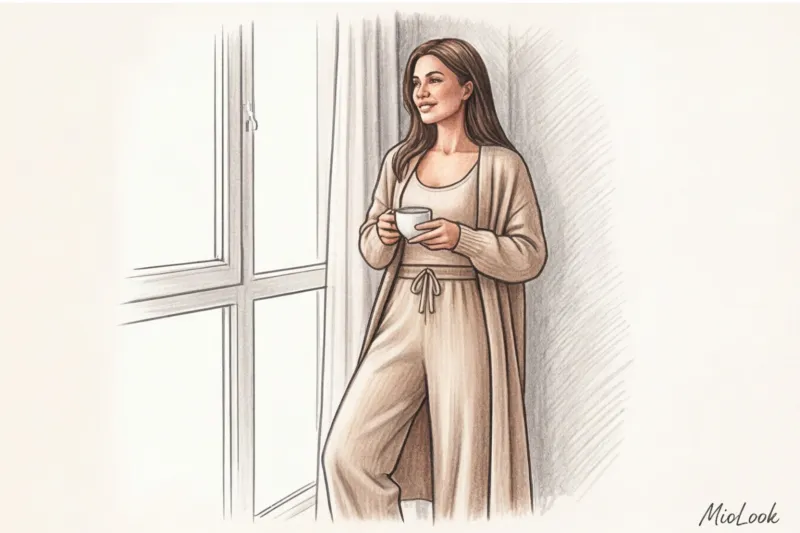
We have already discussed in more detail the systematic approach to household items in our The complete guide to creating a homemade capsule , but today I want to address the most common and destructive mistake. For years, we've been told that home should simply be "comfortable." And this has led to a blurring of the lines between sleep and active life.
As a practicing stylist, I categorically declare: sleep and live in different clothes. The fundamental difference between pajamas and loungewear lies not only in the cut, but also in the way these fabrics program your brain. Let's explore why the lack of a clear boundary between your loungewear and sleepwear is killing your productivity, and how to fix it.
What's the main difference between pajamas and loungewear: functionality versus aesthetics?
Term Loungewear Loungewear has evolved over the past few years from shapeless sweatpants into a distinct and elegant wardrobe segment. However, many still confuse it with sleepwear.
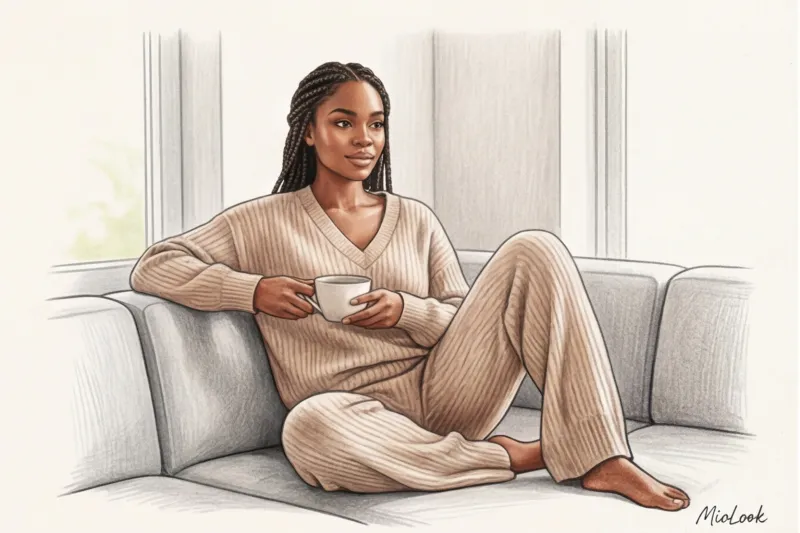
The functional difference between pajamas and loungewear lies in their primary purpose. Pajamas serve solely for thermoregulation and absolute freedom of movement while sleeping. According to sleep physiology research, a person tosses and turns an average of 40-50 times per night. Sleepwear should move with you without twisting or digging into your body. Loungewear is designed for comfortable social and everyday activities. It must hold its shape while sitting at your desk, preparing dinner, or welcoming guests.
In 2012, psychologists Hajo Adam and Adam Galinsky published a groundbreaking study in the Journal of Experimental Social Psychology, coining the term Enclothed Cognition (cognition through clothing). They proved that our brain literally switches cognitive modes depending on what we're wearing. Putting on pajamas sends a signal to the nervous system: "We're relaxing, getting ready for sleep." If you keep them on in the morning, the brain operates in energy-saving mode all day.
Psychological Boundary: Why It's Dangerous to Work in What You Sleep in
My client Anna, a successful IT freelancer, came to me complaining of chronic procrastination. We didn't change her work schedule—we simply implemented one strict rule: take off her pajamas within 15 minutes of waking up and change into a well-packed lounge suit.
"It sounds like magic, but as soon as I put on thick knit pants and a structured cardigan instead of a soft shirt, my back physically straightens. I no longer want to lie on the couch with my laptop," she shared a month later.
The myth that pajamas are the best weekend attire is costing us dearly. The symbolic act of changing clothes works like a toggle switch. Loungewear is the uniform of your private, but active life.
The Courier Test and other rules for choosing loungewear
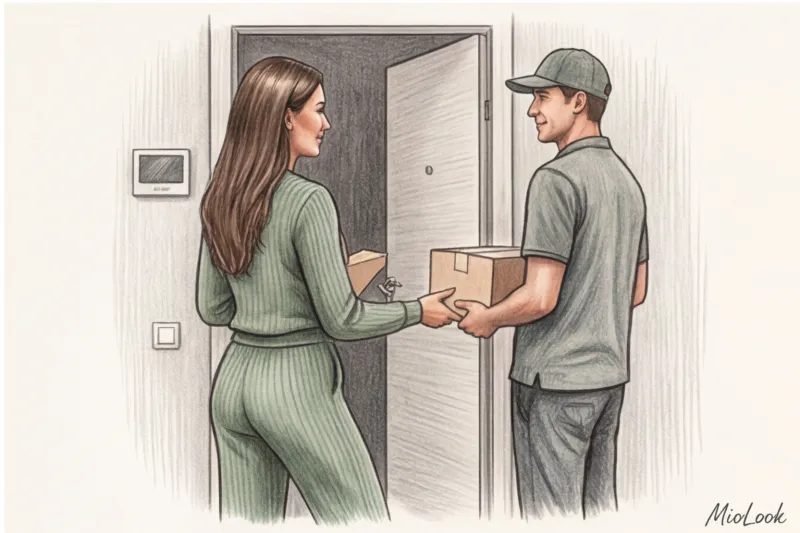
When I'm reviewing my wardrobe, I always use my signature "Courier Test." The rule is: can you, right now, without frantically throwing on a robe or changing clothes, open the door to a surprise delivery person or a neighbor without the slightest feeling of awkwardness?
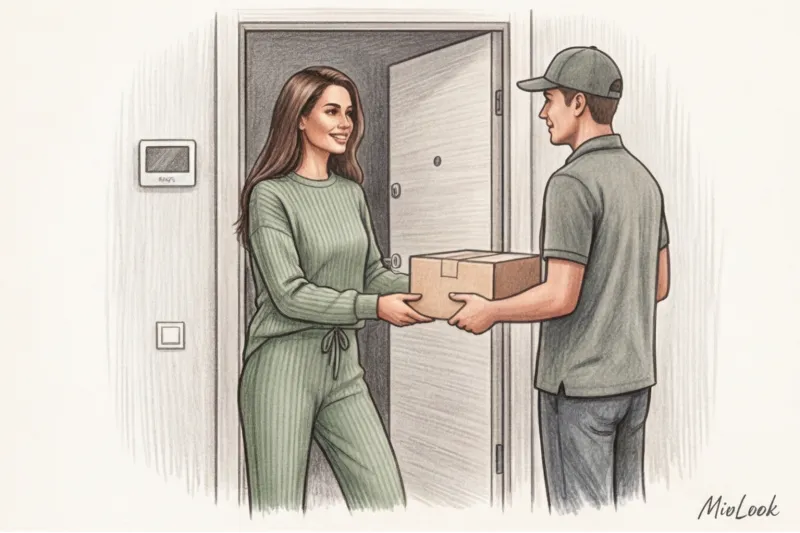
If your instinct is to hide, you're not wearing loungewear. Remember the key features of proper loungewear:
- Presence of pockets. In pajamas, they serve a purely decorative purpose (or are absent so as not to interfere with sleep). In loungewear, they serve a functional purpose—to hold a phone or keys.
- Zoom-ready. The top of your casual look (shirt collar, long sleeve neckline, cardigan texture) should look like you're in a stylish coworking space when viewed on webcam.
- Shape stability. Ditch the stiff buttoned waistbands in favor of wide, soft elastic bands, while still maintaining the clean silhouette of the trousers.
My personal rule that I convey to my clients is that home clothes should be such that you can throw on a trench coat and calmly walk to the nearest coffee shop for croissants.
Organize your closet like a pro
Try MioLook for free: A smart AI stylist will help you sort through your wardrobe and find the perfect combinations for your closet.
Get access — €0.99 onceFabrics and cut: the anatomy of the perfect pajama
While structure is important for loungewear, technical knit density and absorbency are paramount for pajamas. There are many pitfalls here.
Many people sincerely believe that 100% cotton is the best choice for sleeping. This isn't entirely true. Regular cotton absorbs moisture (sweat) well, but takes a long time to dry. If your bedroom is cool at night, you risk freezing in a wet T-shirt. That's why premium sleepwear uses micromodal, tencel, and natural silk. These fibers have a climate-controlling effect and wick moisture away from the body.
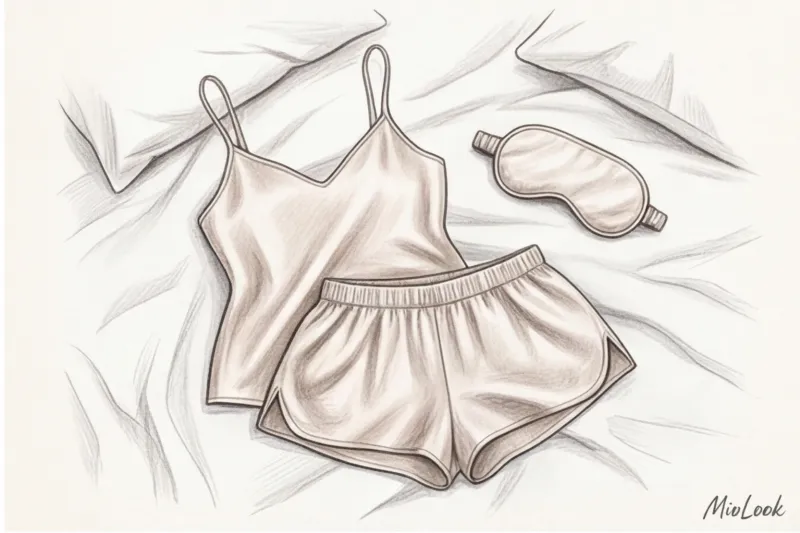
The design of proper pajamas avoids stiff seams, buttons on the back (they'll leave marks on the skin), and tight cuffs. But there's one crucial precaution that's often overlooked: You should absolutely not sleep in fleece pajamas..
By textile industry standards, polyester fleece is an insulator. It retains heat but is completely non-breathable. Sleeping in such pajamas disrupts the body's natural thermoregulation, leading to shallow sleep, nighttime awakenings, and mild dehydration. Fleece is best reserved for a cozy blanket, not for close-fitting clothing.
Home Wardrobe Architecture: Building a Basic Wardrobe
The fabric requirements for loungewear are the exact opposite of those for pajamas. We need durability and stretch resistance.
When I test basic mass-market lines, I always look at the composition of the knit pants. The main problem with H&M and Zara in the budget segment is the 100% loose-spun cotton in their joggers. After just three hours of sitting on the couch, you get the notorious "bumpy knees," which destroy any hint of style.
The secret to the perfect loungewear fabric is a double-thread fleece or a dense ribbed knit with the obligatory addition of 2–5% elastane. This tiny percentage of synthetic fiber acts like a spring, returning the fabric to its original shape. If you're looking for quality at a reasonable price, consider homewear lines from COS, Oysho, or Massimo Dutti—they understand this ratio perfectly.
5-Ingredient Homemade Capsule Formula
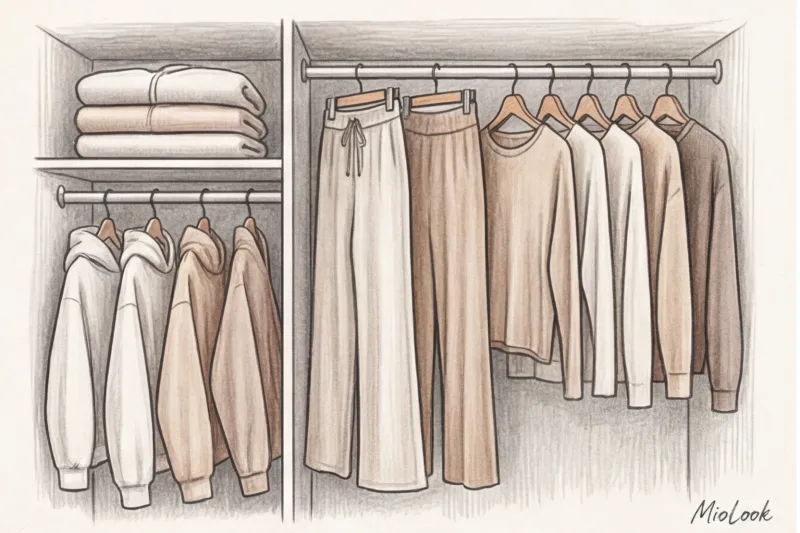
Your wardrobe shouldn't consist of dozens of random T-shirts. You need a compact capsule where everything goes with everything:
- Thick knitted trousers with a loose fit (wide-leg). No tight leggings - they disrupt lymph flow.
- Basic long sleeves. Made from dense (from 180 g/m²), non-transparent cotton in basic shades (ecru, grey melange, deep blue).
- Textured top layer. A long cashmere cardigan, a thick flannel shirt, or a stylish cotton kimono adds a layered feel to the look.
- Shorts or culottes. Made of linen or cotton for the warm season.
- Stylish house shoes. Forget those worn-out, fluffy animal-themed slippers. Anatomically shaped Birkenstocks or flat leather mules not only look expensive but also prevent flat feet when walking on hard laminate floors.
Frankenstein's Wardrobe: Why You Shouldn't Wear Old Clothes at Home
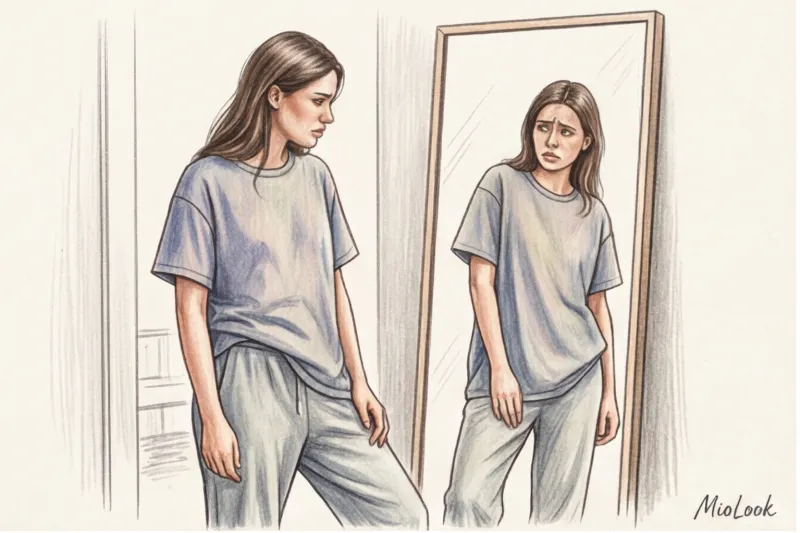
"No one sees at home, so my husband's old T-shirts or faded sweatpants will do." This is the most toxic stylistic belief I've been fighting for years. Yes, no one sees. Except you.
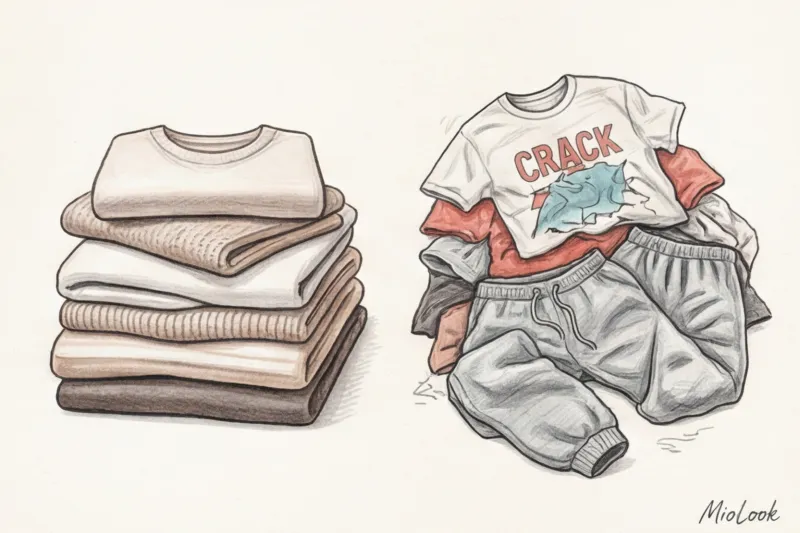
In psychology, there's a concept called "things in exile." When you consign a damaged item with an indelible stain, pilling, or a stretched neckline to a shelf at home to live out its days, you subconsciously agree that you don't deserve to look your best in your safest place.
A typical scene during my wardrobe audits: we pull two huge trash bags of "lounge" items from the shelves, long since out of style. As soon as the client puts on a new, specially purchased lounge suit in a refined shade, her body language changes. Her shoulders straighten, her gait becomes more fluid.
The recycling rule is simple: an item that has lost its outdoor appearance should be sent to a textile recycling center, not to the sofa.
Your perfect home look starts here
Join thousands of users who look flawless every day with MioLook, creating a smart wardrobe without breaking the bank.
Get access — €0.99 onceThe Mathematics of Comfort: Calculating Cost-per-Wear for the Home
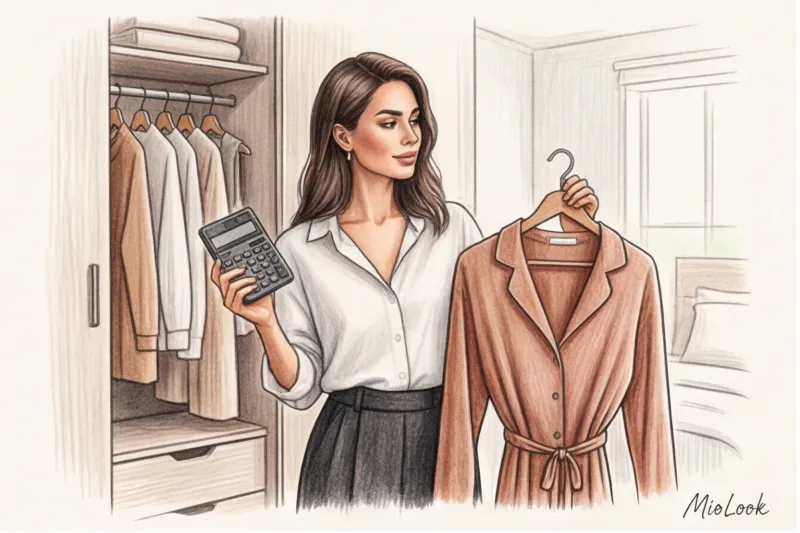
As a smart shopping expert, I love numbers. If you think spending €100 on a quality lounge suit is a waste, let's do the math. Cost-per-wear (cost per outing).
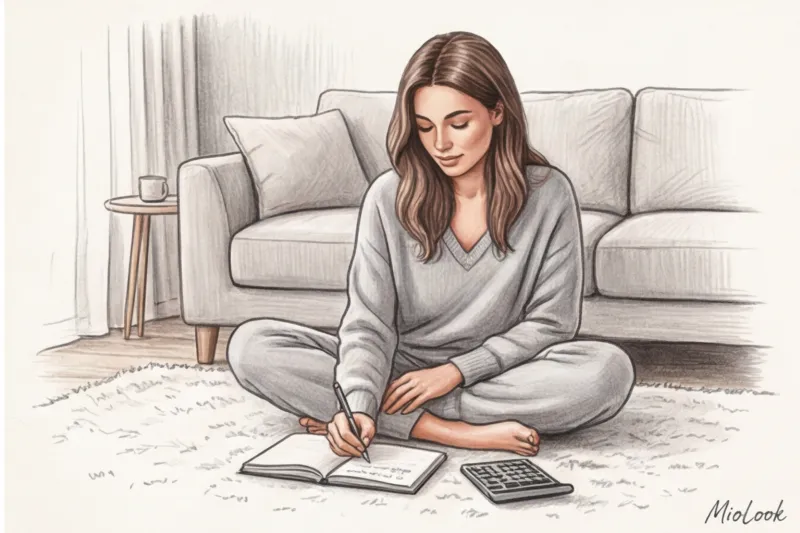
Let's say you bought a gorgeous sequin dress for New Year's Eve for €200. You wore it once. Your CPW is €200 per outing.
Now let's take a great lounge outfit of palazzo pants and a cardigan for €100. If you work from home or spend evenings there, you'll wear this suit at least three times a week. Over the course of a year, that's about 150 wears. The CPW of your lounge suit is only €0.66 per outing!
Investing in a quality home wardrobe is the smartest purchase of the year. You pay pennies for hours of daily physical and aesthetic comfort.
Checklist: How to Audit Your Home Shelf Today
If after reading this you realize your home style needs a refresh, don't rush to the store just yet. Start with an honest audit.
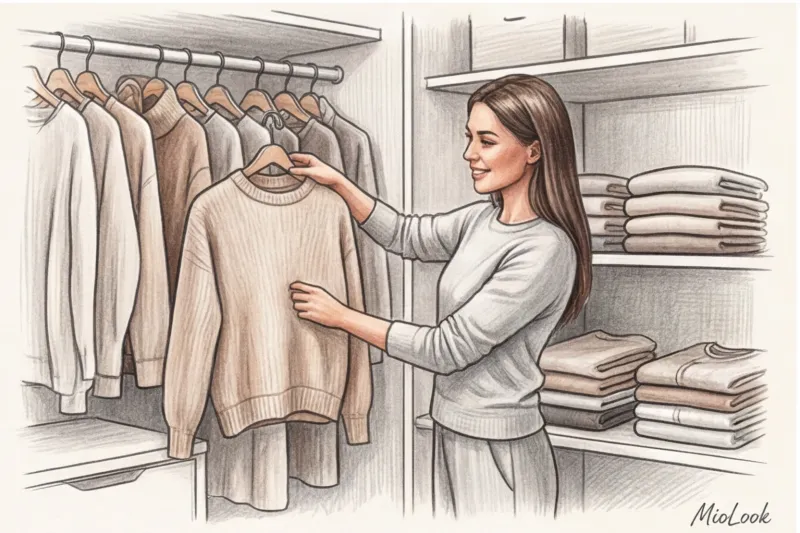
Here are 4 steps that will take you no more than 20 minutes:
- Divide and conquer. Take out absolutely everything you wear at home. Sort them into two piles: "for sleeping in bed only" (pajamas) and "for being awake" (loungewear). Anything in the middle is the risk zone.
- Merciless cleaning. Recycle (not take to the dacha!) anything with stains, small holes, excessive pilling, or misshapen knees or necklines. This is trash, not clothing.
- Crash test. Conduct the "Courier Test" on the remaining items. Imagine yourself in each T-shirt, opening the door to a cute delivery guy. Embarrassed? Throw it away.
- Purchasing strategy. Look at what's left (usually 2-3 items). Write down what's missing to complete the outfit. Most often, what's missing is a thick, textured top and quality shoes.
Style doesn't end when you close the front door. It only begins there. Stop treating yourself as if you're missing something, invest in the right loungewear, and you'll be surprised how much your self-image will change even on the most ordinary Monday at home.