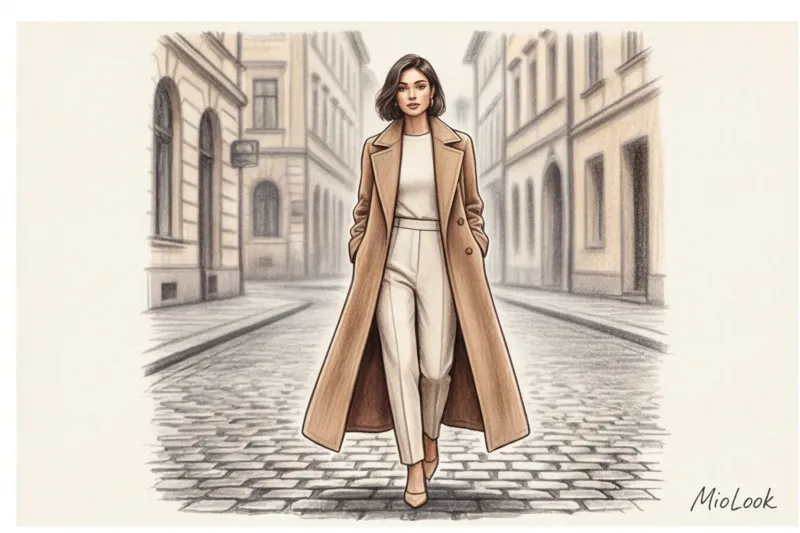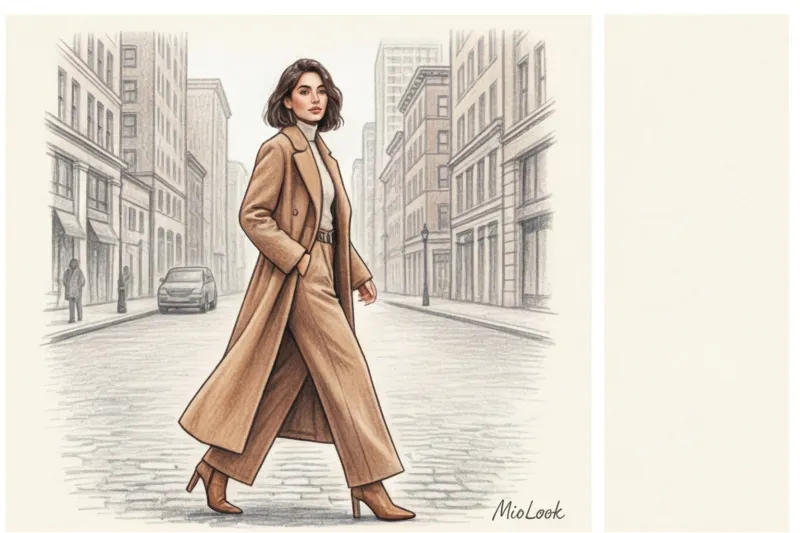
Last week, Anna came to me for a wardrobe review. She's 154 cm tall, her eyes slightly panicked, and her closet was full of five short, fitted jackets and not a single proper coat. "Katarzyna, the magazines say that with my height, you can't wear long clothes, I'll look like a gnome!" she sighed. Spoiler alert: three hours later, we bought her a luxurious camel-colored wool maxi coat from Massimo Dutti, and she looked her full 165 cm tall.
In 12 years of working as a personal stylist in Europe, I have realized one thing: the right outerwear for short girls It's not a search for the mythical "perfect short cut." It's pure math, knowledge of mass-market patterns, and a good tailor on speed dial. If you're tired of looking like a teenager in your mom's clothes, let's forget the outdated rules of fashion magazines.
By the way, knowing how to choose the length is only part of the overall strategy. We discussed this in more detail in our The Complete Guide to Basic Outerwear: Putting Together a Smart Capsule.
The Biggest Myth: Why Outerwear for Short Women Can (and Should) Be Long
The most harmful stereotype still circulating online is that "petite girls shouldn't wear maxi dresses; they make them look shorter." In practice, it's exactly the opposite.
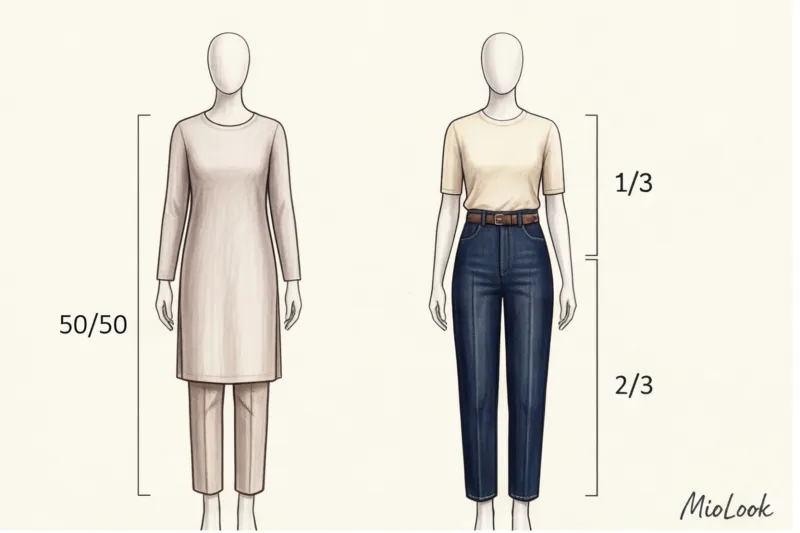
Think about it: a knee-length or mid-thigh coat literally cuts your figure in half. It creates a harsh horizontal line in the worst possible place. The viewer's eye is drawn to this line, and your silhouette is fragmented.
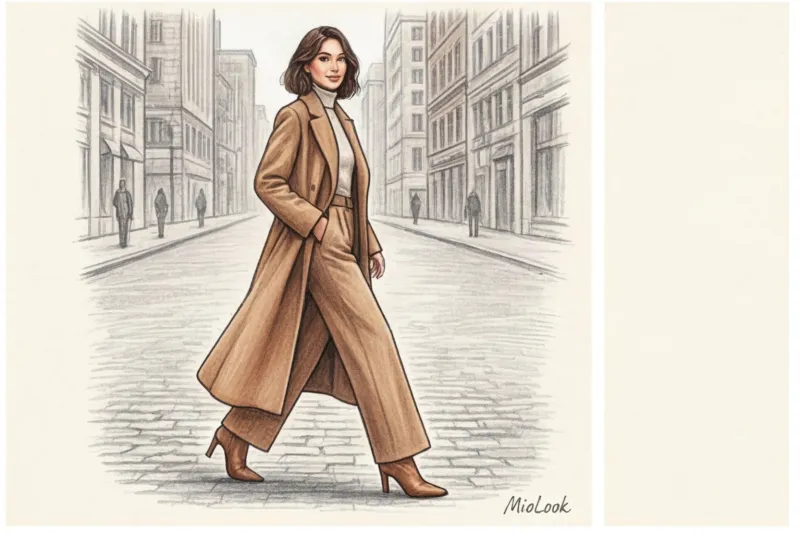
A well-cut maxi coat (cut below mid-calf, leaving only the ankles exposed) creates the optical illusion of a continuous vertical line. You appear taller and slimmer. The secret lies in the "golden ratio" rule of clothing design: the ideal proportion for a petite figure is 1/3 (top) to 2/3 (bottom). A long, unbuttoned coat paired with high-waisted trousers follows exactly this formula.
"If you're intimidated by maxi lengths, start with monochrome looks. When the coat color matches the shoe color, the vertical line becomes absolute. You'll be surprised how much this changes the perception of height."
Your perfect look starts here
Join thousands of users who look flawless every day with MioLook. Its smart algorithm will help you calculate your ideal proportions.
Get access — €0.99 onceThe Anatomy of a Perfect Fit: What to Look for if You're Under 160cm
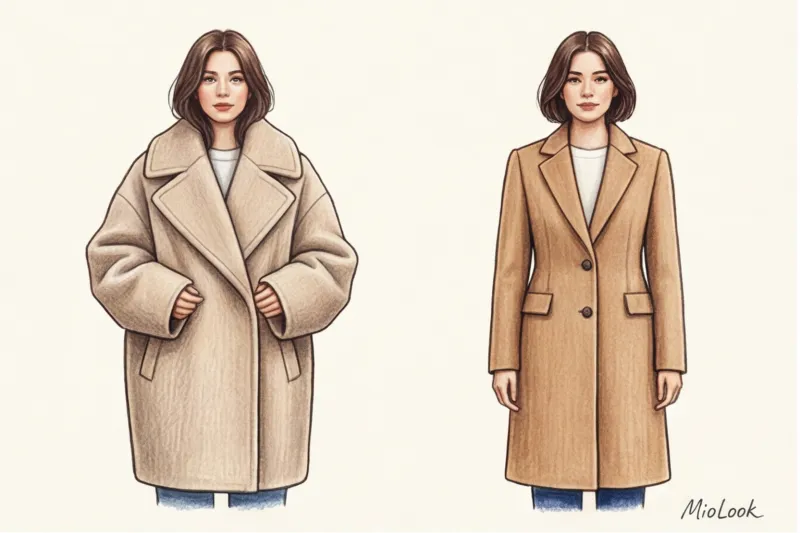
Length is the foundation, but the devil is in the details. For heights under 160 cm, the critical factor is visual weight of fabric Old "wardrobe must-have" lists often recommend thick, stiff gabardine. Forget it. Stiff, heavy fabrics make a petite woman look like a monument. Choose flexible materials: wool with added cashmere, soft drape, or high-quality viscose blends. The fabric should flow along the body, not stand out like a box.
Location of details: pockets, buttons and lapels
You've found a coat in a beautiful color. But for some reason it makes you look squat. Look at the pockets.
In standard patterns (designed for a height of 168-170 cm), patch pockets are positioned at hip level for tall women. On you, they'll slide almost to your knees. Low-positioned pockets instantly lower the figure's center of gravity. Your rule of thumb: only diagonal slit pockets or patch pockets altered higher (we'll discuss this in the tailoring section).
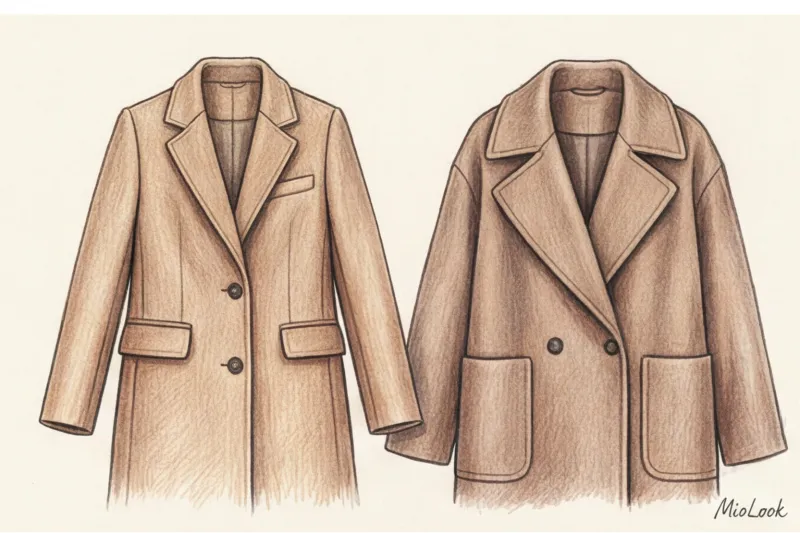
Lapel width is another indicator of proportionality. For petite women, the optimal lapel width is no more than 6-8 cm. The oversized English collars favored by the COS brand will simply overwhelm your figure. The same goes for buttons: avoid oversized hardware and wide belts with massive buckles.
Shoulder Line and Volume: How to Avoid Drowning in Oversized Clothes
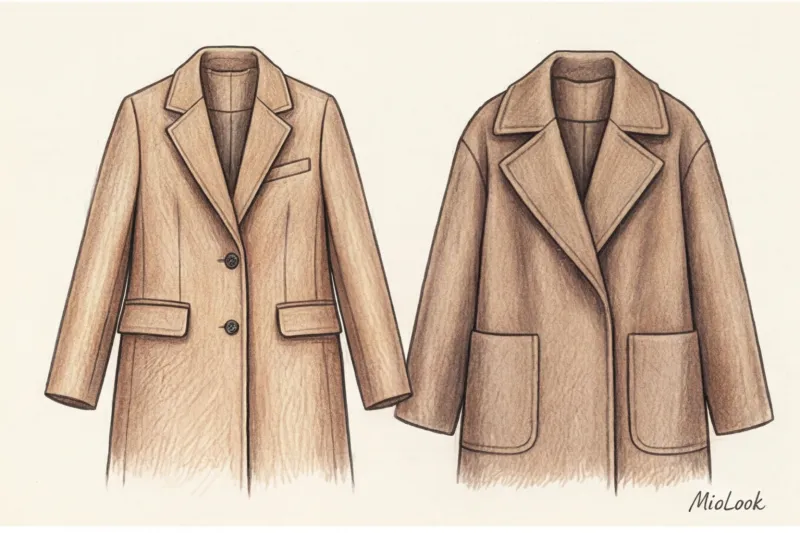
I love oversized clothes, but the line between "stylish volume" and "looking like someone else's clothes" is very fine. If you have narrow, sloping shoulders, avoid drop shoulders. On petite women, they often look sloppy, creating unnecessary folds in the armpit area.
A crisp set-in sleeve or a neat raglan sleeve is your best friend. A set-in sleeve structures the silhouette and defines clear boundaries. If you're unsure how a particular fit will fit into your wardrobe, upload a photo of the item to MioLook — the app will help you evaluate compatibility with your basic items before purchasing.
Jackets and down jackets: how to choose a warm base layer and avoid becoming a "ball"
Winter is the most challenging time for my clients. They often sacrifice proportions for warmth, buying shapeless puffer jackets. But warmth and a slim figure can be combined.
First, texture. Shiny, glossy fabrics (like those found in classic Moncler) reflect light and visually add 1-2 sizes. For petite women, always choose matte finishes.
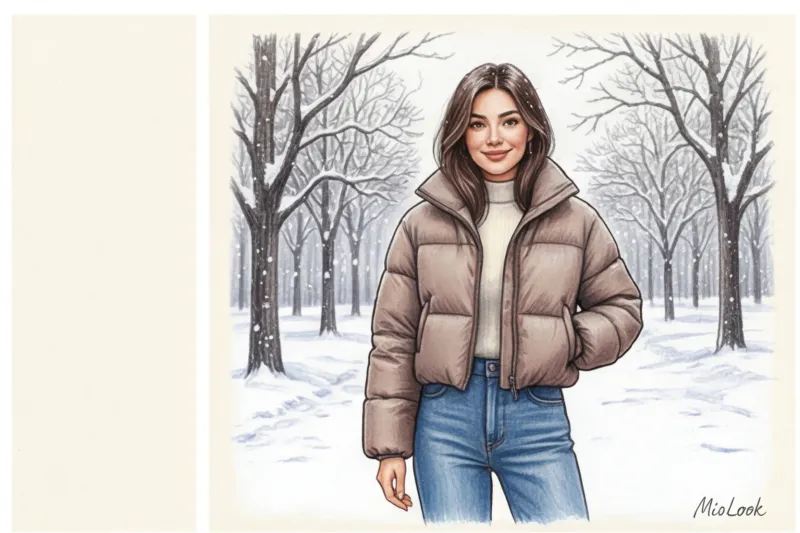
Secondly, the length of short jackets. The rule of extremes applies here: the jacket should end exactly at your natural waist (to emphasize the length of your legs) or just below your hipbone. The most fatal mistake is a jacket with the hem running along the widest part of your hips. This visually widens the bottom and shortens the legs.
Pay attention to the stitching. Wide horizontal stitching (more than 10-12 cm between lines) will turn you into a Michelin caterpillar. Look for down jackets with a fine stitching or even smooth on the outside (when the down is hidden in the inner chambers). And yes, it would go perfectly with such a simple jacket. perfume for a sporty style , completing the dynamic image.
Access to MioLook for €0.99 — one-time payment
Start creating your perfect looks with the help of artificial intelligence. Upload your items and receive ready-made capsule collections for every day.
Get access — €0.99 onceShopping Secrets: Where to Find the Right Size (and a Kids' Hack)
Let's reveal a terrible secret of the European mass market. According to ISO standards, basic patterns for women's clothing (that same size M) are based on a height of 168-170 cm. When a brand like Zara or H&M makes a size XS, it's making it smaller. volumes (chest, waist, hips), but it practically does not change height The darts on the chest, the waistline, the depth of the armholes - all this remains in the places designed for a tall girl.
That's why the Petite lines (available at ASOS, Mango, and H&M) are a lifesaver. Their patterns are designed specifically for a height of 152-160 cm.
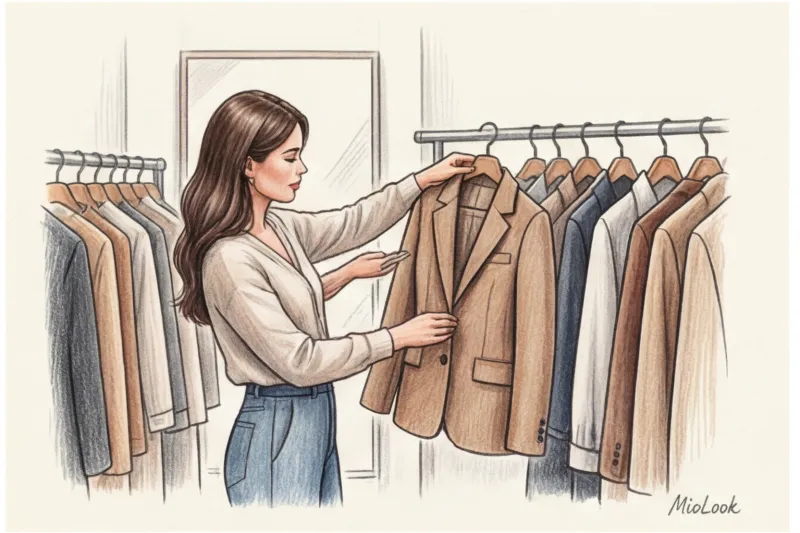
And now for my favorite insider lifehack for a casual wardrobe. Check out the children's departments! Zara Kids and Massimo Dutti (collections for boys and girls aged 13-14, height 164 cm) are a goldmine for petite women.
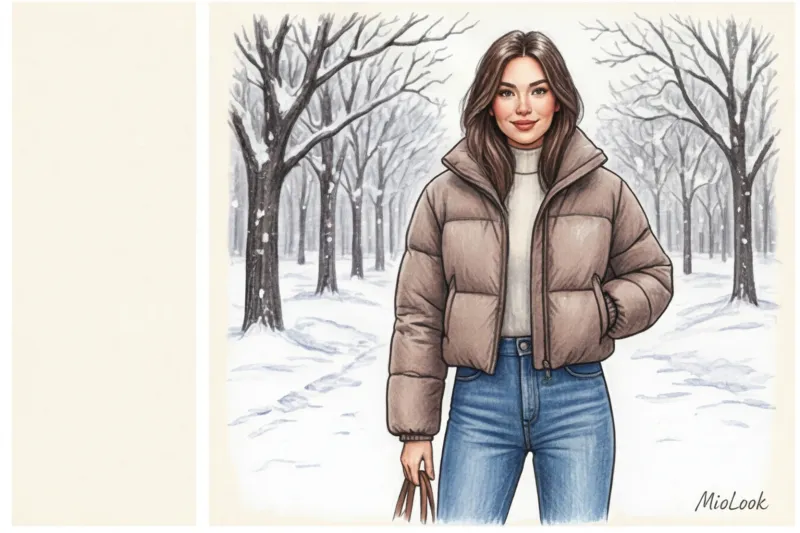
What you can safely buy there:
- Aviator jackets made from eco-sheepskin (they are often better quality there than in the adult department).
- Basic cotton trench coats with a straight cut.
- Denim jackets and bombers.
What to avoid (fair limitation): This life hack WON'T work if you have a bust size larger than a B cup or broad shoulders—the armholes will be too small. Also, always check the hardware: sometimes brands use cheap plastic zippers or childish buttons on children's clothes. In this case, it's best to leave the item in the store.
Budgeting for Tailoring: Why Tailoring Is an Investment, Not an Expense
I never let a petite client leave my shopping without understanding one truth: perfect outerwear doesn't exist in stores. Period. If you're 155 cm tall, you should budget 15-20% of the coat's cost for tailoring services.
A common sight: a girl buys a €200 coat, puts it on, and the sleeves cover her knuckles. She looks like she's wearing her older sister's leftovers. Shortening the sleeves and transferring the lining costs around €30-50 in Europe. Many people regret spending that money.
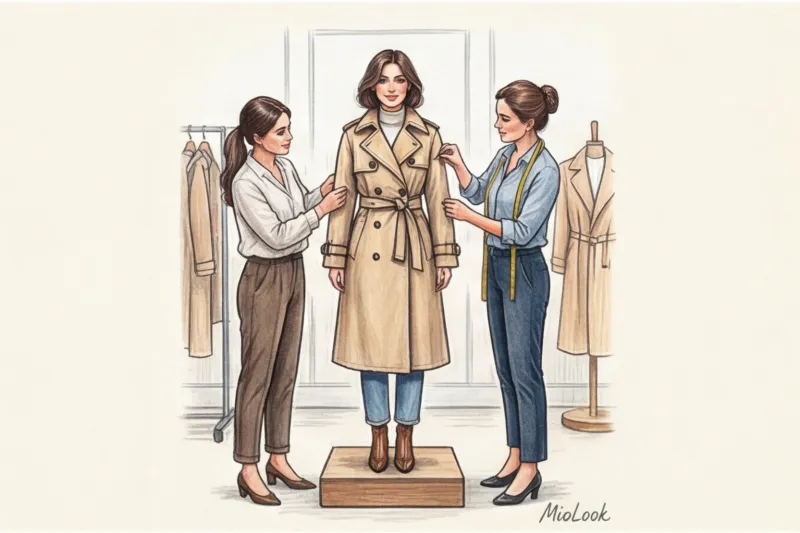
Let's calculate the cost per wear (CPR). A €200 coat that fits poorly will be worn 10 times a season and you'll hate it (CPR = €20). The same coat, costing €200 plus €50 at the tailor, will fit perfectly. You'll feel like a queen and wear it 100 times over two years (CPR = €2.50). The benefit is obvious.
What can be easily altered in a studio:
- Shorten the sleeves (even with a slit, a competent master will transfer it).
- Shorten the hem (unless it's a down jacket with a complex bottom drawstring).
- Sew the buttons a little higher or tighter to change the fit.
What is almost impossible to fix (or very expensive):
- Change the shoulder width (requires a complete re-cut of the armhole).
- Transfer the slit pockets.
- Remove excess volume in the chest on a complex cut.
By the way, when a coat fits perfectly, it's much easier to choose accessories to go with it. For example, accessories for office style will play completely differently against the backdrop of verified proportions.
Checklist: 5 steps before buying outerwear in a store
To help you navigate the fitting room, I've put together a practical checklist for you. Save it on your phone and refer to it before you go to the checkout.
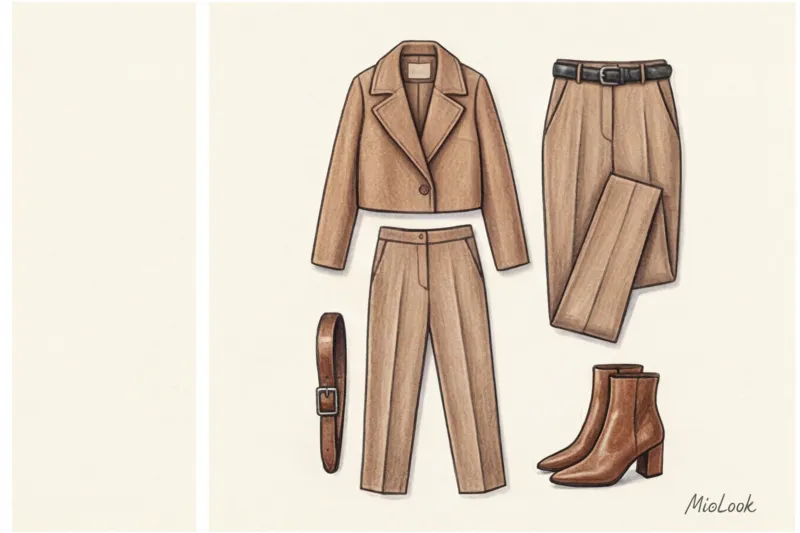
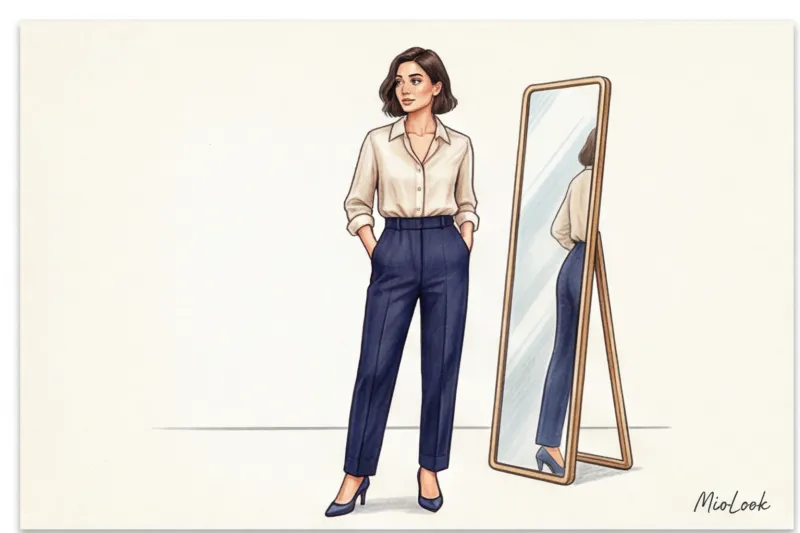
- Sleeve length assessment. Lower your arms. The ideal coat sleeve should end at the base of your thumb. If it's longer, take it to a tailor. If it's shorter, leave it at the store.
- Raised hands test. Raise your arms forward as if you were holding the steering wheel of a car. If the coat is stretched so tight at the back that the seams are bursting and the sleeve is pulled up to the elbow, the armhole is not right for you.
- Checking the waist line. If the coat has a belt, check the location of the belt loops. They should be aligned with your natural waist. If the belt hangs down at your hips, it's a tall coat.
- Analysis of fittings for proportionality. Ask yourself: are the lapels wider than 8 cm? Are the buttons the size of saucers? If so, this thing will "eat you."
- Final efficiency calculation. What will you wear this with from your list? Add your purchase to MioLook virtual wardrobe And check if at least 5 different sets can be assembled. Are you willing to spend another €40 on customization?
Being petite isn't a flaw to be hidden, but a characteristic to be skillfully embraced. Stop fearing maxi lengths, find a good tailor, and remember: clothes should fit you, not you, to mass-market standards. A well-chosen coat doesn't just keep you warm—it changes your posture and the way you present yourself to the world.