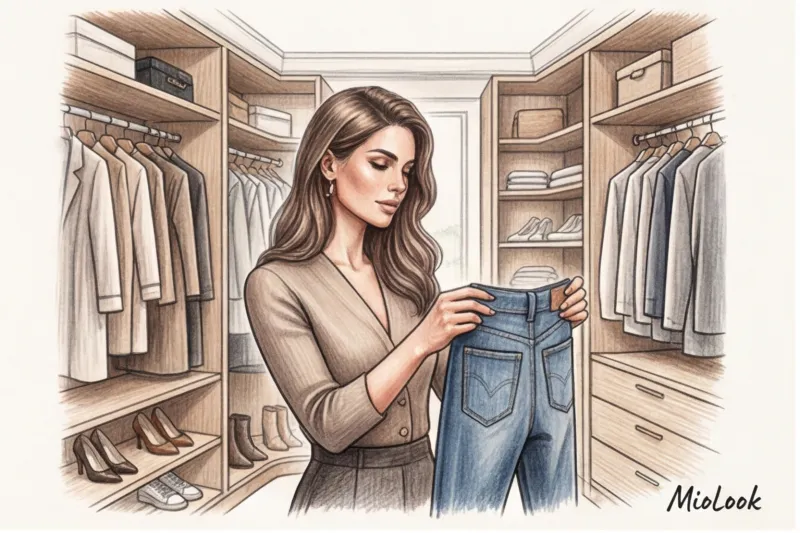
Anna, the CFO of a major IT company, came to my consultation wearing a luxurious Loro Piana cashmere jacket, carrying a Hermès bag... and jeans that instantly devalued the entire ensemble. They were skinny, low-waisted trousers with a pronounced faux-wash effect and an abundance of elastane. Her entire "million-dollar look" was ruined by the ill-chosen denim.
Having worked with luxury wardrobes for over twelve years, I constantly see the same pattern: women are willing to invest hundreds of thousands in bags and shoes, but they buy jeans out of habit, without thinking about their design. After all, it's the wrong hem that can ruin the proportions of even the most flawless figure. We discussed in more detail how one detail can ruin the status of an entire wardrobe in our a complete guide to anti-trends in clothing.
Today we'll explore which jeans are completely out of fashion, why thin fabric with elastane visually cheapens an outfit, and how to choose premium Japanese or Italian denim that will last for decades.
Which jeans are out of fashion: why silhouette design is more important than branding
Denim is the foundation of a modern wardrobe. If the foundation is shaky, expensive trimmings won't save the building. That's why a luxury brand logo on the back pocket (be it Celine or Gucci) won't revive an outdated cut.
According to the analytical agency WGSN (2024-2025 Macrotrends Report), the fashion industry has finally transitioned from microtrends, which last 3-6 months, to macrotrends with a cycle of 5-7 years. The global trend is now focused on "relaxed tailoring." Denim is no longer perceived as strictly work or evening wear—it has integrated into the premium segment and demands a tailored cut reminiscent of classic trousers.
When I evaluate the current silhouette during a client's first fitting, I don't look at the tag. I look at how the fabric interacts with gravity. The right jeans should "pull" the figure together, create clear lines, and not cling to every anatomical detail.
The Main Denim Anti-Trends: 5 Styles That Will Make Your Look Easier
Have you ever noticed how some items visually "forgive" their owner? More often than not, it's not the price, but the texture and details that reveal the manufacturer's savings on manufacturing processes.
Jeggings and hyper-stretch denim
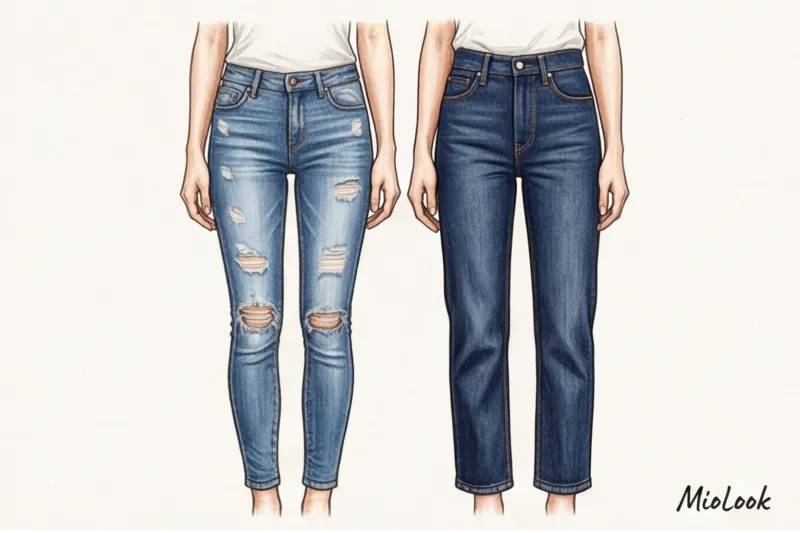
My personal stylistic nightmare is jeggings. These thin pants contain 3% to 5% elastane. After wearing them for a year, I compared the durability of these jeans with classic 100% cotton. The result is predictable: hyper-stretchy denim loses its shape after just two months, stretches out at the knees, and sags in the back.
Jeans should have structure. They should act as a supportive corset for your legs. Jeggings simply cling to the figure, mercilessly highlighting even the slightest imperfections and distorting natural proportions.
Artificial abrasions and active "whiskers"
The sharp, contrasting highlights on the thighs and the horizontal "whiskers" in the groin area are the result of cheap enzyme prewash. Mass-market factories use harsh chemicals to simulate the natural aging process of fabric in 15 minutes.
What does this mean in practice? Contrasting light spots on the thighs act like a bad highlighter—they visually widen your legs by 1-2 sizes. Expensive denim ages naturally, rubbing against your figure over the years, creating soft, subtle color gradients.
Intricate decoration, rhinestones and active embroidery
Women of status avoid unnecessary fuss in their clothing. An abundance of rhinestones, intricate embroidery, pearls, or massive metal logos on denim makes the look childish. Furthermore, accent embellishments dramatically reduce the versatility of a garment. You can wear these jeans with a basic white T-shirt at most, while clean, smooth denim pairs with anything from a silk blouse to a tweed jacket.
Your perfect look starts here
Join thousands of users who look flawless every day with MioLook. Our smart AI stylist will help you find the perfect denim pairing for your wardrobe.
Get access — €0.99 onceThe Anatomy of High-End Denim: How to Distinguish a High-End Piece from a Mass-Market Seller
To never again wonder which jeans are out of style, you need to understand the anatomy of quality denim. There are four markers of premium denim.
- Fabric density: The gold standard is 12 to 14 ounces (oz) per square yard. Anything thinner than 10 oz will inevitably lose its shape. A dense fabric holds a crease when ironed and creates a beautiful, heavy drape at the bottom.
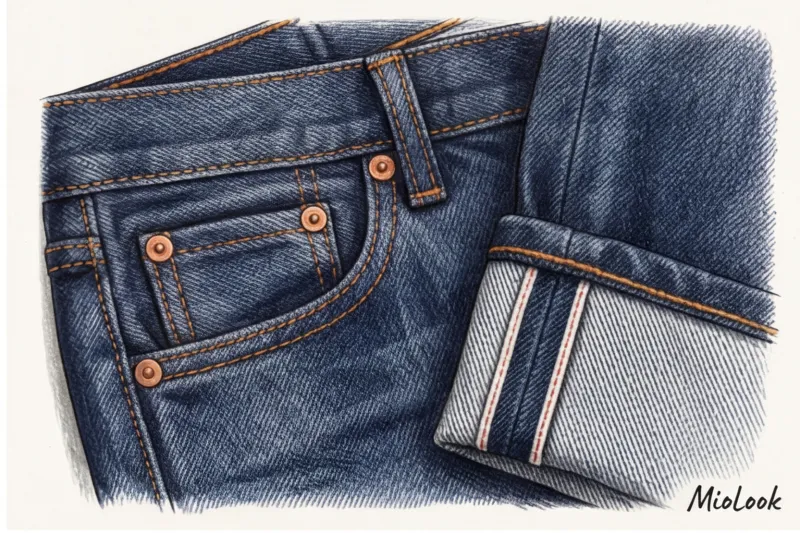
- Selvedge denim: True connoisseurs look for the distinctive selvedge (often with woven red thread) on the cuffs of jeans. Selvedge is woven on vintage shuttle looms, most often at iconic Japanese mills (such as Kurabo) or Italian manufacturers (Candiani). This fabric does not unravel and lasts 3-4 times longer than regular fabric.
- Fittings: High-end brands use heavy copper or brass rivets and top-of-the-line YKK zippers. If the button jingles like a thin tin can, you're looking at a one-season item.
- Color: Ideal shades of basic denim are deep, raw indigo, pure jet black, or crisp white without the slightest hint of yellow.
The Skinny Myth: Are Skinny Jeans Really an Anti-Trend?
Glossy magazines have been burying skinny jeans for several years now. As a practicing stylist, I find this approach too blunt. Skinny jeans haven't gone out of fashion completely—it's the specific way to wear them that's outdated.
"There are no absolute taboos in fashion, only outdated proportions. The difference between bad taste and style is often measured in millimeters of volume and fabric density," says Hedi Slimane.
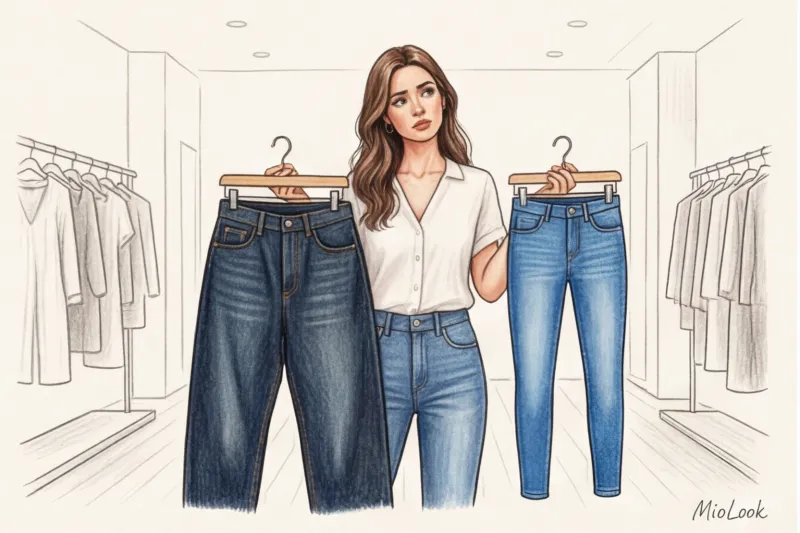
It's important to draw a clear line here. Low-rise jeggings are outdated. But structured, classic slim-straight jeans made of heavy cotton remain a timeless classic. Think of the Saint Laurent aesthetic of the Hedi Slimane era—this rock-n-roll, daring silhouette is still relevant today.
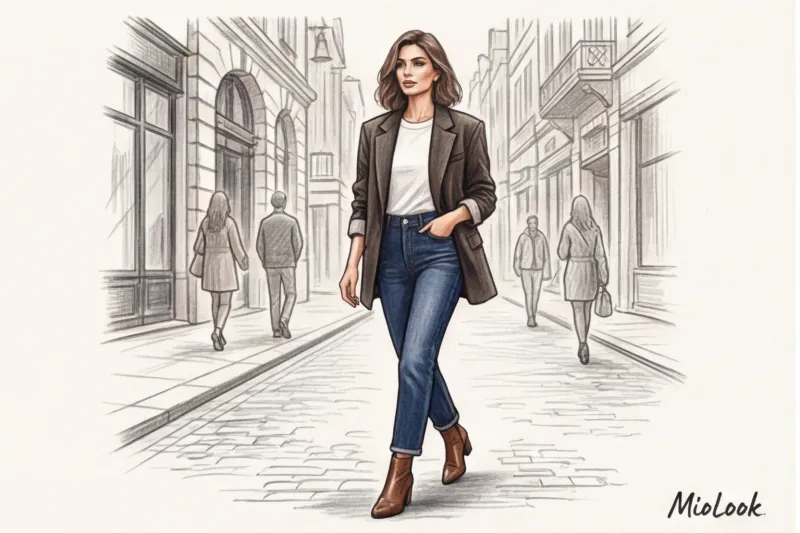
The secret lies in the principle of volume balance. If you're wearing a slim bottom, it requires an architectural, voluminous top: a men's jacket with a sharp shoulder line, a voluminous chunky knit sweater, or a loose trench coat.
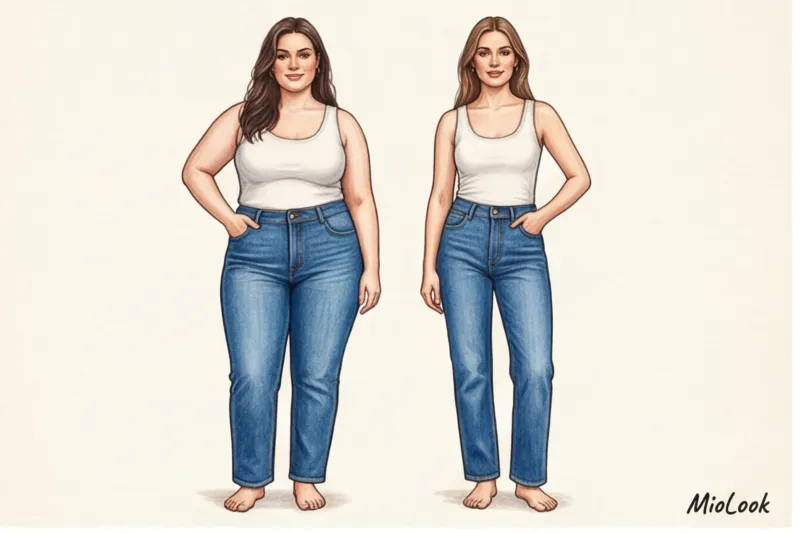
But I have to be honest with you: this rule doesn't work for everyone. If you have a pronounced pear-shaped figure with a heavy breeches area, tight, heavy denim will only highlight the disproportion. In this case, even the most ingenious jacket won't save the situation, and it's best to opt for straight-leg styles.
How to replace outdated styles: investing in a basic wardrobe
With anti-trends out of the way, let's put together a shortlist of silhouettes guaranteed to be worth the investment.
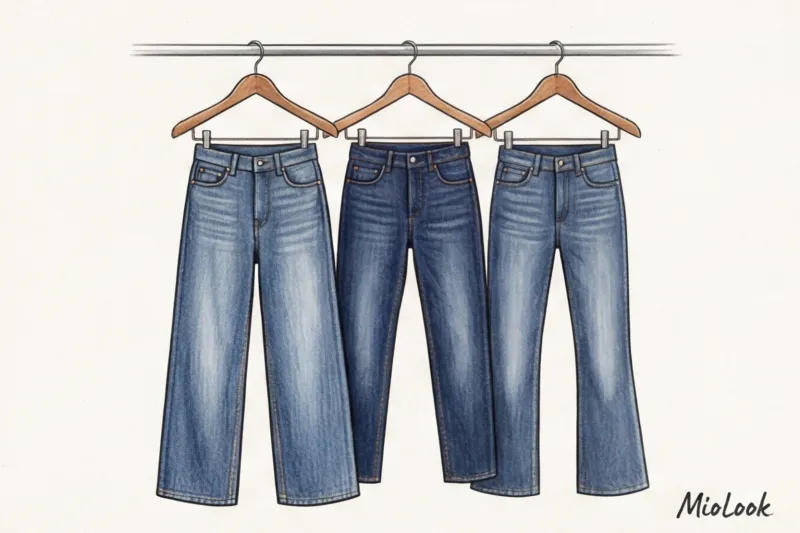
- Straight leg jeans, full length. An absolute classic. They flatter 90% of women, visually elongate them, and aren't tied to microtrends. Important: the length should reach mid-heel or drape slightly over flat shoes.
- Wide leg jeans with a high waist. The perfect tool for creating endless legs. Paired with a fitted bodysuit or a tucked-in turtleneck, they create an hourglass silhouette.
- Barrel / Horseshoe jeans. A sophisticated yet highly prestigious trend, pioneered by brands like Alaïa and Toteme, the rounded, tapered legs look like modern art. They call for a minimalist top (a white tank top or a tailored jumper).
When making a choice, always consider Cost Per Wear (cost per wear). $300 Japanese raw denim jeans that you'll wear 150 times over five years will cost you $2 per wear. A trendy $50 mass-market pair that will stretch out after the fifth wash will cost you $10 per wear. True luxury is buying things that get better with each passing year.
Ready to start your audit?
Add your jeans to your virtual closet. MioLook will analyze your jeans collection and suggest dozens of fresh combinations.
Get access — €0.99 onceA Stylist's Checklist: How to Revamp Your Denim Wardrobe
I suggest you set aside 15 minutes this weekend to audit your jeans. Pull out every pair you own and run them through three filters:
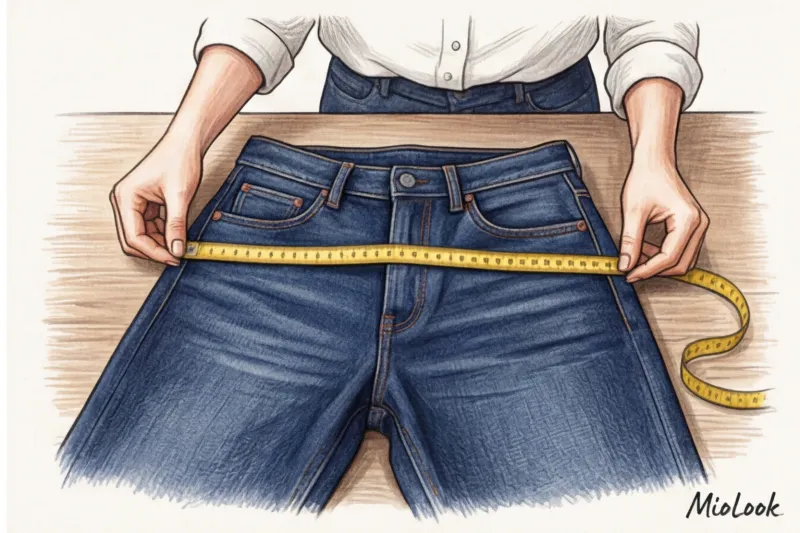
- Pinch test: Pull the fabric at your hip. If it's elastic and bounces back instantly, it's elastane, and it's time to get rid of those jeans.
- Color Purity Test: Do they have sharp, contrasting "whiskers", factory holes with untidy fringe, or a yellowish undertone (a sign of cheap dye)?
- Relevance test: Could you wear these jeans to a casual meeting with an investor or to brunch at an upscale restaurant, pairing them with a cashmere sweater and loafers?
What to do with outdated styles? If the fabric is high-quality but the cut is lacking, cut them into summer shorts. Skinny but well-made jeans can be saved for styling with tall tube boots (they allow you to tuck the legs in comfortably without creating excess bulk at the shaft).
Jeans in a Business Wardrobe: The Line Between Casual and Anti-Trend
Let's return to my client Anna. Her mistake wasn't in the fact of choosing jeans for the meeting, but in her misunderstanding of the smart-casual business dress code. Jeans in the office are no longer taboo, but they do require strict discipline.
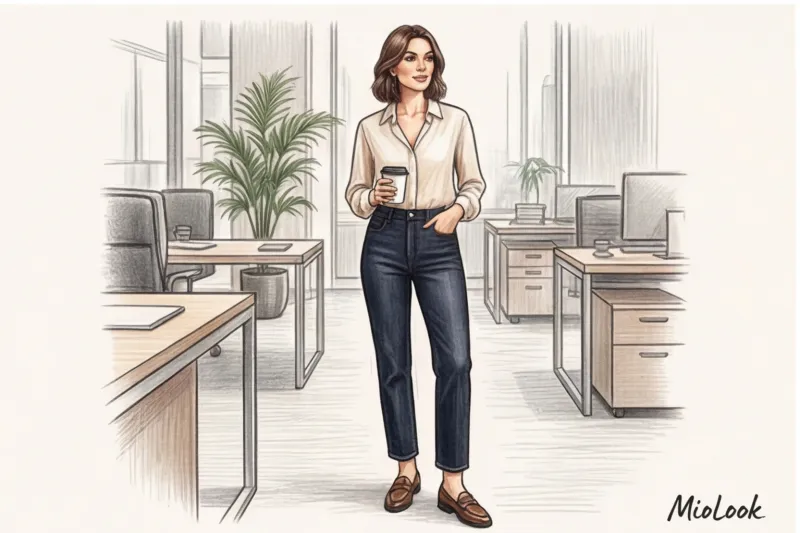
For the office (even on Fridays), only one type of denim is acceptable: dark, solid-colored, without any fraying, full-length, and high or mid-rise. Visually, these jeans should mimic classic trousers.
The best companion for them is a jacket made of fine suiting wool (virgin wool). The contrast of textures—raw denim and fine wool—creates that very feeling of "quiet luxury." Absolutely no-nos for a business environment: ripped hems, cropped styles (revealing the ankle), an abundance of hardware, and a low waistline that reveals a treacherously exposed lower back when sitting in a chair.
Summary: From blindly following trends to personal style
Fashion is cyclical, but the laws of geometry and quality remain constant. When you know which jeans are out of style, you'll stop wasting money on dubious microtrends. Remember: denim isn't just casual wear; it's the canvas on which your everyday status is built.
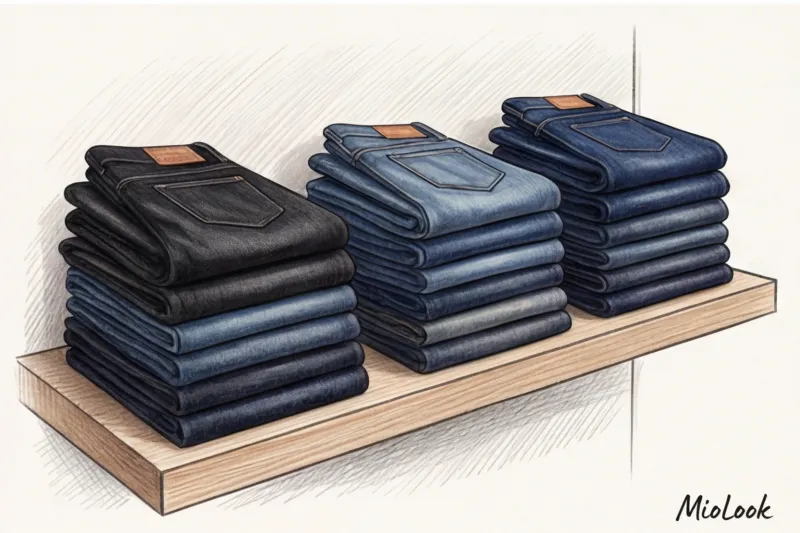
Leave hyper-stretchy jeggings and faux-washes in the past decade. Look for 100% cotton, pay attention to the weight of the fabric (at least 12 oz), and invest in clean, architectural silhouettes. Even if you only have two pairs of jeans in your closet, they'll fit you like they were custom-made in an Italian atelier.