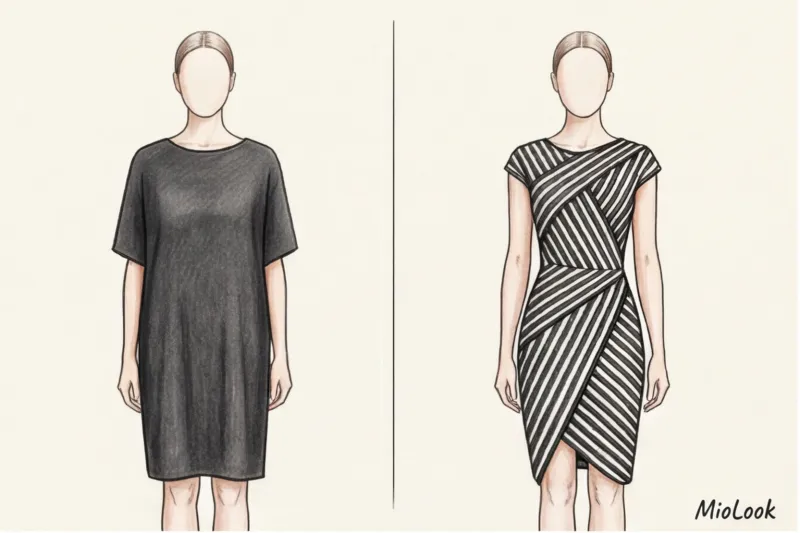
If you still think your body shape is a pear, an apple, or an inverted triangle, I have bad news: we're stuck in the glossy stereotypes of the 2000s. We're not fruits. We're the architects of our own silhouettes. I've already written about the basic principles in our a complete guide to visually correcting your figure with clothing Today we will go further and look at how they work. optical illusions in clothing at the level of neurobiology.
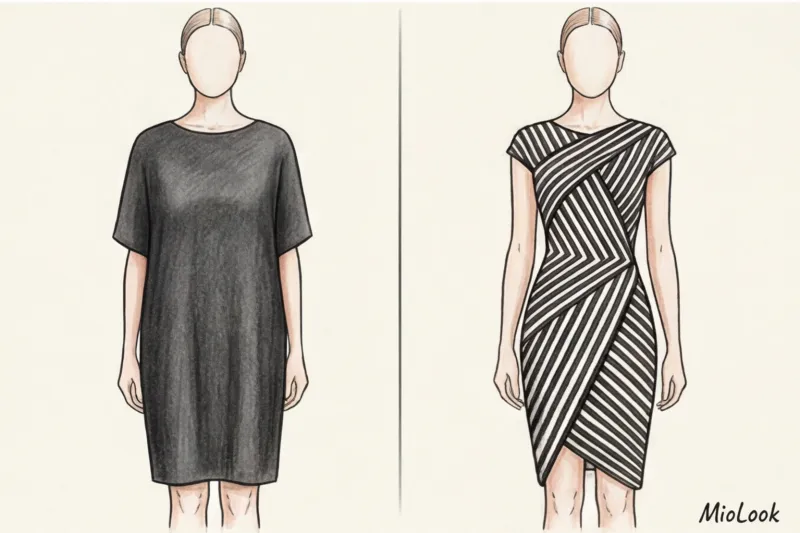
Instead of trivial advice like "black is slimming," we'll turn to precise data, Gestalt psychology, and the laws of physics. Over 12 years of working as a stylist, I've learned one thing: the viewer's brain is lazy. It doesn't read your actual measurements, but the geometry of the contrasts you choose to wear. Let's learn to manage this.
What are optical illusions in clothing, really?
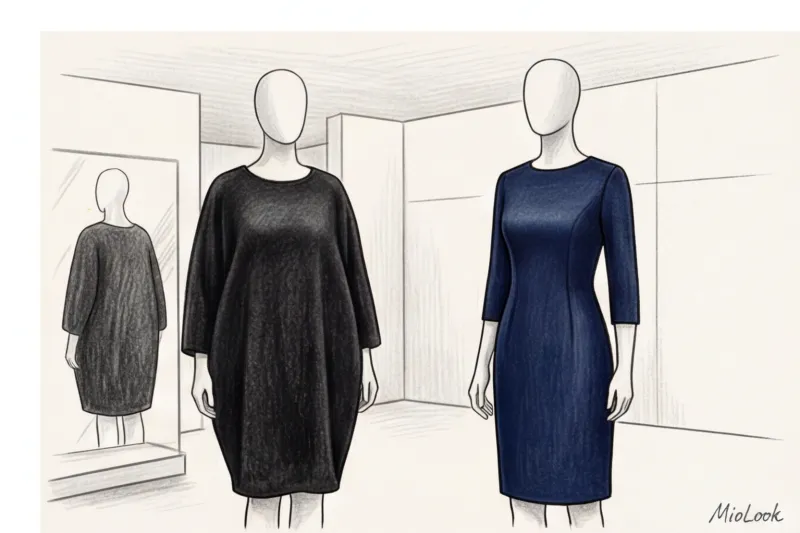
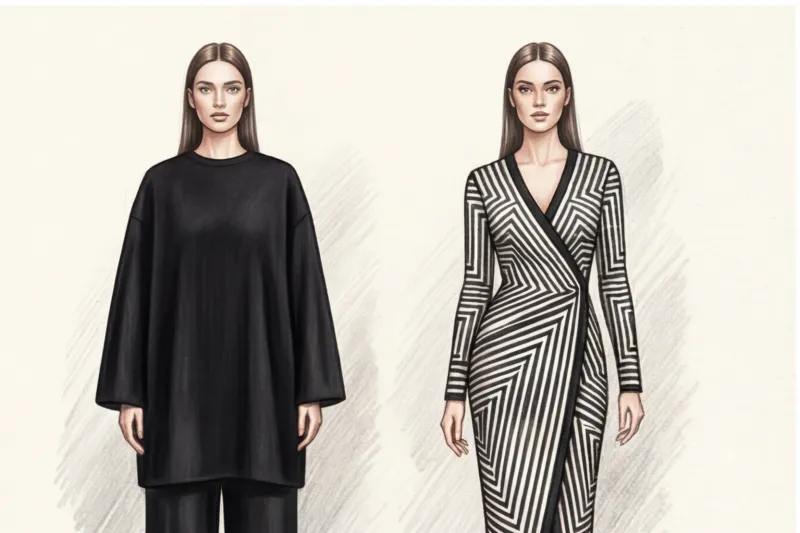
In my practice, eight out of ten new clients come in asking to "hide their stomach or thighs" and bring with them a pile of shapeless knitted hoodies. But concealment is not an illusion. When the eye sees a huge dark spot (like an oversized hoodie), the law of closure from Gestalt psychology forces the brain to construct a corresponding monolithic volume beneath the fabric. You're not hiding weight, you're legitimizing it.
An optical illusion works differently. It's a remote control for our attention. Our visual system is designed in such a way that contrasting geometric patterns can absorb up to 40% of our visual focus, literally forcing the viewer to ignore the actual contours of the body beneath the fabric. You're not concealing the figure—you're creating a new path for the eye.
"Illusion in styling isn't about trying to appear like someone you're not. It's about skillfully redistributing visual weight using lines and color."
The Stripe Myth: Why Vertical Stripes Can Make You Look Fatter, While Horizontal Stripes Can Make You Look Slimmer
Perhaps the biggest misconception of the '90s fashion industry was the mantra "vertical stripes stretch." Have you ever noticed how wide vertical lines on a shirt begin to distort when they hit the curves of your chest or stomach? This creates the "tight globe effect." The line acts like a measuring tape, treacherously emphasizing width and volume in 3D space.
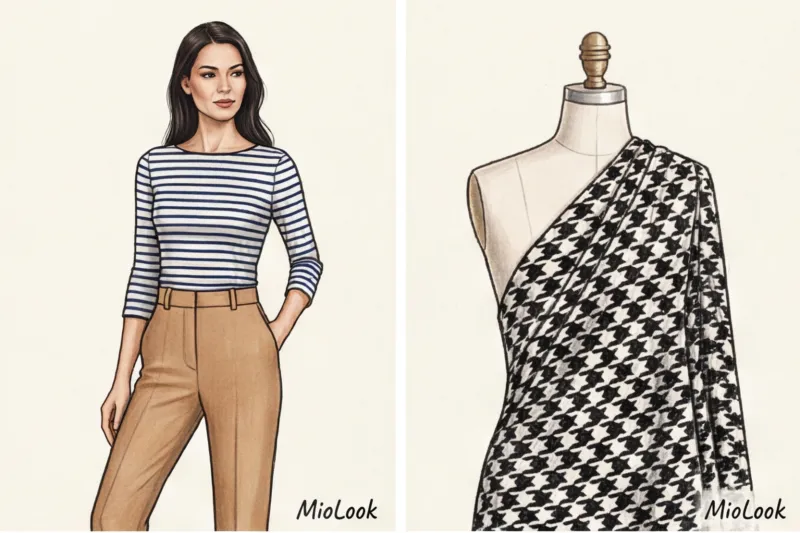
Last year, I conducted an experiment: I persuaded 30 of my clients, sizes 48 to 54 (who were terrified of horizontal stripes), to try on classic Breton stripes. We documented the results in photos. The narrow horizontal stripe visually "shrinked" their waists by at least one size. Why did this happen?
The answer lies in a study by German physicist Hermann von Helmholtz (the Helmholtz illusion) dating back to 1867. He demonstrated that a square filled with horizontal stripes appears taller and narrower to the human eye than an identical square with vertical lines. The horizontal lines force the gaze to slide up and down the "ladder," elongating the silhouette.
The rule of rhythm and width
To create a slimming effect, horizontal stripes are crucially spaced. A distance of less than 1.5–2 cm between stripes creates the effect of a uniform, dense texture at a distance of three meters. A wide stripe (5 cm or more), on the other hand, cuts the figure into blocks. Another nuance: the background should be lighter than the stripe itself (for example, a white T-shirt with thin dark blue lines). This way, the eye focuses on the dark, narrow rhythm, ignoring the light base.
Your perfect look starts here
Join thousands of users who look flawless every day with MioLook. Our AI stylist will select the perfect prints for your body type.
Get access — €0.99 oncePrints as Camouflage: The Dazzle Principle in Contemporary Fashion
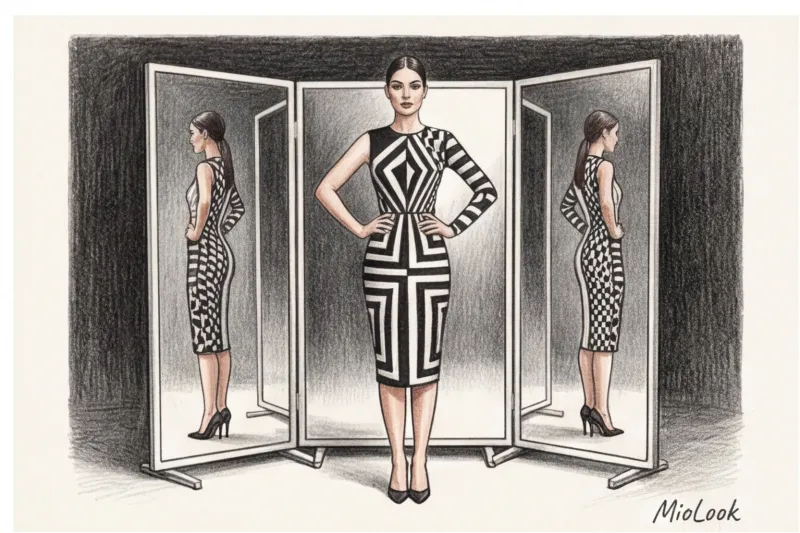
During World War I, the British Navy used dazzle camouflage—painting ships in crazy black-and-white geometric patterns. The goal wasn't to hide the vessel, but to disrupt its outlines, preventing the enemy from determining its size, speed, and direction. The same principle works on the female figure.
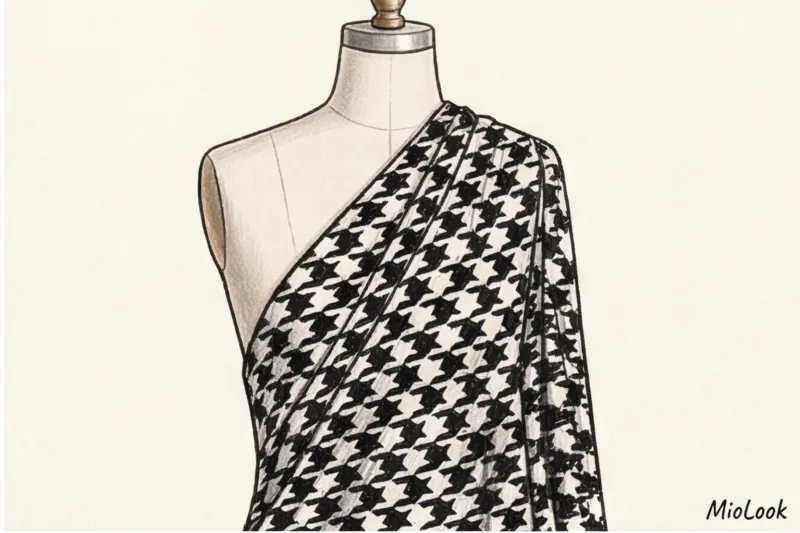
High-contrast geometric and abstract prints blur the real boundaries of the body. A rippled pattern conceals a ruffled waist, a lack of abs, or an imperfect fit ten times better than an expensive, plain monochrome fabric. If you're worried a print will make you look bigger, you've simply chosen the wrong contrast.
Print scale: how not to get lost in the pattern
This is where the rule of proportion comes into play. A small floral on a large, stately figure will work against you. By the principle of contrast, small elements will emphasize the scale of the body. Conversely, huge abstract spots will "eat up" a petite woman. If you're planning incorporate trends into your basic wardrobe Choose prints that complement your bone structure and facial features. Sharp cheekbones and a graphic appearance call for angular geometry, while soft facial lines call for smooth abstraction.
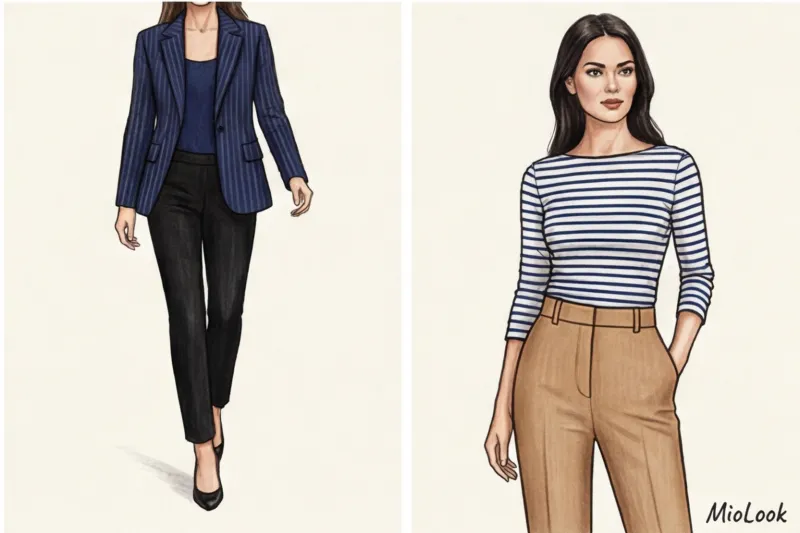
The Geometry of Color: Color Blocking as a Surgeon's Scalpel
Optical illusions in clothing reach their apogee in the color blocking technique. The most famous example is Stella McCartney's iconic Miracle Dress (2011), which made a splash on the red carpet. Its anatomy is simple: contrasting dark panels on the sides and a light or bright panel in the center. This technique allows you to visually "cut" 5 cm from each side, creating a completely new, false waist.
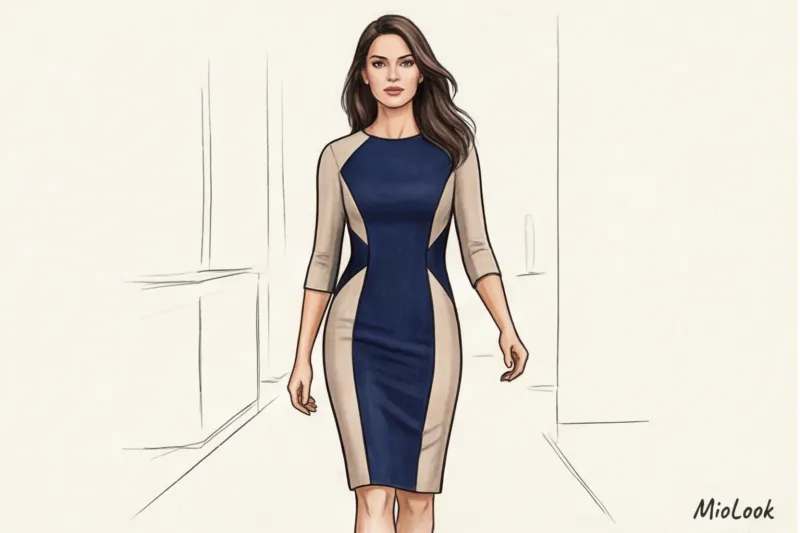
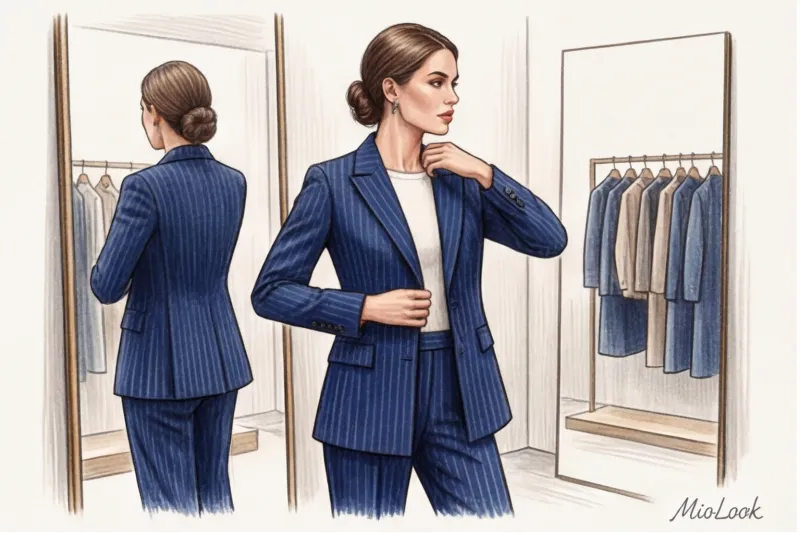
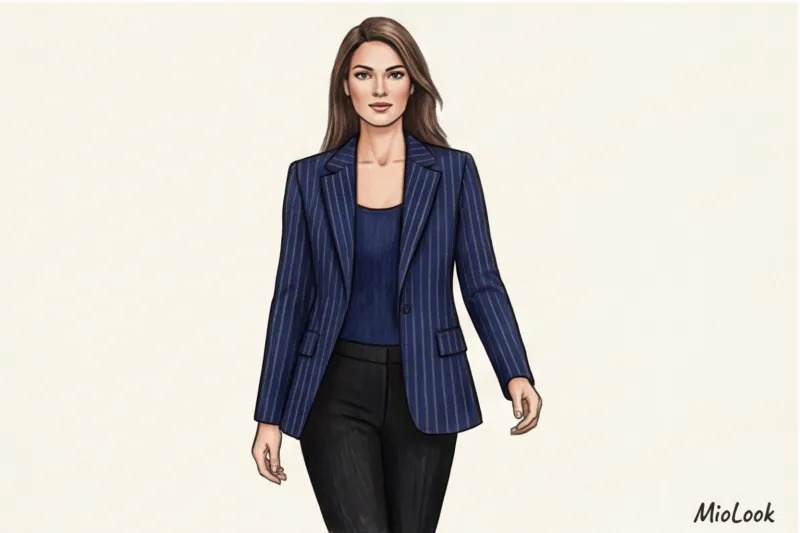
If you're not ready to buy such a dress, create a vertical color break yourself. Wear a light base layer (such as ecru) and layer a dark jacket over it, leaving it unbuttoned. This will create the effect of a "narrow shaft of light" down the center of your figure.
Fair Limit: This trick absolutely doesn't work with glossy textures. Silk, satin, and cheap polyester reflect light on curved parts of the body (belly, chest), instantly ruining the illusion. Color blocking in clothing requires dense, matte fabrics: cotton with a density of 180 g/m², high-quality suit wool or thick viscose.
Dangerous patterns: prints that break proportions and cheapen the look
Illusions can work against you, too. During wardrobe reviews, I regularly toss items that distort perfectly good figures due to poor fabric design.
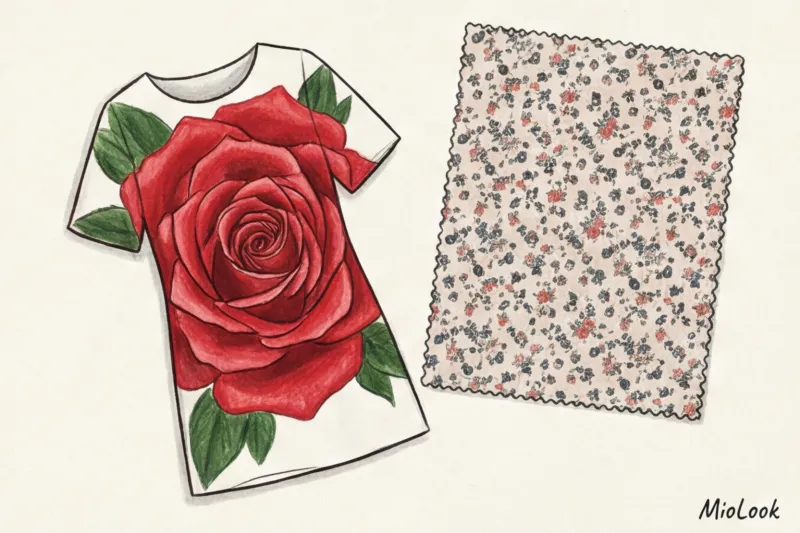
- The "eye" effect: A large, single print (a huge rose, a mandala, or a brand logo) placed squarely on the stomach or chest. It acts as a magnifying lens, drawing the eye to the most prominent point and visually inflating it.
- Vichy check and tartan on soft fabrics: If you wear a tight skirt or plaid pants, the straight lines at the hips will curve, creating a hammock effect. This visually lowers the buttocks and widens the pelvis.
- Cheap gradients: a horizontal transition of color from dark to light, where the lightest part falls on the widest area of the hips.
- Inconsistency in the drawing: Mass-market clothing in the budget segment (up to €30–€50) often skimps on cutting. If stripes or checks don't meet at the side seams, this not only disrupts the silhouette but also immediately reveals the garment's low price.
Even if you experiment with layering, for example, trying the trend of wearing a dress over trousers , make sure that the prints at the junction of things do not compete with each other for attention.
Tech Approach: A Checklist for Testing the Illusion Before Buying
How can you tell if a print will work for you, not against you, even before you hit the checkout? Use technology and visual physiology.
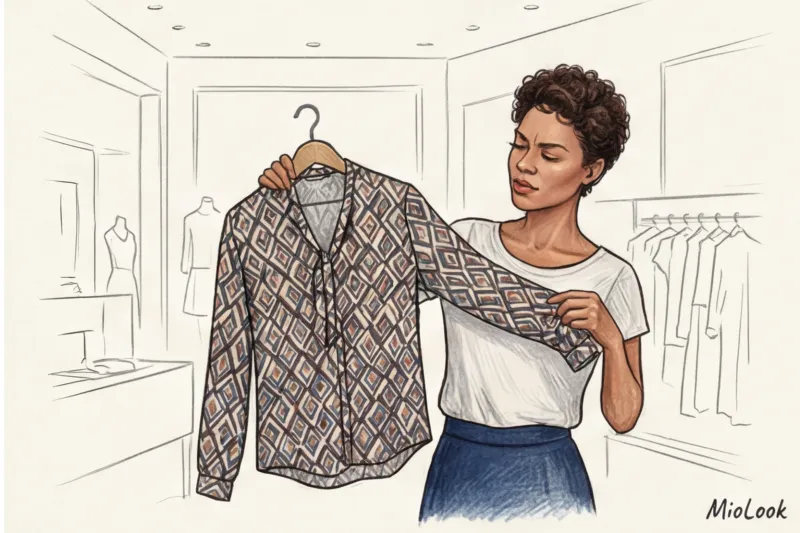
- The Squint Test: Move two meters away from the mirror and squint hard. If the print blurs into a muddy, dirty spot, don't buy it. If the pattern maintains rhythm and geometry, it's a great base.
- Distortion Test: Stretch the fabric over a bent knee. If the pattern has become unrecognizable, the same will happen on the protruding parts of the figure. Choose fabrics with 2-5% elastane to maintain structure.
- Objective shot: Your brain is playing tricks on you in the fitting room mirror due to lighting. Take a full-length photo with your smartphone camera—the lens will show the true geometry without psychological distortion.
I've long since adopted a digital approach for my clients. You can take a photo of an item in the store, upload it to MioLook and check how this complex print will work with your calm base. AI algorithms are excellent at balancing proportions and will tell you if the look is too busy.
Ready to get started?
Try the free plan—no commitments. Create a smart capsule wardrobe and check print combinations in one click.
Get access — €0.99 onceResult: architecture instead of camouflage
Optical illusions in clothing are a shift from the destructive paradigm of "what do I need to hide" to the creative one of "how do I want to direct their gaze?" Stop wrapping yourself in oversized black in the hopes of becoming invisible. Embrace the rhythm of a thin Breton top, the dazzling camouflage of contrasting prints, and the surgical precision of color blocking.
Clothes are your design tool. And once you understand the rules of this game, you'll never want to go back to boring compromises.