Friday, November 2018. I'm just starting to transition my clients from offline to digital, and I proudly send 40 links to a carefully curated capsule collection via WhatsApp. I spent three sleepless nights on this list. On Monday morning, a client writes me in a panic: 18 of the 40 items are already sold out, half the sizes they need are gone, and the links lead to 404 error pages.

This was my most painful, but most important lesson. I realized: professional online shopping with a stylist It's not just about finding a beautiful thing online. It's a complex architectural system that requires taking into account logistics, budget constraints, screen color distortion, and even the warehouse speed of mass-market stores. I've already discussed the technical side and the evolution of our work in more detail in our The complete guide to the best apps for stylists.
Over 14 years of experience, I've seen remote styling evolve from a chaotic exchange of images to a streamlined engineering process. Today, I want to show you the inside story of creating a shopping list that saves clients stress, money, and, most importantly, up to 15 hours of their time.
Why "Just Sharing Links" Isn't Online Shopping with a Stylist
Many people still think that working as an online stylist is like creating a beautiful Pinterest board. You show them a reference, the stylist finds a similar skirt on Zara—profit. In practice, this approach leads to disaster in your apartment's fitting room.
According to the National Retail Federation (NRF) for 2023, the average return rate for clothing purchased online independently reaches 38%. People blindly order items, get the fit wrong, and are disappointed. A well-designed shopping list reduces this rate to 10–12%. Why?
Because a professional doesn't work with individual items, but with a complete wardrobe. A working shopping list is a document that pre-plans how a particular blouse will fit your figure, what old items it will pair with, and what to do if your size is sold out when you order it.
The architecture of a professional shopping list: what it consists of
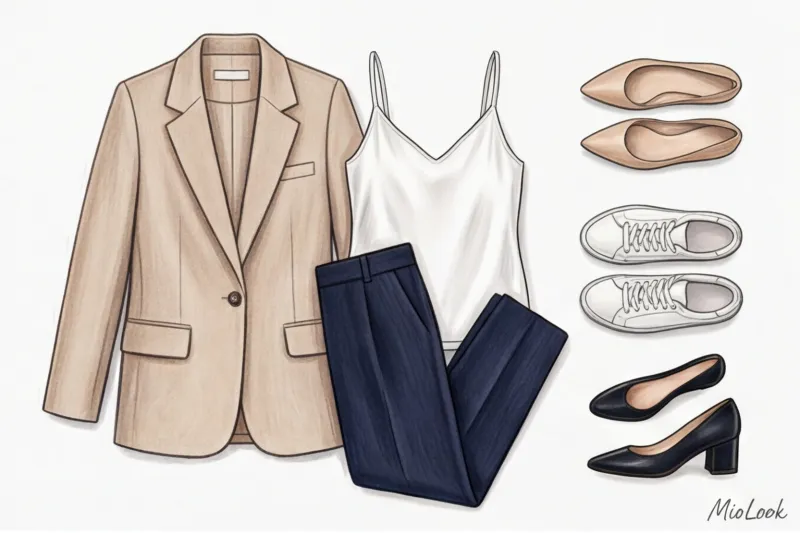
There's a common myth among aspiring stylists: the more precisely you select the perfect item for a given item, the greater your expertise. This is a dangerous misconception. A shopping list with only one link for each item is a sign of unprofessionalism.
In my work I always use rule of three alternatives For each necessary item (for example, basic straight jeans), the client receives three options:
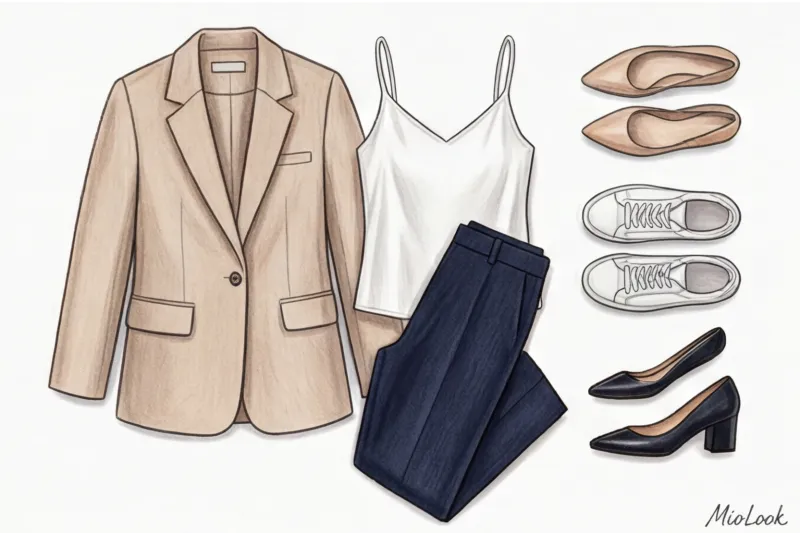
- Main (Target): Perfect fit for budget and style (eg COS or Massimo Dutti).
- Premium (Investment): This option is slightly more expensive than the stated budget, but has impeccable composition and fit (for example, AGOLDE). I offer it in case the client wants to invest in durability.
- Budget (Fallback): A more affordable alternative with good fit reviews (eg H&M's premium line or Uniqlo).
"By giving a client only one option, you're stressing them out. What if this brand's patterns simply don't suit their body type? Alternatives are your insurance against a bad fitting."
Furthermore, a quality sheet always includes fitting instructions. I literally write: "First, try these trousers on with your old black jacket and evaluate the length. Then try them on with a new sweater." This alleviates the anxiety of the client, who is left alone with a mountain of cardboard boxes from the store.
Digitize your wardrobe
Upload your items to MioLook, and our smart algorithm will help your stylist create the perfect shopping list for you that will fit 100% into your current database.
Get access — €0.99 onceCapsule Visualization: How to Link New Purchases with Old Items
No item should be purchased in a vacuum. I strictly forbid my clients from clicking the "Pay" button unless we've proven that the new item forms at least three complete sets, with already hanging in their closet.
To achieve this, use the collage technique. Your shopping list shouldn't just show a catalog photo of a sweater on a perfectly proportioned model, but a collage: this sweater + your favorite jeans + your ankle boots. Only then will the brain stop reacting to the pretty picture and start evaluating the actual functionality of the clothing.
The Main Mistakes in Remote Recruitment (and How to Avoid Them)
When I first started working online, I encountered a multitude of pitfalls that aren't covered in glossy magazines. Here are the most critical traps that both clients and newbie stylists fall into.
1. Ignoring "Vanity Sizing" (size flattery).
Do you think that if you wear a medium, you can safely order a medium from any brand? Wrong. Brands want to make you feel slimmer. A size medium at Zara (which often runs small and is tailored for teenage proportions) and a size medium at Massimo Dutti or German brands are clothes for two completely different people. A stylist must know the brands' size charts and pattern specifics inside and out.
2. Color Trap (True Tone).
One of my clients once ordered a stunning cool-toned graphite jumper. When it arrived, she sent me a photo of it in tears—it was downright yellowish and made her complexion look sallow. The reason? She was coordinating her shopping list with her iPhone, which had True Tone enabled (a feature that adapts to lighting and "warms up" the screen). Now I always ask my clients: before buying expensive basics, check their color on a calibrated monitor with an sRGB profile or turn off filters on their phone.
3. Burning links.
Up to 40% of links to popular sizes (S and M) in mass-market stores expire within the first three days after the start of seasonal sales. A shopping list shouldn't be left "for the drawer" two weeks before payday. It should be compiled strictly one to two days before the expected order date.
4. Fabric error.
Catalog photographers work wonders. A 100% polyester dress can shine like heavy silk under studio lighting. A professional reads the composition, not the glare. Viscose comes in different grades: staple will treacherously wrinkle before you leave the house, while viscose twill will create a beautiful, heavy drape.
Logistics and Returns: What Online Styling Newbies Forget
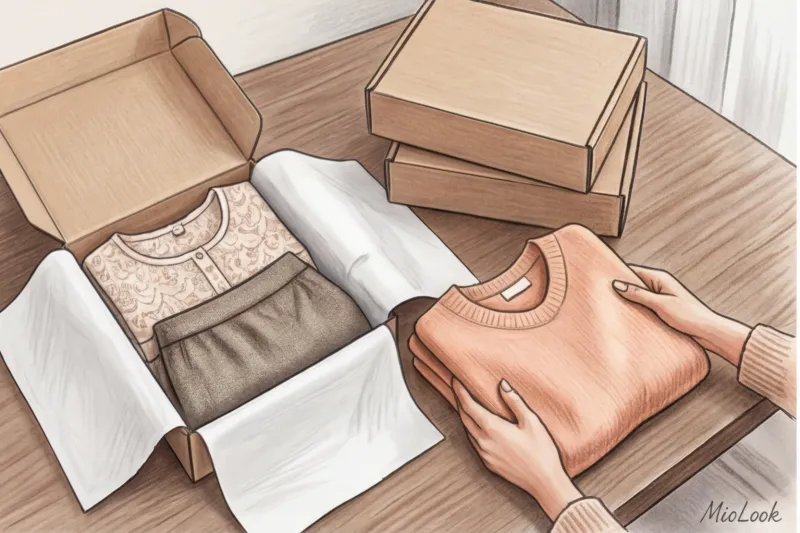
If you think successful online shopping means ordering 10 items and having them all fit, I'm sorry to disappoint you. That doesn't happen. And chasing that means denying yourself the best looks.
I always tell new clients straight out: "We're planning to order 15 items. At least five of them will definitely be returned to the store, and that's perfectly normal." Why do I do this?
If an item has a complex cut (for example, classic trousers or a jacket), we are required to order adjacent sizes. Are you between a 44 and 46? We accept both. This requires a so-called "freeze" on your card. You must budget in advance for the amount that will be held between your bank and the store for a week. This eliminates frustration and the need to reorder, wasting another week on delivery.
Also, if you are afraid of returns, I recommend you study our material on how Trying on clothes before buying online With the help of modern AR technologies, it helps to weed out unsuitable styles right from the start.
Organize your shopping without stress
Plan your looks in advance with the MioLook visual capsule designer. Avoid impulse purchases that you'll have to return later.
Try the capsule designerChecklist: Step-by-step preparation for creating a shopping list
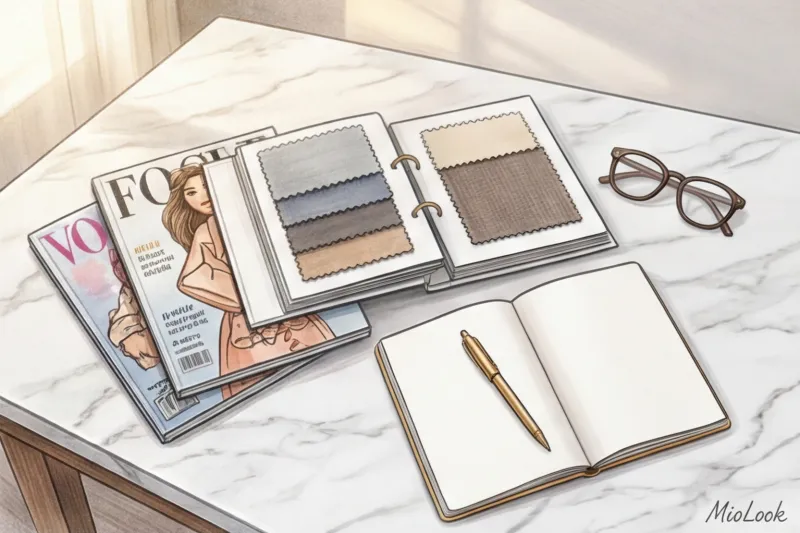
To ensure a flawless online shopping experience, I use a strict four-step protocol. You can follow this even if you're planning your own shopping.
- Audit (Step Zero). No shopping without reviewing what you already have. Often, a client asks to "find a white shirt," forgetting that they have a perfect oversized poplin shirt hanging on the back shelf, bought two years ago.
- Collecting fresh measurements. Forget the phrase "I always wear a size 38." I need your bust, waist, and hip measurements in centimeters, taken no later than yesterday. This is especially critical for buying vintage items—standards change every decade (read more about this in the article about vintage clothing sizes ).
- Budgeting with a tailor in mind. Mass-market clothing is tailored for average fit models with a height of 170-172 cm. If you're 162 cm tall, your trousers will need to be hemmed. I always budget $15-20 for tailoring services. A perfect fit is often the result of a tailor's work, not the magic of a store.
- Synchronization of deadlines. We agree on a specific 48-hour window when the client is ready to sit down, open all my links and place orders while sizes are available.
Tools of the New Age: The Transition to Smart Wardrobe Systems
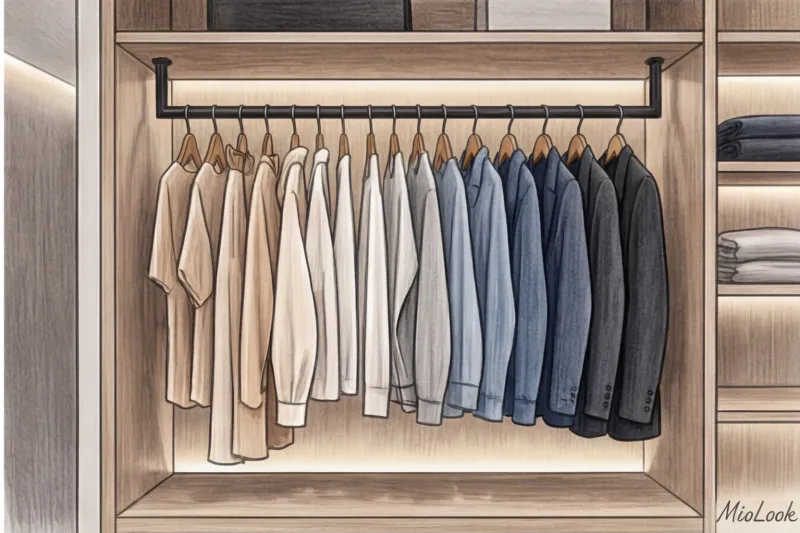
For a long time, we stylists were held hostage by Excel spreadsheets and cumbersome PowerPoint presentations. You send a client a 50-page PDF, they open it on their phone, the images move, the links don't click—panic sets in.
Fortunately, the industry has changed. Now the ecosystem is built around specialized applications. For example, in MioLook The remote shopping process becomes a seamless experience. I can upload a client's current wardrobe, add candidate items from online stores, and generate dozens of looks at once. The client sees not just a shopping list, but their future smart wardrobe in the palm of their hand.
When this approach does NOT work: I'll be honest—shopping 100% online isn't suitable for people with tactile hypersensitivity. If the slightest prick of wool irritates you, or if you can't stand fabric that doesn't rustle as much, you need either an in-person fitting or a strict online order from trusted premium brands where the quality of the materials is 10/10.
Ultimately, online shopping with a stylist isn't magic. It's logistics, market knowledge, and a deep understanding of proportions. Think of your shopping list not as a wish list, but as a clear business plan for your style. Invest time in preparation, don't be afraid of returns, always have a backup plan, and then every item you buy will last for years.