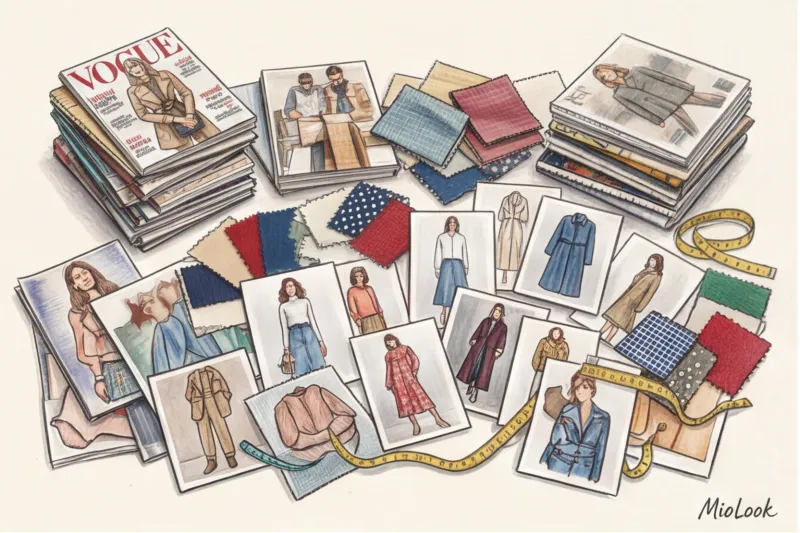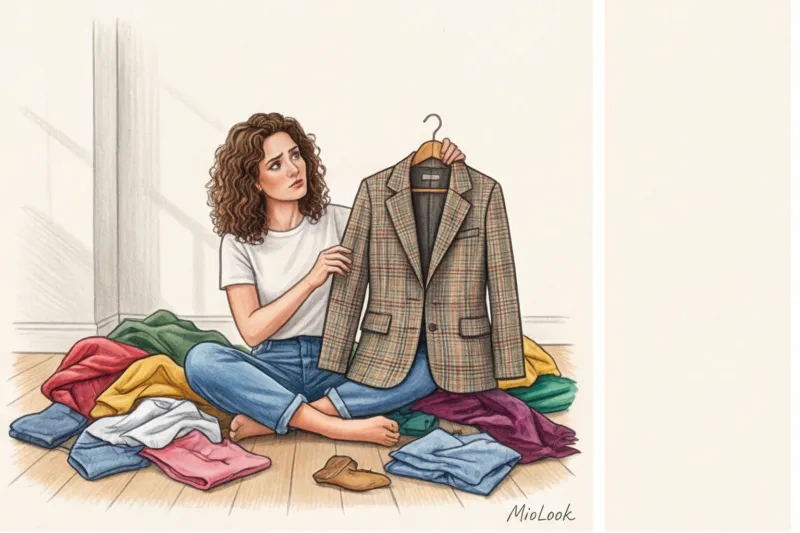
Early in my career, I took on a commission for a virtual capsule collection for a paltry $20. I genuinely wanted everything to be perfect: I manually combed through mass-market websites, checked brands' size charts, and tried to guess from retouched photographs whether this viscose blend would pill after the first wash. The result? I spent 15 hours nonstop. My actual rate was just over a dollar an hour, and the client still returned half the items because the patterns didn't fit.

That's when I learned a hard lesson: when girls are looking Online stylist services prices For prices that seem suspiciously low, they're buying an illusion. A cheap service is a conveyor belt. Today, the personal styling industry has transformed from link exchanges in messengers into a full-fledged IT infrastructure. We discussed this evolution in more detail in our The complete guide to the best apps for stylists Let's break it down to the bare bones: why an expert's work can't cost as much as a business lunch, how a check is calculated, and why competent styling is pure math that ultimately saves you money.
What online stylist services actually consist of and their prices
The most popular myth is that a stylist simply browses online stores and "throws up pretty pictures." If this were true, the profession would have long since been replaced by simple algorithms. In practice, a professional works as an architect of your visual system.
The first thing you pay for is the ability to analyze texture remotely. As a textile expert, I can tell you: a flat studio photo from an online store is always a lie. The lighting is set to hide the looseness of cheap knits or the sheen of low-quality polyester. A trained eye can detect the behavior of a material by the micro-creases on a model as it moves. I look for cotton with a minimum weight of 180 g/m², check the percentage of elastane (ideally 2-5%, so the garment holds its shape but doesn't shine), and eliminate acrylic, which will lose its shape within three weeks.
The second is the depreciation of professional tools. Modern professionals pay for subscriptions to exclusive trend bureaus (such as WGSN), buy access to visualization platforms, and regularly update their knowledge of color and clothing design. You're paying not for an hour of clicking, but for years of insight packed into that hour.
Hidden Hours: What's Behind the Scenes of a Beautiful Presentation
Before you get to the final mood board, a lot of invisible work happens:
- In-depth pre-analysis: studying your profile, body proportions (based on special measurements and photos), and lifestyle.
- Logistics filter: Check availability of the right sizes in your region, as well as shipping and return policies. There's nothing worse than falling in love with an item from a presentation only to discover it's not available in your country.
- Layout: the assembly of all elements into a single, intuitive scheme of combination, where each top is mathematically verified to match each bottom.
Your perfect look starts here
Join thousands of users who look flawless every day with MioLook. Smart digitization and wardrobe management in one click.
Get access — €0.99 onceVirtual Wardrobe Review: Cost, Formats, and ROI
Clearing out your current closet is the foundation. Without it, any new purchase risks becoming just another "one-off" item. The average price range on the market today is from $50 for entry-level professionals to $300 and up for top experts. And this difference is justified.
According to a large-scale McKinsey study (2022), most women regularly wear only 20% of their wardrobe, while 80% of the items simply sit on shelves. The goal of premium decluttering is to break this paradigm. We don't simply tell people to "throw out everything old." I practice an eco-friendly approach: we look for ways to give things a second life. Sometimes, shortening a jacket by 3 centimeters at the tailor's or replacing plastic buttons with horn ones is enough to elevate an item from the "cheap" category to a status staple.
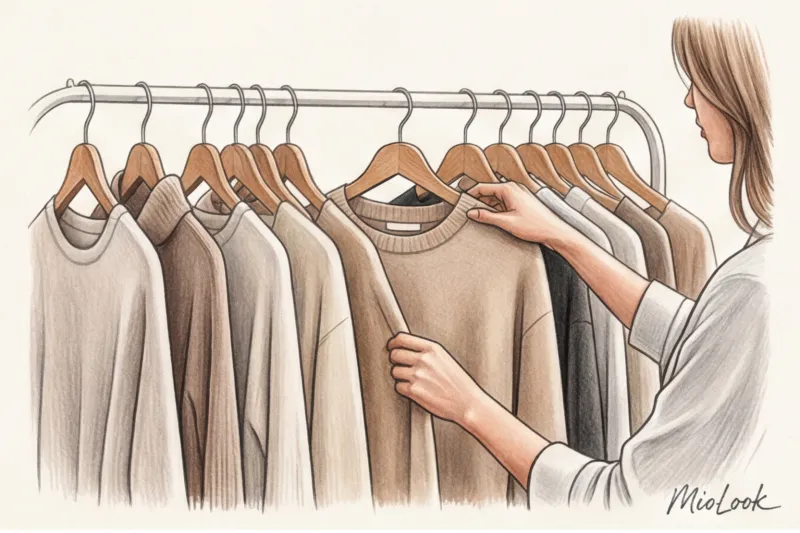
The recoupment of the investment occurs the same day. Nine times out of 10, my clients and I discover 15 to 30 new, unconventional outfits within their "boring" wardrobes. The total cost of these items always exceeds the stylist's fee by a wide margin.
However, there is a catch here important limitation Online fittings are completely useless if you're not prepared to physically try on clothes in front of a camera or if you're concealing your actual measurements. A stylist isn't a magician; they work with the information you provide.
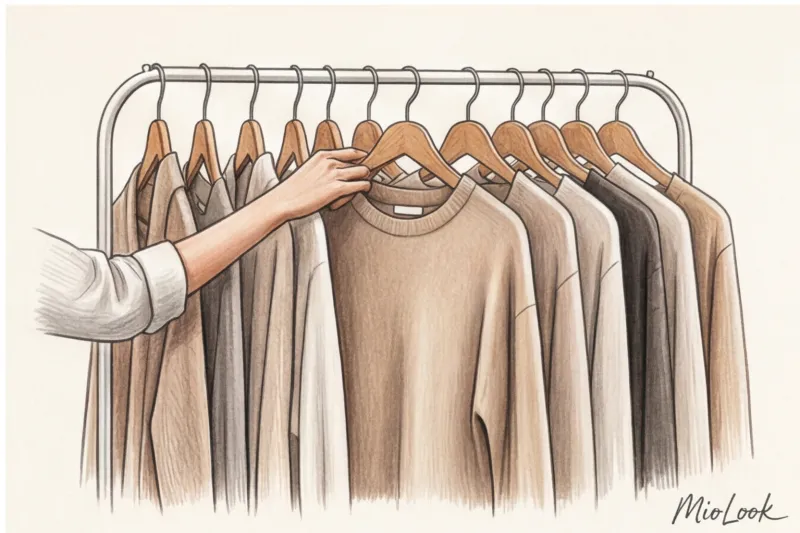
Online Capsule Development: Why a Miser Pays Twice
A full-fledged capsule collection is a system of 10-15 items that, through cut and color, generate 30-40 unique looks. It sounds like magic, but it's pure combinatorics.
Now about what the industry prefers to keep silent about. Contrarian Insight: Cheap online capsule collections for $15-20 are a trap. Stylists with extremely low checks survive on traffic and referral programs. They assemble capsule collections from ultra-fast fashion (like Shein or H&M's basic line) because they get a commission when you click on their links. It's not profitable for them to find you a long-lasting piece. They want your capsule collection to fall apart after a season, and you'll come back for a new one.
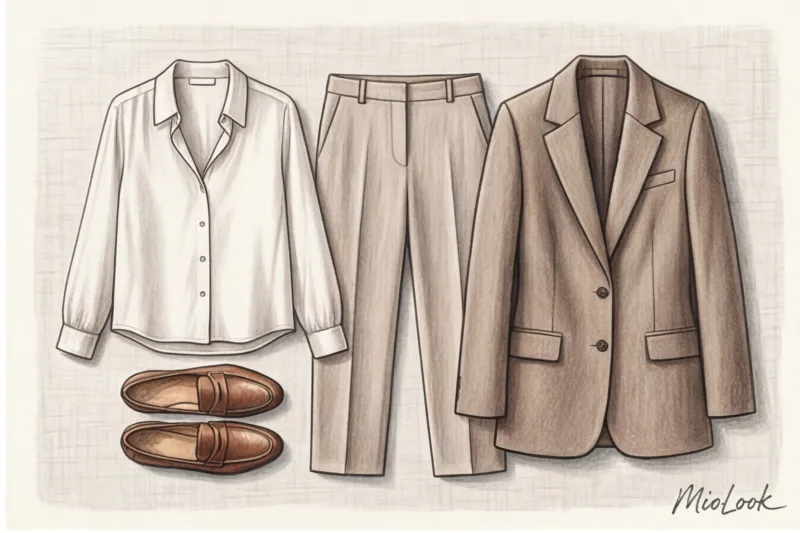
That's why quality service is based on a formula Cost Per Wear (CPW) — cost per wear. The formula is simple: item cost + stylist fee / number of days you wear it. A $150 100% cashmere sweater, expertly fitted and worn 100 times (CPW = $1.50), costs you less than a trendy $30 acrylic top worn twice before it starts pilling (CPW = $15).
Mass Market vs. Investment Brands: How Stylist Checks Are Changing
Customers often wonder, "Why does it cost more to build a wardrobe from Zara and Mango than from Max Mara?" The answer lies in the difficulty of searching. Finding a perfectly tailored, premium-quality, genuine wool jacket takes 10 minutes. Finding a comparable, acceptable quality jacket from a mass-market store takes hours of sifting through hundreds of product listings, checking reviews for fabric shrinkage after washing, and assessing the hardware.
Ready to get started?
Try MioLook's free plan—no commitments required. Upload your items and let the algorithms suggest fresh outfit ideas.
Get access — €0.99 onceOnline shopping and styling support
Three main pricing models have become established in the market:
- Hourly pay — ideal for specific queries (finding the perfect jeans or dress for a friend’s wedding).
- Fixed price per image/capsule — the most transparent format for long-term planning.
- Monthly subscription — you get a “stylist in your pocket” to whom you can send photos from the fitting room at any time.
The biggest challenge of independent online shopping is returns. According to a 2023 Business of Fashion report, the e-commerce clothing return rate reaches 30%, with the main reason being that the fit and fabric quality don't meet the customer's expectations. At the selection stage, a stylist eliminates patterns that are categorically unsuitable for your body type.
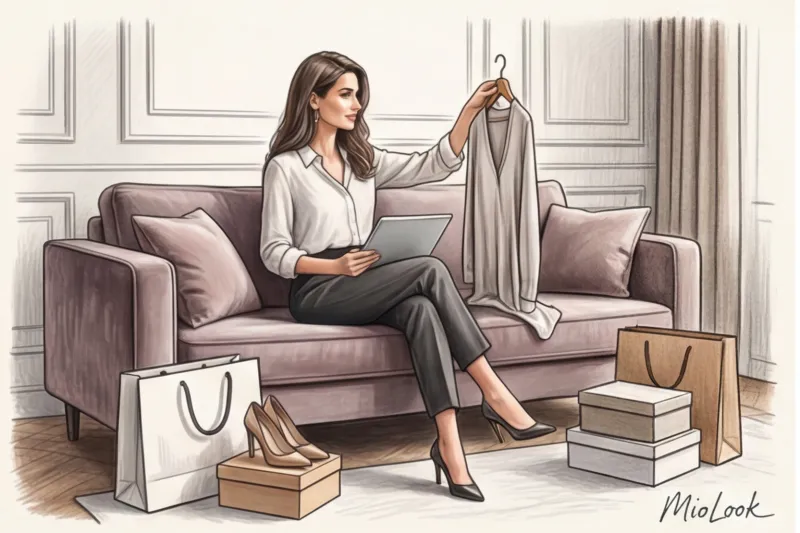
Service evolution: how professional apps (MioLook) justify premium pricing
I remember five years ago trying to color analyze a photo sent via WhatsApp. The messenger compressed the image and distorted the white balance so much that my elegant olive trench coat looked a dirty gray. It was a disaster. The chaos of burned-out links, lost photos, and forgotten recommendations is the main enemy of online styling.
Today, a stylist's premium bill is directly based on the software they use for your convenience. Clients are willing to pay 30-50% more for a service if it's packaged in a dynamic system rather than a static PDF.
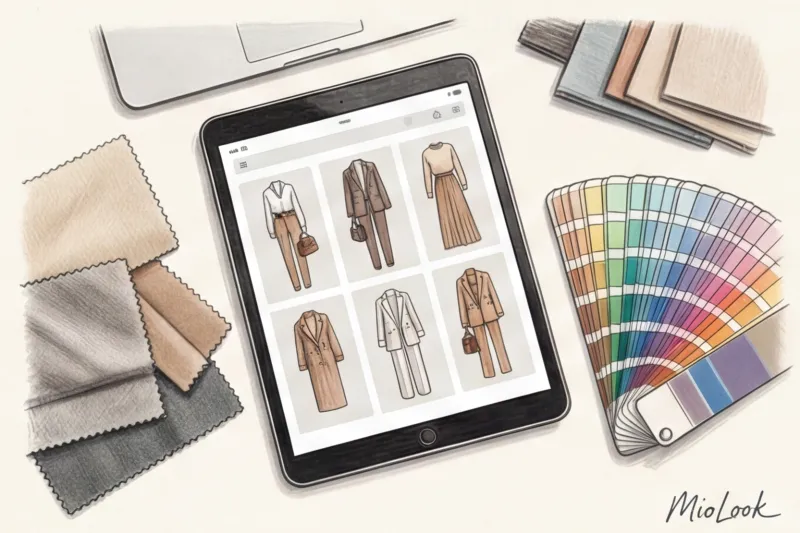
Using Smart wardrobe features in MioLook We transform your physical closet into a digital one. You wake up in the morning, open the app, and see ready-made combinations tailored to the weather and your plans. Links never expire, items are visualized on a pristine white background, and new purchases are instantly integrated into your existing database.
Access to MioLook for €0.99 — one-time payment
A smart AI stylist will create the perfect look for you. Organize your wardrobe and save time on your morning routine.
Get access — €0.99 onceClient checklist: how to choose an online stylist and avoid overpaying for empty space
To ensure your investment in personal style pays off, run the candidate through this checklist before making a down payment:
- Free meeting and introduction available (15-20 minutes). Chemistry between you is crucial. If a stylist doesn't ask questions about your lifestyle but immediately pushes trends, run.
- Portfolio transparency in "Before/After" format. Please note: The "After" should not just be fashionable for a magazine shoot, it should be wearable Can you imagine yourself in this image on the subway during rush hour or on a playground?
- Attention to fabrics. Ask a test question: "How do you feel about polyester in the base layer?" If the specialist considers this normal for everyday trousers, their competence is questionable.
- Tools. Ask what format the work will be delivered in. If it's just random screenshots sent via Telegram, the price should be minimal.
Bottom Line: Your Stylish Independence Is Worth the Investment
Pricing in the online styling industry is no longer a blind spot. Cost is directly correlated with the specialist's technical expertise, their knowledge of textile chemistry, and the availability of professional software. By paying $200 for a capsule collection, you're not buying links to clothing; you're buying peace of mind in the morning, confidence in negotiations, and the freedom from impulse purchases.
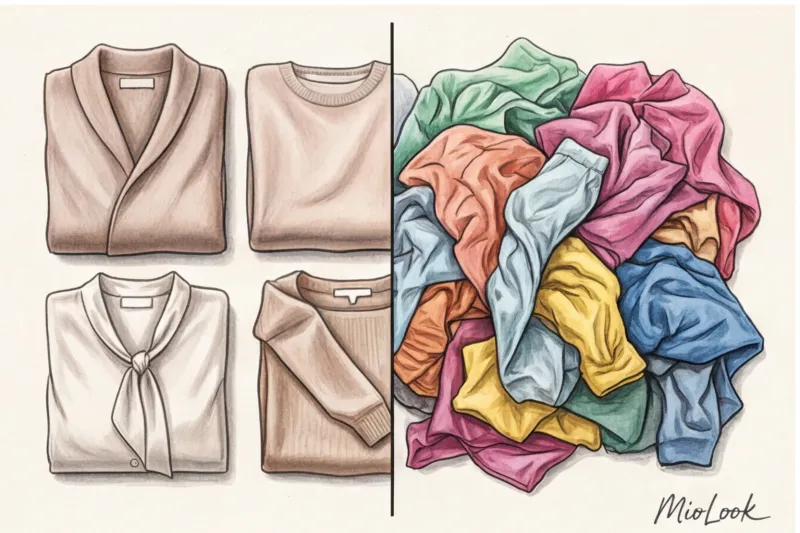
And most importantly: the ultimate goal of working with a truly great stylist is not to tie you to their paid services forever. A good expert provides you with a coordinate system. They customize your wardrobe so that you can easily manage it yourself in the future. After all, the best, most sustainable fashion is the kind you wear for a long time, with impeccable comfort and a complete understanding of why you're wearing it.