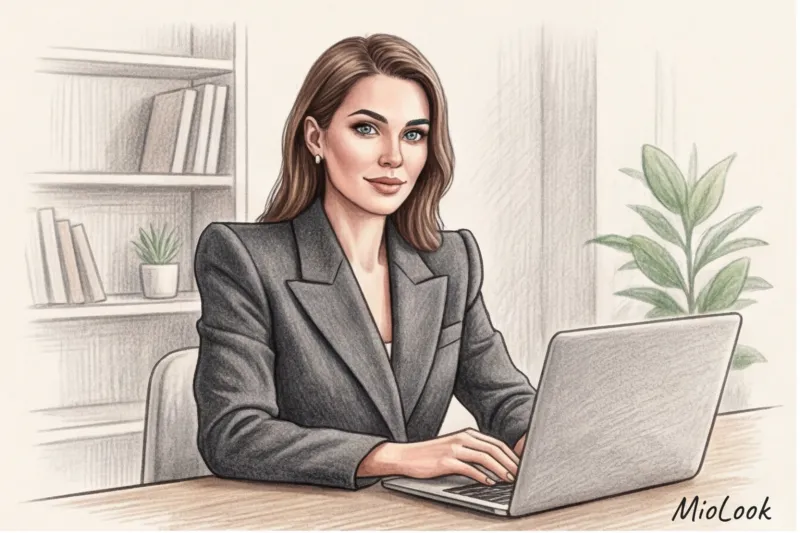
Have you ever noticed how a charismatic leader in real life suddenly turns into an insecure intern the moment they turn on their Zoom camera? Their voice is quieter, their posture seems hunched, and their words lose their weight. The problem often lies not in their public speaking skills. The problem is that a speaker's image online is built on entirely different neurobiological principles than in real life.
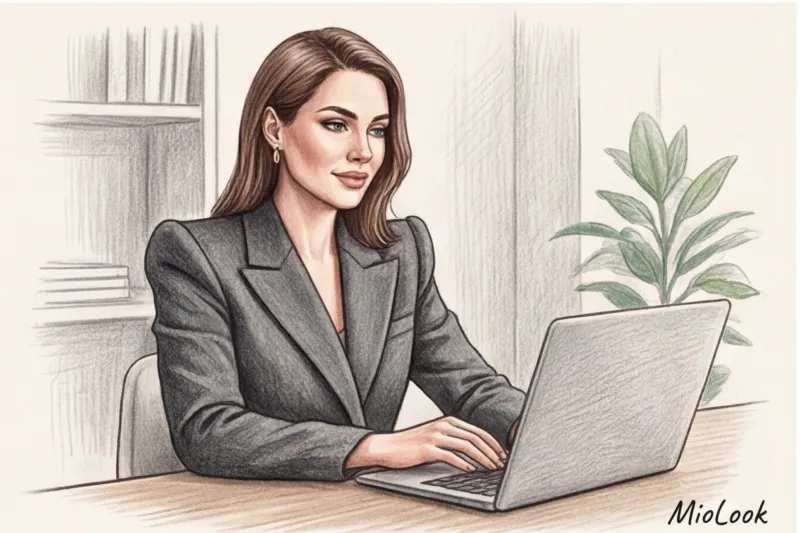
We've already covered the basic rules for preparing your wardrobe in more detail in our complete guide: How to Dress for a Webinar: Style for Online Presentations But today I want to dig deeper. I, Katarzyna Nowak, will tell you how your viewer's brain compensates for the lack of body language by reading the geometry of a collar, the density of a fabric, and the color temperature. Forget the standard advice from glossy magazines—it doesn't work in front of a 16:9 screen.
The 16:9 Trap: Why Your Best Office Suit Won't Work on Zoom
The concept of "keyboard dressing" isn't new, but most people still perceive it as a joke about a jacket and pajama bottoms. In reality, it's a harsh visual concept. On camera, you lose 80% of your body language—everything below the chest. The lack of dynamism, gait, and gestures shifts a colossal amount of meaning to the narrow area from the collarbone to the crown of the head.
One of my clients, a top manager at a European fintech company, was preparing for a crucial pitch to investors. For the broadcast, she chose her lucky €1,500 Jil Sander suit made of the finest summer wool. In person, it looked impeccable: flowing fabric, intricate cut, a refined mouse-gray hue. But on Zoom, it turned into a washed-out gray blob. The video compression algorithms literally ate up 30% of the contrast, destroying all the subtle nuances of the expensive texture.
According to the 2023 Science of People report, in a digital environment, basic trust in a speaker is formed within the first seven seconds of a broadcast. Albert Mehrabyan's famous rule (7-38-55), where 55% of perception depends on nonverbal cues, is transformed online. Now your "nonverbal 55%" is lighting, neckline geometry, and clothing contrast.
Access to MioLook for €0.99 — one-time payment
A smart AI stylist will create the perfect look for your online performances.
Get access — €0.99 onceThe Psychology of Color: How Shades Shape an Online Speaker's Image
The average monitor's color rendering is merciless. It distorts real hues, pushing them toward either a deathly blue or a sickly yellow spectrum. Research in UI/UX psychology, which we now actively apply to video formats, proves that color temperature directly influences a viewer's subconscious trust.
Your on-air "trust palette" should consist of deep, rich tones. Deep navy, emerald, rich wine, and terracotta are ideal. These colors have sufficient pigment density to resist distortion during video compression and convey a calm, confident demeanor.
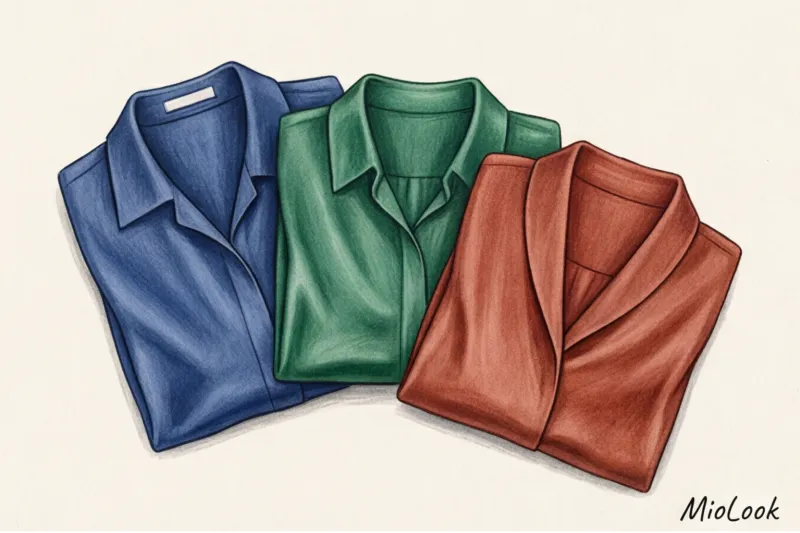
The "Flying Head" Effect: Why Black and White Are Your Enemies
This is where the biggest misconception lies. The classic "authoritative" colors of the corporate world kill your image online. I categorically forbid clients from wearing crisp white and charcoal black for important broadcasts.
Why doesn't white work? The webcam sensor perceives a white blouse as a strong light source. The automatic exposure correction kicks in, and the camera darkens everything else, including your face. You end up with a dark silhouette with bags under your eyes.
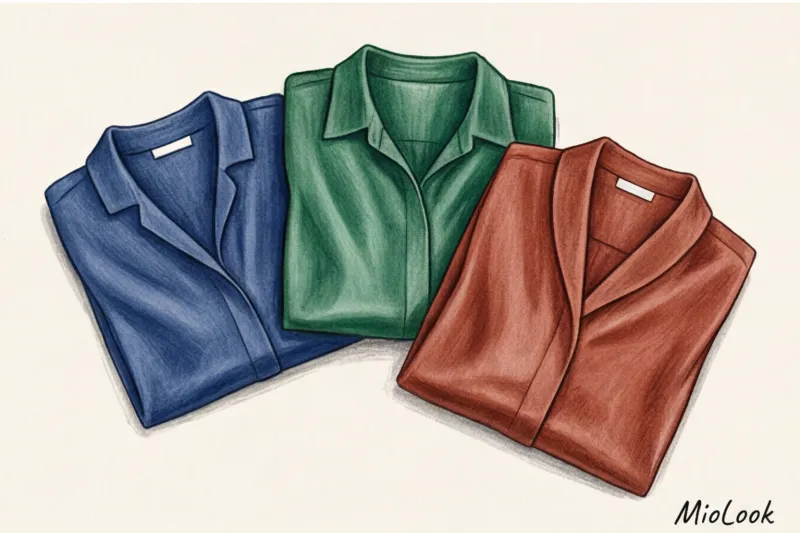
Why is black dangerous? Under standard room lighting, black fabric blends into the shadows in the background. The line of your shoulders blurs, leaving only your head on screen, appearing disproportionately large—this is the eerie "floating head" effect.
Instead of radical contrasts, choose soft alternatives. Excellent options can be found in the basic lines of Massimo Dutti or COS: navy blue instead of black, ecru, ivory, or oatmeal instead of dazzling white.
By the way, if you are unsure whether a particular shade of ecru suits your color type, I recommend using wardrobe analysis feature in MioLook The app accurately determines the temperature of items already hanging in your closet.
Portrait Zone Architecture: Geometry That Holds Attention
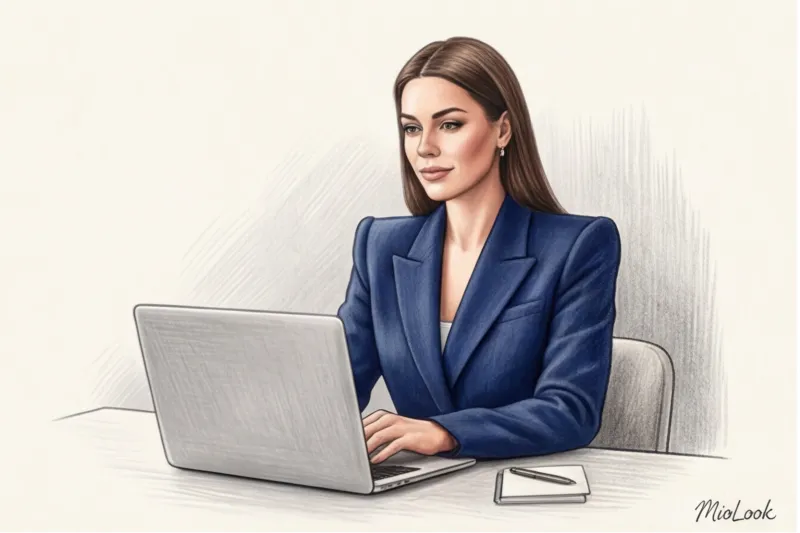
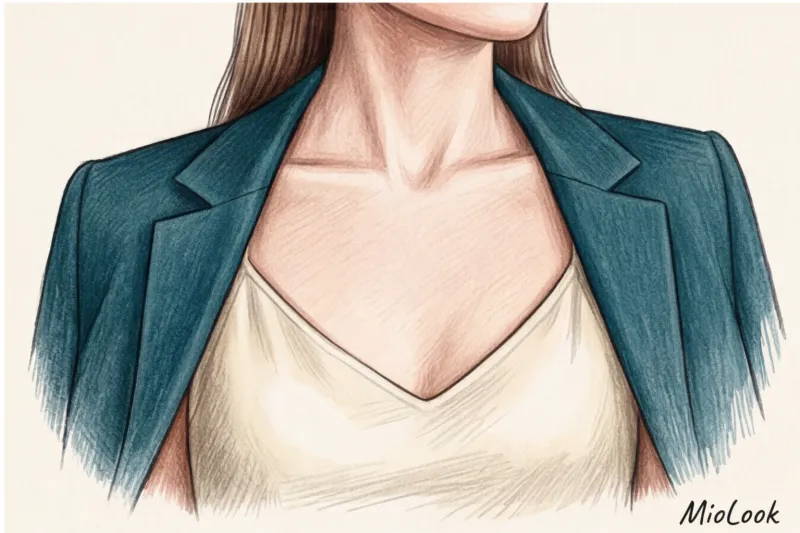
Without gestures, your main tool for directing attention is the lines of your cut. The human brain loves clear geometry. A V-neck is an absolute must-have for an online speaker. It physiologically elongates the neck and acts as a pointer, directing the viewer's gaze directly to your face.
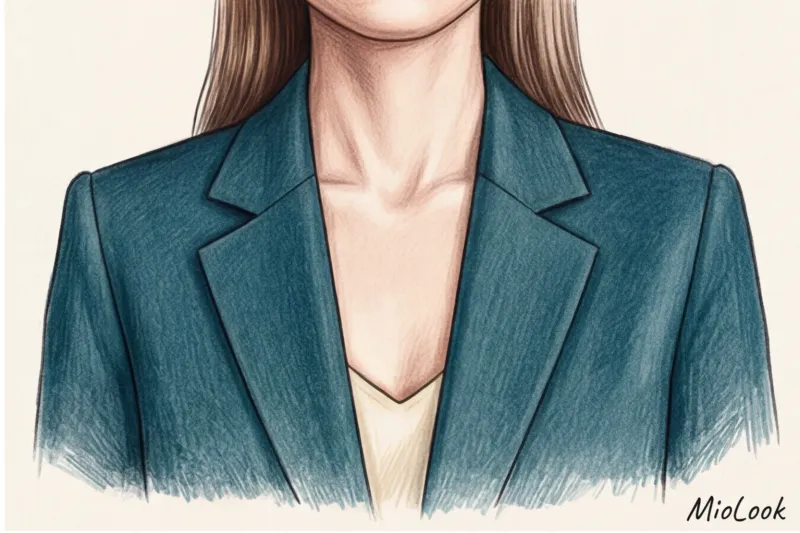
Compare these two looks: a soft collarless cashmere cardigan and a structured jacket with crisp lapels. In real life, a cardigan can look cozy and expensive. In a cell, it instantly flattens the figure, creating an image reminiscent of pajamas or a robe.
A stiff collar on a shirt or jacket is a signal of collectedness. It creates an architectural frame for the face. However, I strongly advise avoiding stand-up collars, turtlenecks, and voluminous bows. Psychologically, they are perceived as a barrier, an attempt by the speaker to "close off" from the audience.
Your perfect look starts here
Join thousands of users who look flawless every day with MioLook.
Get access — €0.99 onceVisual Fabric Weight: How to Avoid Looking Like a Blurred Spot
One of the main secrets of television stylists: the camera loves dense textures. Light, translucent fabrics like chiffon or fine silk cheapen the image on camera. They don't hold their shape, wrinkle with every movement, and create a shapeless silhouette.
You need "visual weight." Wool, gabardine, tweed, or heavy cotton (from 180 g/m²) add weight not only to your figure but also to your words. I recently did a personal test drive under a 4000K ring light. Amazingly, a budget jacket from Zara made of heavy polyester looked far more prestigious and expensive in the frame than a luxury top made of the finest silk, which shimmered and appeared wrinkled.
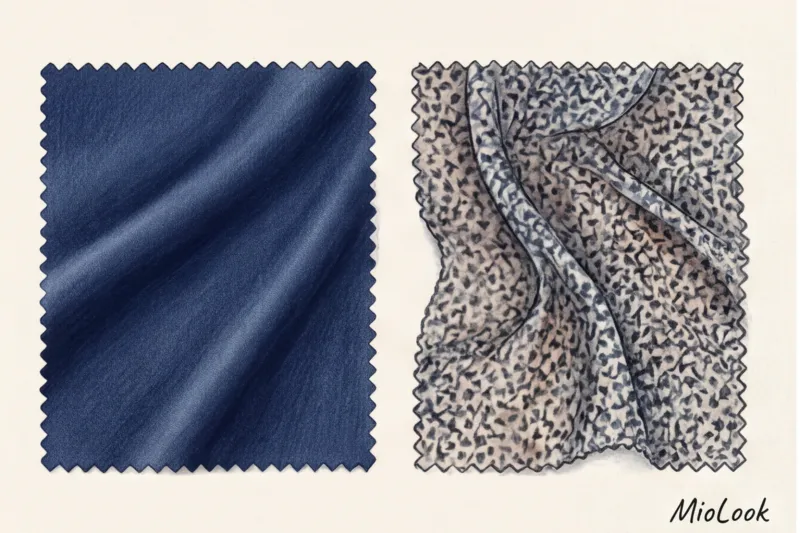
However, there is one fair exception to this rule. doesn't work If you're broadcasting from a stuffy studio with powerful spotlights and no air conditioning, you'll start sweating, your face will turn red, and no amount of authority will save you. In such cases, choose a thick viscose with 5% elastane—it breathes but holds its shape.
And another strict no-no: small patterns. Houndstooth, small checks, narrow stripes—all of these create a stroboscopic (moiré) effect on the screen. The fabric begins to ripple and dance, which physiologically irritates your audience's optic nerve. People will turn off the broadcast simply because their eyes will hurt.
Accessories as Psychological Anchors: Where Your Audience Looks
Accessories online act as focal points. They should draw attention to the face, not steal it.
If you wear glasses, anti-reflective coating on your lenses isn't an option, it's a necessity. Glare from a laptop screen or ring light completely obscures your eyes. And without eye contact, trust is instantly destroyed.
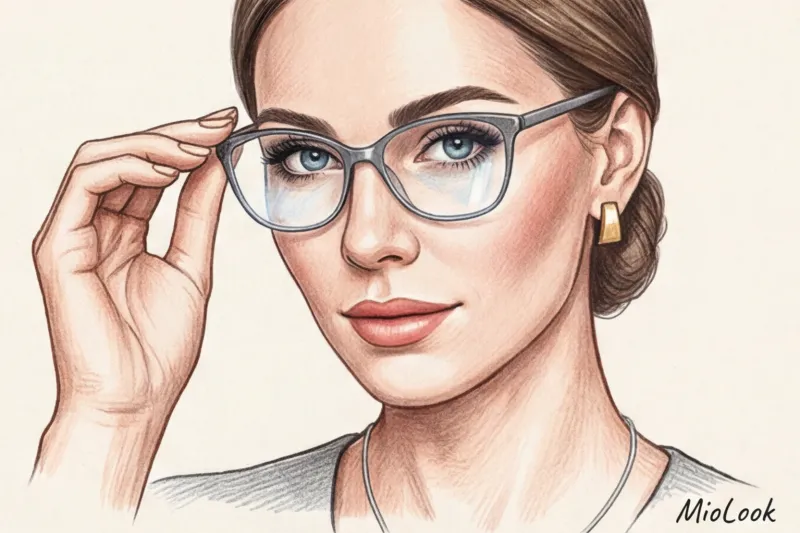
When it comes to jewelry, stick to the one-accent rule. Dangling chandelier earrings, jingling bracelets, or chunky necklaces will distract from the meaning of your words. My practical advice: choose matte metals. Glossy gold or silver often looks cheap under the artificial light of a webcam. Matte metal or pearls look much more refined.
Makeup for a speaker is also part of the wardrobe. Cameras "eat" colors, so you need 20% more contrast than in everyday life. A little more blush, a slightly bolder brow line, and lipstick a half-tone darker than usual.
Ready to get started?
Try MioLook's free plan—no commitments or card required.
Get access — €0.99 onceStylist checklist: 5-minute look audit before the broadcast
Over 12 years of work, I've developed a simple algorithm that I make every client go through before an important Zoom call. Don't rely on the bathroom mirror—check your image only through the lens of the camera you'll be broadcasting from.
- Contrast check: Take a test shot. Are you blending in with the wall or chair? If the background is dark, wear a light (ecru) top. If it's light, add a rich blue or emerald jacket.
- Moire test: Wave your hand in front of the camera and move around actively. Does the fabric "ripple" on the monitor? If it does, change the item immediately.
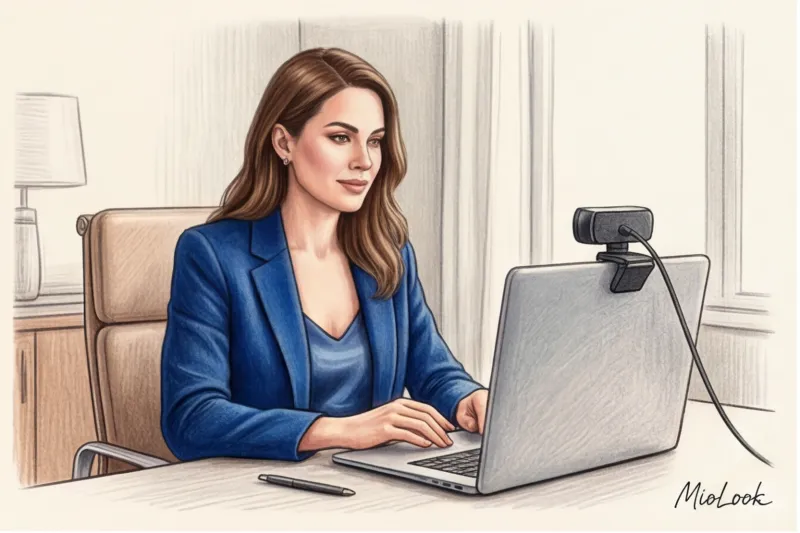
- Checking the shoulder line: Sit as you would during the broadcast (usually we lean lightly on the table). Does the garment sit straight? Is the collar bunching up untidily at the back of your head?
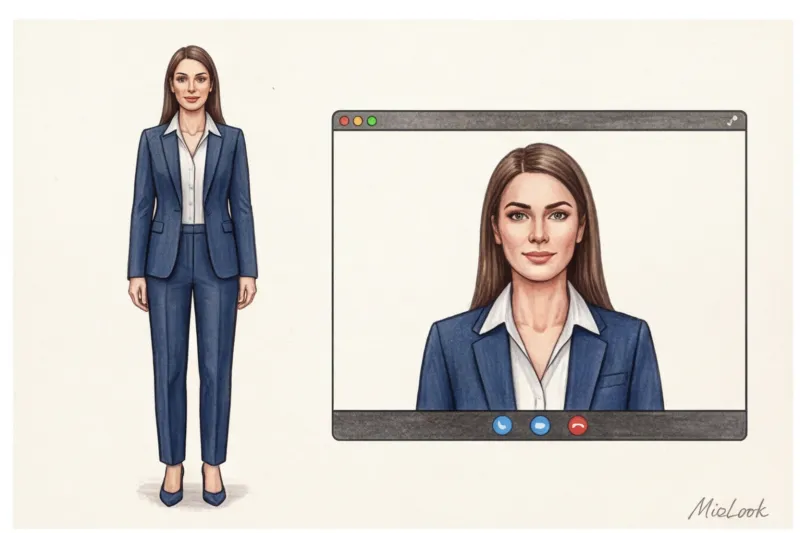
If you're three minutes away from going on air and you're panicking and completely unsure what to wear, follow my ultimate rule: layer a deep blue structured jacket over a basic ecru V-neck top. It's a surefire way to stay on top 99% of the time.
An online speaker's image isn't about fashion or trends. It's about managing attention through geometry and color within the rigid confines of a screen. Think of your image not as clothing, but as the frame of a portrait, where you are the star.