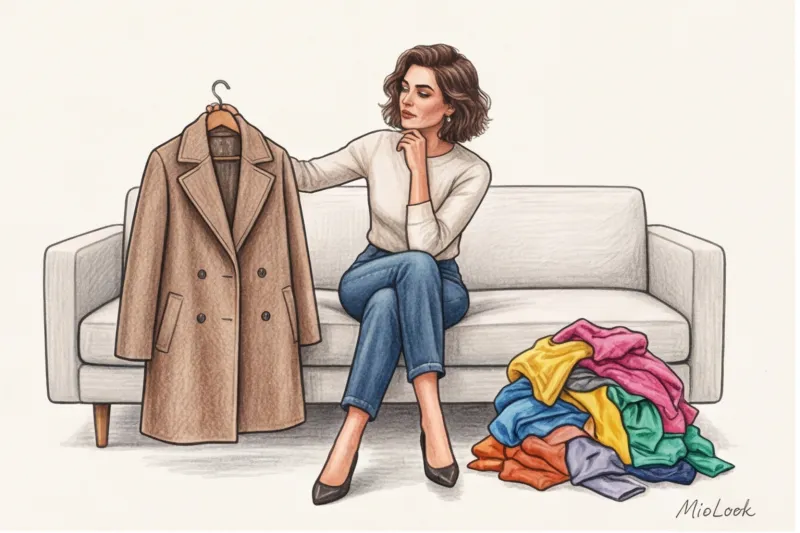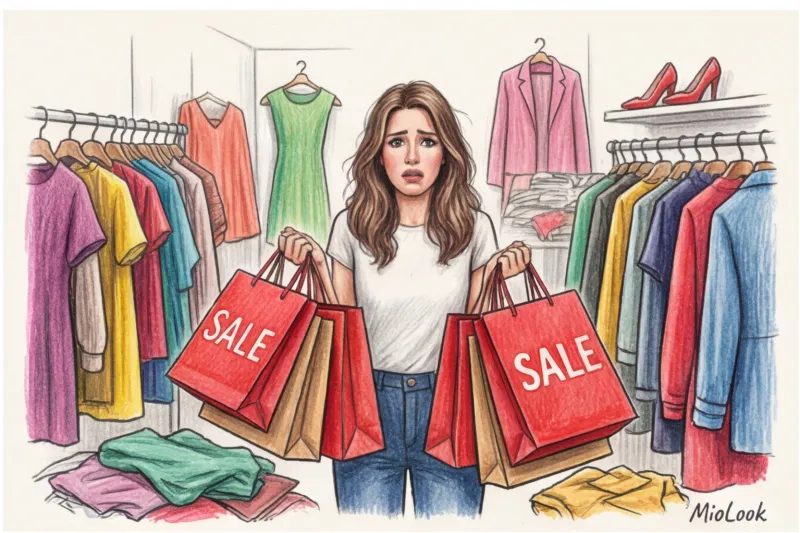
Have you ever noticed that after two hours of scrolling through a seasonal sale, your virtual shopping cart is full of things you don't really need? Or that one wool coat you were originally looking for is still nowhere to be found? As a practicing stylist with 14 years of experience, I regularly save my clients' wardrobes from the consequences of such impulsive online shopping. We discussed the origins of this problem in more detail in our The complete guide to smart shopping during sales , where they analyzed the psychology of shopping itself.

Today we'll go beyond psychology. I'll show you the inside story of retailers' algorithms and working Life hacks for online clothing shopping , which stylists use every day. We'll search for premium foundations at mass-market prices and learn to read between the lines in product descriptions.
Top Life Hacks for Online Clothing Shopping: How to Cheat Marketplace Algorithms
The first thing to understand is that a standard marketplace search returns not what you need, but what's profitable for the platform. The algorithms of most large platforms are tuned to promote products with the highest profit margins. These are often items made from cheap blended fabrics, sewn for pennies, but photographed like luxury.
Your biggest enemy during sales is the "Lowest First" sorting button. It's completely counterintuitive. We think it'll help us find the best deal. In reality, this sorting method causes extreme decision fatigue, clogs the results with low-quality, thin polyester, and forces us to buy "disposable" items.
I recently conducted an experiment. A client and I were looking for a basic black jacket. The standard search results showed the first 15 pages were all 100% polyester, priced between €20 and €40. Once we applied the stylist's tactic, the picture changed in a second.
My search strategy: I always sort by "By discount size" (highest to lowest), but first I set a strict filter by brand (only those whose patterns I know) and material (for example, at least 60% wool, cotton from 180 g/m², or natural viscose).
This is the only way the algorithm is forced to show you a quality item that is currently at the maximum discount, while eliminating visual clutter.
Access to MioLook for €0.99 — one-time payment
A smart AI stylist will select the perfect look based on your preferences and save you time on shopping.
Get access — €0.99 onceThe Anatomy of a Discount: How to Spot a Fake Sale
According to a large-scale study by the British consumer rights organization Which? (2023), approximately 98% of discounts during Black Friday and major seasonal sales are not the lowest price of the year. Retailers are masterfully playing with our expectations.
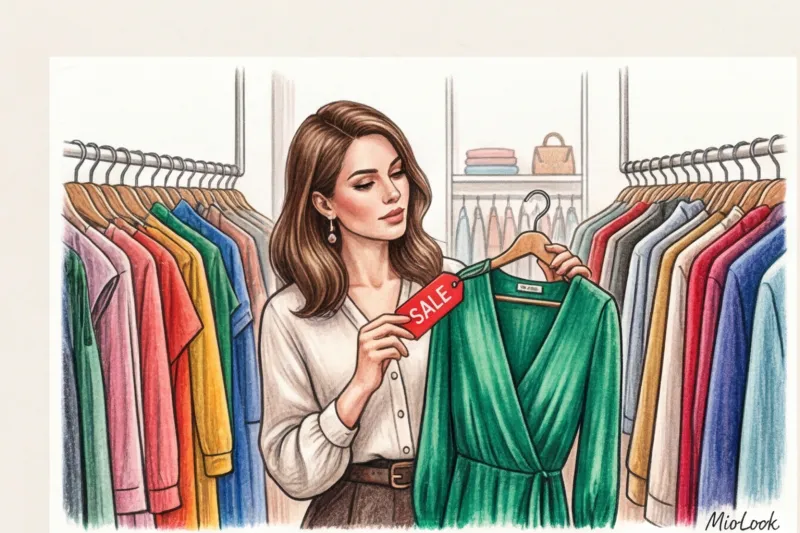
How does this work in practice? Two or three weeks before the sale starts, the seller artificially inflates the base price of an item. A dress that cost €80 becomes €130, and on the big day, it's ceremoniously crossed out and sold for €75. Technically, you've saved €5, but your brain sees "almost a 50% discount" and releases dopamine.

To avoid this trap, I strongly recommend installing browser extensions to track price dynamics (they are available for most major international platforms). A truly honest clearance (liquidation of the remaining stock) always has a logical reason: only extreme sizes (XS or XL) remain, an off-season item, or a change in the brand's product matrix. If a 70% discount applies to the entire size range during the peak season, the base price has been inflated.
Abandoned Cart Tactics and Hidden Promo Codes
One of my favorite tricks, which works with 80% of online stores (especially in the mid-range and premium segments): A week before the sale, log in to your account, add the items you want to your cart, get to the step where you enter your shipping address, and... close the tab.
For the store's algorithm, you're a "warm" customer who's let go. Within 24-48 hours, you'll receive a reminder email, and a day later, a personalized promo code for an additional discount (usually 10% to 15%) to encourage you to complete your purchase.

One of my clients saved €40 this way. formation of the basic capsule , simply by leaving a €150 cashmere sweater in a shopping cart for three days before the start of the COS brand's mid-season sale.
Reading Reviews Through a Stylist's Eyes: What to Really Look for
A 4.8-star rating means absolutely nothing. After 12 years of analyzing thousands of client photos, I've become convinced that the perfect image in a catalog is the result of carefully placed lighting, pins on the model's back, and retouching.
When you open reviews, ignore the text about "fast delivery" and filter by the presence of customer photos. Our goal is to see the actual fabric and fit.
- Find your proportions: Find a woman with a similar body type. If she has creases at the hips or the armholes pull at her shoulder, there's a 90% chance the item will fit you the same way.
- Light decides everything: The studio lighting of a store often hides the cheap shine of fabric.
I had a case where a client sent me a link to an emerald silk-effect dress for €120. In the model photo, it looked like a matte, luxurious fabric. But in the reviews, amateur photos taken with a smartphone flash showed the dress had a cheap, plasticky sheen, revealing it was 100% synthetic. We canceled the order promptly.
Your perfect look starts here
Join thousands of users who look flawless every day with MioLook. Digitize your wardrobe in just a few clicks.
Get access — €0.99 onceSize guide: how to reduce return rates
According to National Retail Federation statistics (2023), over 70% of e-commerce clothing returns are due to size mismatch and poor fit. And it's not your fault; it's that brands' sizing charts are often outrageously misleading, especially when it comes to cross-border purchases.

How can you reduce the risk? Consider the model's height. A quality product description will always state, "The model is 175 cm tall and is wearing a size S." If you're 160 cm tall, a midi dress that hits mid-calf will be ankle-length on you. Consider this when buying trousers—whether you budget for a tailor or go straight to the Petite section.

I always recommend the "two sizes" rule to my clients: if you're buying a fitted or structured item (jacket, sheath dress, classic trousers) from the brand for the first time, order your usual size and a slightly larger size. Yes, this freezes your card balance, but it saves you from disappointment when the size you want is sold out on sale.
But there's an important caveat: this rule doesn't apply to thick outerwear (down jackets, sheepskin coats) or hyper-oversized items. Always take your actual size, otherwise you'll end up drowning in bulk.
How do fabrics behave during shipping?
When unpacking your parcel, consider the physics of the materials. Items made of 100% linen, tencel, or viscose will arrive with a chewed-up appearance. This is normal; their fibers lack spring. Don't rush to return your item—steam a sample of the fabric to see how it will look in real life.
Another life hack works with knitwear: zoom in as much as possible on the website when viewing the photo of the material. If the thread is fluffy, loose, and uneven, the item will pill after the third wash. Look for a tight, smooth twist in the thread.
What you absolutely shouldn't and shouldn't buy at sales
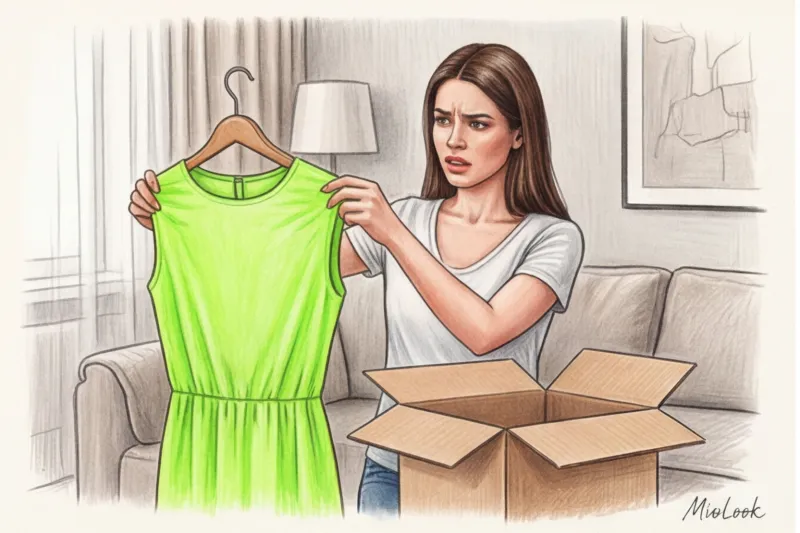
Remember the golden rule: sales are for buying essentials and premium fabrics, not for scooping up fading trends. Buying weirdly cut neon tops just because they're a third of the price is a surefire way to a cluttered closet, which we discussed in detail in the article. How to stop buying unnecessary clothes.

Here lies the key insight that will change the way we approach shopping: An 80% discount on a €20 polyester blouse isn't a gain, it's a loss. But a 20% discount on a classic double-breasted wool coat for €250 is a luxurious investment.
Evaluate purchases using the Cost Per Wear formula. A €120 cashmere sweater bought on sale that you'll wear 100 times over three winters (cost per wear: €1.20) is much more affordable than a €15 synthetic dress worn once to a party.
Pre-payment checklist: wardrobe compatibility test
Before entering the card's CVV code, we need to remove "Sale Points"—that thrill when a low price clouds our judgment. Use a strict filter:
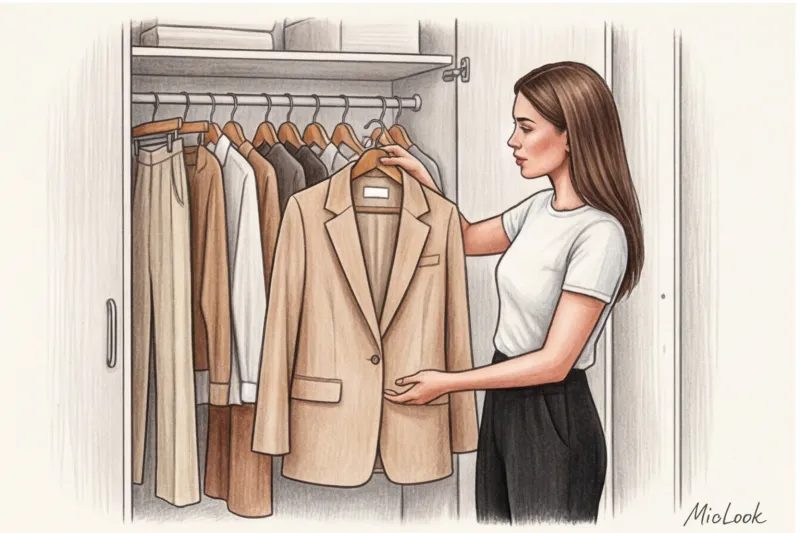
- The Rule of 3 Images: Can you create three complete outfits with this item right now, without buying anything new, using what's already in your closet? If the answer is "no," the item is removed from your cart.
- Virtual fitting: I highly recommend digitizing your closet. Use the "smart wardrobe" feature in the MioLook app Add a screenshot of a store item to the app and see how it compares to your current bottoms and shoes. Artificial intelligence will immediately highlight any gaps.
- 24-hour rule: Close the banking app. If the next morning you still remember the item and have a clear idea of where you'll wear it, buy it.
Successful online shopping isn't about quickly clicking on banners with the word "SALE." It's about cold calculation, the ability to use filters, and a clear understanding of your wardrobe's structure. Stop looking for the cheapest item on the platform—start looking for the highest-quality one within your budget.