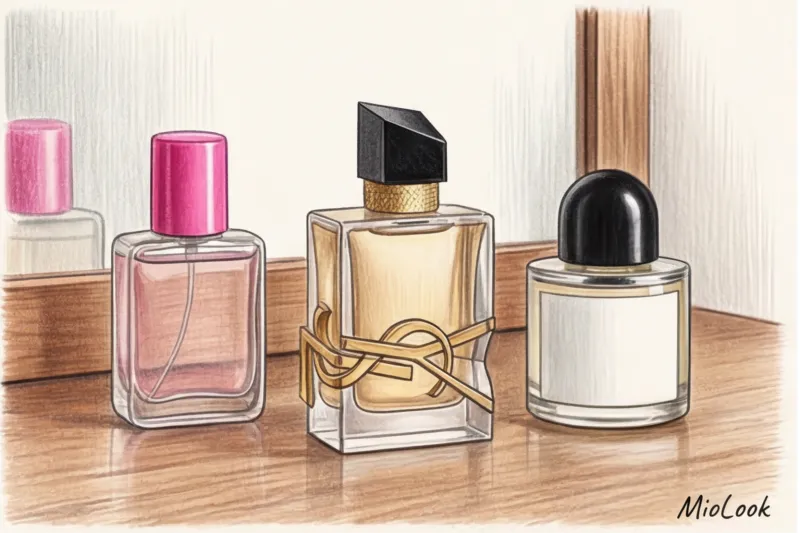
Last month, my client Anna came in for a wardrobe review completely disillusioned. She'd spent 300 euros on a bottle of an exclusive extract after reading reviews from fashion bloggers. "Olena, it smells like burnt rubber and an old church! I can't wear this to the office; my colleagues open the windows," she complained. It's a classic mistake I see all the time as a stylist: buying a complex fragrance without understanding its role in your personal image.
To avoid repeating Anna's mistakes, it's important to understand the basics. We covered this in more detail in our The complete guide to perfume families and blind shopping Perfume isn't just a pleasant sip of water. It's the invisible, yet most memorable, element of your capsule wardrobe. Before investing substantial sums, you need to clearly understand how niche perfumes differ from luxury ones, and when the extra cost is justified.
After 14 years of working with hundreds of women's wardrobes, I've learned one thing: perfect style is built on a clever mix. You don't wear head-to-toe designer pieces every day, do you? The same goes for fragrances.
The main question: how does niche perfumery actually differ from luxury perfumery?
The line between these two worlds is blurred today, but the fundamental difference lies in the business model and creative freedom.
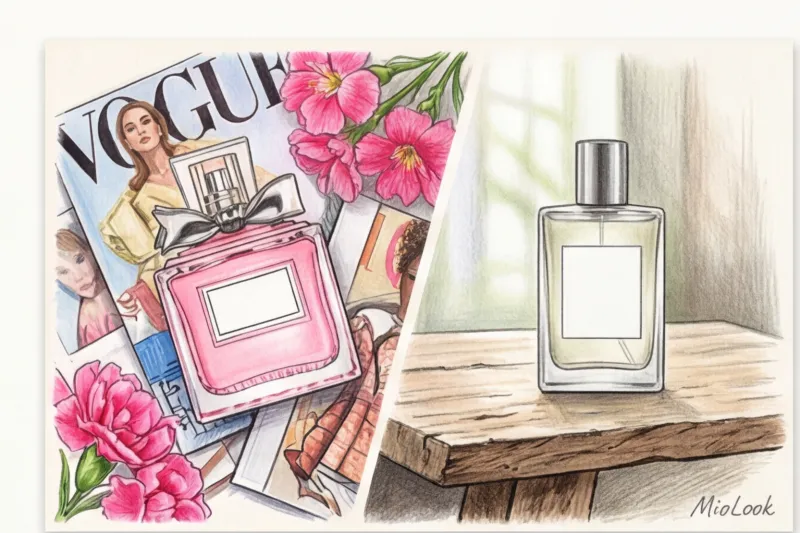
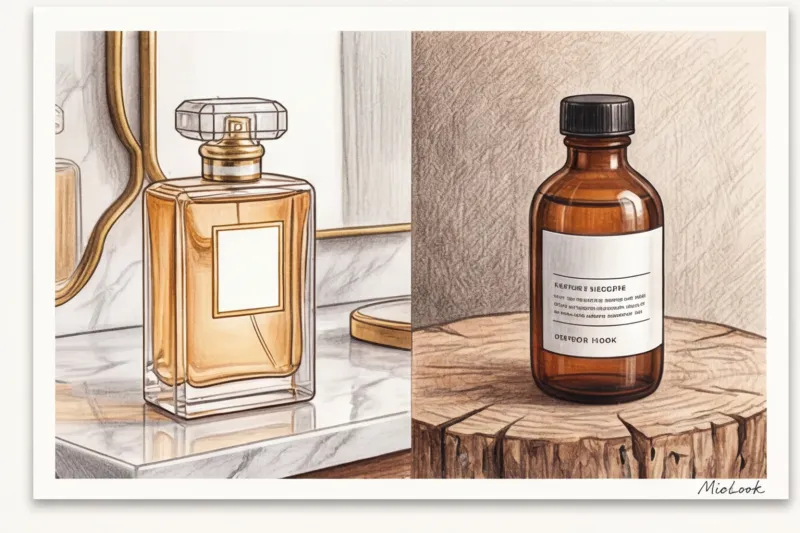
Luxury perfumes (Chanel, Dior, YSL, Givenchy) are created with one primary goal: to appeal to millions. Before a fragrance hits the shelves, it undergoes dozens of focus groups. The formula is "smoothed," removing any overly harsh, controversial, or unusual notes. The brand invests enormous budgets in advertising featuring Hollywood stars. Luxury is understandable, safe, and extremely high-quality beauty.
Niche (selective) perfumes (Byredo, Le Labo, Nasomatto, Frederic Malle) works differently. Here, the perfumer, not the marketer, is in charge. No focus groups. Want a creator to create a fragrance with notes of wet asphalt, blood, metal, or those same burnt tires? They'll make it happen. The target audience for this niche is a select group of connoisseurs open to olfactory experiments.
"Choosing between niche and luxury isn't a choice between good and bad. It's a choice between universal and individual. But to make the right choice, you need to know your olfactory group."
That's why I always make my clients study Michael Edwards' Fragrance Wheel, created back in 1992. If you know your base is woody-oriental compositions, you won't blindly buy a niche aquatic freshener for a huge price, no matter how beautiful the brand's legend.
Luxe is a basic trench coat, niche is an avant-garde jacket
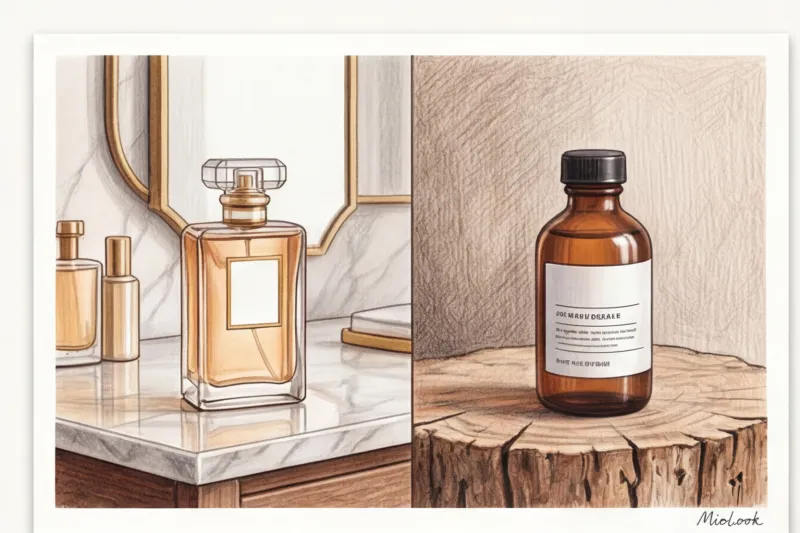
Let's translate this into clothing. A luxury perfume is like a classic beige Burberry trench coat or a perfectly fitting white shirt. It's appropriate everywhere, it attracts compliments, and it makes your look luxurious and relatable. This is what's known as the "halo effect"—our brain perceives familiar, harmonious compositions as a marker of status and grooming.
Niche is a complex, asymmetrical jacket from Maison Margiela. On some, it looks like a work of art, while on others, it looks like a silly tailoring mistake. Niche can be ill-fitting, clash with your skin tone, and even give people a headache. But if you find the perfect bottle, it will become your unique signature.
Your perfect look starts here
Join thousands of users who look flawless every day with MioLook. A smart AI stylist will help you create a capsule look to match any perfume.
Get access — €0.99 onceThe Anatomy of Price: What Are We Paying for in Luxury and Niche?
There's a persistent myth that niche products are expensive because of "natural and rare ingredients," while luxury is "cheap chemicals." This is nothing more than slick marketing.
According to perfume industry statistics, the liquid (juice) itself accounts for only 5-10% of the cost of a bottle of luxury perfume. What do we spend the other 90% on? This includes ambassador fees, the development of a heavy glass bottle, complex logistics, and global advertising.
The cost structure is different in this niche. Yes, brands sometimes use expensive rose absolutes or natural oud. But the main reason for the high price is the small print runs. Producing 500 bottles is always several times more expensive per unit than producing 5 million. Plus, you pay a premium for exclusivity and the legend.
Now let's debunk the myth of naturalness. Since 1973, the IFRA (International Fragrance Association) has strictly monitored the safety of perfumes. Many natural ingredients are banned or severely restricted due to their allergenic potential. For example, natural oakmoss—the base of classic chypres—is practically never used today. Therefore, both your $100 luxury and your $500 niche fragrances are made primarily of high-tech synthetics. And that's great, because synthetics are stable and safe.
Longevity and sillage: who wins?
Here lies the most counterintuitive insight that often shocks my clients: a high price does not guarantee durability Moreover, luxury fragrances often last longer and smell more smoothly than expensive experimental niche compositions.
Why does this happen? Huge conglomerates like LVMH or L'Oréal spend millions of euros on technical research. They hold patents for unique fixative molecules (such as ambroxan or iso e super) that lock the fragrance into the skin for 24 hours. Niche indie brands often don't have such budgets for laboratories, so their fragrances may smell more natural for the first hour but quickly fall apart on the skin.
Furthermore, longevity depends on physics—the volatility of the notes themselves. If you buy a niche citrus cologne for €400, it will still wear off after 2-3 hours. Citrus molecules are too light to linger on the skin for long. Resins, woods, and musks will linger for days, even in the budget segment.
And don't forget about olfactory blindness (anosmia). If it seems like your expensive perfume has lost its scent after an hour, your brain has likely simply blocked out the constant irritant. Ask others around you—they're sure to smell your scent.

Access to MioLook for €0.99 — one-time payment
A smart AI stylist will create the perfect look for work, a date, or a holiday in just a few clicks.
Get access — €0.99 oncePerfume etiquette: where niche and luxury are appropriate
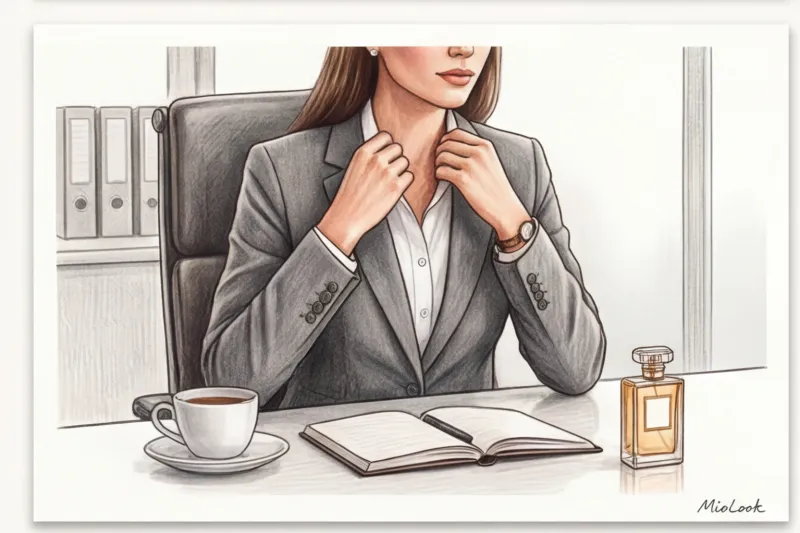
Clothes and perfume should work together seamlessly. I once had a woman approach me who was struggling to pass final interviews for top positions at conservative banks. We reviewed her wardrobe—impeccable suits, perfect hair. Then I asked her what perfume she wore. It turned out to be Baccarat Rouge 540 extract. The suffocating gourmand, bandages, and iodine notes literally filled the conference room, violating all the interviewers' personal boundaries.
Remember the rule: business dress code does not tolerate perfume egoism For more information on how to put together an outfit for such occasions, read the article “ How to dress for a job interview: the best looks ".
- For the office and business meetings: Choose high-quality luxury. Clean musks, light florals, delicate citrus. The scent should be noticeable only when held (at a distance of 15-20 cm), not announce your presence from 10 meters away.
- For evening outings, creative events and personal branding: This is where niche is your best ally. Complex woody notes, smoke, spices, and alcoholic accords. Here, perfume becomes your manifesto and helps you stand out from the crowd.
Checklist: How to build a perfume wardrobe without spending too much
My philosophy as a stylist is quality over quantity. You don't need a shelf of 50 bottles to be stylish. A clever perfume capsule is enough.
The three-bottle rule
I recommend starting with the basic three:
- Everyday basics (luxury): Something universal, fresh, and non-irritating. Your "white shirt."
- Evening accent (niche): A deep, complex fragrance for special occasions and dates. Your "tuxedo" or "silk dress."
- A fragrance for yourself: A composition that may seem strange and incomprehensible to others, but it calms you personally. Wear it at home or on solitary walks.
The Art of Testing
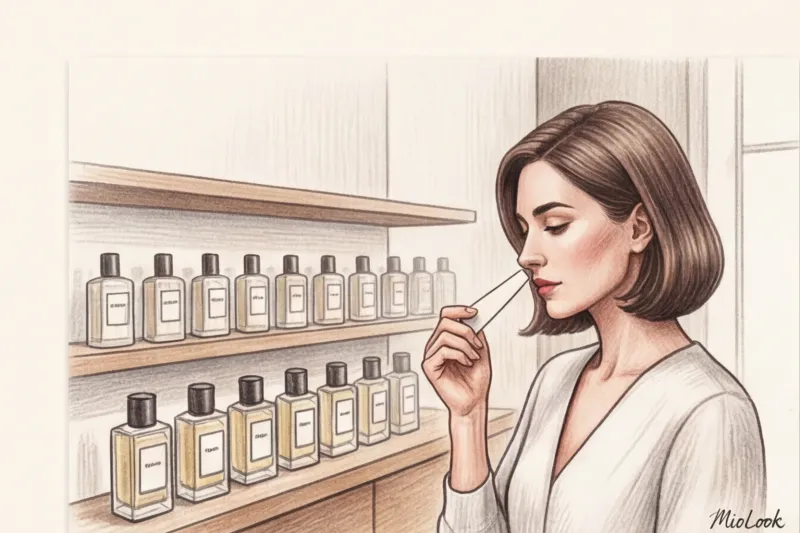
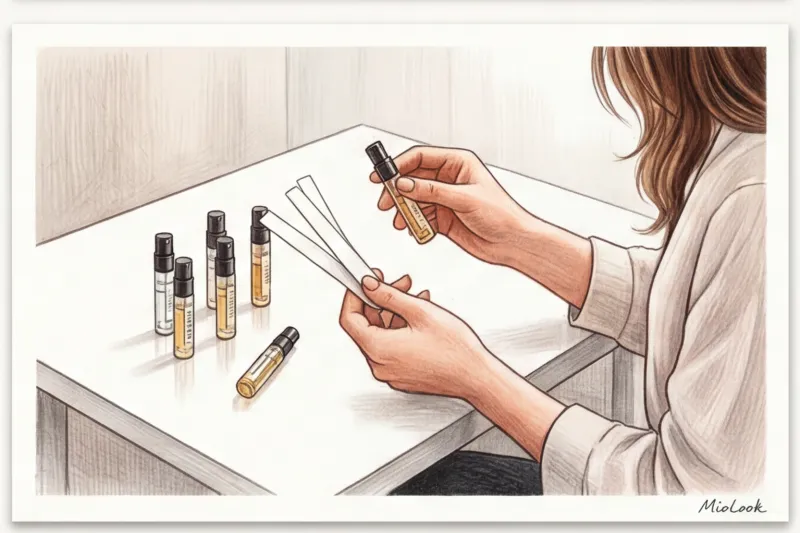
Never buy a complex fragrance after testing it on a paper blotter. The paper is cold and dead. The scent will unfold completely differently on your warm skin. Spray the perfume on your wrist and let it sit for 24 hours. Listen to how it smells in the cold, in a warm room, or after a shower.
A smart way to save money is to buy 2-5 ml decants. This will last for a couple of weeks of daily wear to see if the fragrance is worth the €300 price tag.
Integration into the image
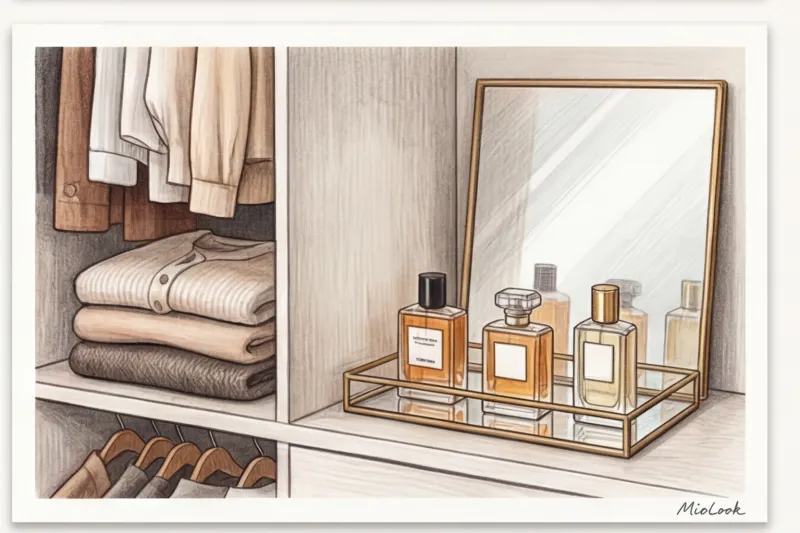
Over 14 years of practice, I've developed a strict rule: a scent should complement the texture of the fabric. Smooth, flowing silk calls for cool white florals (lily of the valley, jasmine, tuberose). But loose tweed, dense wool, or cashmere perfectly capture and complement dry woody notes, vetiver, and spices.
To avoid confusion in these combinations, my clients use modern tools. In the app MioLook We use the "smart wardrobe" feature to create complete looks. You can upload photos of your bottles and visually link them to specific clothing items. The program (and your stylist) will help you see that a heavy oriental oud doesn't go well with a light linen sundress.
Bottom line: is it worth overpaying for niche perfume?
There's one exception to this rule: these tips won't work if you're allergic to perfume or your office has a strict "no scent" dress code (for example, if you're a doctor or work with children). In this case, your best scent is the scent of a clean body and freshly washed clothes.
For everyone else, my verdict is this: niche is art, emotion, and olfactory expansion of horizons. Luxury is status, reliability, and impeccable taste, understandable to everyone.
Don't overpay for a niche brand just because it's trendy to smell like "bandages" or "burnt wood." Buy an emotion. Invest in the bottle that makes you sit up straight and feel like a million bucks, whether it's a bestseller from Chanel or a limited edition from an artisan perfumer. Your style is how you carry yourself, and perfume just subtly enhances that message.