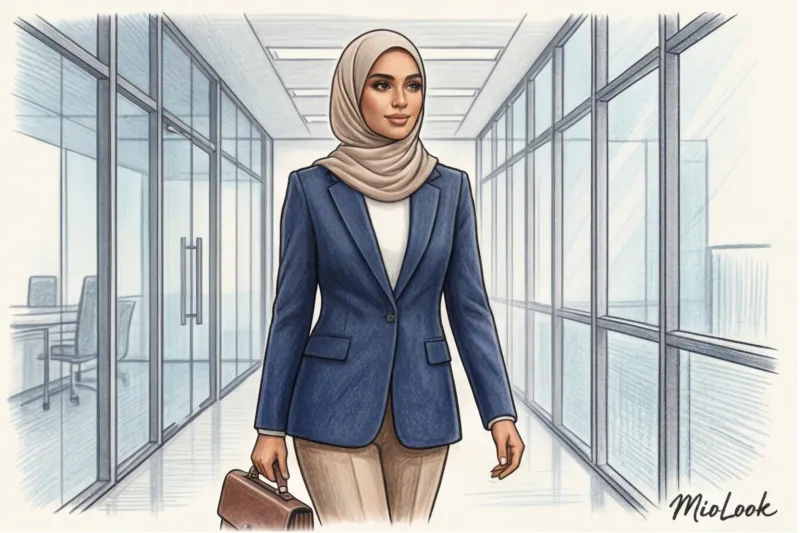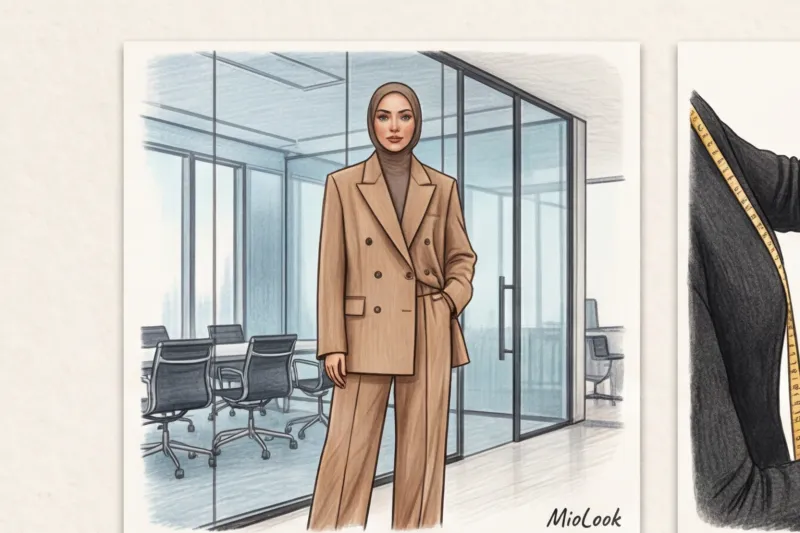
One of my clients, Amira, a brilliant financial analyst, nearly failed her probationary period at a Swiss bank. The problem wasn't her skills, but the way the local HR department interpreted her appearance. Seeking to comply with religious norms, Amira wore loose, shapeless tunics and loose cardigans made of soft knitwear to work. In the strict corporate world of Geneva, this relaxed silhouette was interpreted not as modesty, but as sloppiness and a lack of professionalism.
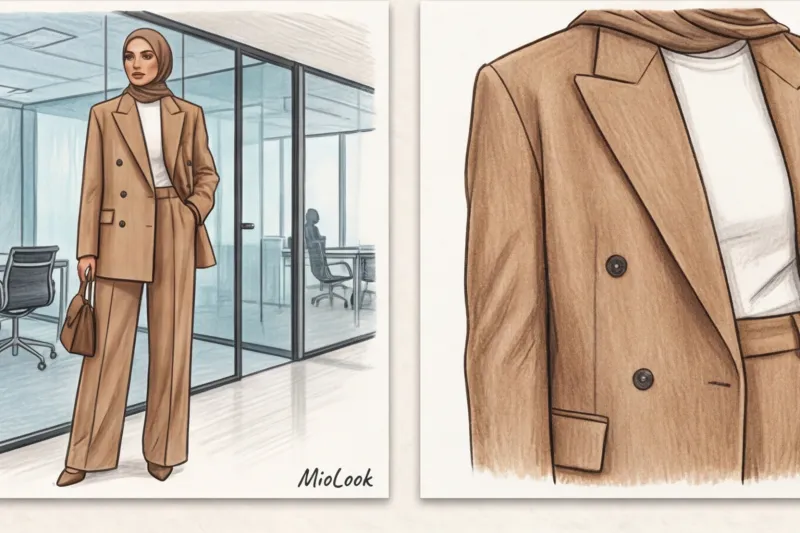
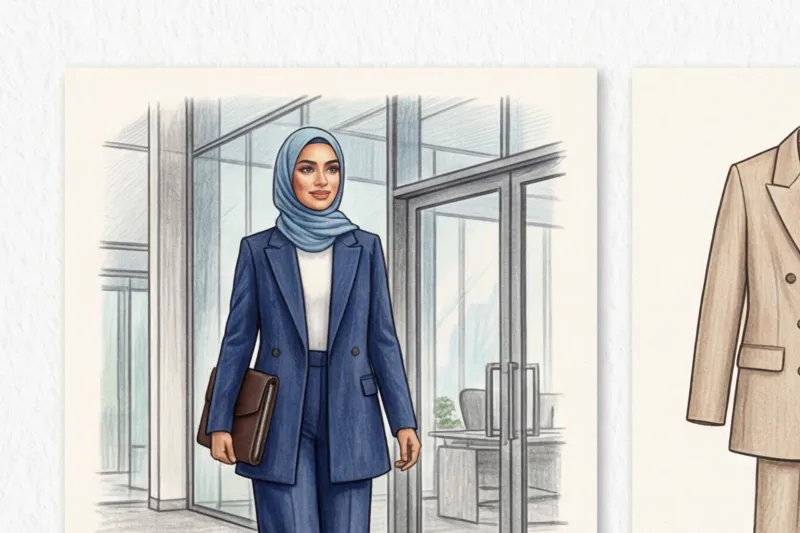
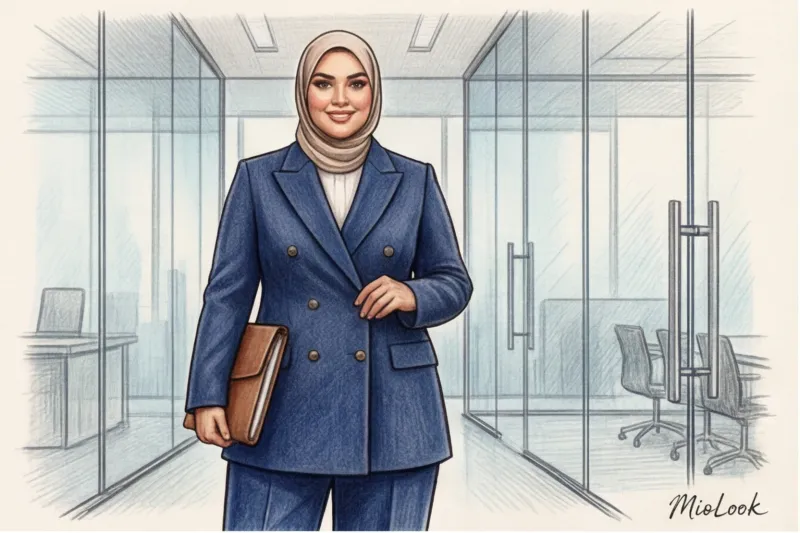
We solved this problem in one weekend by buying a double-breasted, heavy wool pantsuit from Massimo Dutti. It covered every curve, but the sharp shoulder line instantly reasserted her status as a confident expert. In 12 years of working as a personal stylist, I've learned: Women's business suits for Muslim women — it's not a compromise between faith and career. It's pure wardrobe architecture. We discussed the evolution of this style in more detail in our The Complete Guide to Business Attire for Muslim Women: Stylish Looks.
Today I'll tell you why buying clothes "three sizes too big" is the worst thing you can do to your office style, and how to choose the perfect basics in the European mass market.
Muslim Women's Business Suits: From Stereotypes to Architectural Power Dressing
For a long time, closed-off office attire was associated with boring, long mermaid skirts and dull turtlenecks. But corporate culture is changing. A 2024 study by global trend bureau WGSN found that the "Modest Power Dressing" segment grew by 34% over the past year, with structured pieces playing a key role.
The connection between modesty and status operates at a subconscious level: clean, crisp lines convey authority. When fabric holds its shape regardless of the contours of your body, you command the attention of your conversation partner. You compel them to look at your face and listen to your ideas, rather than be distracted by the details of your clothing.
“In Western companies there is an official HR term - business professional attire with modesty accommodations (Business professional attire with a modicum of modesty). It implies maintaining strict cut standards while varying the length and fit level." This is the very argument you can confidently use in a dialogue with management if your dress code is too conservative.
Your perfect look starts here
Join thousands of users who look flawless every day with MioLook.
Get access — €0.99 onceThe Anatomy of a Perfect Cut: How to Conceal Your Silhouette Without Losing Your Professionalism
Italian tailors use the term "canvas." In closed-toe clothing, it's the canvas that's responsible for your silhouette. The larger the area of skin covered, the more perfect the shape of the fabric should be.
Jacket: The shoulder girdle decides everything
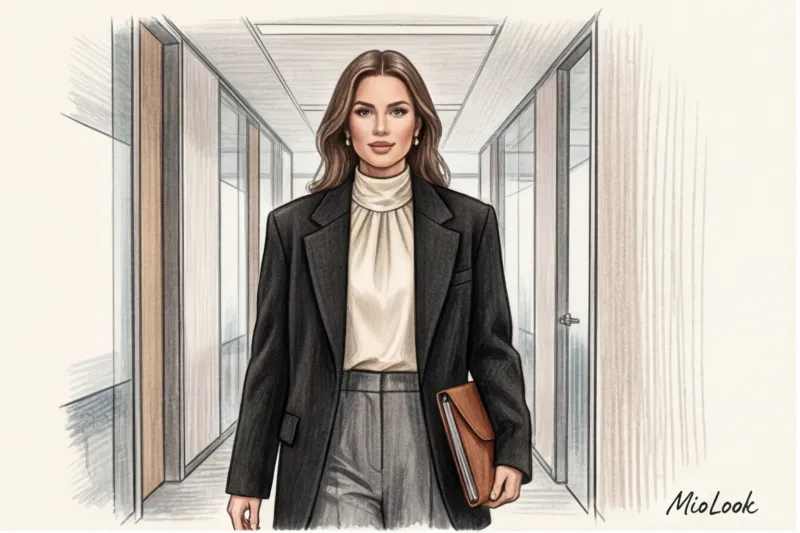
The shoulder seam should not slope down in a soft wave, unless it's an intentional architectural oversize with thick shoulder pads. The correct length for a Muslim woman in the office is mid-thigh. It reliably conceals the hip area, but doesn't cut off the height as aggressively as knee-length jackets.
I always recommend double-breasted jackets. When buttoned, they create a box-fit, which conceals the bust much more effectively than single-breasted jackets, which often split at the button when you move.
Trousers and skirts: a balance of freedom and status
Forget about straight-leg, classic trousers with pleats—in a closed wardrobe, they often cling to your calves as you walk. Your choice: palazzo pants and wide-leg trousers with deep pleats at the waist. The high waist and pleats create a slack in the fabric, ensuring proper draping.
As for skirts, the ideal option for the office is an A-line or a crisp pleated midi-length (just above the ankle) or maxi. Pair them with sock-like ankle boots or tall boots that extend below the hem to avoid a strip of exposed skin.
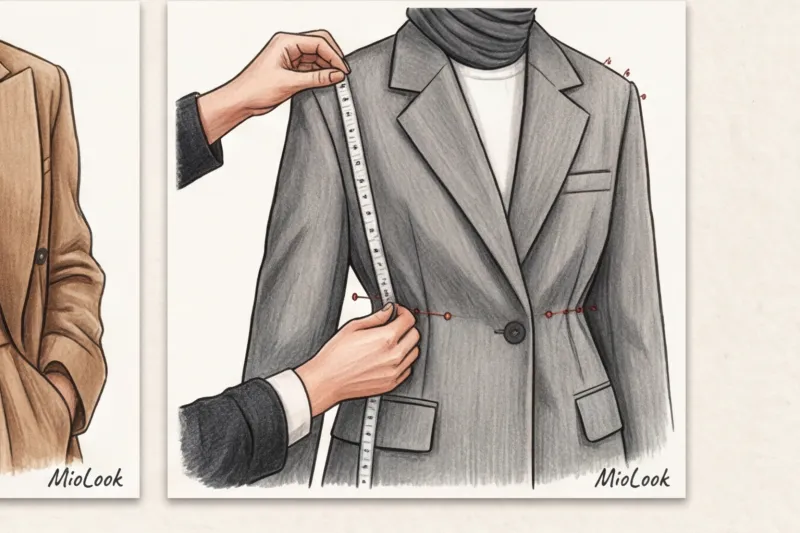
The biggest mistake of a modest wardrobe is buying clothes that are two sizes too big.
This is my personal cry from the heart as a stylist. I often see girls who hide in men's hoodies or oversized suits bought on sale. They think it makes them look modest. In reality, they look like insecure interns wearing their dad's clothes.
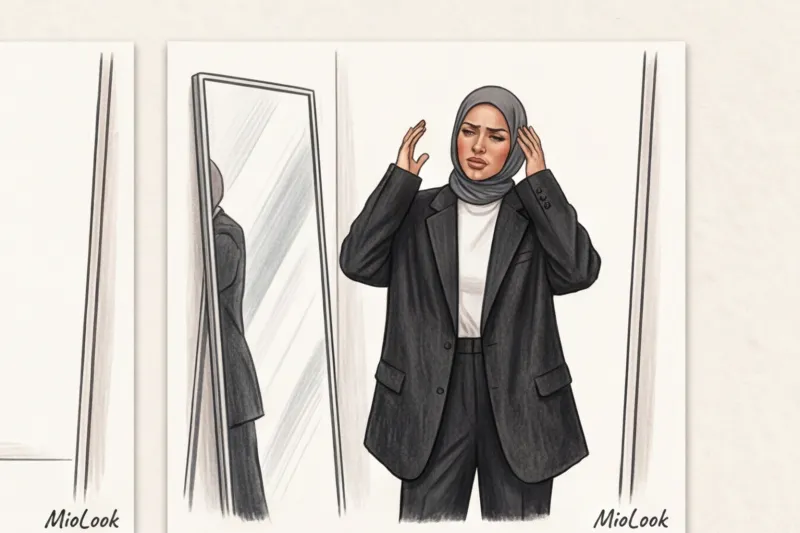
There's a huge difference between "architectural oversize" (a garment that fits your size but is cut in a wide cut) and simply "big." If you buy a jacket two sizes too big, the armhole sags, the sleeves become comically long, and the collar hangs away from the neck, throwing off the proportions.
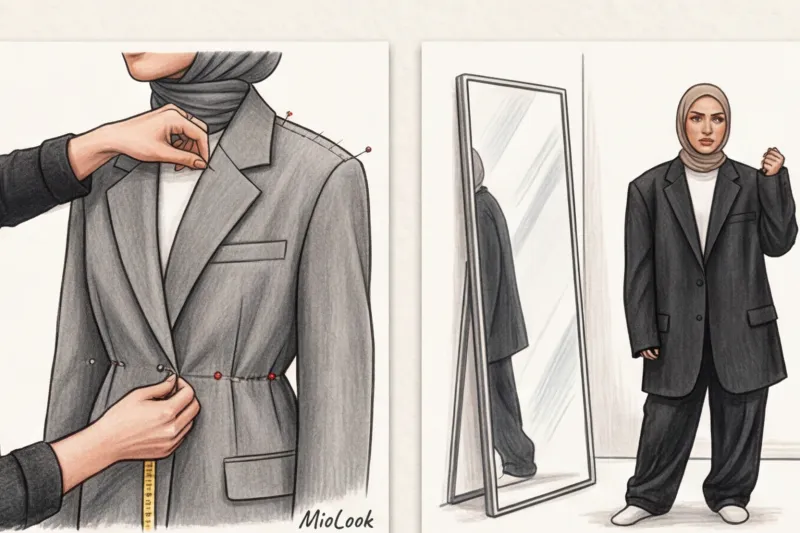
How a professional works: We take a jacket in your size with an oversized fit. If it's too boxy, we take it to a tailor and have the back waistline taken in minimally (just 2-3 cm). This keeps air between your body and the fabric, but adds structure. Important limitation: This trick absolutely doesn't work with soft knits (jersey)—the thin fabric will still sag. We only need dry, dense materials.
Fabrics that don't let you down: density, weight, and camouflage
According to the Fashion Institute of Technology (FIT, New York, 2023) standards, to create clean, non-transparent, and non-clingy silhouettes, fabric density (GSM - grams per square meter) should be at least 250. Anything lighter will become staticky, stick to your legs when you walk, and reveal your body contours in a headwind.
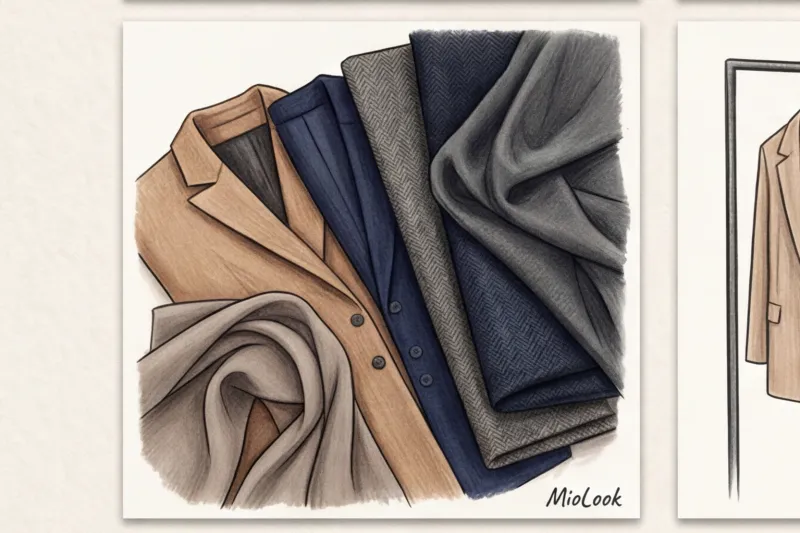
When I go shopping I always use flashlight test Turn on the flashlight on your smartphone, hold it close to the back of the pants in the fitting room, and look at them from the front. If you see a clear spot of light, the fabric isn't suitable for a modest wardrobe; in daylight, it will reveal the silhouette of your legs.
- Ideal composition: from 60% wool, 30% viscose and strictly no more than 2-5% elastane (more elastane - more tightness).
- What to avoid: Summer linen and thin cotton. They wrinkle instantly, losing their formality.
- What to replace in summer: Tropical wool is a plain weave fabric made from tightly twisted wool threads. It breathes better than cotton but falls in heavy folds.
Access to MioLook for €0.99 — one-time payment
A smart AI stylist will select the perfect look based on your dress code requirements.
Get access — €0.99 onceWhere to look for a base: European mass-market vs. Modest brands
Many Muslim women limit themselves to specialized brands. But the truth is, the perfect suit can be found in high-quality European mass-market stores.
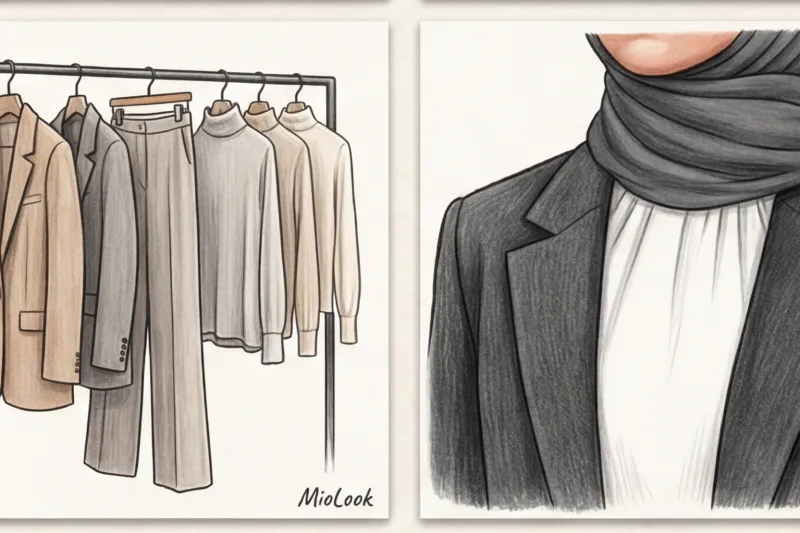
Scandinavian brands COS And Arket — is a mecca of architectural minimalism. Their patterns are built primarily on volumes and straight lines. Here you can find perfect wide-leg trousers in a heavy wool blend for €90–€120.
Massimo Dutti — the leader in premium looks. But be careful: ignore their flowing lyocell suits (they're too thin) and instead hunt for the limited-edition Studio collections. A double-breasted wool jacket there will cost you around €150–200.
Let's do the wardrobe math (Cost Per Wear). One excellent suit will cost you around €400. You'll wear it to work at least 50 times a year (divided into top and bottom). Cost per outing is €8. A cheap synthetic suit for €80 will pill, lose its shape after the first dry cleaning, you'll wear it 5 times (€16 per outing), and feel uncomfortable. Invest in quality.
Layering without the "cabbage" effect: styling and hijab
The office is often hot. Wearing a cotton shirt under a tightly buttoned jacket is a guaranteed way to overheat.
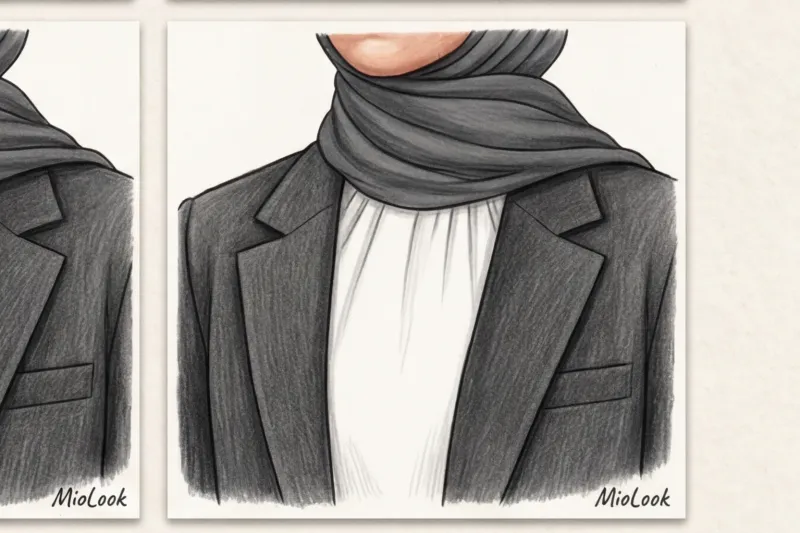
Use a smart base layer (inner wear):
- Dickies — a brilliant invention. They create the illusion of a shirt or turtleneck around the neck and décolleté, leaving the back and arms free.
- Thin turtlenecks made of 100% merino wool - They regulate body temperature better than cotton.
- Silk blouses with ascot collars — a bow or fabric tie around the neck perfectly conceals the gap between the hijab and the jacket collar.
Integrating the hijab into a corporate dress code is an art unto itself. Avoid shiny satin and silk with bold prints. Matte textures such as georgette, thick chiffon, or fine premium jersey look premium in the office. The ultimate corporate formal is monochrome, with the scarf perfectly matching the shade of the suit or blouse, and the ends neatly tucked under the jacket.
Ready to get started?
Try a free plan – upload your wardrobe to MioLook and build capsules without commitment.
Get access — €0.99 onceKatarzyna's Checklist: 5 Steps to Trying on a Suit
To avoid unpleasant surprises at a meeting, run any suit through this checklist right in the fitting room:
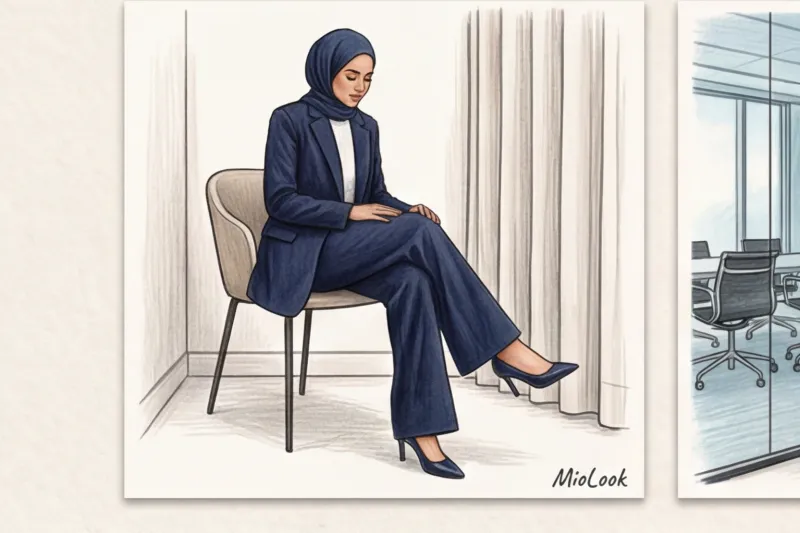
- Raise your hands up. Check that the jacket doesn't ride up too high, exposing your lower back. Are the sleeves long enough?
- Sit on a chair. This is a critical test for trousers. While they may look loose when standing, the fabric may be too tight around the hips and knees when sitting. Leave at least 3-4 cm of clearance.
- Take a wide step. Is there enough stride width in a maxi skirt or trousers without the fabric being pulled tight in the groin area?
- Go to the light source. Move out of the booth closer to the window to check the transparency of the fabric in daylight (artificial light often obscures transparency).
- Tilt test. Is the lapel of your jacket or the neckline of your blouse so that when you bend over a table, your underlayer is not visible?
Modesty in business isn't an attempt to hide or become invisible. It's a conscious choice about what you want to convey to the world. By using dense fabrics, architectural cuts, and a precise fit, you create a protective presence that commands respect even before you utter the first word in a negotiation.