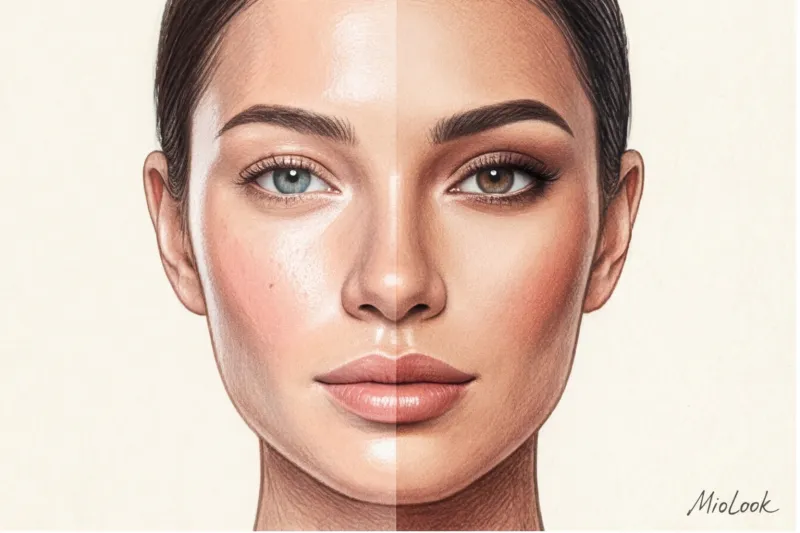
Last Tuesday, Anna, a top manager at a major fintech company, came to me for a styling consultation. She was wearing an immaculate Jil Sander wool suit worth around €2,000, a minimalist Cartier watch, and a prim hairstyle. However, her look was falling apart, and it wasn't the cut of the jacket that was the cause. By midday, her foundation had caked in her expression lines, accentuated the flaking on her cheeks, and her T-zone was noticeably shiny, creating a feeling of untidiness. Her entire prestigious, carefully curated wardrobe paled in comparison to her runny makeup.

While analyzing her morning beauty routine, we quickly found the culprit. It turned out that Anna had been washing her face daily with a harsh, alkaline gel, "until it squeaks," in an attempt to remove "nighttime toxins." And here we come to one of the most common questions my clients ask me: is it necessary to wash your face with a cleanser in the morning if you want your makeup to look expensive and last all day?
As a personal stylist, I often repeat: your wardrobe doesn't start with the hanger, but with the condition of your skin. The lipid barrier is your most important and expensive primer. We discussed this foundation in more detail in our A complete guide to basic facial skin care as the secret to long-lasting makeup.
The connection between morning washing and a status wardrobe
There is an ironclad rule in styling: texture decides everything You can wear a premium silk blouse, but if your skin looks dehydrated and dull and your foundation feels like a mask, the visual value of your look diminishes dramatically. Flaking and uneven skin tone act like a magnifying glass—they instantly draw the eye and highlight even the slightest sloppiness.
Anna's story with the Jil Sander suit is a classic example of how an aggressive morning routine can ruin a wardrobe investment. Washing her face with a harsh gel stripped away the natural lipid layer, leaving her skin completely defenseless against makeup.
"Moisturized skin without a damaged stratum corneum is the perfect canvas. Only with such a base can foundation blend seamlessly with the face, creating a 'second skin' effect, a key hallmark of the 'quiet luxury' (Old Money) style."
That's why your approach to morning cleansing needs to change: it's not just a hygiene routine; it's the first and most important step in your makeup routine and, as a result, in building your personal brand.
Should you wash your face with cleanser in the morning? Debunking the myths
I'll answer directly: Most women with normal, dry and sensitive skin do not need a morning cleansing gel at all. For decades, the beauty industry has been selling us the idea of twice-daily, harsh cleansing, but modern dermatological data suggests otherwise.
The main myth that makes women reach for a facial cleanser at 7 a.m. is the belief that overnight, the skin releases certain "toxins" and impurities that need to be immediately washed away. From a physiological perspective, this is absurd. The body eliminates toxins through the liver and kidneys, not through the pores on the face.
According to a 2023 report from the American Academy of Dermatology (AAD), what forms on our face overnight is precious sebum. This complex mixture of lipids, squalane, and ceramides acts as a natural protective barrier. By stripping it with harsh sulfates, you're voluntarily depriving yourself of nature's best makeup base.
Access to MioLook for €0.99 — one-time payment
A smart AI stylist will select the perfect look based on your color type and appearance.
Get access — €0.99 onceWhen Water Is Your Best Beauty Tool
The natural pH of healthy skin is around 5.5 (slightly acidic). Most foaming gels have an alkaline pH of 7.0 to 9.0. Simply rinsing your face with warm water at room temperature does not upset this delicate pH balance. Water does an excellent job of refreshing the face, removing any residue from night cream, and preparing the stratum corneum for daytime skincare without damaging it.
Who really needs a morning gel?
Of course, there are exceptions to every rule. I always warn my clients that skipping the morning gel It doesn't work in the following cases:
- Oily skin with active seborrhea: if excess sebum is produced overnight, which prevents the penetration of day cream.
- Acne in the acute stage: when it is necessary to wash away pathogenic flora.
- Using thick occlusive ointments at night: for example, heavy textures with petroleum jelly or active retinol, which are not completely absorbed.
But even in these cases, you should choose the softest, low-foaming emulsions possible without SLS and SLES (sulfates).
The Anatomy of Long-Lasting Makeup: How Cleansing Affects Foundation
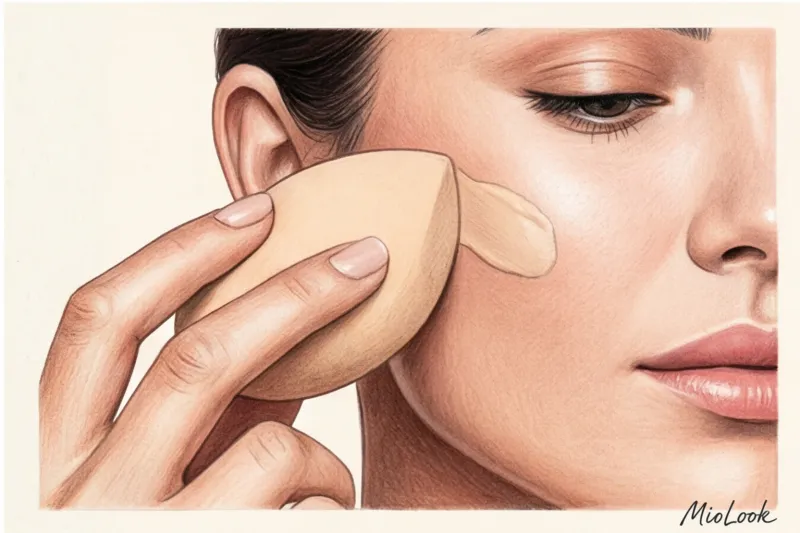
Let's look at this from a cosmetic chemistry perspective. Foundation is an emulsion, most often water-in-oil or oil-in-water. When you apply such an emulsion to skin stripped of its natural lipids after a squeaky-clean wash, disaster ensues.
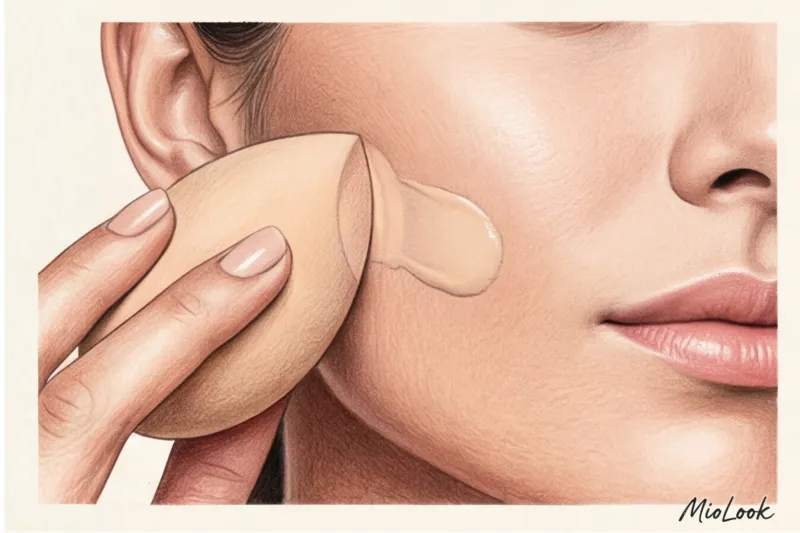
Overdried skin behaves like a sponge: it greedily draws the water phase from the foundation, trying to hydrate itself. As a result, only dry pigment remains on the surface of the face. This is why, 2-3 hours after application, the foundation begins to collect in creases, accentuating wrinkles and looking like dry plaster.
Many people try to solve this problem with silicone primers. But for a daytime business look, this isn't the best solution. Silicone creates a greenhouse film that weighs down makeup. The natural lipid barrier works much smarter: it bonds with the foundation, ensuring 10-12 hours of wear. Incidentally, this nuance is especially critical when you're creating Perfect makeup for a black dress , where the face should look flawlessly porcelain in contrast with the dark fabric.
The "Ricochet Effect": The Main Mistake That Cheapens Your Look by Midday
The paradox is that the desire to mattify skin in the morning leads to the opposite result during the day. This phenomenon is known in dermatology as the "rebound effect."
A study published in the Journal of Clinical and Aesthetic Dermatology (2022) found that when you completely strip your skin of oil with aggressive cleansing, the sebaceous glands receive an emergency SOS signal. To restore the damaged barrier, they begin to produce sebum in hypervolume—30–40% more than normal.

As a result, by 12:00 PM, a "cosmetic collapse" sets in: the face is shiny, foundation dissolves in excess oil, and eyeshadow creases in the crease of the eyelid. What do most women do in this situation? They reach for their powder and blotting papers.
Layering powder on top of dissolved foundation and sebum creates a "layer cake" effect on the face. This texture instantly reveals untidiness and ruins the elegance of even the most expensive office outfit.
Your perfect look starts here
Join thousands of users who look flawless every day with MioLook. Digitize your wardrobe in just a few clicks.
Get access — €0.99 onceSecret Stylist Formulas: A Skin Prep Checklist Before Makeup
Over 12 years of practice, I've developed several effective skin prep formulas that I recommend to my clients before important events. They work like recipes: consistency and texture are key. How to combine makeup and clothes , we already wrote, but the base always starts with care.
For dry and mature skin
- Formula: Warm water + moisturizing toner with hyaluronic acid + nourishing cream with ceramides.
- Result: A radiant canvas where anti-aging makeup won't settle into wrinkles. Morning gel is strictly prohibited here.
For combination skin (like my client Anna's)
- Formula: Micellar water only on the T-zone (nose, forehead, chin) + thoroughly rinse the entire face with water + light serum with niacinamide.
- Result: Perfect balance. The T-zone is mattified, and dry cheeks are not tight.
For oily skin
- Formula: Enzyme powder or soft gel with pH 5.5 + balancing toner + mattifying fluid.
- Result: Controlling sebum without overdrying. A cleanser is essential here, but it needs to be gentle.
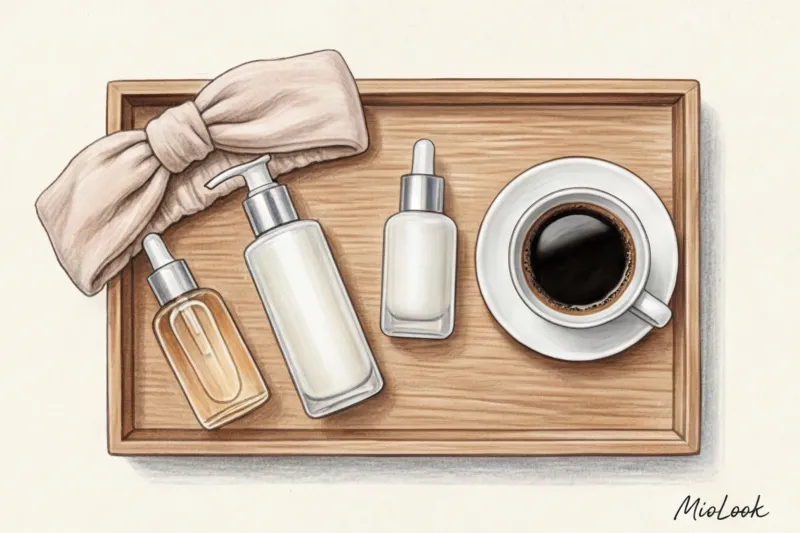
The 3-Minute Golden Rule: Never apply foundation immediately after skincare. Allow the foundation exactly 3 minutes to set. This allows the emulsifiers to evaporate, the active ingredients to be absorbed, and the makeup to prevent it from moving with the brush.
Balancing Your Beauty Routine and Dress Code: Putting the Finishing Touches
In business attire—whether formal with three-piece suits or relaxed smart casual with cashmere sweaters and jeans—the face is the main focus. Strictly defined clothing demands a flawlessly even yet vibrant complexion. A mask of heavy foundation on dry skin always cheapens the look.
When you ditch the aggressive morning cleanser and maintain your lipid barrier, you no longer need thick, camouflaging textures. You can switch to lightweight BB creams, cushions, or fluid tints. A translucent, slightly radiant skin texture is a sign of high status and well-groomed appearance. By the way, in the app MioLook We often see how users who have mastered light makeup on healthy skin begin to choose more complex, elegant architectural silhouettes in clothing – they gain self-confidence.

To sum it up: your basic skincare routine is as important an investment in your personal brand as buying the perfect jacket or an expensive handbag. Try this experiment: skip your morning cleanser for a week and simply rinse your face with water. You'll be surprised how long-lasting your makeup will be, your skin will be more radiant, and your overall look will look like it was created by a team of professional stylists and makeup artists.