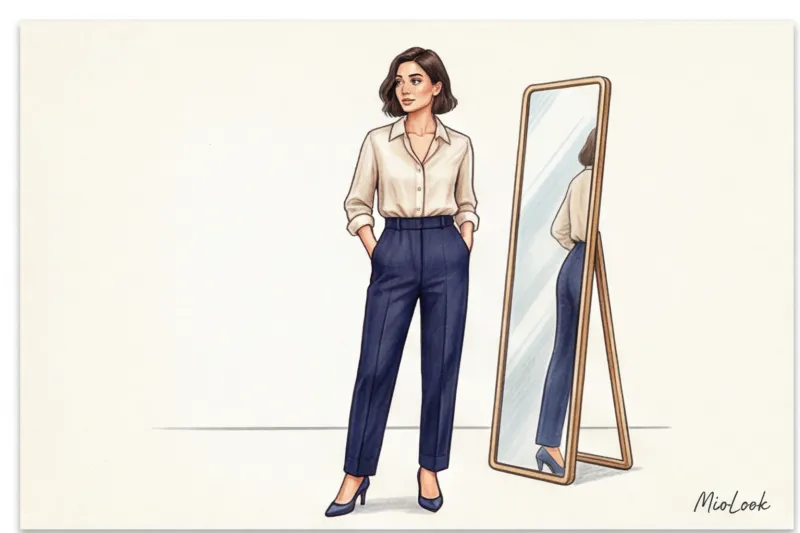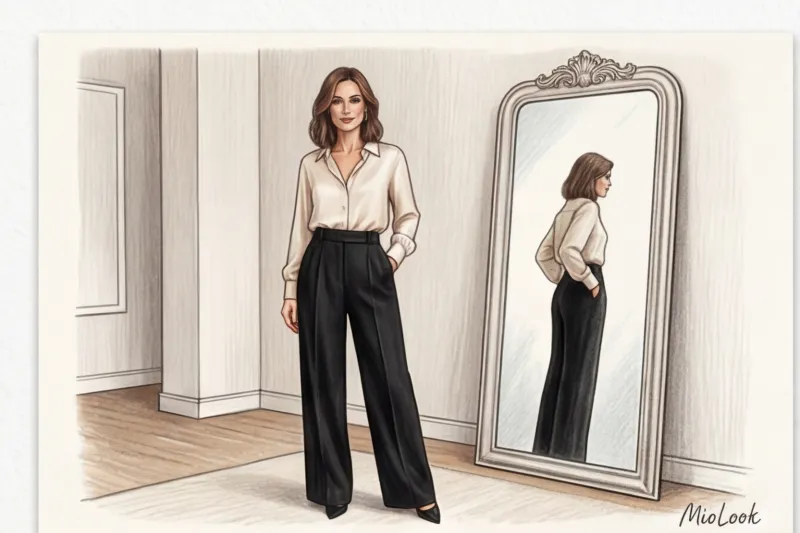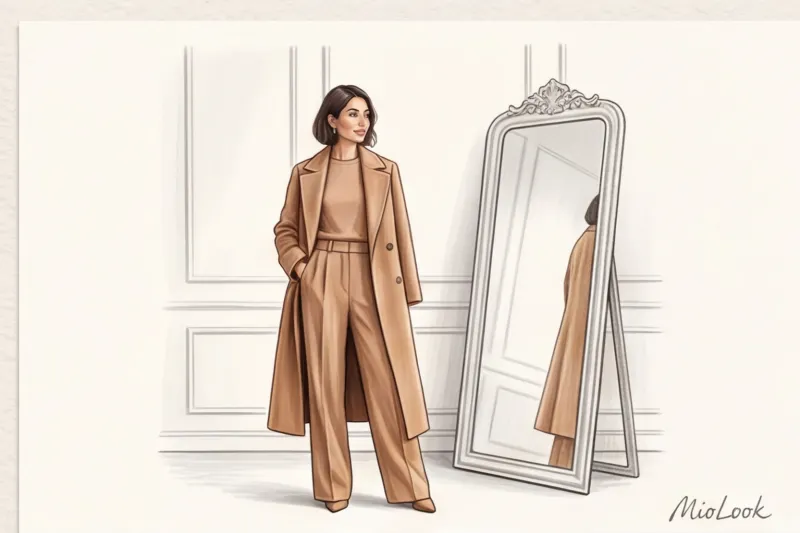
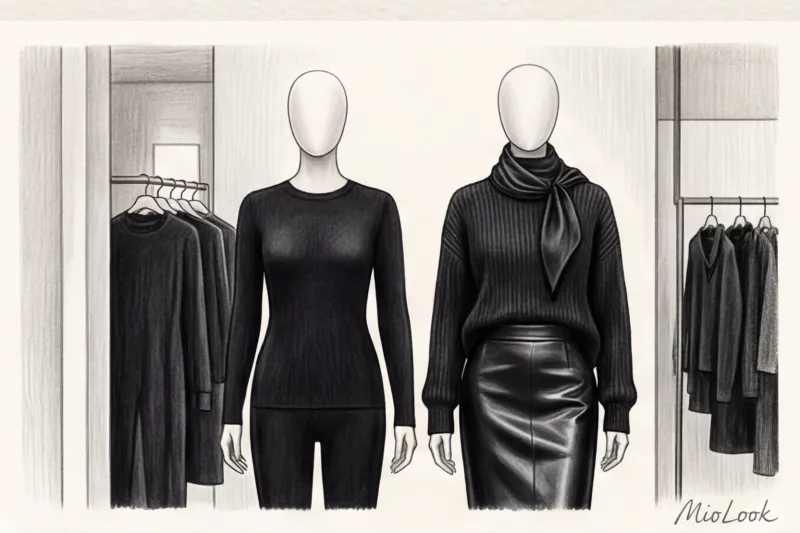
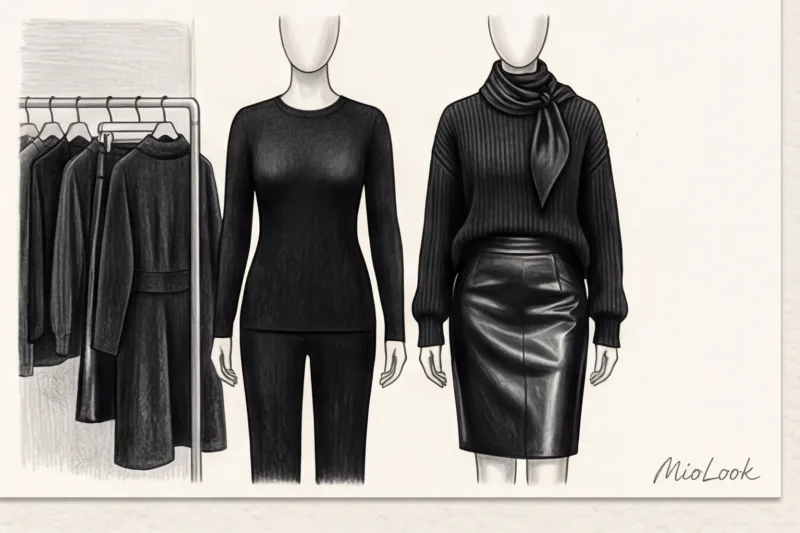
How many times have you been advised, "Just wear all black, it's slimming and elongating"? I bet dozens. As a textile expert and stylist, I constantly encounter this ingrained stereotype. In fact, a stark matte all-black is the worst thing a petite woman can do to her wardrobe. The physics of light work differently: matte black absorbs light and creates hard, heavy silhouette lines, literally pinning a petite figure to the ground.
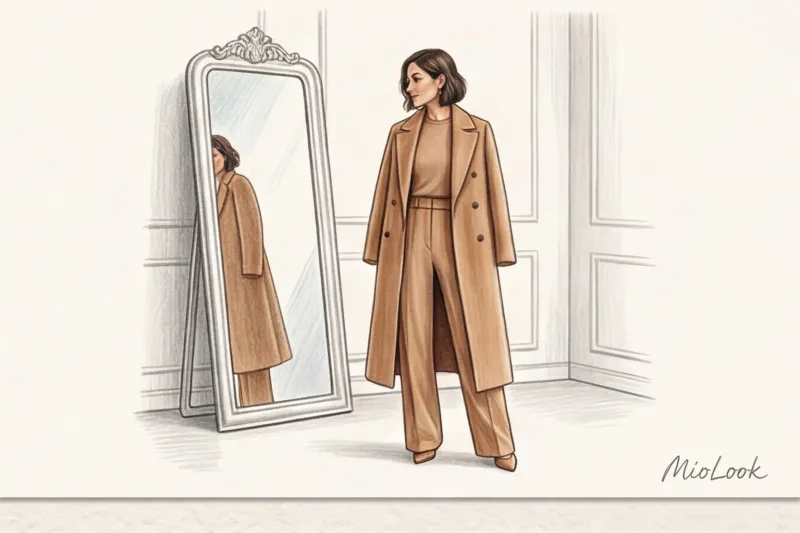
A smart monochrome look for petite women isn't built on blindly copying a single color, but on managing light reflection and texture. I've already covered the basic principles of fit in more detail in our A complete guide to a basic wardrobe for women under 160 cm , but today we'll delve into optics. I'll show you how to make light and color work for your proportions, adding a visual 5-7 centimeters of height without the hassle of pins.
The Illusion of Growth: How Our Brain Reads Color Verticals
To understand how color affects height, we need to understand the mechanics of our vision. The human eye is lazy. It glides over an object until it encounters an obstacle. In clothing, such obstacles are horizontal lines: a contrasting belt, the hem of a jacket, the sharp transition from light-colored trousers to dark shoes. Each such line causes the eye to stumble, visually "cutting" the figure into blocks.
A 2024 study by the Pantone Color Institute confirms that a continuous vertical line of color causes the eye to move 30% faster from bottom to top. The brain interprets this rapid, continuous movement as length. This is why monochrome works.
"Color is an optical superstructure. The foundation always remains the architecture of the cut. If the waist of your trousers has slipped onto your hips because of a pattern designed for a height of 175 cm, no monochrome color scheme will save the silhouette," clothing designers emphasize.
In my practice, women often try to "stretch" themselves with color, ignoring the fit. Remember: the color vertical begins with the correct patterns. The armholes, shoulder line, and darts must be precisely in place.
Monochrome Looks for Petites: Why the "Total Black" Myth Is Harming Your Style
Now let's return to the main myth. One of my clients, Anna (152 cm tall), spent years hiding in matte black heavy cotton turtlenecks and suit pants, trying to appear taller. The effect was counterproductive: against the backdrop of her bright office, she looked like a "smaller version" or a graphic, black blob with clearly defined edges.
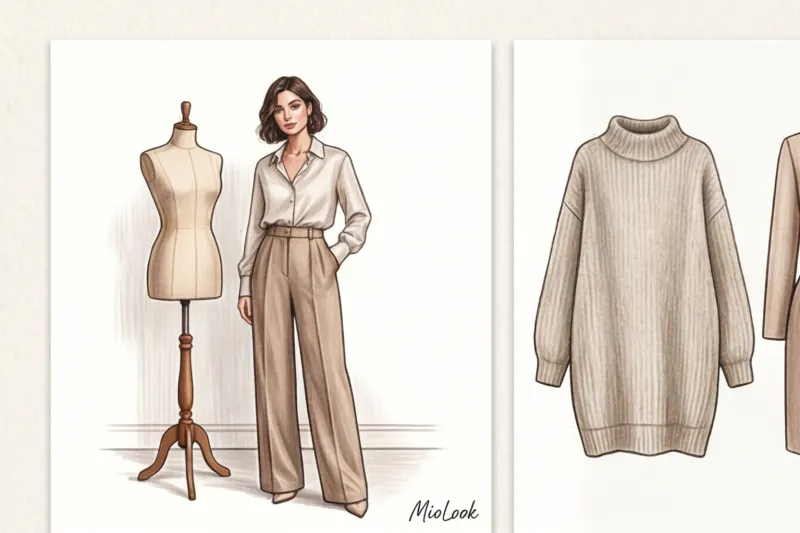
Dark colors against a light background act as a marker—they uncompromisingly outline the figure's true dimensions. Matte black acts like a black hole: it doesn't reflect light, depriving the figure of volume and dynamism. As soon as we transitioned Anna's wardrobe to monochrome shades of camel, ecru, and taupe, the silhouette instantly became lighter and taller.
The LRV Rule: Light Reflectivity and Texture Differences
In textile physics, there's a concept called LRV (Light Reflectance Value). Light-colored fabrics have a high LRV, visually protruding into the foreground. Darker fabrics recede.
If you still adore dark monochrome and aren't ready to give it up, use the rule of texture differences. Texture differences in a single color can create up to a 15% difference in the perceived volume. Pair dull, matte wool trousers with a shimmering silk or viscose blouse. The sheen reflects light, creating vertical highlights that act as additional elongating lines within the dark area.
Access to MioLook for €0.99 — one-time payment
A smart AI stylist will analyze your figure and select the perfect monochrome combinations based on textures.
Get access — €0.99 onceColor vertical without monochrome: the "Inner Column" technique
What if total monochrome seems boring? Try the "inner column" technique. It's a powerful styling tool for petite women, allowing you to elongate your height without having to wear a single color from head to toe.
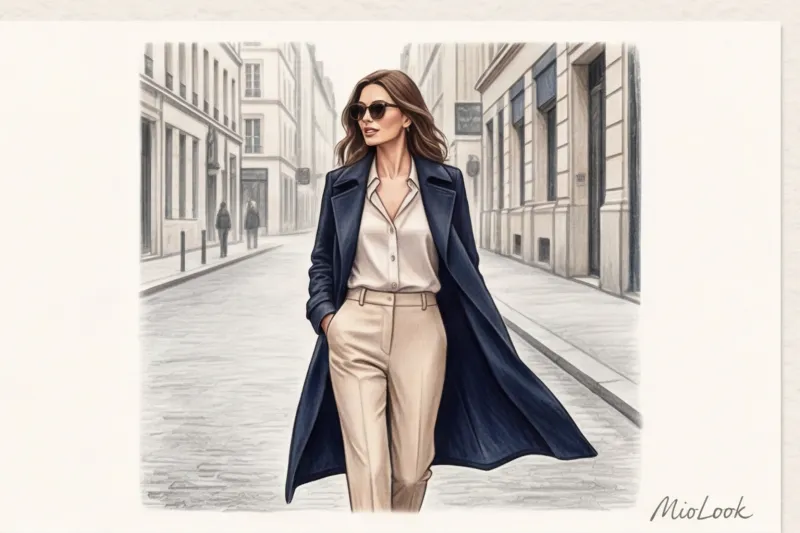
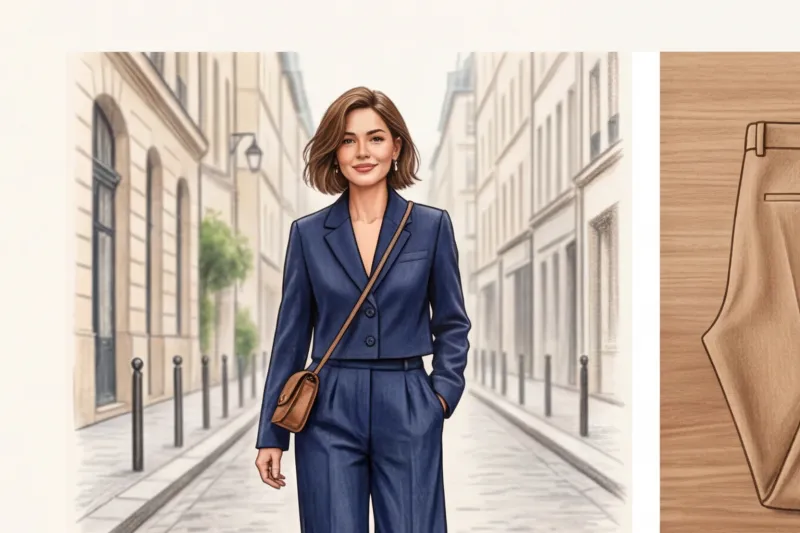
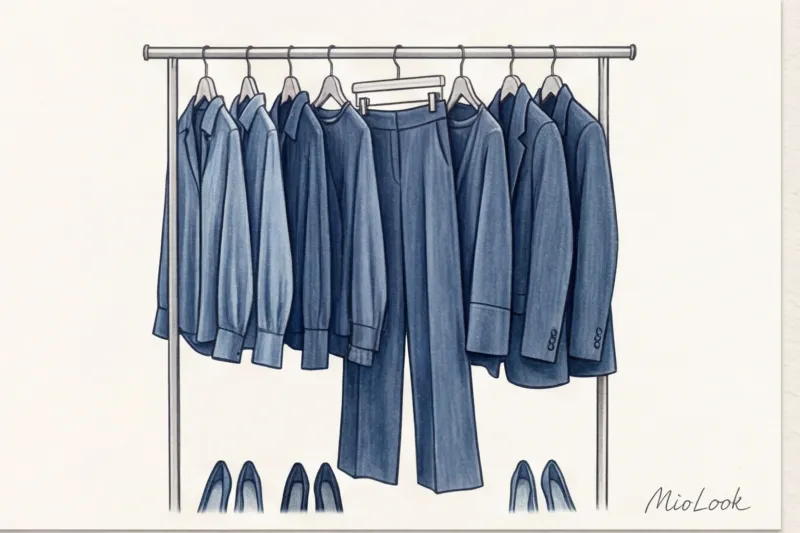
The idea is simple: you wear a top and pants (or skirt) in the same light shade, creating that seamless base. Then, you throw on a contrasting dark jacket, cardigan, or trench coat on top, which Necessarily leave it unbuttoned.
An unbuttoned top layer works like theater curtains: it visually cuts off your volume at the sides, leaving only a narrow, elongated, light stripe down the center for the onlooker to see. Excellent three-piece suits for this look can be found at eco-friendly brands in the mid-price range (approximately €150–€250 per set).
I'll be honest, this technique has its limitations. The "inner column" won't work if the contrasting jacket ends right at the widest part of your hips. In this case, the horizontal hem will ruin the effect. Opt for longer styles or cropped jackets.
Dangerous Horizontals: Shoes, Belts, and Prints
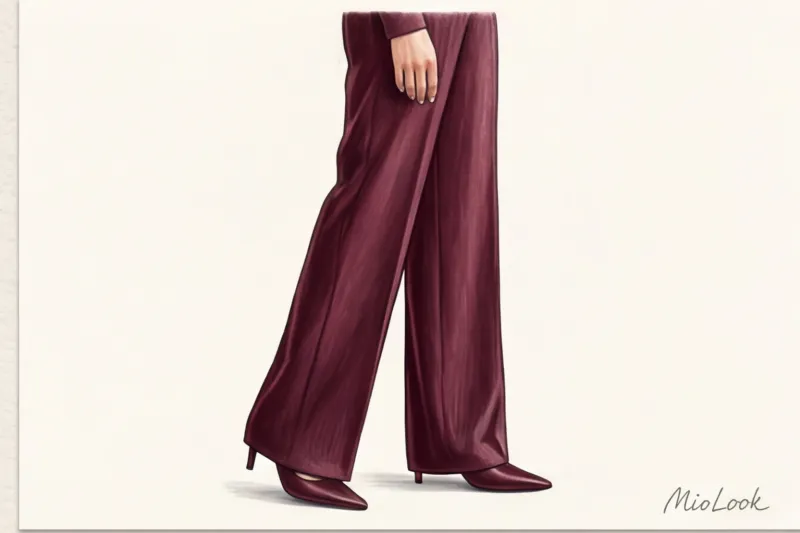
You can create a perfect vertical line with your clothes, but ruin it with one wrong pair of shoes. Black ankle boots paired with nude tights or a light skirt will mercilessly shave off 8 to 12 cm from your legs. The eye instantly notices the contrasting transition.
Three golden rules of detailing for short people:
- Shoes: Always match your shoes to the color of your bottoms (trousers or tights). If your legs are exposed, choose nude shades that match your skin tone (not just "beige," but your specific skin tone).
- Belts: Avoid contrasting belts with large buckles. If you must wear a belt, it should match the color of your trousers. We don't want to draw attention to the horizontal line at the waist.
- Prints: Large floral patterns or wide checks can take away height. If you love patterns, choose micro-patterns (thin houndstooth, thread-like stripes) that blend into a single color from a distance of two steps. Read more about working with patterns in the article about contrast in appearance and choice of prints.
Your perfect look starts here
Join thousands of users who look flawless every day with the MioLook virtual fitting room.
Get access — €0.99 onceTextile Science: How Fabrics Affect Color and Height Perception
As a fabric expert, I can't ignore drape coefficient. The way a fabric falls under its own weight is critical for a petite figure.
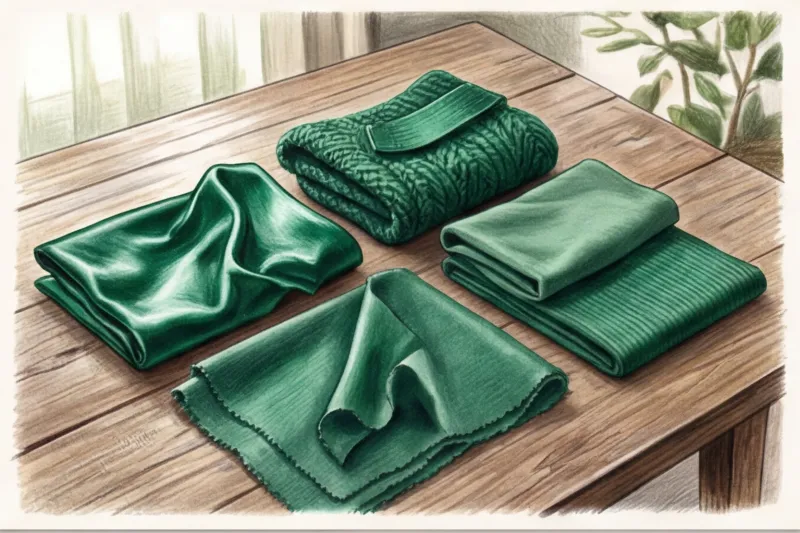
Let's compare two materials: dense, stiff cotton and flowing Tencel (or cupra). Stiff cotton maintains a bell-shaped silhouette, widening it laterally. Tencel is a heavy, eco-friendly cellulose fiber. Palazzo pants made of Tencel don't stick out like a pole; they fall down in heavy, natural folds. These folds create additional vertical lines in the fabric, dramatically elongating the figure.
However, chunky knits, bouclé, and dense ribbed corduroy are dangerous. Their loose, fuzzy texture not only absorbs color, dulling it, but also physically adds millimeters of volume throughout the body. Use them sparingly: for example, a chunky knit pullover (€50–€90 at local brands) is only acceptable when paired with perfectly smooth, flowing bottoms.
Checklist: How to Create the Perfect Monochrome Look
To make sure this theory doesn't just remain a text, let's move on to practice. Stand in front of a mirror and check your appearance against these five criteria:
- Architecture of the cut. Is the waist in place? Is the shoulder seam loose? (If the item is too big, the color won't help.)
- Color temperature. Does the chosen color match your natural coloring? (If in doubt, take a look at our A guide to determining the contrast of appearance ).
- Conflict of textures. Does the look include at least two different textures? (For example, smooth leather and soft cashmere).
- Blind spot of the feet. Is the transition from the hem of the trousers/skirt to the shoes smooth? Is there a sharp color jump?
- Length of layers. Does your coat or jacket cut off your figure along the widest horizontal line of your hips?
If you want to automate this process, I recommend digitizing your things in an app. MioLook The algorithm will help you group clothes by shades and textures, so you can create striking monochrome capsule collections in just a few clicks.
Conclusion: Your height is the canvas, and color is the tool
Monochrome is far from a boring, matching suit. It's a subtle play of textures, a careful understanding of light reflection and geometric lines. Being small isn't a flaw that needs to be desperately "corrected" with black. It's your unique personality, requiring only the right touch.
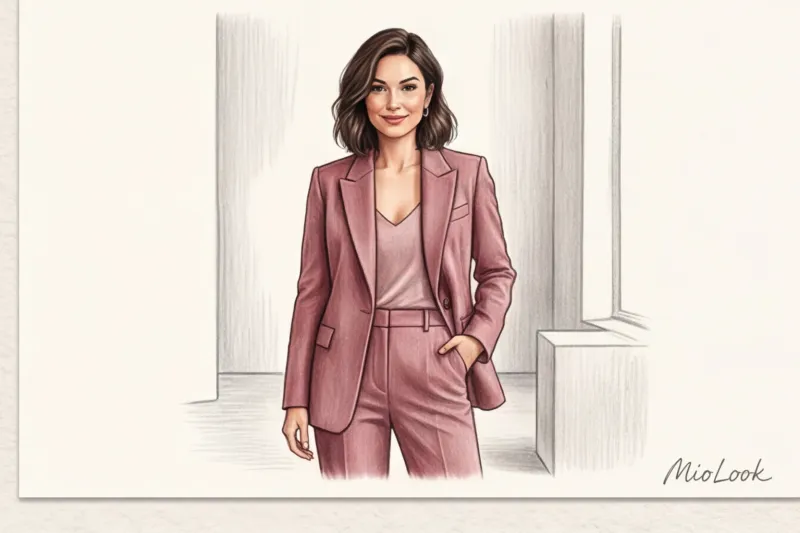
Go through your closet today. Find items in the same light color range and try creating that "inner column." You'll be surprised how much the proportions in the mirror change when you stop hiding behind matte black and let the light work for you.