What is modern Scandinavian style in women's clothing (Spoiler: it's no longer beige)
A couple of years ago, a client came to me with three huge shopping bags from COS and Arket. She laid a pile of clothes on the sofa: beige trousers, a sand-colored sweater, a cream coat, and an ecru scarf. "I want to look like those stylish girls from Stockholm," she said. "But somehow this makes me look like a very expensive but sad moth." And she was right. This is the main misconception about what constitutes modern Scandinavian style in women's clothing.
We've written in more detail about why sterile, "clean" images are becoming a thing of the past in our a complete guide to women's clothing styles But in short: the era of Stockholm asceticism from the 2010s (hello, old Acne Studios) is dead. It's been replaced by the Copenhagen aesthetic (Copenhagen Girl)—a radical mix of austere basics, ironic oversize pieces, and wildly bright accents.
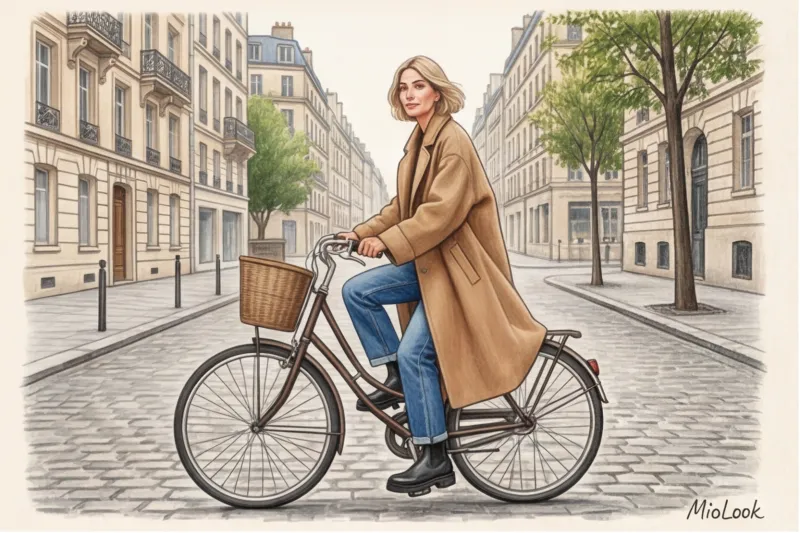
The modern Scandinavian woman doesn't dress up. She dresses so she can bike her child to kindergarten in the morning (in the icy wind), give a presentation at the office during the day, and go to a bar in the evening without having to go home to change.
The phenomenon of brands like Ganni and Saks Potts has forever changed the DNA of this trend. The pandemic has only accelerated the process, forcing us to mix sweatpants with jackets and abandon uncomfortable shoes.
The Rule of Three: Convenience, Utility, Uniqueness
Scandinavian style is based on the concept effortless (effortlessly). Over 12 years of working as a stylist, I've noticed one pattern: the more carefully and "correctly" an outfit is put together (hair to hair, bag to match shoes), the more it ages. Scandinavian women look so cool precisely because their looks always have a slight, controlled casualness.
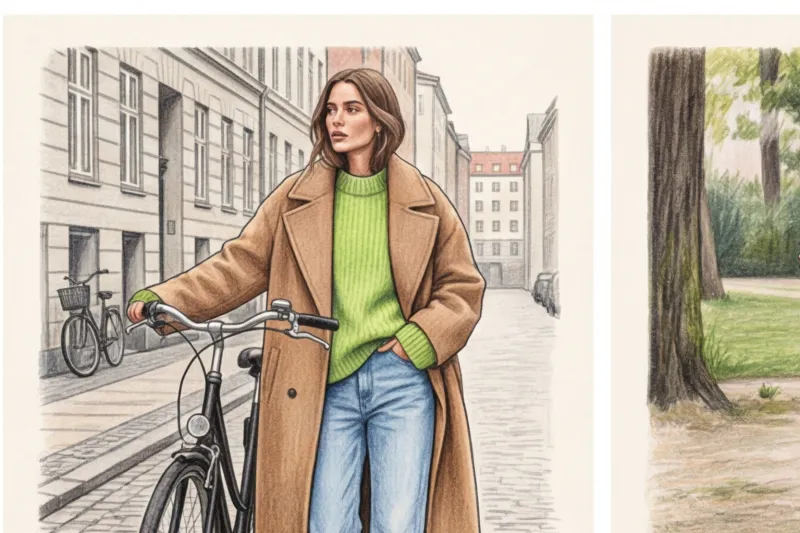
The foundation of this style is outerwear and proper layering. Investing in a quality wool trench coat or a voluminous menswear-style overcoat can be 80% of the success of your cold-season look. The secret to the perfect "Scandinavian sandwich" is simple: thin wool thermal underwear + thick white shirt + voluminous knitwear + oversized jacket or coat.
Your perfect look starts here
Join thousands of users who look flawless every day with MioLook. A smart AI stylist will help you create layering looks from your clothes.
Get access — €0.99 onceNorthern Sport Chic: Combining the Incompatible
Now, why perfect classics don't work here. Scandinavian style loves to clash opposing aesthetics. Wearing a romantic, flowing floral dress? Take it down a notch with chunky trekking sneakers (like Salomon) or chunky lace-up boots.
Opting for a tailored two-piece suit? Pair it with a vintage baseball cap and a gray hoodie peeking out from under the jacket. But stiletto heels are a no-no in a casual Scandinavian wardrobe. Have you ever tried walking in stilettos on Copenhagen cobblestones? Neither do they.
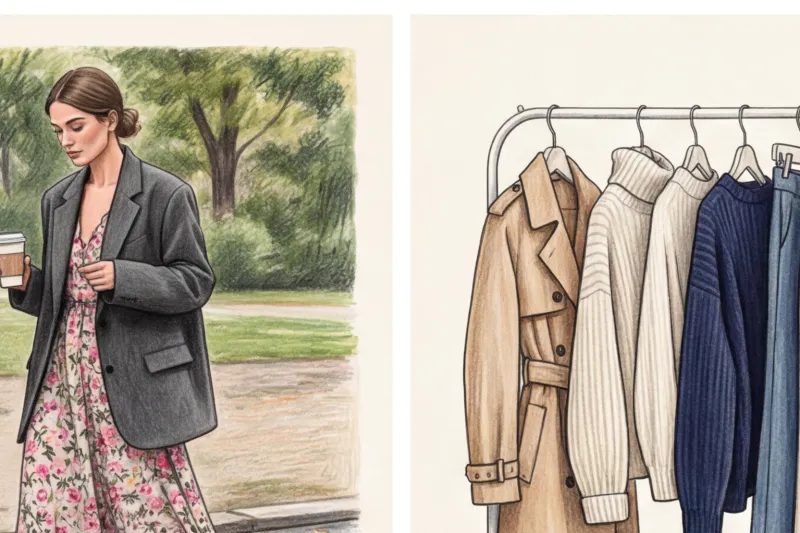
Bright Accents: How to Wear Color the Copenhagen Way
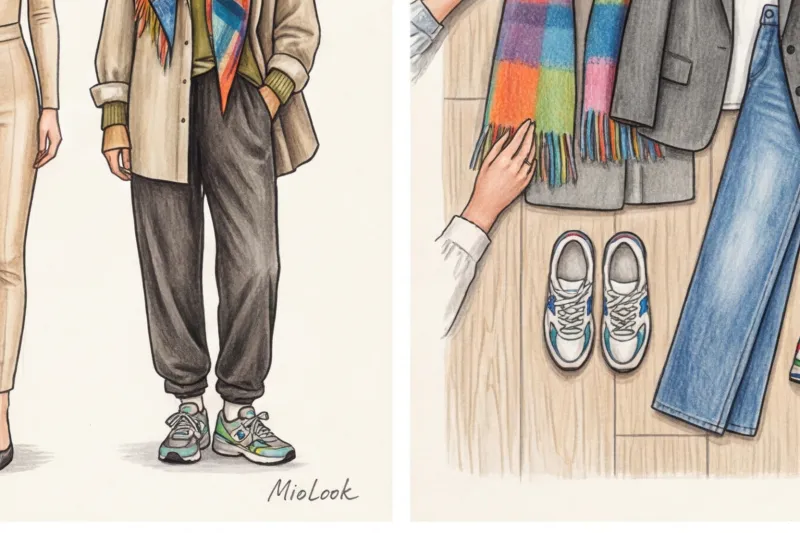
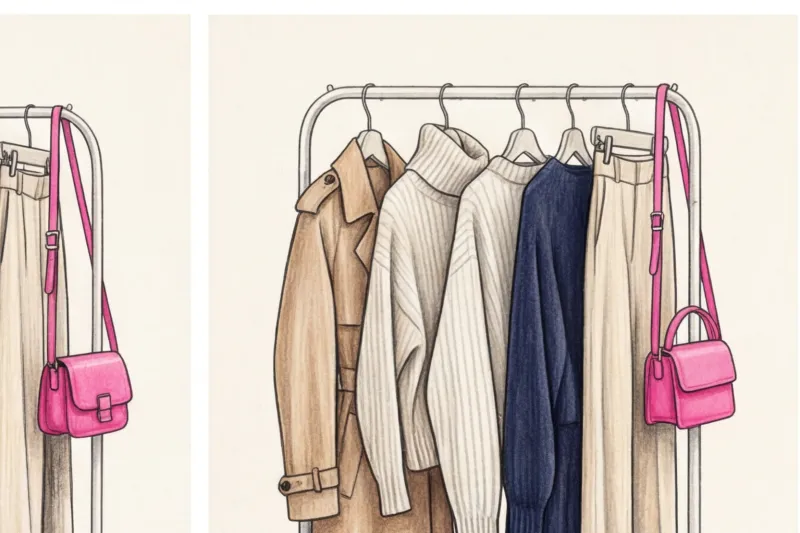
The myth of monochrome is shattered by the "color spot" method. Imagine the perfect gray base: wide-leg suit trousers, a graphite coat. Now add a neon green sweater or a fuchsia bag. That's the Copenhagen signature.
Moreover, leopard print has long since become a neutral base in Scandinavia. How to wear leopard print without looking vulgar I wrote about this separately, but the main rule for northern women is that leopard print should be the only predatory item in a set with completely relaxed, almost “grandfatherly” styles.
Sustainability and Conscious Consumption: Calculating Cost-Per-Wear
For women in Northern Europe, sustainability isn't just a buzzword, but a strict requirement. In 2024, Copenhagen Fashion Week (CPHFW) introduced 18 mandatory sustainability standards for brands. If a brand doesn't use recycled materials or provide decent working conditions, it simply won't be allowed on the runway. The Global Fashion Agenda report shows that Scandinavian consumers are the first in Europe to make a massive shift from fast fashion to sustainable shopping.
How does this work in practice? Using the Cost-Per-Wear formula. Let's calculate:
- An acrylic sweater from a mass-market store costs €30. After 5 washes, it pills and loses its shape. You've worn it 10 times. Cost per wear = €3.
- A 100% alpaca wool sweater costs €150. With proper care, you'll wear it for three seasons (at least 100 times). Cost per sweater: €1.50.
A quality item ends up costing you half as much. Scandinavians love mixing expensive wool essentials with unique finds from vintage shops. To easily calculate the cost per wear of your items and understand what's really working in your closet, I recommend digitizing your wardrobe in an app. MioLook — its built-in analytics will quickly show you which “profitable” purchases are actually draining your money.
Essential Style Markers: What to Buy at COS, Arket, and Zara
If you're shopping, here are some specific markers to look out for in European mass-market and mid-market stores:
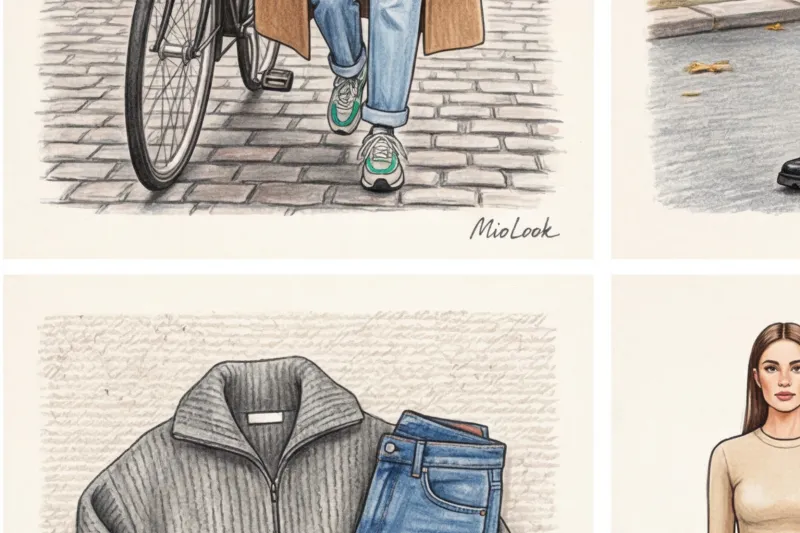
- Textured knitwear. We are looking for zip-collar sweaters that are great for layering (especially over a turtleneck ), and chunky knit cardigans. Thin, flimsy knits are left on a hanger.
- Wide Leg Jeans. Forget skinnies. The Scandinavian silhouette calls for airiness. Jeans should be straight or wide-leg, full-length, and slightly covering your shoes.
- Jackets from a man's shoulder. Wide shoulders, a straight cut, and heavy fabrics. Cotton with a minimum weight of 180 g/m² or textured tweed.
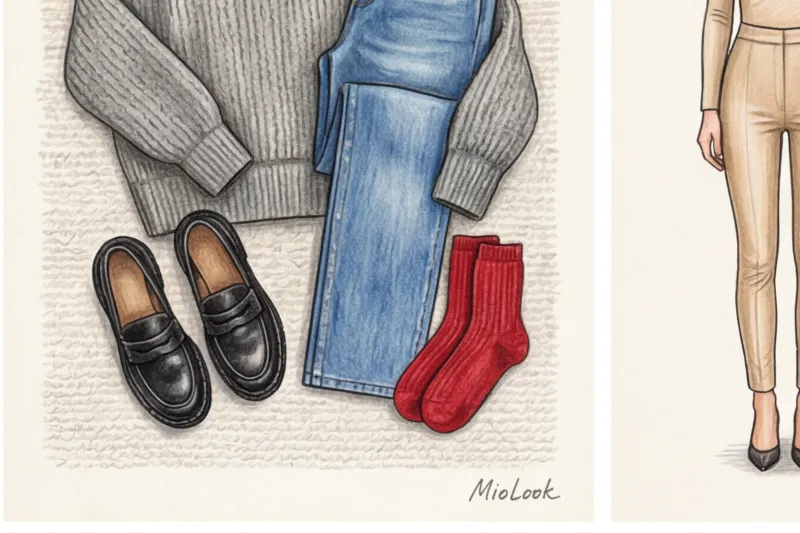
- Accent accessories. In Copenhagen, they love micro-trends: puffy bibs, huge colorful scarves with fringe (often checkered), and bright socks (red, green, yellow) casually peeking out from under chunky black loafers.
Ready to get started?
Try the free plan—no commitments. Create a Scandinavian-style capsule right on your phone.
Get access — €0.99 onceCommon mistakes: why you look boring, not stylish
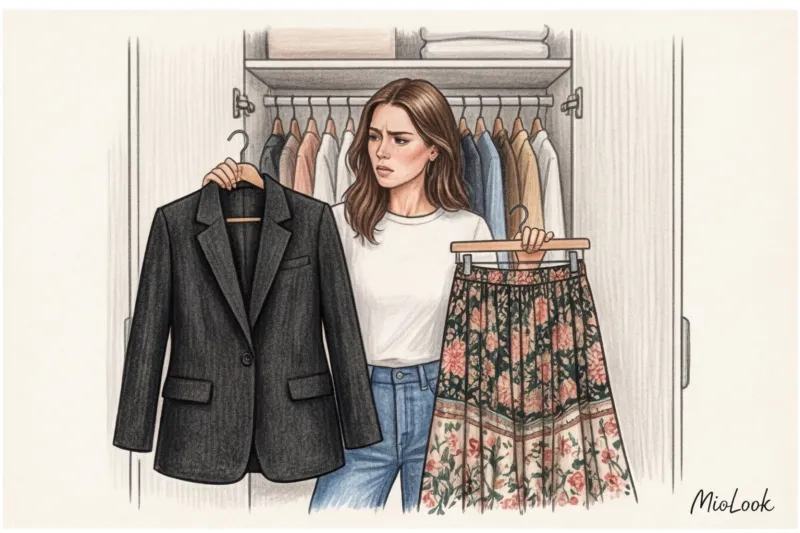
Returning to my client Anna's story, when we sorted through her purchases, it became clear that the problem wasn't the color, but the texture and volume. I swapped her thin, fitted cashmere jumper for a thick, textured, oversized sweater, and her posture instantly changed—she gained that confident, relaxed demeanor.
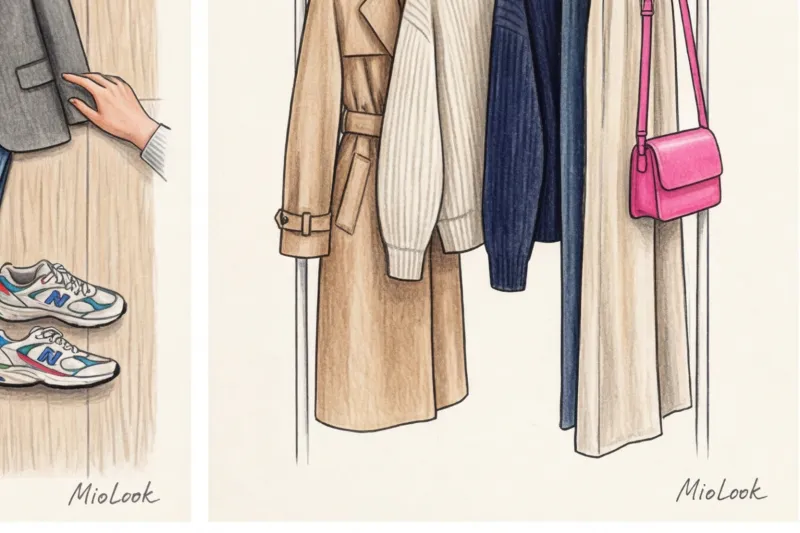
Here are the 4 main mistakes that kill this style:
- The Moth Effect (obsession with 100% minimalism). If you only wear beige, gray, and black, you lose dynamism. Without contrasting textures or a pop of color, the look looks flat.
- Lack of air. Overly tight silhouettes are the enemy of Scandinavian style. There should be space between the body and the fabric (2 to 5 cm).
- Daytime "Hollywood". Complex evening hairstyles (tight curls, lots of hairspray) and heavy makeup look out of place during the day when paired with casual clothes. Try a low, messy bun or leave your hair natural.
- Fine knitwear. Scandinavian style is visually "expensive" precisely because of the density of its materials. A sweater that reveals underwear will cheapen any look.
It's important to recognize that Scandinavian sporty chic is absolutely NOT suitable for strict corporate dress codes (such as the highly regulated banking sector). However, for smart-casual Fridays or IT companies, it's the perfect solution.
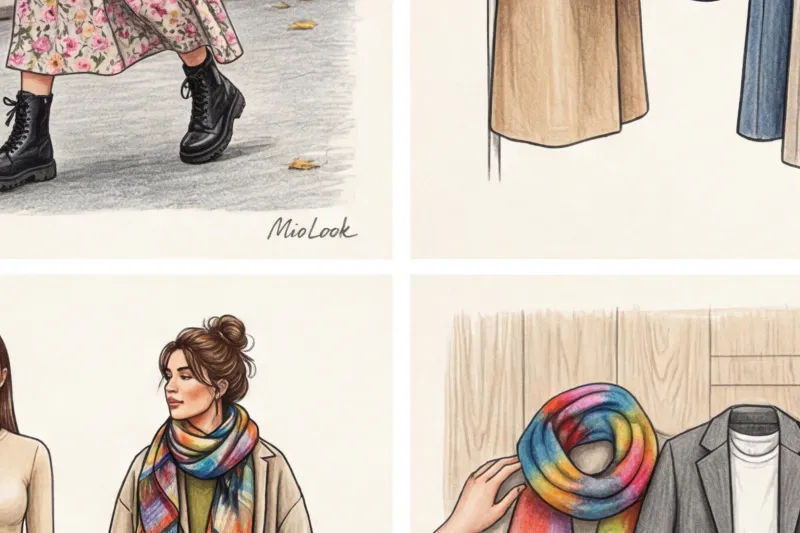
Checklist: Putting together a Scandinavian-style capsule for a week
To help you get started, I've put together a basic formula for a Copenhagen capsule wardrobe. These pieces can be used to create over 10 looks that are suitable for both work (without a strict dress code) and long weekend strolls:
Bottoms (3 items):
1 pair of wide-leg dark blue or light blue jeans.
1 pair of loose-fitting suit trousers with creases (gray or black).
1 midi skirt (try a silk texture to play on the contrast with chunky knits).
Tops (5 items):
2 basic thick long sleeves or T-shirts (white and grey melange).
1 oversized shirt (light blue or pinstriped).
1 bright accent sweater (green, pink or cobalt blue).
1 voluminous wool jacket.
Shoes and accessories:
Comfortable retro sneakers (like the New Balance 530) and chunky lace-up boots or chunky Chelsea boots.
Long, loose trench coat or double-breasted wool coat.
A roomy, soft-shaped shopper and a long, colorful scarf.
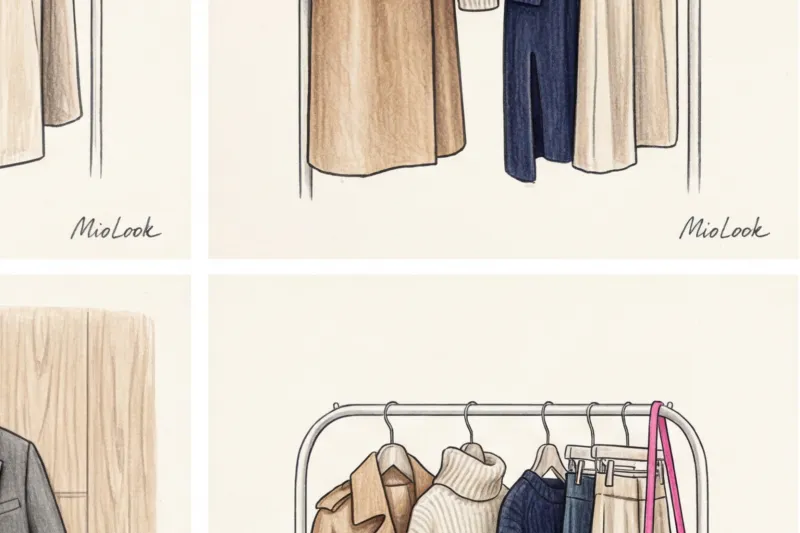
Scandinavian style teaches us one incredibly important thing: fashion should serve you, not you fashion. Your clothes shouldn't restrict your movement, make you suck in your stomach, or freeze for the sake of "beauty." Once you adopt the "air between your body and the fabric" rule and allow yourself to wear a bright pink scarf with a formal office coat, you'll understand why girls in Copenhagen always look so happy.