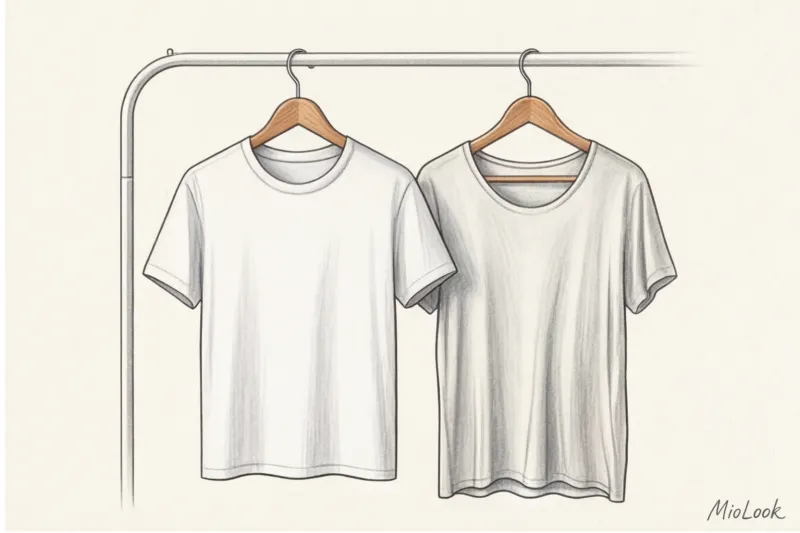
Over 12 years of sorting through wardrobes in Paris and Milan, I regularly see the same picture: stacks of faded, warped basic "100% premium cotton" T-shirts, purchased just a couple of months ago for €40-€60. My clients often genuinely don't understand why an expensive item made of an all-natural material has so quickly become a dust rag. And every time we reassemble a capsule wardrobe, I suggest they break the most important fashion rule of the last century: stop blindly pursuing pure cotton.
Today, high-quality base materials are built on technological blends, and the star here is modal fabric, whose properties have literally revolutionized the industry. We discussed the evolution of these materials in more detail in our complete guide to eco-friendly fabrics: tencel, modal and lyocell , but today I want to talk about modal from a practical perspective. We'll explore how this fabric changes the fit of clothing and why it's quietly displacing classic knitwear from the collections of your favorite brands.
What is Modal: Nature Born in the Lab
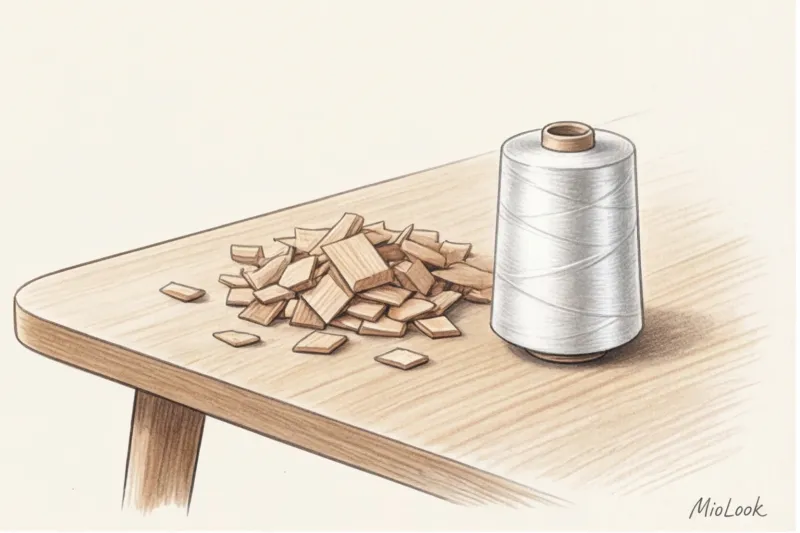
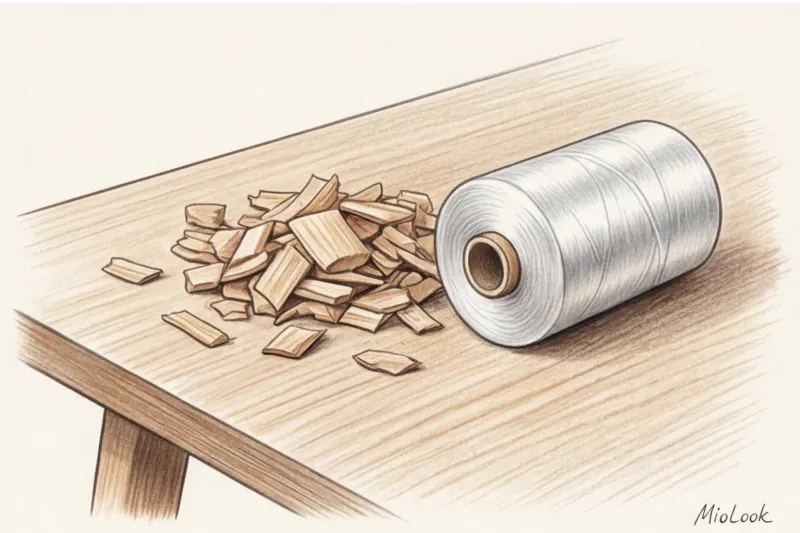
Let's get the terminology out of the way right away: modal is an artificial fabric, but non-synthetic The difference is colossal. Synthetics (polyester, acrylic) are made from petroleum products. Artificial fabrics are made from natural materials, but with chemical treatment.
Modal is based on cellulose from beech wood (less commonly, eucalyptus or pine). It's essentially an improved version of viscose. Regular viscose is fine until you wash it: when wet, it loses up to 50% of its strength, tears easily, and shrinks unpredictably. In the 1960s, technologists began searching for ways to make viscose stronger.
"A real breakthrough was made by the Austrian company Lenzing AG, which patented the micromodal production technology. They changed the fiber spinning process, producing a material that maintains its geometry even after dozens of machine washing cycles."
An interesting fact for those concerned about the environment: according to Lenzing (creators of the TENCEL™ Modal standard), the production of modal uses 10-20 times less water than growing the same volume of cotton.
Organize your wardrobe wisely
Upload your essentials to your virtual closet and track which fabrics last the longest.
Get access — €0.99 once
Modal Fabric: The Properties That Made Brands Forget Cotton
Why have mid-market and premium brands (from COS to Brunello Cucinelli) embraced this fiber so much? It's not just the cost, but also the physics of the material itself.
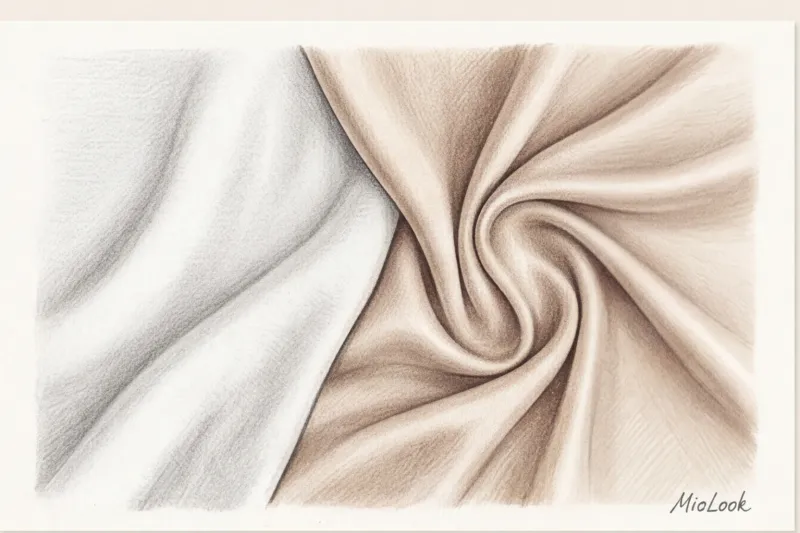
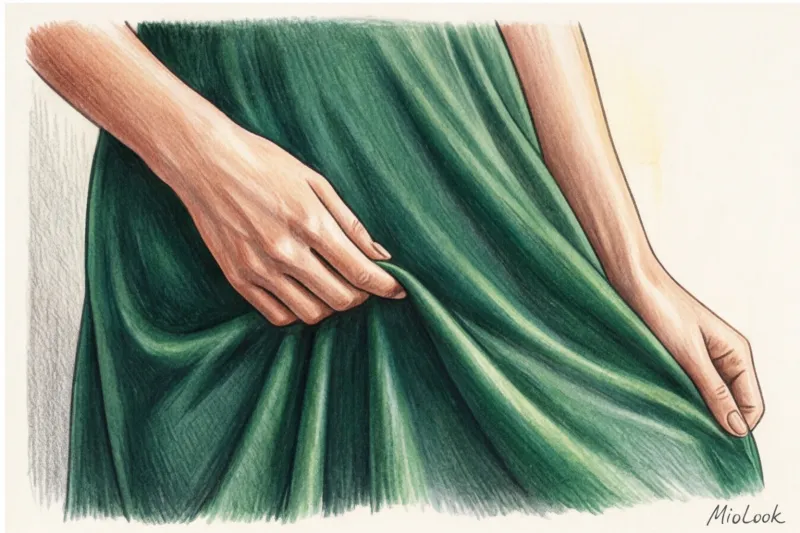
- The tactility of "peach skin". Modal fibers are incredibly fine and smooth. They don't have scales like wool or micro-roughness like cotton. The fabric feels like dense, heavy silk.
- Deep color rendition. Modal absorbs dye deep into the fiber structure and doesn't release it during washing. I conducted a revealing test: two black turtlenecks (cotton and modal). After 30 washes, the cotton one had acquired a graphite-gray hue, while the modal turtleneck remained jet black, just like the day I bought it.
- Abnormal hygroscopicity. Modal absorbs moisture 50% more effectively than regular cotton. It instantly wicks sweat away from the body without leaving a wet feeling.
- No pilling. The long, smooth fibres of high-quality modal are virtually free of pilling, unlike loose viscose or short-staple cotton.
A fly in the ointment: the downsides of modal and common mistakes when choosing
Reading brand descriptions, you might think you've found the perfect fabric. But as a stylist, I have to warn you: modal is tricky, and its 100% composition often works against you.
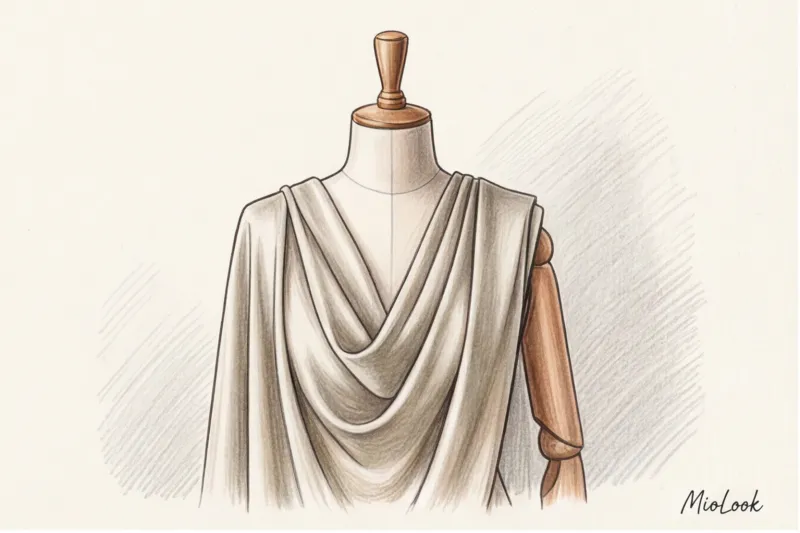
The main drawback of 100% modal is its absolute "flow." This fabric has no inherent structure. While dense cotton (from 180 g/m²) can create a rigid frame, conceal waist folds, and define the silhouette, pure modal will cling to you like a second skin.
This creates the so-called "caterpillar effect." If you wear a dress made of 100% thin modal, everyone around you will see everything: the contours of your lace lingerie, the slightest relief of your skin, the seams of your tights. On plus-size figures (and even on standard sizes if they don't fit snugly), thin modal often looks sloppy, sagging where support is needed.
The second drawback is that although modal is stronger than viscose when wet, it's still vulnerable to washing. Aggressive spinning can irreparably stretch the neckline of your favorite top.
Don't know what to combine with basic items?
Try MioLook for free: A smart AI stylist will find the perfect look for your body type and lifestyle.
Get access — €0.99 once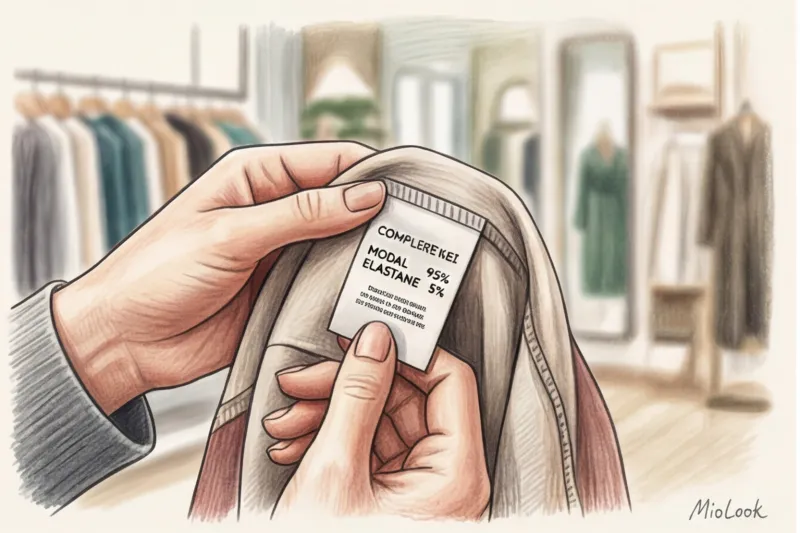
How Modal Changes Fit: Reading Labels Like a Pro Buyer
The secret to an expensive and neat wardrobe lies in knowing how to read the composition labels. Looking for "100% modal" on T-shirts or dresses is a bad idea. This fabric reveals its best properties precisely in blends.
Here are three formulas I always look for in showrooms and stores for my clients:
- Modal + Cotton (usually 50/50 or 40/60). The gold standard for the perfect basic T-shirt. Cotton adds structure and density, while modal prevents fading and shrinkage and adds a subtle, refined sheen. These T-shirts (in the €30–€50 range) look three times more expensive.
- Modal + Elastane (95/5 or 90/10). The perfect base for lingerie style: long sleeves, bodysuits, turtlenecks, leggings, and underwear. The addition of elastane allows the fabric to stretch elastically and return to its original shape. This is the very "second skin" effect for which the basic collections of Intimissimi and COS are prized.
- Modal + Cashmere / Wool. A premium combination for the transitional season. Modal reduces the cost of the product (pure cashmere starts at €200), but also makes the wool lighter, more flowing, and, most importantly, less itchy. These sweaters are often found at Massimo Dutti in the €80–120 range.
By the way, if you often forget what ingredients are prevalent in your closet, MioLook's smart wardrobe feature It allows you to digitize your items once and assemble outfits, taking into account not only the color but also the texture of the fabrics.

Who and for what occasions is modal clothing ideal?
Beyond its obvious role in a basic capsule wardrobe, modal pieces are a secret weapon for specific life scenarios.
For public speaking and webinars. If you're performing under spotlights or a bright ring light at a Zoom conference, avoid silk and shiny synthetics. A silk blouse will become sweat-stained from nervousness, and cheap polyester will reflect off-camera. A matte turtleneck made of thick modal looks classy, absorbs excess light, and instantly wicks away moisture.
For layered business looks (smart casual). When wearing a classic jacket, you need a base layer (a top or long sleeve) that won't restrict movement or create excess bulk in the sleeves. A thin modal-elastane blend glides over the jacket's lining, ensuring a perfect fit.
For long flights. Unlike linen suits, which look like chewed-up paper after just an hour of flight, modal and cotton tracksuits don't wrinkle at all.
Checklist: How to care for modal items
Modal is easy to maintain, as long as you avoid one critical mistake: using high spin cycles. Here's my quick care guide that will extend the life of your basic items by a couple of years:
- Wash strictly at 30–40°C. Hot water destroys the structure of cellulose fiber.
- Slow down. Mistake #1: spinning at 1000+ RPM. Use a maximum of 600. Modal becomes heavier when wet, and the spin cycle simply pulls out the fibers.
- Turn inside out. This will protect the front side from micro-friction against the drum (especially important for black and dark blue items).
- No twisting. If you're hand washing, don't wring the item out or twist it. Simply squeeze gently to remove excess water.
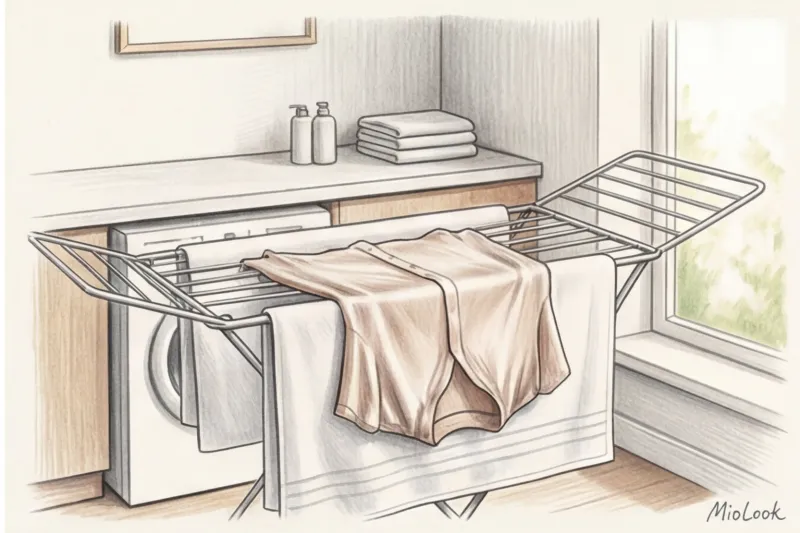
- Drying and ironing. Heavy items (such as thick dresses or bulky cardigans with modal) are best dried flat on a towel. Iron only from the inside out at the lowest temperature (Silk), but ideally use a handheld steamer—modal irons out in seconds.
Your perfect look starts here
Join thousands of users who look flawless every day with MioLook. Create your perfect capsule wardrobe with the right fabrics.
Get access — €0.99 once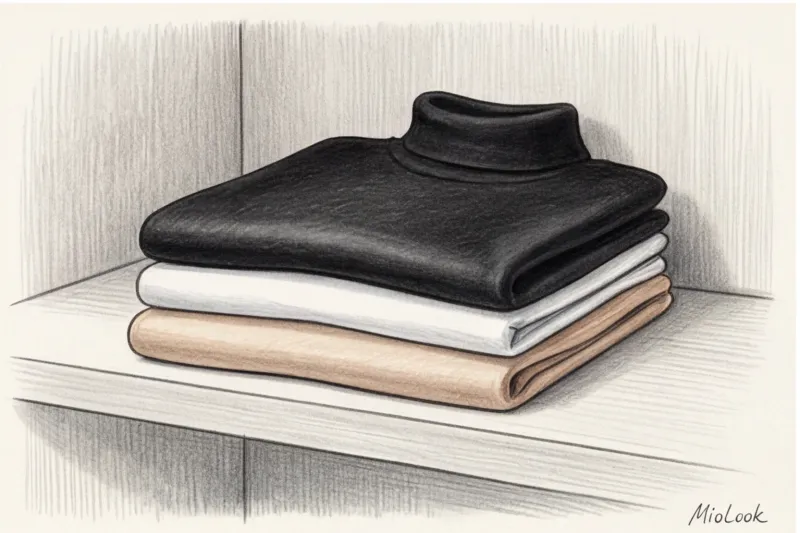
Stylist's Summary: Is This Fabric Worth the Extra Pay?
Today, the stereotype that clothing must be made of 100% natural fabrics (linen, cotton, or wool only) is hopelessly outdated. Yes, when it comes to rigid denim or a structured shirt, cotton is unrivaled. But for fitted silhouettes, turtlenecks, bodysuits, and T-shirts, a technical blend with modal is the best choice for a modern wardrobe.
The price difference between a regular cotton T-shirt from a mass-market store for €15 and a T-shirt with modal for €35–50 pays for itself within the first three months. Modal is an investment not just in clothing, but in your personal appearance. Items look "like new" longer, don't fade in the sun, and don't shrink after washing.
The next time you're shopping, try this simple trick: before you go into the fitting room, turn the tag over. If you see 45-50% modal in a basic top, grab it without hesitation—it's worth every penny.