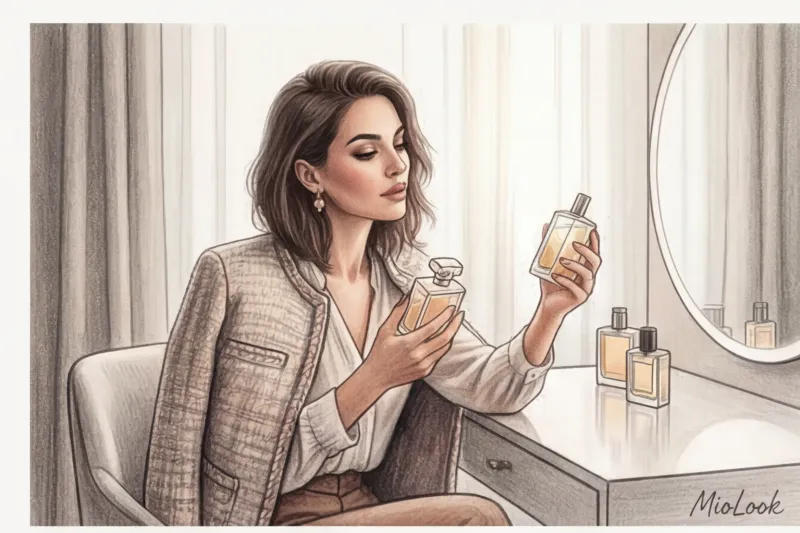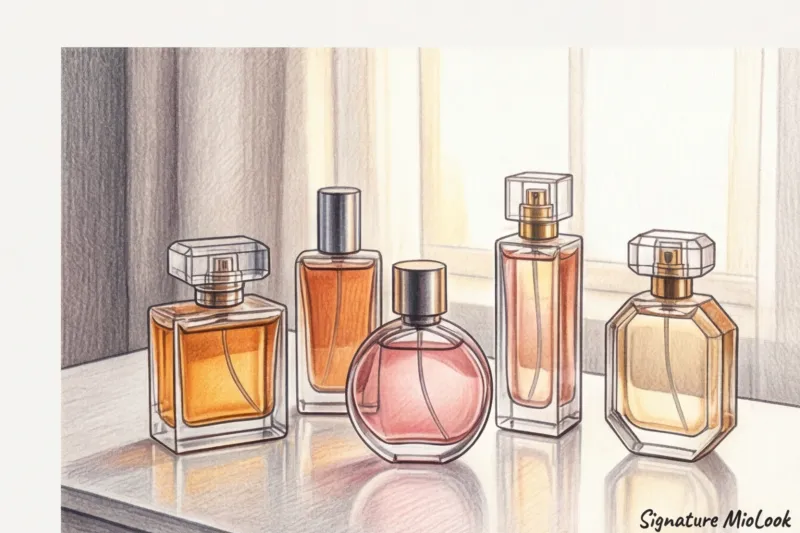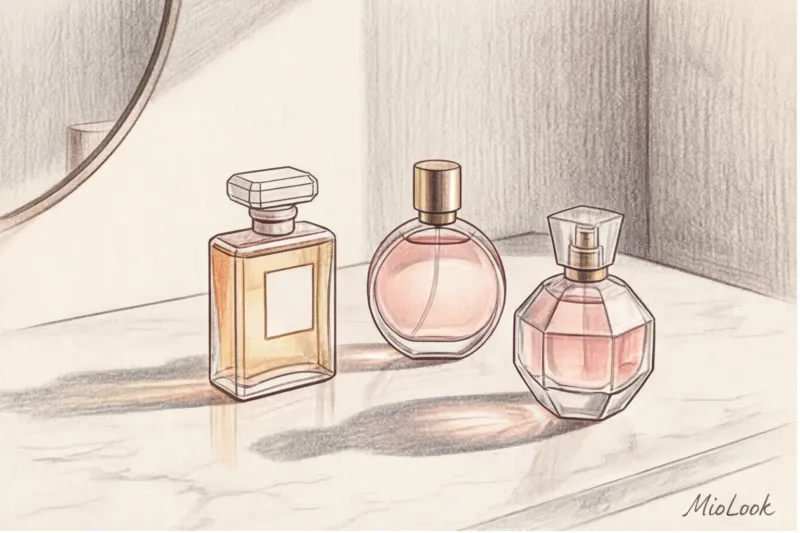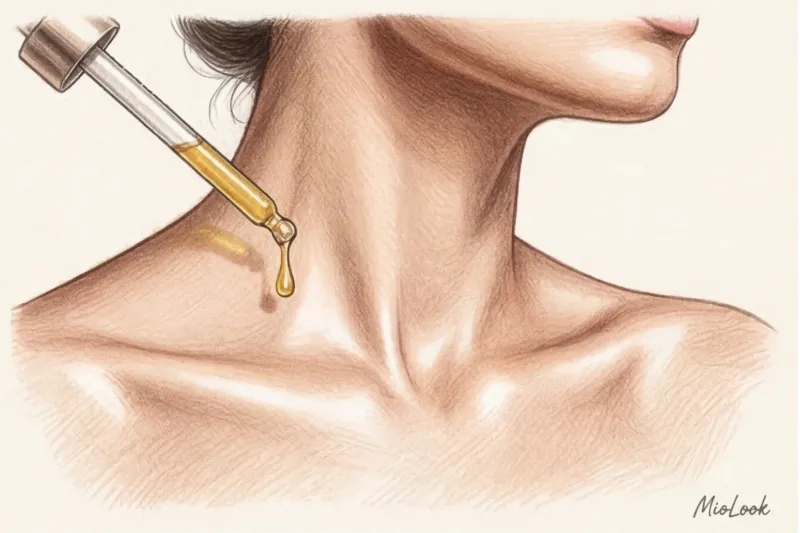
Have you ever noticed how that expensive €200 perfume sometimes disappears from your skin faster than you can get to the office? Over 14 years as a personal stylist, I've heard this complaint from hundreds of women. We create the perfect look: a perfectly fitting thick wool jacket, a carefully chosen color scheme, classy shoes... but the finishing touch—the scent—treacherously evaporates, leaving only a faint echo.
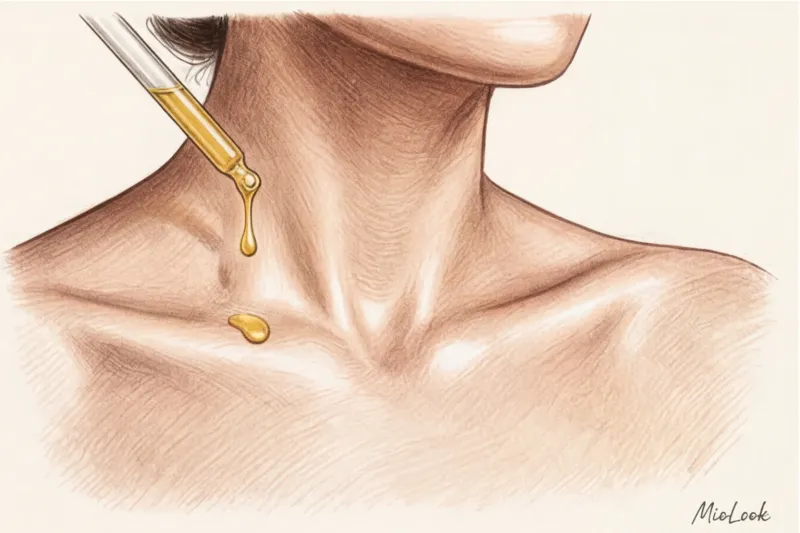
I found the solution to this problem not in buying even more concentrated (and suffocating) perfume, but in proper layering. Today we'll look at how to use oil and alcohol perfumes together to create a long-lasting, luxurious, and absolutely unique trail. Applying the principles of clothing styling to perfumery, we'll create your personal "fragrance capsule." We've already covered the basic rules in more detail in our The complete guide to mixing perfume on your skin , and now let's move on to advanced texture chemistry.
Can oil and alcohol perfumes be used together? The chemistry of the perfect trail.
The need to mix different textures doesn't come from a good life. Modern alcohol-based perfumes (especially citrus and floral waters) often suffer from poor longevity. As research published in International Journal of Cosmetic Science Volatile alcohols and light esters evaporate from the skin's surface in just 1-2 hours. Meanwhile, an oil base (attar) can last for 8-12 hours, as large oil molecules oxidize more slowly in air.
The secret to perfect sillage lies in synergy. Oil-based perfumes sit close to the skin, opening up with the warmth of your body, but they often lack diffusion—that "tail" that follows you down the hallway. Alcohol-based perfumes, on the other hand, offer stunning voluminous sillage and a quick onset, but fade quickly.
When combined, the oil acts as a cosmetic primer or "anchor." It physically captures the volatile molecules of the alcohol-based fragrance, preventing them from evaporating too quickly. This technique isn't new: in traditional Middle Eastern perfumery, thick oud- or rose-based attars have been coated with light floral waters for centuries precisely to create a multidimensional trail.
The main rule: what to apply first - oil or alcohol?
There is one ironclad rule in perfume layering: Oil is always applied first, and only then alcohol It's not just a matter of habit, it's basic chemistry.
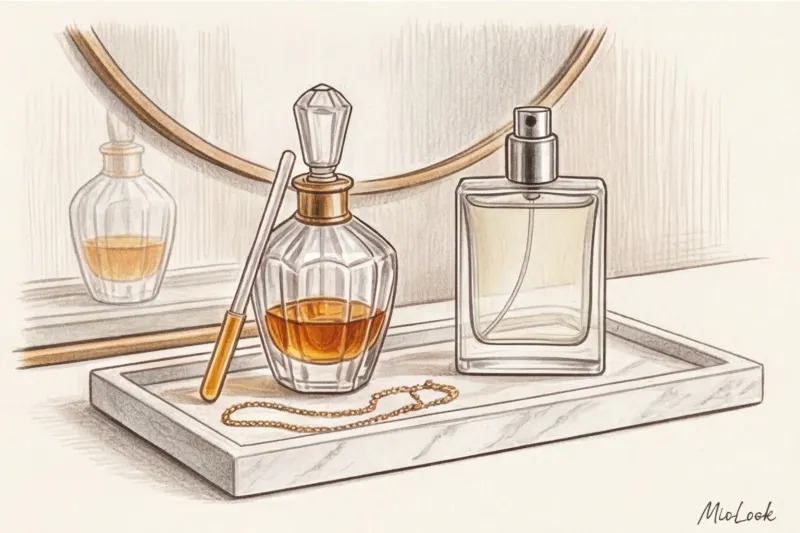
Alcohol is an aggressive solvent. If you spray the eau de toilette first and then try to rub it with an oil roller, the oil will simply dissolve the alcohol base, "lubricate" the olfactory pyramid, and the result will be a vague, and sometimes downright unpleasant, soapy scent.
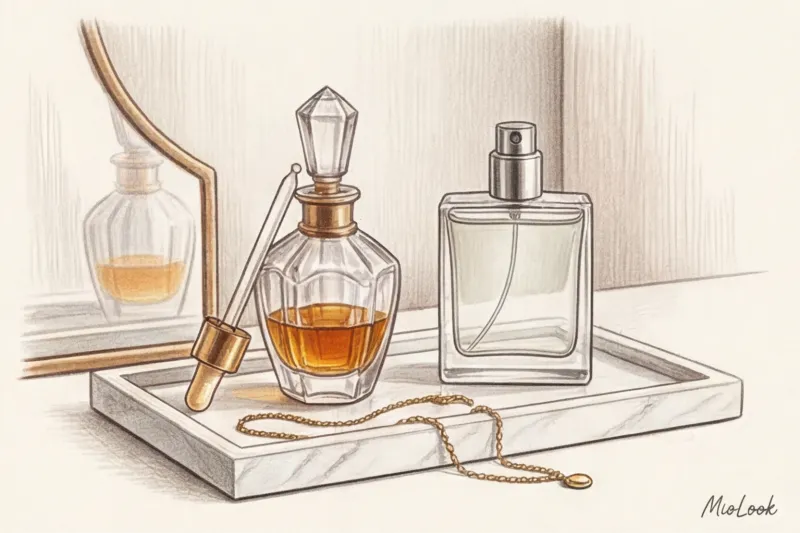
As a stylist, I always tell my clients: a poor lining will ruin the fit of even the most expensive cashmere coat. In perfumery, your skin is the lining. Here's the proper prep routine:
- Moisturizing: Apply a base lotion with ceramides, strictly fragrance-free, to your pulse points. Dry skin will "eat up" any perfume within an hour.
- Base: Apply a drop of oil perfume to the prepared areas.
- Expectation: Let the oil warm for 2-3 minutes. It should match your body temperature.
- Accent: Only after this spray the alcohol perfume.
Your perfect look starts here
Join thousands of users who look flawless every day with the MioLook smart wardrobe.
Get access — €0.99 once3 effective ways to combine oil and alcohol perfumes together
Building a fragrance is like creating a layered look. You can wear a turtleneck under a shirt (dot-to-dot), or you can add a contrasting scarf to a coat (zoning). Let's explore three of my favorite techniques.
Classic Layering (Dot to Dot)
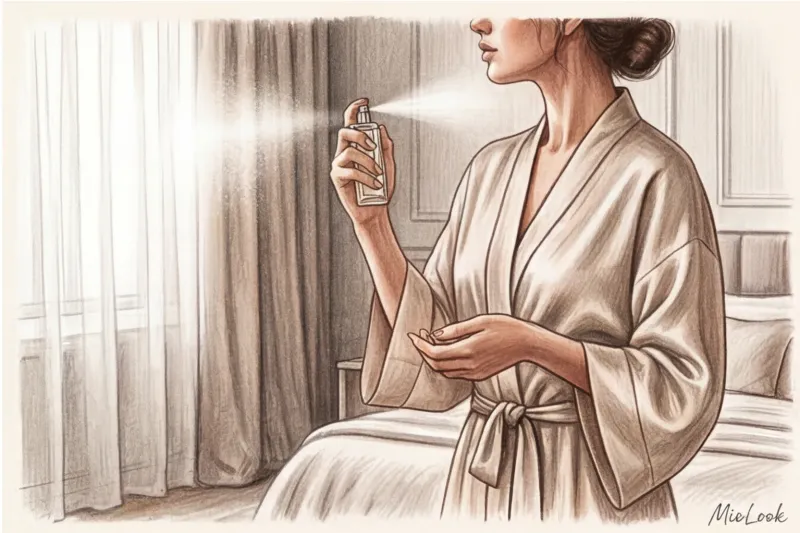
The simplest and most straightforward method. Apply the oil base directly to your pulse points: the inside of your wrists, the sternal notch of your neck, and the inside of your elbows. Then, after a pause, spray on the alcohol-based perfume. exactly on top of these same points.
An important nuance: The optimal distance for spraying alcohol is 15-20 cm from the skin. If you spray it directly, the high concentration of alcohol will destroy the oil film. This method is ideal for saving fragile citrus colonies—they will live three times longer on a base of oily white musk.
Spatial layering (zoning)
My favorite technique for creating a 3D trail effect is that the scents mingle not on your skin, but in the air around you as you move.
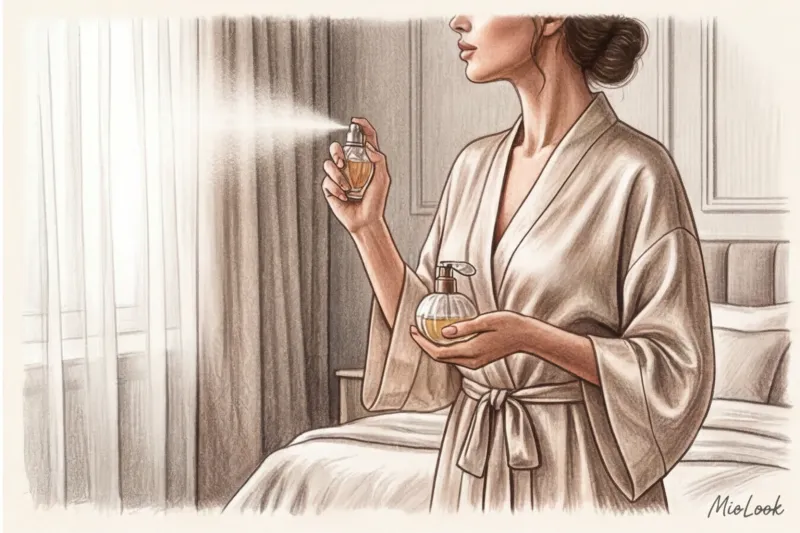
We apply the oil to the body's "hot spots" (the décolleté, the back of the neck, under the hair, behind the knees). We spray a light, alcoholic fragrance mist onto the hair or the lining of outerwear. As you walk, the dense base of your skin and the light trail of your hair intertwine, creating an intriguing, ever-changing aura.
Temporal layering (Image transformation)
This method is a lifesaver for my clients with busy schedules, when they need to rush off to an evening event after work and absolutely no time for a shower. In the morning, you apply only a thick oil base (for example, pure sandalwood or amber). During the day, it feels appropriate and close to the skin, without violating the business dress code.
And in the evening, right before going out, you apply a bright, diffused alcohol-based perfume (for example, with notes of tuberose or cherry) on top. The morning base instantly "picks up" the new notes, making the evening scent incredibly deep and languid.
Fatal Mistakes: How to Avoid Ruining Your Perfume Layering
Contrary to popular but harmful advice from TikTok, perfumes don't tolerate harsh physical manipulation. Here are four things you absolutely should avoid.
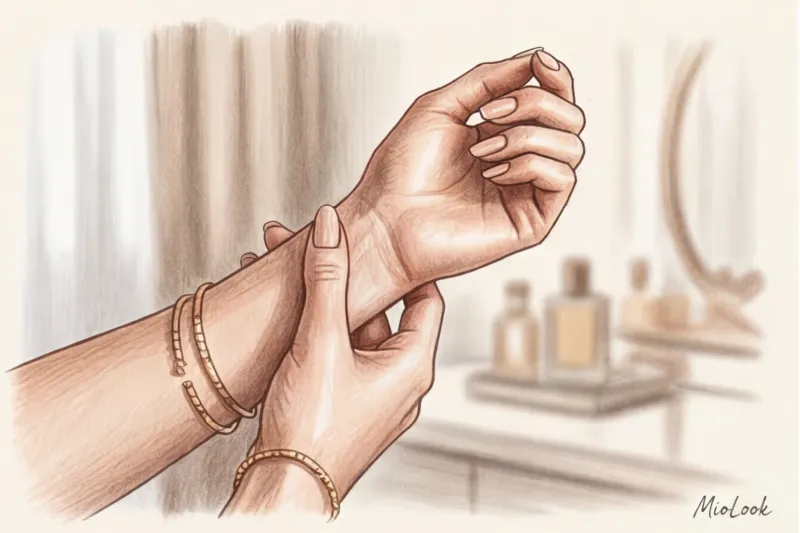
- Rubbing the wrists. Forget the "rubbing wrists together" gesture. Friction instantly heats the skin, causing the alcohol to evaporate aggressively and the fragile molecules of the top notes to literally break. The fragrance loses its initial freshness and immediately fades into a flat base.
- Mixing in a bottle. Never try to pour oil-based perfumes into an atomizer containing alcohol-based perfumes. The different densities and chemical compositions of the components will cause the liquid to become cloudy, sediment to form, and ultimately ruin both products.
- Oil on clothes. While alcohol-based perfumes can be applied to fabrics, oil-based ones will leave permanent yellow stains on your favorite silk blouse. Dry cleaning won't help.
- Database conflict. This method does NOT work with complex, multi-component niche fragrances (like Baccarat Rouge 540 or complex Amouage creations). If you try to layer two distinct fragrance masterpieces, you'll create a cacophony and "perfume noise" that will give you and everyone around you a headache.
Access to MioLook for €0.99 — one-time payment
A smart AI stylist will create the perfect look, to which all that remains is to add the right fragrance.
Get access — €0.99 oncePerfume capsule: formulas for ideal combinations
As a stylist, I adore the concept of a capsule wardrobe. The perfect capsule wardrobe consists of a reliable base (perfectly fitting jeans, a white shirt) and bold accents (a silk scarf, statement shoes). A perfume wardrobe is built in exactly the same way!
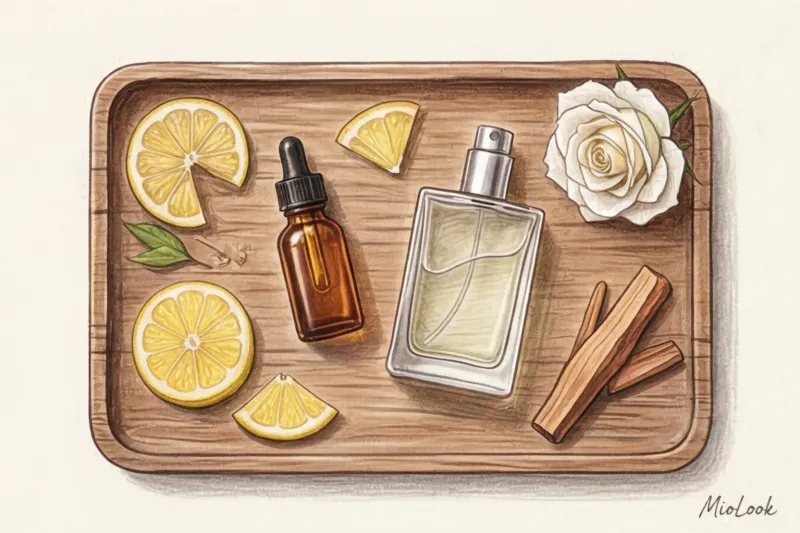
One of my clients, a partner at a major law firm, complained that her favorite light scent with notes of Earl Grey tea sounded too "frivolous" for complex negotiations, but her heavy evening perfume was suffocating her during the day. We put together a fragrance capsule for her: a strong woody base (oil) plus her favorite tea topper (alcohol). The result? Eight out of 10 colleagues noted her new "expensive and confident" sillage. Here are three proven formulas you can adapt to suit your needs:
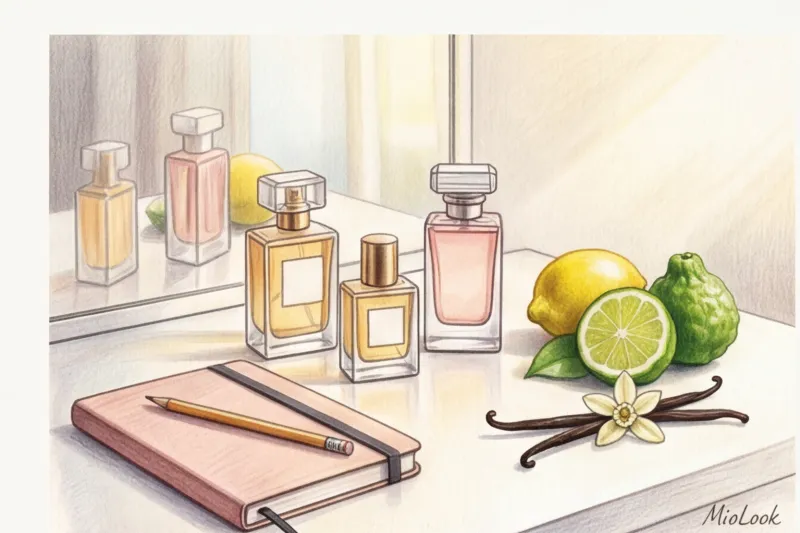
- Formula 1: Wood oil (oud, cedar, sandalwood) + Citrus alcohol perfume (bergamot, neroli).
Result: A rich, fresh, yet profound fragrance. The citrus notes don't fade within an hour, but fade gracefully into a woody base. Ideal for the office and business meetings. - Formula 2: Musk oil (white musk) + Floral spray (rose, jasmine, peony).
Result: A delicate, powdery trail that mimics the scent of well-groomed, clean skin after a shower. A perfect choice for a date or a relaxing weekend. - Formula 3: Vanilla oil + Spicy or alcoholic perfume (rum, tobacco, cherry).
Result: A luxurious, gourmand evening wear. Vanilla softens the harshness of tobacco and alcohol notes, making the fragrance enveloping and inviting.
Checklist: Create Your Own Unique Train
To avoid getting lost in the morning rush, here's a step-by-step guide. Before applying a new combination, be sure to test it on a paper blotter (or a regular napkin) and let it sit for a couple of hours—this will help you understand how the notes sound together.
- Select one direction for the base: Buy a high-quality mono-oil (musk, wood, or amber). This is your "white shirt" in the perfume world.
- Pick 2-3 tops: Take your favorite alcohol-based perfumes (citrus, aquatic, light floral).
- Observe the dosage: The golden ratio of leering is that 1 drop of oil perfume is equal to 2 sprays of alcohol. Don't overload the database.
- Evaluate the appropriateness of: For indoor spaces, use the point-to-point method; for outdoor spaces, use spatial layering.
Creating a personal fragrance is an exciting game. You're no longer dependent on the decisions of a fashion house perfumer. You become the creator of your own image. Remember: the right clothes show the world who you are, but it's your unique sillage that makes people turn their heads.