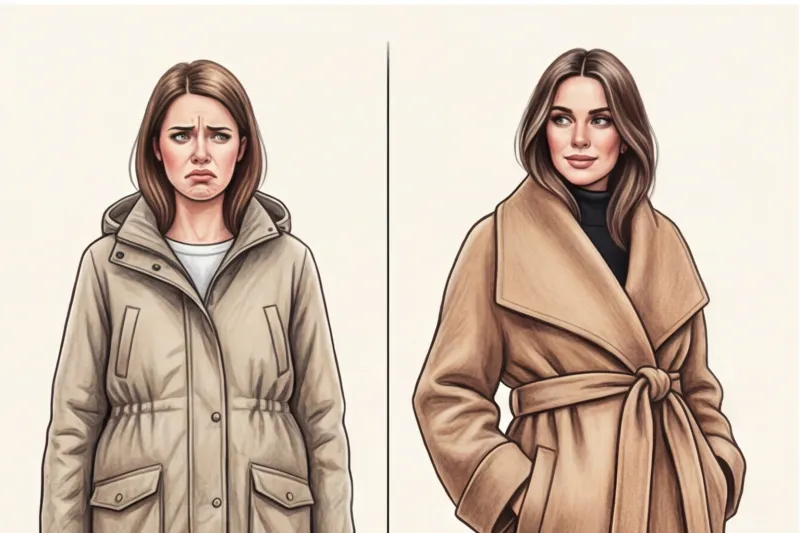
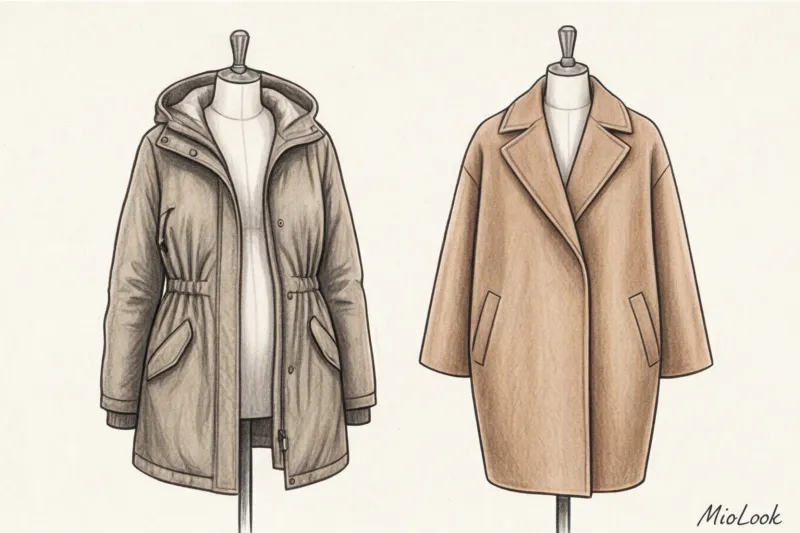
Two weeks ago, Anna came to me for a wardrobe review. She pulled out a heavy, shapeless parka with numerous elasticated sides and sadly said, "I paid €250 for it, but I've only worn it twenty times." Sound familiar? The third trimester, when your belly is at its largest, lasts only 10-12 weeks. Buying a specialized, one-time-only item for this short window is a real crime against your budget and personal style.
Correctly selected winter outerwear for pregnant women should not have the label "maternity" at all. We discussed this systemic approach in more detail in our A complete guide to choosing maternity clothes without breaking the bank Today I'll show you how to use the architectural cuts of mass-market brands and clever life hacks to completely eliminate disposable purchases.
Winter Maternity Outerwear: Why Special Departments Are a Trap
The maternity clothing industry is built on a simple marketing calculus: pregnant women are vulnerable, they want comfort at any cost, and are willing to pay for items of dubious quality because "they'll only last a couple of months." The Global Fashion Agenda (2023) report explicitly identifies specialized maternity clothing as one of the main sources of textile waste.
Let's calculate your savings using the Cost Per Wear metric. A mid-range, specialized winter jacket costs around €150. You'll wear it a maximum of 30 times over the winter (and only on those days when your belly really starts to get big). The cost per wear is €5.
Now, consider a high-quality cocoon coat made of thick wool from COS or Massimo Dutti for the same €150-€200. You'll wear it for the rest of your pregnancy, and then you'll wear it for at least another 3-4 seasons (that's about 360 times). The price per coat drops to a mere €0.40-€0.50. The difference is colossal.
"Maternity line manufacturers know full well that the item will be trashed or resold within three months. So they skimp on everything: using cheap, squeaky polyester instead of breathable nylon, thin synthetic padding instead of down, and plastic hardware that breaks in the cold."
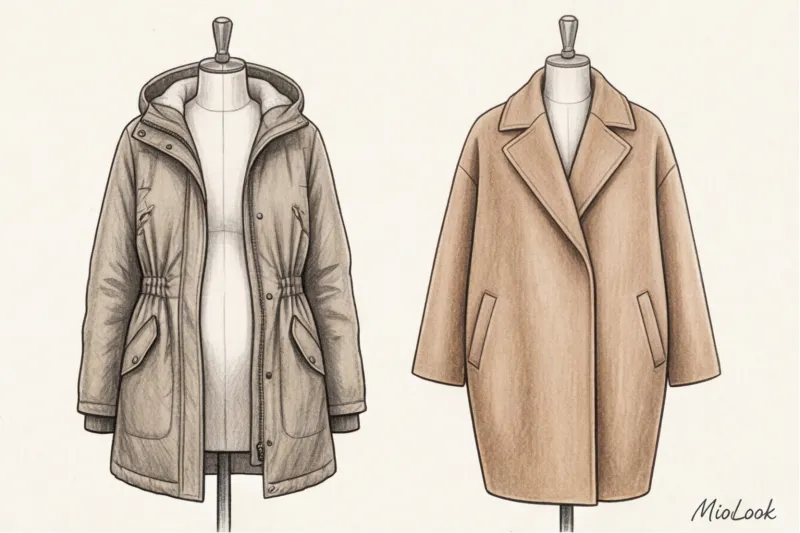
Special edition vs. oversized: what's the difference and which is more affordable?
The design of technical jackets often gets stuck somewhere in 2010. Drawstrings under the bust, side zippers with expanders, gathers at the waist—all these details visually cut into the silhouette and shout about your size, while simultaneously adding unnecessary bulk to the figure.
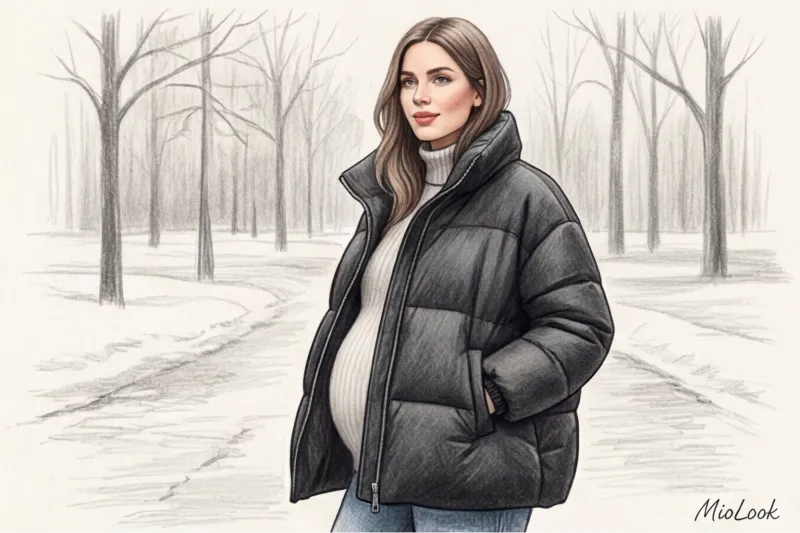
The European approach to maternity style (the so-called Mediterranean style) dictates a different rule: we don't hide our bellies behind shapeless loose garments, but rather frame them with high-quality, architectural cuts. As Lyst reports (2024) show, off-the-shoulder silhouettes remain a wardrobe staple. The secret to proper oversize is that the armholes are artificially lowered, but the sleeve length and neckline are anatomically correct for your usual size.
Your perfect look starts here
Join thousands of users who look flawless every day with MioLook. Artificial intelligence will help you adapt your pre-pregnancy wardrobe to your new figure.
Get access — €0.99 onceThe main mistake when choosing a size
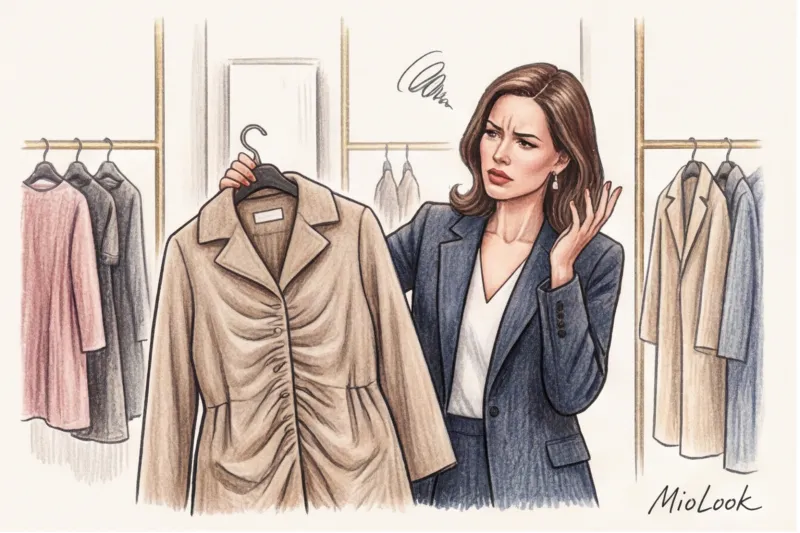
The worst style crime I regularly see in fitting rooms is when a woman who is a size S buys a standard jacket in size L or XL just to fit her belly.
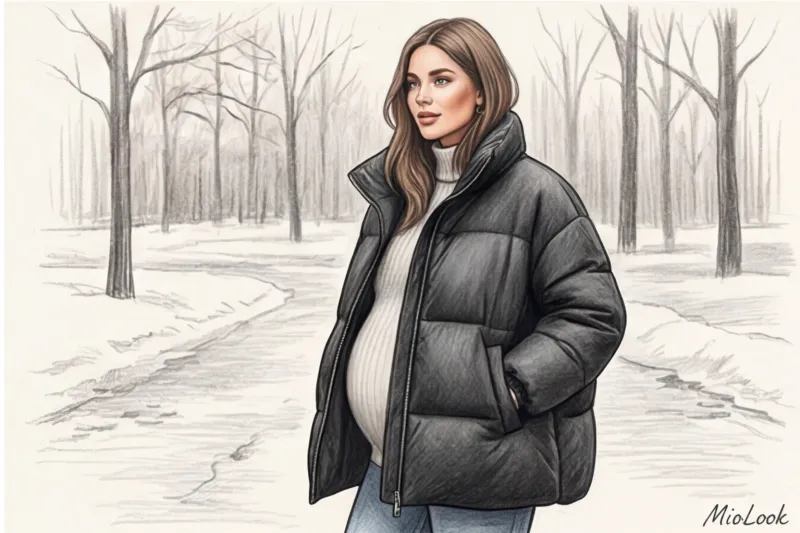
This isn't oversized; it's a piece that's been hand-me-down. What happens to the proportions at that point? The shoulder seam extends almost to the elbow, the sleeves cover the fingertips, and a hollow bubble of fabric forms in the chest area. You instantly look like a massive wardrobe. You need to buy it. mine size (maximum one larger), but the item must have style Oversized from the start.
4 Regular Outerwear Silhouettes That Will Accommodate Your Bump (And Stay That Way)
You don't need to search for specialty stores. Zara, &OtherStories, H&M, and local brands always have these four basic styles in their winter collections that are perfect for a pregnant figure:
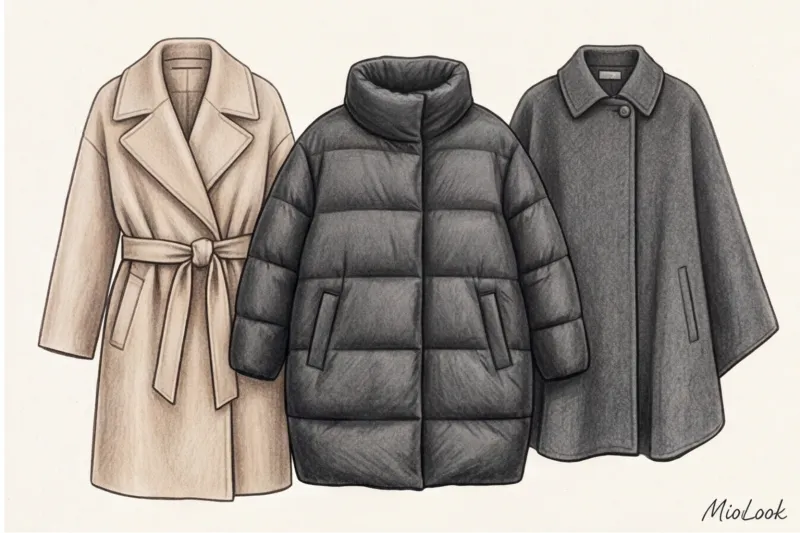
- Wrap coat. A brilliant investment. The lack of a rigid fastener or buttons allows you to control the smell at any stage of pregnancy. Just choose styles with at least 70% wool content to ensure the fabric drapes beautifully rather than being stiff.
- Down jacket-cocoon (Cocoon puffer). The center section easily accommodates your belly, and the tapered waist prevents cold winds from blowing under the jacket. Look for models made of matte, thick nylon—they look more expensive.
- Capes and ponchos. Absolute European chic for mild winters and transitional seasons. Throw it over a warm cashmere sweater for a super-sleek, flowing silhouette, completely concealing bulk.
- A-line parks (Trapezoid). The flare begins just below the bustline, allowing freedom of movement. It's a great choice for a sporty or casual look.
Secret Stylist Trick: Sling Inserts and Extenders for Your Favorite Jacket
What if I told you you don't need to buy new outerwear at all? One of my Berlin clients saved about €300 when I introduced her to zip-in extenders.
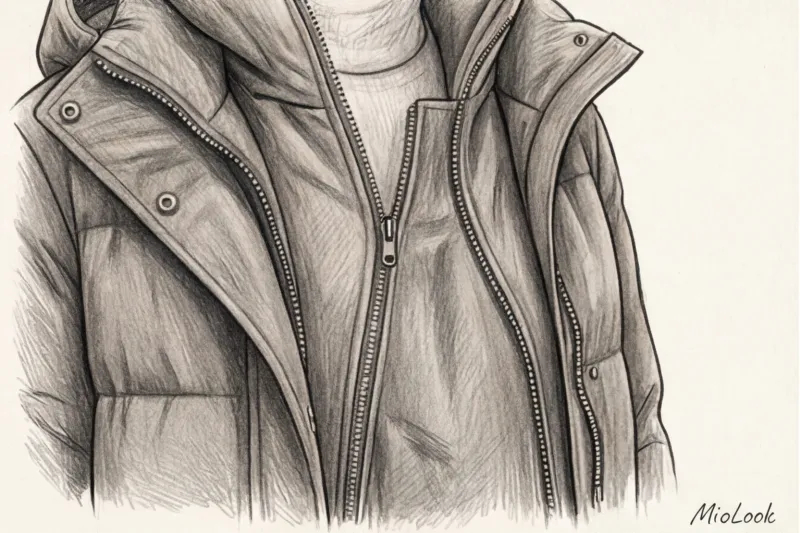
Brands like Kumja and Makepe produce special fabric zipper panels. Using an adapter kit, this panel can be attached to the original zipper of your favorite winter jacket.
As your belly grows, you simply loosen the drawstrings on the insert a little. After birth, this same panel can be used for babywearing, protecting your baby from the wind. When you no longer need it, you unzip the panel and continue wearing your pre-pregnancy jacket. This is the pinnacle of conscious consumption.
Access to MioLook for €0.99 — one-time payment
A smart AI stylist will create the perfect look from the items you already have in your closet. Upload a photo of your jacket and discover how to pair it.
Get access — €0.99 onceLayering Formula: How to Stay Warm Without a Thick Down Jacket
I've been working with clients in Europe for many years, where winters are often chilly, damp, and windy. And here I want to debunk another myth: to stay warm, you don't need a huge, sleeping-bag-like jacket that will make you sweat on public transportation.
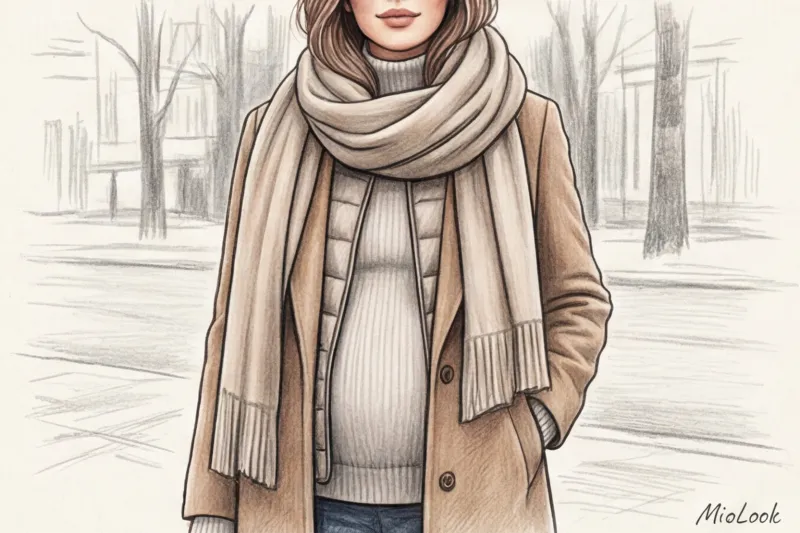
Use the Italian layering method:
- Thin down vest (ultra-light down). Wear a lightweight down jacket from Uniqlo or Massimo Dutti under your favorite open wool coat. The vest keeps you warm, while the coat adds structure to the look.
- Thermal underwear made of merino wool. A study of the properties of natural fibres (The Woolmark Company, 2023) shows that a thin base layer of 100% merino wool with a density of 200 g/m² retains heat more effectively and wicks away moisture better than 3 cm of cheap synthetic padding in a jacket.
- Voluminous scarf. A long stole made of cashmere or wool blend, tightly wrapped around the chest, not only provides warmth but also creates a stylish vertical line that elongates the silhouette.
Pre-purchase checklist: 5 questions that will save your budget
I'm always very strict with my clients when they're shopping. If an item doesn't pass this checklist, we leave it in the store:
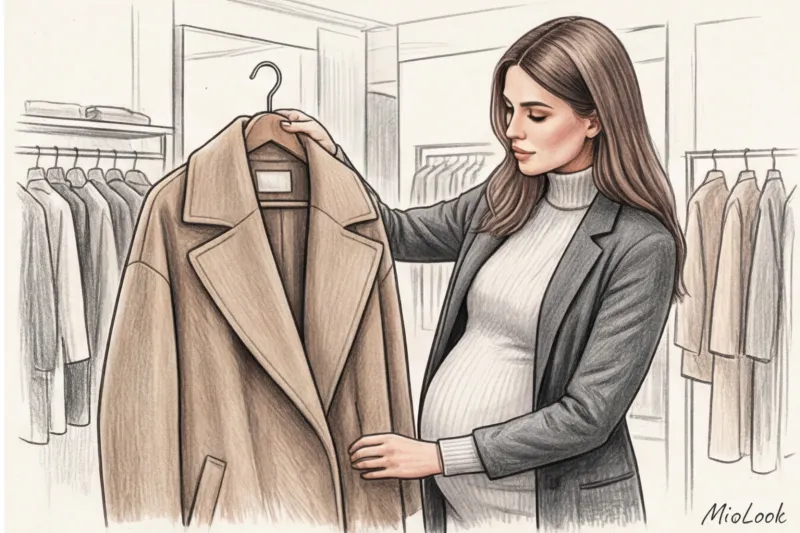
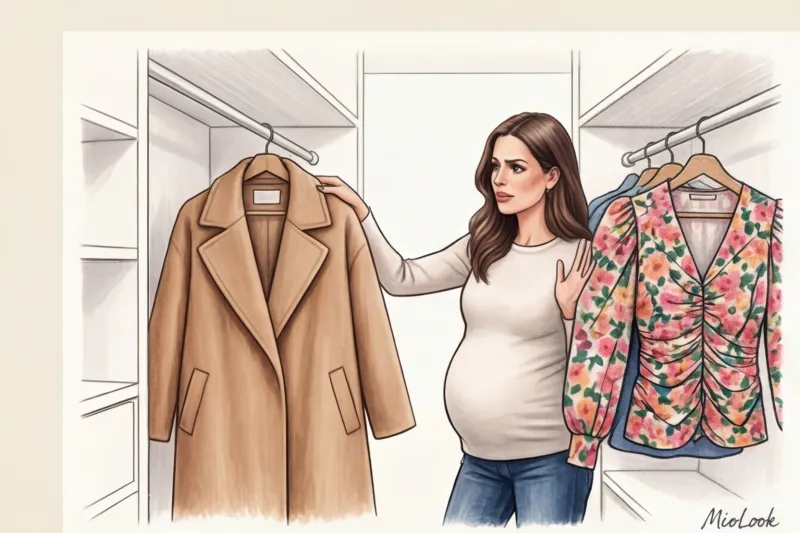
- Will I wear this a year after giving birth? (If the answer is “no,” we hang it back immediately.)
- Where is the shoulder seam? (It should either sit squarely on your natural shoulder or be dropped architecturally, but the sleeves should not hang like an accordion.)
- Will I be able to adjust the volume? (Look for a wrap, a double zipper that can be unzipped at the bottom for step-in, or an A-line silhouette.)
- How light is this thing? (It's already hard for pregnant women to carry the extra weight of their bellies; a down jacket shouldn't weigh like a suit of armor.)
- Does the length cover the lower back and hips? (We'll leave the cropped jackets until next year.)
Fair Limitation: When It DOESN'T Work. My method of oversized clothing, sling inserts, and elegant layering won't work if you live in a region with harsh winters down to -30°C and have to wait outside for long periods of time for a bus. In extreme weather, aesthetics take a backseat—you'll need a specialized arctic parka with built-in belly protection. But for the urban lifestyle at temperatures down to -10°C...-15°C, these guidelines work flawlessly.
Ready to get started?
Try the MioLook plan for free—no commitments required. Organize your winter wardrobe so every item is 100% worth its price.
Get access — €0.99 onceStylist Resume: Investing Wisely
The appearance of two lines on the pregnancy test isn't a reason to abandon your usual style and switch to shapeless, frilly robes. Pregnancy is temporary, but your wardrobe, sense of taste, and family budget are here to stay.
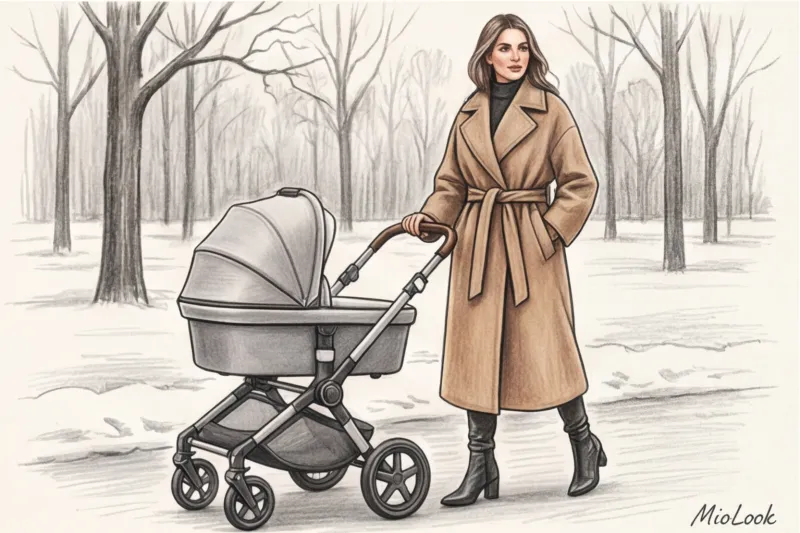
Opt for high-quality fabrics, the right architectural oversize from regular brand collections, and smart gadgets like zipper extenders. Remember the most important rule: buy the right style, not the right size. Only then will your outerwear delight you both at 38 weeks pregnant and during long winter walks with the stroller a year later.