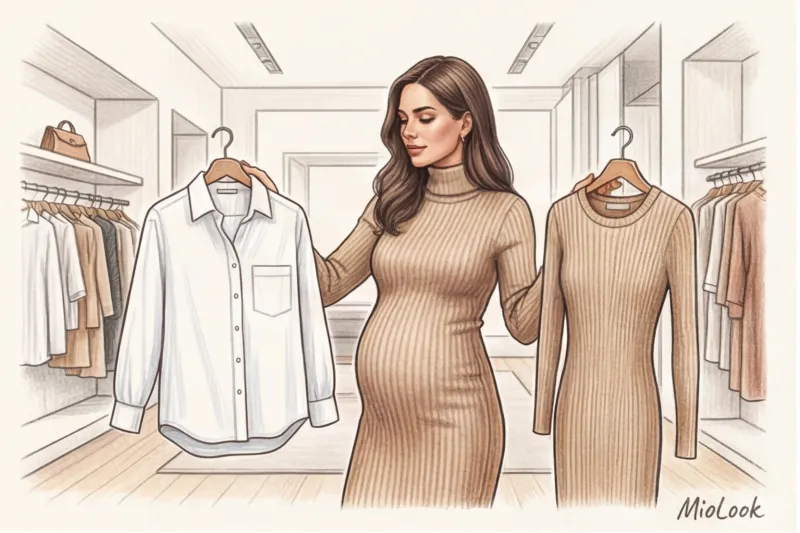
Maternity Clothes: What to Buy and What to Avoid
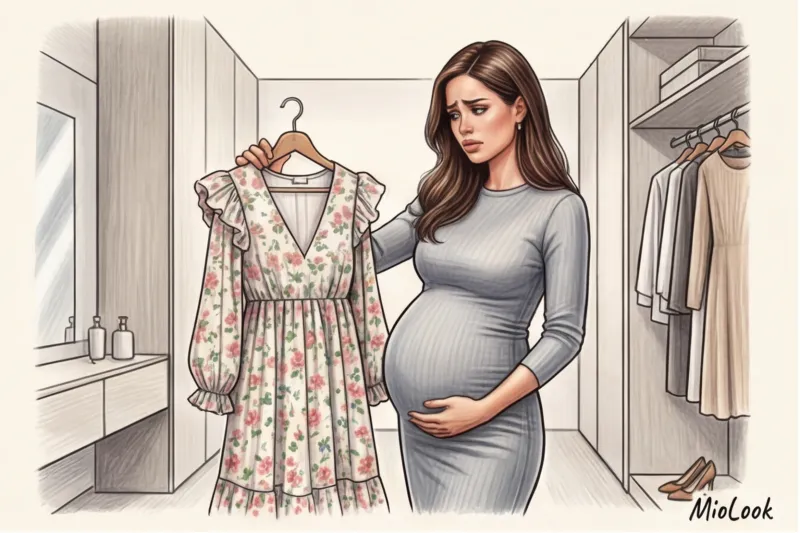
I remember one of my clients, with tears in her eyes, showing me a receipt for €850 for a bag of completely shapeless clothes from the maternity section. Sound familiar? When those two lines on the pregnancy test become reality, the first impulse is to urgently update your entire wardrobe. But let's face it: when a woman starts searching in a panic, What to buy for pregnant women? , this almost always ends in impulsive and senseless spending.
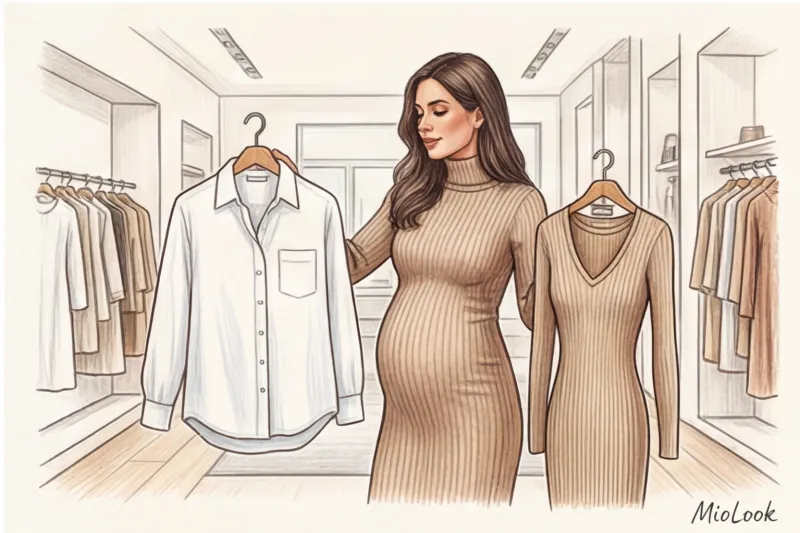
The traditional approach of buying dozens of items to last a few months is hopelessly outdated. According to a global Mintel report (2023), the average shopper spends a significant portion of their budget on a maternity wardrobe, each item of which they'll wear only 15-20 times. This isn't just a waste of money; it's classic "disposable fashion" clogging up shelves.
Over 12 years of working as a personal stylist, I have accustomed my clients to the concept Cost Per Wear (Cost Per Wear) Let's do the math: if you buy a pair of €90 jeans in your fifth month of pregnancy, you'll wear them for a maximum of 4-5 months. Wearing them twice a week, the cost per wear is about €2.50. Now compare that to a quality ribbed midi dress for the same price, which will stretch comfortably over your belly, return to its original shape after you give birth, and last another three years. The benefits are clear.
"My philosophy is based on a Mediterranean approach to style. In Italy or Spain, you won't see a mother-to-be in an oversized robe. Elegance abhors bagginess, and pregnancy is no excuse to hide in shapeless cocoons!"
The biggest styling mistake I see everywhere is buying ordinary clothes "to grow into," simply two or three sizes too big. What happens as a result? The shoulder seams mercilessly slide down, the armholes hang forlornly, and the figure visually turns into a shapeless square, adding extra bulk. If you're really interested Affordable style: how to update your wardrobe without breaking the bank , remember: the secret is not in buying giant sizes, but in choosing the right silhouette.
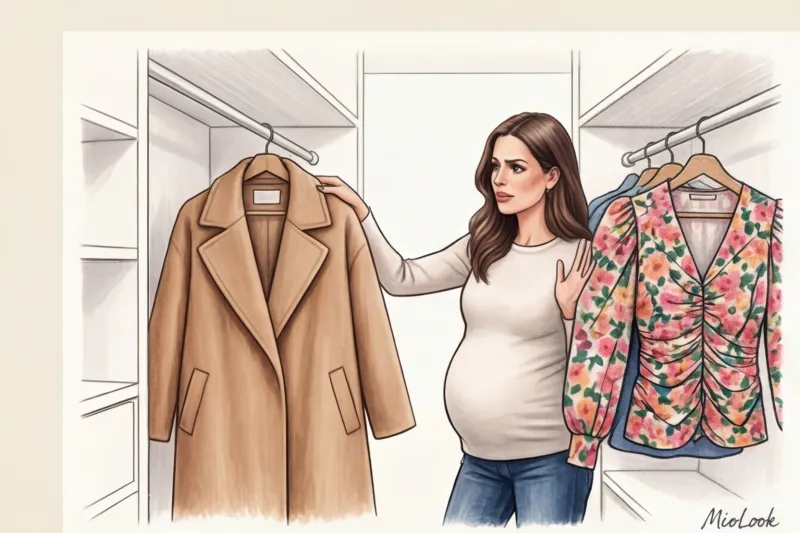
This leads to the basic rule of smart shopping: Invest in the right fabrics and fit, not the sewn-on "maternity" tag. Look for stretchy textures (fabrics containing 5-8% elastane), heavy cotton, and wrap-around fits. Before you rush to the store, I always recommend doing some research. After loading your items into MioLook app , you'll be surprised to find that many of your unbuttoned jackets, voluminous cardigans, and slip dresses from your pre-pregnancy life will become the perfect base for the next 9 months.
The 70/30 Rule: How to Transform Your Current Wardrobe Without Spending a Lot
When Anna, the marketing director, invited me to a wardrobe review four months pregnant, she already had three huge black trash bags lying on her bed. "I can't fit into anything anymore, let's just throw it all out and buy something new," she declared despairingly. This is the most common reaction women have to their rapidly changing bodies. But I stopped her, we unpacked the bags, and by the end of the day, we had created fifteen stunning outfits without buying a single new item.
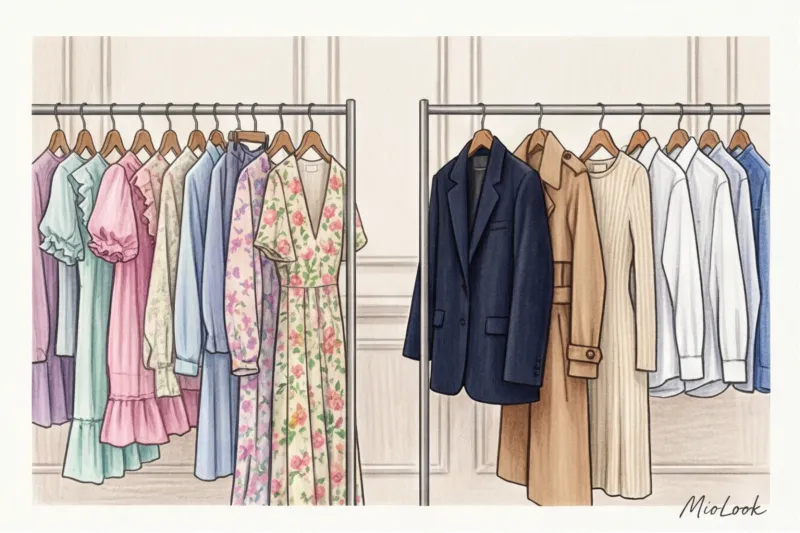
That's when we applied my 70/30 golden rule: exactly 70% of your ideal "maternity" wardrobe is already hanging in your closet. You just need to do the right inventory. Put away stiff denim and high-waisted pants. We focus on stretchy knits, viscose, wrap dresses, and anything straight-cut or buttoned up the front. We save the remaining 30% of the budget for targeted, smart investments in the second and third trimesters.
The key to transforming a basic wardrobe is clever layering. Unbuttoned shirts, structured jackets, and long cardigans create two clear vertical lines. These lines visually elongate the silhouette, flatter the figure, and add a touch of class to the look. My foolproof formula, which works on any figure, is: a tight first layer (base) + a voluminous second layer By wearing a basic knit dress (first layer) and layering an unbuttoned oversized jacket (second layer), you elegantly accentuate your tummy while concealing the bulk of your hips and waist, maintaining impeccable proportions.
Stylist Secrets: Life Hacks for Adapting Everyday Items
Let's go over specific techniques that will help you save hundreds of euros on temporary clothing and extend the life of your favorite items.
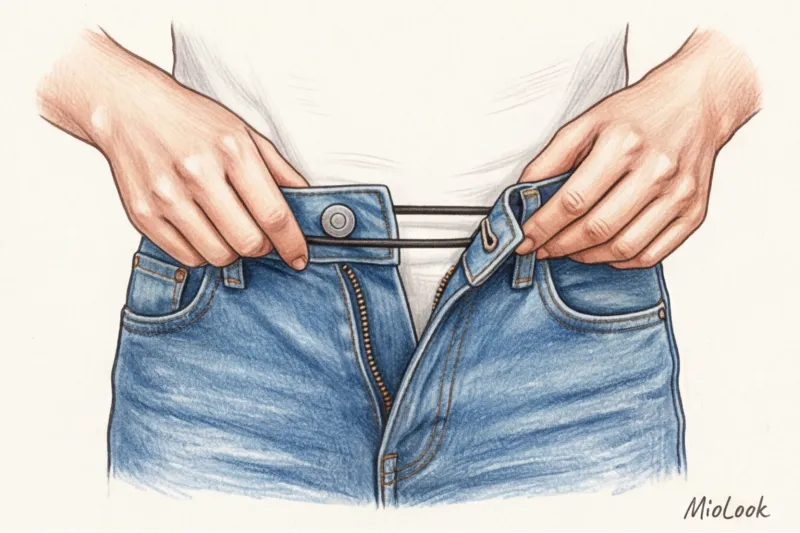
Let's start with a classic—the elastic band trick on the button of your favorite jeans. If your denim fits perfectly around your hips but is no longer tight around your waist, simply thread a strong hair tie through the loop and drape it over the button. This micro-lifehack will give your favorite pants an extra 1-2 months of life without sacrificing comfort.
When elastic isn't enough, a special maternity belly band comes into play. It's a wide, elastic band made of thick knit fabric that fits over unzipped jeans or office pants. This accessory costs between €15 and €25, but it allows you to wear your pre-pregnancy bottoms until the end of the second trimester, securely holding your waist and hiding any open zipper.
Another hidden treasure is slip dresses. Thanks to their bias cut, silk or viscose dresses adapt beautifully to your growing figure, softly hugging your figure. In early pregnancy, wear them solo, draped over a sweater. In the second trimester, layer them with a basic white T-shirt, and in the ninth month, use them as a luxurious first layer under a chunky knit cardigan.
Access to MioLook for €0.99 — one-time payment
A smart AI stylist will select the perfect look from your current items and suggest which wardrobe items can be stylishly adapted to your new figure.
Get access — €0.99 onceThe men's department is a gold mine for stylish looks.
I'll let you in on a secret: for the best basic tops for expecting mothers, I don't go to the maternity section, but to the men's sections of brands like COS, Uniqlo, or Massimo Dutti. Why is that? Women's oversized shirts often have an A-line silhouette or are unnaturally wide in the chest and back, making the figure look bulky. Men's shirts are cut along a strict, straight line. They fit perfectly on a pregnant belly, maintaining a neat shape and not creating an unnecessary "bubble" at the back.
The same goes for the perfect men's hoodies and jumpers. Pay attention to the shoulder line—quality men's clothing has a more delicately dropped shoulder, and thick cotton holds its shape better, without clinging to items you want to keep in the shade.
And, of course, don't forget about your partner's wardrobe. Borrowing your husband's pieces—oversized white shirts, sweatshirts, and jackets—is not only ultra-fashionable but also eco-friendly. You get a relaxed, "I threw on the first thing I saw and I look great" aesthetic without spending a dime.
Trimester by Trimester: A Smart Shopping Schedule
According to 2023 statistics from the analytical agency WGSN, approximately 65% of women make their largest maternity wardrobe purchase in the first 10 weeks after a positive test. It's a perfectly understandable psychological impulse: you're excited, a new stage is beginning, and your hand instinctively reaches out to search for " What to buy for pregnant women? "But as a stylist, I have to stop you.
Buying specialty clothing in the second month of pregnancy is like choosing a wedding dress without knowing the date or location. Your figure will change in a nonlinear manner. What fits perfectly on your barely noticeable bump at 14 weeks will be hopelessly small or dig uncomfortably into your sides at 30 weeks. Moreover, physiology dictates its own rules: in the third trimester, your belly inevitably drops, completely changing the fit of your shoulders and the length of your front hem.
To avoid storing items you'll only wear twice, we need a strict shopping plan. We'll address our wardrobe needs step by step, responding to actual body changes rather than fantasizing about them. Let's break this process down into three logical steps.
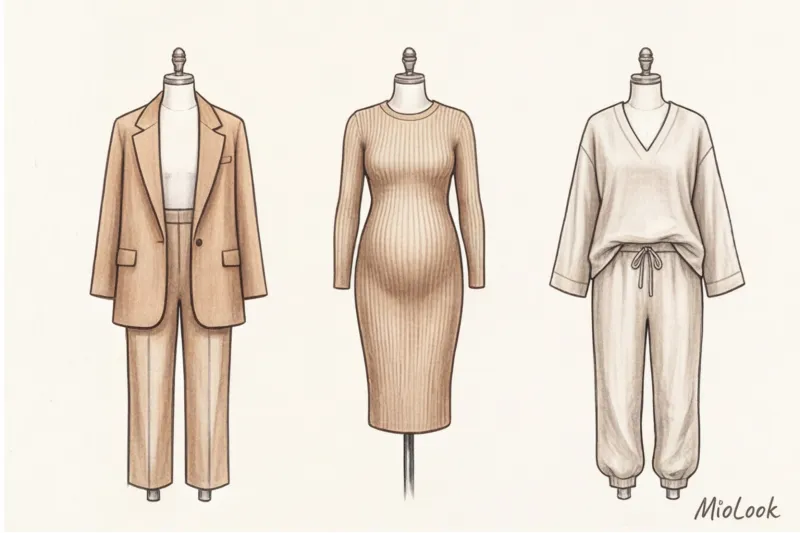
1st trimester: Concealing changes without sacrificing style
The first three months are a time of paradoxes. No one notices yet, but your favorite jeans suddenly stop buttoning. It's not the growing baby that's to blame, but hormonal changes and simple bloating.
The main goal during this period is to avoid any tight belts or waistbands that put pressure on the lower abdomen and impair circulation. Switch to drawstring trousers with an elastic waistband. Pajama-style pants made of thick viscose or flowing silk are an excellent alternative.
- Silhouettes: Opt for A-line and A-line dresses. They elegantly balance the figure, conceal your position at work, and create the perfect amount of volume.
- Investment #1: The initial focus shouldn't be on clothing, but on comfortable, seamless underwear. Laser-cut edges and elastic microfiber will prevent chafing. Budget around €40–€60 for a quality basic set—these items will be worth every penny.
"Don't try to squeeze into your pre-pregnancy clothes. If a button on your pants leaves a red mark on your skin, it's on the back shelf. Period."
2nd trimester: Transition period and first investments
Around 16–20 weeks, your belly will begin to take shape, and this is where we'll need to make some targeted investments in a specialized wardrobe.
Let's start with buying the right bottoms. When choosing maternity jeans or pants, you'll encounter two types of fit: over-the-bump (a wide knitted insert that stretches over the entire stomach) and under-the-bump (Elastic side panels or a low, soft waistband under the belly). From my experience, I can say that for thick denim, a belly fit works best—it holds the heavy fabric in place more securely and prevents the jeans from slipping down when you walk.
The second must-have is knitwear. Not smooth, but textured. Ribbed dresses are a brilliant invention of the textile industry. Thanks to the "noodle" knit, the fabric works like an accordion: it stretches as the volume increases without losing its shape or becoming see-through.
Isabella's Secret: My favorite formula for clients at this stage is two-piece knit suits. A midi skirt with a soft elastic band (which can be pulled high at the waist or tucked under the belly) plus a voluminous sweater. It looks like a quiet luxury (the Loro Piana aesthetic), costs between €100-€150 for a good blend with wool or cashmere, and, most importantly, they can be worn independently. If you add this formula to the "smart wardrobe" feature in MioLook , the app will generate dozens of looks for you using the shirts and jackets you already own.
3rd trimester: Maximum comfort and preparation for the maternity hospital
Welcome to the home stretch. By week 30, your body's production of the hormone relaxin, which softens ligaments, peaks. Add to this natural fluid retention, and you'll experience slightly (or significantly) swollen feet and a shifted center of gravity.
This is when your belly might start to drop. Those shirt dresses you bought in the second trimester will suddenly start to ride up comically in the front. What do we need at this stage?
- Premium leggings for pregnant women. Forget thin cotton that stretches at the knees. We need dense, matte microfiber with a light compression effect. They will become your uniform.
- Change of footwear. Keep heels, even small kitten heels, in the box. Your feet can expand in width, so the ideal solution is to buy stylish suede loafers, mules, or slip-ons a half size larger than your usual. The main criterion: you should be able to put them on without using your hands, a shoehorn, or bending over.
- Maxi lengths. Knitted maxi dresses and kimono capes will save the final weeks. A thick viscose kimono (around €70–€90) will create a flowing, bohemian silhouette, visually elongate the figure with its vertical sides, and is perfect for nursing or simply relaxing at home with your baby.
Each trimester requires its own tools. By shopping according to a schedule, you protect yourself from the "closet full, nothing to wear" situation that so often mars the expectation of a baby.
The main myth: "Special clothes for pregnant women are always more comfortable."
Let's be honest. When I'm presented with a client request like " What to buy for pregnant women? for the first season”, I immediately veto most specialized mass-market lines. Last season, for professional reasons, I analyzed the composition of 40 basic items from popular maternity collections in the €30–€50 price range. The result? 85% of them were made of low-quality polyester. Brands love cheap synthetics in this niche because they stretch easily, forgiving designers of any pattern flaws. But wearing non-breathable plastic during a period when body temperature is already elevated due to hormones is a fashion crime against one's own comfort.
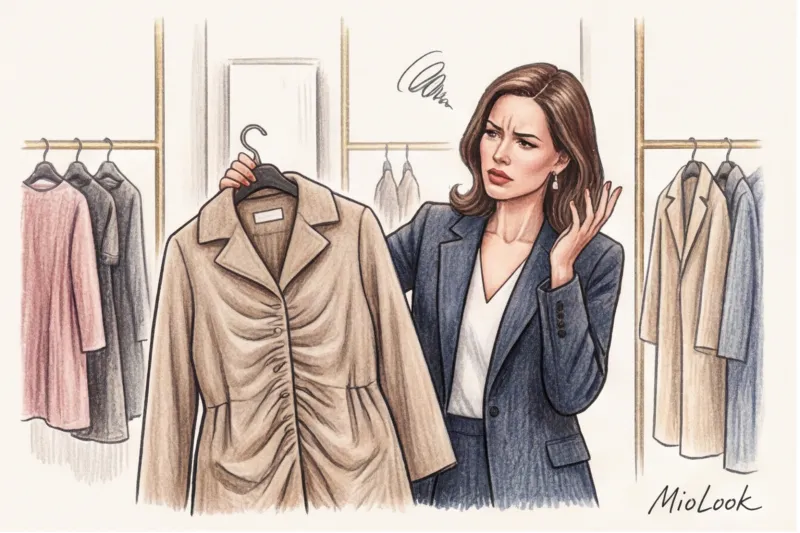
Another common problem in maternity departments is the notorious side ruching. The industry has somehow decided that pleated fabric at the sides of a T-shirt or dress is the best way to drape growing volumes. In practice, this cut hopelessly cheapens the look. Instead of creating a clean, elegant silhouette, ruching disrupts vertical lines and visually widens the waist.
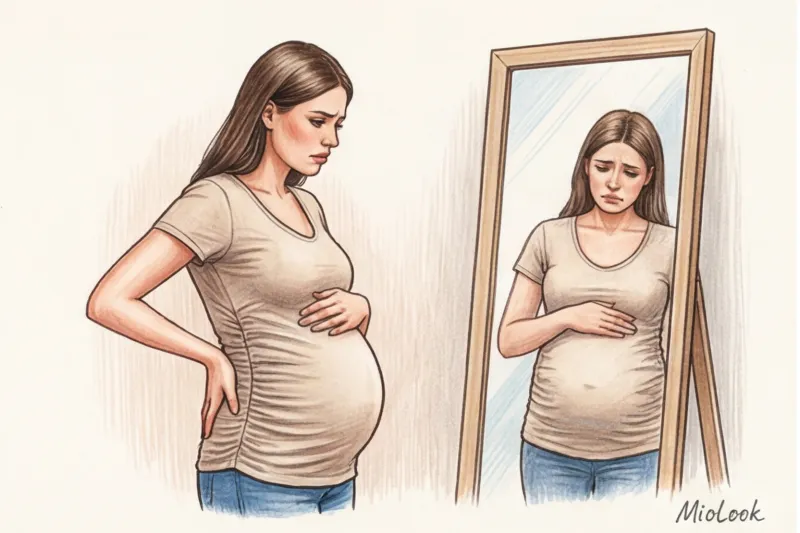
Herein lies the most counterintuitive insight of my practice: maternity patterns often make women look much larger than they actually are. They disproportionately add volume everywhere—in the bust, hips, and, most critically, in the shoulders.
Shoulder geometry is the foundation of any classy look. As soon as the armhole line slants downwards without a deliberate oversize intention, the entire structure collapses, and you look like you're wearing someone else's clothes.
That's why the popular advice to "just buy clothes 1-2 sizes bigger from a regular store" is a bad idea. Sure, a shirt or jumper might fit comfortably around your stomach, but the telltale sagging at the shoulders and overly wide, baggy sleeves will turn you into a shapeless rectangle.
What's the alternative? I recommend investing in minimalist basics brands (like COS or Arket), whose standard collections are built around loose, architectural cuts made from dense cotton or structured viscose. Another stylist's secret trick is to use the Tall or Curvy lines at your favorite stores. A midi dress from the Tall collection will give you those all-important extra inches of length in the front that a rounded belly inevitably eats up. At the same time, the shoulder seams, darts, and armholes will remain perfectly aligned, preserving the neatness of the silhouette and your natural figure.
Access to MioLook for €0.99 — one-time payment
Start creating perfect images with the help of artificial intelligence
Get access — €0.99 onceA capsule for the expectant mother: 12 items for 30+ looks
The mathematics of smart style are merciless to impulse purchases: twelve carefully selected elements will give you three times more combinations than forty spontaneous purchases. When the question arises during consultations, What to buy for pregnant women? First of all, I suggest forgetting endless lists from the internet. Based on the principles of a minimalist wardrobe (remember Courtney Carver's famous Project 333, which I adapted for expectant mothers), we create a rigid yet incredibly functional framework.
Many people think a dozen items is critically inadequate. "Isabella, I'll die of boredom in this uniform!" I often hear at first meetings. But the secret lies in the combination and contrast of textures. Here's my curated capsule that will cover 90% of your needs:
- 1. One pair of flawless maternity jeans (straight cut or slightly flared, forget about outdated skinnies).
- 2–3. Two knitted dresses (one smooth base, the second textured, with a dense ribbed pattern).
- 4. One voluminous structured jacket (preferably from your pre-pregnancy wardrobe).
- 5. One pair of thick black leggings (matte, premium microfiber, in the 40-60 € range - you can't skimp on these).
- 6. One loose shirt dress made of thick cotton or viscose.
- 7. Classic white shirt (borrow from the men's department for the right oversize).
- 8. A voluminous cashmere or quality wool sweater.
- 9. Basic loose-fitting T-shirt.
- 10. Long sleeve shirt with Breton stripes (French chic has not been cancelled).
- 11. Comfortable micro platform loafers.
- 12. Urban leather sneakers.
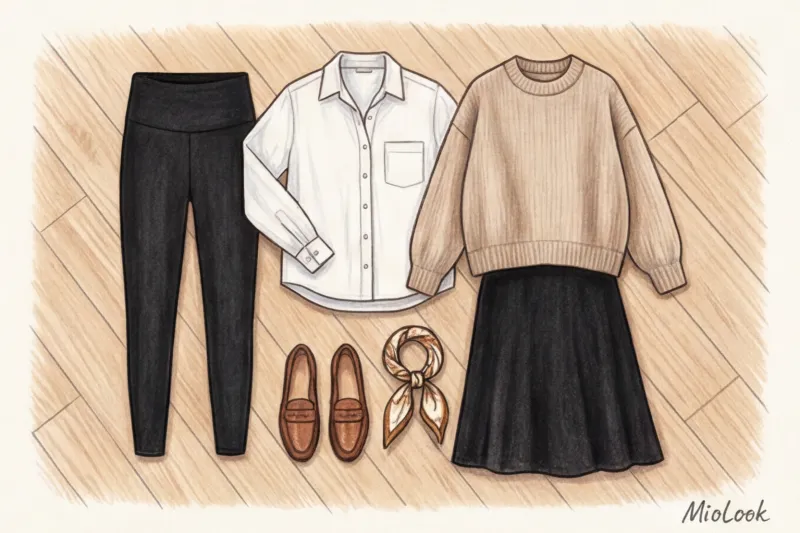
With this base, you'll never have to stand in front of an open cabinet in a panic again. If you download these items into the "smart wardrobe" feature of the MioLook app , the algorithm will instantly give you dozens of ready-made sets. But let me share my favorite stylistic formulas—I call them "instant polish recipes":
A ribbed dress + oversized jacket + loafers = a classy casual look. The jacket creates clean vertical lines, bringing together the dress's soft silhouette and setting the overall aesthetic.
Here's my favorite formula for walks and meetings with friends: Leggings + men's white shirt + sweater draped over shoulders + sneakers = Old Money Mom aesthetic A sweater worn over the shoulders isn't just an extra layer for windy weather. It's a clever geometric design that draws attention to the upper body and the portrait area, visually balancing the proportions.
And now, the most important rule I brought back from the Costa Brava: interesting details elevate the basics. A Mediterranean vibe can save even the most basic look. Are you wearing simple black leggings and a white T-shirt? Add oversized tortoiseshell sunglasses, a silk scarf casually tied to the handle of a structured bag, and chunky vintage earrings. I always insist: budget at least €100–€150 just for accessories. Bright accents near the face distract from a changing belly and lift the mood. With them, you're not just a "woman in waiting"—you're a chic woman who knows her style.
Office Dress Code While Expecting a Baby: Classy and Comfortable
Have you noticed that my executive clients' work wardrobe causes the most stress? When their stomachs start pushing back the buttons on their formal suits, panic sets in: how to maintain an authoritative appearance and avoid slipping into home-style slackness? Official corporate dress code rules, according to updated guidelines from international HR associations, now allow for a smooth transition from strict attire. Business Professional to elegant Smart Casual And for the expectant mother, this is an ideal window of opportunity.
I was recently putting together a business capsule for the vice president of a large company. When the question arose, What to buy for pregnant women? For daily board meetings, my answer was clear: look for items made of ponte knit. This dense double-knit fabric visually imitates high-quality suiting wool, holds the trouser crease perfectly, and doesn't stretch at the knees, yet offers four-way stretch. Excellent ponte trousers will cost you around €90–€150, and they're the best investment for a working woman in labor—you'll look sharp but feel like you're in your favorite pajamas.
Forget about constricting belts and rigid waistbands. Instead of jumping straight into specialized styles (which often feature an abundance of shiny polyester), consider classic, wide-leg palazzo pants from mainstream collections, but with one key detail: an elastic waistband at the back. From the front, they look uncompromisingly classic with a flat yoke, while the back offers just the right amount of room for a growing bump. Paired with a loose silk blouse, they look incredibly classy.
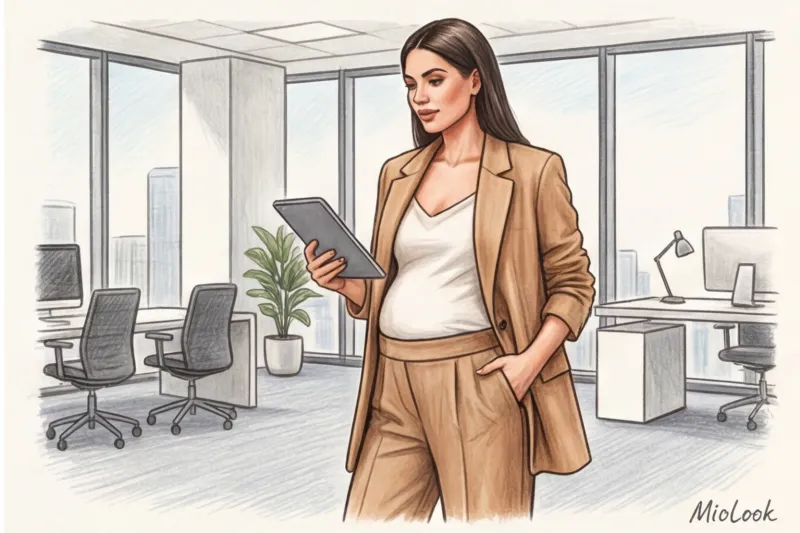
As a stylist, I love working with optical illusions. Your main tools of influence during this period are open jackets and long suit vests. Worn over a basic turtleneck or sheath dress, an unbuttoned long vest (lengthening to mid-thigh) instantly ties the look together. It creates two clear vertical lines that structure the silhouette, visually elongate the figure, and convey professionalism without restricting movement at all.
Shoe etiquette requires special attention. It's entirely possible to look professional without stilettos. Due to the shift in your center of gravity and the increased strain on your spine, safety is paramount. Swap high-heeled pumps for pointed-toe smooth leather ballet flats (a pointed toe always adds formality and elongates the leg), loafers with a rigid shape, or simple oxfords. A little advice from my experience: buy office shoes a half size larger than usual, as your feet may swell slightly by the evening, even if you feel perfectly comfortable.
Your ideal image
it begins Here
Join thousands of users who look flawless every day with MioLook.
Get access — €0.99 onceSmart Shopping Checklist: Ask Yourself These 5 Questions Before Checkout
You're standing in the fitting room or hovering your finger over the "Pay" button. The thought is pulsing in your head: "I need to buy this, otherwise I won't have anything to wear tomorrow." As a stylist who integrates a coaching approach into my wardrobe management, I know this feeling all too well. Panic over your changing body is the main driver of impulsive and senseless purchases.
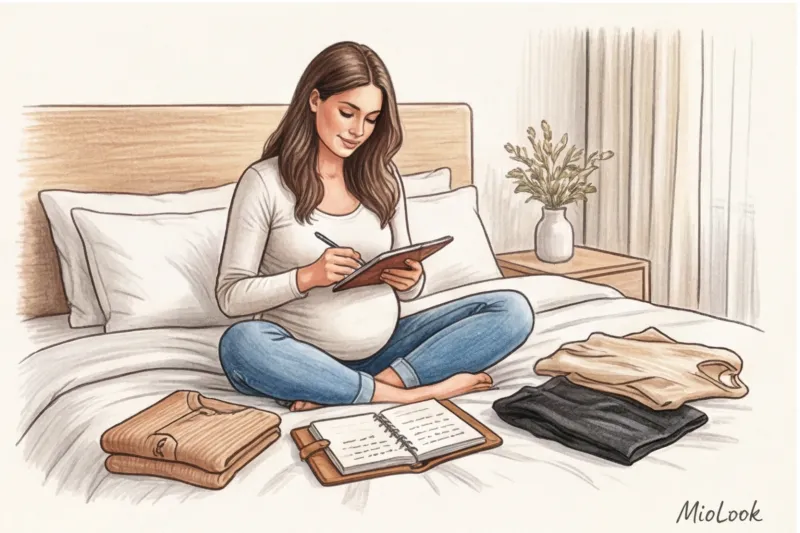
To prevent your budget from disappearing into bags of clothes you'll only wear a few times, I've developed a strict filter. Save these five questions and force yourself to answer them honestly before every transaction.
- Will I be able to wear this item 6 months after giving birth? If you're looking at a blouse with specific side gathers that scream "I'm pregnant," pass it on. Think long-term: a voluminous men's shirt made of thick cotton or a straight-cut slip dress will still be around in a year. Evaluate Cost Per Wear (price per output) for each item.
- Does the fabric contain at least 5% elastane or spandex? Stiff denim or 100% pure linen will begin to cling to your skin as early as week 25. Be sure to check the sewn-in tag. Your ideal formula for pants or dresses during this period is a natural base (cotton, viscose) plus 5% to 8% high-quality elastane. The fabric should adapt to your body, not dictate its needs.
- Is this machine washable without dry cleaning? Let's be pragmatic. Delicate silk or items marked dry clean only — a bad investment for a new or expectant mother. Look for thick, blended fabrics that can withstand frequent machine washing at 30–40 degrees and don't require extensive steaming after each wear.
- Does this item go with the other 3 items in my closet? The capsule wardrobe is inexorable. If you need to buy special shoes, the right top, and a new jacket to buy those wide-leg trousers, it's a lost cause. The item should integrate instantly and effortlessly into your existing wardrobe.
- Am I buying this out of fear that I will have nothing to wear, or do I really need the item? This is a key psychological marker. We often buy a tenth basic turtleneck (by the way, the average bill for such "comfort" purchases is about €150 per visit to a mass-market store) simply for the feeling of control. Take a deep breath. You already have the basics; you just need the occasional additions.
When you're pondering what maternity clothes to buy right now, the internet throws up hundreds of long must-have lists. But true style begins with eliminating the unnecessary. Run your potential purchases through this checklist, and you'll see how 80% of your items will end up on the store racks, and only functional elegance will settle in your closet.
Investing in the Future: Postpartum-Friendly Clothing
Let's put aside the glossy illusions: the day after you're discharged from the hospital, you won't be able to button your favorite vintage Levi's. According to medical data, it takes about 6-8 weeks for the female body to return to its original size. This is the "fourth trimester" that the fashion industry prefers to remain discreet about.
As a stylist, I want to talk to you about your postpartum body completely frankly, without Instagram filters. Your figure has done a tremendous job. Please, don't try to squeeze into your stiff pre-pregnancy denim just for show or to meet other people's expectations. Continuing to wear maternity jeans with a soft, elastic waistband two, three, or even five months after the baby arrived is completely healthy, physiological, and stylish. That's why, when addressing this issue, What to buy for pregnant women? In the final stages of pregnancy, remember: you are essentially creating your basic wardrobe for the first six months of motherhood.
If you plan to breastfeed, the focus shifts sharply from the belly area to the portrait area. Leave dresses with high collars and complex back zippers in the closet. Your new dress code is built around elements that provide aesthetic appeal and quick access: loose, menswear-style button-down shirts, basic tops with a deep V-neck (great options in thick cotton can be found at essential brands for €30–€50), and, of course, wrap-front pieces.
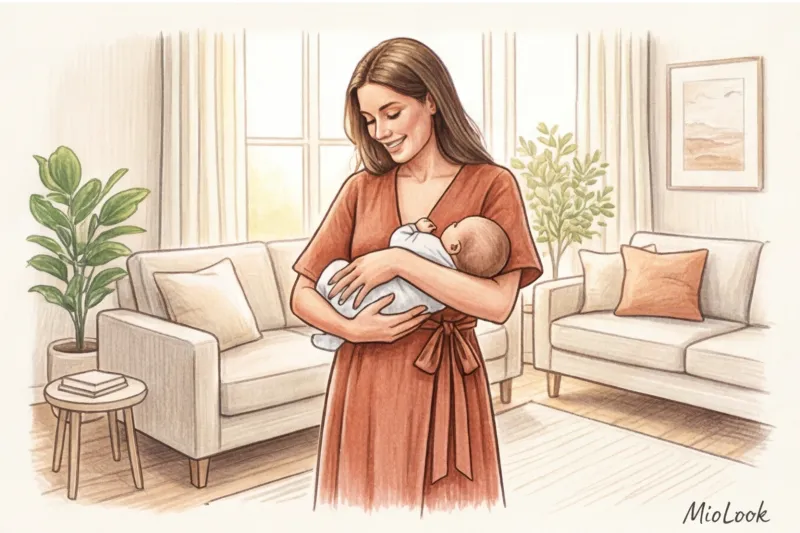
This brings us to my absolute favorite: the iconic wrap dress, the cut made famous by Diane von Furstenberg in the 1970s—perhaps the most ingenious wardrobe investment of the entire nine months. The design is impeccable: you can loosen the waistband as much as possible in the final weeks of pregnancy, then tighten it tightly, emphasizing your waist as your waistline begins to fade. The diagonal line creates a perfect V-neckline, which is incredibly comfortable for nursing and visually elongates your silhouette.
To avoid panicking through the shelves when you only have a few minutes to get ready, I advise my clients to do a top inventory beforehand. Collect all button-down shirts and tops with appropriate necklines in a separate capsule tagged "nursing-friendly." MioLook - this will save you a lot of time and nerves in the first months after giving birth.
Stylist Resume: Your Style, Your Rules
For decades, the fashion industry treated expectant mothers as if their primary goal was to become visually invisible. Studying the archives of fashion houses, from the voluminous tent dresses of the 1960s to the exaggerated collars with bows of the 1980s, I was always struck by how tailoring literally erased a woman's individuality. But let's put this approach behind us once and for all. Pregnancy is absolutely no reason to put your personal style on hold or try to disguise dramatic changes in your figure under bland knitted robes.
When a classic request comes up during a consultation, What to buy for pregnant women? My final and most important piece of advice sounds counterintuitive: buy something that reflects your natural aesthetic. If you adored grunge before pregnancy, continue wearing vintage biker jackets unbuttoned with basic maxi dresses. If you prefer structured minimalism in the spirit of Jil Sander, look for simple, monochrome, loose-fitting pieces. Your personal style is your DNA, and it doesn't disappear when you get two lines on the pregnancy test.
The key to a truly luxurious look at any stage of pregnancy lies in the right textures, architectural layering, and, above all, unconditional self-love. A woman's body, creating new life, is monumental and beautiful. Stop hiding it! Instead, frame your figure with noble materials. Leave the stiff, scratchy polyester on store shelves. Your choices now are softly flowing cupro, heavy silk, viscose, and breathable modal.
I always advise paying special attention to the bias cut ( bias cut ), ingeniously invented by Madeleine Vionnet back in the 1920s. Items cut diagonally to the warp have a phenomenal ability to stretch softly, hugging new curves, and return to their original shape after washing. Add the right layering: throw an open duster coat or a structured vest over a form-fitting dress. These two clear vertical lines at the sides will create that very statuesque posture and elongate the silhouette, allowing the belly to proudly take center stage.
But before you give in to the hormonal urge to nest and impulsively fill your online shopping carts with hundreds of euros (I've seen clients spend €300-500 in a single evening on items they never wore), I want to stop you. My professional advice is to start with an honest closet review before opening online shopping apps. This isn't just a budget tip; it's a matter of your stylistic hygiene.
Get everything out. You'll be surprised, but your favorite silk blouses (which can now be worn unbuttoned over a top), chunky knit cardigans, and men's blazers will handle the new task much better than specialized lines. To avoid the process turning into tedious chaos, upload your favorite loose-fitting pieces to MioLook The algorithm will help you look at your existing wardrobe from a new perspective and assemble trendy capsule wardrobes without making a single purchase.
"I'll be honest: in your eighth month, there will definitely be days when you feel like nothing in the world fits you. This is completely normal, and I've seen tears of despair on dozens of stunningly beautiful women. At times like these, just put the complicated styling tricks aside. Put on your most comfortable base coat, tie a vintage silk scarf around your neck, add statement earrings, and your favorite lipstick."
Ultimately, the most precious accessory you can wear during this period is the inner peace of a woman who knows her worth. You are beautiful right now. And your wardrobe should only delicately highlight this incredible transformation, while remaining true to your own rules.
Your micro-step for today: Take exactly 15 minutes, pull out 3-4 of your favorite "non-pregnancy" pieces (like a loose blazer or shirtdress), and try them on with your new proportions in mind. You'll see that your style still feels right.
Guide Chapters
Maternity Loungewear: How to Maintain Style
Forget about your husband's stretched-out T-shirts and shapeless clothes. We'll show you how to create a stylish and comfortable home wardrobe for expectant mothers.
Stylish Clothes for Nursing Moms: A Wardrobe After Childbirth
Nursing clothes with hidden zippers are a marketing myth. Find out how a stylist integrates regular clothing into new mothers' wardrobes.
Office Wear for Pregnant Women: A Stylish Dress Code
How to maintain a professional style during pregnancy? A stylist's tips for choosing comfortable and elegant business attire for expectant mothers.
Stylish Summer Maternity Clothes: How to Survive the Heat
Forget shapeless tunics and synthetics! We'll show you how to create a stylish and comfortable summer wardrobe for expectant mothers using breathable fabrics.
Comfortable shoes for pregnant women: style and comfort without swelling
Your feet change during pregnancy, but that's no reason to give up on beautiful looks. We're talking to a stylist about how to choose elegant shoes without harming your health.
Stylish and Elegant Maternity Dress: Stylist Tips
Why isn't a maternity dress the most stylish evening dress for expectant mothers? We explore common mistakes and help you choose the perfect outfit.
Maternity Jeans: How to Choose the Perfect Fit
Choosing clothes while expecting a baby is an investment in your confidence. Learn how to find the perfect pair of jeans that will flatter your figure.
Winter outerwear for pregnant women without overpaying
Is it worth investing in specialized maternity jackets? We'll explore how regular oversized clothing can replace throwaway items and save you money.