Do you know what the most common request I hear from clients in their fourth or fifth month of pregnancy is? "Darina, I look like a giant cupcake." And I understand them completely. When your favorite fitted shirt stops fitting around your belly, your hand automatically reaches for the shelves of specialized maternity brands. But let's be honest: most items labeled "for expectant mothers" instantly diminish your professionalism. We've covered more about how to build a cohesive work wardrobe during this period in our The complete guide to office wear for pregnant women And today I want to prove one thing to you: the right office blouses for pregnant women are most often found in the department stores of regular brands, and sometimes even in your husband's closet.
Maternity Fashion Stereotypes: Why Typical Office Maternity Blouses Are Ruining Your Image
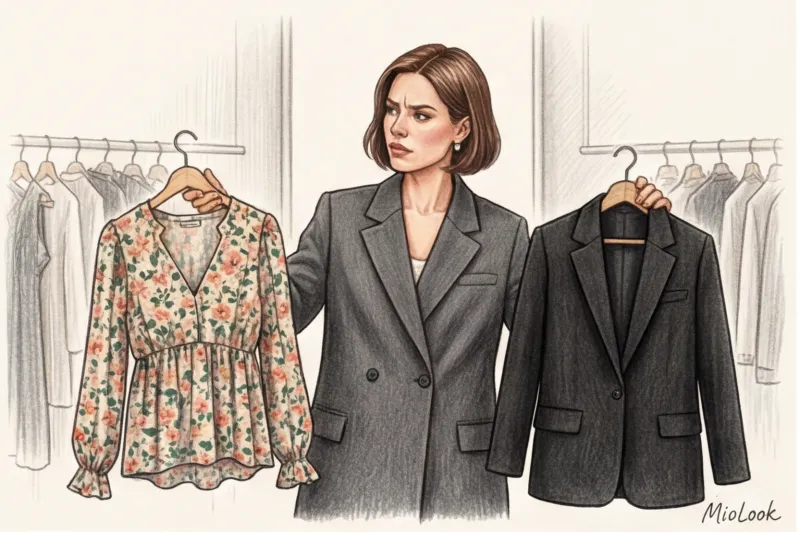
I have a client, Anna, who is the marketing director at a large IT company. Seven months pregnant, she faced a challenging budget defense before the board of directors. For our fitting, she brought a special maternity blouse for €90: it had a high-waisted empire waist, a cute bow at the chest, and side gathers at the belly.
"I feel like an intern in it, not a boss," she admitted. And that's entirely understandable. A popular myth holds that pregnant women need side gathers and elastic under the bust. The reality is this: such a cut visually cuts off the figure, weighs down the silhouette, and makes the look childish. Childish decorative elements (ruffles, round collars, bows) are subconsciously interpreted as a lack of authority.
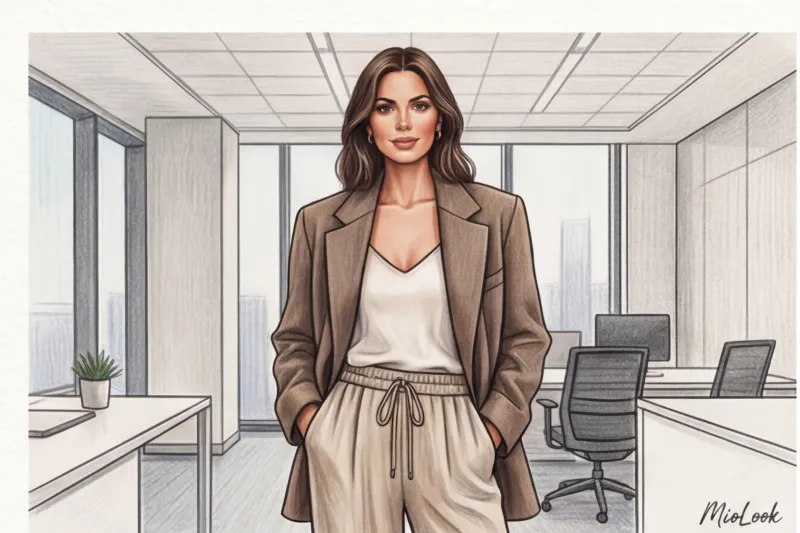
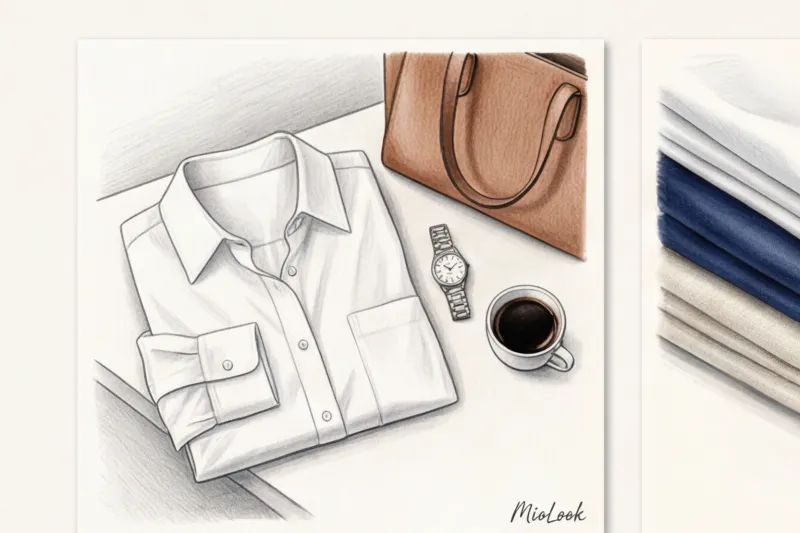
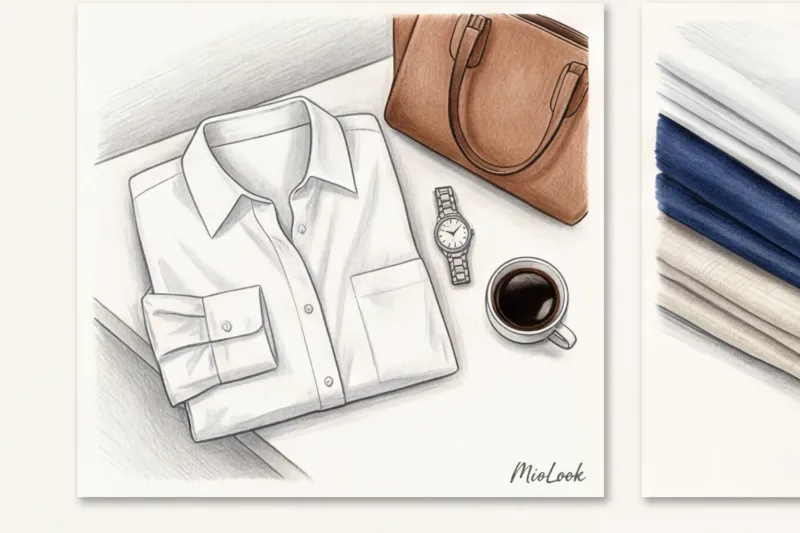
We put the blouse aside and pulled a classic white heavy cotton shirt (costing around €120) from my husband's closet, rolling up the sleeves. The difference was dramatic: the stiff collar and straight lines restored Anna's status and uncompromising professional image. Over 12 years of working as a stylist, I've developed a rule of thumb: investing in two or three loose-fitting shirts from regular brands pays off 100%. You'll wear them long after maternity leave, while specialized blouses will be consigned to the back burner after three months.
Fabrics That Will Save Your Workday (and Your Thermoregulation)
Pregnancy changes the rules of the wardrobe game, most notably regarding thermoregulation. Hormonal changes raise your core body temperature, and what once felt "a little stuffy" now causes unbearable discomfort in a stuffy office.
A 2024 market study by WGSN revealed alarming statistics: approximately 80% of mass-market maternity blouses contain more than 15% polyester or elastane. Manufacturers emphasize maximum stretchability, ignoring the fact that synthetics reduce breathability by half. Cheap viscose with elastane is non-breathable, quickly becomes pilled, and, worst of all, clings to all the seams of underwear.
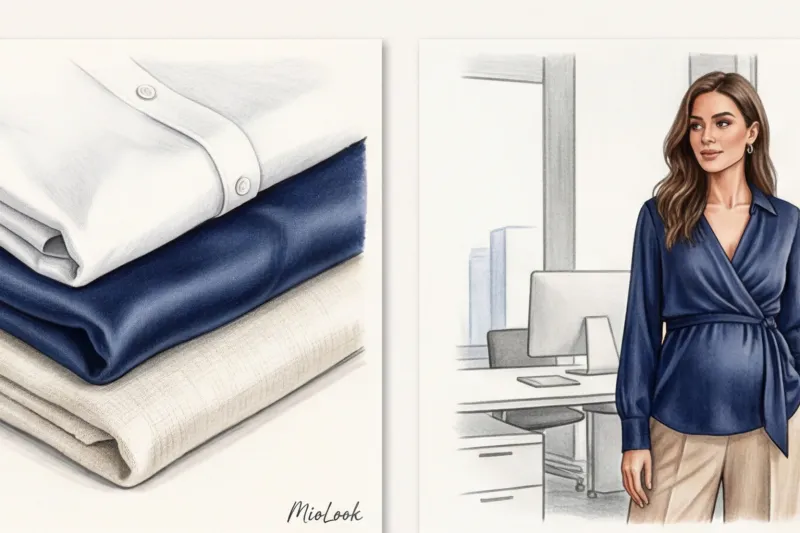
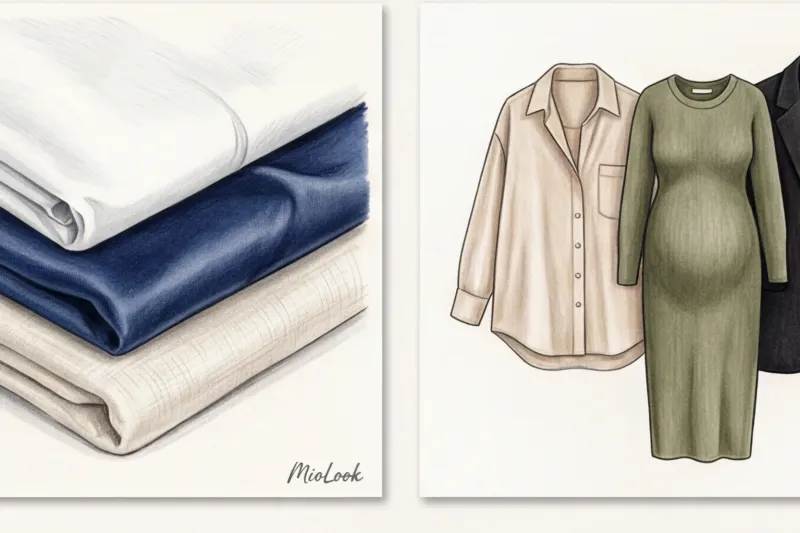
Your go-to fabrics are heavy cotton poplin (look for a weight of 120 g/m² or higher), natural silk, lyocell, and cupro. Let's recall the lectures on tailoring: why does a dense, stiff fabric conceal volume better than a stretchy knit? A stiff fabric creates its own framework. It drapes over a protruding belly in straight lines, leaving air between the body and the garment. A fine knit, on the other hand, clings to every fold. You can read more about how to combine these fabrics in the article about combination of textures in clothing.
Access to MioLook for €0.99 — one-time payment
A smart AI stylist will select the perfect look based on your proportions.
Get access — €0.99 onceIdeal styles: office blouses for pregnant women in early and mid-pregnancy
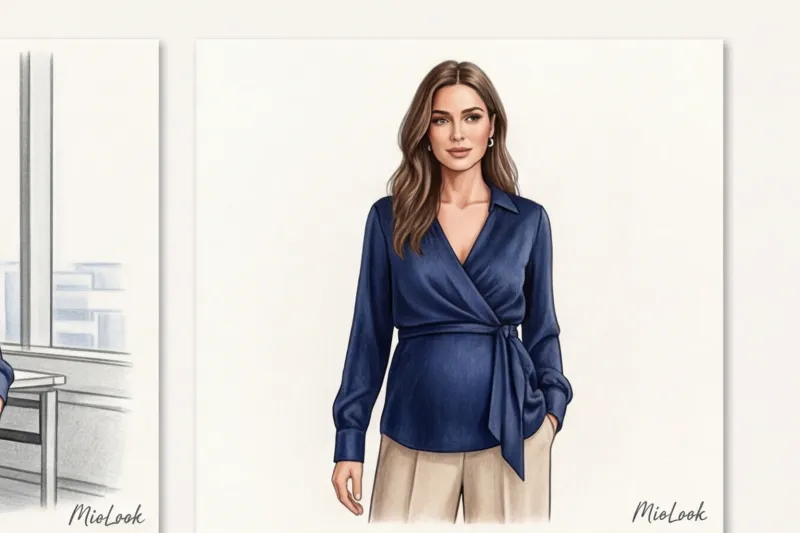
The first and early second trimesters are the most treacherous times. Your belly is just starting to grow, your coworkers don't know it yet, but your regular fitted clothes are already bursting at the seams. The biggest mistake at this stage is to start buying clothes two sizes too big. You'll simply sink into your shoulders, and your figure will look bulky.
Boyfriend shirt: a masculine cut on a feminine figure
A men's cut works flawlessly. A straight shirt with a stiff collar and dropped shoulders is the best basic purchase. How to choose the right size? Focus strictly on the shoulder line and neckline, not the width of the stomach. The shirt should fit loosely, but the shoulder seam shouldn't hang down to the elbow. A good basic poplin shirt from brands like COS or Massimo Dutti typically ranges in price from €50–€100.
Wrap blouses
Wrap blouses are the only style that literally "grows" with you thanks to their adjustable fastening. A deep V-neckline brilliantly balances proportions: it elongates the neck, visually narrows the chest, and minimizes the appearance of fullness around the waist. Important: choose styles without built-in elastic, only with long fabric ties.
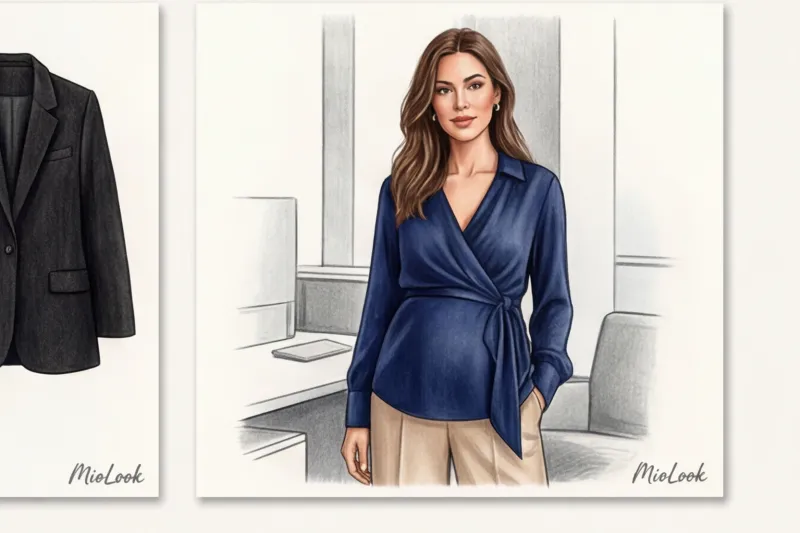
Third trimester: shirts and blouses that don't look like a tent
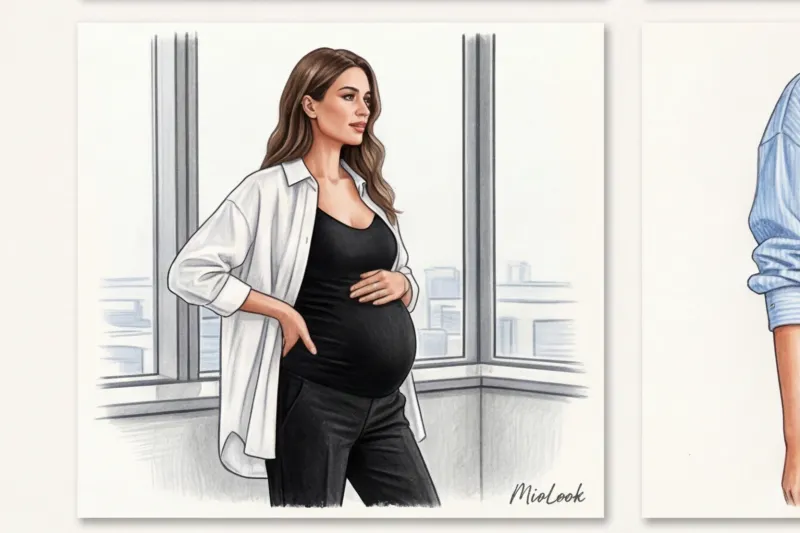
When the belly really gets big, many give up and switch to shapeless tunics. A huge mistake! Overly long, soft tunics without a defined shoulder line visually shorten the legs and turn the figure into a massive square.
A-line shirts are great in the third trimester: they're well-fitted through the shoulders and chest, but flare out at the bottom. But my favorite styling trick for this period is architectural layering.
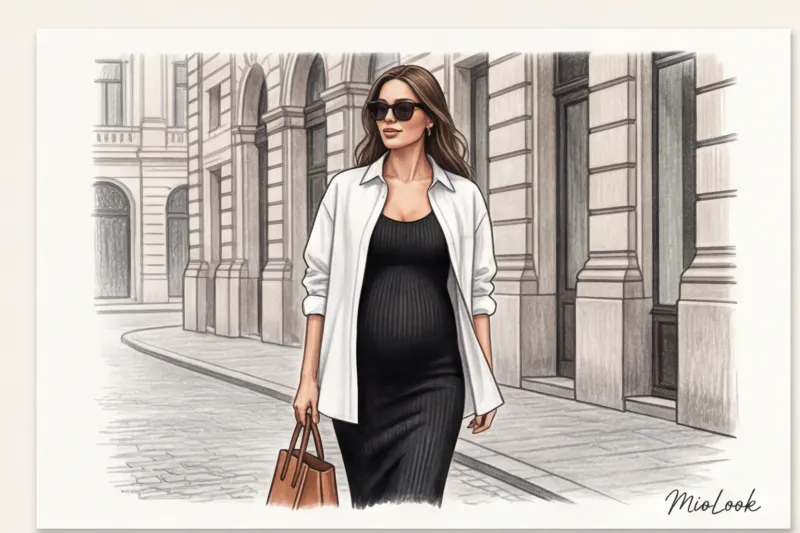
Wear a basic silk top or a smooth, form-fitting knit dress, then layer a crisp, oversized shirt over it, leaving it completely unbuttoned. The two strong vertical lines that form the shirt's lapels dramatically elongate the figure and trim away the sides. A strict geometric styling principle applies here: if we add significant volume to the center of the figure (the stomach), we must reveal the thinnest parts of the body—the wrists, ankles, and collarbones. Otherwise, the silhouette will become disproportionately heavy.
Your perfect look starts here
Join thousands of users who look flawless every day with MioLook.
Get access — €0.99 onceStylist Tricks: 4 Ways to Wear Regular Shirts When You're Growing
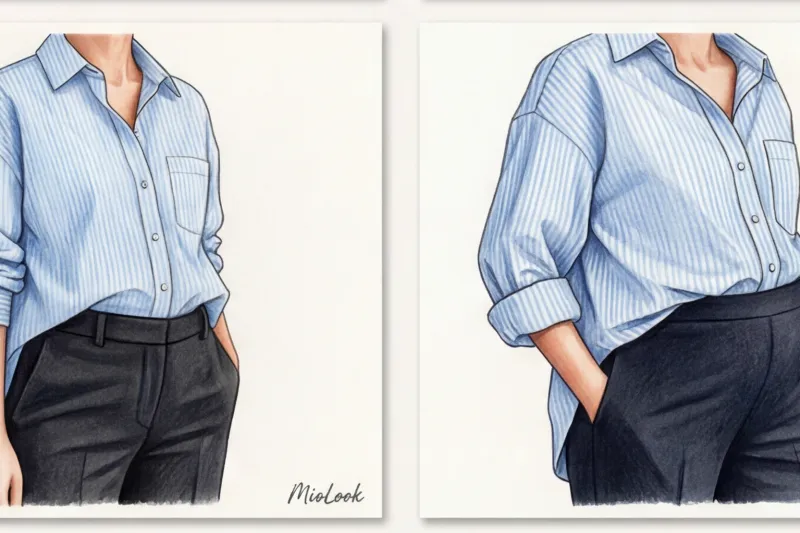
You don't have to buy half the store to feel confident at work meetings. Here are four tips I constantly use on set and when reviewing the wardrobes of pregnant clients:
- French dressing (French tuck): Tuck only one front or side edge of a loose shirt in trousers for pregnant women This creates a slight asymmetry and defines the line of the legs, instantly eliminating the "tent" effect.
- The Rolled-Up Sleeves Rule: Never wear an oversized shirt with long cuffs. Roll them up twice, just below the elbow. Exposed, delicate wrists add a delicate touch.
- Belt under the belly: If the dress code allows (like a casual Friday), wear a long shirt untucked and tie a thin leather belt just below your belly. But be careful: This technique does not work at all in the 8th or 9th month or if your baby is in a very low position – you will be physically uncomfortable sitting.
- Hair Tie Trick: My favorite insider tip for avoiding buying new pants in the first trimester: Thread a regular hair tie through the buttonhole of your office pants, then drape both ends over the button. This will give you an extra 3-4 centimeters around your waist, and the top can easily be covered with a long shirt.
Checklist: How to audit your wardrobe before maternity leave using the MioLook app
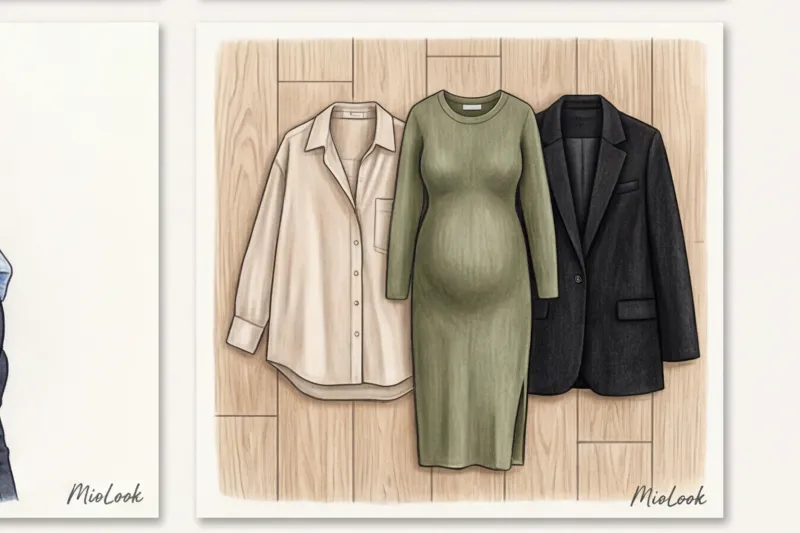
Over the years of working with private clients, I've come to the conclusion that pregnant women buy too many unnecessary clothes due to anxiety and their changing bodies. Experience shows that 70% of the "maternity" blouses you need are already hanging in your closet. You just need to detach yourself from their traditional purpose.
To avoid spending hundreds of euros on clothes that won't last, conduct a rigorous digital inventory. Here's a step-by-step plan:
- Photograph and upload all your current business items into a digital wardrobe MioLook.
- Filter blouses and shirts by tags: "oversized," "straight fit," "off-the-shoulder." Forget fitted silhouettes—temporarily archive them in the app.
- Assess your remaining inventory and assemble a capsule wardrobe. The ideal minimum for the office: 2 heavyweight men's-style shirts (e.g., white and blue stripes), 1 wrap-over blouse made of silk or cupro, 1 loose A-line shirt.
- Make a shopping list only for what you're clearly missing. My clients typically only need a couple of basic silk tops for layering (around €40-€70) and quality trousers with a soft waistband.
Pregnancy isn't a reason to give up your career image and hide behind ruffles. Your professionalism doesn't fade as your belly grows, and your wardrobe should project the same confidence and strength as it did before maternity leave. Invest in tailored cuts, choose thick, flowing fabrics, and you'll notice how the right shirt can transform not only your reflection in the mirror but also your attitude toward your body during work meetings.