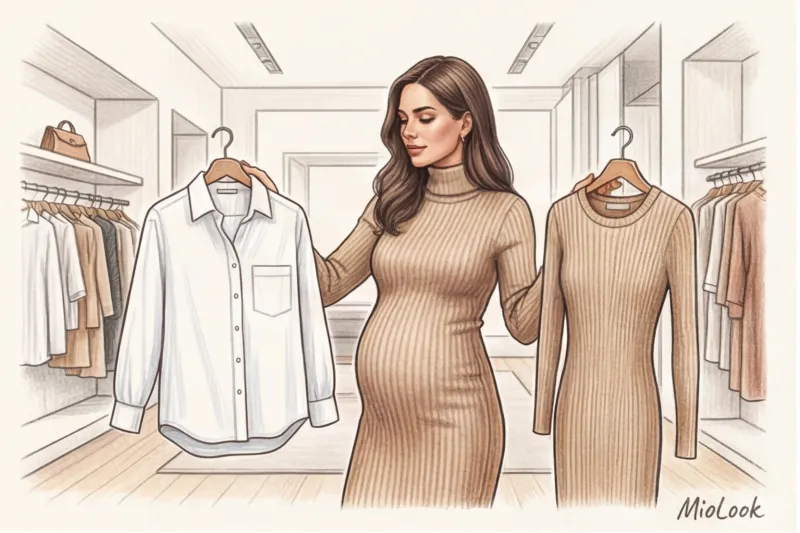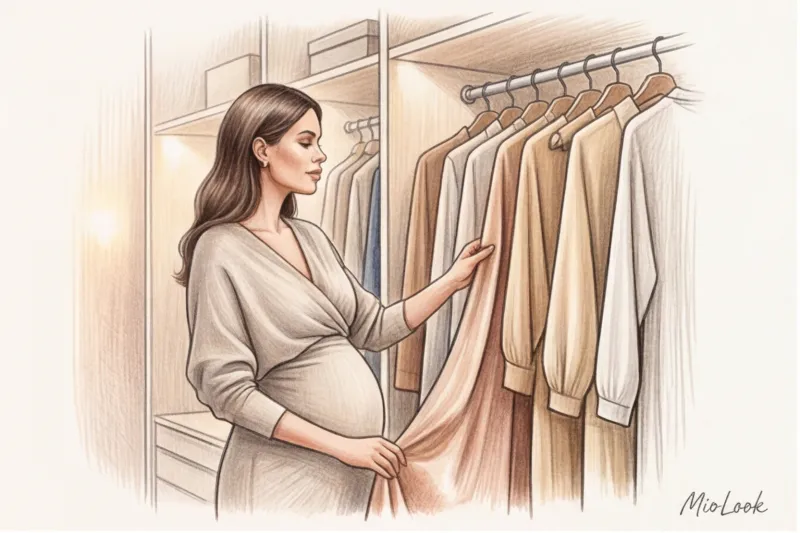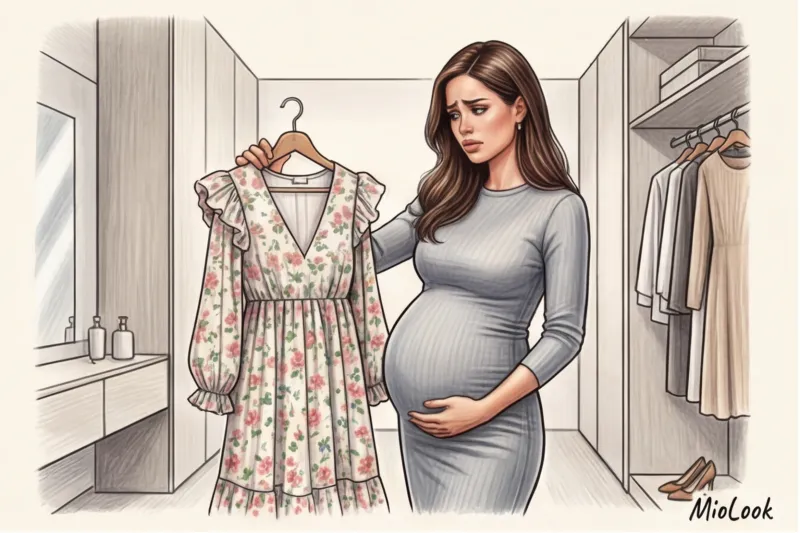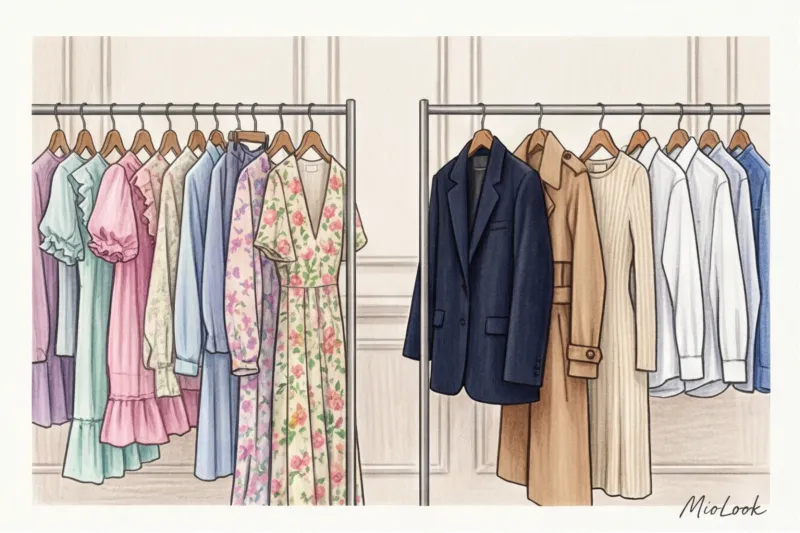
A few years ago, at Paris Fashion Week, I watched the glossy editors and expectant models. You know what I never saw on them? Shapeless, high-waisted dresses, childish ruffles, and T-shirts with funny slogans on their bellies. In 14 years of working as a personal stylist, I've learned one thing: the fashion industry often tries to sell expectant mothers a temporary uniform, erasing their personal identity.
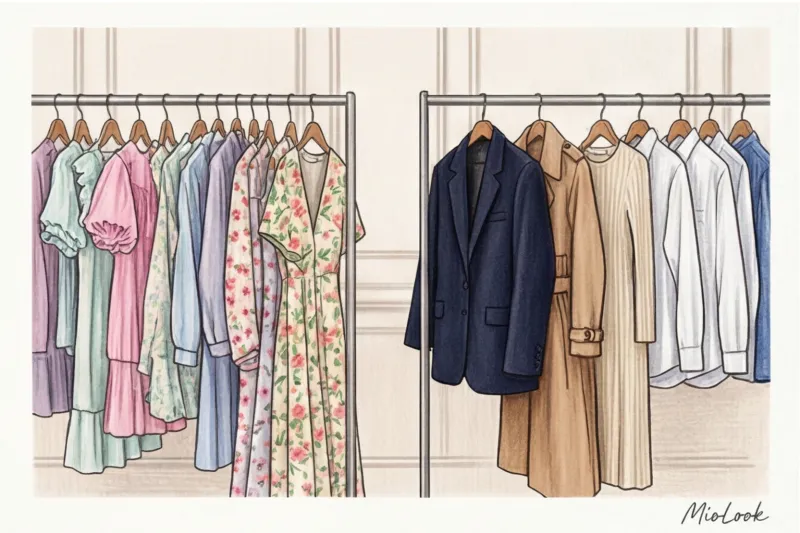
Let's be pragmatic - you don't need a huge separate wardrobe for nine months. A well-chosen maternity clothes that can be worn after giving birth — this isn't a myth, but a matter of understanding the architecture of cuts and the properties of fabrics. We discussed the basic principles in more detail in our The Complete Guide to a Maternity Capsule Wardrobe: How to Maintain Style Today, we'll explore the math and physics behind smart shopping that will save you hundreds of euros.
The 'Special Departments' Trap: Why Classic Maternity Wear No Longer Works
I remember my client Anna, a senior partner at a major architectural firm. Five months pregnant, she came to me in despair: "Olena, in specialty stores they're telling me to dress either like a giant cupcake or like a monolithic tent. I'm losing myself." The empire line (with a drawstring just under the bust and a flared hem) is the cardinal sin of maternity brands. It visually cuts off the figure at its widest point, adding volume where it doesn't exist.
Besides the loss of style, buying disposable clothing is a financial crime against your budget. According to ThredUp's 2023 global report, up to 80% of specialized maternity clothes end up in landfills or end up in the back of a closet within the first year after giving birth. This represents a colossal carbon footprint and wasted money.
The investment wardrobe concept offers a different approach. Your signature style doesn't have to be put on hold. A well-curated capsule wardrobe of 7-10 high-quality mid-range pieces (like COS, Massimo Dutti, or Arket) will cost around €400-€600, but these items will last for years, saving you up to €1,500 over two years.
Access to MioLook for €0.99 — one-time payment
A smart AI stylist will select the perfect look for every day, adapting to your style.
Get access — €0.99 onceSilhouette Architecture: What to Look for in Regular Stores (and Wear for Years)
The most harmful and counterintuitive advice you'll find on women's forums is: "Just buy regular clothes three sizes bigger." This is a fatal mistake for your silhouette.
When you take a size 44 item into a size 50, it's not just your waist that gets bigger. The shoulder seam slips down to the middle of your biceps, the armholes dip toward your ribs, and the neckline exposes your collarbones. As a result, your figure looks bulky and baggy. The secret lies in the rule of "freedom in the right places." You need items in your natural size (maximum +1 size for comfort), but with the right amount of volume.
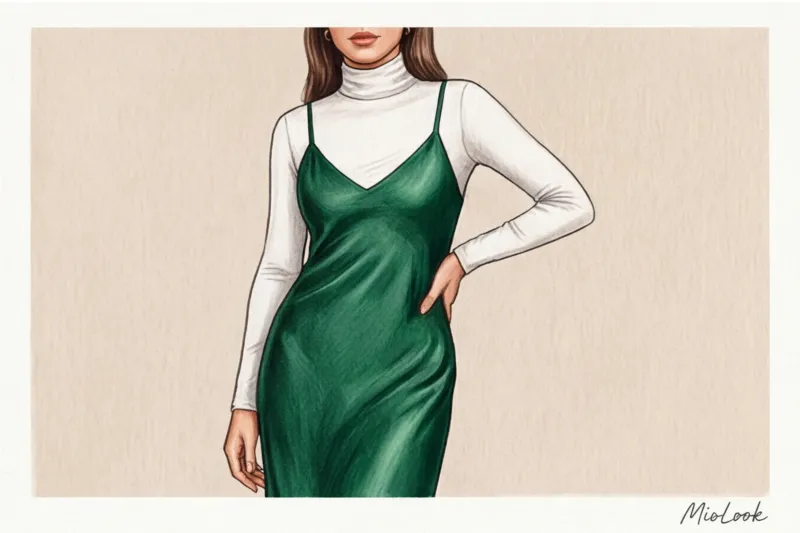
Be inspired by the aesthetic of The Row or its more affordable counterparts in high-quality mass-market fashion. Look for A-line silhouettes, cocoons, and thoughtfully oversized pieces where the shoulder line remains defined and the volume is distributed around the body, creating air between the skin and the fabric.
The Magic of the Bias Cut
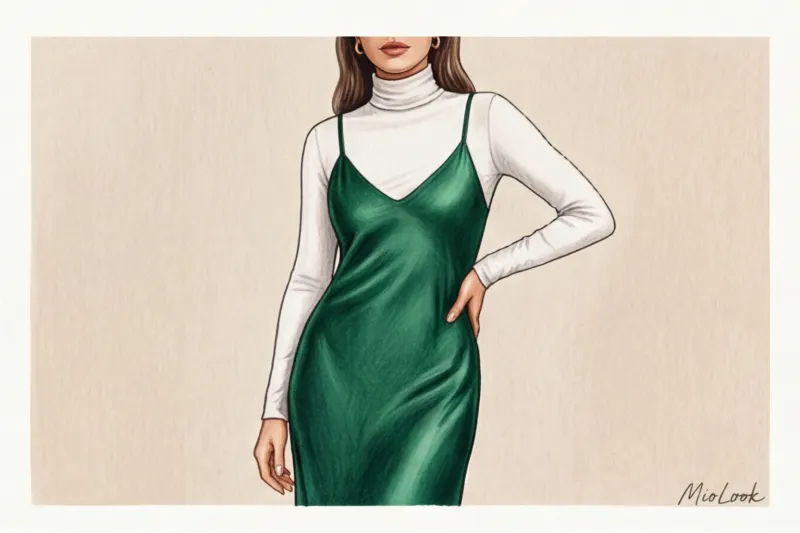
Back in the 1920s, the brilliant Madeleine Vionnet invented the bias cut—a method in which fabric is cut at a 45-degree angle to the grain. This isn't just a historical fact; it's pure physics working to your advantage.
Silk, viscose, or satin cut on the bias acquire a unique elasticity without a drop of spandex. A midi skirt or slip dress cut this way will stretch gently, hugging your growing belly without the slightest pressure. And a couple of months after giving birth, this same fabric flows elegantly over the figure, returning to its original slim silhouette. It's pure magic, available at any price point.
Borrowings from the men's wardrobe
For some reason, maternity shirts are often made of thin, characterless cotton. My personal style lifehack: head to the men's department. A men's shirt made of heavy poplin (at least 120 g/m²) is a phenomenal investment.
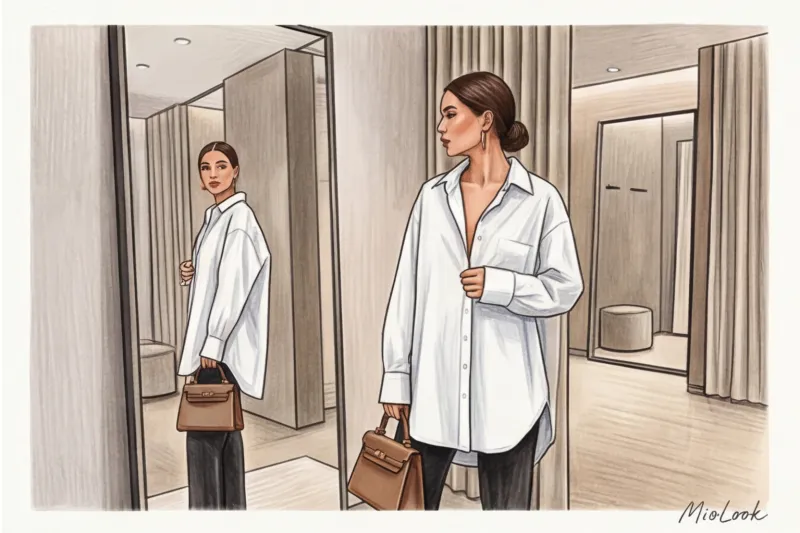
Firstly, the crisp men's collar creates a clear geometric line around the face, bringing the whole look together. Secondly, the elongated, straight cut perfectly covers the hips. How to style it after giving birth? Wear it unbuttoned over a crop top as a lightweight jacket, tuck it asymmetrically into jeans, or tie it at the waist to accentuate the silhouette.
Textures that remember their shape: a guide to knitwear
The main enemy of an investment wardrobe is cheap, thin viscose. You've probably seen those dresses that, after a couple of weeks of wearing them on your stomach, stretch out like a bubble, losing their shape forever. If a garment can't return to its original shape, it's a bad investment.
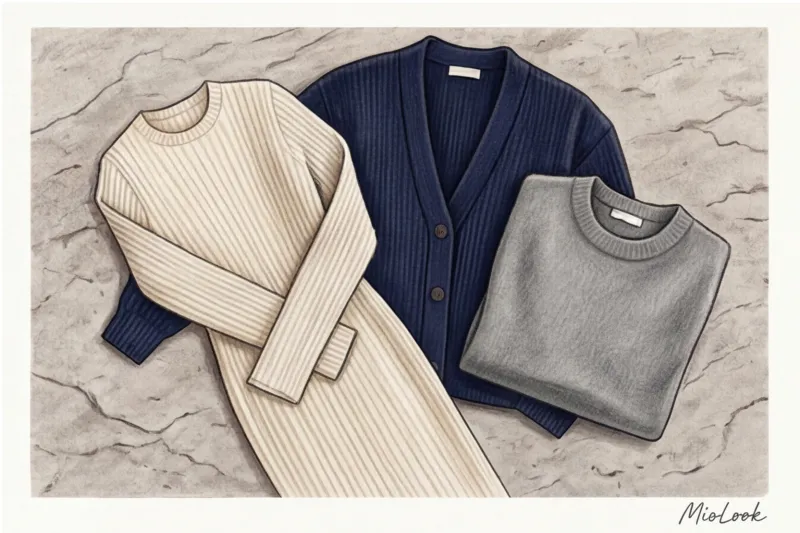
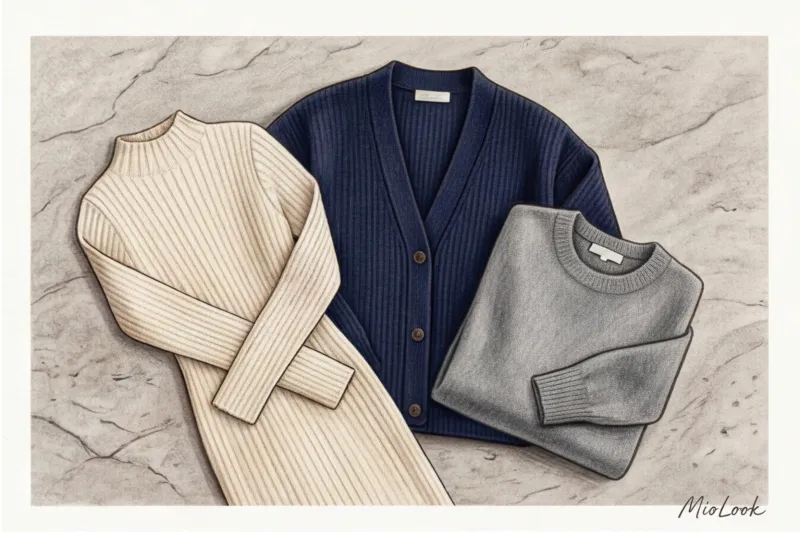
Your best friend is a densely knitted or natural blend. Look for merino wool, heavy cotton with 5-10% elastane, or high-quality plain-knit viscose (Punto di Roma). My clients' absolute favorite is the ribbed knit dress in a dense knit.
"The ribbed structure works like an accordion—it stretches just as much as needed and instantly contracts back thanks to its elastic texture. This dress fits equally luxuriously both at eight months and a year after discharge."
Conduct a simple test in the fitting room: stretch the fabric with your hands at its widest point by 10-15 centimeters and release it quickly. If it immediately returns to its original shape without any ripples at the edges, the item is safe to wear. Also, remember the rule of texture: matte, dense fabrics always look more expensive and hold their shape better than shiny, loose ones.
Your perfect look starts here
Join thousands of users who look flawless every day with MioLook.
Get access — €0.99 onceTrouser Question: Stylish Alternatives to Bandage Jeans
I'll be completely honest with you here: this is the exception to the rule. Purchase one A pair of quality jeans with a special soft bandage is justified. Comfort is paramount. But when I see girls buying up office pants, shorts, and leggings with belly pads, I want to stop them.
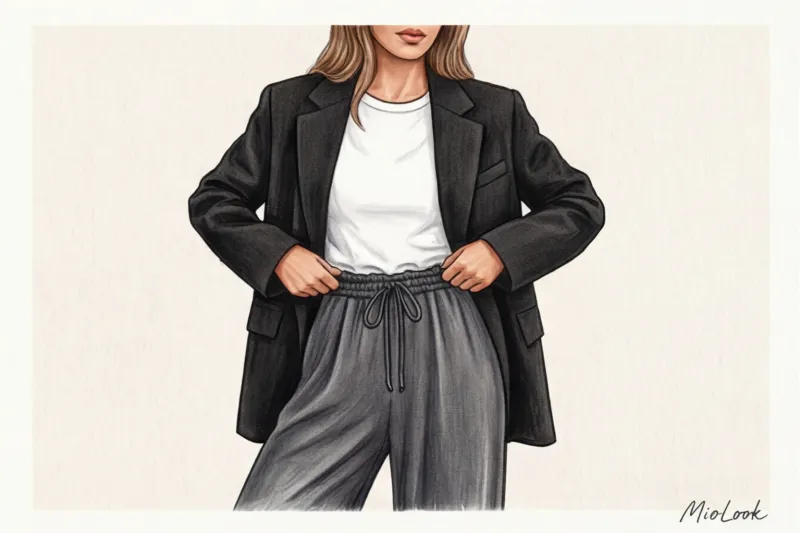
There's a luxurious and trendy alternative: wide-leg drawstring pants made of flowing fabric. Styles made of heavy silk, lyocell, or fine wool look incredibly elegant. During pregnancy, you can wear them down below your belly—the soft drawstring will prevent pressure. Afterward, you can cinch them at the waist for a trendy, relaxed silhouette. They're the perfect choice for budget capsule wardrobe , where every item must earn its price.
If you have a strict dress code, look for smart-casual trousers with a tailored front (pleats, faux fly) and an elastic waistband at the back. They have a classic tailored look but are more forgiving of a size fluctuation of 1-2 sizes.
Investment Capsule: 5 Things That Will Pay Off 100%
To be clear, let's build a micro-capsule and calculate the Cost Per Wear (CPE) for a 2-3 year horizon. This is exactly the approach I use in my work with wardrobes in MioLook.
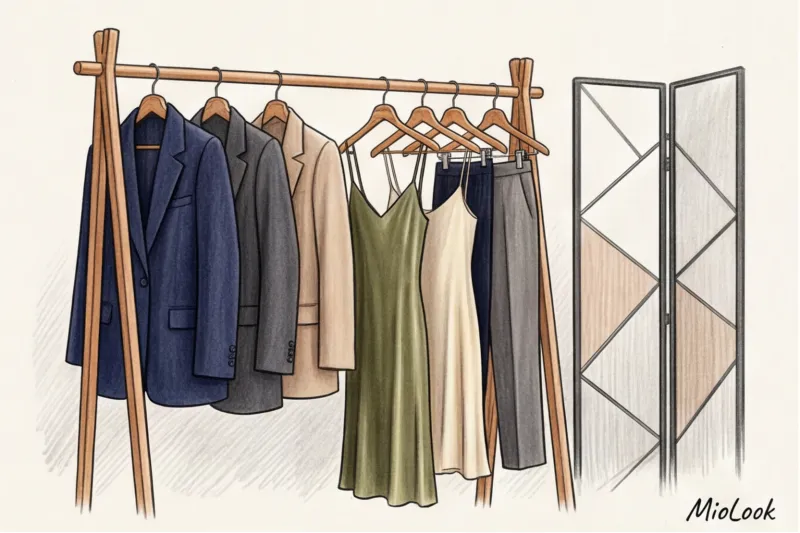
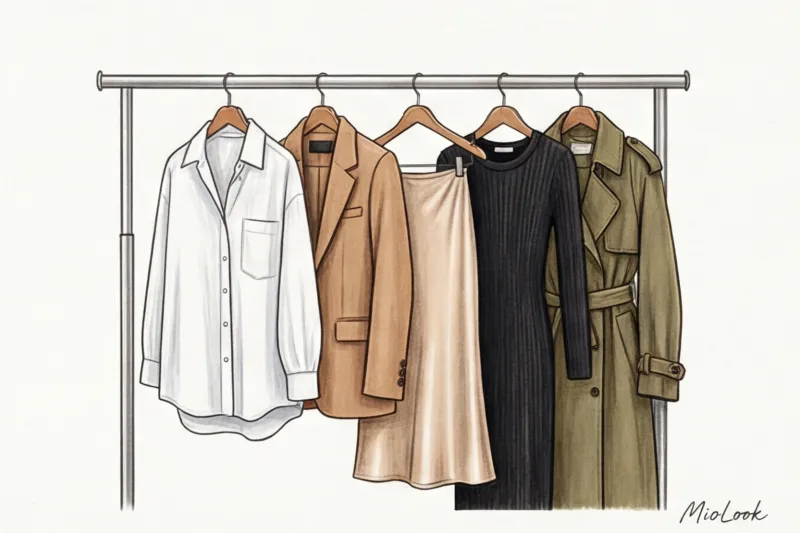
- A midi or maxi slip dress with a bias cut. (approx. 90 €). Wear with jumpers, under jackets, or solo in summer.
- Men's shirt made of thick cotton. (approx. 50 €). Base for layering.
- An elongated straight-cut jacket (male shoulder). (approx. €150). During pregnancy, we wear it only unbuttoned. It creates two strong vertical lines that visually elongate the silhouette and bring the look together.
- Ribbed knit column dress. (approx. 100 €). Your universal soldier for any occasion.
- A loose trench coat or wrap-around robe coat. (approx. 180 €). The belt can be tied above, below or on the back.
In total, such a capsule will cost around €570. If you wear a high-quality €150 jacket at least 100 times over three years (to the office, on walks, at meetings), the cost per outing will be only €1.50. Compare this to a specialized "maternity" dress for €70, which you'll wear five times on special occasions (CPW = €14) and then put away forever. The math behind conscious consumption speaks for itself. If you're interested in this topic, read our article. Cost Per Wear: How to Calculate the Cost to Wear an Item.
Stylist's checklist: how to try on clothes for postpartum wear
Before taking an item to the checkout, run it through my signature checklist. If you have any doubts about any of the items, return the item to the rack.
- Shoulder seam test: Look carefully in the mirror. The shoulder seam should be exactly where it should be (on the shoulder bone). The only exception is if the sleeve is a drop-shoulder, as intended by the designer. If the shoulder simply "drops" due to being too big, the garment won't fit.
- Layering test: Can you wear this item unbuttoned? A button-down dress can be transformed into a lightweight cardigan. A shirt can be turned into a cape. If an item only works in one scenario (buttoned), its versatility is limited.
- Checking the hem length: In the final months, your belly inevitably lifts the front of your clothes. Make sure a midi or maxi dress doesn't look too mini at the front. Asymmetry should look aesthetically pleasing.
Pregnancy is an amazing, yet brief, stage in your life. Your style, your taste, and your sense of self are yours, not a temporary status. Don't settle for compromises like shapeless robes. Invest in quality fabrics, thoughtful cuts, and pieces that make you feel strong, beautiful, and, most importantly, yourself.