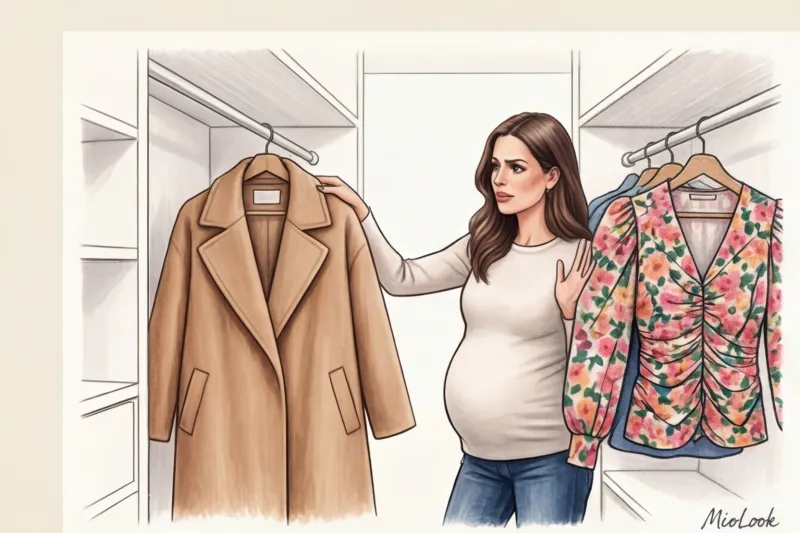
Have you ever considered that the most expensive item in your wardrobe right now is likely inexpensive maternity outerwear, bought in a fit of panic in your third month? It sounds counterintuitive, but as a stylist and capsule wardrobe enthusiast, I see this math error every week. We spend money on compromised items with elastic waistbands, wear them for maybe a couple of months, and then they end up taking up space in the attic for years.
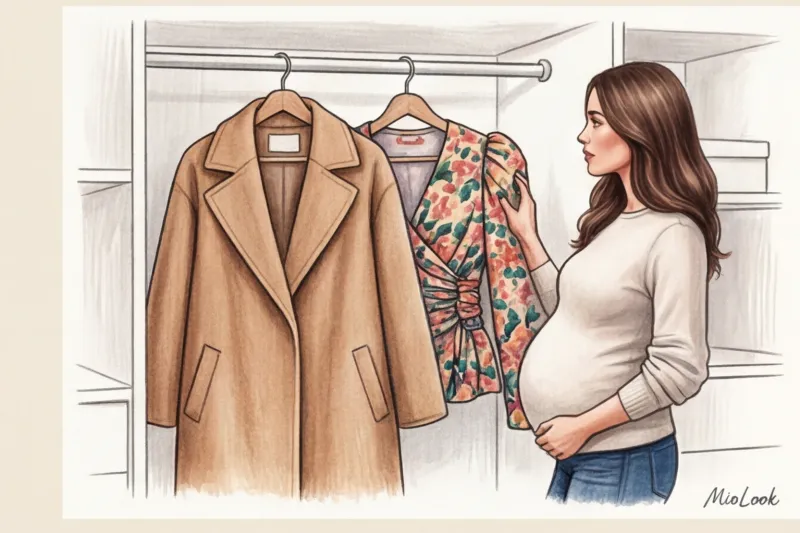
We have discussed in more detail the basic principles of creating such a wardrobe in our The complete guide to stylish maternity outerwear But today I want to talk about money. My goal is to show you how to stop subsidizing the fast-fashion maternity industry and start investing in things you'll last for years. Spoiler: you don't even have to set foot in the maternity aisle.
The Mass-Market Trap: Why Inexpensive Maternity Outerwear Is Too Expensive
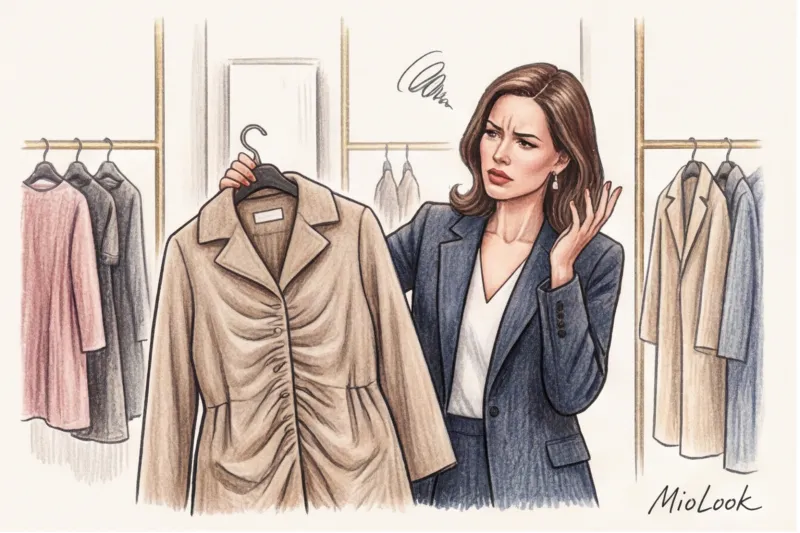
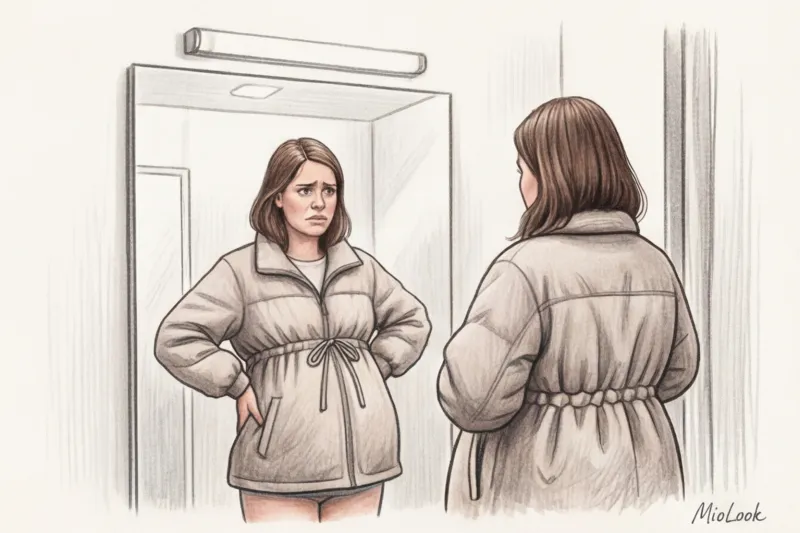
Last year, my client Isabella came to me for a wardrobe audit on the MioLook app with tears in her eyes. She'd bought a specialized maternity jacket for €90. It was decidedly not her style: a strange floral print, gathers at the sides, and a shapeless silhouette. Isabella described her experience this way: "I feel like a giant marshmallow cloud in it, but it's only for one season, so why overpay?"
Let's do the math. During her pregnancy (from the moment her belly became visible until she gave birth), she wore this jacket exactly 60 times. The cost-per-wear (CPW) per wear was €1.50. After she gave birth, the jacket went into a charity bag, as such items are practically worthless on resale platforms—according to statistics from a McKinsey report (2024) on circular fashion, specialized maternity clothing loses up to 95% of its value immediately after purchase.
"The most expensive thing you wear is the one you only wear once. Real savings begin when an item lives in your wardrobe for years."
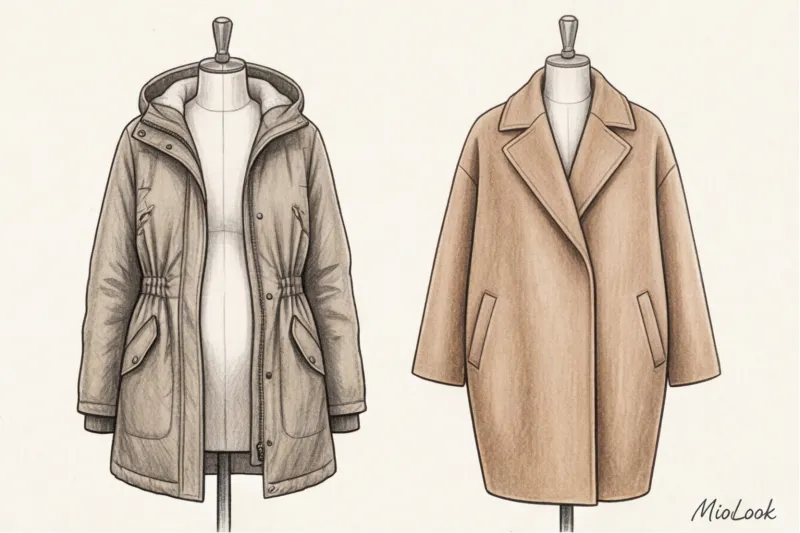
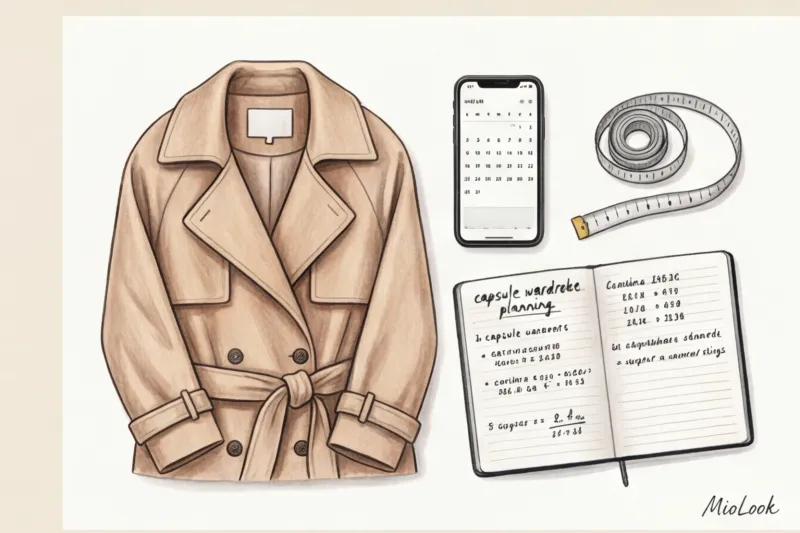
Now, here's an alternative scenario. You buy a high-quality oversized heavy wool coat from COS or Massimo Dutti for €250. You wear it 60 times during your pregnancy, and then another 100 times each fall/winter season for three years. Your CPW drops to €0.69. Moreover, high-quality basics easily sell on Vinted or Vestiaire Collective for 50-60% of the original price. The math is ruthless: the "cheap" jacket cost Isabella twice as much as the premium coat.
Access to MioLook for €0.99 — one-time payment
A smart AI stylist will select the perfect look for any occasion and help calculate the cost per piece (CPW) for each item.
Get access — €0.99 onceSmart Shopping: 4 Styles from Regular Collections That Will Fit Your Tummy Perfectly
The maternity clothing industry often uses lazy cutting: they simply take a standard pattern and add excess fabric at the front. This results in hemlines that ride up and shoulders that are too low. The secret to a perfect fit lies not in elastic, but in the correct construction of the garment.
Wrap Coat: Elegance without fastenings
The classic wrap coat is a brilliant invention that adapts to your changing figure down to the millimeter. The lack of a fixed button line (like the iconic Max Mara 101801) allows you to wrap it exactly where you feel most comfortable.
In early pregnancy, wear it unbuttoned with a warm, chunky knit sweater. Later, wrap it around your waist, shifting the waistband slightly above your belly, creating a high-waisted silhouette (empire style). Wide lapels create a strong vertical line in the portrait area, elongating your height and visually lightening your figure.

Oversized jacket and blanket down jacket: the macro-volume trend
The biggest mistake eight out of 10 of my clients make is buying a regular straight-cut jacket two sizes too big. As a result, the shoulders hang down to the elbows, and the sleeves have to be rolled up three times. You don't look stylish, but rather like you're wearing your older brother's leftovers.

Modern oversized jackets are cut differently. A proper blanket-style down jacket has a shoulder line that's either firmly in place or has a proper raglan fit, with volume built into the cut itself. Look for cocoon-style jackets: they're roomy at the waist but taper gently toward the bottom, trapping in warmth without making you look like a balloon.
Ponchos and capes: a status alternative
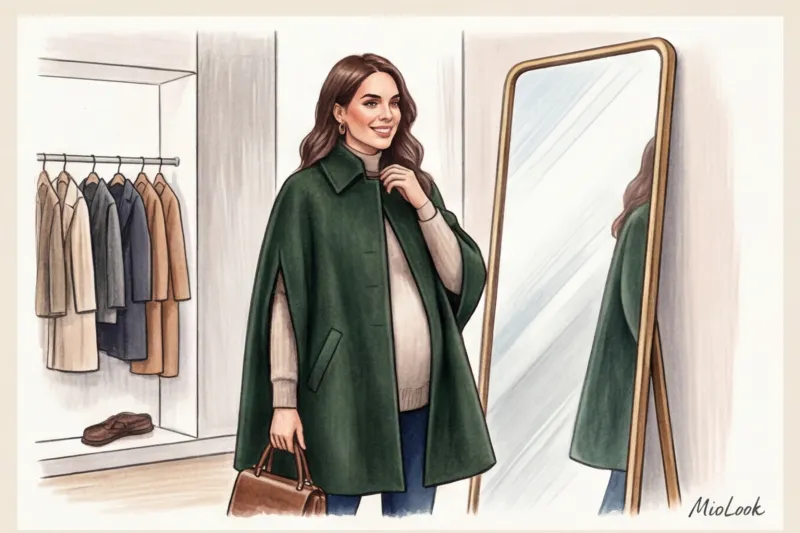
If your job requires a dress code, a shapeless down jacket won't do. Capes come to the rescue. They create a luxurious, high-status look with an old-money aesthetic.
The cape falls loosely from the shoulders, completely concealing the curves, but with armholes, it maintains the structure of the silhouette. It's an ideal wardrobe investment that will look stunning even five years after giving birth, worn over an evening gown at a party or at the theater.
Men's Department: The Stylists' Secret Weapon
I love the men's departments at high-street stores like Zara or H&M. Women's coats are often fitted or A-line. Men's coats and parkas are cut straight. If you choose a men's size S or M, it will sit perfectly straight on your pregnant belly, without creating any extra bulk on your hips.
Moreover, this is pure savings: men's collections in the same price range (€100 to €150) are often made from higher-quality blended fabrics than women's. Men's fashion is more conservative, so manufacturers prioritize the durability of materials over fast trends.
Your perfect look starts here
Join thousands of users who look flawless every day with MioLook. Create a capsule collection from our regular collections!
Get access — €0.99 onceThe Hacker Approach: How to Adapt Your Current Outerwear
What if you don't need inexpensive maternity outerwear at all because you already have a great winter wardrobe? There are some styling hacks we constantly use on shoots.
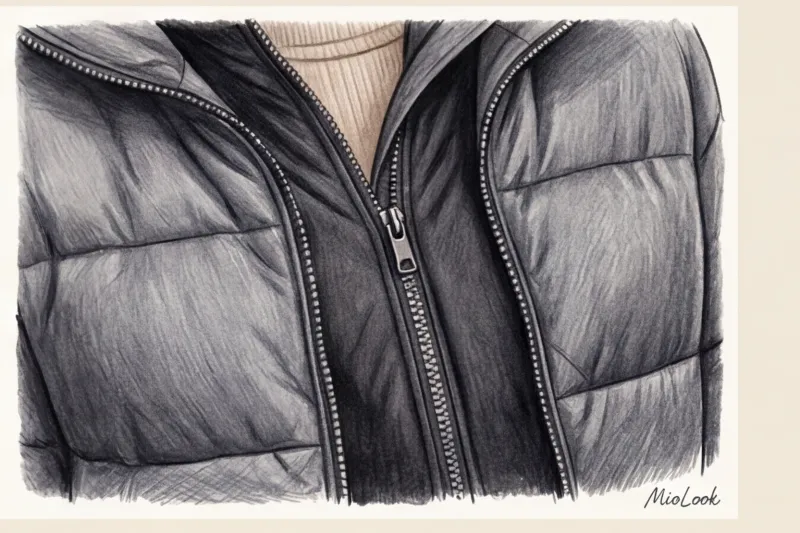
1. Sling inserts and jacket extenders It's a brilliant invention: a special zippered fabric panel that attaches to your favorite pre-pregnancy parka. For just €30-€40, you transform your skinny jacket into a third-trimester garment. After you give birth, the insert is removed, and the jacket returns to its normal size.
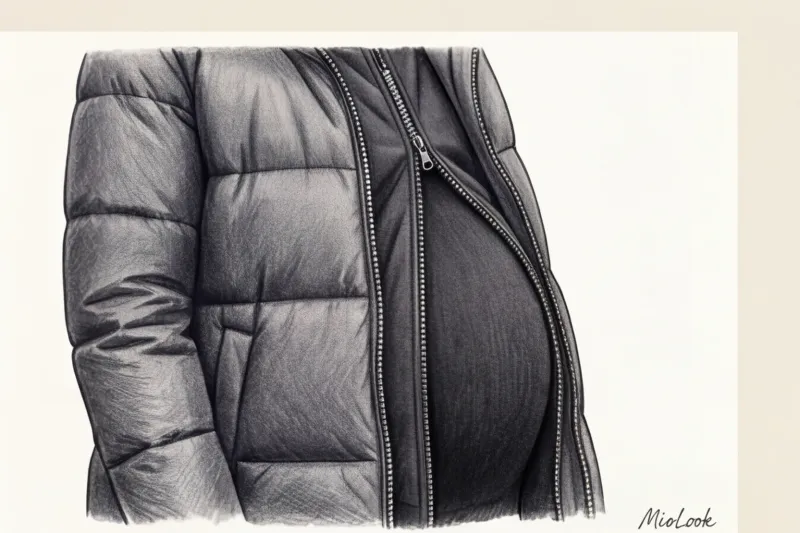
2. Deep layering method. How do you wear your favorite fall coat in subzero temperatures if it won't button up at your stomach? Wear high-quality thermal underwear, a thick wool sweater, and a thin down vest (like those at Uniqlo, for example) underneath the coat. Leave the coat unbuttoned! The vest protects your stomach from the wind, and the unbuttoned flaps create two long vertical lines that are incredibly slimming.
3. Visual balancing. If you're wearing an unbuttoned top, add a giant scarf (Acne Studios style). Wrap it around your neck, letting the ends hang down your body. This not only adds warmth but also draws attention away from your midsection, shifting the focus to the texture and color of your accessories.
Resale and Conscious Consumption: Where to Find Brands with the Biggest Discounts
I understand that there are sometimes exceptions. For example, if you live in a harsh climate, your budget is strictly limited, and you desperately need a warm jacket for exactly two very cold months. But even then, I don't recommend going fast fashion.
The problem with cheap mass-market clothing is that it's 100% polyester and has low-quality insulation. During pregnancy, the body's thermoregulation changes, and women often sweat and experience hot flashes. A polyester jacket without ventilation will turn into a greenhouse.
Resale platforms (Vinted, Vestiaire Collective, and local marketplaces) are your best friend. For the same €50-€80 you'd pay for squeaky synthetics at the mall, you can find down jackets from The North Face, wool coats from COS, or Scandinavian brands like Ganni on resale sites. Look for the "oversized" filter.
There is also an honest limitation to my method. When does oversized NOT work? If you're shorter than 155 cm (petite), oversized men's parkas and cocoon-style down jackets can be a real turn-off and visually "pin" you down. In this case, it really makes sense to look for specialized lines for petite maternity wear, so that the shoulder line and sleeve length are proportional to your height.
Pre-purchase checklist: durability test
Before you take an item to the checkout, run it through this short filter. This is the basic algorithm I teach all my clients:
- One year test. Ask yourself honestly: "Will I wear this a year after giving birth, on a walk with a friend or to the office?" If the answer is "no" or "only to the dacha," leave the item in the store.
- Checking the fabric density. Thin, saggy materials highlight every crease and look cheap. Look for items that hold their shape. For coats, this means at least 70% wool. A coat should stand up straight on a hanger, not droop like a cardigan.
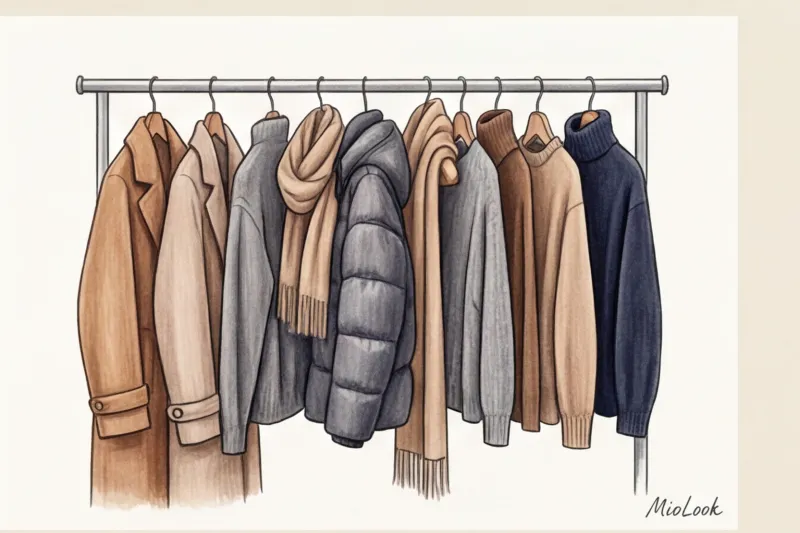
- Color base. During periods of significant body transformation, it's best to avoid loud neon shades and complex geometric prints in outerwear (save them for accessories). Opt for refined shades: camel, deep graphite, navy, or chocolate. They always look three times more expensive than their actual price.
Ready to get started?
Conduct a wardrobe audit before shopping. Try the MioLook free plan—no commitments.
Get access — €0.99 onceConclusion: Your style is more important than temporary inconveniences
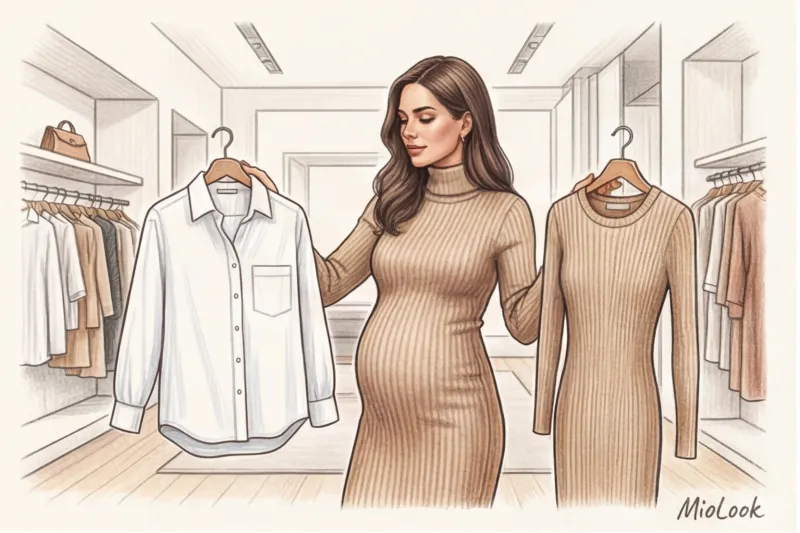
Trying to save money by buying disposable clothing is an illusion. True affordable maternity outerwear is the kind whose cost to sell approaches zero thanks to years of active wear. Invest in architectural styles, use jacket extenders, master the art of layering, and explore men's departments.
Pregnancy is an amazing yet challenging time. Your body is changing, and that's normal. But that's no reason to deny yourself the pleasure of looking fabulous. Before you go shopping, take out all your outerwear, try it on, and see what you can adapt. And if you don't know where to start, entrust this process to smart algorithms. Digitize your favorite pieces, and let your wardrobe work for you, not the other way around.