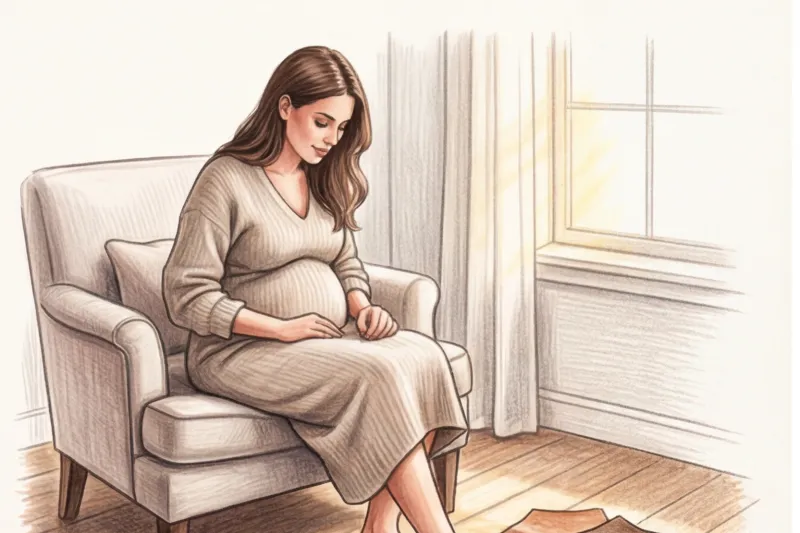
The Anatomy of Style and Comfort: Why Your Feet Change During Pregnancy
Over 12 years as a stylist, I've learned one ironclad rule: pregnancy is a litmus test for your wardrobe. And shoes are usually the first to fail this rigorous test. I remember one of my regular clients, the director of an IT company, coming to me in tears in her fifth month. Her favorite Gianvito Rossi pumps had suddenly become an instrument of torture, and the prospect of spending six months in shapeless orthopedic shoes was depressing. Spoiler alert: we found a solution, and she didn't have to sacrifice either her elegance or her status to achieve it.
We've shared more details on how to adapt your wardrobe to the new reality in our The complete guide to maternity clothes: what to buy and what not to overbuy But today I want to talk about the basics—why your feet suddenly "no longer fit" in your usual shoes, and how comfortable maternity shoes can still look stunning.
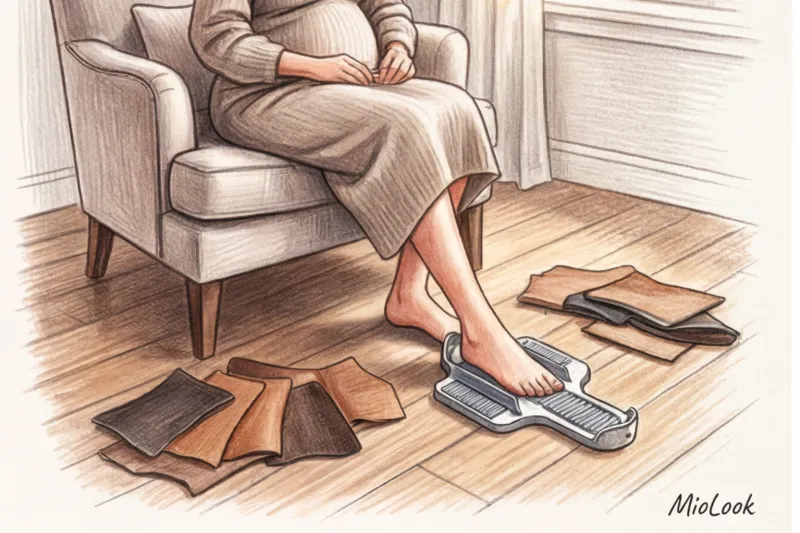
Let's turn to physiology. During pregnancy, the body actively produces the hormone relaxin. Its purpose is to make the pelvic ligaments more elastic, but it also relaxes the ligaments of the foot. This can cause the transverse and longitudinal arches to flatten. According to the American Podiatric Medical Association (APMA, 2023), by the third trimester, foot circumference increases by 5–8% in the evening due to fluid retention. Your size hasn't changed forever—it's just changed. volume and the center of gravity shifted.
The Size Myth: Why Buying Shoes "One Size Bigger" Is a Dangerous Mistake
The worst advice you'll hear on forums is, "Just buy sneakers two sizes bigger!" This is a disastrous mistake, and here's why.
I had a case in my practice: a client bought designer sneakers in a size 41 instead of her usual size 39 to compensate for evening swelling. What happened? The extra two centimeters in the toe completely changed her gait pattern. To avoid tripping on the long toe box, she instinctively began shuffling and turning her foot inward. Three weeks later, she began experiencing excruciating lower back pain because her walking biomechanics had been disrupted.
You don't need extra length. You need increased fullness (width) and adaptability of materials. Buying long shoes only increases the leverage on an already overloaded spine.
Ideal and comfortable shoes for pregnant women: what to look for when buying
When looking for that perfect pair, the secret lies not in the price tag, but in the design. Truly comfortable maternity shoes always have a width marking (look for the H or K indexes in the European shoe size chart) and offer hidden room for expansion.
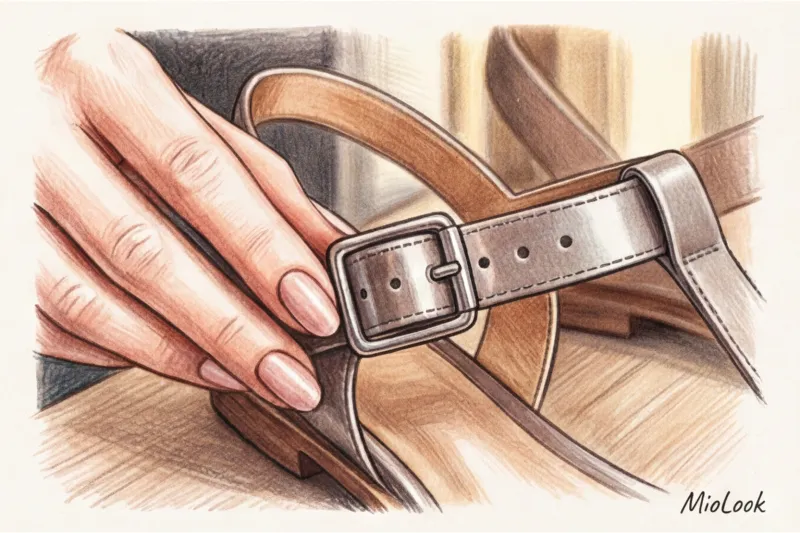
Look for shoes with invisible elastic inserts (like Chelsea loafers) and adjustable Velcro or buckle straps that don't require a lot of reaching. As for trends, they're easy to integrate. Swap out a narrow almond-shaped toe for a super-trendy square toe: it gives your toes the correct anatomical space. Choose models with a soft, collapsible heel (like the iconic Babouche loafers) to avoid irritating the Achilles tendon, which often suffers from friction due to swelling.
Your perfect look starts here
Join thousands of users who look flawless every day with the smart AI stylist MioLook.
Get access — €0.99 once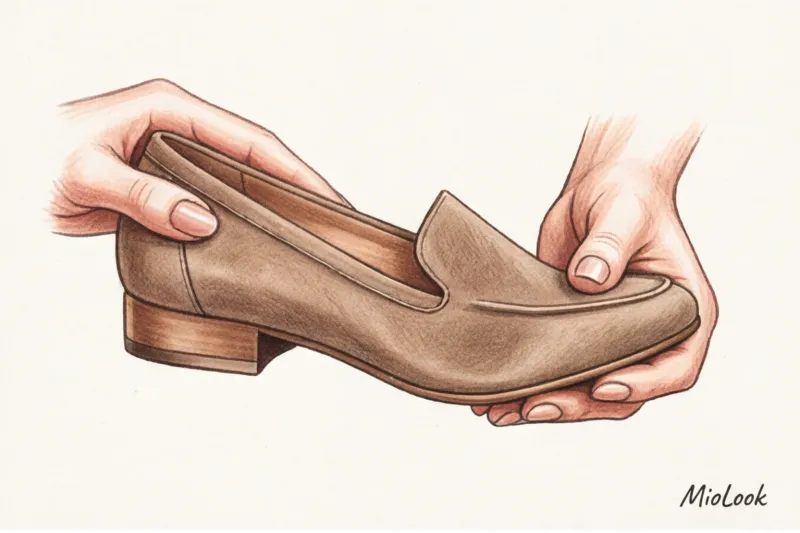
The 2-Centimeter Rule: Why Completely Flat Soles Are Your Enemy
Many women, upon learning they're pregnant, immediately switch to completely flat ballet flats or sneakers with thin rubber soles. It's counterintuitive, but this flatness can actually increase swelling and pain in the feet.
Research by the Institute of Biomechanics shows that when wearing shoes with a flat heel, all the impact force from a step is transferred directly to the heel, and from there to the sacrum. The ideal heel or wedge height for weight distribution during pregnancy is 1.5–3 centimeters. The sole should have a slight spring to absorb the micro-shocks from the asphalt. Forget flat ballet flats—they're not good for your health.
Investment in materials: leather, suede and Sacchetto technology
Don't even consider stiff patent leather or cheap eco-friendly alternatives. They don't breathe, create a greenhouse effect, and, most importantly, have absolutely no stretch. A swollen foot in polyurethane shoes will feel like it's in a plastic container by the end of the day.
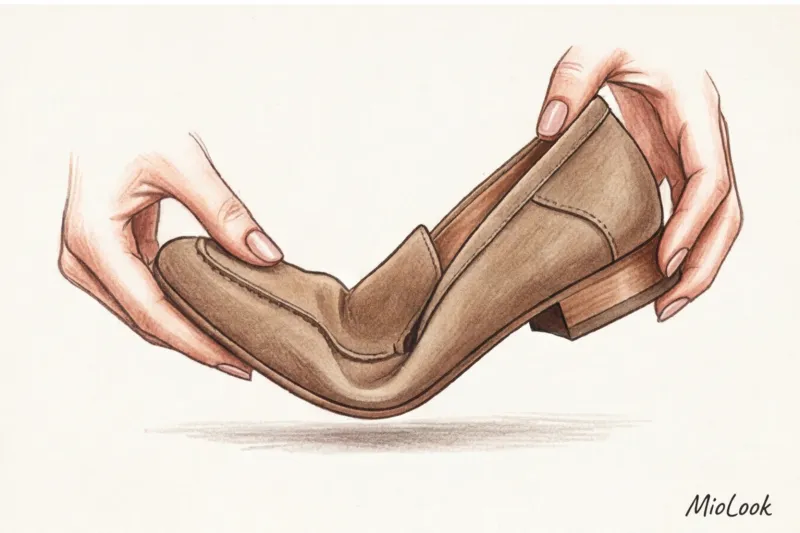
Your best investment is soft Italian suede or nappa leather. But the ultimate status wardrobe — is the search for shoes made using Sacchetto technology (Italian for "little bag"). With this method, the lining is stitched to the insole in one piece, creating a soft glove for your foot. There are no hard seams, glue, or cardboard inside that could dig into your skin. Sacchetto shoes can literally be folded in half with one hand—this flexibility will save you in later stages of pregnancy.
A Stylish Wardrobe for the Expectant Mother: Top 5 Elegant Pairs
Over the years of styling, I've developed the perfect shoe capsule that allows you to look chic on the red carpet, in the office, and on the go. Here are 5 styles of statement shoes that will solve your problems.
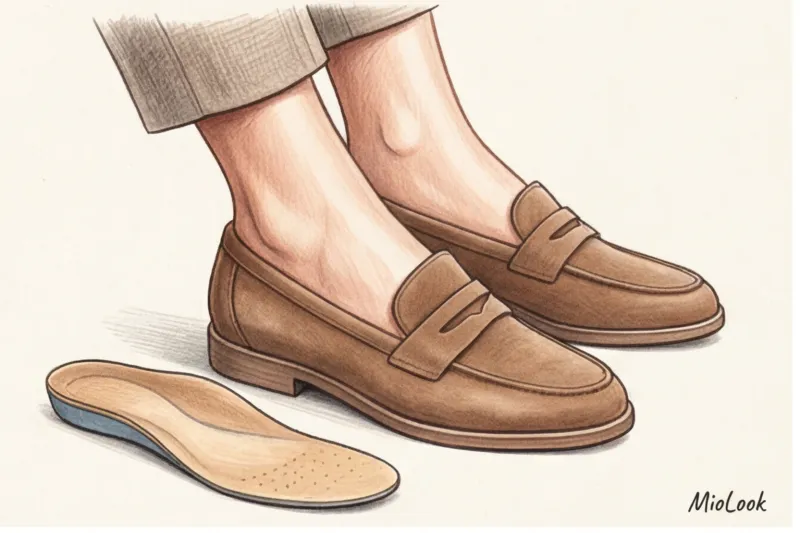
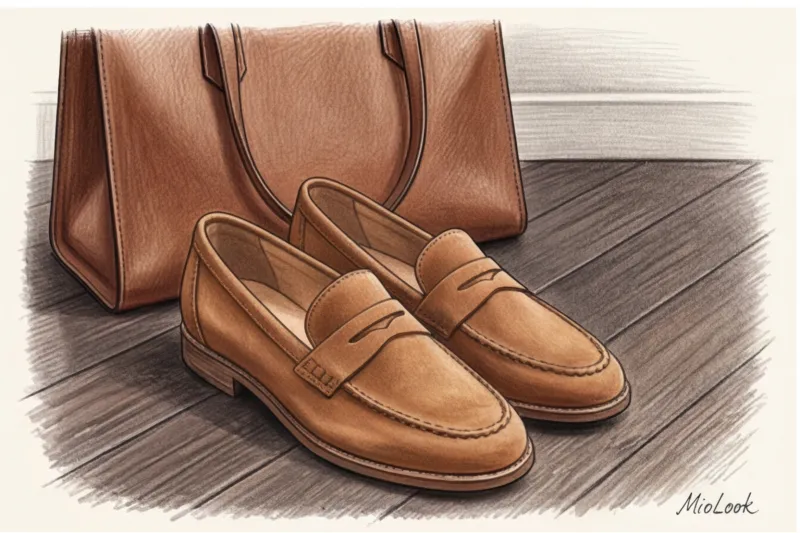
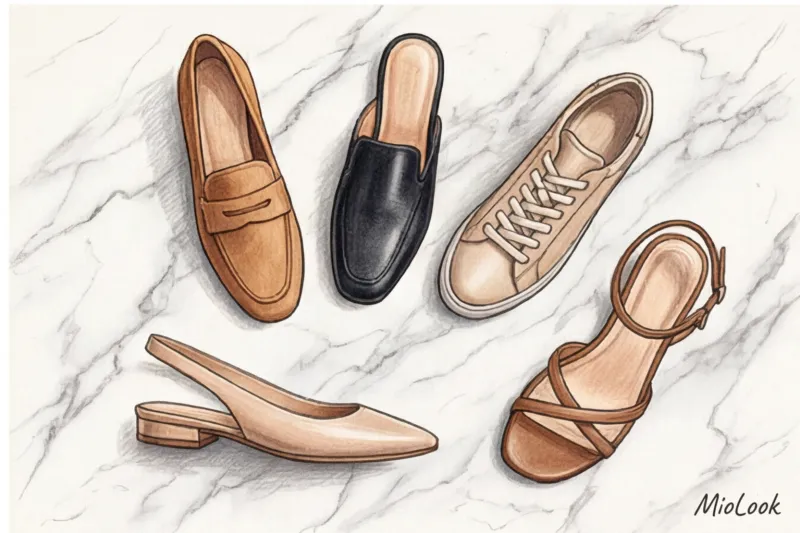
- Soft suede loafers with flexible soles: An alternative to formal oxfords, choose styles without a stiff toe cap. They instantly tie together a look with trousers or boyfriend jeans.
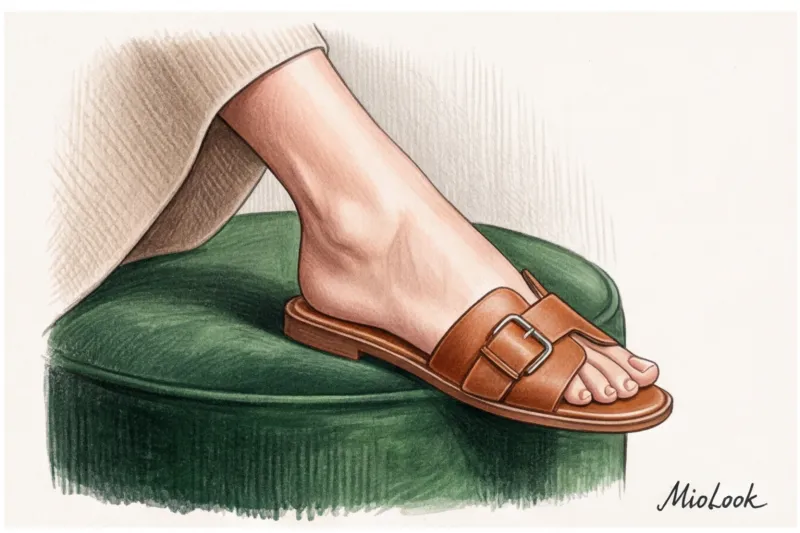
- Elegant micro-heeled mules: An open heel is a brilliant solution to evening swelling. The foot isn't restricted at the back, so the shoe won't start rubbing after a couple of hours of walking.
- Premium leather clogs (Birkenstock Boston style): Relaxed chic. Available in suede or leather with fine hardware, they look incredibly expensive and provide orthopedic arch support.
- Smart sneakers made of breathable knitwear (Flyknit): Slip-ons that slip on hands-free. The knit upper adapts to your foot size down to the millimeter.
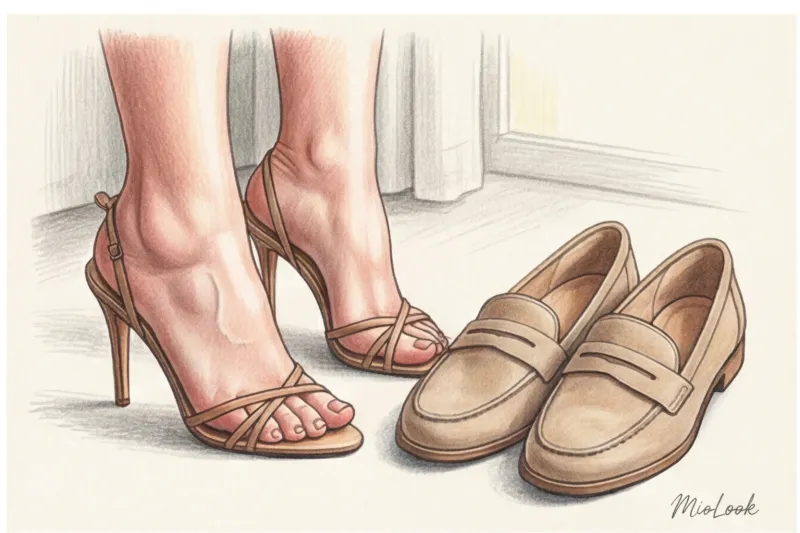
- Slingbacks with elastic strap: For those days when you need to look your best (baby shower, date, or theater). The closed, elegant toe and elastic heel band ensure blood flow is not restricted.
"Elegance isn't about the height of your heels, but the confidence in your gait. A woman who finds it painful to walk can't look luxurious, even if she's wearing thousand-euro shoes." — Giulia Rossi
Ready to get started?
Try the MioLook free plan—no commitments required. Our AI assistant will create a capsule plan tailored to your new figure.
Get access — €0.99 onceShoes for the office and business meetings during pregnancy
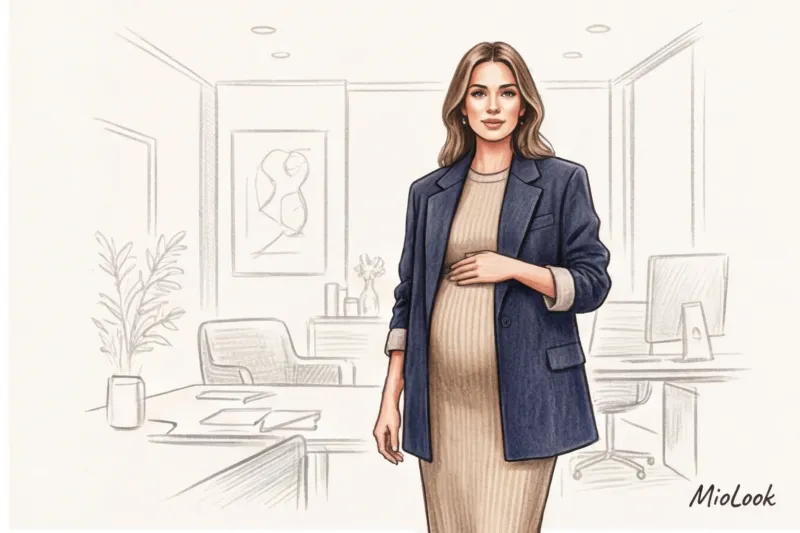
How do you adhere to a business dress code when your feet refuse to fit into classic attire? First, take heart—the modern corporate world has become much more forgiving. Strict pumps are easily replaced by elegant penny loafers in smooth matte leather or minimalist Chelsea boots with a low block heel.
If your dress code allows smart casual for women Pair loose-fitting pantsuits or midi dresses with comfortable closed-toe mules. They look like classic pumps from the front, but they allow for more freedom in the heel. Important: this advice doesn't work for everyone. If your coordination is severely impaired by the ninth month, an open heel can create a feeling of instability. In this case, choose fully closed-toe shoes.
Also don't forget about tights and business etiquette When paired with office shoes, wear special maternity compression tights (20-40 DEN for warmer weather). They will not only complete your formal look but also relieve some of the strain on your veins.
First Aid for Swelling: Stylist Life Hacks
Sometimes even the best-fitting shoes can fail at the end of a long day. Over the years of working "in the field" with pregnant clients, I've picked up a few foolproof tips.
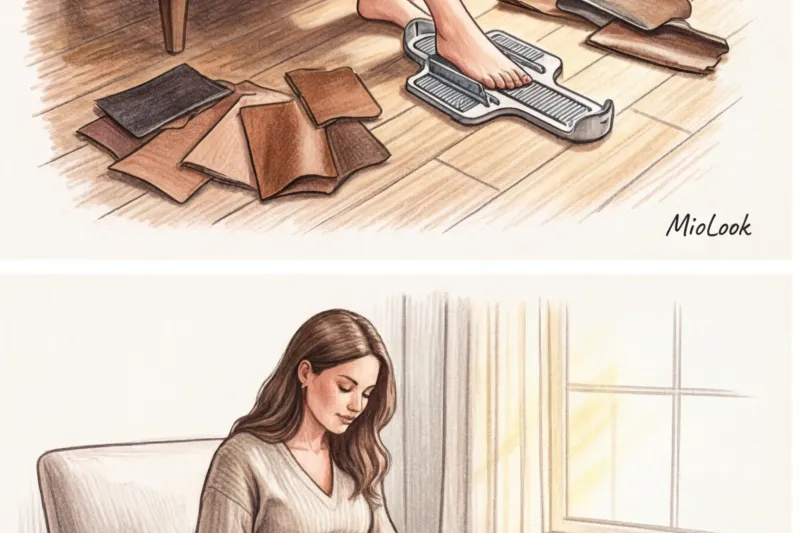
- Time of day rule: Never buy shoes in the morning. Try them on after 4:00 PM, when your feet reach their fullest size. What fits perfectly at 10:00 AM will feel like a vice by dinnertime.
- Deep V-neck: If you want to visually conceal a swollen ankle, choose shoes or loafers with a deep V-shaped vamp (the upper part of the shoe). This geometric trick makes your leg look incredibly slimmer.
- Home stretcher: Buy a wooden shoe stretcher and some spray foam. If your favorite suede loafers are feeling tight in the toe box (the widest part of the foot), you can safely add a few millimeters of volume overnight.
- Invest in the right horn: A long metal shoehorn (at least 60 cm) is the most underrated accessory of the third trimester. It's best to use metal, as plastic bends and wood is too thick. You'll stop bending over, and putting on shoes will no longer feel like a CrossFit workout.
Access to MioLook for €0.99 — one-time payment
A smart AI stylist will select the perfect look for you, taking into account your body shape and comfort.
Get access — €0.99 onceSmart Shopping Checklist: Cost Per Wear for Shoes During Pregnancy
I often hear the phrase, "Why buy expensive shoes for just six months? I'll make do with cheap ballet flats from the mass market." As an investment wardrobe expert, I strongly disagree. Let's calculate the cost per wear.
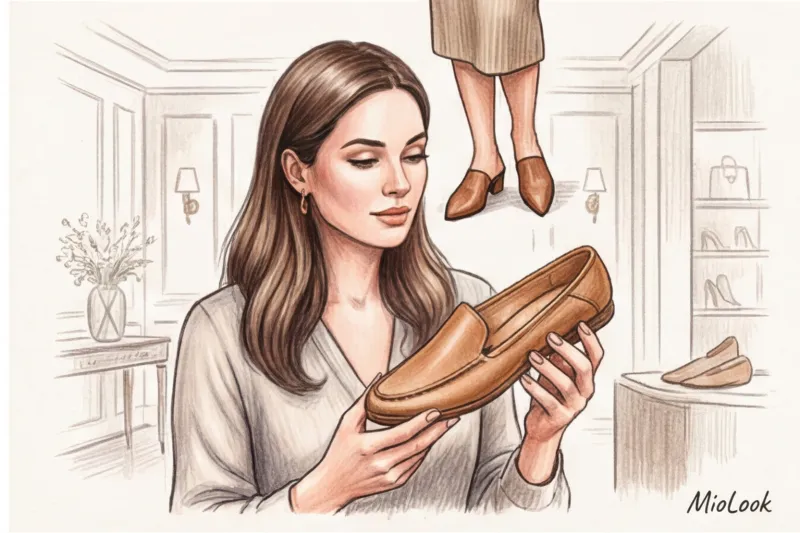
Let's say you buy luxury Italian suede loafers for €200. You'll wear them every day for the remaining four months of your pregnancy, and then for another year while pushing the stroller. That's about 150 outings total. Your CPW = €1.33.
Alternatively, you buy three pairs of stiff synthetic ballet flats for €70 each (a total of €210) because your feet are constantly swelling and none of the pairs are comfortable. You wear each pair maybe 10 times, suffer from blisters, and eventually toss them in the back of your closet. The CPW of each pair is approaching €7.
Before checking out, always check the pair according to three criteria:
- Fold test: Can you bend the sole of your foot in the front third with one hand?
- Seam test: Run your fingers along the inside of the lining. If you feel any rough seams, leave the shoes in the store; if they swell, they'll rub your skin raw.
- No-hands test: Can you put this pair on by simply slipping your foot into them, without bending over or fastening complicated straps?
Pregnancy is not a time to compromise your body. It's a time when you have every right to pamper yourself with impeccable quality, anatomical cuts, and premium materials. By investing in the right fit and width, you're not only saving your back now, but also acquiring a basic pair that will last you for years after your baby arrives.