If you think buying a black leather bag to pair with black pumps is the safest style decision, I have bad news. It's not a lifeline. It's a visual "weight" that not only weighs down your look but also instantly adds five to seven years to your age, revealing a fear of fashion experimentation.
Every day I get the same question in my direct messages: Should I match my bag and shoes? Tone on tone? As a certified colorist and image consultant, I constantly see this outdated mindset ruining otherwise excellent results. We've covered more about what's truly worth investing in in our The Complete Guide to Essential Bags: How to Choose the Perfect Wardrobe Investment Today, let's explore why "perfect outfits" no longer work and how to learn to combine accessories in a new way.
Debunking the myth: is it necessary to match your bag and shoes in today's reality?
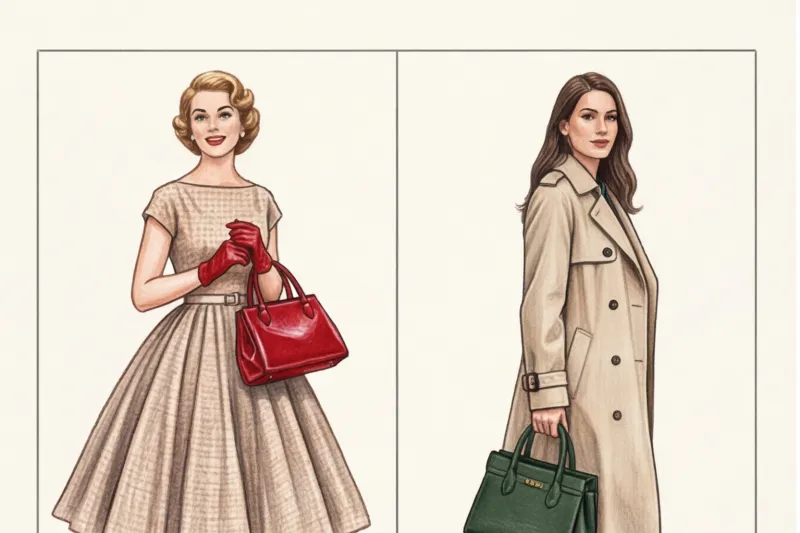
Let's take a quick historical tour. Why did our mothers and grandmothers so firmly believe in the "color-matching, texture-matching" rule? In the post-war years and the austere 1950s, the chemical industry couldn't boast a wide selection of dyes. Producing tone-on-tone accessories was a complex technological challenge, and such a set automatically signaled the owner's status and wealth.
Today, according to the annual report The State of Fashion (2024), 78% of practicing stylists and buyers consider exact matching accessories an outdated trend. In the 21st century, this technique is perceived as bad form. Why? Because it looks too diligent.
"True chic always implies a touch of casualness—the Italians call it sprezzatura. When your outfit looks like you spent two minutes getting ready, rather than two hours standing in front of the mirror with a ruler and palette," fashion historians cite this principle as the key marker of old-money aesthetics.
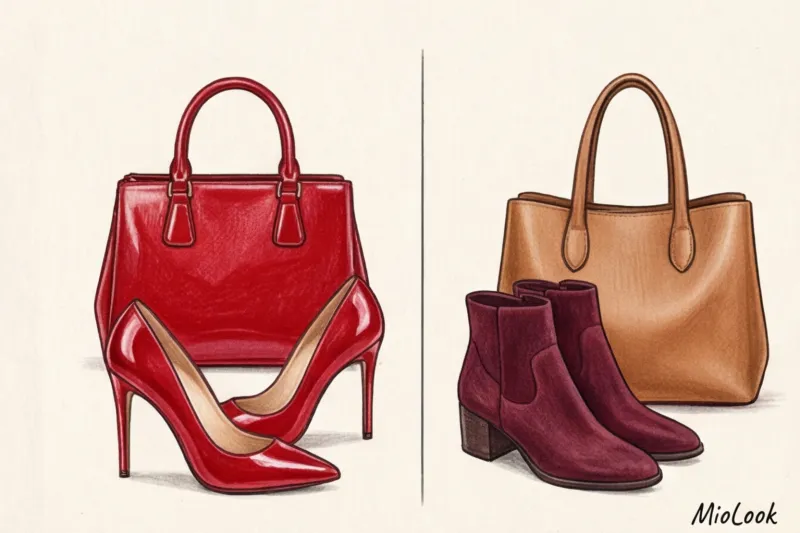
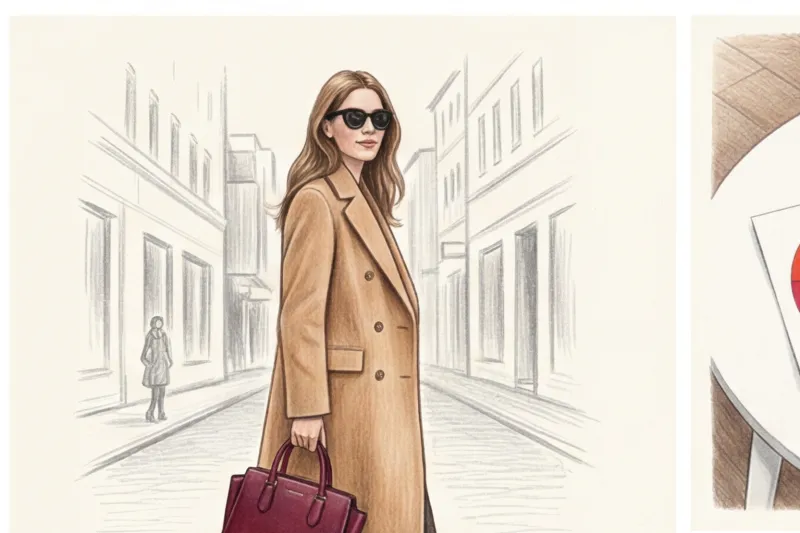
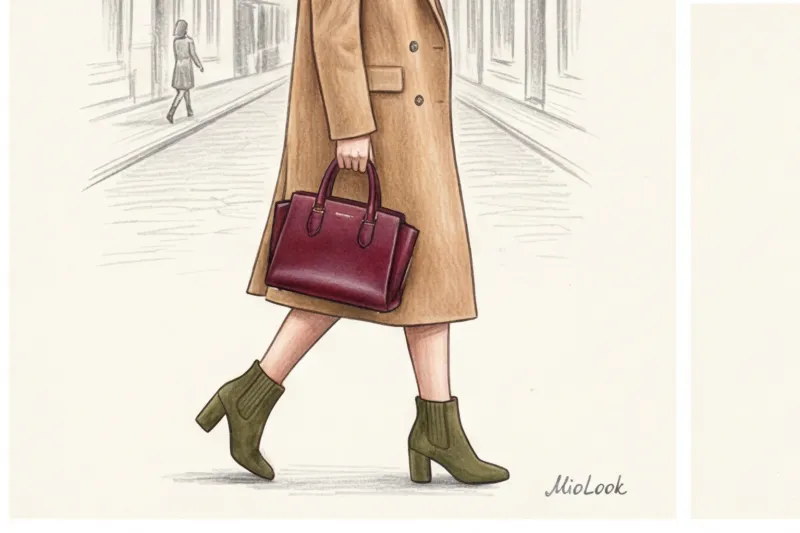
One of my clients, 42-year-old Marina, is a marketing director. During our first wardrobe review, she proudly showed off eight perfect pairings: a burgundy bag with burgundy shoes, and a beige bag with beige shoes. The problem was, these carefully chosen combinations made her look like a stern Soviet headmistress. Once we "split" these pairings—adding olive suede shoes to the burgundy bag and an emerald shopper to the beige shoes—Marina looked ten years younger. Her look became dynamic and lively.
Coloristics Rules: How to Choose Accessories According to the Laws of Color
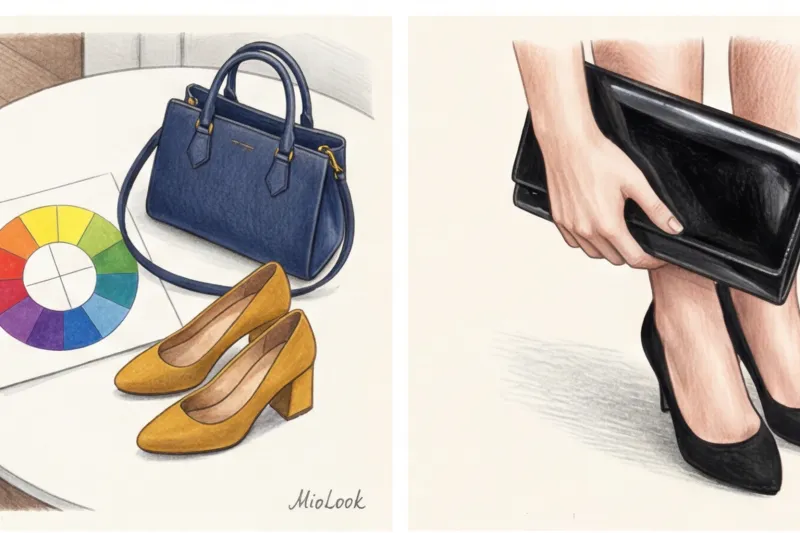
Where do you start breaking free from familiar patterns? First, forget the myth that black is a universal basic color. In fact, black is the color of maximum contrast. Black shoes and a black bag sharpen the silhouette and create heavy accents.
As a colorist, I highly recommend replacing black with complex, deep shades like taupe, marsala, emerald, or dark chocolate. These colors are perfect chameleons, adapting to most outfits.
The human eye perceives harmony not through sameness, but through logic. One of the most reliable rules is uniform temperature rule Pair cool-toned shoes with cool-toned bags, even if they're different colors. For example, cool gray shoes will pair beautifully with a dusty rose or icy blue bag. Both shades have blue undertones, and the brain instantly makes this subtle yet powerful connection.
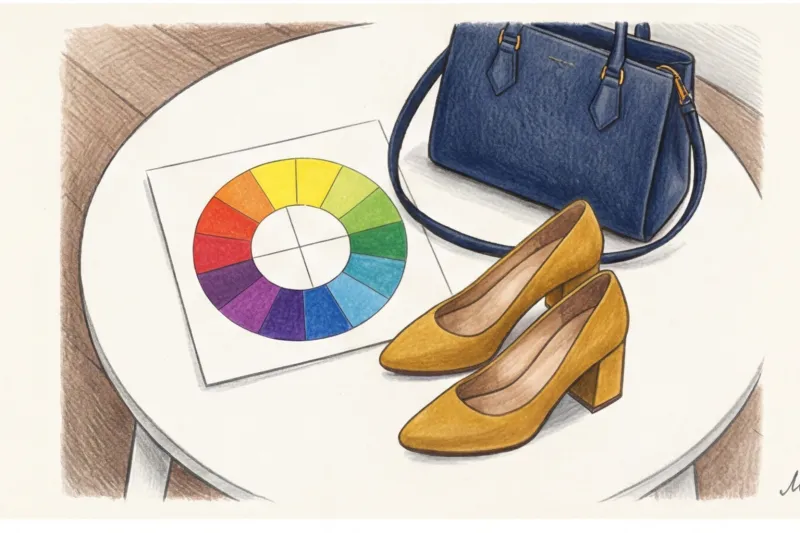
Itten's classic color wheel also works great:
- Analogue combinations: neighbors in a circle (for example, a dark blue bag and emerald loafers).
- Complementary combinations: opposites that enhance each other (mustard suede shoes and a deep blue bag).
The secret of "color echo" in the image
If you still want to tie your accessories together, use the "roll-over" technique. The color of your shoes can be repeated not in the bag's material, but in its details or embellishments. Tied a silk twill scarf with terracotta accents to the handle of a basic beige bag? Great, now you can confidently wear terracotta ankle boots.
The main rule of this technique: for bright color accents, the background in the clothing needs to be as calm and neutral as possible. Otherwise, instead of a stylish look, you'll end up with a circus costume.
Architecture and Texture: Why Bag Quality is More Important than Matches
In my experience, I often see women buying a mediocre bag just so it matches their new shoes. This is both economically and stylistically irrational.
Let's do the math. Shoes, even the most expensive ones, come into direct contact with asphalt, chemicals, and puddles. On average, a favorite pair lasts 2-3 active seasons. A high-quality basic bag made of full-grain leather, with proper care, will last 5-10 years. Over the life of one good bag, you'll go through at least 5-7 pairs of shoes. Trying to organize them into everlasting sets is a constant waste of money.
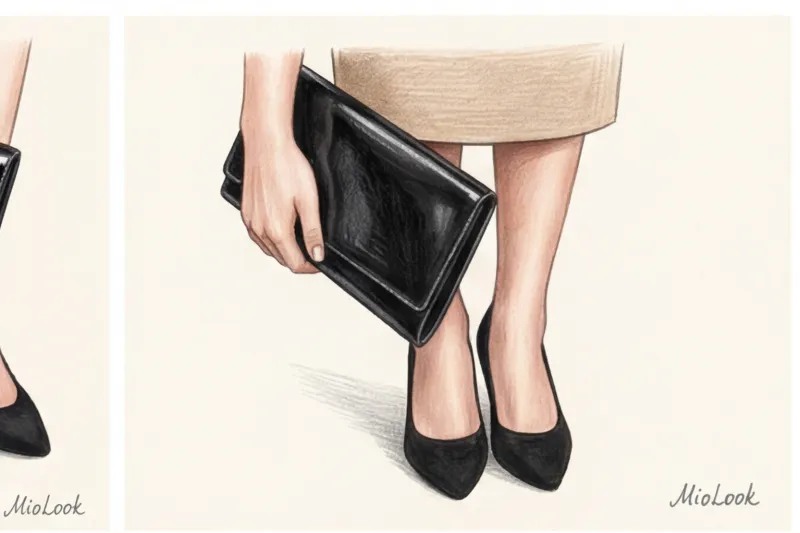
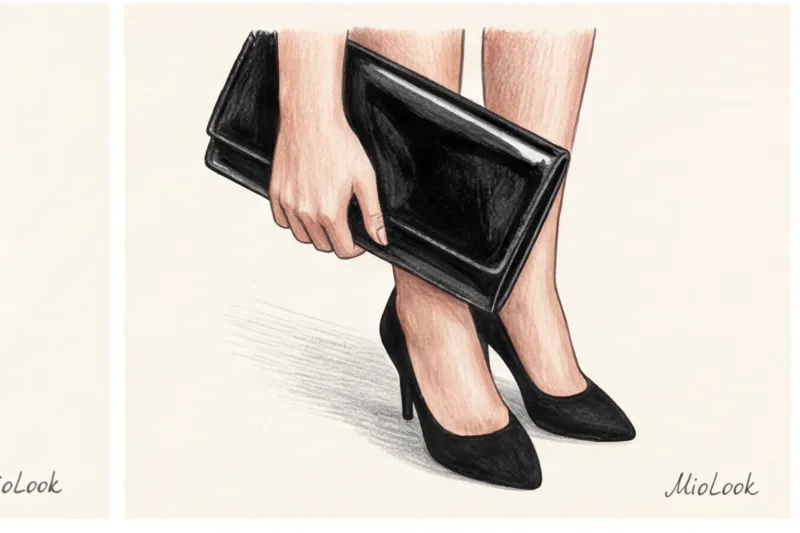
Instead of searching for color matches, play on contrast of textures It's what truly elevates a look. If you're still not ready to give up the "black on black" idea, do it wisely: choose a sleek matte bag and black patent leather shoes. Or black suede shoes and an embossed crocodile leather bag. Different textures reflect light differently, creating the illusion of different shades and adding depth to the outfit.
By the way, to avoid getting confused about your investments and invoices, I often recommend that my clients digitize their closet. By uploading your accessories to MioLook , you will clearly see what textures you are missing to create complex contrasts.
Try MioLook
A smart AI stylist will select the perfect look for you based on your digital wardrobe.
Get access — €0.99 onceBalance of Emphasis: Who Plays the Leading Role?
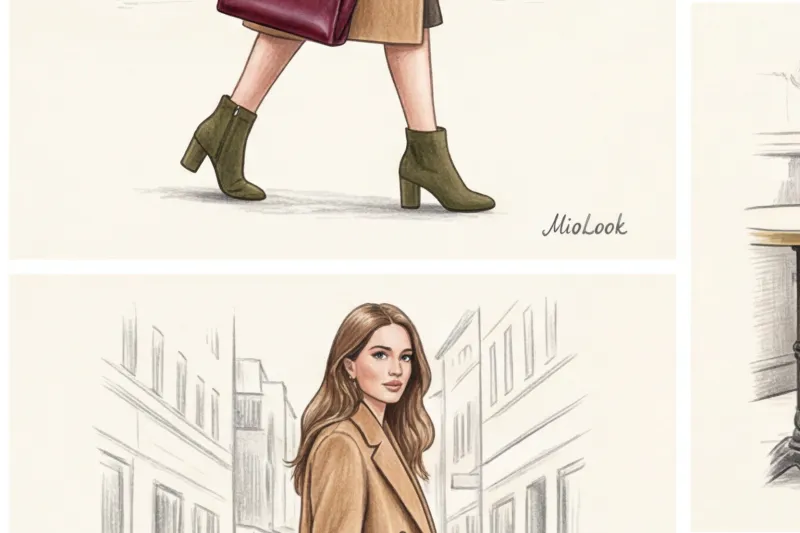
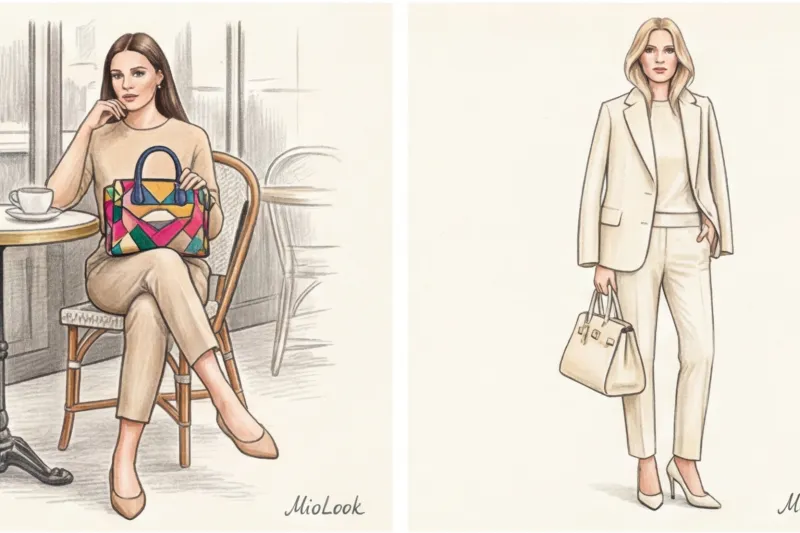
Any harmonious look should have only one soloist; the rest are the corps de ballet. If you have a complex, statement bag (geometric color blocking, leopard print, profuse fringe, or an architectural design), your shoes should be as minimal as possible, as if disappearing from view.
The opposite rule also works. Decided to wear statement snakeskin-print Cossack boots or chunky, acid-colored sneakers? The bag fades into the background—choose a structured, basic style without unnecessary hardware.
It is important to remember here visual weight This is a physical dimension in style. I often warn: a shopper bag wider than 40 cm paired with shoes with a chunky sole (platform at least 4 cm) will visually add a couple of sizes to your figure. They drag your look down. If your shoes are chunky, your bag should be compact (for example, a rigid crossbody bag). And vice versa.
Exceptions: When should a bag and shoes match?
Of course, every rule has its exceptions. In style, there are clear boundaries where conservatism is not just appropriate, but mandatory. I always tell my clients: if you're going to a meeting with investors or a reception with strict protocol, it's best to postpone experimentation.
- Strict dress code (Business Formal and White Tie). These are the only areas where the "match your bag to your shoes" rule is still alive. Just look at Kate Middleton's outfits—royal family protocol requires a conservative approach, and you can often find perfect matches there. You can read more about this in our article about business clothes for women.
- Monochrome looks (Total Look). If you dress in one color from head to toe (for example, everything in cream or caramel tones), then an exact match of the shade of your shoes and bag will work like a magic eraser, elongating your silhouette and adding a couple of centimeters of height.
- Fantasy and neon colors. If you're using a very specific shade—say, a poisonous lime green or an electric blue—matching it tone-on-tone will make a deliberate statement, showing that it's a bold idea, not an accident.
Stylist Checklist: 5 Ready-Made Formulas for Pairing Shoes and Bags
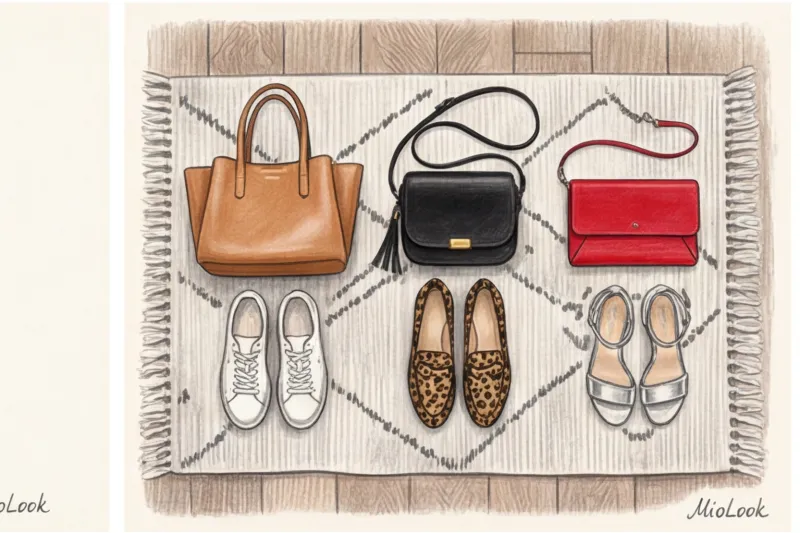
Theory is great, but what should you wear tomorrow morning? If you don't want to spend hours choosing, delegate this task to algorithms. For example, you can upload your clothes to an app, and MioLook smart AI stylist He'll assemble them into stylish capsules himself. But for those who prefer to assemble looks by hand, I've prepared 5 foolproof formulas:
- Formula 1: Neutral base + Bright accent. Beige pumps (blend with the skin, lengthen the leg) + accent emerald or burgundy bag.
- Formula 2: Conflict of textures (in one color). Black leather ankle boots with a matte heel + a black suede hobo bag. Safe, but not boring.
- Formula 3: Related shades. We move within one segment of the color wheel. For example, deep wine-colored shoes + a soft pink bag.
- Formula 4: Color from print. Leopard loafers (which come in black, brown, and caramel) + a solid caramel bag. You pull one color out of the pattern and use it as the background.
- Formula 5: Metallic as the new beige. Silver or gold shoes work like a mirror. Silver pairs perfectly with bags in any cool shade (blue, gray, purple), while gold pairs perfectly with warm shades (olive, terracotta, brown).
Forget the rules that shackle your imagination. Modern style isn't about strict mathematics, but rather about architecture and the psychology of color. Try tomorrow a bag that you think "doesn't quite match" your shoes, and see how it transforms your everyday outfit.
Your perfect look starts here
Join thousands of users who look flawless every day with MioLook, without having to worry about combining accessories.
Get access — €0.99 once