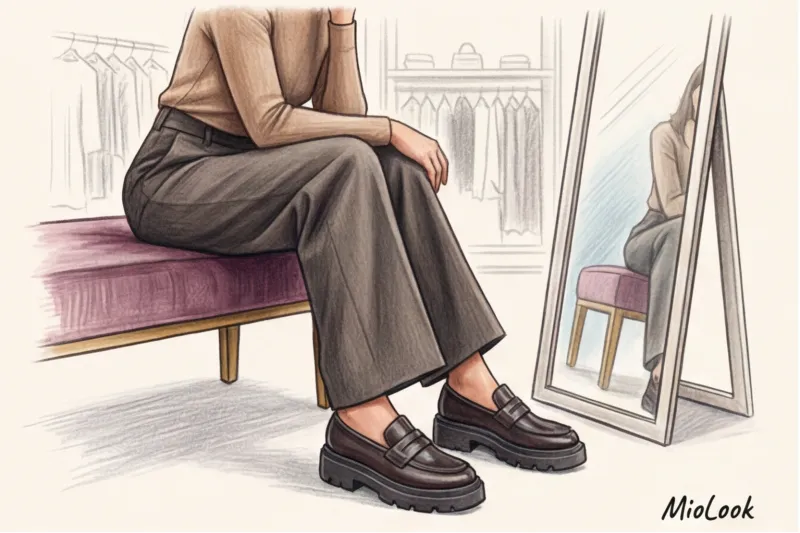
How many pairs of black shoes are gathering dust in your closet simply because you once read a glossy magazine article about their "versatility"? As a stylist with twelve years of experience in the luxury segment, I constantly see the same picture: a wardrobe overflowing with shoes, but nothing to wear with a new cashmere coat. We're used to thinking in terms of color and brand, forgetting the most important things: geometry and proportions.
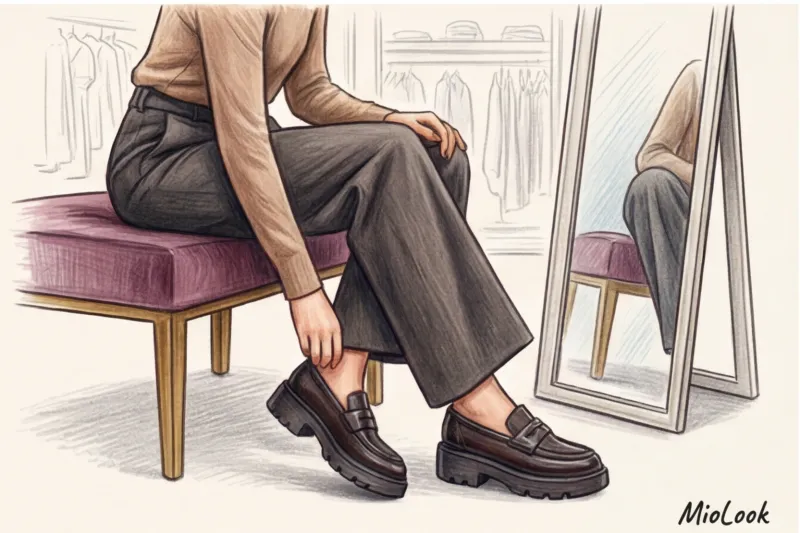
The question is, How to choose shoes to match your clothes , isn't solved by buying another pair "to go with everything." It's the mathematics of volume, the play of textures, and a sober calculation of the cost of each step. We've covered the foundation of a shoe capsule in more detail in our The complete guide to a basic shoe wardrobe , and today I suggest we move on to an advanced level. We'll explore an architectural approach to styling that will permanently rid you of the "separate legs, separate torso" effect.
Silhouette Architecture: How to Match Shoes to Clothes Based on Visual Weight
The most common mistake I correct during wardrobe reviews is an imbalance in visual weight. The visual weight of a shoe is determined by the thickness of the sole, the heft of the hardware, the width of the welt, and the shape of the last.
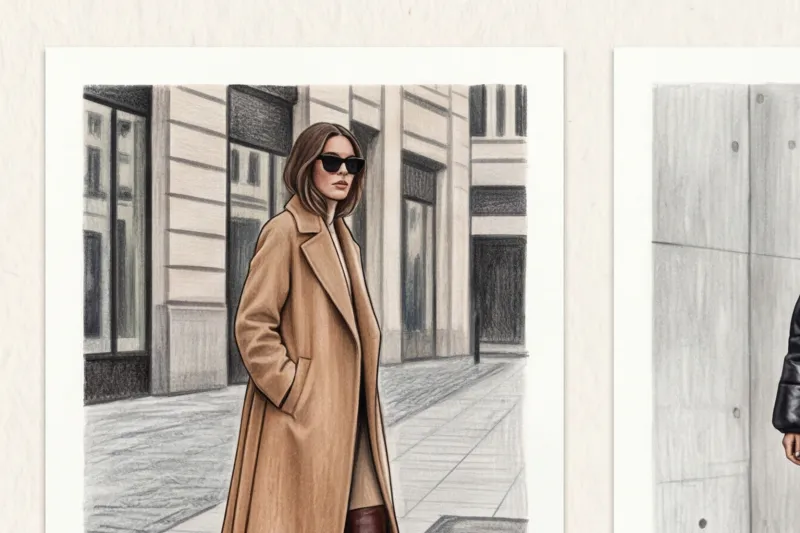
Imagine wearing a voluminous down jacket made of thick wool or an oversized men's blazer, and then wearing elegant ankle boots with a thin heel underneath. What happens? Your legs look like toothpicks, and your upper body appears bulky. Massive clothing requires visually heavy footwear. This is where boots with tractor soles, platform loafers, or tube boots come in handy.
During my internship at Italian shoe manufacturers in Marche, I clearly understood how the construction of the shoe last changes the perception of the entire look. For example, classic Italian stitching Blake makes the sole thin and graceful—these shoes are perfect for flowing silk dresses. But the English method Goodyear welt with a raised leather welt, it adds just the right amount of groundedness to the shoe, perfect for balancing out heavy autumn tweed coats.
Geometry of the toe and length of the products
The shape of the cape works as an optical illusion. It must be used with surgical precision:
- Sharp Cape: Visually extends the leg line. It's the perfect partner for full-length trousers (palazzo or flared), which cover the shoe, leaving only the toe visible.
- Square Cape: Adds a rugged, architectural edge to the look. Pairs flawlessly with cropped, straight-leg jeans (ankle length), highlighting a slender ankle.
- Round Cape: The most insidious casual option. I strongly advise against pairing a pronounced round toe with A-line midi skirts—it instantly creates a "baby legs" effect and adds weight to your calves.
Access to MioLook for €0.99 — one-time payment
A smart AI stylist will select the perfect look based on your proportions and the shoes you have.
Get access — €0.99 onceForget the Bag: Modern Rules for Combining Colors
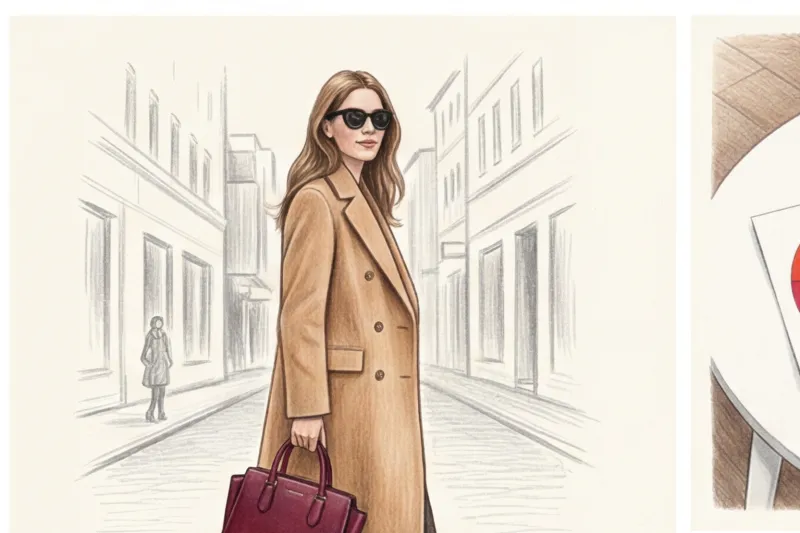
If you're still matching your bag to your shoes, stop. In 2024, this technique looks contrived and visually ages your look, adding unnecessary conservatism. Modern styling is built on casual elegance, not the rigid rules of the '90s.
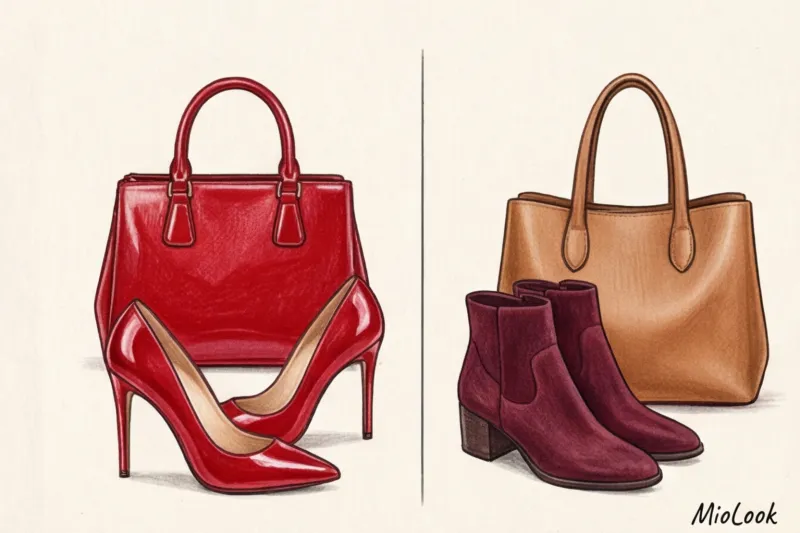
Now about the main anti-trend for basic wardrobes. I often shock my clients with this statement: black shoes aren't the most versatile staple. If you wear light-colored jeans or beige trousers with black ankle boots, you create a sharp horizontal contrast line. This line inevitably cuts off height.
"The ideal base isn't black. It's complex, deep shades that mimic the surrounding fabrics."
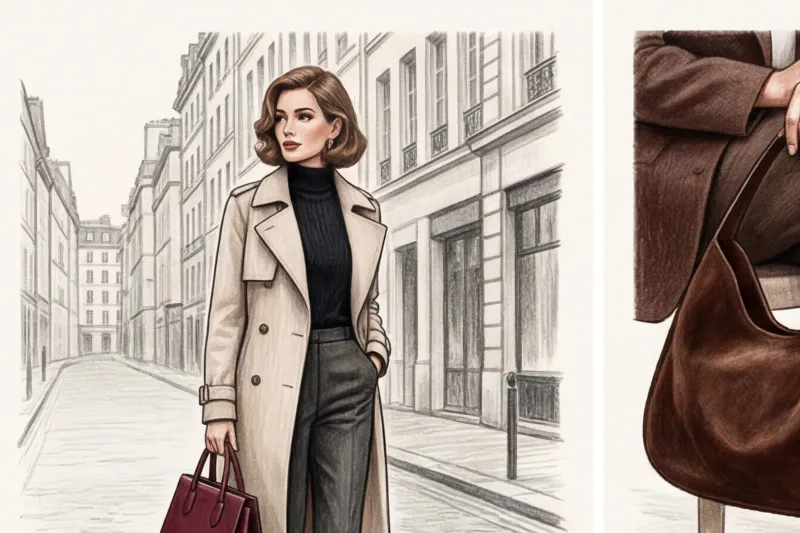
How to match shoes to clothes by color? Use the "color stretch" method and sophisticated neutrals. According to the WGSN (2024) color trends report, burgundy, deep taupe, and olive have become the "new black" in the premium segment. Burgundy loafers will chicly complement a gray suit, blue jeans, and a beige trench coat without creating a harsh contrast.
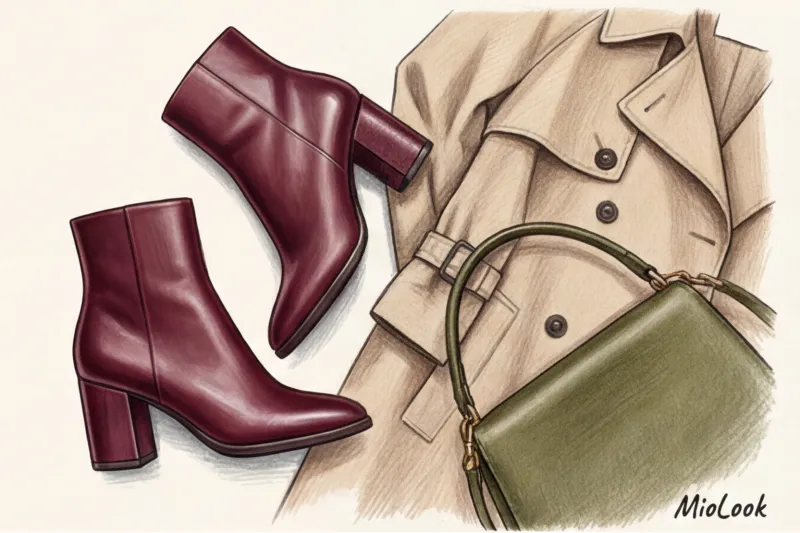
Texture Play: The Secret to a High-End Look
The difference between a "normally dressed woman" and a woman who looks like a million bucks often lies not in logos, but in the use of textures. Smooth leather, suede, patent leather, textile—each material has its own degree of formality.
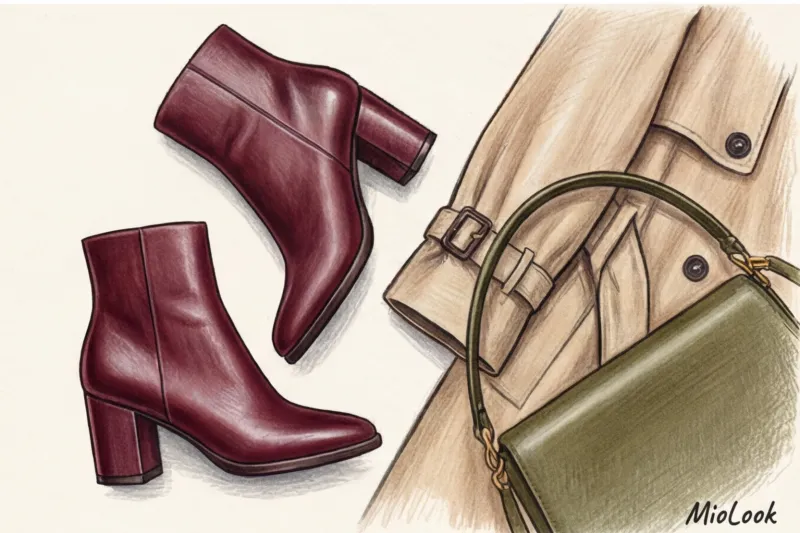
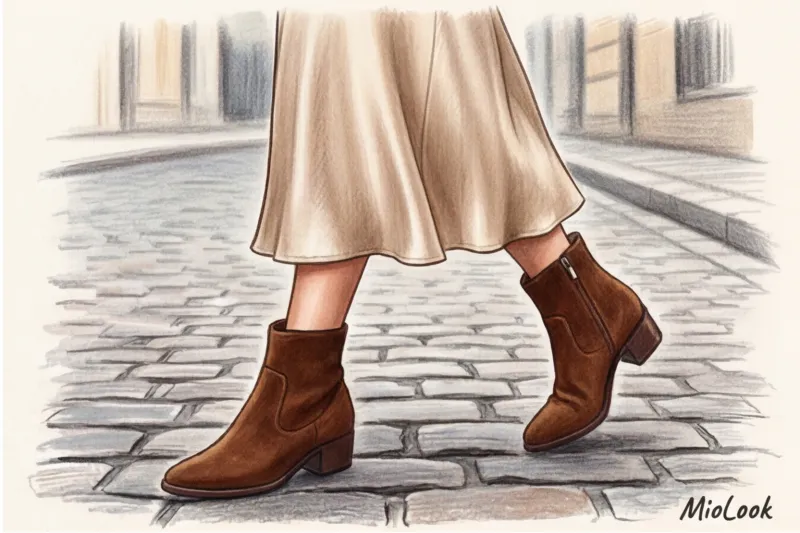
The main rule of luxury styling: contrast of textures If your clothing is made of a smooth, shiny material (silk, satin, fine viscose), your shoes should absorb light, meaning they should be textured or matte (suede, nubuck). Conversely, a matte cashmere sweater and wool trousers pair perfectly with shoes made of smooth, polished leather or patent leather.
Suede shoes are a stylist's secret weapon. Suede ankle boots instantly up the "expensive" factor of an outfit, even when paired with basic denim from mass-market brands like COS or Massimo Dutti. The cheap, glossy sheen of low-quality leather cheapens the entire outfit, while the luxurious velvetiness of suede always looks premium.
Trousers, Jeans, and Dresses: A Practical Stylist's Cheat Sheet
Theory is great, but let's move on to concrete scenarios in front of the mirror.
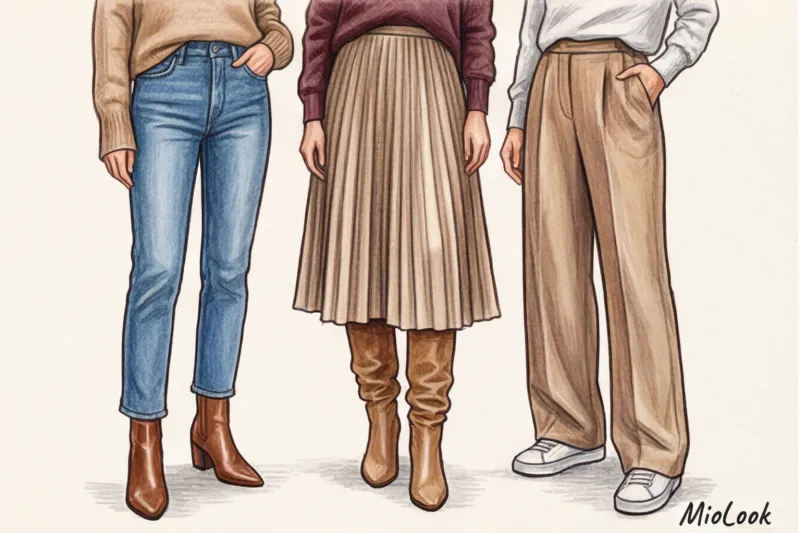
Straight-leg jeans. This is the most demanding style. Ideal partners for them are loafers (if the ankle is visible) or ankle boots that fit snugly and under the pant leg. The main anti-trend is trying to pull straight jeans over wide boot shafts. This creates folds that disrupt the silhouette.
Wide trousers (palazzo). It's important to avoid the "dragging" effect. If you're wearing flat palazzos with sneakers or loafers, the leg should end exactly 1-1.5 cm from the floor. The trousers should slightly "break" against the instep of the shoe, creating a single, elegant fold.
Midi length skirts and dresses. In professional circles, we call this the "gap rule." You have two options: either the boot shaft extends deep under the skirt hem (no leather strip at all), or there's a sufficient amount of leg (at least a palm's width) between the skirt hem and the boot. A narrow strip of leather, 2-3 cm, looks untidy and cuts into the widest part of the calf.
By the way, in order not to make a mistake with the proportions before purchasing, many of my clients use the virtual fitting room feature in MioLook - This allows you to upload your skirt and check how different bootleg heights will look with it.
Your perfect look starts here
Join thousands of users who look flawless every day with MioLook, finding the perfect combination of clothes and shoes.
Get access — €0.99 onceThe Heel Versatility Myth and Your Lifestyle Index
The MioLook app's internal statistics reveal a startling figure: women wear only 20% of the shoes they buy regularly. The remaining 80% are reserved for "special occasions" or are simply too uncomfortable for real life.
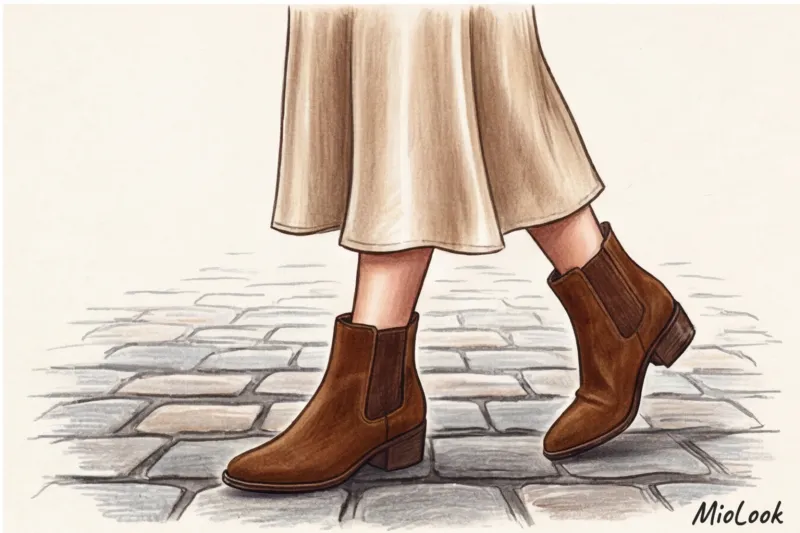
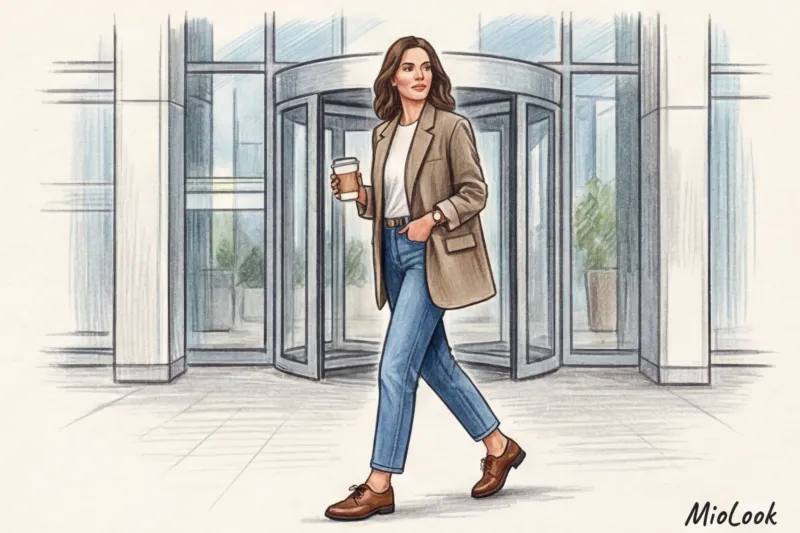
I had a client, Anna, an IT director. During a wardrobe audit, we found 15 pairs of luxurious stilettos. Her daily routine involved driving, navigating a huge office, and working a hybrid work environment. The stilettos were simply gathering dust in boxes. We created a functional capsule collection for her, consisting of just four pairs in a smart-casual style (brogues, elegant oxfords, minimalist sneakers, and ankle boots with a sturdy 5cm heel).
Before purchasing you should calculate your lifestyle index What kind of surface do you walk on? How many steps do you take (the optimal heel height for 10,000 steps without harming orthopedics is 2-4 cm)? Do you drive?
Of course, there is an exception here. This rational approach doesn't work for so-called "emotional shoes"—luxurious evening sandals or satin mules for the theater. But such items should make up strictly no more than 5-10% of your shoe wardrobe, not half.
Checklist: How to Inspect Shoes Before an Investment Purchase
Buying quality shoes is an investment. And you need to approach it with an accounting-like equanimity. I always teach my clients the formula Cost-per-wear (CPW) — cost per wear.
What's more cost-effective: buying premium leather loafers for $500 or ultra-fashionable shoes from a mass-market store for $150? You'll wear basic loafers at least 100 times per season (costing $5 per wear). You'll wear shoes that give you blisters maybe three times (costing $50 per wear). A high-end basic always pays for itself.
Before you take your shoes to the checkout, run them through the checklist:
- The rule of three images: If you can't come up with 3 outfits with the items ALREADY hanging in your closet right in the store, put the pair back on the shelf.
- Fitting time: Buy shoes only in the afternoon, when your feet naturally swell.
- Equipment: Try on shoes with the socks or tights you plan to wear them with. Never try on fall boots with the nylon sock suggested by the salesperson.
- Context: Come shopping in your typical basic clothes, not in a weekend tracksuit. Judging elegant Chelsea boots with sweatpants is a waste of time.
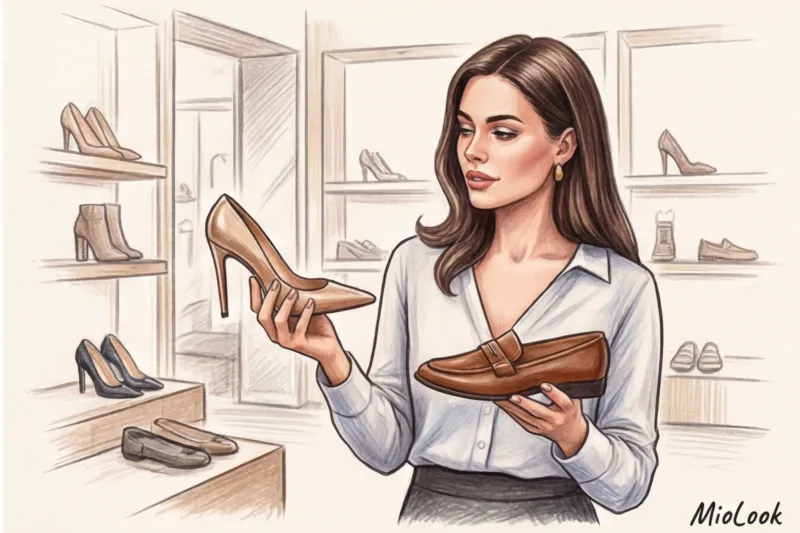
Ultimately, the art of matching shoes to your outfit boils down to one simple truth. Shoes are the foundation. They shouldn't clash with your outfit or cause physical pain. Invest in the right last, sophisticated textures, and sophisticated shades, and you'll be surprised how even the simplest jeans and sweater ensemble will start garnering compliments.