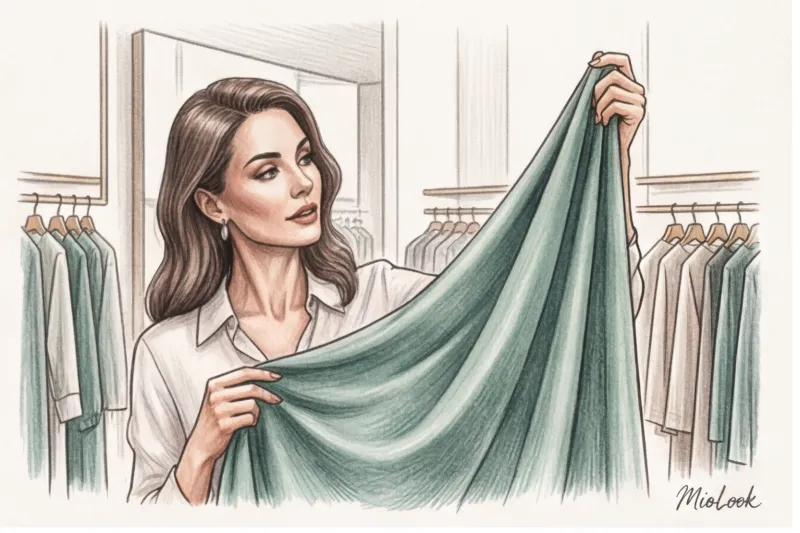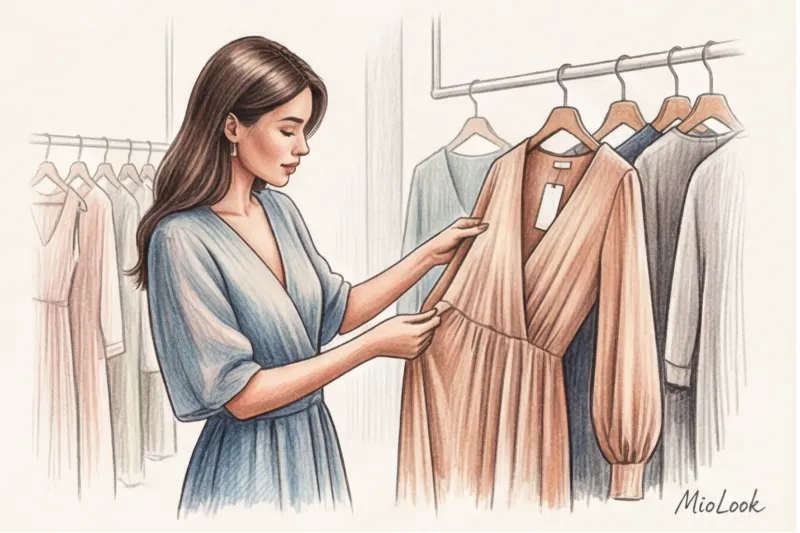
Imagine you're standing in the fitting room at Massimo Dutti or COS. You're wearing a flowing dress that feels like luxurious, thick silk. The price is appropriate—around €120. You glance at the tag, expecting to see the coveted "100% silk"—but instead, there's this mysterious word: Lyocell or Tencel My first thought? "Once again, brands are trying to sell me cheap synthetics at premium prices."
As a personal stylist and colorist, I see this reaction all the time. One of my regular clients flatly refused to try on "those weird artificial fabrics" until she fell blindly in love with a Tencel suit, mistaking it for silk. We've already discussed the global trend for such materials in more detail in our The complete guide to eco-friendly clothing fabrics , but today I want to dig deeper. Lyocell and Tencel: the difference between them isn't just a line in the textile dictionary; it's the key to understanding what you're actually paying for.
Lyocell and Tencel: The Difference You Need to Know (The Xerox Effect)
Over 12 years of reviewing women's wardrobes, I've handled thousands of tags. The most common question I get asked during shopping sessions is, "Darina, why should I pay for some lyocell as if it were real silk?" My answer: because you're investing in one of the best textile technologies of our time.
The main secret that will remove all the confusion: Lyocell is the name of the material itself (like wood, glass or cotton). A Tencel™ is a patented brand name for lyocell. , owned by the Austrian company Lenzing AG.
The classic "Xerox effect" or "diaper effect" comes into play here, where a brilliant brand name becomes a household name for an entire product category. Any Tencel is Lyocell. But not every Lyocell deserves the name Tencel.
Let's dispel the main myth right away: it's not synthetic. Synthetic fabrics (polyester, acrylic) are made from petroleum products. Lyocell, on the other hand, is a man-made fiber of natural origin. Its base is wood. Essentially, it's a high-tech relative of viscose, but without its main drawbacks.
Why do brands write different names on labels?
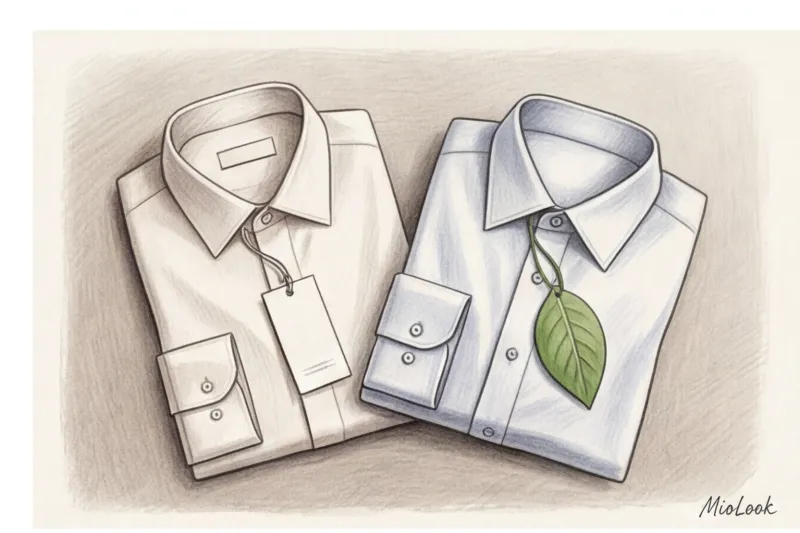
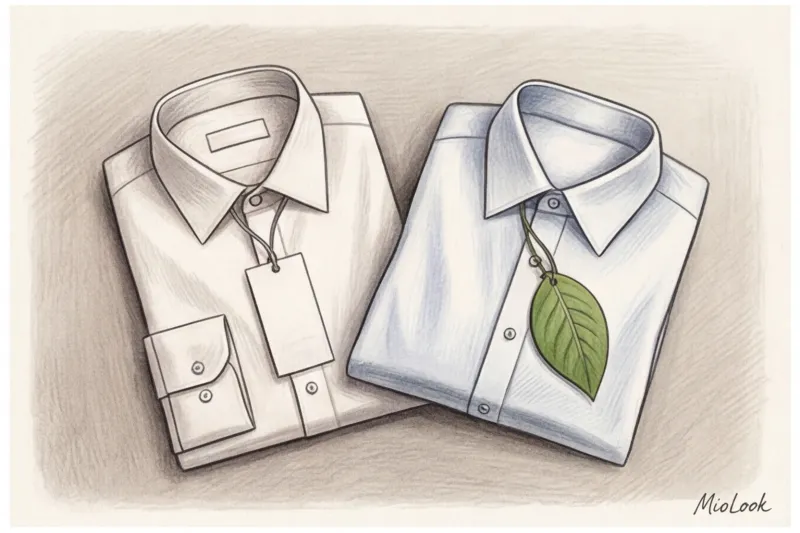
It all comes down to licensing and strict quality control. If Zara or a local niche brand sources fabric from Lenzing-certified factories, they proudly display this information on the label. Tencel™ Lyocell (and often they also sew on a separate green book-shaped label).
If the fabric is produced in an unnamed factory in Asia using similar technology, but without the Austrian quality control, the brand is legally not allowed to use the trademark. The label will simply say Lyocell or Lyocell fiber The difference in raw material purchasing costs is colossal, and this directly affects the price of the item in the store.
Access to MioLook for €0.99 — one-time payment
A smart AI stylist will select the perfect everyday look and help you create a smart capsule wardrobe from high-quality fabrics.
Get access — €0.99 onceNature in a Flask: How Lyocell Is Made and Why It's Eco-Friendly
I promise to avoid boring chemicals, but the process of creating this fabric is like pure magic. They take eucalyptus wood, grind it into chips, then transform it into a thick cellulose mass using an organic solvent. From this mass, smooth, silky threads are literally "pulled" through tiny sieves.
Why is the entire fashion world, from Stella McCartney to mass-market brands, so obsessed with lyocell? It's all about closed-loop technology. According to official data from Lenzing AG (2024), 99% of the water and solvent used in its production are captured and reused. The solvent is also non-toxic—it's an organic compound that doesn't pollute rivers, unlike the chemicals used in the production of conventional viscose.
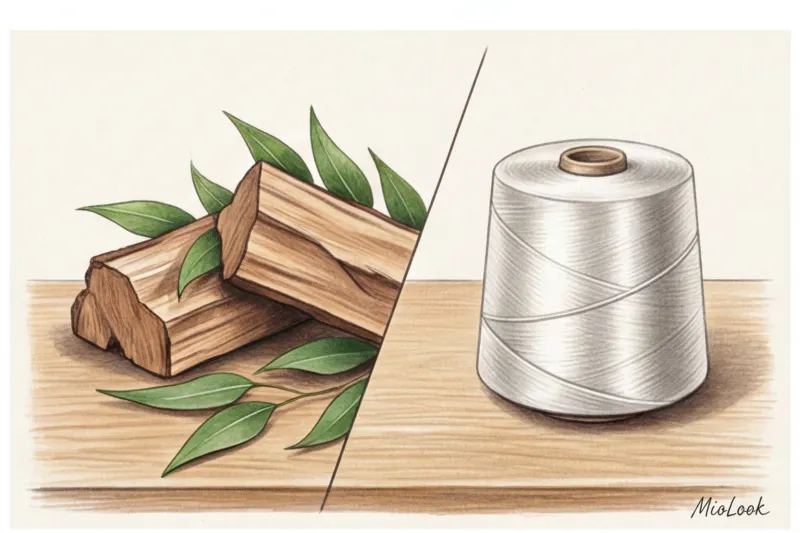
Moreover, eucalyptus is a superhero tree. Research by the World Resources Institute (WRI) shows that the cotton industry catastrophically depletes soil and requires enormous amounts of irrigation. Eucalyptus, on the other hand, grows quickly in poor soils and requires no pesticides or artificial irrigation at all. It was for this technology that Tencel production received the prestigious European Environment Award.
Tencel™ vs. Regular Lyocell: Is It Worth Paying a Premium for the Brand?
As a practitioner, I often hear: "If it's the same thing, why pay €90 for a Tencel brand when you can buy a T-shirt made from a no-name lyocell for €25?" I'll answer bluntly: the difference lies in how the fabric behaves after the first wash.
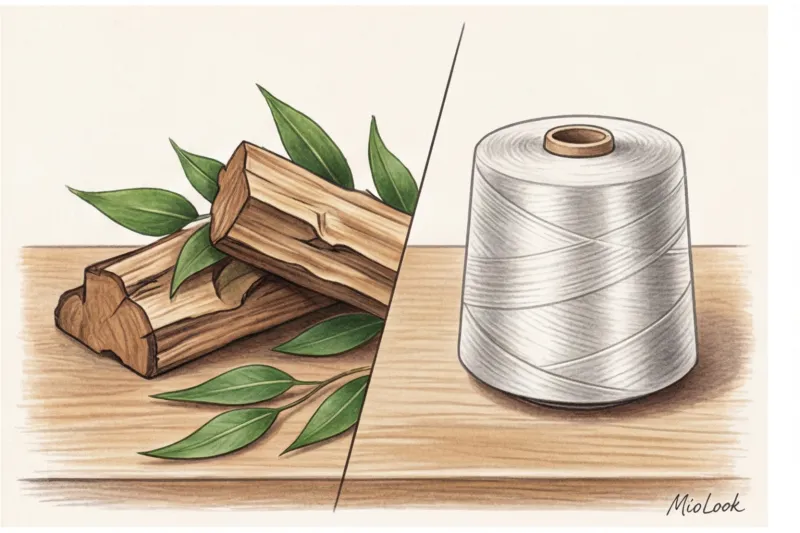
Austria's Lenzing uses only certified, renewable forests. Cheap lyocell from Asia is often made from questionable raw materials (even including the deforestation of endangered forests) and in violation of environmental standards. But for us, the consumers, the tactile and functional differences are important:
- Pilling: Brand-name Tencel has an incredibly smooth fiber structure. Cheap lyocell often suffers from short fibers in the yarn—after a couple of months of wear, unsightly pilling will appear on the thighs and underarms.
- Shape stability: You know that feeling when, after washing, the side seam of your favorite T-shirt creeps up onto your stomach? That's because the fabric is warped. In my experience, basic items made from certified Tencel maintain their shape for years, while mass-market lyocell often becomes misshapen.
- Strength: Regular viscose loses up to 50% of its strength when wet (it literally falls apart in your hands). Tencel is the strongest of the cellulose fibers and can withstand delicate machine washing.
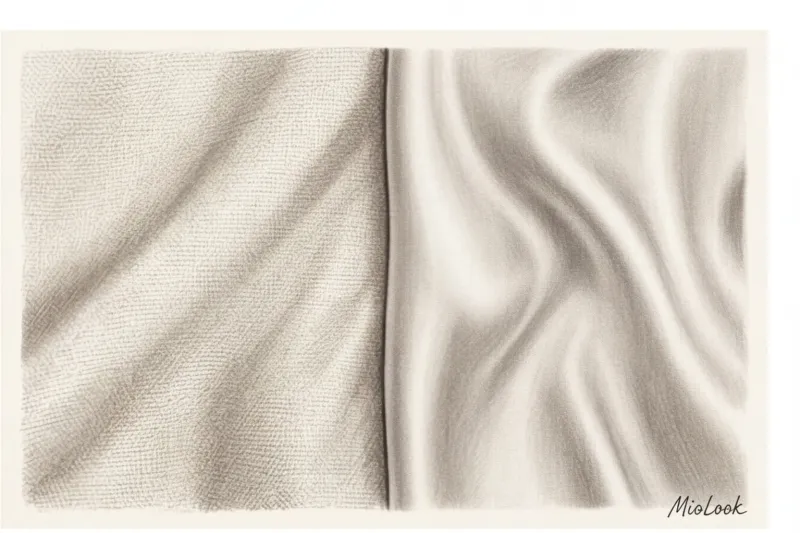
Tencel Properties: A Stylist's and Colorist's Perspective
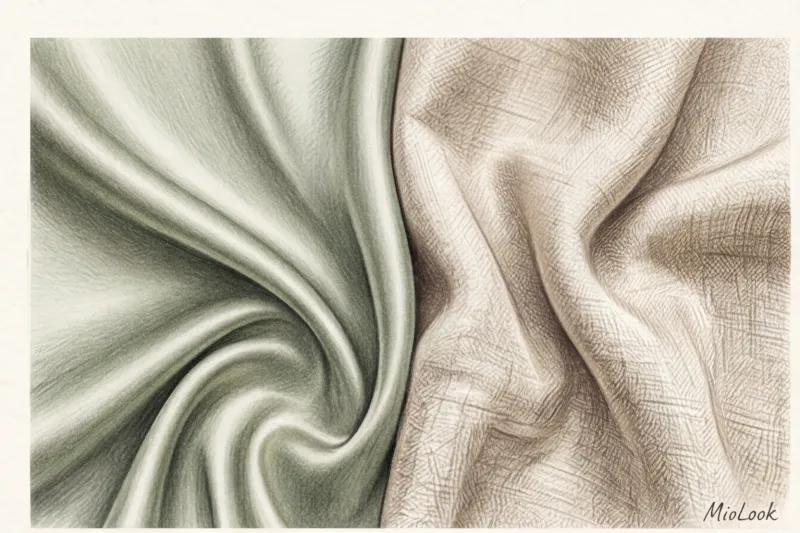
If you asked me to name the fabric with the most beautiful and "expensive" drape, I'd say Tencel, weighing at least 180 g/m². It's heavy yet fluid. Unlike stiff cotton, which can be stiff and visually bulky, Tencel flows along the body, delicately concealing the nuances of the figure. This is why it's the best material for palazzo pants, summer duster trench coats, and slip dresses.
But my favorite topic is color. As a colorist, I always pay attention to how fabrics release pigment. Do you know what happens to a black cotton shirt after six months? It turns a sad, graphite color, and the seams start to fade.
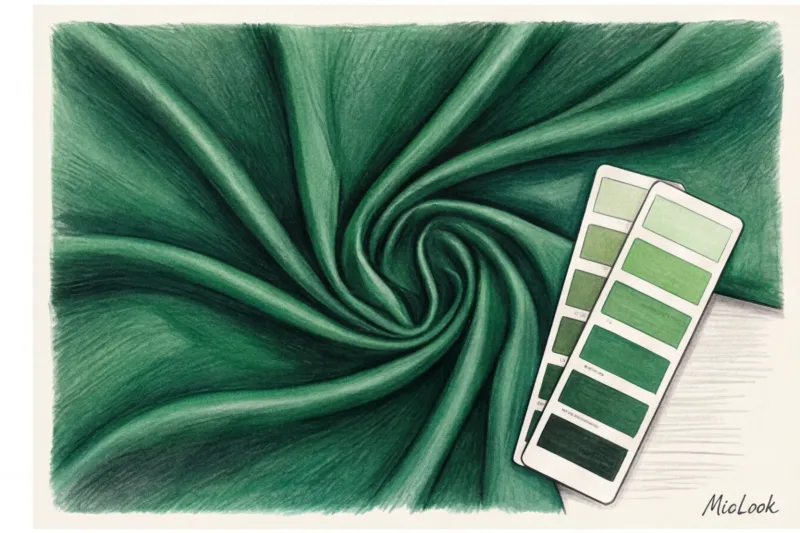
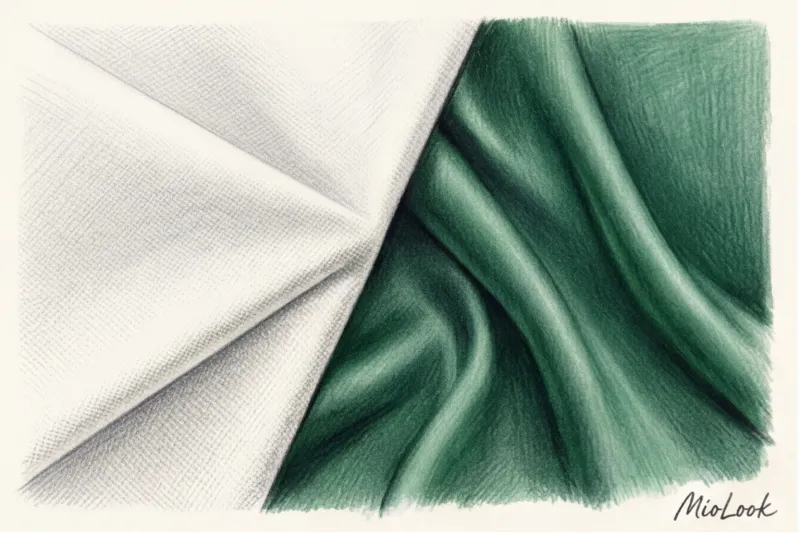
Tencel fibers are perfectly smooth (under a microscope, they resemble glass tubes). Color penetrates deeply and is securely fixed. The smooth cuticle acts like a mirror, reflecting light. Therefore, deep emerald, rich burgundy, or jet black colors on Tencel always look richer, more expensive, and last for years.
"According to laboratory tests, Tencel absorbs moisture 50% more effectively than cotton and dries several times faster, creating a natural cooling effect on the skin."
Your perfect look starts here
Join thousands of users who look flawless every day with AI-powered advice from MioLook.
Get access — €0.99 onceTencel in a business and capsule wardrobe: who should wear it and when
It's time to break one of the main fashion stereotypes: "100% cotton is the best choice for the office in summer." Nothing of the sort.
Cotton absorbs moisture well, but it takes a long time to dry. If you sweat on the way to work, the wet spots will linger. For my clients who frequently speak publicly or give important presentations under hot spotlights, I always choose blouses made of Tencel. It doesn't just absorb sweat; it instantly wicks it away from the body and evaporates it. No telltale marks under the arms.

In a business-casual aesthetic, Tencel is an ideal, no-fuss alternative to natural silk. If your office allows for relaxed silhouettes (for example, at an IT company or creative agency), consider two-piece suits made of this fabric. They look put-together enough for meetings without restricting movement.
To properly fit such things into your style and not buy too much, I recommend using the functionality virtual wardrobe in the MioLook app - this will help you see in advance how new textures will combine with your base.
A fly in the ointment: the disadvantages of lyocell and tencel
To build trust, I must be honest: perfect fabrics don't exist. I don't want to create the illusion of a "magic material," so here are some situations where Tencel might disappoint you:
- He still hesitates. Yes, significantly less than linen or fine cotton. But it won't be perfectly smooth at the end of the day. The good news is that, due to the weight of the fabric, creases often "sag" under their own weight.
- Catastrophic intolerance to hot water. If you accidentally throw your Tencel pants in the wash at 60°C, be prepared to hand them over to your little sister. The material shrinks significantly at high temperatures.
- Delicate when wet. Although it's stronger than viscose, wet lyocell shouldn't be wringed aggressively by hand. The fibers may become deformed or develop micro-creases that won't be removed with an iron.
Ready to get started?
Try the MioLook free plan—no commitments required. Digitize your wardrobe and get ready-made looks for every day.
Get access — €0.99 onceChecklist: How to choose and care for Tencel items
Purchasing premium lyocell clothing (especially in the €80-€150 range) requires proper care. It's not something you can just throw in the washing machine with your jeans and forget about. Here's my tried-and-true approach:
- Washing: Strictly no higher than 30°C. Use only liquid detergents for delicate fabrics. Regular laundry detergent acts as an abrasive—its granules clog the Tencel microfibers and permanently deprive the fabric of its signature silky shine.
- Spin: Maximum 600 rpm. Don't overload the drum, otherwise your clothes will come out with hard creases.
- Drying: Spread out on a horizontal surface or on wide hangers, away from direct sunlight (UV rays destroy cellulose).
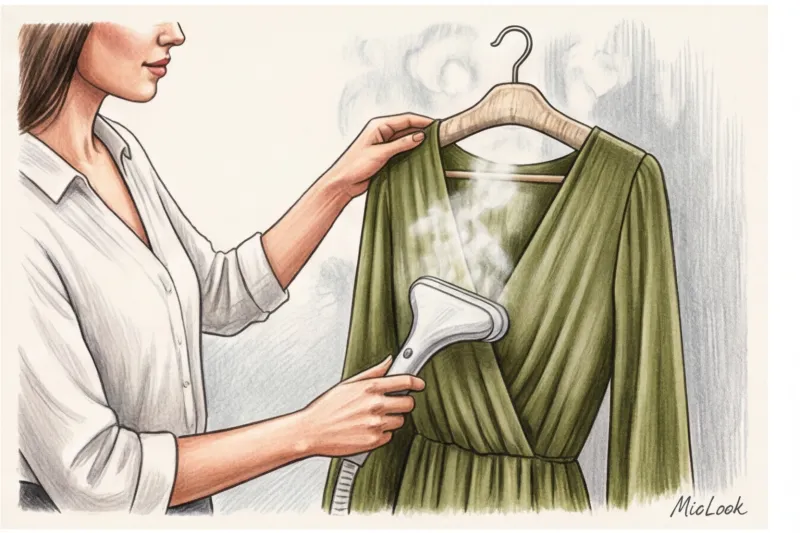
- Ironing: Forget about a hot iron. Tencel's best friend is a handheld steamer. If ironing is unavoidable, iron the garment from the inside out on the "silk" setting while it's still slightly damp.
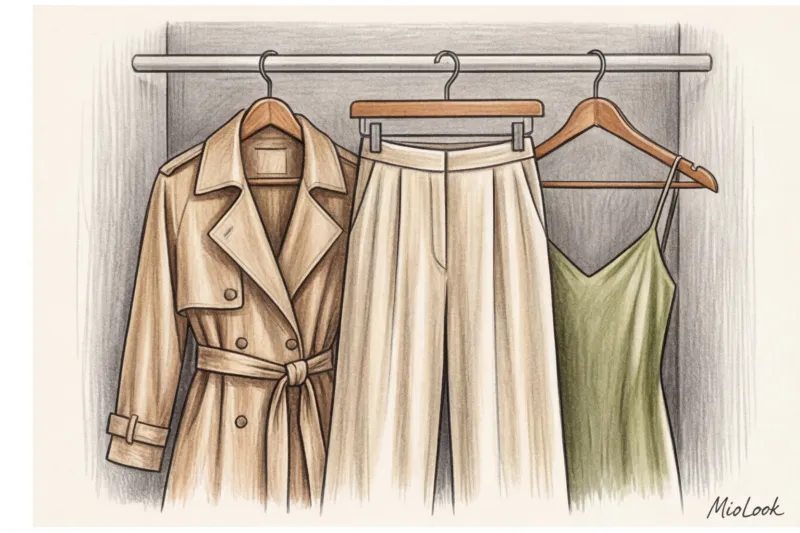
The next time you see the words "lyocell" or "Tencel™" on a tag, don't rush to accuse the brand of trying to sell you plastic. This is a rare case where modern technology has surpassed nature, creating a fabric that feels cool like linen, flows like silk, and is kind to the planet. Your only task is to look for the green Lenzing label and follow the washing temperature guidelines.