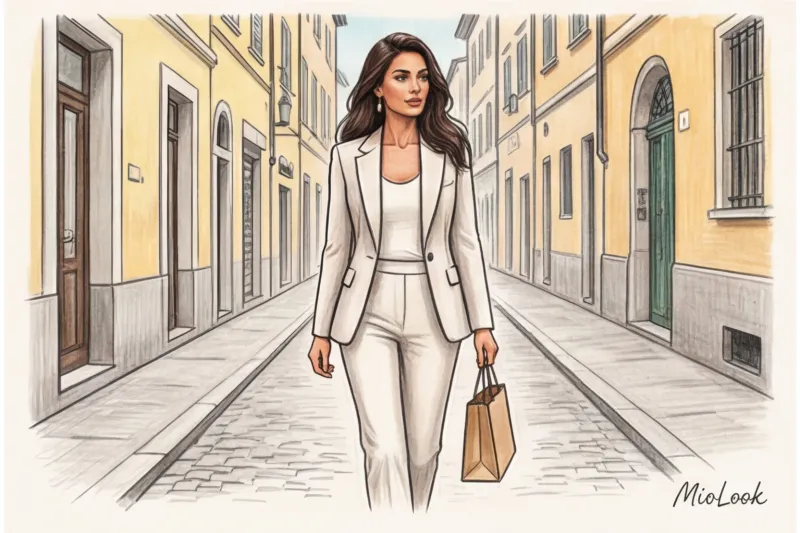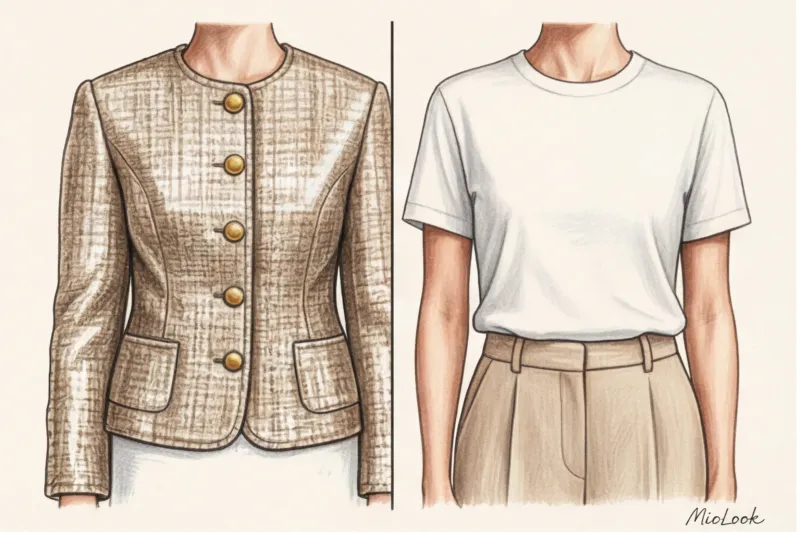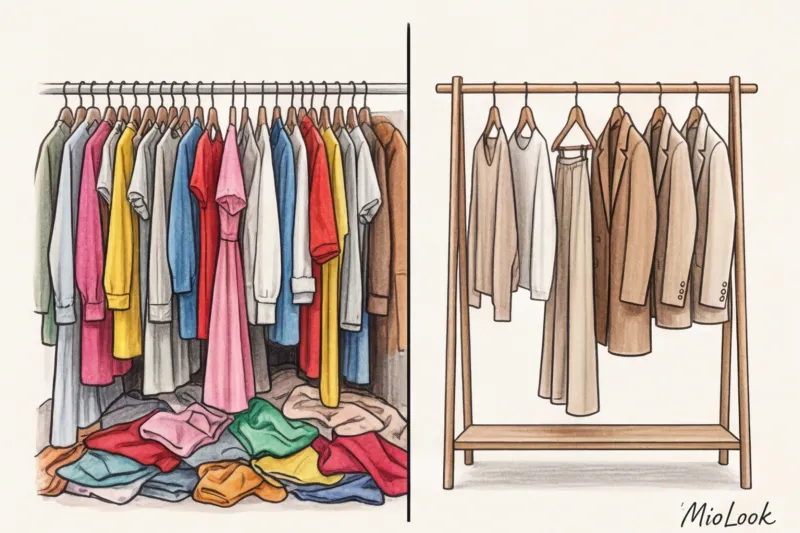
Have you noticed the paradox? Your closet is overflowing with seasonal sale items, the combined cost of which is equivalent to a used car, yet you have absolutely nothing to wear to an important meeting or date. Your look is falling apart, looking sloppy and cheap. In 12 years of working as a personal stylist, I've learned one cruel rule: status can't be bought wholesale at a sale. It lies in the architecture of the cut, the right textures, and mathematical calculations.
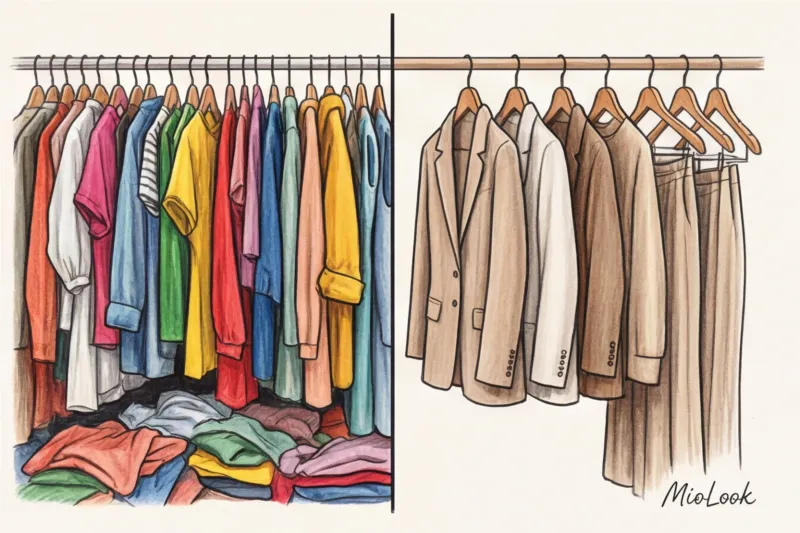
We have already discussed the philosophy of a conscious wardrobe in more detail in our A complete guide on how to look expensive as you age. But today I want to debunk the biggest myth of the mass market. I'll show you the technique of "architectural upcycling"—a method used by celebrity stylists. We won't just be buying "basic white T-shirts." We'll learn how to find hidden gems with complex structures and perfect them with a needle, thread, and the right hardware. Find out. How to look expensive on a budget , it's easier than it seems if you're willing to change lenses.
The Illusion of Wealth: Why We Spend a Lot but Look Cheap
Let me tell you the story of my client Marina, a top IT manager. When we first sorted through her wardrobe, there was a pile of thirty items from Zara, H&M, and Mango on her bed. All ultra-fashionable, with recognizable prints and rhinestones. In total, this haul cost her more than €1,500. Meanwhile, Marina felt insecure during interviews: the thin viscose wrinkled treacherously, and the crooked stitching on her trousers distorted her silhouette.
According to a report by the analytical agency Business of Fashion (BoF), the quality of mass-market fabrics has declined drastically over the past 10 years. Brands are cutting costs by replacing heavy cotton with thin polyester. Buying 10 trendy items of dubious quality isn't saving you money. You're financing your own visual insecurity.
The WGSN study (2024) confirms a global shift toward the concept of Quiet Luxury. Logomania and flashy embellishments are dead. In their place has come "visual calm"—clean lines, refined shades, and a mathematically precise fit. Trying to skimp on a nice coat to buy a bag with a huge logo is the biggest style mistake of our time.
Access to MioLook for €0.99 — one-time payment
A smart AI stylist will select the perfect look from your items and help you find the perfect combinations.
Get access — €0.99 onceSmart Shopping Secrets: How to Look Expensive on a Budget
To turn things around, we need an "architectural wardrobe." It's a concept where you evaluate not the brand on the tag, but the rigidity of the structure. A garment should hold its shape even when it's hanging on a hanger. That's exactly what we did with Marina: we got rid of the shapeless pile and bought just three structured jackets from the mid-range (Massimo Dutti and COS), having them tailored.
This approach is based on Cost-Per-Wear formula The mathematics of status are merciless: a trendy €30 top that you'll wear twice (and lose its shape after washing) will cost you €15 per outing. But a perfectly tailored €150 jacket that will last three years if worn once a week (156 outings) costs less than €1 per outing. Is this really a savings?
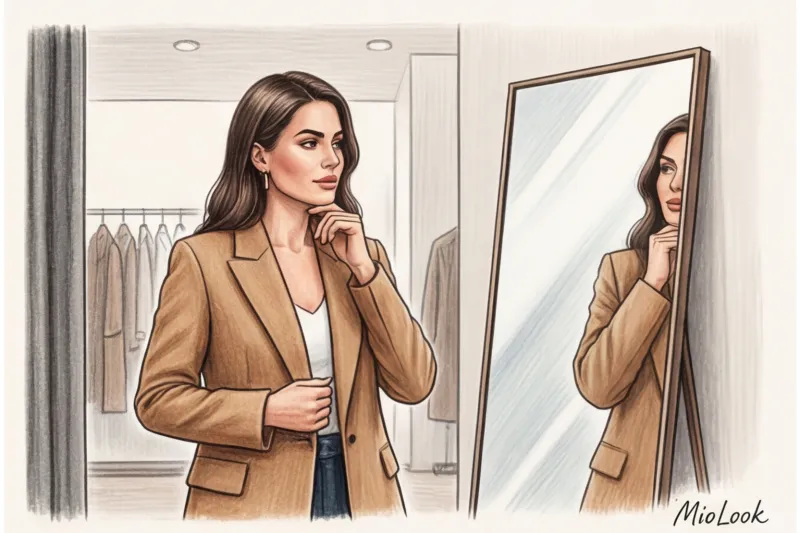
Architectural cutting in the mass market: what to look for?
When you enter a mass-market store, turn on your "X-ray vision." Ignore the prints. Look for density.
- Look for a dense crepe or wool blend: Even high-quality synthetics (for example, dense polyester with viscose), if it is heavy and holds its shape, will look many times more expensive than thin, translucent natural linen, which wrinkles at the first glance.
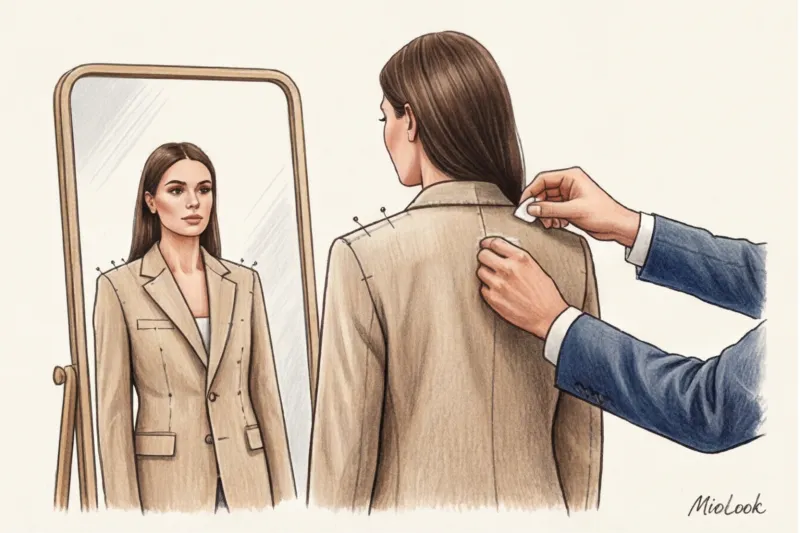
- Check the geometry: In the fitting room, look at the shoulder line. The shoulder seam should lie flat on the boning, the darts should point directly to the center of the chest, and the side seams should not be pushed forward.
- Avoid flimsy knits: This is my strictest rule. Cheap, thin knitwear (especially acrylic) is impossible to salvage. It clings to every fold of the body, reveals the texture of the underwear, and starts to pill by the third day. It's better to buy one thick cotton oxford shirt than three viscose sweaters.
Atelier Magic: How Fit Increases the Price of a Dress by 10 Times
And now, the biggest insider secret I share only with my clients. Mass-market clothes are tailored for an average, non-existent figure. A garment starts to look like a million dollars when it hugs yours proportions.
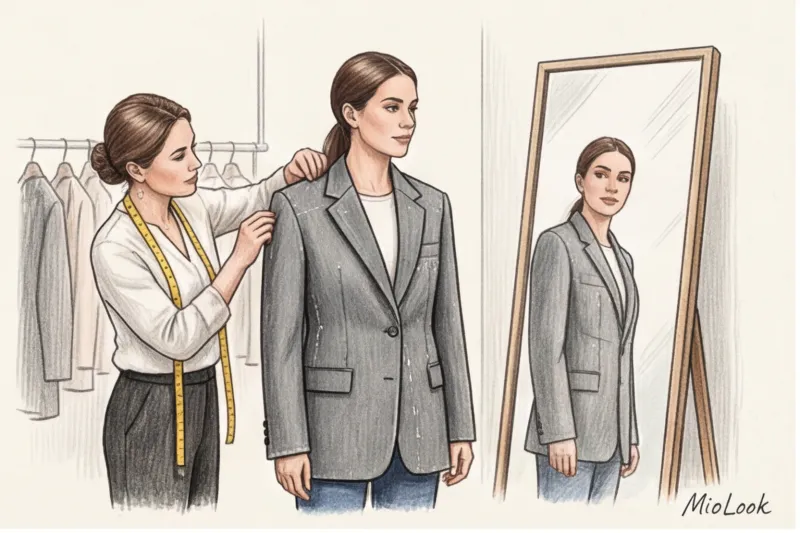
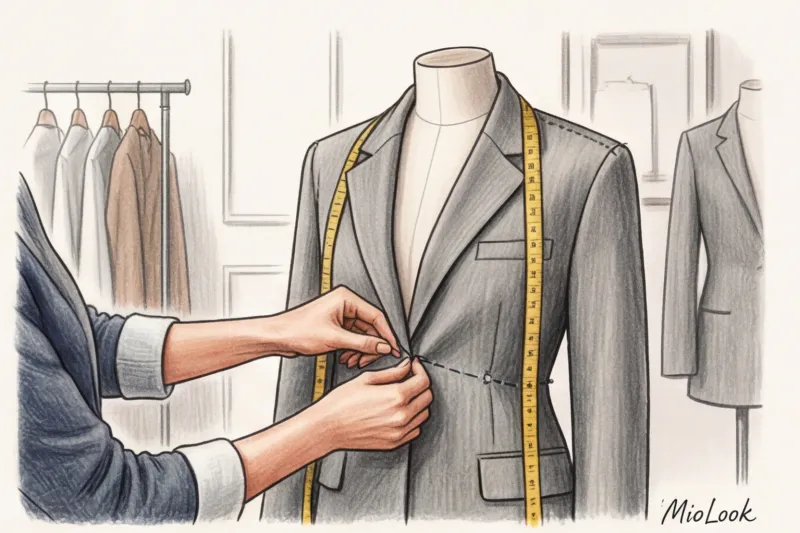
I always recommend buying structured items (jackets, trousers, coats) one size larger and taking them to a good tailor.
"The difference between mass-market and luxury clothing often lies in 1.5 centimeters of sleeve length. If a shirt cuff peeks out 1.5-2 centimeters from under a jacket sleeve, the look is instantly considered bespoke."
What always needs to be re-stitched:
- Sleeve length: Shorten the jacket sleeve to the anatomical bone on the wrist.
- Waist fit: Taper the back of the jacket to eliminate the bubble above the waist.
- Trouser length: Hem your trousers precisely to the heel height or flat sole of your specific pair of shoes. Trousers that skim the pavement or awkwardly expose the ankle are a style killer.
Let's calculate the cost: you buy a jacket at Zara for €60. You spend €20 at the tailor for a perfect waist fit and sleeve shortening. The total is €80—but the visual effect and fit look like a €500 Max Mara jacket.
Your perfect look starts here
Join thousands of users who look flawless every day with MioLook. Take a photo of your belongings, and AI will create a capsule collection of them.
Get access — €0.99 onceTextures that deceive the eye (and wallet)
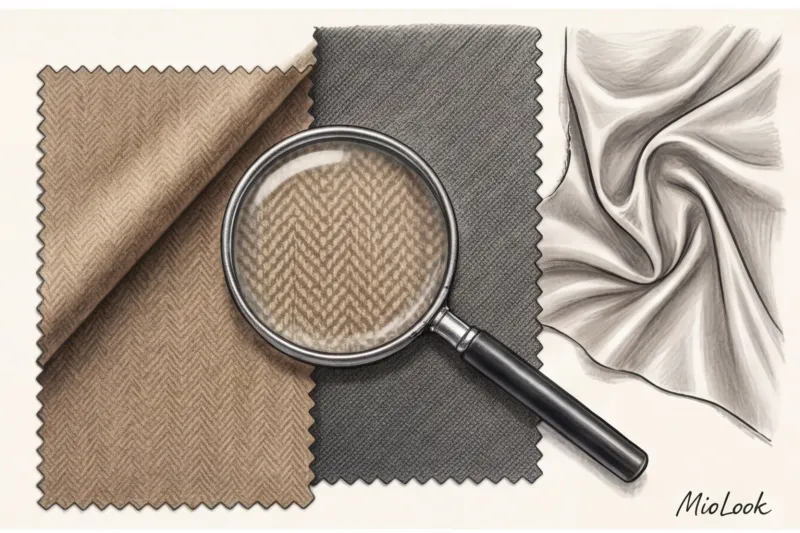
My personal secret to Mediterranean styling: Spanish and Italian women love to play with contrasting textures. We don't spend fortunes on silk, but we masterfully combine smooth and rough.
The rule is: pairing a matte, dense fabric with a slight sheen automatically elevates the look. Pair a chunky sweater in a thick, textured yarn with a smooth faux leather skirt (which often looks better than real leather in mass-market stores). This pairing will deceive any aesthete.
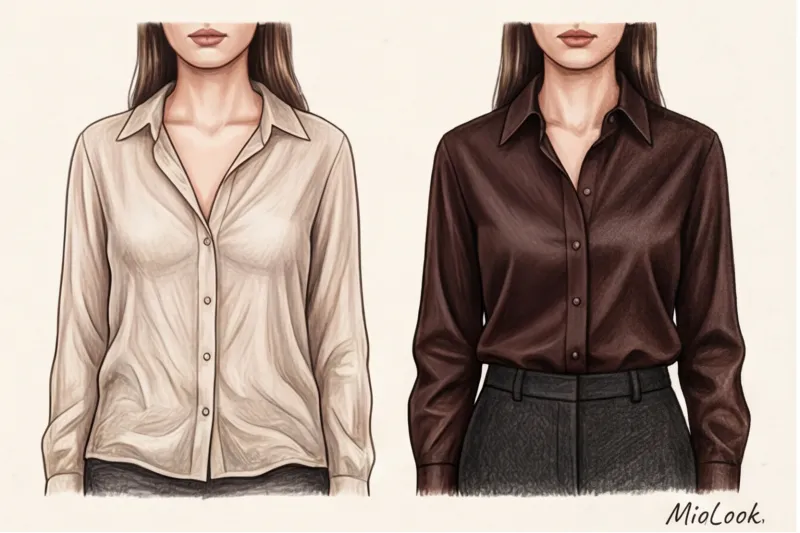
Palette of wealth. Color is a powerful tool. There are shades that always look bad in cheap versions: snow-white (often veers toward blue) and jet black (fades after the first wash). Replace them with the colors of old money: deep graphite, ecru (the color of undyed wool), rich camel, chocolate and deep emerald A €40 ecru sweater will always look three times more expensive than its crisp white counterpart.
Traitorous fabrics: Avoid thin, shiny polyester (it attracts static and creates a cheap, reflective effect), acrylic sweaters, and "glass" lace. If your budget is limited, choose heavyweight cotton (180 g/m² and above), unblemished denim, and heavyweight viscose with 5% elastane.
Fittings and details: the main traitors of budget items
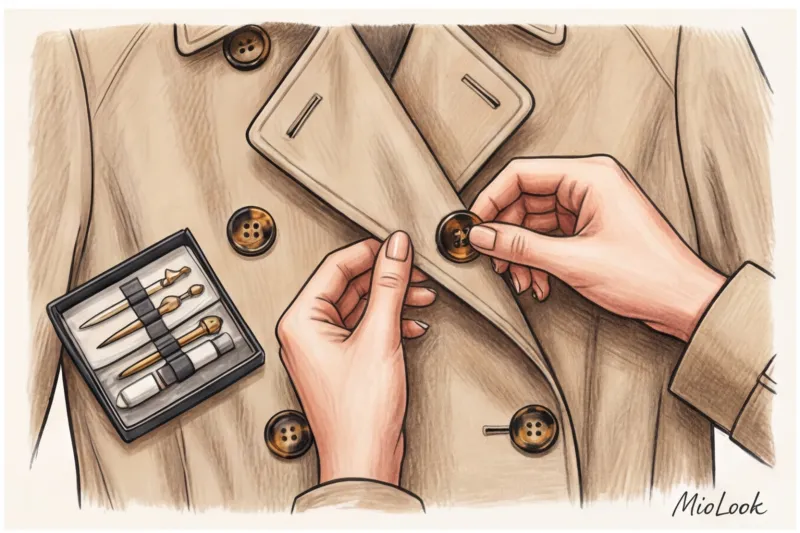
Even if you find the perfect double-breasted coat made of good wool at a budget store, its origins will be immediately revealed by the buttons. Cheap, shiny plastic with scratches or fake gold leaf screams low price.
My first step after purchasing any high-street item is to grab a pair of scissors and cut off the original hardware.
Head to specialty fabric stores or vintage markets. Buy a set of horn, metal (matte, not glossy!), or fabric- or leather-covered buttons. It's an investment of about €5-€10, but your €120 coat will instantly move into the "€800 and up" category.
The same goes for belts. Throw away those flimsy fabric belts that come with dresses or trench coats. They bunch up and cheapen the silhouette. Replace them with a quality leather belt with a simple buckle—this will create the right horizontal line and add a touch of toughness to the look.
Budget allocation: where to invest and where to save?
One of the most counterintuitive pieces of advice I give is to avoid buying expensive basic t-shirts. A €100 t-shirt from a famous designer will fade, stretch out at the neck, and get dirty just as quickly as a quality €15 t-shirt from Uniqlo.
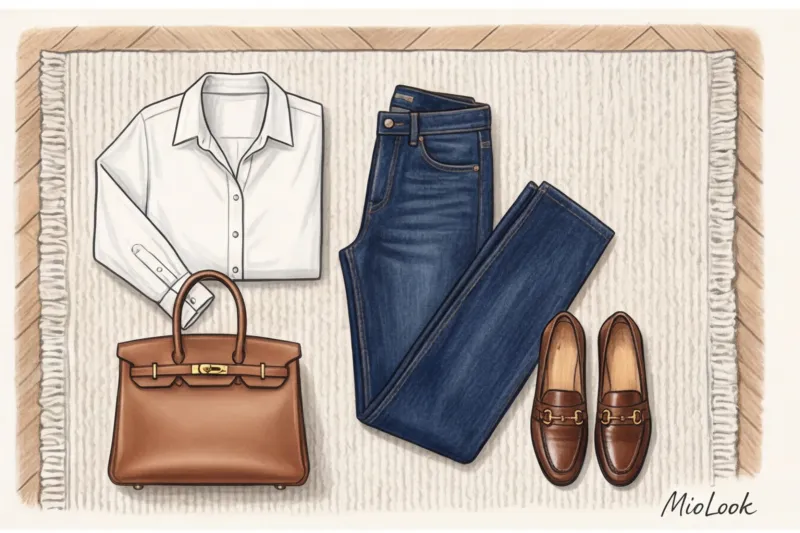
The secret lies in the concept High-Low dressing (a mix of luxury and mass-market). A crisp, perfectly ironed white T-shirt for €10 paired with a structured vintage jacket and good leather shoes looks stunning. The base layer (T-shirts, turtlenecks, tank tops) is the "canvas." It just needs to be crisp, clean, and opaque.
But here's what you shouldn't skimp on (this rule does NOT apply here):
- Shoes: They should have a rigid frame. Soft, floppy ballet flats made of thin faux leather will ruin your gait and look. Invest in loafers or ankle boots made of thick leather (€100 to €250) that hold the shape of the toe and heel.
- Bags: Forget soft bags with lots of zippers and tassels. Opt for geometrically shaped, framed bags made of stiff leather or high-quality faux leather without shiny gold hardware.
- Outerwear: A coat is a statement of your style. Look for options with at least 60% wool content.
Ready to get started?
Try the MioLook plan for free—no commitments required. Create your first perfect capsule today.
Get access — €0.99 onceIsabella's Checklist: 5 Strict Rules for Smart Shopping
Take a screenshot of this list and open it every time you're at the checkout. It's your bulletproof vest against impulsive spending.
- Crease test: Squeeze the edge of the fabric in your fist for 10 seconds and release. If it's still wrinkled, return it to the hanger. You don't want to look unkempt 20 minutes after leaving the house.
- Transmission test: Lift up an item (especially shirts and pants) and hold it up to a store light. If you can clearly see the outline of your hand, the fabric is too thin and will reveal the contours of your underwear.
- Analysis of the inside: An expensive item is beautiful from the inside out. Check the seams: they should be even, ideally bound with binding (closed seams), with no loose threads or tightness.
- The rule of three images: Ask yourself, "What THREE items from my current closet could I wear this with tomorrow?" If you have to buy new pants to wear this top, it's a bad investment.
- Refusal of compromise: Never buy something if it's "almost" perfect. "It's a little tight, but I'll lose weight," "It's a weird color, but I got a 70% discount." These things become dead weight.
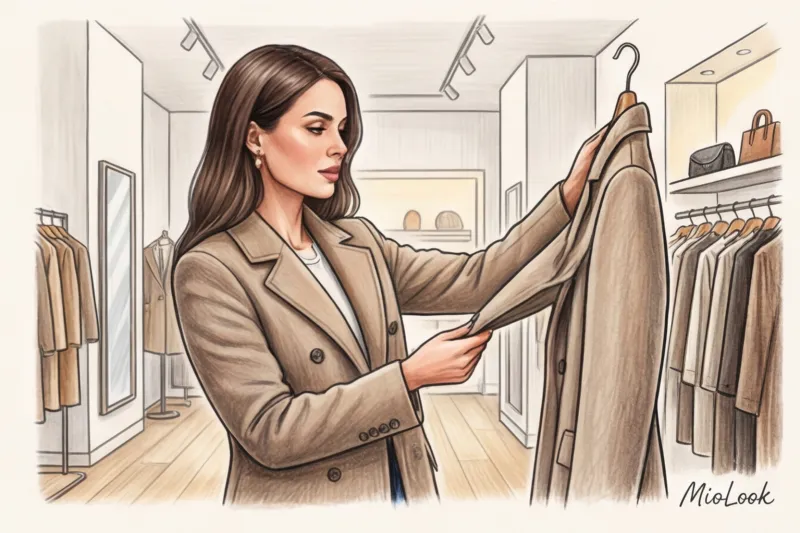
Summary: Your Step-by-Step Plan to a Status Wardrobe
Remember: luxury doesn't mean zeros on the price tag. True luxury is about well-groomed clothes, precision cuts, and obsessive attention to detail.
Your first step today is to take stock of your wardrobe. Put aside those thin, pilling knits, cut the plastic buttons off old coats, and take that jacket that's been collecting dust because of its long sleeves to a tailor.
The second step is to create a conscious shopping list. Look for density, ignore fleeting trends, and always keep your tailoring budget in mind. Because a woman who knows her proportions and wears perfectly fitting clothes exudes a confidence that can't be bought in any boutique.