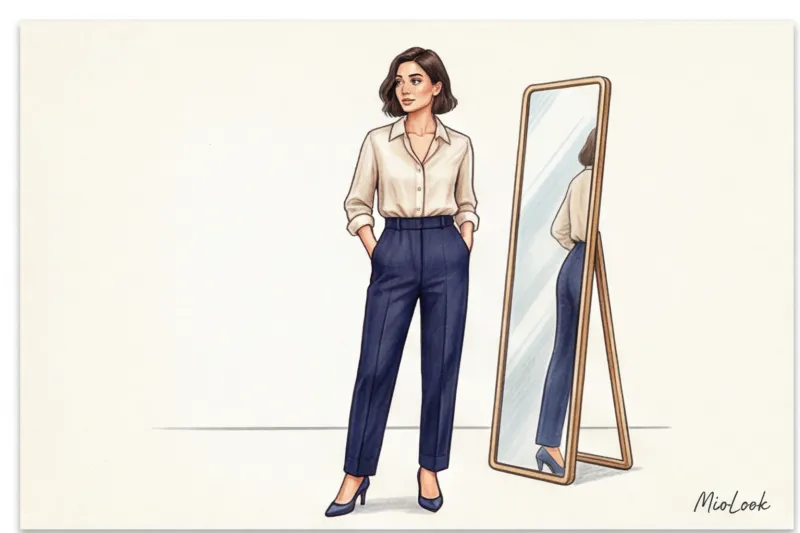
I vividly remember a rainy morning in Paris in 2018. I was standing outside the Givenchy showroom, waiting for the show, when a group of editors from Japanese Vogue walked past. None of them were taller than 5'10" or 5'5", but they looked absolutely monumental. They were wearing complex, asymmetrical coats over long shirts and wide trousers. It was then that I realized: layering for petite women isn't taboo, but a powerful tool for optical illusions.
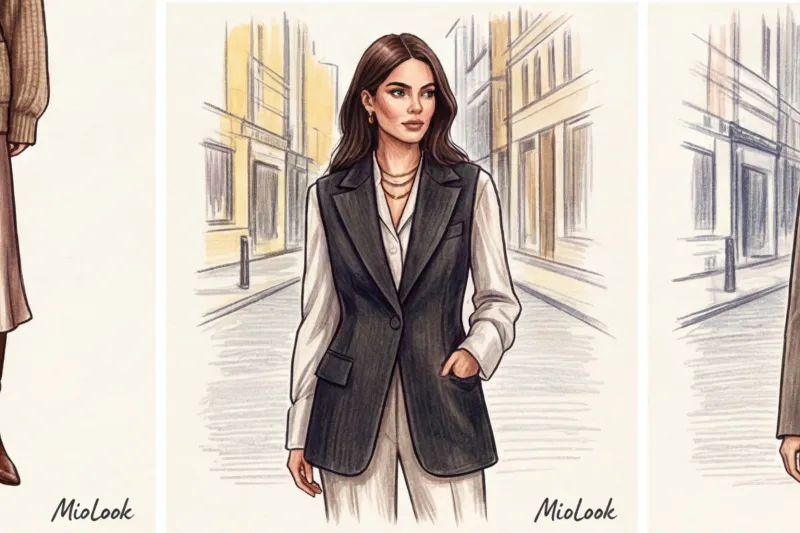
We talked in more detail about the basic principles of creating complex combinations in our The Complete Guide to Layering: How to Create Stylish Looks But today we'll talk about a specific geometry—how to outsmart gravity and visually add those precious centimeters, even if you prefer flat shoes.
Layering for Short Girls: Breaking the Biggest Stereotype
You've probably read hundreds of times the glossy advice from the 2000s: "Thumbelinas should avoid volume! Wear everything that fits your figure, otherwise you'll drown in fabric." As a practicing stylist, I officially declare: this advice is hopelessly outdated and often betrays a lack of modern taste.
The biggest mistake petite women make is believing that tight clothing makes them look taller. In reality, tight clothing ruthlessly outlines your actual skeleton and shows your height down to the millimeter. But architectural layering blurs these boundaries, allowing you to "draw" new proportions.
Layering has long since evolved from a utilitarian way to stay warm into a smart styling tool. We no longer throw on a sweater under a jacket simply for warmth. We create vertical cuts, direct attention, and shape the silhouette.
The Inner Column Rule: The Foundation of a Stretching Silhouette
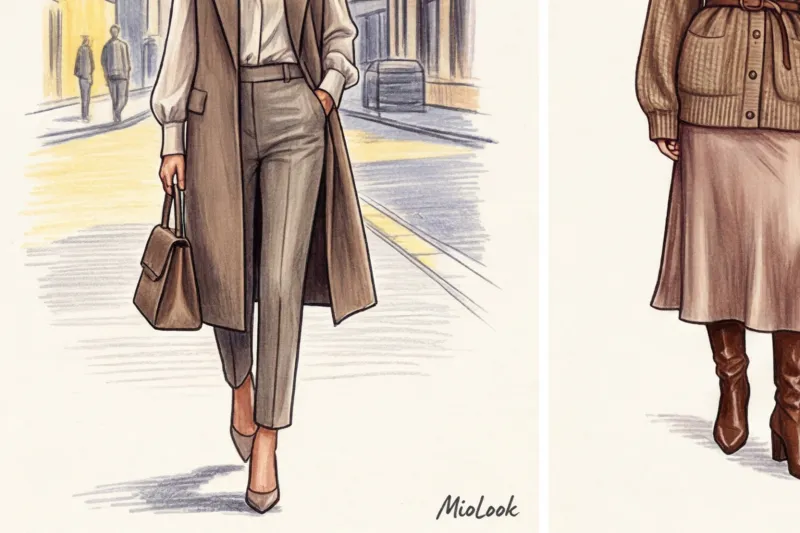
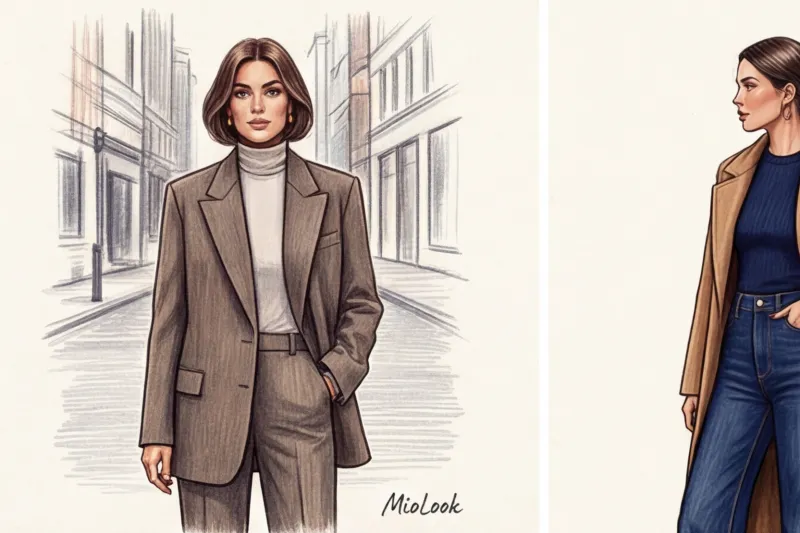
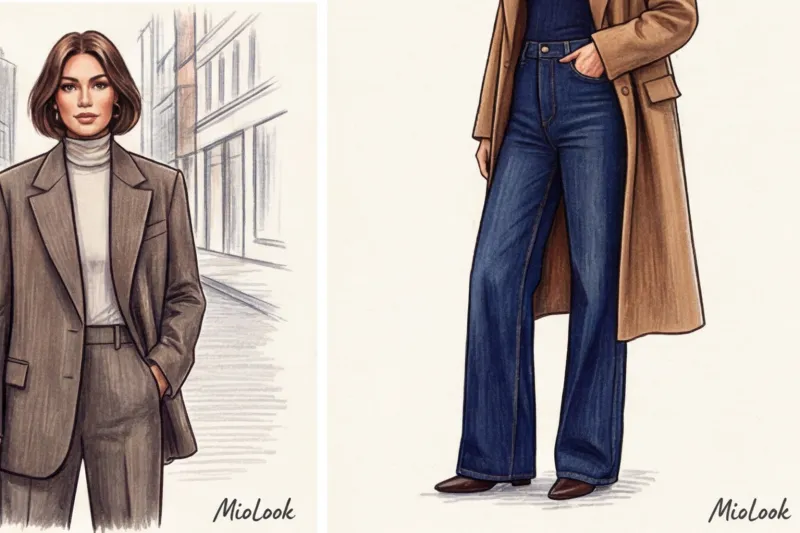
The most powerful technique in a stylist's arsenal when working with a petite figure is the so-called "inner column." The idea is simple: wear a top and bottoms (for example, a turtleneck and pants) in the same color or very similar tones, then layer a contrasting outer layer over it, leaving it unbuttoned.
How does this work physiologically? According to research in visual psychology, the human eye reads a continuous vertical line 20% faster than a broken line. The brain perceives this rapid, sweeping glance as a signal that the object is long and tall.
An unbuttoned coat or jacket acts as a rigid frame. It literally "cuts off" your bulk at the sides, leaving only a narrow stripe of color visible down the center. And you don't have to spend a fortune here—even a basic trench coat or coat from a mass-market brand like COS or Massimo Dutti in the €150–€250 range will do the trick if it's cut correctly.
Playing with texture: replacing color contrast with tactile contrast
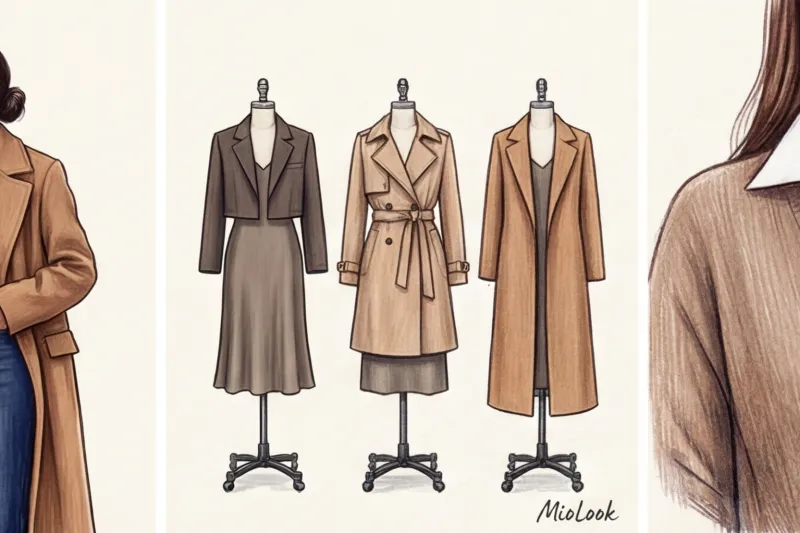
My clients often ask, "If I wear all black or all beige under a coat, will it be boring?" Yes, if the pieces are made of the same matte fabric. The secret to intelligent fashion lies in tactile contrast.
The WGSN trend report for 2024 notes a steady shift away from aggressive color blocking and toward complex textured combinations. Try pairing a sleek silk skirt with a fluffy mohair sweater, or matte leather pants with fine cashmere. Textures draw the eye, giving the look a premium feel.
Access to MioLook for €0.99 — one-time payment
A smart AI stylist will select the perfect look based on your proportions and favorite items.
Get access — €0.99 onceLength Architecture: Layering for a Body Shape Up to 160cm
Style is mathematics. Prestigious design schools like Central Saint Martins rely on the golden ratio (1/3 to 2/3) when constructing silhouettes. If you visually divide your figure in half (1/2 to 1/2), you'll "cut" your height and appear shorter.
When layering, the hem difference rule comes into play. The ideal distance between the edge of the top layer (such as a coat) and the bottom layer (a skirt or dress) should be 5–7 centimeters.
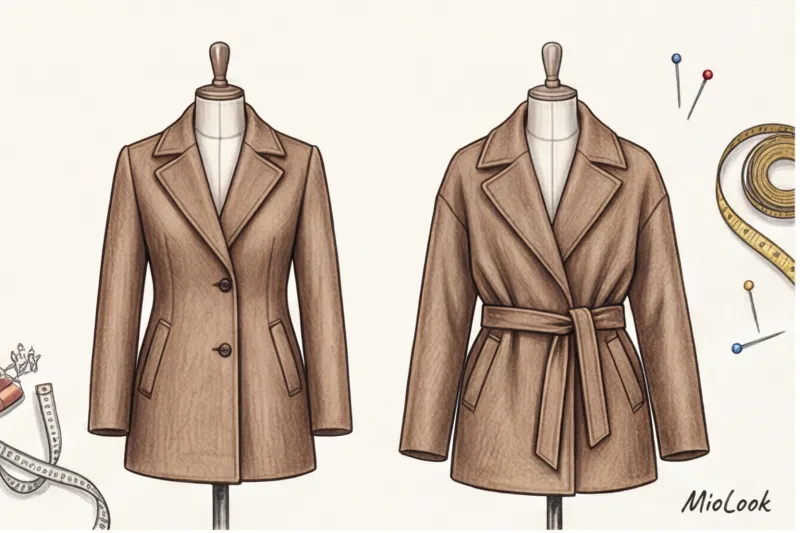
We were once choosing a wardrobe for my client Anna (she's 156 cm tall). She bought a stunning coat that finished exactly the same as her favorite midi dress. In the mirror, it looked heavy and squat. We shortened the coat at the tailor's by just 5 centimeters. This created a dynamic, airy look, and Anna visually lengthened by at least half a size.
Danger zone: where the top layer should not end
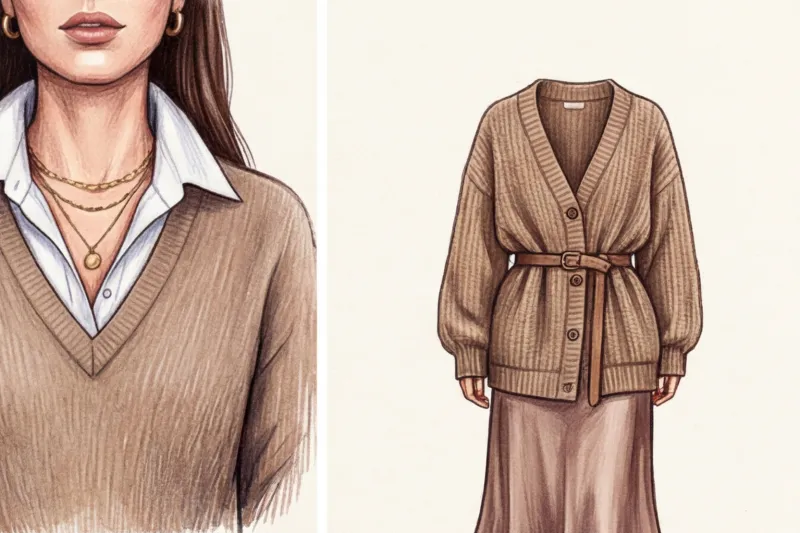
Every rule has its exceptions, and here I must point out when layering does NOT work. It will ruin your proportions if the hem of a long jacket, sweater, or coat ends at the widest part of your body.
No horizontal lines across the widest part of your hips or mid-calf. Either higher (at the narrowest part of your thighs) or lower (fading into a maxi). A horizontal line across the widest part makes you look squat.
Focus on the portrait area: making the eye slide upwards
Another professional trick is the "vector upward" principle. If you maximize detail and layers in the face and neck area, your interviewer won't judge your height; their gaze simply won't drop below your chest.
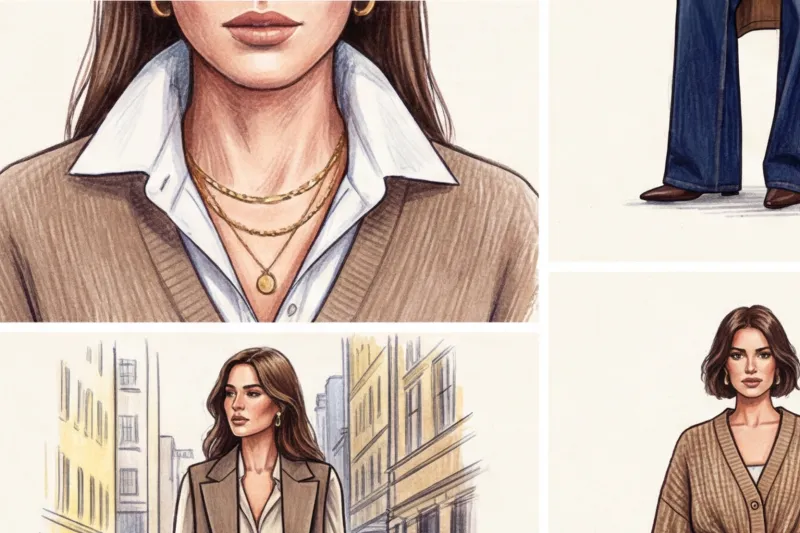
I love the double-collar hack. Wear a thin turtleneck (180 g/m² cotton is perfect) and a heavy shirt over it, leaving the top three buttons undone. This creates a double V-shape that beautifully elongates your neck.
Add proportionate jewelry: a thin but long pendant or delicate earrings. The key word is proportionate. Oversized plastron necklaces on a petite girl will look like you borrowed them from your mom.
Oversized Layering: A Guide to Taming Volume
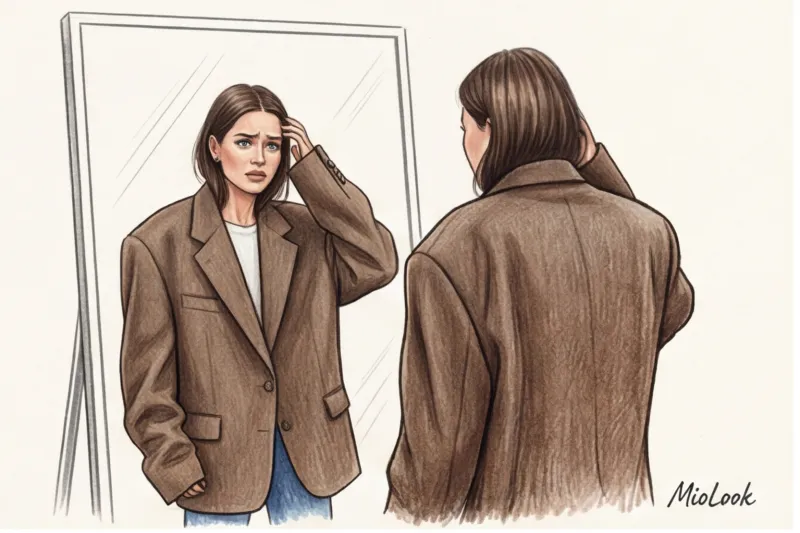
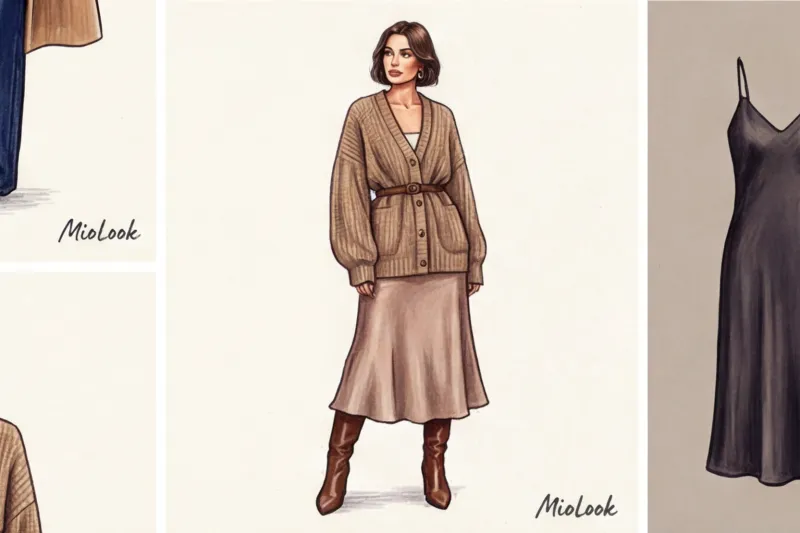
Can someone who's 150 cm tall wear oversized cardigans and voluminous jackets in layers? Yes. But there's a difference between "architectural" oversize and "shapeless" oversize.
A common beginner mistake is to layer a bulky, soft sweater over a loose, soft dress and then throw a soft, cocoon-like cardigan on top. You'll end up looking like a haystack. If you're going for volume, it needs to have a frame. Ideally, the outer layer should hold its shape (for example, a coat with a defined shoulder line).
Always use the "assemblage point" technique. When layering heavily, show off your skin's most delicate features. Roll up the sleeves of a bulky sweater to reveal delicate wrists. Wear pointed-toe shoes to highlight your graceful ankles. Pointed-toe ankle boots are a surefire way to visually elongate your legs.
Stylist Checklist: Creating a Layered Look
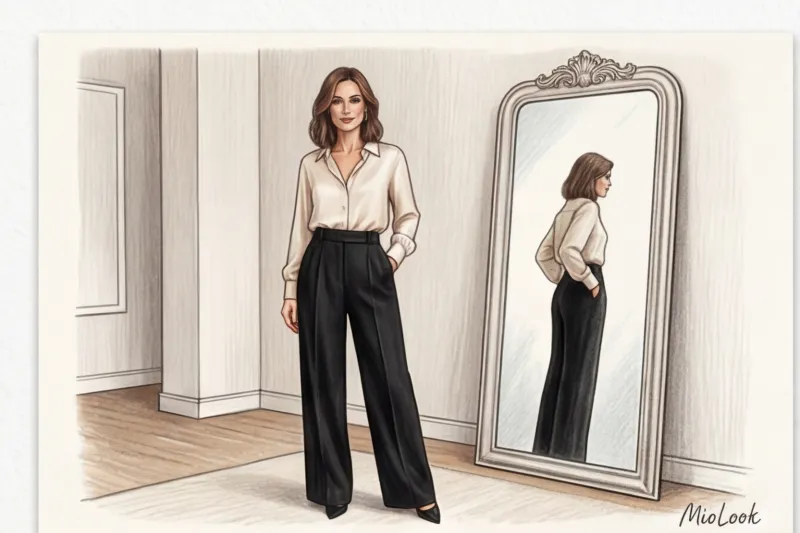
It's time to move from theory to practice. If you're standing in front of a mirror and unsure about your image, run it through this algorithm:
- We are forming a base. Create a narrow color vertical from the bottom layers (top and pants/skirt).
- Adding a frame. Throw on a top layer in a contrasting texture. Be sure to leave it unbuttoned.
- Let's check the math of lengths. Make sure the edges of the garment do not end in a straight line or cut across the widest part of your calves or thighs.
- We are looking for the “assemblage point”. Show off your wrists (by rolling up your sleeves) or accentuate your waist with a thin leather belt.
- Vector up. Make sure there's an interesting detail around the face - a shirt collar underneath a jumper, a bright scarf or pendant.
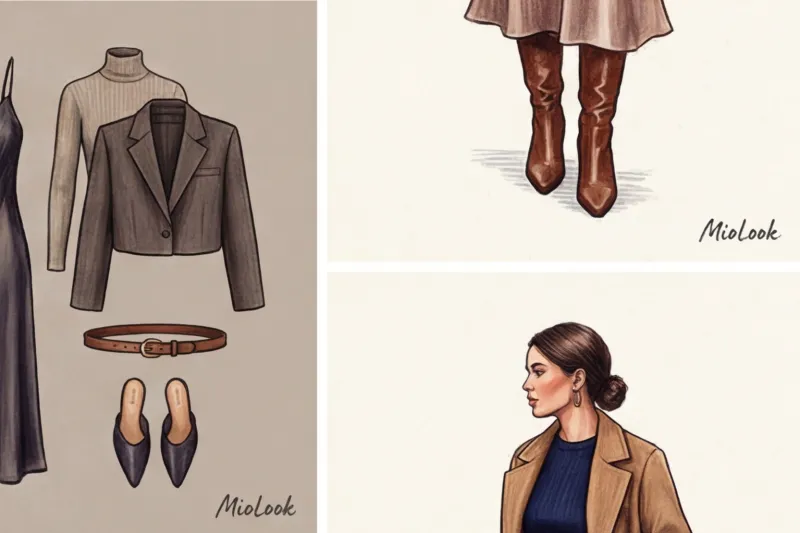
Your perfect look starts here
Join thousands of users who look flawless every day with AI-powered advice from MioLook.
Get access — €0.99 onceConclusion: A smart wardrobe without looking back at centimeters
Layering isn't the preserve of tall Scandinavian runway models. It's your personal game of proportions, where you set the rules. Once you master the geometry of textures and lengths, you'll understand that height is simply a number on your passport, not a style limitation.
In the appendix MioLook The built-in smart wardrobe functionality will help you digitize your items and create those perfect outfits in just a couple of clicks, even before you open your closet.
Stop being afraid of volume. Start experimenting with unbuttoned coats over silk dresses and chunky sweaters over thin shirts. Create your own architectural masterpieces, and remember: the most beautiful height is the one you carry with confidence.