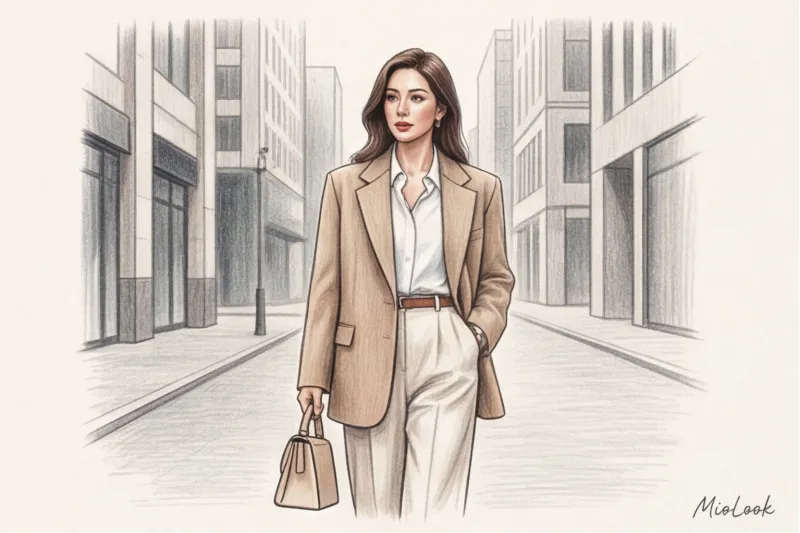
I remember a couple of years ago, a client came to me for a wardrobe review with a huge bag of clothes. She was in love with the style of Korean dramas and tried to recreate Park Min Young's looks from "What's Wrong with Secretary Kim?" by buying a dozen cheap blouses on marketplaces. The results were disappointing: the clothes were staticky, the seams were uneven after the first wash, and instead of elegant "quiet luxury," they looked like cheap cosplay. We threw out (or rather, recycled) almost everything, keeping only a few good trousers, and began building her wardrobe anew—focusing on cut architecture rather than quantity.
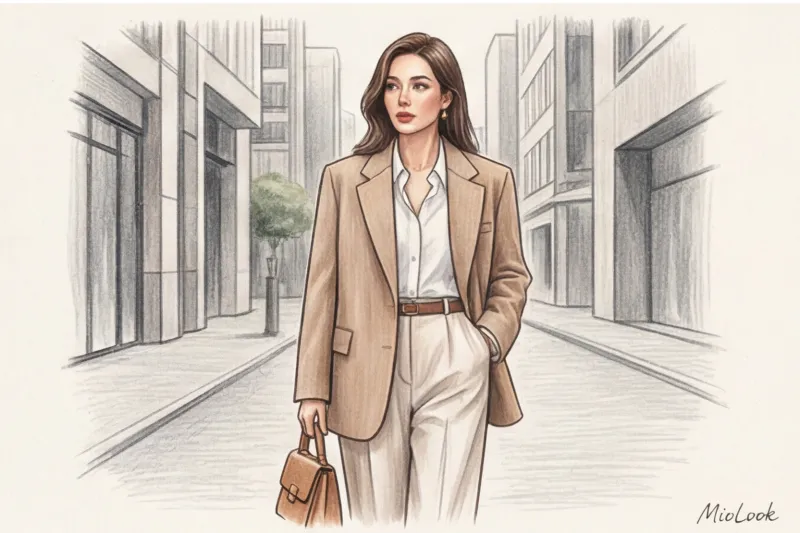
We discussed the phenomenon of this aesthetic's popularity in more detail in our complete guide: K-pop Fashion: How Korean Clothing Conquered the World But today, as a stylist and fabric expert, I want to explore the practical side of the matter. We won't be assembling a basket of throwaway pieces. We'll be breaking down the anatomy of Seoul chic so your wardrobe investment will pay off for years to come.
Anatomy of Korean Drama Style: Why Does It Look So Expensive?
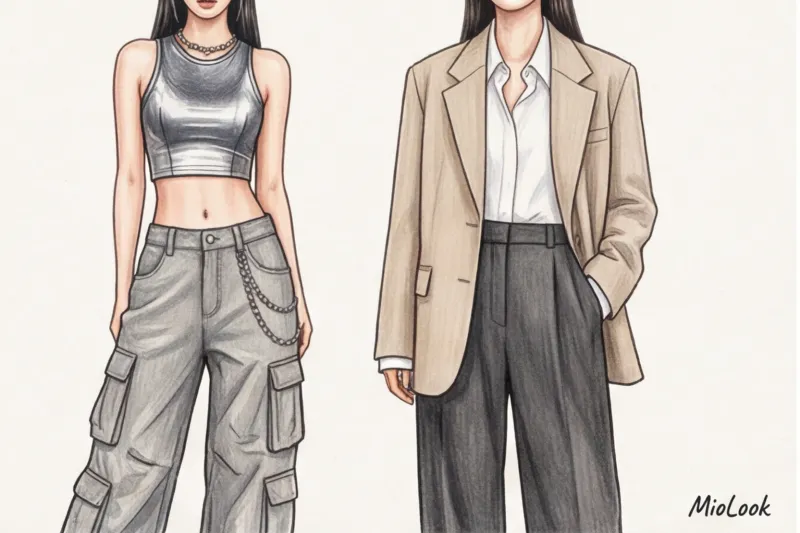
The secret to the "chaebol heiresses" on screen isn't brands with logos emblazoned across their chests. Their clothes look flawless on camera for two reasons. First, it's the magic of cinema: on-set stylists use double-sided tape to ensure collars fit perfectly and spend hours steaming every millimeter of fabric. Second—and most importantly—the entire aesthetic is built on a balance between radical oversize and a pronounced fragility of the figure.
In real life, we don't have a personal assistant with a steamer. Therefore, the visual value of your garment depends 70% on the fabric density (measured in GSM—grams per square meter) and the quality of the hidden seams. A basic T-shirt for a proper Korean layered look should have a density of at least 180–200 GSM. Anything thinner will lose its shape and ruin the overall silhouette.
Your perfect look starts here
Join thousands of users who look flawless every day with MioLook. A smart AI stylist will help you digitalize your clothes.
Get access — €0.99 onceToday in South Korea the concept is actively developing Jeong-jang (정장) is a modern formal style adapted for smart casual. According to the Global Fashion Agenda (2023) report on clothing longevity, premium Korean brands are currently setting the global trend for slow fashion, emphasizing items that last for decades rather than being consigned to landfill after a season.
K-Drama Wardrobe Essentials: Building Your Basics
To assemble a functional wardrobe, you need to rely on the principle cost per wear (price per item). It's better to invest in one item made of high-quality material than to buy five synthetic knockoffs that don't keep you warm or breathe.
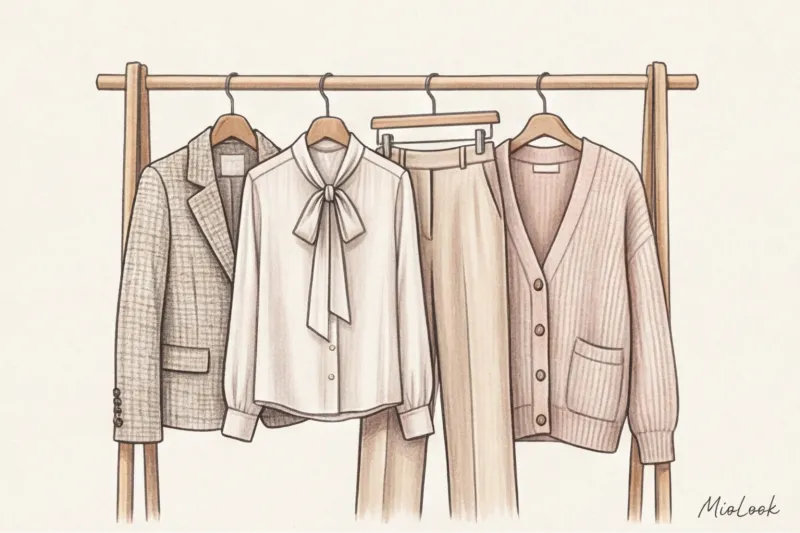
Structured jackets and oversized coats
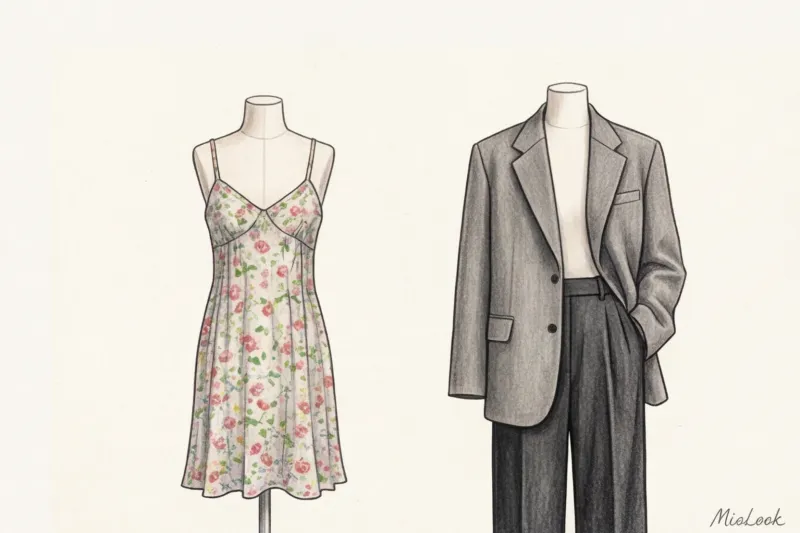
The Korean jacket cut is radically different from the classic European or Italian style. Here we see a dropped but firmly defined shoulder line, elongated sleeves (often covering half the wrist), and a straight, boxy silhouette.
Invest in a dense wool blend. It should contain at least 60% virgin wool. 100% acrylic jackets are a waste of money: they quickly pill and don't hold their architectural shape. At a mid-market store (like COS or Massimo Dutti), a good structured jacket will cost between €150 and €250, making it a worthwhile investment.
Romantic blouses and shirts of the right cut
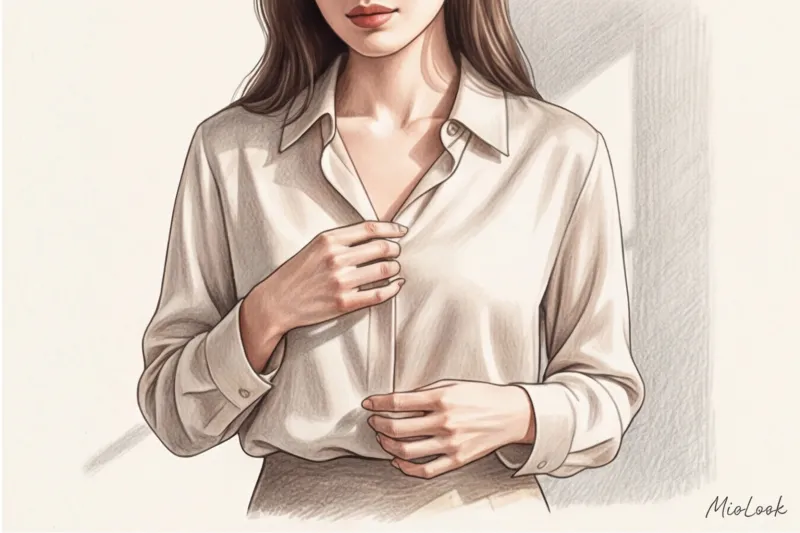
A classic drama piece is the ascot collar blouse with voluminous cuffs. This detail adds just the right touch of fragility under a rugged men's jacket.
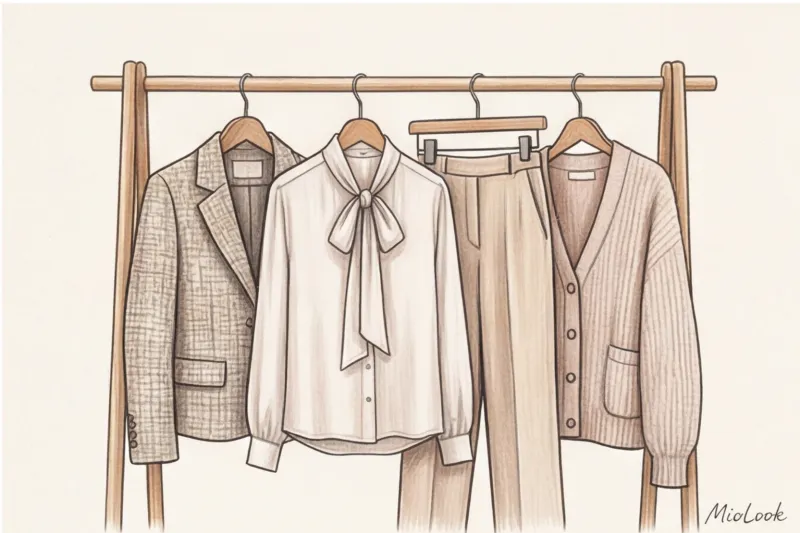
But the material is crucial here. Cheap polyester is shiny, creaky, and makes you sweat. Look for natural silk, organic cotton, or high-quality viscose (cupro, tencel, modal). Cupro, for example, is often called "vegan silk"—it flows incredibly beautifully, creating that soft drape across the chest.
High-density knitwear
Korean layering is unthinkable without textured cardigans, vests, and thin turtlenecks. The main rule: no fluffy, cheap knits that leave lint on other clothes. Choose dense merino or cashmere blend knits. They look elegant and, importantly for the environment, don't release microplastics into wastewater when washed.
The Illusion of "Quiet Luxury": How to Choose Fabrics Like an Expert
As a textile expert, I always teach my clients the simple "fist test" when shopping. Squeeze the edge of the fabric in your palm for 10 seconds, then release. If the fabric remains wrinkled, like a sheet of paper, leave it in the store. A high-quality wool blend or a good Tencel will straighten out almost instantly thanks to the elasticity of the fibers.
Ready to get started?
Try MioLook's free plan—no commitments required. Upload your items and let the AI create stylish outfits.
Get access — €0.99 onceIn 2024, research by analytics platform Lyst showed a record surge in searches for "structured oversized jackets" following the release of hit Korean dramas. But the mass market responded by releasing tons of clothing made from low-quality tweed. Cheap tweed is expensive and adds visual bulk where it's not needed. Expensive tweed (or its high-quality EcoVero recycled cotton and viscose equivalent) is flexible—it falls heavily and beautifully, enveloping the figure.
Color palette: Seoul pastels and deep monochrome
Have you noticed that K-Drama heroines rarely look colorful? The secret lies in low-contrast combinations. Korean women rarely use harsh color blocking (for example, fuchsia and emerald). The entire palette is built on nuances.
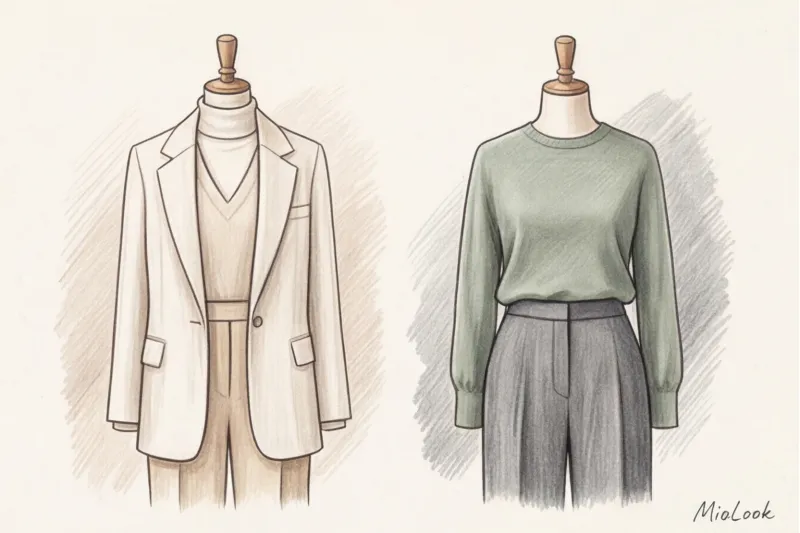
The foundation of a long-lasting wardrobe is ecru (not a crisp white, but a shade of unbleached wool), graphite, camel, and deep navy blue. Pastel shades like sage, butter, and dusty rose are layered on this base. According to the Pantone Color Institute, these complex, dusty tones are subconsciously perceived as more "expensive."
"When choosing a pastel, be sure to consider the temperature of your skin's undertone. If you have a cool undertone, peach will make your face look tired. Replace it with icy lavender or dusty blue."
The biggest mistake K-fashion fans make: the "cheap cosplay" trap
And now for the most important thing. Blindly copying images from the screen using ultra-fast fashion is the main style trap. Trying to put together a look "like the heroine's" on a marketplace for €30 kills the whole idea at the root.
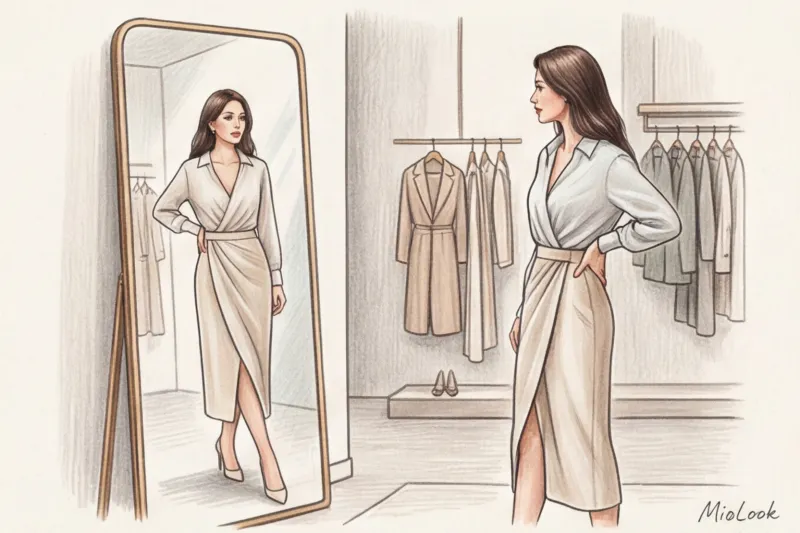
This is a phenomenon. fast-fashion fatigue (fatigue with fast fashion). Disposable items rob you of your individuality. Here's my counterintuitive advice: If you're on a budget, don't buy five acrylic cardigans in different pastel shades. Buy one perfect men's jacket at a thrift store or vintage market (you can often find amazing Italian wool there for €40-60) and have it tailored to fit the sleeves. One perfect piece will make the whole look complete.
A Drama Heroine-Style Capsule Wardrobe: A 12-Item Checklist
Let's apply some simple wardrobe math. You don't need a cluttered closet to look different every day. Here's the formula for a 12-piece mini capsule wardrobe that will give you over 30 combinations:
- Top (4): White cupro blouse with a bow, basic T-shirt made of thick cotton (200 GSM), merino turtleneck, voluminous structured jacket (wool).
- Bottom (3): Wide-leg trousers with pleats at the waist (darts), straight-leg dark blue jeans without fraying, satin midi skirt cut on the bias.
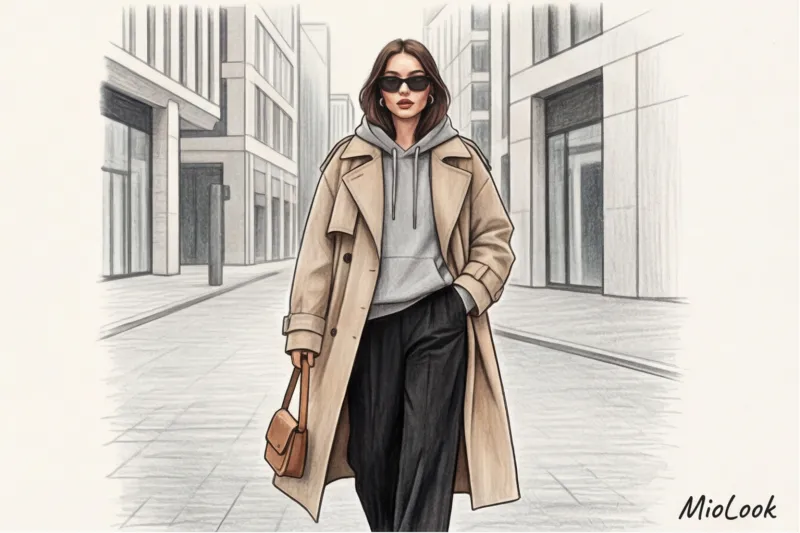
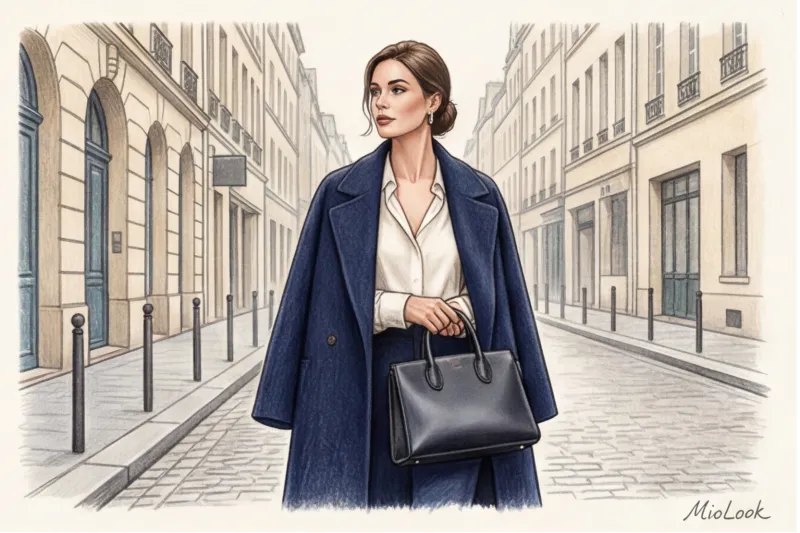
- Outerwear (2): Long oversized trench coat made of gabardine, a classic straight-cut coat.
- Shoes (2): Elegant pointed-toe ballet flats (or Mary Janes), minimalist loafers with a stiff sole.
- Bag (1): A structured baguette bag with a rigid shape and no active fittings.
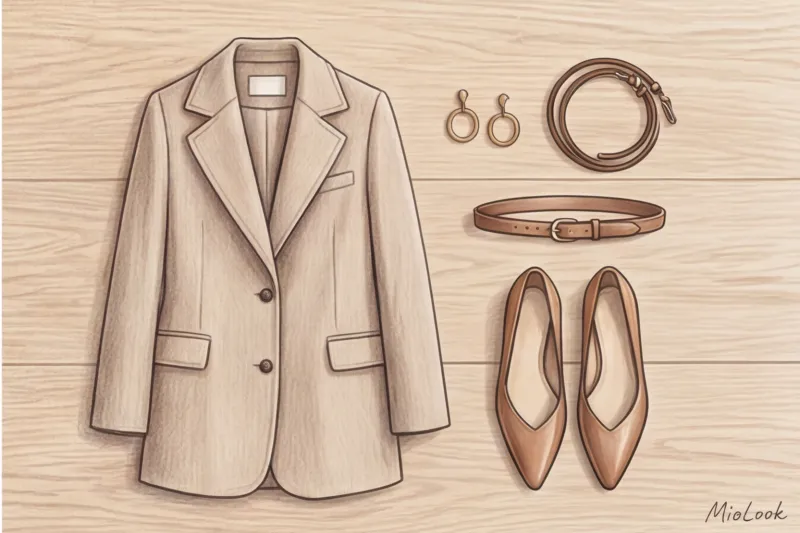
Add minimalist accessories to this: a strand of small pearls, thin metal rings, and a watch on a leather strap. To avoid having to remember all these combinations, I recommend my clients digitize this capsule collection. This is perfect for this. MioLook's smart wardrobe feature — the app will automatically suggest how to mix these 12 things for the office or a date.
Integration into real life: from a strict office to a business event
K-Drama style fits perfectly with European dress codes. For an interview at an IT company (where formal suits are not favored, but a well-put-together look is essential), a combination of wide-leg trousers, a basic T-shirt, and a textured cardigan draped over the shoulders is ideal.
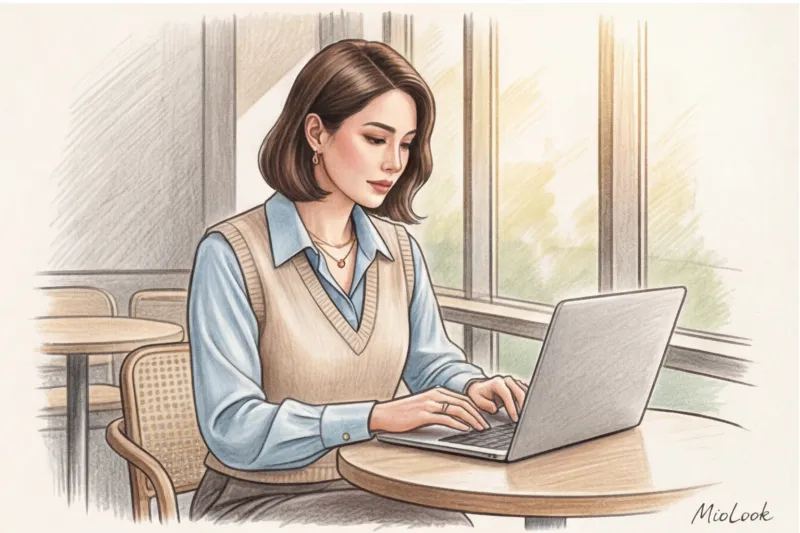
But I'll be honest: This style doesn't always work. The main physical limitation of Korean layering is outerwear in the harsh winter climate. You won't be able to comfortably squeeze a heavy, oversized, off-the-shoulder jacket under a tight, fitted wool coat or down jacket. You'll feel cramped, and the fabric will wrinkle. For such looks, you'll either need to buy a coat one size larger (with raglan sleeves) or remove the jacket before heading out into the cold.
Access to MioLook for €0.99 — one-time payment
A smart AI stylist will select the perfect look based on your appearance and the items you have.
Get access — €0.99 onceKorean style isn't a temporary TikTok trend. It's a global return to a high-quality, well-thought-out wardrobe, where form prevails over prints, and the texture of the fabric is more important than a brand logo. Start by taking inventory of what you already own, ruthlessly get rid of worn-out synthetics, and make your first conscious investment in the perfect jacket. This is how true elegance is born.