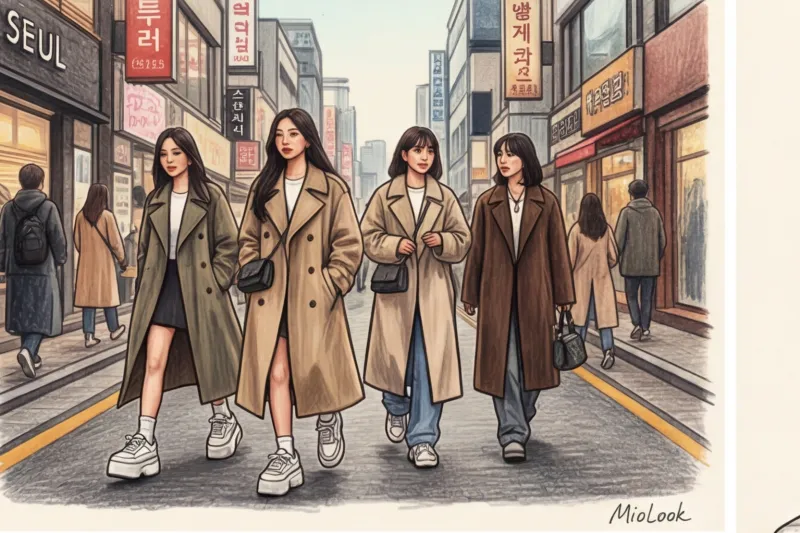
The Hallyu Phenomenon: How Korean Clothing Captured Global Street Style
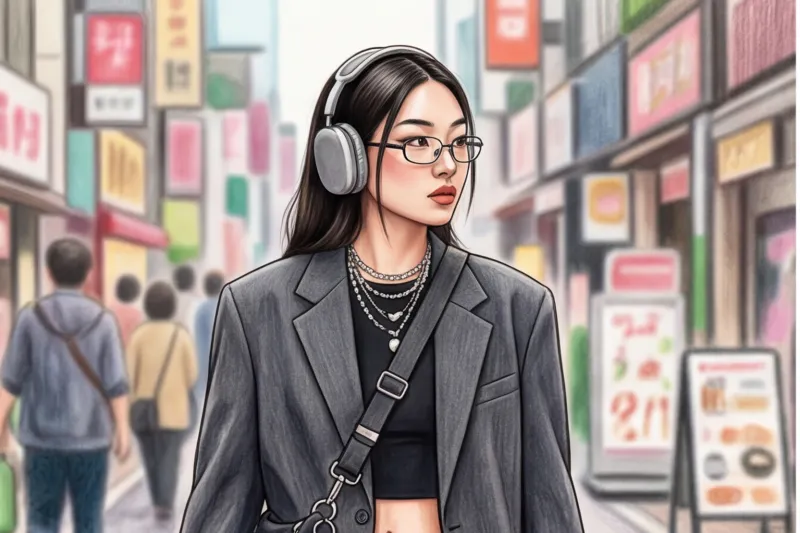
Remember the days when casual Parisian chic was the ultimate fashion dream? Forget it. Today, the rules of the game are dictated by a twenty-year-old girl from Seoul in baggy tube jeans, a micro-top, and chunky headphones. Modern Korean clothing style It's no longer just a niche hobby for drama-obsessed teenagers—it's literally rewritten the DNA of global street style.
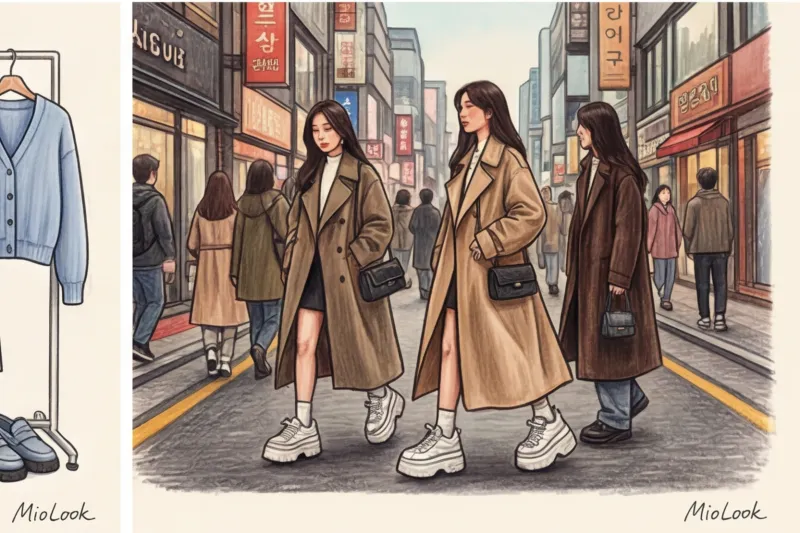
The Hallyu (Korean Wave) phenomenon, which began in the early 2000s as a localized boom in pop music and variety shows, has rapidly transformed into a global fashion dictatorship. In my 12 years of personal styling, I've never seen such a radical visual shift. Where once clients asked for a "Catherine Deneuve look," now mood boards are dominated by screenshots of Blackpink, BTS, and New Jeans performances.
Traditional European fashion houses were the first to sense the wind blowing and realized the key: old muses no longer sell. Consider the unprecedented strategic shift: titans like Chanel, Dior, and Celine are en masse abandoning their traditional Hollywood ambassadors in favor of K-pop idols. Why did Karl Lagerfeld, while still alive, make Jennie from Blackpink the face of Chanel, and Hedi Slimane choose Lisa for Celine? The answer lies in their phenomenal commercial success.
"Today, K-pop idols aren't just brand ambassadors; they're sell-out machines. Their influence on global retail exceeds that of any Hollywood blockbuster."
The numbers speak for themselves. According to Lyst's 2023 analytics report, the influence of Asian stars on sales is unprecedented. When Jennie showed up at the airport wearing Maison Margiela ballet flats, searches for that particular style soared 274% in just 24 hours. And when Park Jimin became Dior's global ambassador, LVMH's stock reached an all-time high. Idols don't just model clothes—they instantly monetize trends.
Amid this madness, Seoul Fashion Week is confidently pushing aside the classic "Big Four" (Paris, Milan, London, and New York). While European catwalks often offer measured, predictable commercialism, South Korea has become the world's premier testing ground for the boldest street style. It is on the streets of Seoul that formulas are being tested that will be copied by the global mass market a year later: deconstructed jackets (incidentally, this is where modern Corpcore style ), transparent fabrics over strict turtlenecks and technological, architectural oversized ones.
Asian street style masterfully plays with contrasting volumes and textures. Replicating this aesthetic without the risk of looking like you've thrown everything on at once requires a cool head of steam. I always recommend my clients use MioLook We upload basic items and practice our eye for detail. The app helps us create that sophisticated Seoul look from what's already hanging in our closet, seamlessly mixing strict classics with bold, sporty accents.
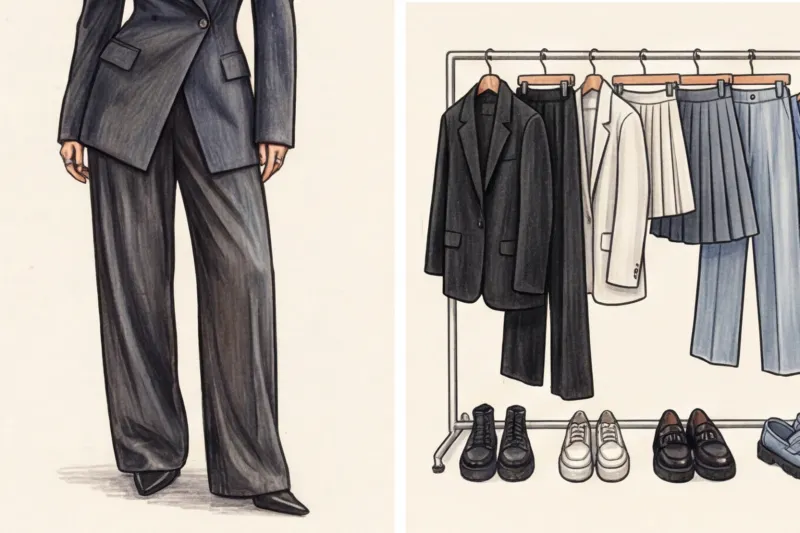
You don't need to spend thousands on luxury to rock Korean street style. The perfect tailored jacket or the perfect pair of wide-leg trousers can easily be found for €100–€250 from quality local brands. The key is to understand the architecture of the cut and not be afraid to break traditional proportions.
The Anatomy of K-Pop Idol Style: From Stage Costumes to Airport Fashion
Have you ever noticed how Western celebrities look at the airport? Most often, they're wearing baggy hoodies, their faces hidden behind sunglasses, and they clearly don't want to be photographed. Now watch any K-pop group arrive at Incheon International Airport. The difference is stark. This isn't just a transit area—it's Asia's main runway.
Phenomenon Airport Fashion Airport fashion arose out of sheer necessity. Idols are under constant scrutiny from the press (giants like Dispatch) and dedicated fansites (home-masters with professional optics). Fans dissect their looks in minutes, searching for every hairpin and lace in online stores. Therefore, stars have to walk a fine line: they need physical comfort for the upcoming 14-hour flight to Paris or New York, but they also need to look impeccable.
Let's be honest: that "casual" look with a coffee in hand is never accidental. The industry's biggest secret lies in the work of the visual directors at the largest agencies. They literally construct the public persona of each group member through their clothing. An idol's everyday wardrobe is a carefully calculated matrix of brands that must appear natural. If one singer is described as "daring and independent," her contracts will be with YSL or Celine, and her silhouettes will be replete with leather and sharp angles. Another member, with the image of an "elegant heiress," will be given strict tweed suits from Chanel or flowing silhouettes from Dior.
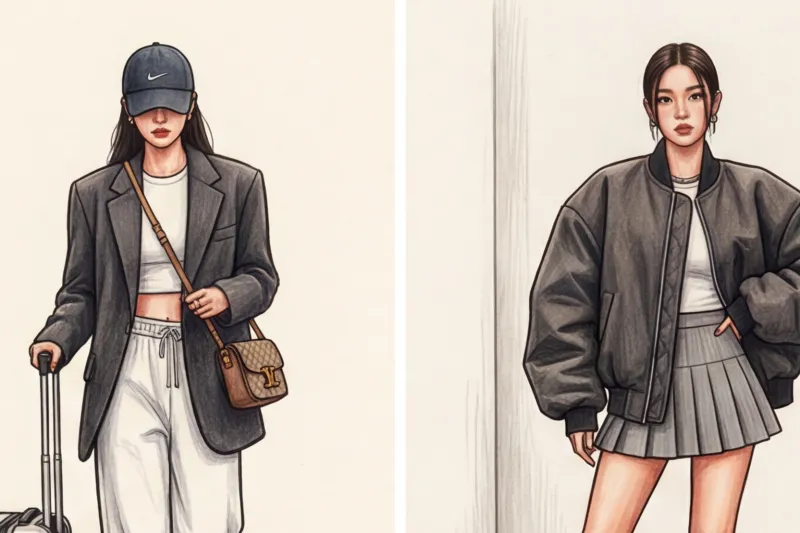
In my personal styling practice, I often work with female executives who are constantly traveling for business. And I always use the classic Korean Airport Fashion formula with them. It's ingenious in its anatomy: Oversized structured jacket + thick sports joggers + luxury baseball cap.
Why is this combination an absolute hit? Track pants made of thick terry (I recommend choosing models in the €80–€150 price range) allow for freedom of movement in a business class seat and don't stretch out at the knees, unlike thin knitwear. But throw a men's jacket with sharp shoulders over a basic T-shirt and your silhouette instantly ties together, adding a touch of class. A baseball cap is a lifesaver when there's no time to style your outfit after a late-night flight, and chunky sunglasses hide the signs of sleep deprivation. This is a stunning example of how Korean clothing style takes utility and elevates it to the level of high fashion.
Access to MioLook for €0.99 — one-time payment
A smart AI stylist will select the perfect look for flights and everyday wear, taking into account your personal wardrobe.
Get access — €0.99 onceStage extravagance vs. everyday comfort
If an airport is a place of measured casualness, then the stage demands a completely different scale. The dichotomy of the idols' styles is truly striking: the exaggerated theatricality and visual maximalism of their concerts contrast sharply with their relaxed personas off-camera.
Let's dissect a classic stage costume. It's always an aggressive, uncompromising customization. K-pop stylists mercilessly chop up runway luxury pieces. A €3,500 jacket can be shortened below the bust, ripped at the seams, held together with dozens of safety pins, and transformed into an asymmetrical top. And this isn't just for the sake of shock value. It's simply impossible to dance complex, high-intensity choreography in the original haute couture cut.
Stage outfits often include rigid corsets, an abundance of rhinestones, heavy metal hardware, and layered outfits. While this looks incredibly impressive under the spotlight at music shows, it's physically exhausting for the performers. The clothes literally cling to the body, restricting breathing.
It was precisely as a counterbalance to this glamorous discomfort that the so-called Dance Practice Look — a style for long dance rehearsals in the studio. And paradoxically, it became the most influential global street style hit. Tired of tight stage costumes, idols opt for total comfort for training. The formula here is ironclad: Oversized sweatpants (often parachutes or cargo) with an extremely low rise + a tight micro-crop top.
This combination serves several practical purposes. First, the baggy pants emphasize the range and dynamics of the dance movements, making each step visually more powerful. Second, the crop top accentuates the waist and allows the choreographer (and the dancer themselves in the mirror) to see whether the core muscles are working properly during isolation. This look is often complemented by a bucket hat or beanie pulled down over the eyes—a clever stylistic trick to hide the new hair color from fans until the official album release.
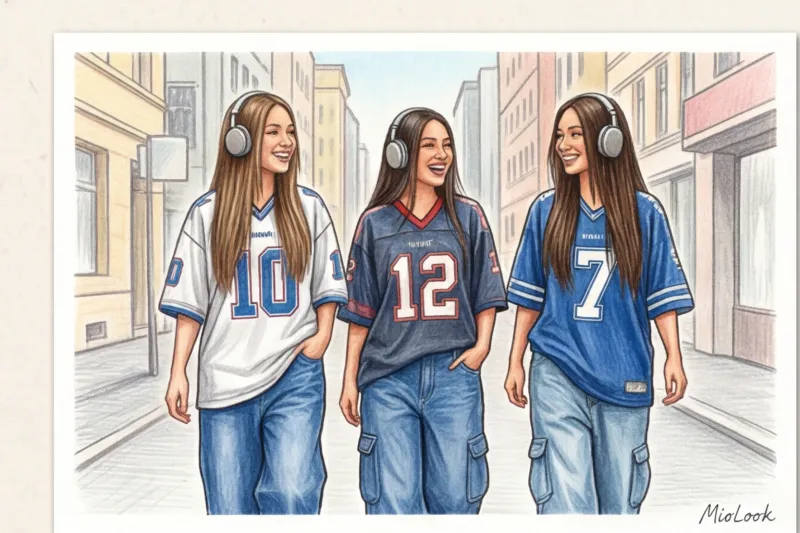
Today, this silhouette has long since transcended the confines of Seoul's rehearsal halls and become the global uniform of Generation Z. And the best part is that this aesthetic is accessible to everyone. To create the perfect Dance Practice look, you don't need a fashion house budget—excellent cargo pants can be found at streetwear brands for €50–€70, simply paired with quality basic knitwear.
Key Formulas and Silhouettes: Building a Korean Clothing Style
Forget the conservative "light top, dark bottom" rule. Contemporary Seoul street style is built not on color combinations, but on radical geometric shapes. Last month, a client, a top manager at an IT company, came to me with a specific request: "I want to look relaxed and fresh, but not like a teenage skater." We began working with silhouette architecture, and this is where Korean style truly reveals its potential.
The rule of contrasting proportions is the alpha and omega of this trend. The entire aesthetic rests on the formula of "hyper-volume plus micro-length" (or vice versa). You take a massive, menswear-style bomber jacket (models from COS or Zara's basic men's lines are perfect), which visually broadens the shoulders, and wear it with a micro-pleated tennis skirt. This creates a powerful optical illusion: against the backdrop of the enormous, almost cartoonish top, the legs seem endless and incredibly fragile. An alternative option for those who don't wear miniskirts is a form-fitting ribbed micro top paired with giant puddle pants. As we discussed in detail in our body type guide , these avant-garde proportions paradoxically flatter almost any body type if you correctly shift the balance point.
The next level of complexity is aggressive layering. While the classic European styling school teaches us to carefully conceal our underlayers, the Asian school demands they be flaunted. I call it the "deconstruction principle." Wearing a sheer slip dress over wide-leg suit trousers? Absolutely yes. A long, crisp poplin shirt casually peeking out from under an extremely cropped knit vest? Definitely. Add to this the deliberately visible underwear trend—a trend that Seoul influencers have adapted for the streets with far greater viability than the original Miu Miu runway looks.
However, there's a catch. I'll be honest: this formula only works with the right mix of textures. If you try to layer heavy fabrics (for example, wearing a wool midi dress over heavy 14-ounce denim jeans), you're guaranteed to add an extra 10 kilograms of visual bulk. The secret lies in using thin, flowing materials—silk, batiste, organza. To avoid turning your bedroom into a battlefield when layering, I strongly recommend testing such complex combinations virtually. Upload your basic shirts, vests, and dresses to MioLook smart wardrobe and see how they fit together on your smartphone screen. This saves time in the morning and prevents impulse purchases of complex items in the €100–€300 price range.
Finally, the key feature that makes these looks so appealing is their gender neutrality. According to WGSN's 2024 analytical report, visionary South Korean brands like Ader Error and We11done have become global leaders in blurring the boundaries between men's and women's wardrobes. You won't find traditional body-con dresses designed to accentuate every curve here. Korean street style favors boxy, architectural cuts.
The ideal jacket in this aesthetic should fit like you borrowed it from your basketball-playing boyfriend: with a strong, exaggerated shoulder line (often with additional padding) and a straight silhouette without a single dart at the waist. This exaggerated bagginess creates that very feeling. effortless chic You look expensive and confident precisely because your outfit doesn't try to please anyone or appear "seductive" in the classic, outdated sense.
Practical formula for tomorrow: Take the most tailored and oversized men's shirt from your closet. Wear it over wide, pleated suit trousers. Instead of the usual leather belt, define your waist with a contrasting fine-knit sweater, casually tying the sleeves diagonally across your shoulder and chest. You'll achieve a complex, layered, and thoroughly Korean silhouette in two minutes.
Top Aesthetics: What's Wearing on the Streets of Seoul Right Now
According to WGSN's 2023 analytical report, Seoul has officially surpassed Tokyo in the speed of adapting and transforming street style trends. While European fashion capitals continue to cling to their classic heritage, Korean streets have become a global laboratory for stylistic experimentation. If you stroll through the bohemian Seongsu-dong district today, you won't see a homogeneous crowd. Contemporary Korean clothing style has crystallized into several clearly defined aesthetics, each dictating its own uncompromising rules of the game.
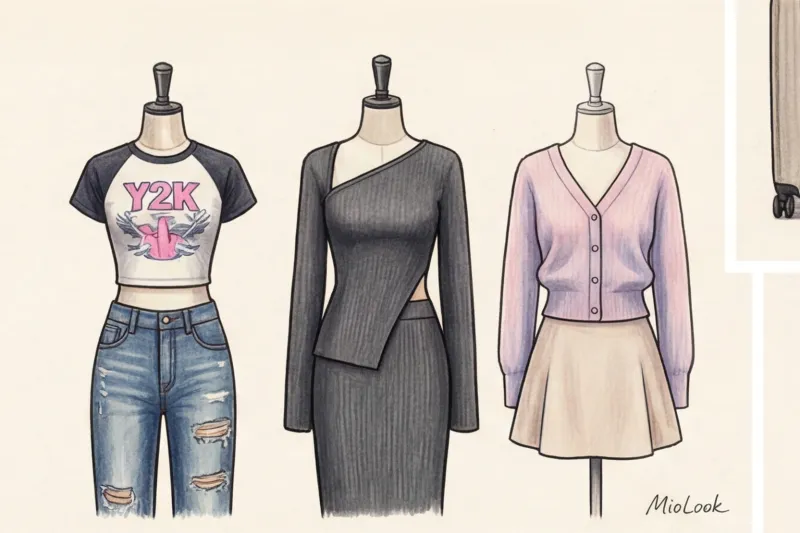
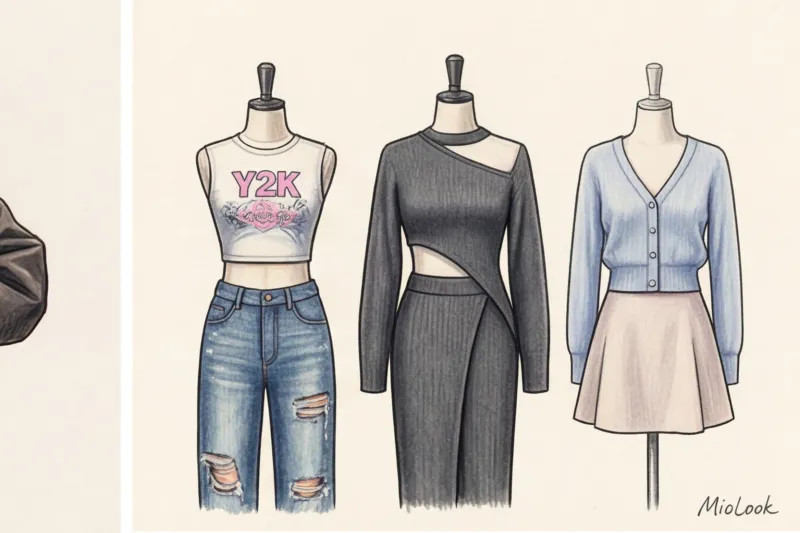
Let's start with the most commercially successful direction - Y2K and Cyber Y2K The global boom in this aesthetic in Asia sparked the so-called "New Jeans effect" (a reference to the super-popular band that reimagined the fashion of the early 2000s). But this isn't a blind retelling of Paris Hilton-era archives. Korean Y2K looks more futuristic and architectural. Its visual base: extremely wide, low-rise jeans (baggy denim), tight crop tops with childish or deliberately aggressive cyber prints. The main hallmark of this style is massive over-ear headphones (often Apple AirPods Max or vintage Sony models), worn around the neck purely as a status accessory. Add to this a pair of chunky platform sneakers, and you have the perfect silhouette with exaggeratedly contrasting proportions.
But what if acid colors, rhinestones, and an exposed midriff just don't fit into your lifestyle? This is where my favorite find of the last few seasons comes into play: Acubi Style I often cite this aesthetic as an example to clients looking for an elegant yet distinctive base. Acubi (named after the Korean conceptual brand Acubi Club) is a new Asian minimalism and the most sophisticated, intelligent alternative to the garish Y2K.
It is based on the concept subversive basics ("basics with a twist"). Imagine a muted, melancholy palette: ash gray, sagebrush, khaki, dusty black, faded mocha. Textures play the leading role here, not logos: thin, translucent fabrics, asymmetrical cutouts, ripped edges, and intricate layering that appears casual but is actually precise down to the millimeter.
The Acubi formula: wide-leg, pleated suit pants, an asymmetrical mesh top layered over a sleek bra, and a distressed vintage leather jacket. It's sophisticated, grown-up grunge that looks incredibly expensive.
It can be challenging to create a multi-layered capsule like this in complex shades, so I always recommend using smart wardrobe feature in MioLook to see in advance how transparent textures and complex halftones will combine with each other in real life.
The third major pillar of Seoul street fashion is Gorpcore and Tech-wear Korean fashionistas were the first to realize that high technology can and should be integrated into everyday luxury. The essence of the trend lies in the uncompromising mix of overtly sporty, outdoor gear with classic pieces. Wearing a high-tech Arc'teryx windbreaker (usually priced between €300 and €500) not for a mountain hike, but over a formal office shirt, is an absolute street style standard. Technological fabrics (Gore-Tex, parachute shell, ripstop) are not only functional but also create a stunning visual contrast when mixed with fine wool or heavy cotton.
Try MioLook
for free
Start creating perfect images with the help of artificial intelligence
Get access — €0.99 onceBreaking Stereotypes: Why It's Not Just 'School Skirts'
For a long time, there was a persistent myth in the West (and among many of my new clients, too). Korean fashion was considered to be exclusively "Soft Girl" aesthetics: pleated tennis miniskirts, pastel cardigans with daisies, knee-high socks, and an exaggerated, almost doll-like childishness. This stereotype originated back in the days of the second generation of K-pop, but today it is hopelessly outdated.
As a stylist who regularly monitors the transformation of global markets, I can assure you: the "cute schoolgirl" image is merely a commercial product exported to the masses. Within the country itself, fashion has long since evolved toward power dressing. True Korean design today is extremely mature, gender-neutral, and architectural.
Consider the work of Jung-Wook Jun, founder of the cult brand Juun.J. His runway collections are a celebration of voluminous menswear tailoring, exaggerated shoulder lines, and dark deconstruction. Or take Rok Hwang and his brand Rokh (the designer, incidentally, studied under Phoebe Philo at Celine). His intricately tailored, transformable trench coats with double straps and asymmetrical slits, priced from €800 to €1,500, are now the object of desire for leading fashion insiders from New York to Paris. Contemporary Korean fashion has shifted its focus to strict form, intelligent tailoring, and the interplay of space between body and fabric, offering a wardrobe for strong and utterly confident women.
How to Incorporate Korean Style into Your Wardrobe (Without Cosplaying)
The most common mistake I see from girls inspired by Asian dramas is trying to copy the entire outfit. In the context of European streets or a strict business center, all-out K-fashion often looks like a Halloween costume. My main secret to successful adaptation is 80/20 rule.
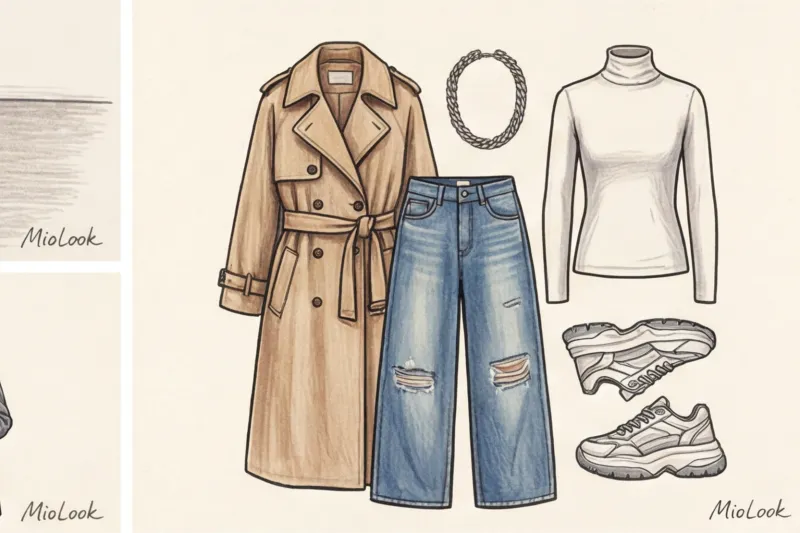
The formula is simple: keep 80% of your familiar, familiar European or local basics (great straight jeans, a quality wool coat, simple turtlenecks) and add just 20% Korean styling techniques or statement pieces. For example, a basic pantsuit can be complemented with an asymmetrical top, or you can use the layering technique typical of Seoul—wearing a cropped shirt over a fitted dress. It's this contrast in styles that creates the spark. Korean clothing style works best when it integrates into your personal context, rather than overpowering it.
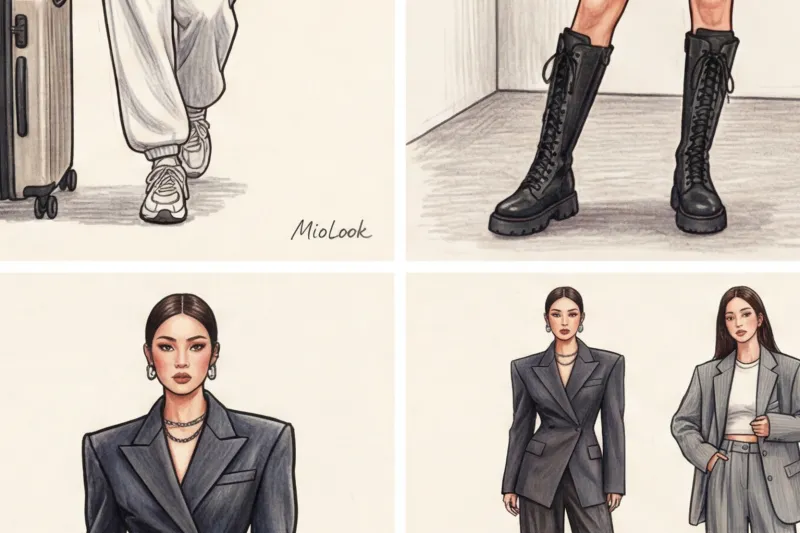
Let's look at this using the corporate dress code as an example. Last month, Anna, the head of the analytics department, approached me. Her request was specific: "I want to look as classy and sophisticated as Yoon Se Ri in the drama 'Crash Landing on You,' but we have strict regulations at our company." The solution lay in the micro-details.
We replaced the stiff, fitted sheath jackets with softer tailoring — suits with soft shoulders but a clear, relaxed silhouette. Instead of standard office shirts, we opted for blouses with accentuated, slightly exaggerated collars and extended cuffs. We shifted the color palette from stark black and white to sophisticated, muted pastels: pistachio, dusty blue, and taupe. We didn't break any HR rules, but the look acquired the polish of Seoul's elite.
To avoid getting your proportions wrong and accidentally buying too much, I strongly recommend digitizing your current base before shopping. Upload your everyday items to MioLook And virtually attach screenshots of your desired "do-commercial" purchases. The smart wardrobe feature will immediately show you whether you're maintaining an 80/20 balance, or if you're risking losing your individual style to the latest trends.
But if you want to take just one step forward right now, start with a shoe transition. Forget classic stiletto pumps for everyday looks. Feel free to swap your usual office shoes for chunky platform loafers or rugged, decidedly futuristic sneakers.
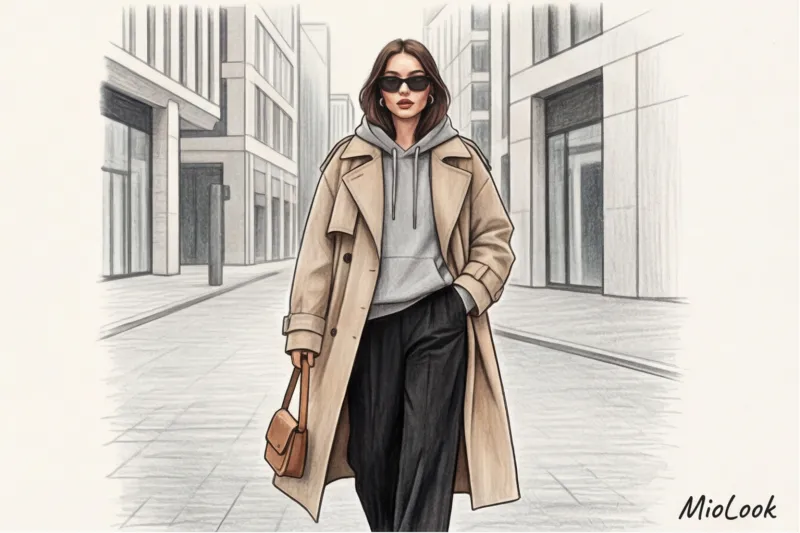
"The combination of a classic straight coat, tailored trousers with creases and chunky, aggressive shoes instantly takes the arrogance out of any business look, making it sharp and modern."
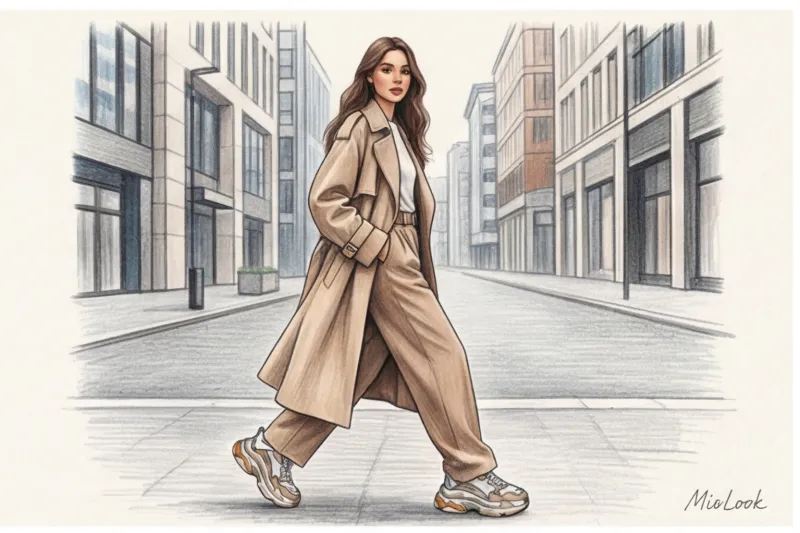
A quality pair of these mid-up loafers will set you back around €150–250, but it's an investment that will literally rewire the DNA of your entire wardrobe. Take the most boring, conservative two-piece suit in your arsenal, wear it with a basic T-shirt, and add chunky sneakers underneath. You'll immediately feel how not only your silhouette but also your gait changes.
The Pitfalls of Online Shopping: Asian Sizes and Patterns
Let's be honest: ordering clothes from Asia without preparation is a costly lottery. I'll let you in on an open secret: when you see the coveted letter "F" (Free Size) or the words "One Size" on a Korean brand's tag, it doesn't mean the item will magically fit any body type. As a practicing stylist who regularly orders clothes for photo shoots, I know for sure: the Asian "one size fits all" is a reliable European 34-36 (XS-S) for a height of up to 165 cm. While a Free Size hoodie might look stylish and dramatically oversized on a petite Korean woman, it will fit like a regular basic sweatshirt on a European size ML, completely ruining the relaxed aesthetic for which the purchase was made.
What's the fundamental difference between European and Asian tailoring blocks? It's not just about volume. Korean clothing styles have historically been built on a different body architecture. Asian patterns feature a shorter inseam, a noticeably narrower shoulder line, and, most critically for fit, a high and small armhole.
If you have a developed chest, a prominent bust, or athletic shoulders, a standard Korean size M shirt will cut into your armpits, even if there's some extra fabric at the waist. The same goes for pants: Asian brands often cut pants with less curve at the hips. If you have an hourglass figure, wide-leg pants may not fit over your hips, even if your waist measurement is the same.
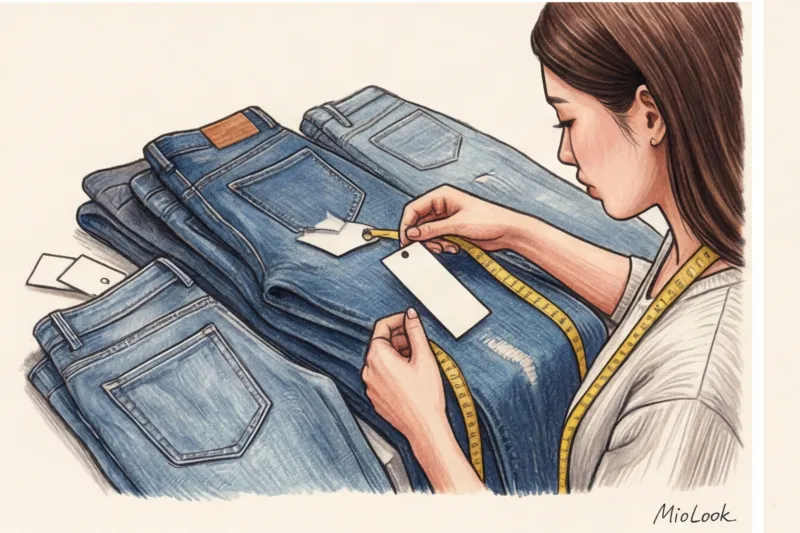
How can you avoid returning an expensive €150-200 jacket back to Seoul? My golden rule: forget about S/M/L labels forever. Before opening your cart on YesStyle, W Concept, or Musinsa, you'll need a measuring tape and your favorite, perfectly fitting item from your closet. Measure the garment flat, not your body.
- Shoulder width: Measure strictly from shoulder seam to shoulder seam. This is the most important measurement for jackets and coats.
- Half chest circumference (Chest/Bust): Check the armpit line, leaving at least 3-5 cm for a loose fit.
- Total length: Be sure to check the inseam length of your trousers, as Korean oversized pants are often designed to drag on the ground (puddle pants), but for a European height of 175 cm, they may simply be standard-length trousers.
To avoid having to take these measurements again and again, I strongly recommend digitizing your ideal items once. In the appendix MioLook You can save the exact measurements of your best basics. This saves you from impulsive mistakes: you simply open the size chart of a complex conceptual brand on W Concept and instantly compare the numbers with the measurements of your trusted sweatshirt on your phone.
Your perfect look starts here
Join thousands of users who look flawless every day and save time getting ready with the MioLook smart wardrobe.
Get access — €0.99 onceEssential Capsule: 10 Items for Creating Korean-Style Looks
The secret to perfect Seoul street style lies not in endlessly buying trendy, one-time items, but in rigorous curation of a base. Last season, a client flying off to Asia for an exchange semester approached me with a very pragmatic request: to assemble a wardrobe that would fit in one suitcase, with a budget of around €600. We completely avoided random purchases and assembled a mathematically calibrated micro-capsule of exactly 10 items. This set covered 100% of her needs—from morning lectures to parties in Itaewon.
To Korean clothing style To work for you, not turn you into a teenage cosplayer, the foundation should consist of the right silhouettes. Here's the anatomy of this ideal ten:
- Oversized structured blazer Look for styles with exaggeratedly wide shoulders, reinforced with shoulder pads. This isn't just a "jacket two sizes too big"; it's a clear geometric shape that sets the tone for the entire look. A good basic wool-blend option will cost between €150 and €250.
- Ultra-wide leg trousers / puddle pants The key detail is extreme length. They should literally fall in soft folds over your shoes (hence the name "puddle pants"). Choose a heavy suiting fabric with a pronounced drape.
- Chunky platform loafers or high-tech sneakers Shoes need to be visually heavy to ground the bulky upper. Running shoes with a complex design (like the ASICS Gel-Kayano) or rugged leather loafers with a lug sole will do the trick perfectly.
- Cropped ribbed cardigans This is the very tool we wear on our bare skin or over a shirt to create an accent on the waist and avoid the shapeless effect of baggy bottoms.
- A-line midi or pleated mini skirt Seoul doesn't tolerate half measures: you'll need either a daring mini with a Y2K nod (with a low waist) or a discreet A-line midi in thick cotton or nylon.
- Men's oversized shirt (classic sky blue or thin graphic stripes).
- Translucent mesh long sleeve (the absolute basis for the layering in the Acubi aesthetic).
- Wide-leg straight-leg jeans with a dirty vintage wash and a low waistline.
- Basic white t-shirt made of very dense cotton that holds its shape and is not see-through.
- Micro bag with a rigid, structured shape to play on contrast with hyper-voluminous clothing.
The real magic begins at the styling stage (How to mix and match). These 10 pieces generate an endless number of outfits by juggling proportions. Use the rule of contrast: pair a voluminous architectural jacket with a pleated miniskirt, completing the look with a sharp men's shirt and rugged loafers. If you're wearing ultra-wide puddle pants, balance them out with a fitted, cropped ribbed cardigan with a sheer mesh long sleeve peeking out from underneath.
There's absolutely no need to keep all these multi-layered schemes in your head. I give my students one strict rule: as soon as the basic ten items are purchased, take photos of the items and upload them to MioLook The smart wardrobe feature will algorithmically create a month-long lookbook for you, mixing layers just like local Seoul influencers. Simply open the app over your morning coffee and see a pre-designed, proportional layout.
To wrap up our dive into Asian street style, I want to emphasize one key point. The phenomenon of this aesthetic isn't based on flashy logos or fleeting TikTok microtrends. It's built on the courage to disrupt classic European proportions and the ability to treat clothing like an architectural construct. Start with this basic capsule, add a dash of self-confidence, and your personal daily runway will be ready.
Guide Chapters
Korean footwear trends from ugly shoes to loafers
The epicenter of shoe fashion has shifted to Asia. We explore the top Korean trends—from chunky sneakers to elegant loafers.
Korean Unisex Style: How to Wear Boy Band Clothes
How K-pop aesthetics and menswear help women look more fragile and modern. We explore the phenomenon of Korean grunge and learn how to style oversized clothing.
Korean Clothing Accessories: How to Create a K-Pop Look
Seoul is setting new fashion standards, where micro-styling is more important than couture. Find out what details will transform your everyday look into a true street style hit.
Jang Won-young's Style: How to Wear Coquette at Any Age
Dreaming of adding balletcore elements to your basic wardrobe, but worried about looking out of place? We explore IVE's Jang Won-young's visual strategy.
Where to buy Korean clothing: top brands and stores
Dreaming of elegant looks like those from your favorite dramas? I'm sharing a list of trusted stores and revealing the secrets of Korean patterns and the perfect oversize look.
Elegant K-Drama Style: A Wardrobe Guide
We explore the anatomy of Seoul chic with a stylist. Learn how to create an elegant wardrobe that will last for years, not just until the first wash.
Blackpink's Lisa's Style: A Mix of Streetwear and Luxury
The secret to Blackpink's Lisa's phenomenal style lies in a masterful blend of streetwear and sophisticated luxury. We explore her looks through the lens of a smart wardrobe.
Trendy Korean K-pop hairstyles for women
Secrets to creating perfect Korean K-pop-inspired haircuts from a top stylist. Learn how to perfectly adapt Asian trends to European hair.
New Jeans Style: How to Wear Korean Y2K Clothing
How did a South Korean band bring back the comfy 2000s? Learn how to create relaxed Y2K-inspired looks using high-quality denim.
Korean Idol-Style Makeup: A Step-by-Step Guide
We reveal the secrets of celebrity makeup artists. Learn how to create flawless, long-lasting makeup in the style of K-pop idols, creating a dewy look.
Blackpink Jennie's Style: How to Recreate Her Looks
We're exploring the secrets of Jennie Kim's wardrobe. Learn how to recreate the "Human Chanel" aesthetic with basic pieces and the right proportions.
Virtual Try-On of Korean Clothes with AI
Ordered an oversized fit like New Jeans, but it didn't fit? Find out how AI helps you test complex Korean style proportions before you buy.
Korean Street Style: How to Wear Oversized Clothes Stylishly
Korean fashion isn't just about teenage rebellion, it's also about thoughtful layering. We'll show you how to create elegant oversized looks.