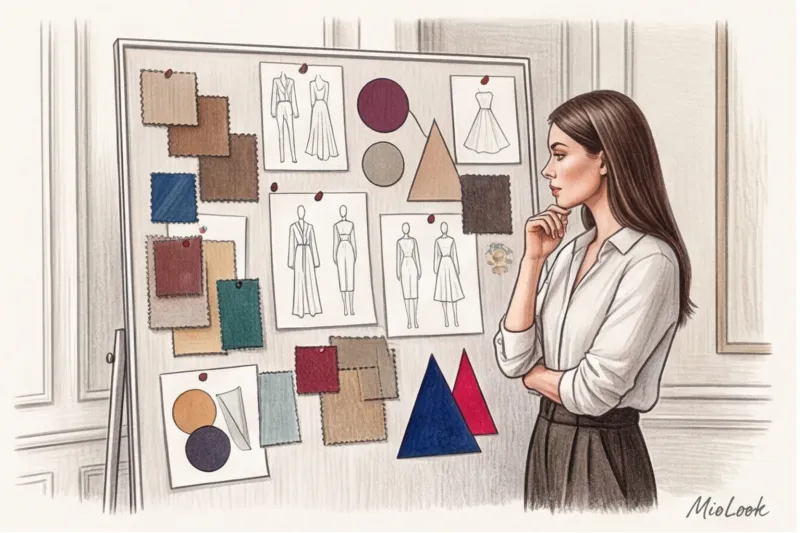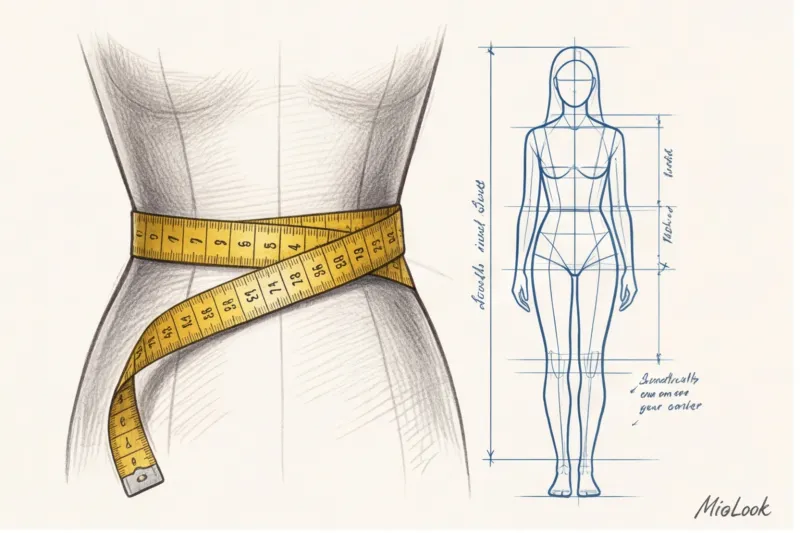
I begin every first consultation with a new client with the same ritual: I take out the classic yellow tailor's tape and... demonstratively toss it in the trash. You should have seen the girls' eyes at that moment! In 14 years of working as a personal stylist, I've learned the most important rule: women are not still lifes. We can't be measured by three points and placed in baskets of apples and pears.
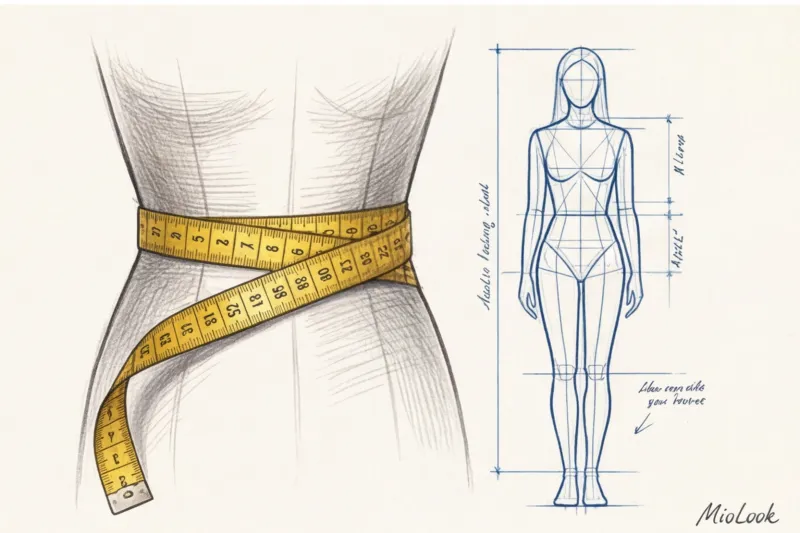
When it comes to arguing about what is more effective, kibbies or body types , most stylists begin by drawing diagrams of visual illusions. But the truth is, these aren't just two different classifications. It's a conceptual choice between constantly concealing your "imperfections" and architecturally emphasizing your natural geometry. We've already discussed the origins of this approach in more detail in our complete guide to Kibbe types and finding your own style.
Let's figure out why trying to fit into an imposed standard ruins your wardrobe, and how to move from insecurities to effortless elegance.
Classic body types or Kibbe types: why is the "fruit" system hopelessly outdated?
The classic body type system (apple, pear, inverted triangle, rectangle) is based on one deeply toxic idea: there's something wrong with your body that needs to be fixed immediately. The whole point of the "fruit" approach boils down to visual deception. Wide hips? Let's wear a jacket with exaggerated shoulder pads to balance out your bottom. No defined waist? Let's tie you into a tight corset belt.
This system uses just three superficial measurements: bust, waist, and hips. It completely ignores your bone structure, height, hand size, and soft tissue distribution. As a result, women spend years living with the mindset of "I need to hide my bottom" and are afraid to try on light-colored pants.
"Choosing between the classic school (kibby or body types) is a choice between apologizing for your hips your whole life or making them the main architectural accent of your look."
Access to MioLook for €0.99 — one-time payment
A smart AI stylist will select the perfect look based on your natural curves and body structure.
Get access — €0.99 onceAnatomy and Geometry: What is the essence of David Kibbee's system?
In 1987, stylist David Kibbee published the book "Metamorphosis," which revolutionized the perception of female beauty. He proposed evaluating the figure not by size, but by the balance of yin (softness, roundness, delicacy) and yang (sharpness, structure, scale).
His 13-point analysis works like an architectural drawing. Your body is a frame (bones) and a facade (soft tissue). Kibbe looks at the geometry of the shoulders (are they pointed or sloping?), the length of the limbs relative to the torso, and the facial features.
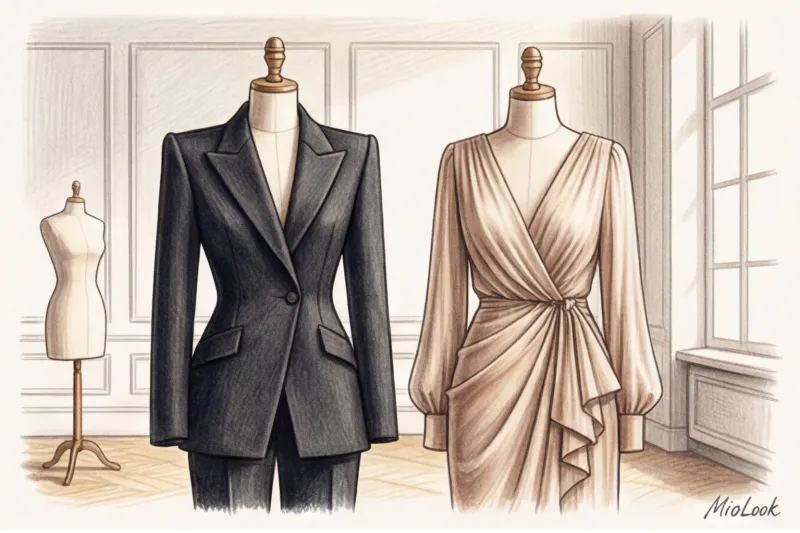
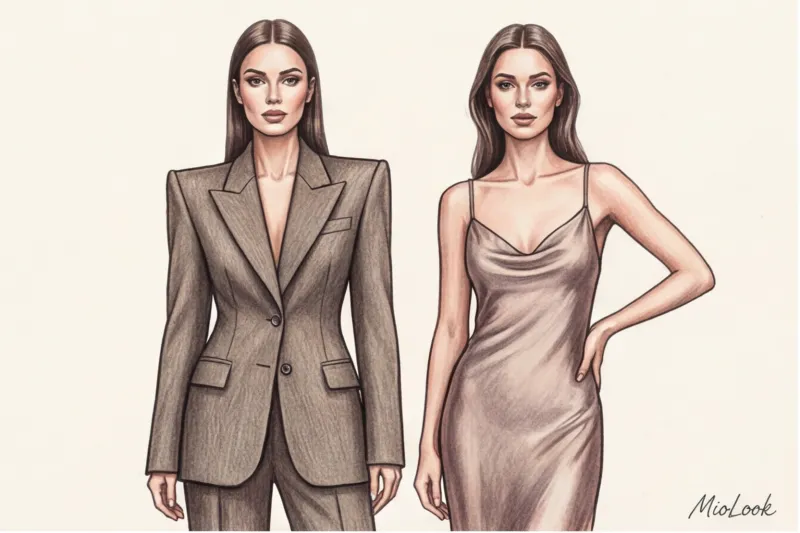
If you have a wide, blunt bone structure (Yang), soft ruffles and small floral prints will make you look larger and heavier. Conversely, if you have a delicate, rounded bone structure (Yin), a stiff, straight-cut tweed jacket will look like you're wearing a cardboard box.
Battle of the approaches: kibbies or body types based on real-life examples
The theory sounds great, but let's see how these systems collide in the fitting room. In my experience, the standard advice from mass-market stylists regularly harms real women.
Case #1: Why does a stiff jacket disfigure the Pear but enhance the Bright Natural?
One of my clients, Elena, spent 10 years trying to "hide her pear-shaped hips." She's a size 44, has pronounced hips, and a small bust. According to the classic body type, she's a dead ringer for a pear shape. A classic tip: wear structured, oversized jackets with a sharp shoulder line to balance out the bottom.
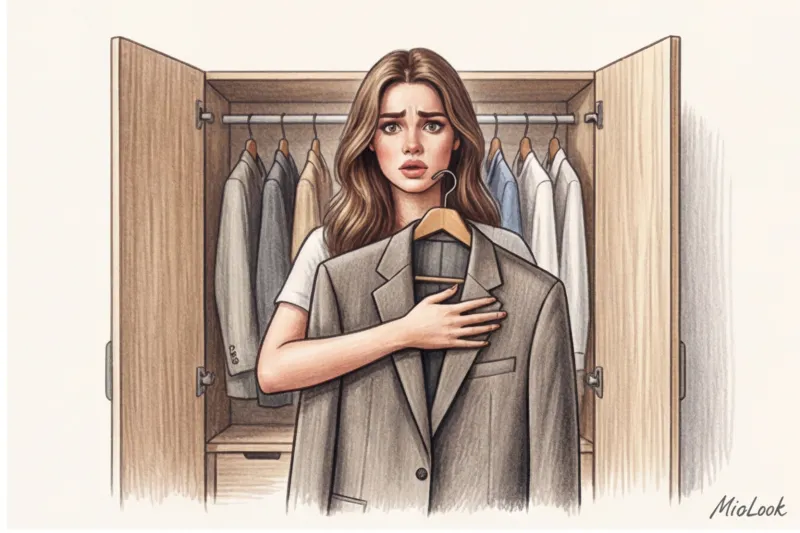
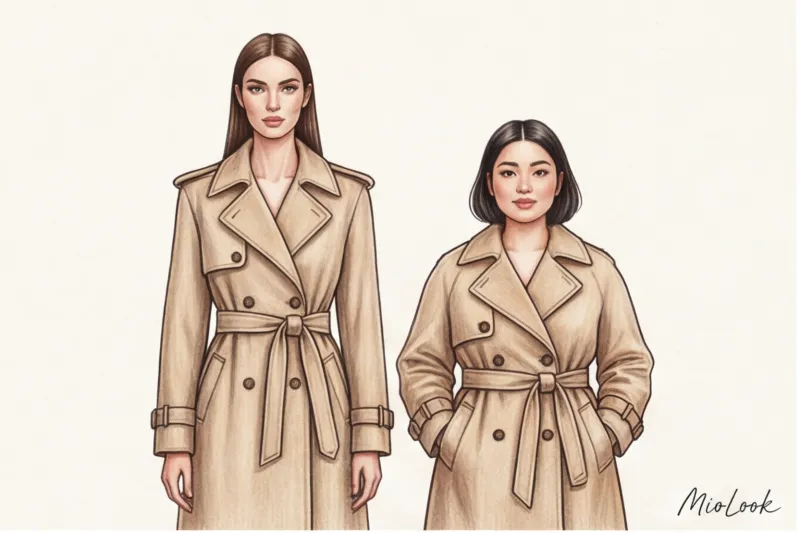
We did a test. I had Elena and another client, Anna (with the exact same measurements), try on the same thick wool jacket. On Anna, the jacket looked bulky, making her look boxy. But on Elena, it fit luxuriously, like a street style star. Why?
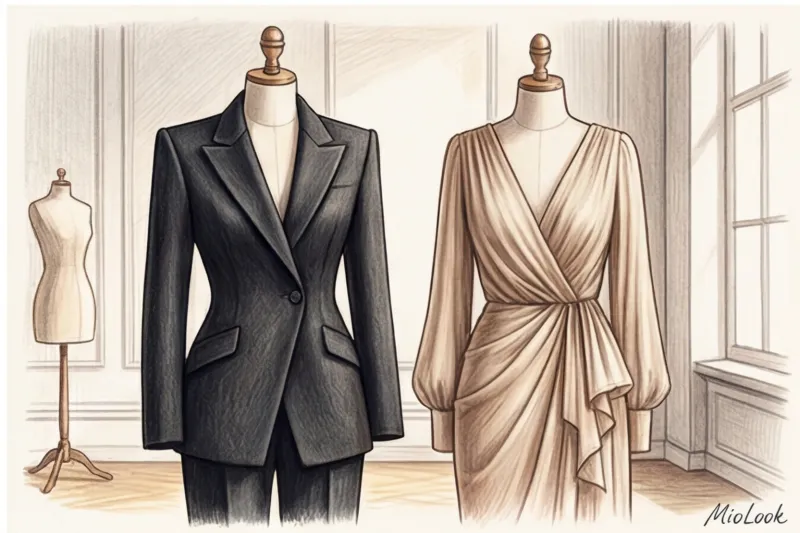
Because according to Kibby, Anna is a Soft Dramatic (she needs a soft, heavy drape, like viscose with 5% elastane), while Elena is a Bright Natural with a wide, blunt shoulder structure. The jacket fit her natural frame. Elena spent years swaddling in flared A-line dresses, trying to hide her hips, even though her frame called for long, relaxed, straight lines and dense fabrics.
Case #2: The Illusion of a Waist and Why Not Everyone Needs It
The advice to "be sure to accentuate your waist with a belt" is a legacy of the New Look silhouette, introduced by Christian Dior in 1947. It's beautiful, but it's not for everyone. If you're a straight-legged figure (Dramatic, Gamin, and some Naturals), you don't have a pronounced difference between your waist and hips in your bone structure.
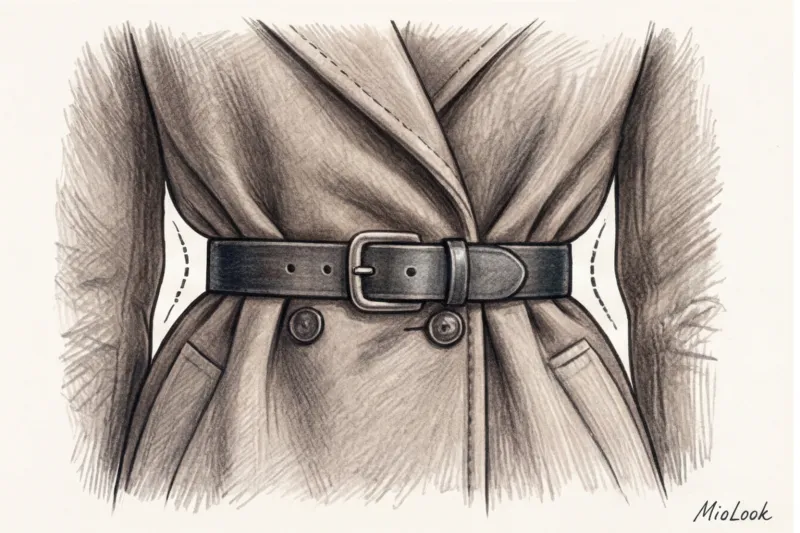
Trying to cinch a straight waist with a leather belt over a voluminous chunky knit sweater or jacket doesn't create the illusion of an hourglass figure. You create the illusion of a cinched waist. It's counterintuitive, but if you have a straight body shape, avoiding the waist and emphasizing it with straight, elongated silhouettes (like those in the COS or Massimo Dutti collections) will visually slim you down by two sizes.
Your perfect look starts here
Join thousands of users who look flawless every day with MioLook. Find your perfect silhouette.
Get access — €0.99 onceThe Biggest Myth: The Toxicity of the Perfect Hourglass
According to the large-scale anthropometric study SizeUSA (often cited in the fashion industry), less than 8% of women have a natural hourglass figure. However, 92% of women are forced to create this silhouette.
The desire to visually "saw" your proportions in half with a wide belt or contrasting color blocking makes the look heavy and, frankly, old-fashioned. Contemporary fashion is embracing a Mediterranean approach: effortless elegance, freedom of movement, and a sense of air between the body and the fabric.
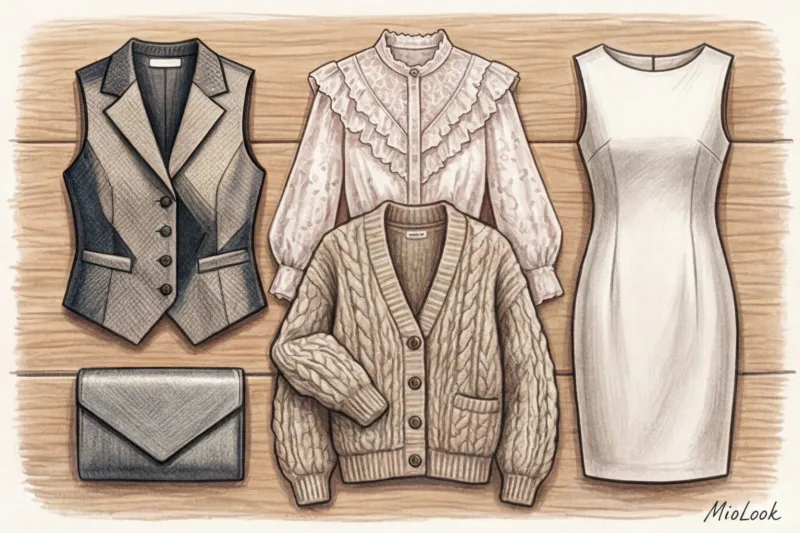
Pay attention to Spanish or Italian women. They don't wear shapewear in 30°C weather and don't cinch themselves with corsets. They choose relaxed linen suits and bias-cut silk slip dresses because they understand that clothing should serve the body, not the body the clothing.
How do you know what system your wardrobe needs right now?
I'll be honest: I don't think body types are an absolute evil. This system has one application where it works flawlessly. That's when it doesn't work for creating a unique style, but it does work for emergency situations.
If you're a beginner and urgently need to buy a dress for a friend's wedding, but don't want to dig too deep, the "cover wide hips with a circle skirt" rule will save you in 15 minutes at your local Zara. It's quick, but superficial.
But if you want to build a long-lasting, expensive capsule wardrobe that conveys status and confidence, Kibbe's architectural approach is essential. The main sign that it's time to change your system is when you buy clothes that fit your size and are objectively fashionable, but in the mirror you look like you're wearing someone else's clothes.
Ready to get started?
Try the free plan—no commitments. Create your first perfect capsule today.
Get access — €0.99 onceStylist Checklist: 5 Steps to Kibbe Lines
If you're ready to break free from outdated rules, here's a specific algorithm you can apply tonight in front of the mirror:
- Take the right photo. Wear form-fitting clothing (like leggings and a top), position the camera at chest level, and take a full-length photo in daylight. Look at yourself as if you were sketching. Where do angles predominate, and where are there circles?
- Estimate your height. This is a key cutoff factor in the Kibbe system. For example, if you're taller than 170 cm, you automatically can't be a Romantic or a Gamine, as you have a pronounced Yang (bone structure scale).
- Conduct a texture test. Try on two radically different pieces: a jacket made of heavy cotton (180 g/m² and up, which is incredibly expensive) and a blouse made of flowing silk or fine viscose. Which looks more harmonious on you? A rigid frame or a fluid softness?
- Find your neck. It's a micro-detail that changes everything. Sharp faces and shoulders look great with V-necks and asymmetrical necklines. Softer curves look great with cowl necklines and U-necks.
- Create a test capsule. Don't throw out your entire wardrobe. Start by buying one perfect pair of trousers (like wide-leg pleated palazzos for straight men or tapered skinny pants for gamines) and build your looks around them.
Smart Approach: How to Adapt Trends to Your Body Type with MioLook
Clients are often afraid to examine their body shape, wondering, "What if they ban me from wearing oversized or trendy cargo pants?" Knowing your body type isn't a prison; it's a guide. Any trend can be adapted to suit your personality.
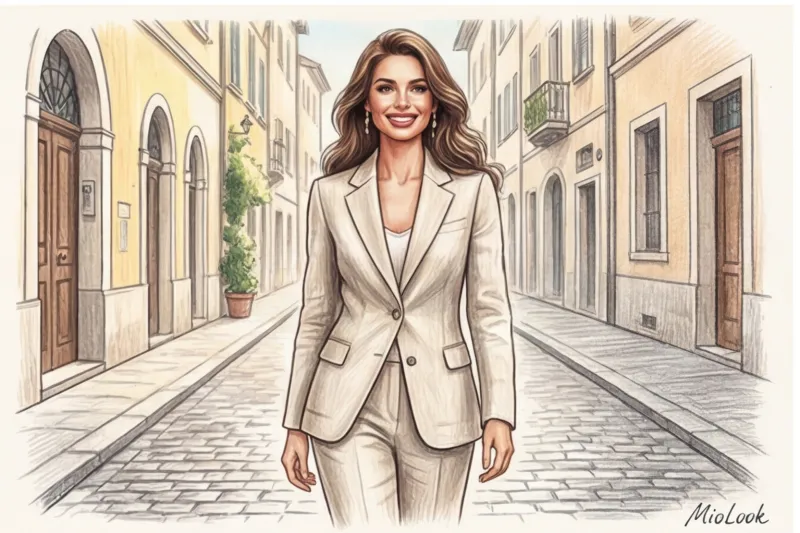
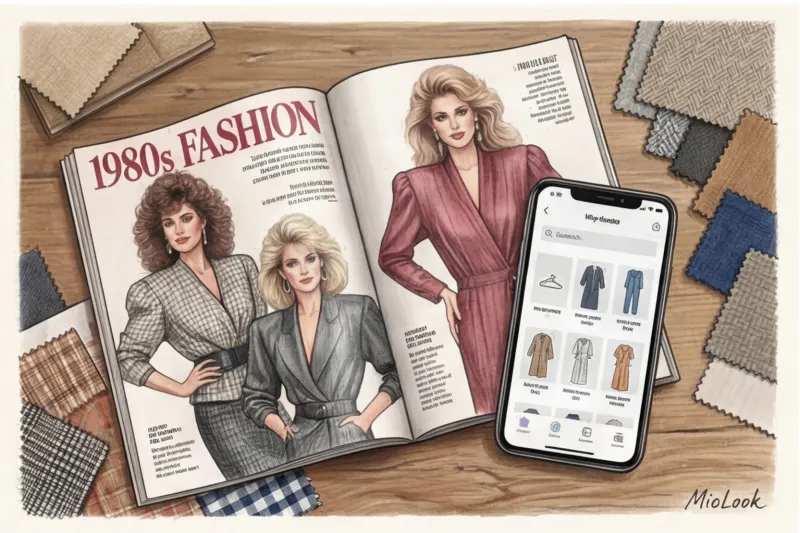
Today, you don't need to keep all these rules in your head or spend months studying the theory on your own. You can delegate this task to technology. MioLook , you get access to AI analysis that helps you match trending items to your personal profile. You simply upload items to your virtual wardrobe, and the algorithm suggests which combinations will flatter your natural curves.
The formula for impeccable style is: your unique kibby silhouette + the season's on-trend details. Stop trying to shape yourself into the mythical hourglass figure. Embrace your sharp collarbones, broad shoulders, and soft curves, and start dressing the stunning woman you already are.