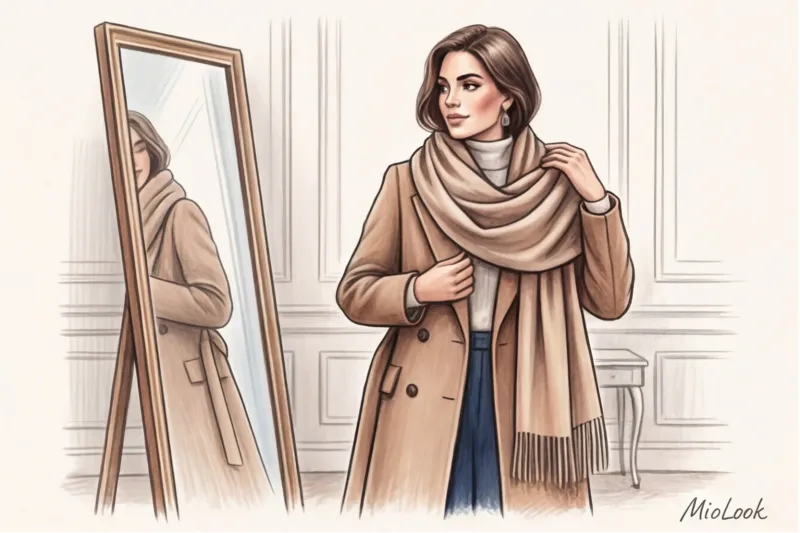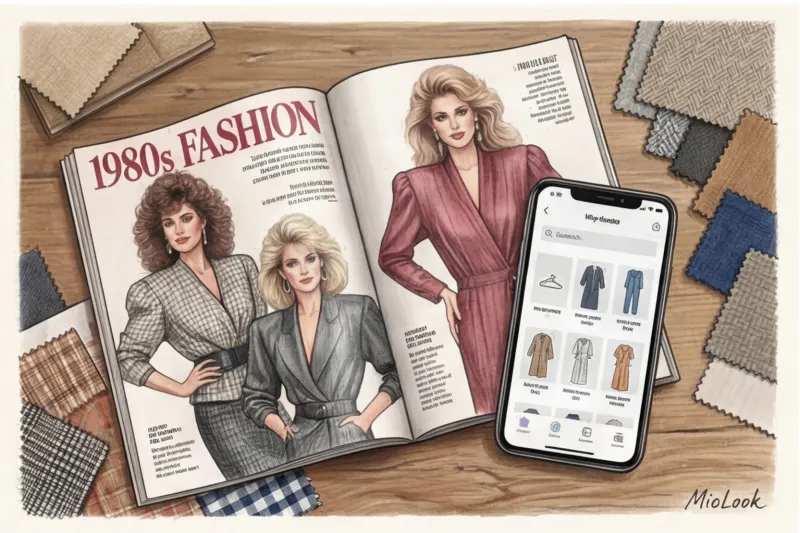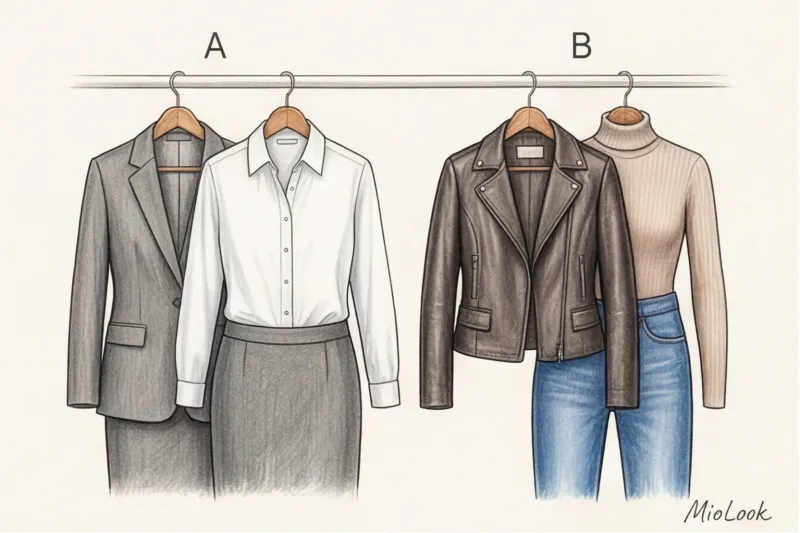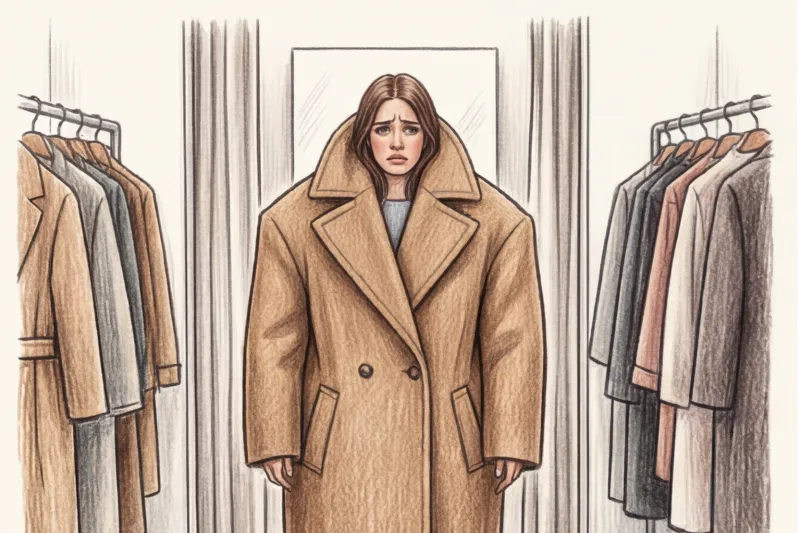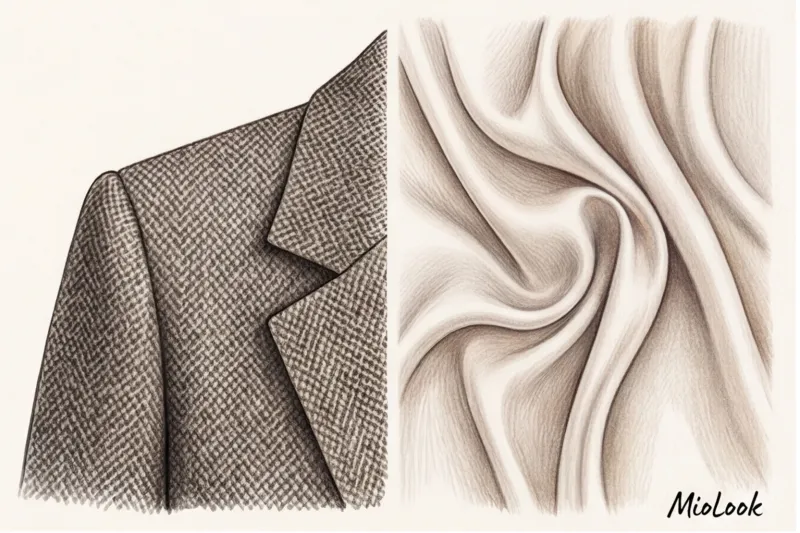
Have you ever noticed how the same basic size 11 sheath dress fits two different women? On one, it looks classy, as if it were custom-made in an expensive atelier, while on the other, it hangs awkwardly, or feels like a strange, rigid shell. Women start blaming their figures, the brand's cut, or the croissant they ate for dinner. But based on my 14 years as a personal stylist, I can tell you: in 9 out of 10 cases, the problem lies in the fabric's texture.
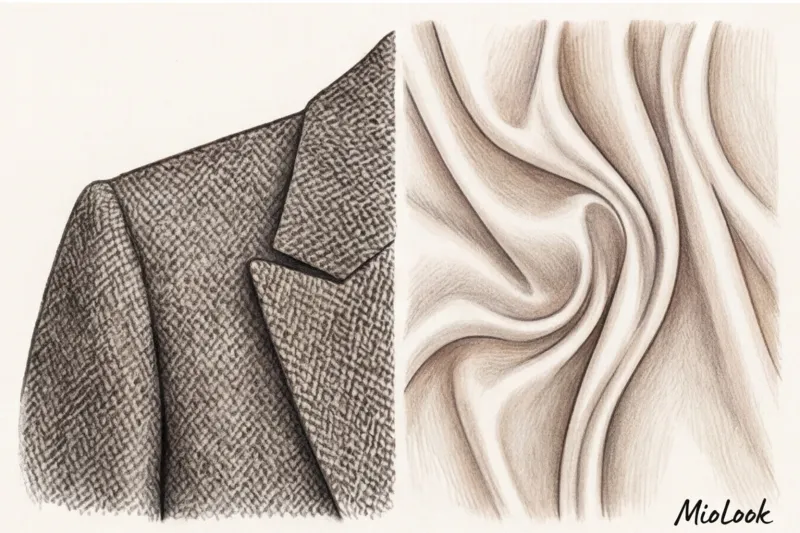
Correctly selected fabrics for kibbie types decide more than a perfect cut. You can find a jacket that's perfectly proportioned, but if it's made of a material that clashes with your natural body structure, the look will fall apart. We've already discussed the basics of this system and body lines in more detail in our The Complete Guide to Kibbe Types Today, let's talk about materiality—the weight, density, and drape of the items hanging in your closets.
Why Fabrics Are More Important Than the Perfect Fit for Kibbie Body Types
When David Kibbee published his book "Metamorphosis" in 1987, he revolutionized the field. He invited women to abandon the outdated "apples and pears" system of fruit selection and view their bodies as architectural blueprints. His theory is based on the balance of yin (soft, rounded lines) and yang (sharp, hard angles).
But many miss a crucial detail: this geometry requires the right building material. The skeletal structure is the framework. If you have a strong, expressive Yang framework, you need fabrics that can hold their own shape. If you are woven from the soft lines of Yin, the fabric should flow, following every curve.
"The mistake I see every other time I review a wardrobe is buying the right cut from the wrong fabric. A classic man buys a simple jacket, but it's made of thin, flimsy knitwear, and it instantly loses all its aristocratic appeal."
Fabric has three critical properties: weight, density, and drape. These determine whether a garment will work for you or against you.
Dramatic and Classic: Fabrics that hold architectural form
For those with a strong Yang (Dramatic) and Balanced (Classic) personality types, clothing is like armor. Your appearance requires clarity, smoothness, and uncompromising geometry. Soft, loose fabrics visually blur your chiseled features and make your figure appear bulky.
Ideal textures: Thick suiting wool, heavy gabardine (its diagonal weave holds the frame well), stiff tweed, brocade, dense raw silk, and high-quality cotton with a weight of at least 180 g/m². These materials don't cling to the body, but create an independent shape around it.
I had a particularly revealing case in my practice. I had a client with a dramatic personality who adored cozy pieces. She wore a trendy, oversized cardigan made of soft bouclé, and in the mirror, we saw how the loose texture had visually added 5 extra pounds and made her look "tired." We replaced the cardigan with a crisp, heavy gabardine blazer from Massimo Dutti. Her silhouette instantly became more defined, and her face became more expressive. The fabric took over the job of shaping her appearance.
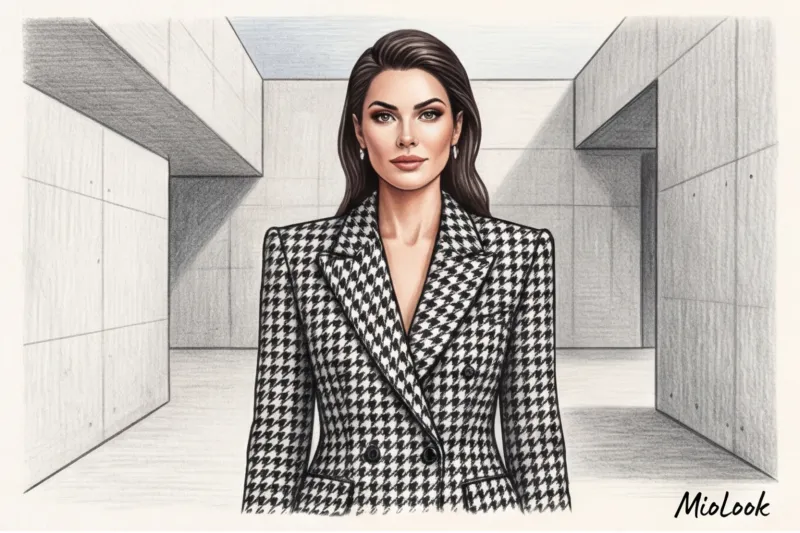
Prints: Sharp geometry, high contrast, symmetry. Classic houndstooth, crisp graphic stripes, large abstract angles. Avoid small florals and watercolor blurs—they'll look lonely against your vibrant architecture.
Your perfect look starts here
Join thousands of users who look flawless every day with MioLook. A smart algorithm will analyze your appearance and create a capsule look.
Get access — €0.99 onceRomantic and Soft Types: The Art of Drapery and Watercolor
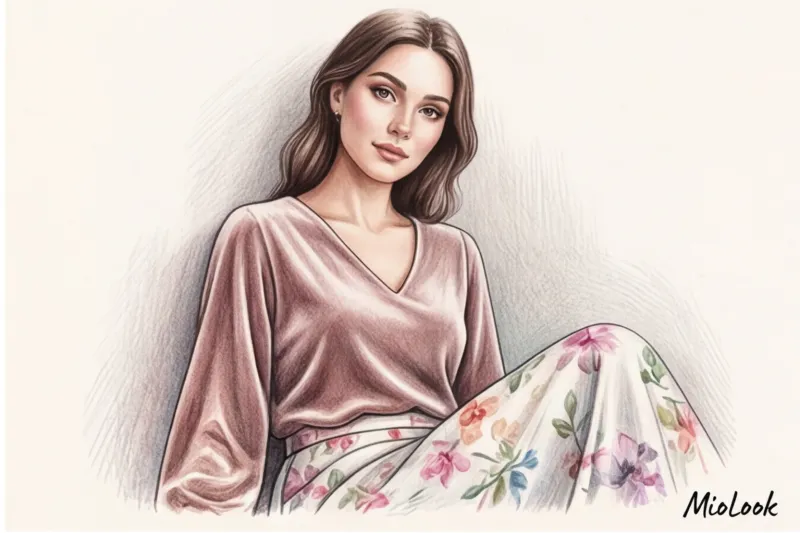
While Dramatic types need a frame, Romantics and all Soft types need water. Your superpower is Yin, soft, rounded lines, and smooth transitions. Fabric should flow over your body, responding to every movement.
Ideal textures: Flowing silk, delicate chiffon, soft velvet, delicate angora, fine lace, and viscose. The main rule: if you hang the fabric over the back of a chair, it should fall gently in beautiful folds, not stand rigid.
One of my Romantic clients struggled for a long time to incorporate the trend for oversized men's jackets with sharp shoulders into her wardrobe. She eventually complained that they made her look "armored" and completely boxy. Once we switched her to a wrap dress made of heavy, flowing silk, her stunning figure emerged and her appearance radiated.
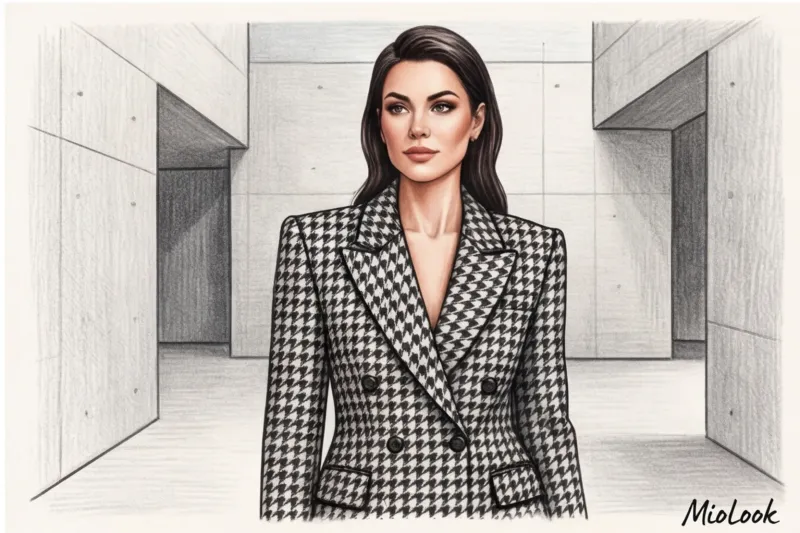
Prints: Watercolor splashes, soft florals, low contrast, and rounded elements. Avoid harsh stripes and strict checks—they will visually cut into your smooth, natural lines.
Limitation: Of course, this advice doesn't work in all life situations. If you have a strict corporate dress code, you wouldn't wear chiffon to the office. In this case, we use dense but flexible fabrics (like crepe georgette) and adapt them. smart casual style for women , pairing a soft blouse with a moderately structured bottom.
Natural and Gamine: The Magic of Texture and a Broken Silhouette
Naturals (soft Yang) are the queens of complex textures. Your appearance can withstand the most incredible roughness. What looks unkempt on a Classic looks bohemian and expensive on you.
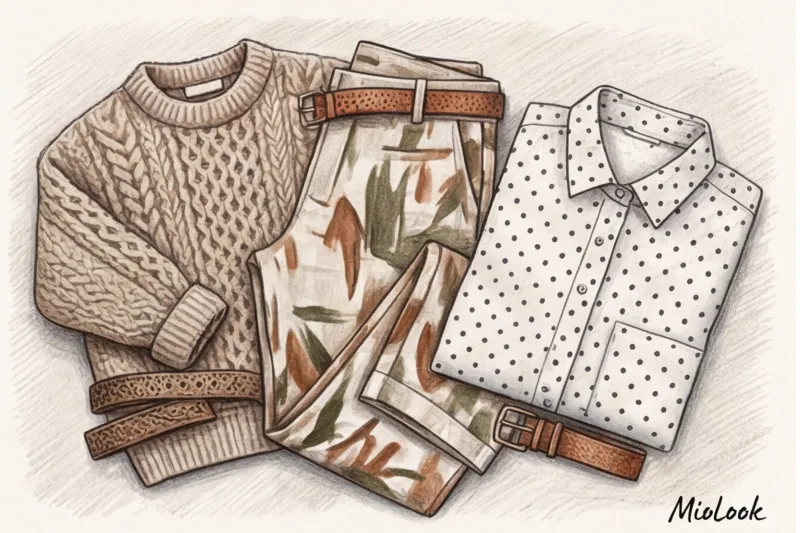
Natural textures: Rough washed linen, suede, chunky cable knit, matte leather. The more texture, the better. Prints: asymmetry, ethnic, abstraction with blurred edges, tie-dye.
Gamins are a miniature clash of Yin and Yang. You need fabrics that hold their shape well but remain lightweight and won't overwhelm your delicate scale (cotton, pique, lightweight taffeta).
Gamina Prints: Small geometric patterns, polka dots, animation, high contrast. How do you choose the right print scale? Over 12 years of practice, I've developed a simple rule for Gamines: use your palm. The ideal rapport (a repeating element of a print) shouldn't be larger than your clenched fist. If the flowers on your dress are the size of your head, the garment will "eat you."
The Myth of 100% Natural: When Synthetics Save the Look
Let's be honest: we've all fallen victim to the marketing myth that clothing must be made from 100% natural fibers. "Only pure linen, only 100% cotton," the glossy magazines insist. But for structured body types (Dramatic, Classic), this mantra is a disaster.
The thing is, pure linen or fine cotton don't have a memory effect. They instantly lose their shape. I often see a perfectly fitting linen suit in the morning turn into a wrinkled mess by lunchtime, ruining the entire "architecture" of the look. According to a 2024 WGSN study, even luxury brands are switching en masse to blended fabrics when creating business wardrobes.
The ideal standard for rigid structured items is a 70/30 (or 80/20) proportion, where the base is natural and 20-30% is high-tech synthetics.
Viscose, elastane, or high-quality new-generation polyester are your friends, not your enemies. They prevent the knees from stretching, maintain a sharp collar angle, and make the fabric spring back nicely in your hands. So, when looking at the tag at Zara or COS, don't be alarmed by the 5% elastane—thank it, your garment will maintain its Kibbe fit all day long.
Ready to get started?
Try the MioLook free plan—no commitments required. Store your wardrobe on your smartphone and get daily recommendations.
Get access — €0.99 onceStylist's Checklist: How to Test Fabrics for Kibbie Body Types in Stores
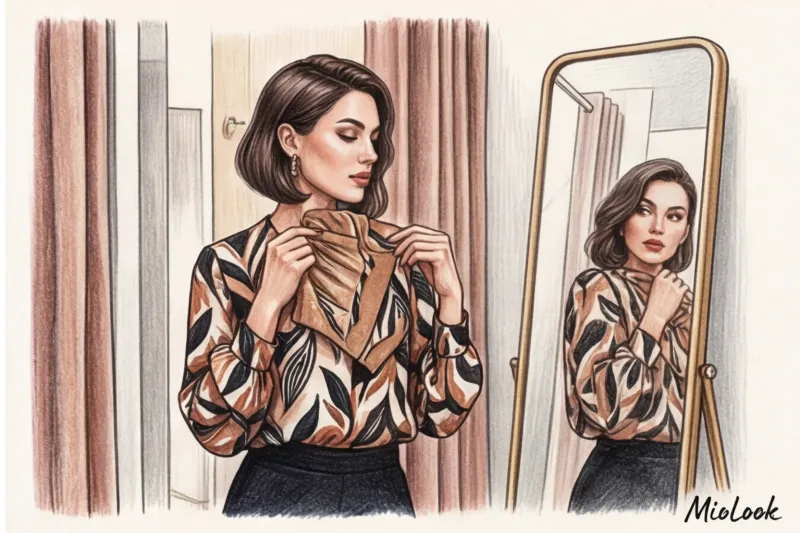
How can you tell if a material is right for you right in the fitting room? I teach my clients four simple tests before purchasing. It takes exactly 15 seconds.
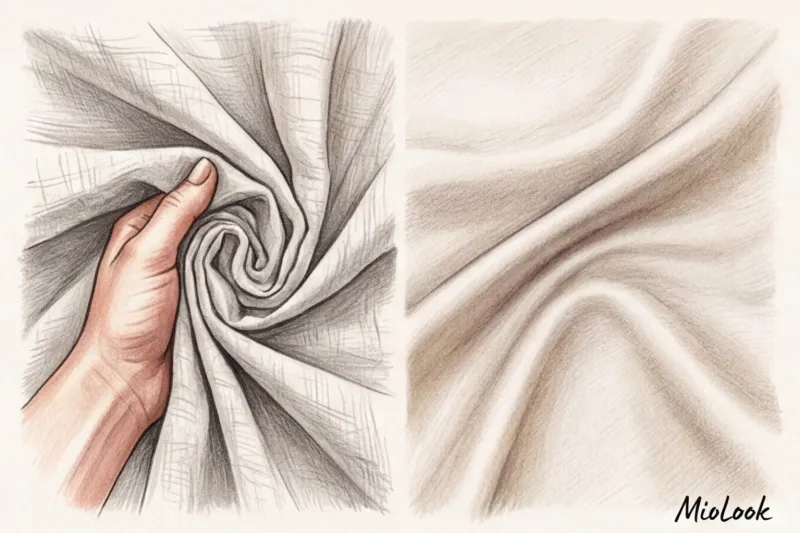
- Crumpled fist test. Hold a piece of fabric in your fist for 5 seconds, squeeze hard, and release. If it remains hopelessly wrinkled, a network of wrinkles, then it's not suitable for structured types. If the fabric springs back (thanks to the correct blend), then it's suitable.
- Drapery test. Place the item over your shoulder. Look at how it falls. Does it fall in beautiful, heavy waves (perfect for a Romantic)? Or does it stick out at an angle (perfect for a Dramatic)?
- Checking the scale. Hold the printed fabric directly up to your face. Don't look at the garment as a whole, just your face. Are your features lost against the backdrop of giant peonies?
- Light test. Matte versus shiny. Twirl the fabric under the fitting room lamp. Smooth, shiny fabrics (satin, leather) enhance Yang characteristics. Deep, matte, light-absorbing textures (suede, velvet) emphasize Yin.
How to Wear 'Banned' Prints and Fabrics: Circumventing the Rules
The Kibbe System is a compass, not a prison cell. What if you're a Dramatic type, but you're madly in love with a delicate chiffon top with a tiny floral pattern? Or are you a Romantic type, looking for status in an important negotiation?
The main stylistic rule: remove anything you "can't wear" from the portrait area. The portrait area (from the chest to the crown of the head) accounts for 80% of the impression. If the fabric isn't your thing, pull it down. Choose flowy chiffon trousers or a skirt, and keep a crisp, crisp top that complements your frame around your face.
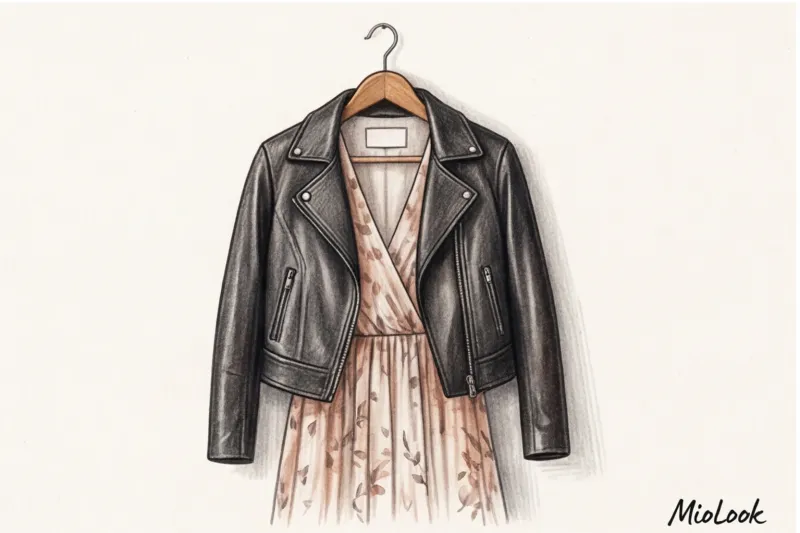
The second technique is statement accessories and layering. Any "wrong" print can be mitigated by layering it with the right jacket for your style, leaving only a thin strip of the print at the neckline. If you find it difficult to combine such items yourself, you can upload photos of your items to MioLook app , and an AI stylist will suggest how to integrate a complex texture into your look without compromising your figure.
Remember: knowing your body type doesn't give you limitations, but rather tools for impression management. If you understand the mechanics of how thread count and pattern scale interact with your cheekbones and shoulder line, you'll never again buy something that hangs like dead weight in your closet with the tag still attached.