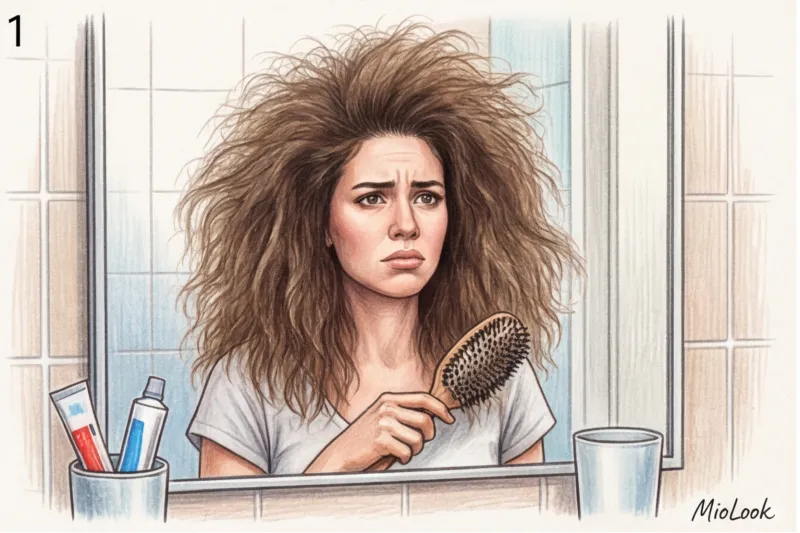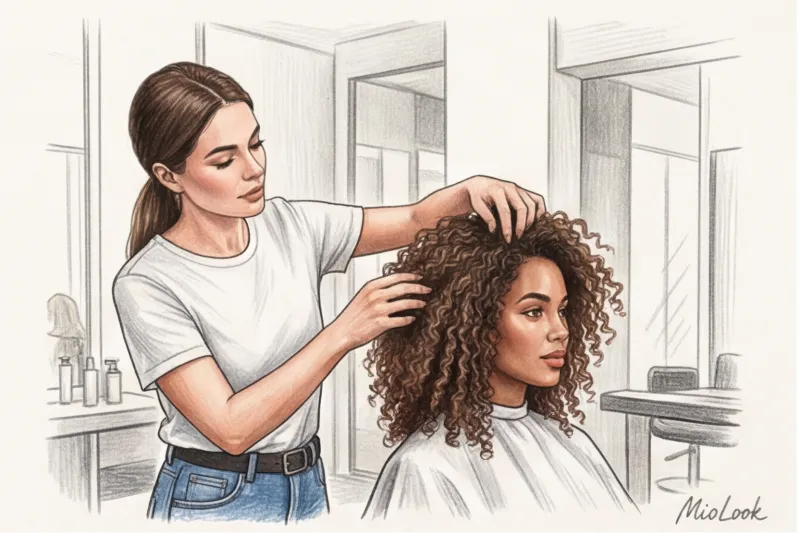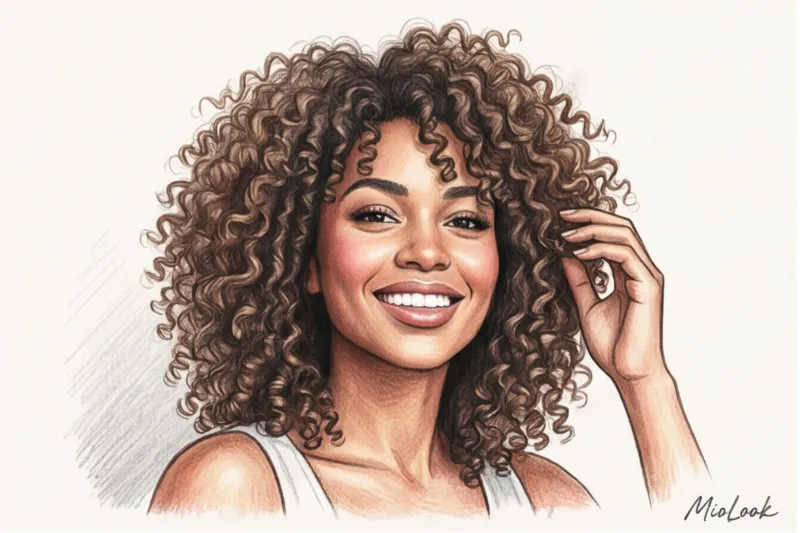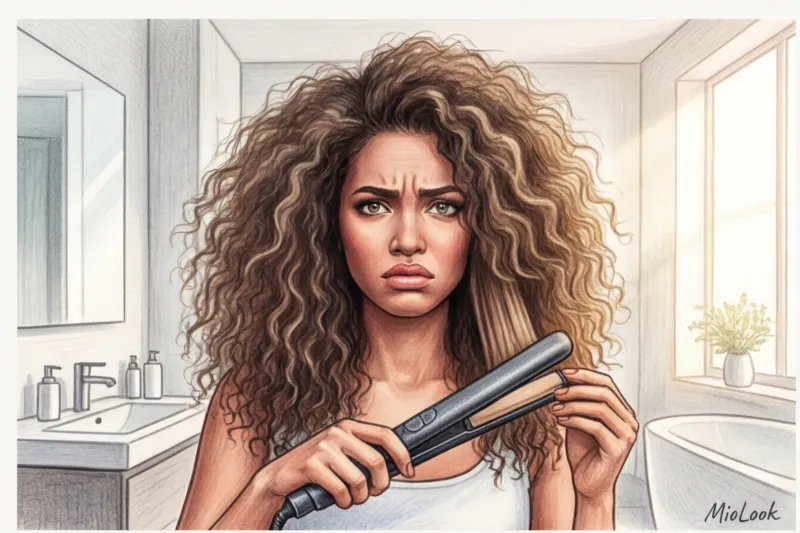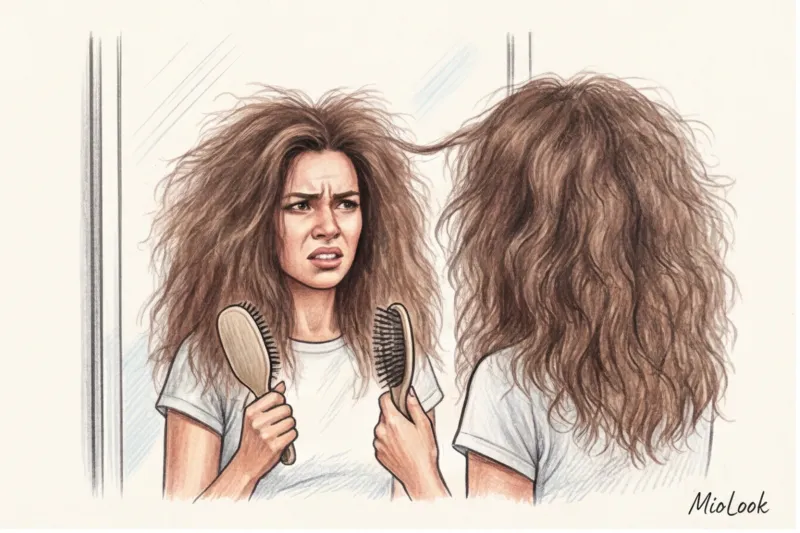
For five years, a lawyer client of mine woke up at 5:30 a.m. She spent an hour and a half fanatically straightening her frizzy hair with a flat iron until it was as smooth as glass. She believed that only a perfectly sleek hairstyle looked classy and courtroom-appropriate. By lunchtime, even the slightest bit of humidity would cause her roots to treacherously curl. When we finally put the flat iron away and introduced proper curling into her routine, she not only slept an hour longer. Paradoxically, her appearance became more sophisticated and confident. We wrote more about integrating quick fixes into your morning routine in our complete guide. Everyday Hair Styling: Quick Ideas for Any Length.
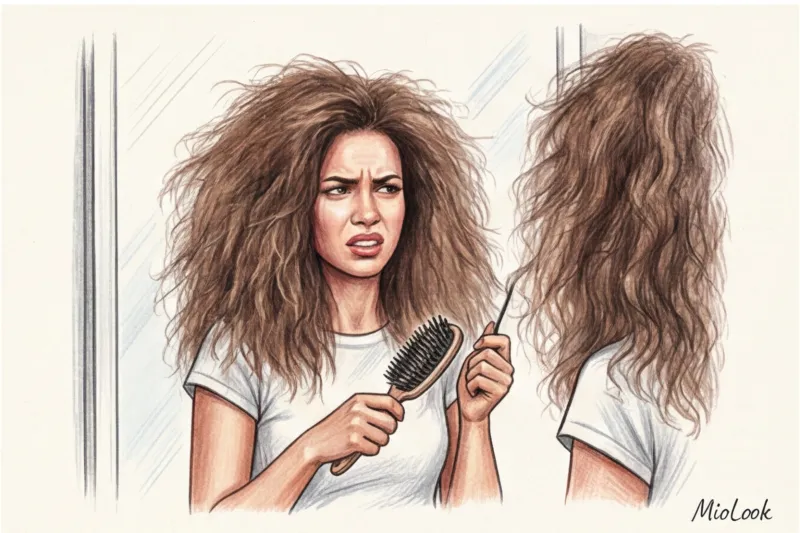
As a certified image consultant, I often encounter a fundamental misunderstanding of texture. Women have been battling frizz for years, buying up tons of oils and smoothing serums from the mass market. The irony is that popular "anti-frizz" products often only exacerbate the problem by accumulating non-water-soluble silicones. In reality, a shapeless, fluffy cloud is simply curls that have forgotten how to hold their shape. And skillfully styling curly hair with a diffuser isn't a TikTok beauty trick, but a basic tool for shaping your silhouette.
Why frizz is hidden curls and how to stop fighting them
Styling-wise, your hair is the pinnacle of your silhouette. You can wear a perfectly tailored, thick wool jacket (say, from COS or Massimo Dutti for €200), but if you're wearing a shapeless, dry mess, the entire look falls apart. The texture of your hair clashes with the texture of the fabric, and the look instantly becomes cheap.
Let's turn to chemistry. Why does porous hair turn into a dandelion when brushed? It's all about hydrogen bonds. Curly hair has an oval (elliptical) cross-section, unlike the round, straight hair. When you brush it dry, you mechanically break the hydrogen bonds between the keratin fibers. The hair tries to return to its natural spiral, but the strand has already been broken into hundreds of individual hairs. The result is that famous "frizz."
According to statistics, approximately 90% of Slavic and European women who complain of "unruly, perpetually frizzy" hair actually have a hidden 2A-3A curl pattern. They simply have never tried to properly moisturize and set it.
The main mistake I see during consultations is trying to "smooth" this porous structure with heavy oils. Oil doesn't moisturize. It only creates a film on the surface of the cuticle. Curls need water, and then that water needs to be locked into the hair.
The ultimate architectural tool: styling curly hair with a diffuser
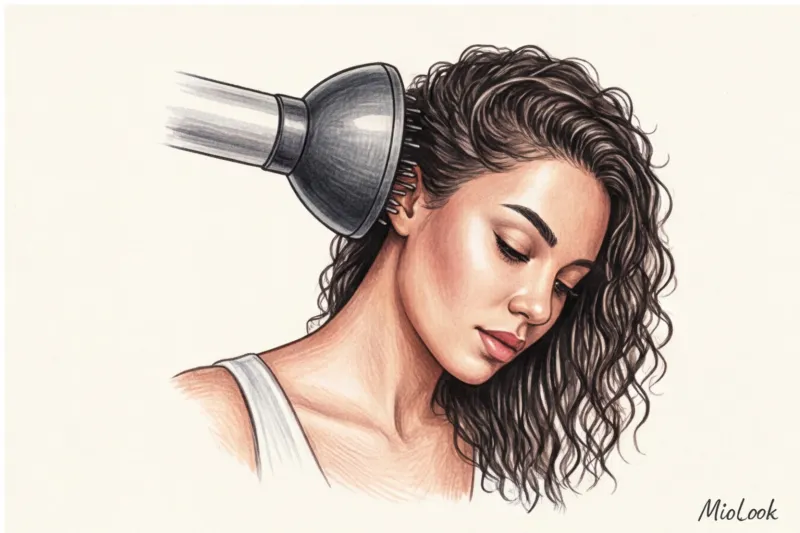
A diffuser isn't just some weird "finger attachment" that collects dust in your hair dryer box. It's an engineering solution for distributing a powerful airflow into multiple, weaker streams. A traditional hair dryer nozzle blows hair strands out, ruining their shape. A diffuser, on the other hand, gently envelops them in warmth, allowing styling products to set the curl.
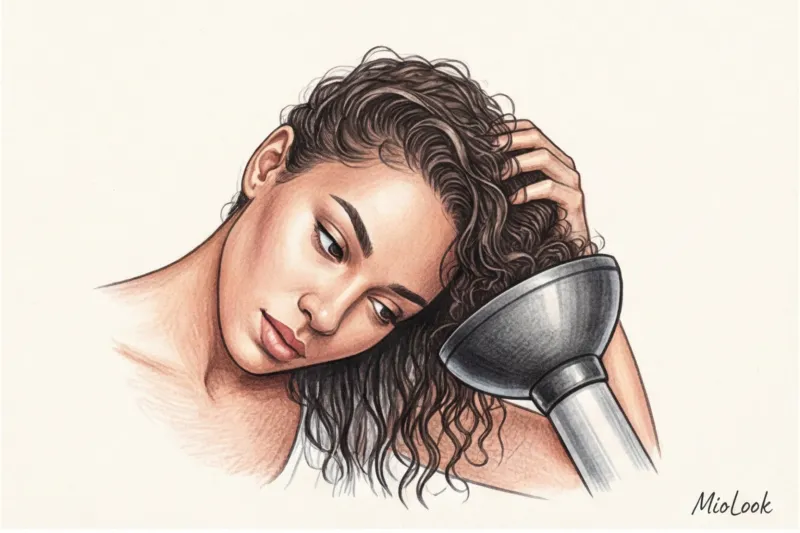
The basic rule without which nothing will work: styling is applied only on wet hair In the bathroom, when water literally drips off your hair strands. Trichologists call this the "seaweed effect"—the hair should be slippery, smooth, and clump together into thick, wet strands without a single stray hair. Only then do we reach for the hair dryer.
Your perfect look starts here
Join thousands of users who look flawless every day. Upload your photos and let AI find the best silhouettes for your hair texture.
Get access — €0.99 onceTemperature control and the Hover and Scrunch technique
Trichologist research on the effects of high temperatures on porous cuticles (for example, data from the Textile Research Journal) is unambiguous: hot air causes the cuticle scales to lift. Moisture quickly evaporates from the cortex, causing the hair to greedily draw water from the environment, causing frizz to return. Therefore, styling curly hair with a diffuser is always done at medium or low temperatures.
There are two key drying stages that take 10-15 minutes:
- Hover Technique: For the first 3-5 minutes, don't touch the hair with the diffuser at all. Instead, simply move it around your head at a distance of 10-15 cm. The goal is to dry the roots, create basic volume, and give the gel a chance to set so the curl doesn't fall apart when touched.
- Scrunch Technique: Once the gel has lost its stickiness, gently fold the strands of hair into the diffuser bowl. Press the bowl against your head, hold for 20-30 seconds, turn off the hair dryer, and remove. Avoid any sudden movements.
Shaping a "caste": why stiff hair during drying is a good thing
And now comes my favorite part, where 8 out of 10 women who try this method for the first time break the stereotypes. You've dried your hair, and it looks... awful. It's stiff, stuck together, and hard to the touch. At this point, many people panic and rush to wash out "that awful gel."
Stop. If your hair is crispy after it's completely dry, you've done it perfectly. This styling shell is called caste This is not a bug, but the main technical goal.
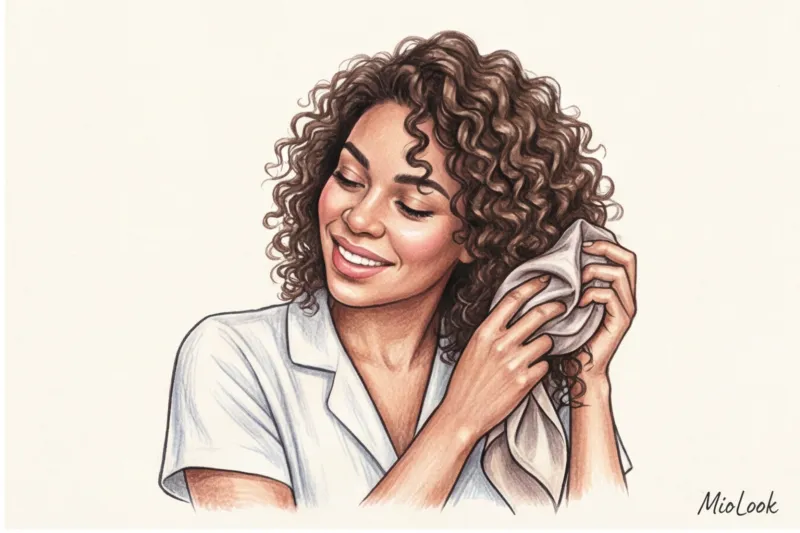
The cast acts as a rigid framework that traps moisture within the porous hair while it dries and prevents the cuticle from becoming fluffed by airflow. Once the hair is 100% dry (and not a percent less!), we begin the magic of SOTC—Scrunching Out The Crunch.
Take a drop of light oil (such as argan) or a regular smooth silk scarf. Tilt your head and use gentle, upward squeezing motions to comb your dry curls. The hard crust will instantly crumble, leaving behind incredibly soft, shiny, yet defined curls that will last for 3-4 days.
Styling for porous hair: the two-product rule
You absolutely don't need the 10-step Curly Girl Method (CGM) if you live the fast pace of a big city and aren't filming YouTube tutorials. The overabundance of jars is a marketing ploy. According to WGSN (2024), the global trend has shifted toward hair skinification—a minimalist yet effective treatment.
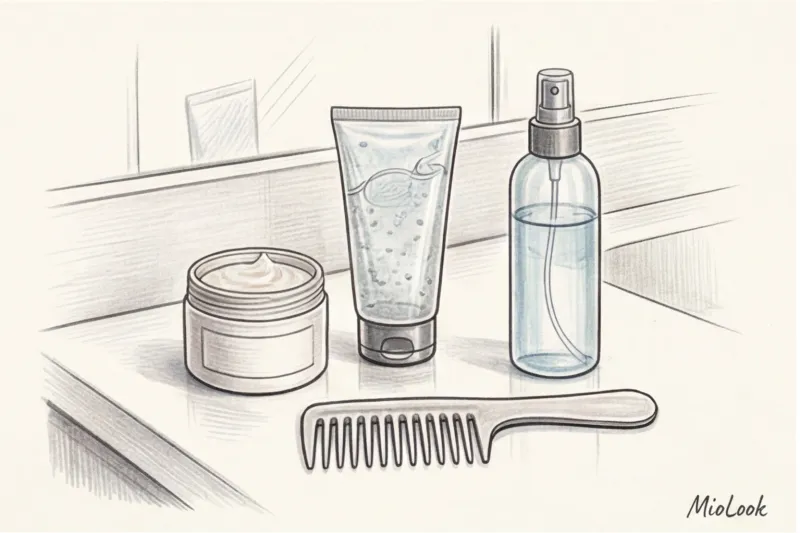
My styling formula consists of two steps: Moisturize + Hold.
- Leave-in conditioner (leave-in cream). This is responsible for hydrating the hair. It's important to consider your genetics here. Heavy creams with shea butter and coconut oil (often found in brands for Afro-textured hair) will turn fine Slavic hair into dirty icicles. Look for lightweight textures with aloe or panthenol in the €15–€30 price range.
- Strong hold gel or foam. It is they who form that very caste.
Important limitation: When does this system NOT work? If you have chemically straightened, keratin-treated, or extremely bleached hair with a 10th tone (total blonde, where the cortex is completely empty). In these cases, the hydrogen bonds are irreversibly broken, and a diffuser will only accentuate the damage. Only a brush or hot tools with heat protection will save you here.
Also, pay attention to the dew point and glycerin content. In winter, when radiators are dry, high-glycerin gels will draw moisture out of your hair, resulting in dryness. During the rainy season, glycerin, on the other hand, will draw moisture from the air into your hair, resulting in uncontrollable frizz.
How to incorporate curls into a strict business dress code
I often hear: "Curls are for vacation; you need to look serious at the office." This is a profound misconception, based on a failure to work with texture contrasts. In imageology, there's a rule: the more complex and vibrant your hair texture, the more minimalist your clothing should be.
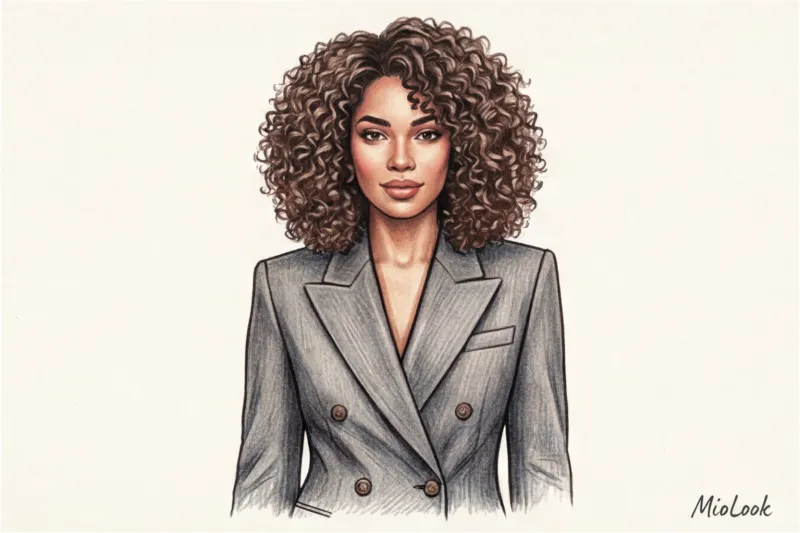
Imagine a crisp, menswear-inspired jacket, a sleek silk blouse, and... sleek, slicked-back hair. It looks flat and often boring. Now add to this same tailored suit the vibrant, voluminous architecture of defined curls. The look instantly becomes expensive, Italian, with a touch of casual chic (sprezzatura).
Dangerous stylistic combinations: Curls + small floral print (millefleur) + ruffles. This is the "shepherdess" aesthetic that instantly flatters the face and transports you back to a childlike state. If you wear curls, opt for minimalist clothing: satin, thick suiting wool, cashmere, clean lines, monochrome.
If the dress code requires hair up (for example, for an interview at an IT company or bank), curls are your best friend for creating a classy low bun. Don't brush them! Gather defined curls into a low ponytail at the nape of your neck, wrap them around an elastic band, and secure with bobby pins. The texture will give the bun a voluminous and complex look, rather than a mousey ponytail. Not sure if this hairstyle will suit your new office look? Use image selection function in MioLook to assemble the perfect set in advance.
Morning Rescue Plan: 5-Minute Curl Refresh
The biggest fear of beginners: "Do I have to wash my hair and stand there with a diffuser every morning?!" Nope. Properly dried and styled curls will hold their shape until the next wash. Your morning routine is reduced to 5 minutes.
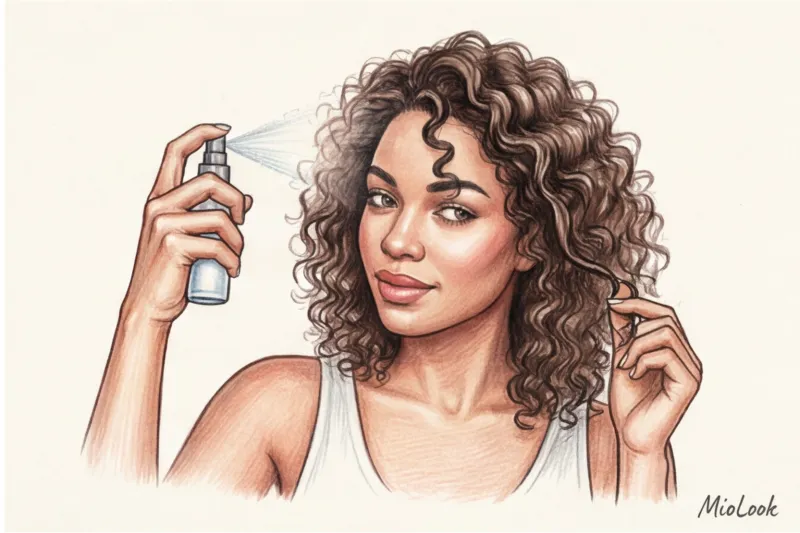
The process of restoring shape is called "refreshing." Your hair may become slightly mussed overnight. Your goal is to lightly moisturize only the strands that have lost their shape.
- You will need a fine mist spray bottle (continuous spray bottle).
- Lightly spray the dented areas with water (not wet, but like morning dew).
- Rub a pea-sized amount of gel between wet palms and gently smooth frizzy strands from top to bottom.
- Squeeze your curls upwards – the curl will bounce back. After 5 minutes, it will dry on its own.
To minimize refreshing, sleep on a silk or satin pillowcase (cotton acts as a grater, drawing out moisture and loosening the cuticle). At night, gather long curls into a "pineapple"—a loose, high ponytail at the very top of your head, using a soft silk scrunchie.
Ready to get started?
Try a free plan—no commitment. Find a wardrobe that perfectly complements your natural hair texture.
Get access — €0.99 onceImage Maker Resume: A Checklist for Healthy and Stylish Curls
Embracing your natural texture isn't about covering up imperfections, it's about expressing your individuality. Once you stop fighting nature with a straightener at 200°C and start using the laws of physics to your advantage, your personal style will reach a new level.
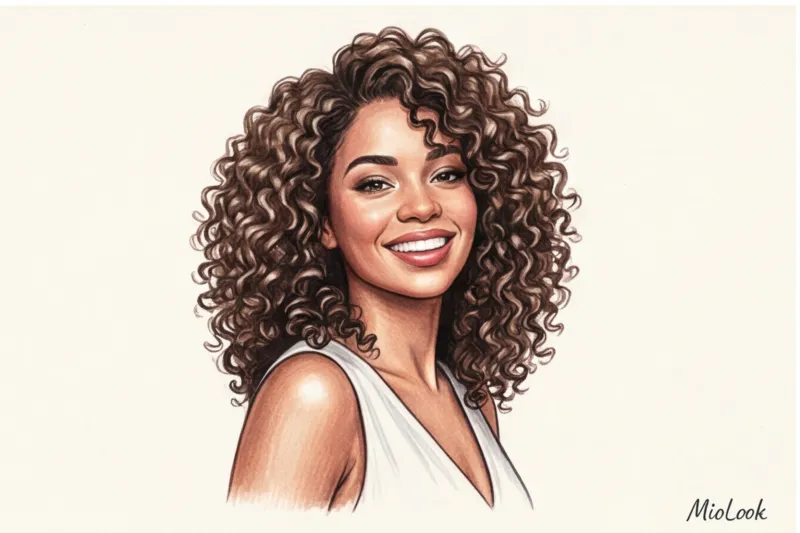
Remember these five fundamental steps:
- Apply styling products (Livin + gel) only to completely wet hair.
- Dry with a diffuser on low or medium heat without breaking strands.
- Wait until it's 100% dry and a hard cast has formed. No manual inspection during the process!
- Break the cast with a silk scarf or a drop of oil.
- Wear texture proudly, balancing it with clean lines in your clothing.
Styling curly hair with a diffuser is an investment in the quality of your hair. Give your curls a chance, the right gel, and a little time to adjust, and you'll be surprised at what a powerful styling tool they can become.