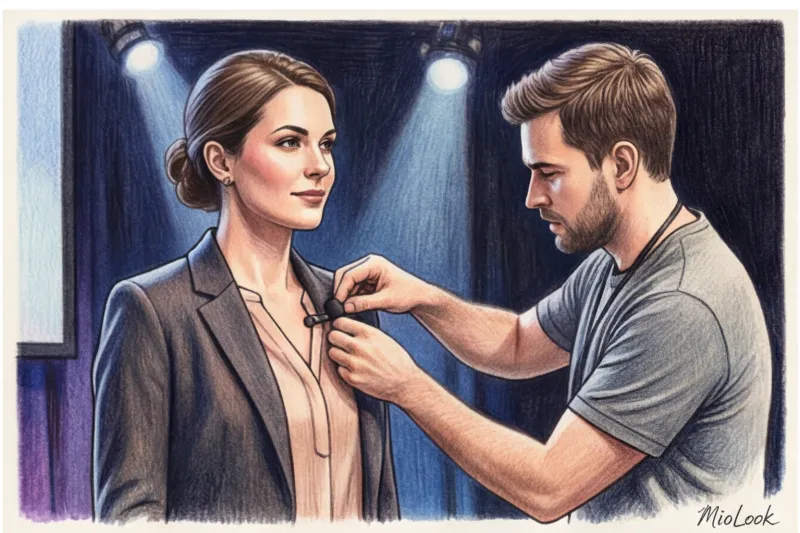
Two minutes before going on stage at a major IT conference, my client, a top manager at a fintech company, is mentally rehearsing the opening lines of her presentation. Suddenly, a sound engineer runs up to us, literally rips the lavalier microphone off her, and categorically declares, "Take off your necklace, or we'll mute your sound." It turned out that her beloved multi-layered necklace, which looked flawless and a status symbol in real life, was smashing against the microphone's plastic with every breath. A deafening crackling sound came from the technicians' headphones.

It's moments like these that make you realize: choosing the right jewelry for a public appearance isn't a matter of personal taste or current trends. It's a strict matter of technical safety and managing the attention of a large audience. We've already discussed the basic silhouette in more detail in our The complete guide to public speaking attire and a status wardrobe And today I propose to analyze the most insidious detail – accessories that can either save your speech or completely ruin it.
Why Public Speaking Jewelry Is an Attention-Managing Tool
There's a popular, yet fundamentally flawed, piece of advice among public speaking coaches: "For a serious presentation, strip yourself bare." Many take this literally and appear before the audience in completely bare, basic shirts without a single detail. In fact, a completely bare, bare-bones appearance on a large stage makes your image appear incomplete. You appear vulnerable, and the audience's eye simply has nothing to engage with.
According to a 2023 study by the Institute of Applied Neuroaesthetics, the human brain scans the face of the person you're speaking to, searching for "visual anchors." If they aren't in the portrait zone, the audience's gaze begins to wander around the room, to the screen displaying the presentation, or to their phones. A well-placed matte brooch or simple earrings draw the audience's gaze back to your face.
But there's a fine line here—cognitive ease. An excess of glitter and fine detail overloads the visual cortex. The viewer unconsciously wastes cognitive resources staring at your shimmering stones rather than comprehending the complex analysis you're presenting. Your goal is to create a focal point, not visual noise.
The Speaker's Main Enemy: How Accessories Conflict with Technology
What garners compliments at an intimate business breakfast can irreparably ruin a professional video recording. The physics of sound and light on stage dictate their own strict rules. Ever noticed how sometimes in YouTube recordings of conferences, the speaker's voice is accompanied by a strange metallic clang? That's the laws of acoustics at work.
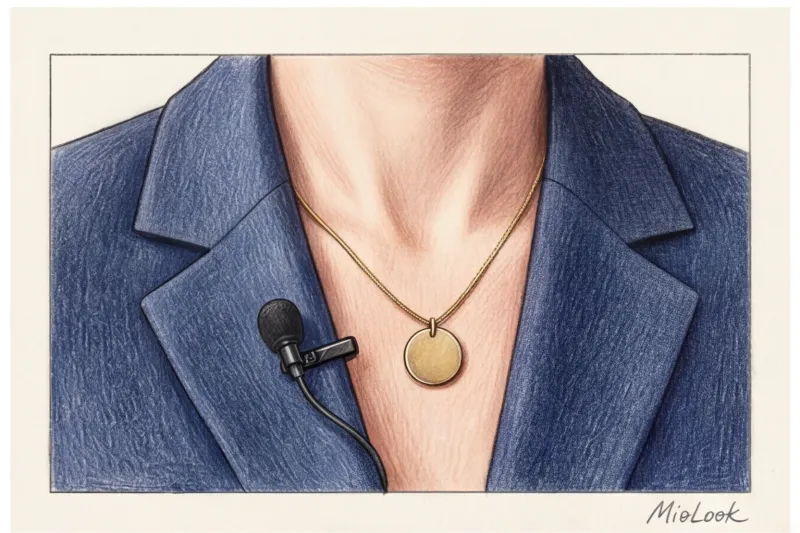
Lavaliers, microphones and audio interference
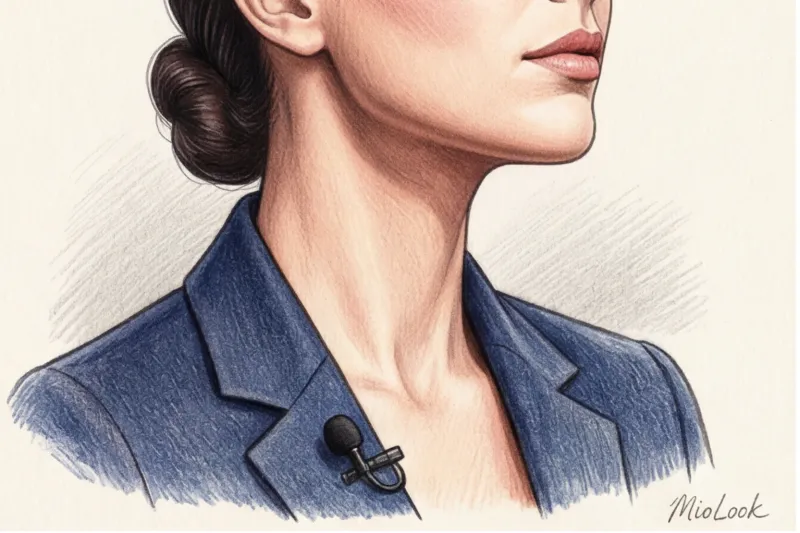
Lavalier microphones are incredibly sensitive. They pick up high-frequency metal ringing (in the 2000–5000 Hz range), which is three times louder than your voice in the final recording. The area where the lavalier is attached—the lapel of a jacket or the edge of a shirt collar—should be completely clear. Long chains, bulky pendants on cords, and stiff chokers are unacceptable if you plan to speak into the microphone.
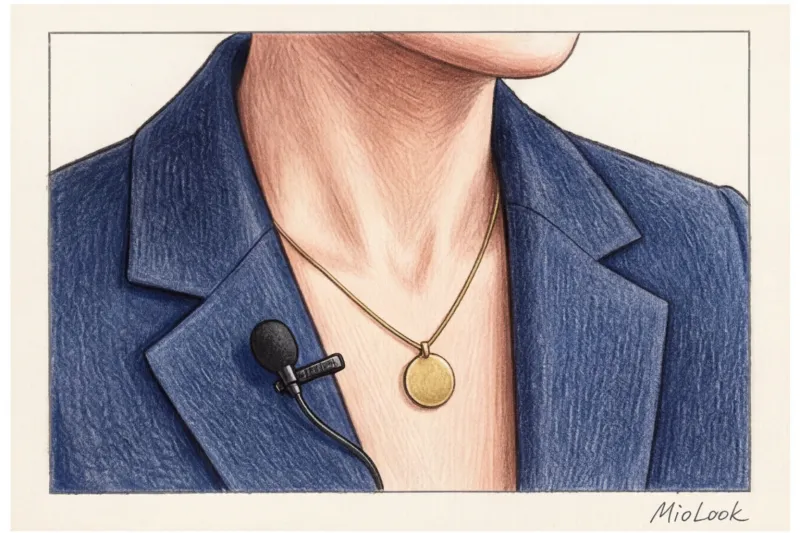
Stage lighting and highlights
Spotlights and powerful ring lights hate glossy metal and rhinestones. Bright, directional beams reflect off polished surfaces, and these glare directly hit the lens, bleed-out the camera sensor (the so-called "bunny effect"). Broadcast engineers always ask speakers to choose matte textures: satin silver, unglazed ceramic, fine wood, or thick fabric.
Blacklist: What You Should Never Wear on Stage
Over 12 years of working with experts, I've compiled a personal anti-rating of items that clients have to remove right before going on stage. Remember these four no-nos.
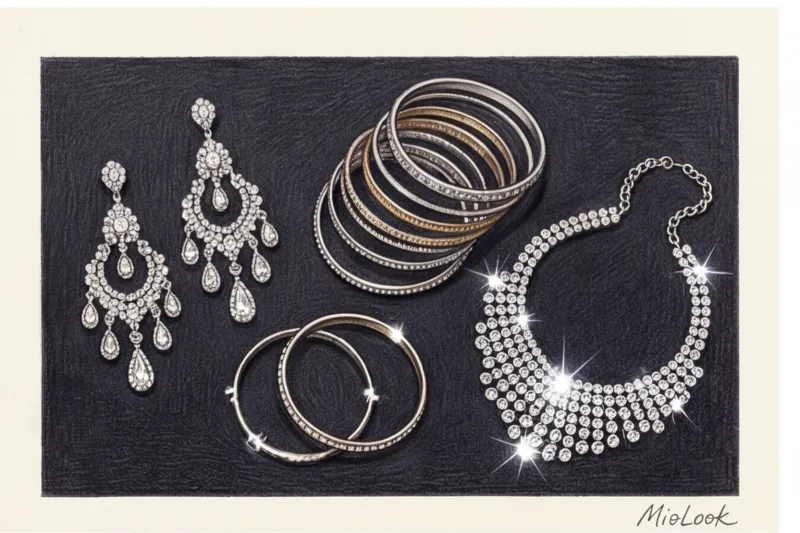
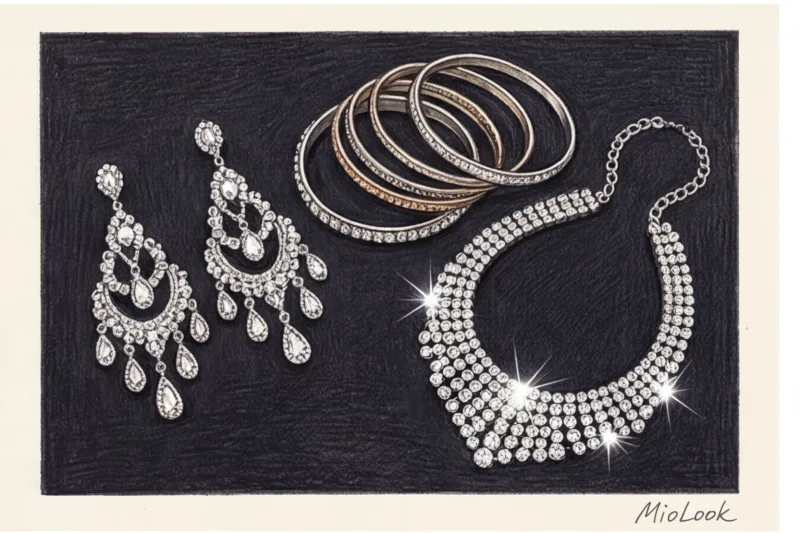
- Chandelier earrings and long pendants. With every nod or turn of their head, they create a rhythmic pendulum effect. This literally hypnotizes the front rows, but completely lulls them into a state of distraction.
- Stacking bracelets. When you actively gesticulate, they act like castanets. You can say brilliant things, but the audience will only remember the annoying ringing.
- Large rings with stones on the index finger. The index finger is often used to emphasize important points. A large ring will turn a compelling gesture into a banal display of jewelry.
- Cheap glossy jewelry. HD cameras mercilessly reveal the low quality of materials. Mass-market alloys (usually brass with a thin coating) take on a dirty yellow or unnaturally white tint under cold professional lighting, cheapening the entire look.
Of course, I must add a disclaimer: this rule does NOT apply if you're a flamboyant creative, pop artist, or fashion influencer, where visual provocation is part of your personal brand's DNA. But for IT, finance, medicine, and traditional consulting, this list is an absolute no-no.
Your perfect look starts here
Join thousands of users who look flawless every day with MioLook.
Get access — €0.99 onceThe Speaker's Golden Ratio: What Jewelry Builds Your Authority
My favorite stylistic formula for the scene is "meaningful minimalism." Leave no more than two dots of shine in the portrait area. This is enough to convey status, but not enough to distract from the essence.
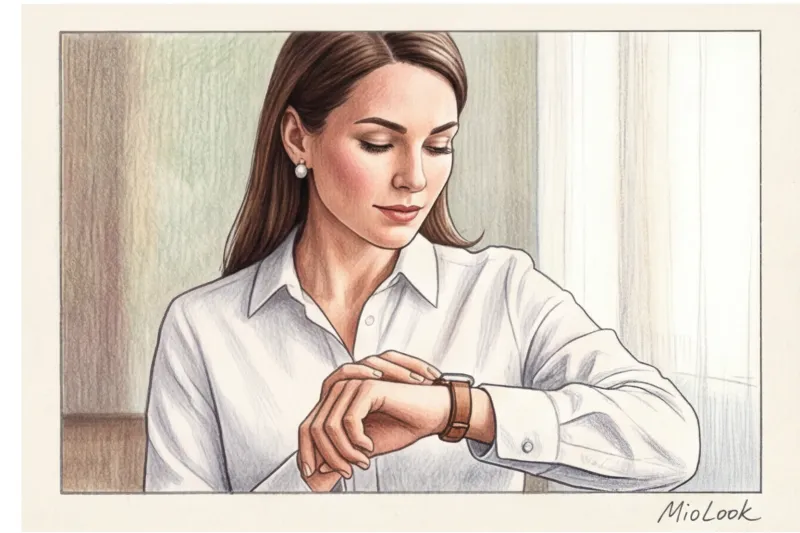
Earrings: Focus on the eyes
The ideal choice is classic stud earrings, small congo earrings (wide hoops up to 2 cm in diameter), or geometric matte shapes. Be sure to consider the temperature of the metal. Bright spotlights often make skin appear paler than it actually is. If you have a warm undertone, matte gold will bring a fresh glow to your complexion, while cool, polished silver can make you look tired and unhealthy.
Brooches: semantic emphasis and status
Remember Madeleine Albright's famous "pin diplomacy," which used brooches to convey hidden messages in political negotiations. A brooch is a powerful storytelling tool. Place it on the left side, just above your bustline. This way, it will direct the viewer's eye diagonally toward your face, acting as an invisible arrow.
Watches: Status without unnecessary noise
A watch with a chunky metal bracelet will inevitably bang against the podium, laptop, or table during a panel discussion. Replace it with a model with a strap made of thick organic cotton, high-quality eco-leather, or matte high-tech ceramic. This is the kind of status symbol that doesn't scream money, but confidently whispers of the owner's intelligence.
Eco-friendliness and awareness in choosing status accessories
As a sustainable stylist, I always emphasize: your accessories convey your values even before you utter a single word. According to a McKinsey global report (2024), over 60% of luxury consumers today pay attention to the ethical origin of materials. This trend has firmly established itself in the business world, too.
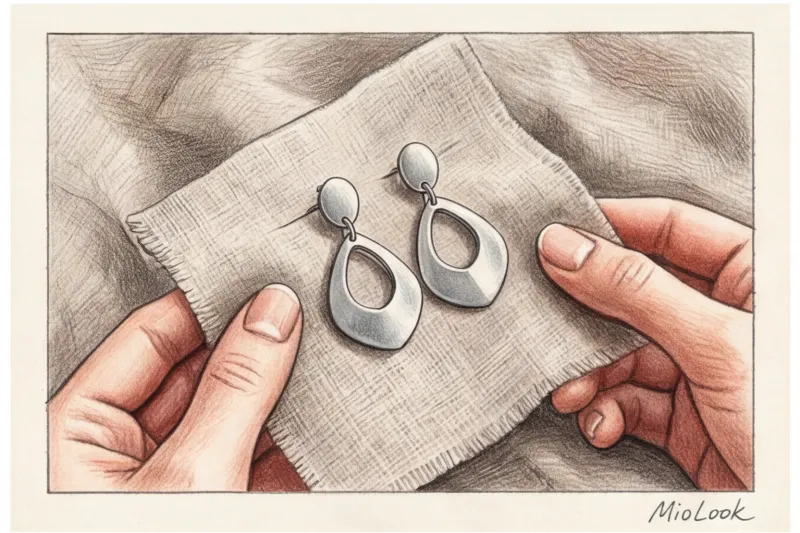
Invest in brands that use recycled silver, ethically sourced stones, or lab-grown diamonds. A high-quality, handcrafted ring from a local artisan with a transparent provenance is far more effective for your personal brand than a logo-laden, heavy luxury bracelet. It shows your audience that you're thinking globally and caring about the future, not just to show off your purchasing power.
By the way, in order to avoid buying new jewelry for just one performance and to support the principles of reasonable consumption, I recommend using smart wardrobe feature in the MioLook app Artificial intelligence will analyze your current wardrobe, evaluate the geometry of your jacket's neckline, and suggest which of your existing accessories will perfectly complement your stage look without any additional expense.
Access to MioLook for €0.99 — one-time payment
A smart AI stylist will choose the perfect look for you.
Get access — €0.99 onceChecklist: Test-driving accessories before going on stage
Never wear new, untested jewelry on the big day. Here's a practical step-by-step guide my clients always go through in front of the mirror in their dressing room (or at home the night before):
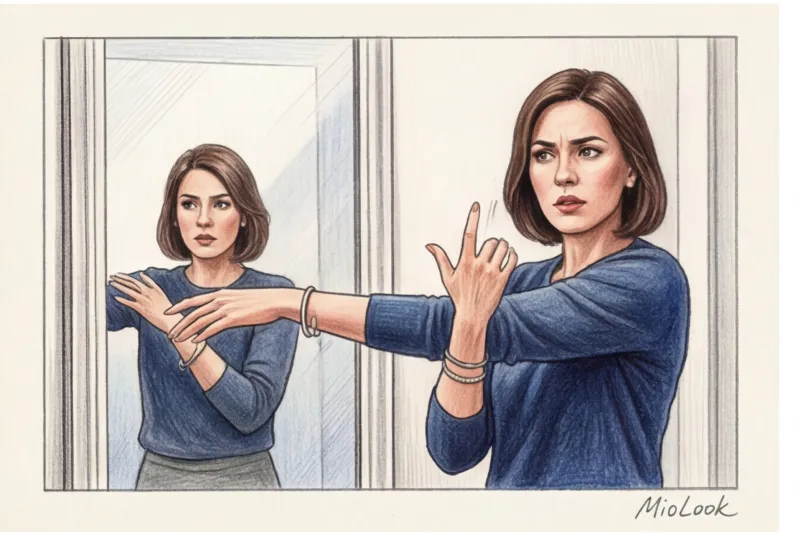
- Audio test: Stand in a quiet room, jump up and down vigorously, and gesture energetically with your hands, as if you were making an important point. Hear the ringing? The jewelry stays at home.
- Light test: Take a selfie with a hard flash in a dark room. If the accessory produces a harsh white glare that obscures the texture of the fabric and is blinding, replace it with a matte alternative.
- Microphone test: Pin an imaginary buttonhole to your jacket lapel (about a hand's breadth below your collarbone). Lean forward toward the audience. Does your pendant or necklace touch this area? If so, choose stud earrings instead of pendants.
- Comfort test: Turn your head sharply to the right and left. Earrings should not catch in your hair, shirt collar, or scratch your neck. Any physical discomfort will immediately be reflected in your facial expression.
A speaker's accessories aren't just decoration, but a strictly functional tool. When you're standing in front of an audience of hundreds, your primary goal is to convey your message without visual or auditory interference. By choosing "quiet," matte, and eco-friendly accessories, you demonstrate deep respect for your audience and your technical team. And trust me, this confident, intelligent simplicity will be remembered by the audience far more than the most expensive, but misplaced, diamond.