Do you remember the first time you put on a pair of thin jeans with 5% elastane? It probably felt like liberation. They didn't pinch anywhere, you could bend over freely, and the fabric hugged your body softly. But this comfort came at a high price. Just last week, my client Anna (43, a department head at an IT company) nearly burst into tears in the fitting room. "My figure has completely deteriorated; no pants suit me," she said, looking at herself in her usual jeggings. But the problem wasn't her body. It was the thin stretch.
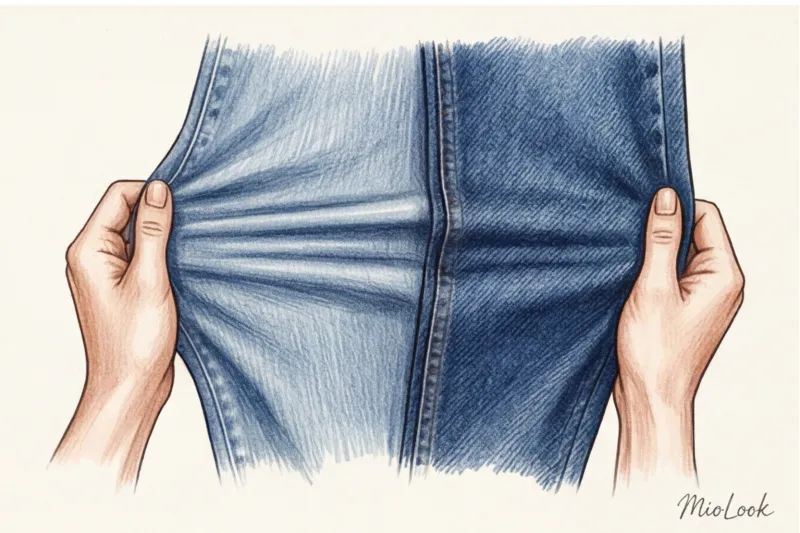
The mass market industry has been telling us for years that jeans for women over 40 should be as flexible as possible for the sake of "age-appropriate comfort." This is a colossal misconception. We discussed the architecture of a basic wardrobe in more detail in our The complete guide to a basic denim wardrobe , but today I want to address a specific pain point—why your usual stretch is betraying you, and how to find your perfect match.
The Architecture of Denim: Why Stretch Is Your Main Enemy After 40
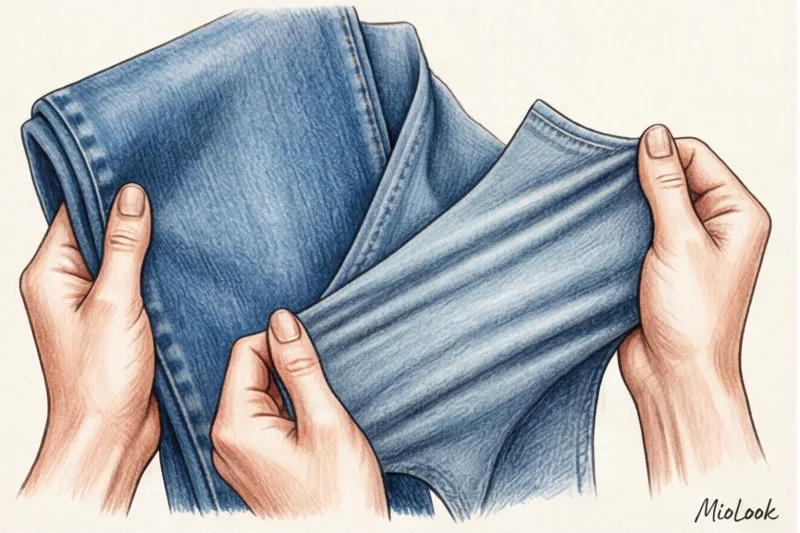
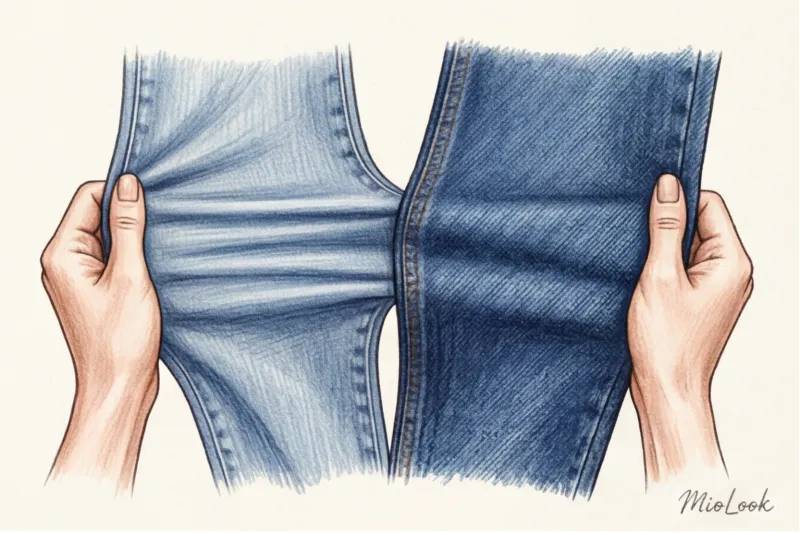
Stretch is your enemy, not your friend. Most women look for styles with the highest elastane content, hoping for comfort. But thin stretch denim is the one that treacherously highlights every unevenness on the skin, loses its shape at the knees by mid-work, and detracts from the overall look. It acts like a second skin, not clothing.
"Rigid denim is an architectural framework. It doesn't conform to your imperfections; it forces your silhouette to conform to its ideal geometric lines."
In the professional stylist community, we use the Denim Density Index—the density of a fabric measured in ounces (oz). High-end jeans weigh between 12 and 14 oz. This material is produced using ring-spun technology, which creates an uneven thread and incredibly strong. By comparison, inexpensive stretch denim is made from open-end denim with a density of 8–9 oz.
According to the application's internal statistics MioLook By 2024, 80% of women over 40 would throw away their thin stretch jeans within eight months of purchase. The reason is always the same: fabric deformation. To ensure your investment pays off, look for the following formula on the tag: 98–100% cotton and maximum 1–2% elastane.
Access to MioLook for €0.99 — one-time payment
A smart AI stylist will select the perfect look for every day and help you optimize your wardrobe.
Get access — €0.99 onceStyles That Work: How to Choose Jeans for Women Over 40
When we abandon the tightness of stretch, geometry comes into play. The key to a youthful, toned silhouette is the air between the body and the fabric. Skinny jeans are ruthless: they require perfect leg tone, otherwise they visually turn into "sausages." Geometrically correct shapes, on the other hand, elongate the height and conceal nuances.
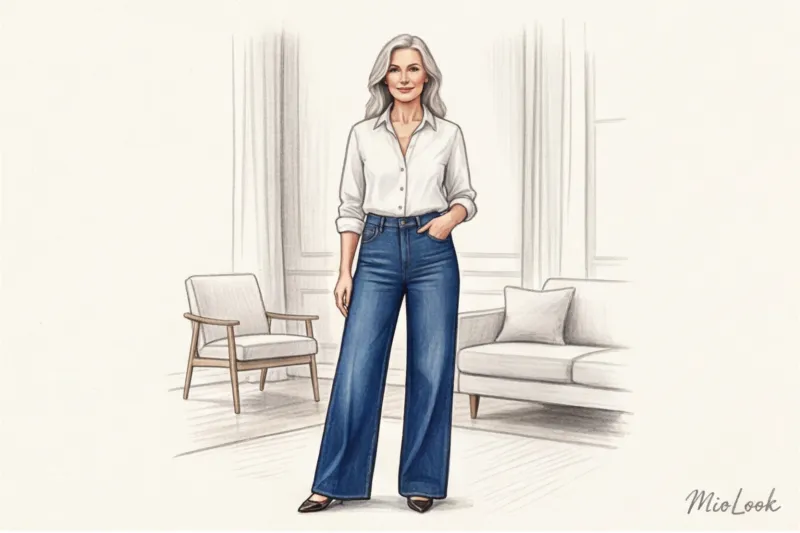
Straight: Impeccable status base
Straight jeans are a top investment. If you're only planning on buying one pair in the €80-€150 range (for example, at Massimo Dutti or Arket), go for the classic straights. Their main difference from skinny jeans is that the leg falls straight down from the knee, not hugging the calf.
They create a quiet luxury effect when paired with loafers, a cashmere turtleneck, and a structured coat. They're a versatile canvas for any look.
Wide-leg and Palazzo: Elegant Relaxation
Wide-leg styles perfectly smooth out any imperfections in the hip area. If you have hip dips, a tight wide-leg will conceal them completely, creating a smooth A-line from the waist down.
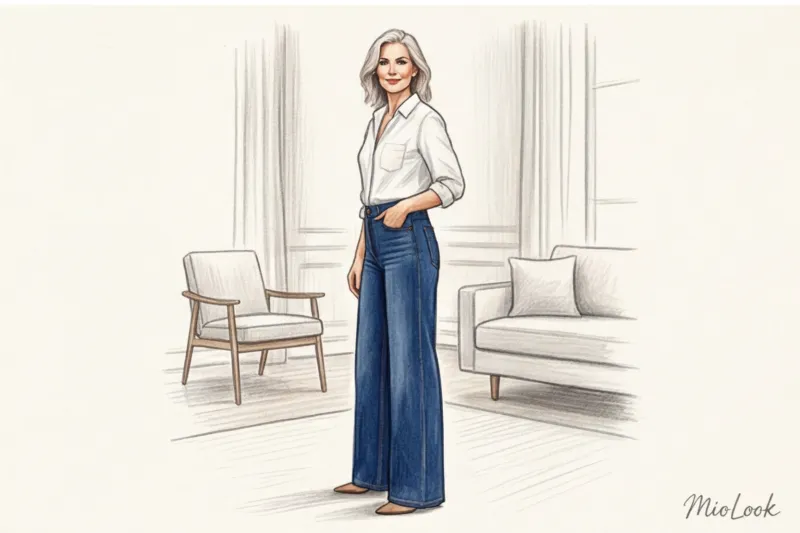
The key here is balancing volume: if the bottom is wide, the top should be compact. Tuck in blouses, wear cropped jackets, or use a belt to define your waist. The ideal length is when the hem of the pant leg covers two-thirds of your heel or chunky sole.
Bootcut and Flare: Perfect Proportion Correction
The bootcut style (slightly flared from the knee to accommodate boots) is a boon for a pear-shaped figure. The flare at the bottom visually balances out heavy hips.
But there is a strict limitation here that fashion magazines often remain silent about. This style absolutely does not work with a flat run. Wearing flares with ballet flats will visually shave 5 centimeters off your height and make your figure appear squat. Bootcuts require a heel or wedge of at least 4–5 cm.
The Anatomy of a Perfect Fit: Waist, Yoke, and Pockets
Even the most expensive Japanese denim will look terrible if the cut isn't perfect. Fit is everything.
It's believed that a high-rise waist is flattering for everyone. This isn't true. If you have a naturally short torso and long legs, an extremely high rise will make you look like a cartoon character. In this case, a snug mid-rise, which sits just below your belly button, is your best bet.
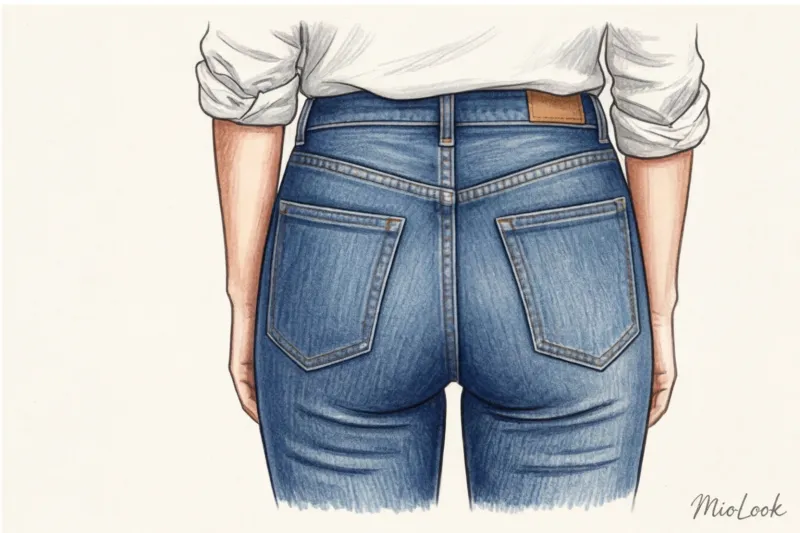
And now, a sneak peek from the fitting room. Do you know what makes your butt look visibly toned without going to the gym or stretching? V-shaped yoke On the back. This is the seam between the waistband and the pockets. The deeper and sharper this "V" is, the stronger the push-up effect. A straight yoke will make your buttocks appear flat and wide.
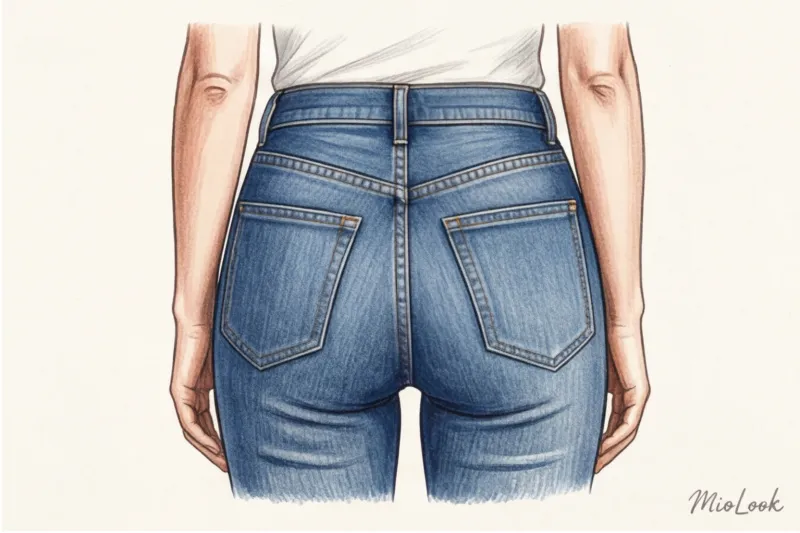
The size and angle of the back pockets is another factor. Small pockets on a larger buttocks visually make them appear even larger due to contrast. Pockets that are too wide apart "widen" the hips. Look for a happy medium: medium-sized pockets, slightly angled toward the center.
Your perfect look starts here
Join thousands of users who look flawless every day with MioLook. Digitize your wardrobe in minutes.
Get access — €0.99 onceColor and Wash: The Visual Codes of Expensive Denim
According to the analytical agency WGSN (2024), the premium denim segment has finally moved away from aggressive abrasions in favor of pure, deep colors. Chemical "whiskering" in the crotch area not only cheapens the garment but also creates visual creases where they shouldn't be.
What to choose for a status wardrobe:
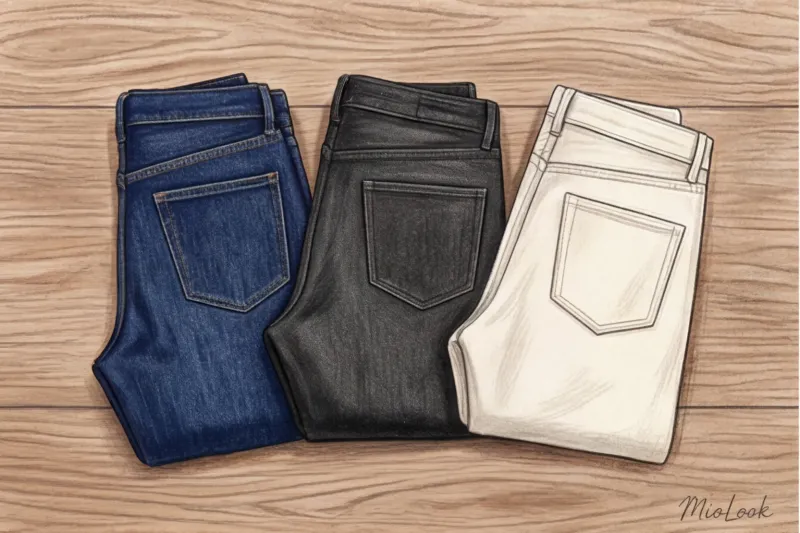
- Raw denim: A deep, unwashed indigo color, it's a gorgeous and more modern alternative to formal black pants at the office.
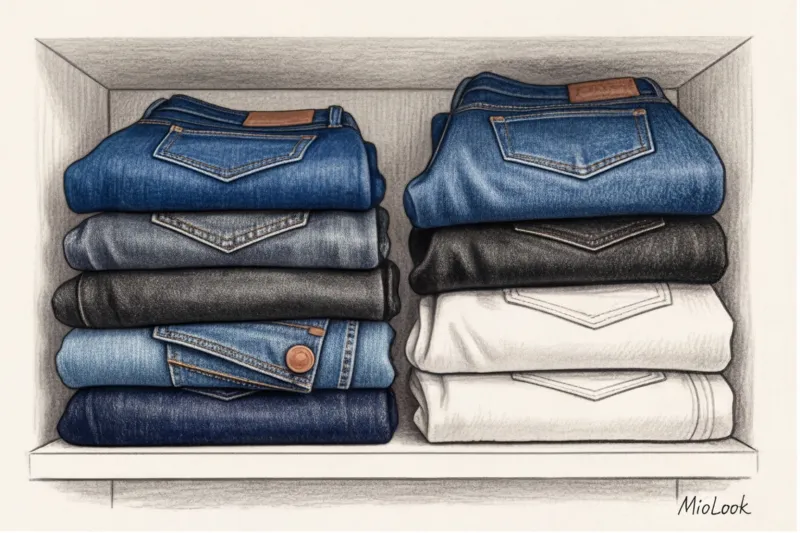
- Correct black: Avoid faded black with a reddish undertone. Choose charcoal black or a refined washed gray.
- Light palette: Off-white, ecru, and classic white. Many people dread white denim in winter, but heavy off-white jeans with a camel-colored cashmere sweater are the height of elegance year-round.
What to wear with jeans at 40+: formulas for work and life
To avoid jeans looking like country house clothes, they need to be styled correctly. Here are three tried-and-true formulas I use for my clients.
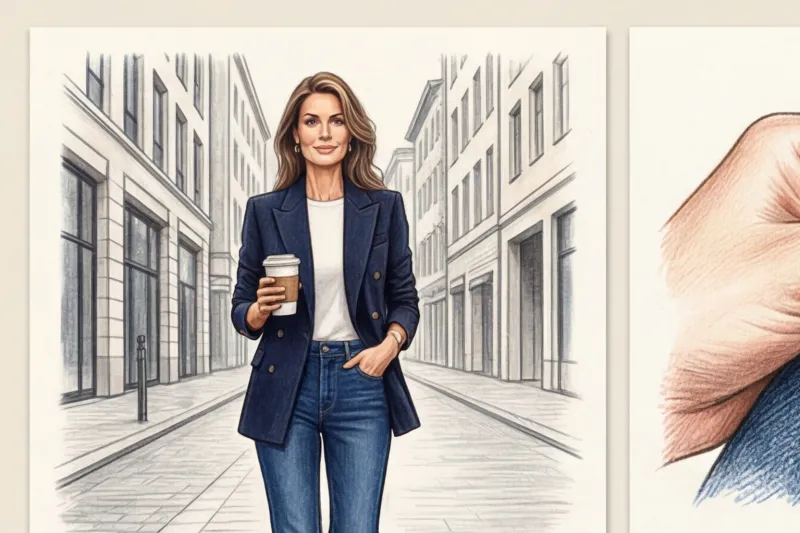
Smart Casual for the Office: Dark blue straight-leg jeans, a cream-colored silk blouse, a structured tweed jacket (in the vein of Chanel), and leather loafers. The jacket pulls the look together, while the jeans tone down the tweed's overly pretentiousness.
Elegant casual: Wide-leg ecru jeans, an oversized cashmere V-neck sweater (the sweater is casually tucked in at the front), a belt with a minimalist gold or silver buckle, and ankle boots.
Evening outing: Black palazzo jeans, a statement asymmetrical silk top, kitten heel slingbacks, and a sturdy clutch. It looks much more modern than a classic evening dress.
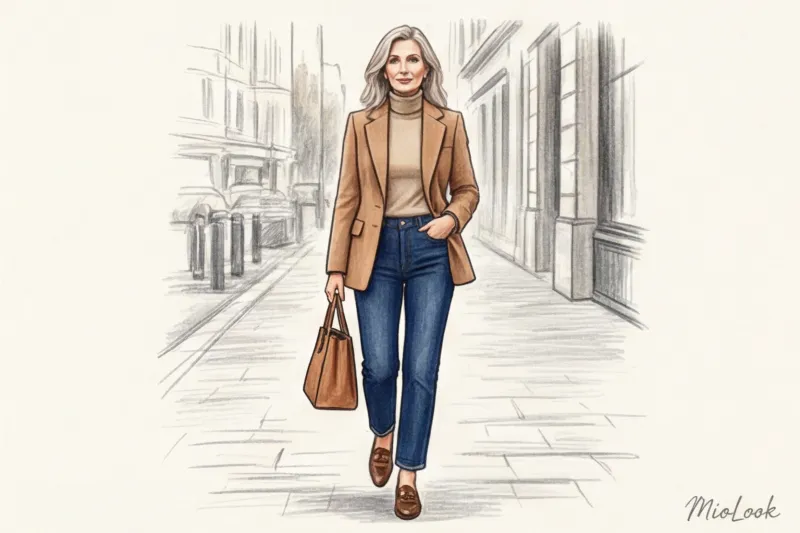
Pay special attention to footwear. Round toes are a definite no-no with wide, straight-leg jeans—they make your leg look stubby. Choose shoes with an elongated almond or square toe. This visually extends the line of your leg.
Ready to get started?
Try the free MioLook plan—upload photos of your clothes and get ready-made look formulas from an AI stylist.
Get access — €0.99 onceStylist Checklist: 5 Steps in the Fitting Room Before Checkout
Over the years as a personal shopper, I've developed a strict procedure for checking jeans. Never take an item to the checkout until you've completed these 5 steps:
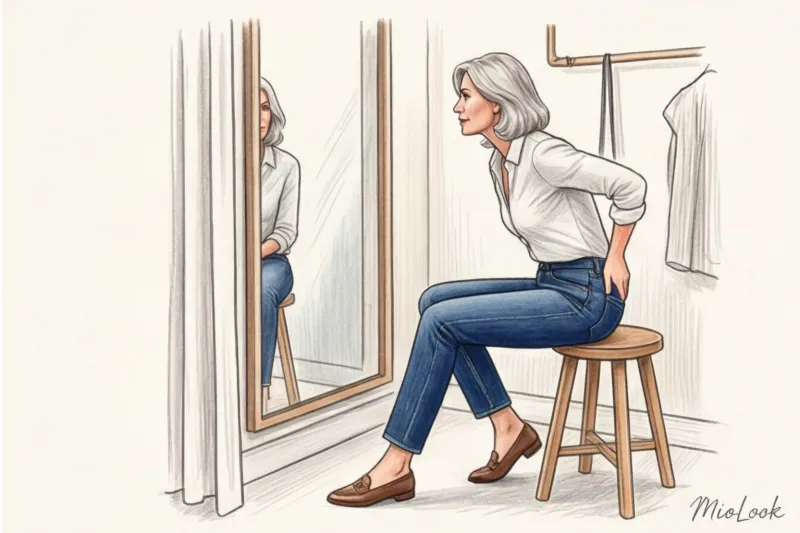
- Sit-down test. Sit on the ottoman in the fitting room. If there's a gap in your lower back big enough to fit your hand into, your jeans aren't cinched properly. They'll slide down all day.
- Pinch test. If you can pinch and pull more than 2-3 cm of fabric on the side of your thigh with your fingers in straight-leg jeans, you need a smaller size. Thick denim should fit snugly when you buy it (it will stretch a little with body heat).
- Checking the seams. Stand up straight and look in the mirror. The outer side seam should be strictly vertical. If it "slants" forward or back, the fabric is cut crooked along the grain. This garment will become crooked after the first wash.
- Evaluation of fittings. Shiny rhinestone buttons scream cheapness, even if the jeans cost €200. Look for matte rivets and buttons in aged copper, brass, or blackened silver.
- Length to fit shoes. Always try on the shoes (or at least shoes with a similar heel height) you plan to wear with these shoes. An extra half-centimeter can visually add 5 kilograms to your weight due to the fabric bunching up at the ankle.
Choosing jeans isn't about compromising style and comfort. It's about investing in the architecture of your everyday wardrobe. Stop hiding behind thin stretch fabric. Let thick, high-quality denim do the job it was designed for—sculpting your silhouette, elongating your height, and restoring your confidence in your flawless appearance.