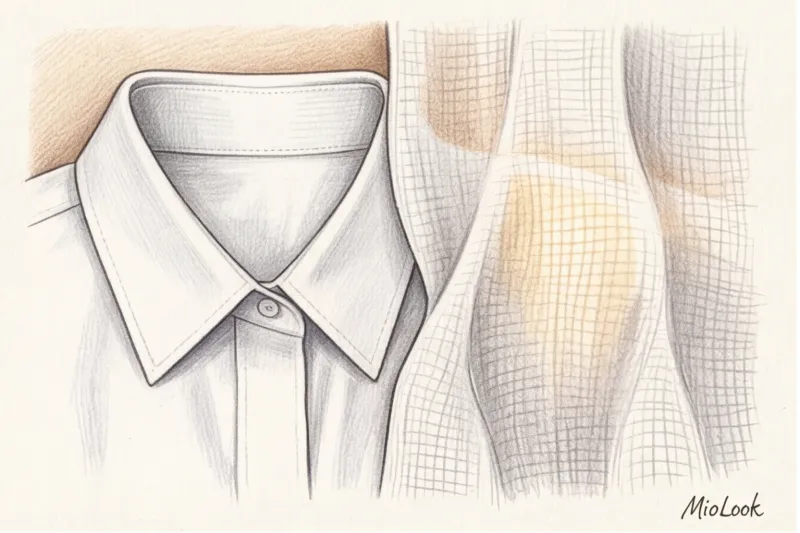
Have you ever noticed how often women in the fitting room put down a beautiful dress in disappointment after seeing "100% Viscose" on the tag? "More chemicals, you'll get sick in this in the summer," they complain, and go in search of their usual stiff cotton. In 12 years of working as a stylist and colorist, I've seen this scene hundreds of times. Women are depriving themselves of stunning, flowing silhouettes simply because of a confusion of terminology.
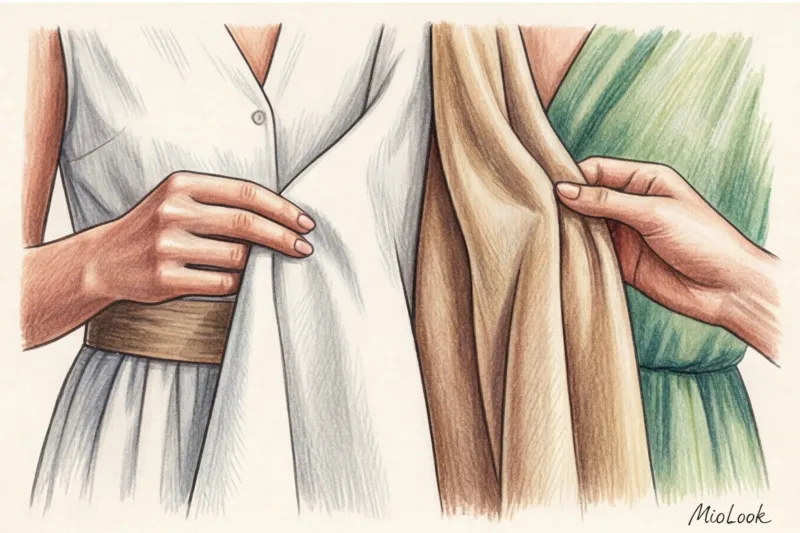
Let's get this straight. If you're Googling right now, Is viscose hot for summer or not? , my answer is: no, if you know how to cook it. We've already discussed the basic properties of summer materials in more detail in our A stylist's complete guide to the best fabrics for summer wear , but today I want to dissect viscose specifically. We'll examine the physics of its "cooling effect" and talk frankly about its main pitfall—the chameleon effect when wet, which manufacturers prefer to remain discreetly silent about.
Artificial, but not synthetic: debunking the main myth about viscose
The main fear of viscose lies in the word "artificial." For many, it's synonymous with "synthetic." But from a materials science perspective, these are two completely different poles.
Synthetics (polyester, acrylic, nylon) are made from petroleum products. They are literally plastic threads. Viscose, on the other hand, is artificially processed, but absolutely natural Base. It is made from wood pulp (pine, spruce, beech, or eucalyptus). The wood chips are crushed, boiled in a special solution, and pressed through very fine sieves, producing ultra-fine threads.
Chemically, viscose is much closer to cotton than to polyester. It's this wood composition that determines how the fabric interacts with our skin in 90-degree heat. You get the breathability of cotton, but with the visual aesthetics and fluidity similar to silk.
Viscose for Summer: Too Hot or Not? Understanding the Physics of Comfort
When answering the question of whether viscose is hot in summer, we must turn to hard data. According to research by the Textile Institute, viscose has phenomenal hygroscopic properties—it can absorb up to 13% of its own weight in moisture. By comparison, the beloved cotton absorbs about 8.5%.
This means that viscose wicks moisture away from the body one and a half times more effectively than a basic cotton T-shirt. You'll feel the greenhouse effect more quickly in a thick cotton shirtdress than in a flowy viscose sundress.
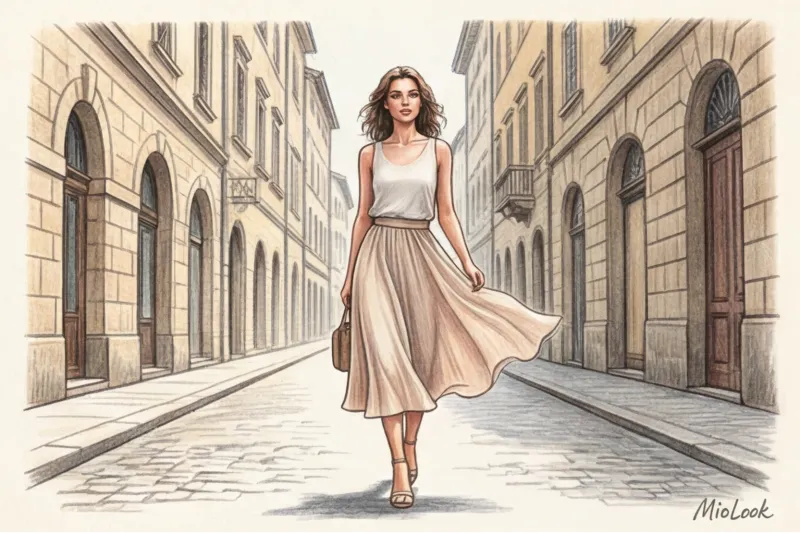
The second important parameter is heat absorption (thermal effusivity) This is the physical ability of a material to absorb heat when in contact with the skin. Smooth viscose threads have a high heat absorption rate, which is why you feel a distinctly cool "chill" when you first touch a high-quality viscose garment.
The Secret to Coolness: Why Flowing Viscose Cools the Skin
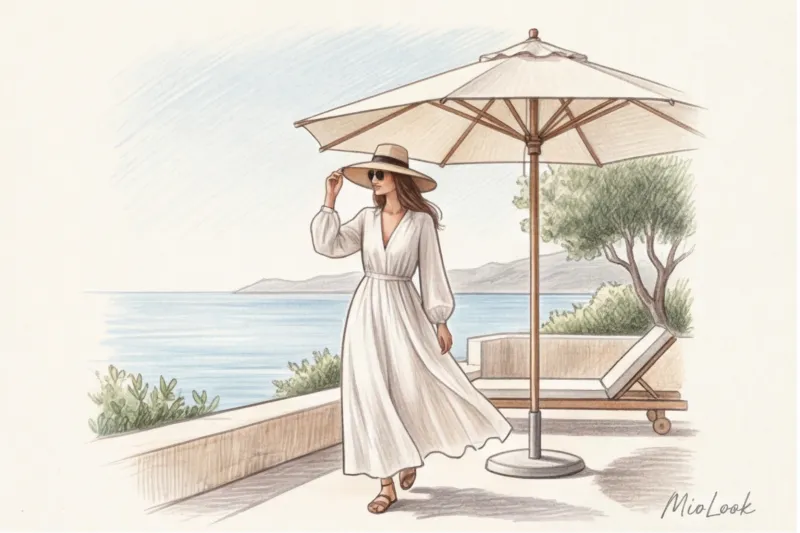
Why do women sometimes complain that viscose feels stuffy? The secret lies in the style. Viscose works like a personal air conditioner, only dynamically.
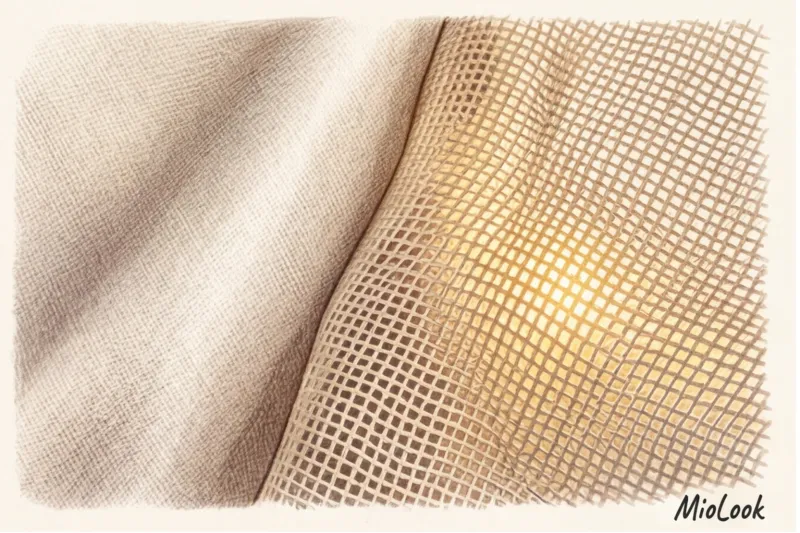
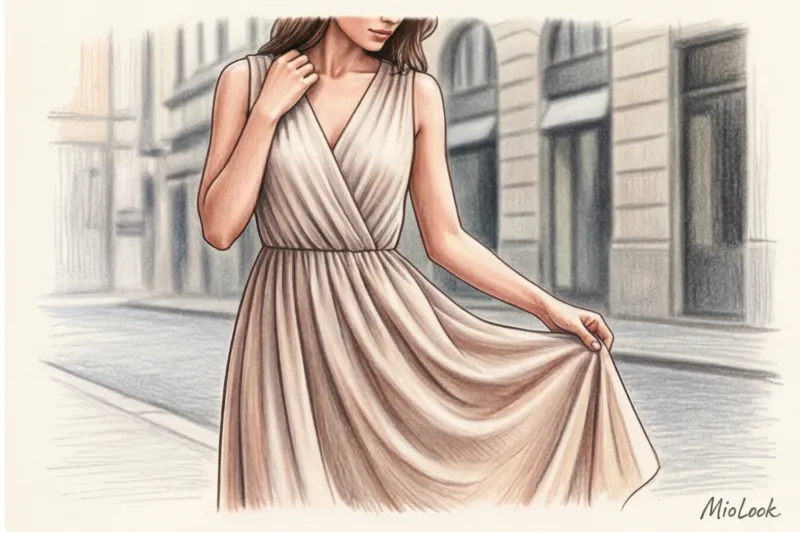
Flowy slip dresses, loose palazzo pants, and voluminous blouses—as you move, smooth fabric sways against your skin, absorbing heat and immediately releasing it into the air. But if you wear a tight-fitting viscose jersey dress at 32°C (90°F), you'll block the airflow. The fabric will absorb moisture, but due to the lack of ventilation, it won't be able to evaporate it. For fitted silhouettes in hot weather, it's best to look for fabrics with a loose weave.
Your perfect look starts here
Tired of wondering which fabric will suit you best? MioLook's smart AI stylist will help you create a capsule wardrobe based on the season, styles, and your personal measurements.
Get access — €0.99 onceThe Treachery of Fabric: What Manufacturers Don't Tell You (and What Stylists Know)
And now for the fly in the ointment. As a practicing stylist, I must warn you of the main drawback of this material. Viscose is a ruthless indicator of humidity.
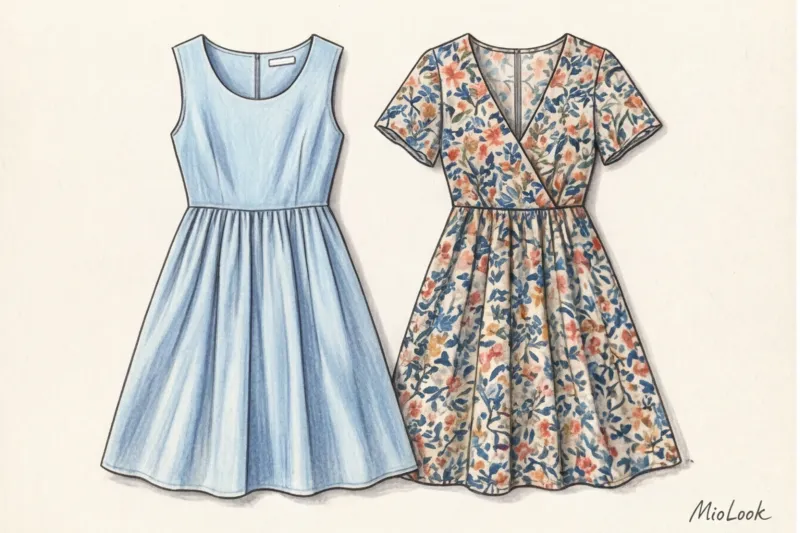
One day, a client of mine, a top manager at an IT company, bought a luxurious, solid-color, sky-blue, 100% viscose dress for a presentation at a summer conference. The air conditioning in the room broke. Viscose, as we all know, absorbs moisture brilliantly. But the trick is that when wet, light-colored, solid-color viscose instantly darkens by 3-4 shades. Sweat stains appear as huge, clear, wet stamps. The client spent 40 minutes on stage, feeling completely self-conscious about the telltale marks under her arms and on her back.
"Viscose works like a chameleon in hot weather: it protects you from overheating, but mercilessly reveals the level of your physical discomfort with wet spots," I always say before buying summer base layers.
If this problem is relevant to you, I recommend that you study our material. What fabrics don't show sweat stains: A guide for speakers.
Furthermore, there's another physical characteristic: when wet, viscose fibers lose up to 50% of their strength. If you sweat heavily and the garment is tightly fitted (for example, in the armholes), the fabric may become deformed or even "unravel" in areas of intense friction.
Viscose relatives: modal, lyocell (Tencel) and cupra
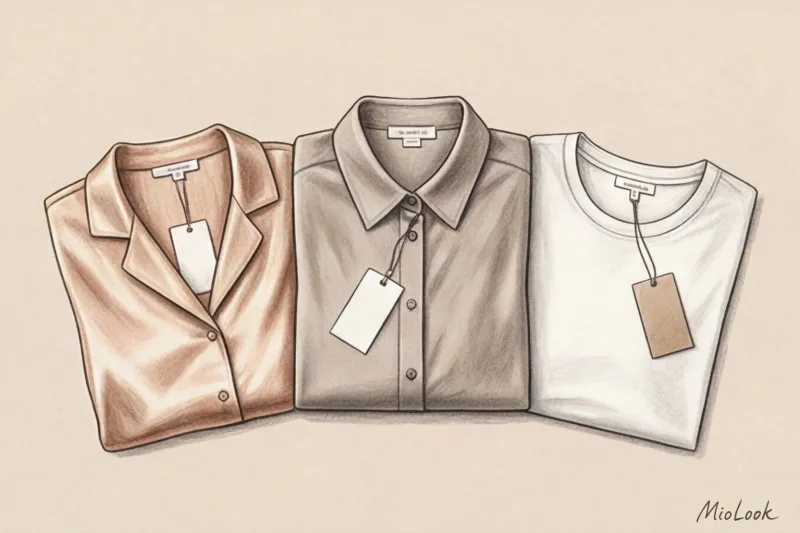
Basic first-generation viscose wrinkles easily. But the chemical industry is constantly evolving, and today, on the labels of brands from Zara to COS, you'll increasingly find premium "relatives" of viscose. They're more expensive (for example, trousers made of dense Tencel will cost an average of €80-120), but they solve many problems.
- Lyocell (aka Tencel): Made from eucalyptus wood, it's my absolute favorite for summer business suits. Last year, I tested a Tencel pantsuit in Florence at 35°C—the fabric is cool, holds its shape perfectly, and wrinkles much less than linen. It fits perfectly. Summer business style clothing for women in the heat.
- Cupra: Made from cotton cellulose, it's visually and tactilely almost like matte silk. Cupra flows beautifully, has a refined peach micro-pile, and is ideal for summer evening dresses or elegant lingerie-style skirts.
- Modal: Beechwood viscose. A lifesaver for summer T-shirts. Modal is more durable than regular viscose, doesn't pill as quickly, and retains its shape after dozens of washes.
Organize your closet for summer
Add your summer viscose, linen, and cotton pieces to your MioLook virtual wardrobe. The app will help you mix and match them for a new look every day.
Get access — €0.99 onceThe Pros and Cons of Viscose in Hot Weather: A Quick Checklist
To make it easier for you to make decisions in the store when assembling summer capsule wardrobe , I have compiled an objective table of material characteristics.
Pros:
- Excellent breathability (the body can breathe easily).
- Cooling effect thanks to smooth fibre.
- Beautiful, flexible draping (ideal for figures requiring soft lines).
- Colour fastness: Viscose does not fade in the intense summer sun as quickly and in patches as dark cotton does.
- It does not become electrified at all (unlike polyester).
Cons:
- Strong creasing (although the creases are soft, not “papery” like on linen).
- Maximum visibility of wet spots on light, solid colors.
- Risk of serious shrinkage if washed at the wrong temperature.
- Loss of strength when wet.
How to Choose the Perfect Viscose Summer Outfit: Stylist Tips
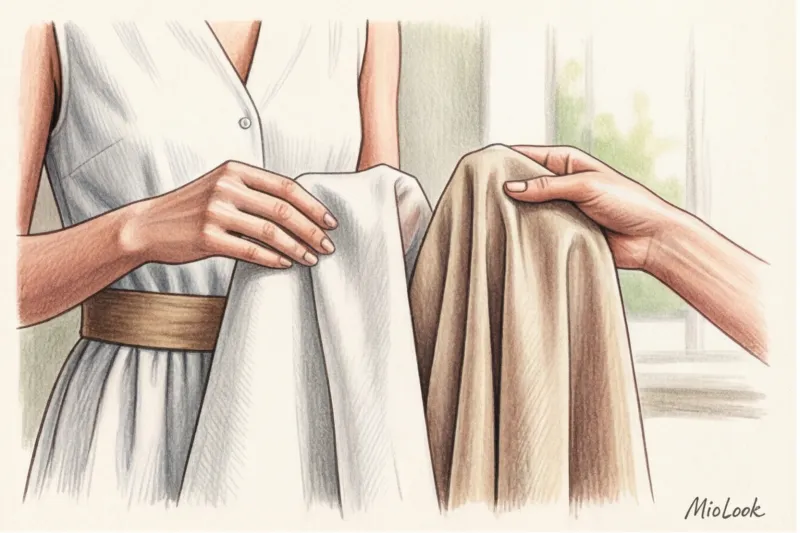
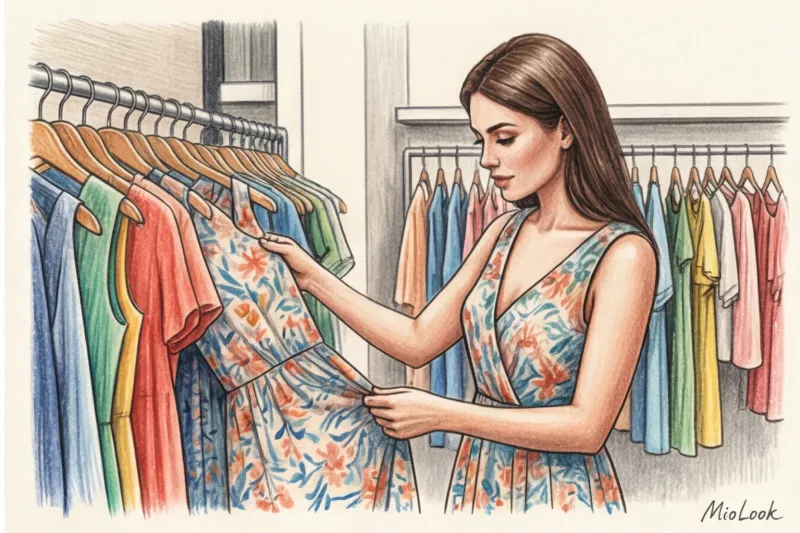
Knowing the theory isn't enough—you need to be able to apply it on the rail in the store. Here are three rules I use when accompanying clients on shopping trips:
Print rule. To completely eliminate the problem of sweat stains, never buy solid light-colored viscose (blue, light green, beige) for summer. Choose bold, small prints: millefleur flowers, leopard print, or abstract geometric patterns. The ripples in the pattern will hide any discoloration.
The magic of mixing. Finding a 100% perfect fabric is difficult, but designers have long since come up with a cheat code. Look for the composition. 70% viscose + 30% linen It's a brilliant formula: linen gives the fabric structure and a slight casualness, while viscose completely removes the linen's prickliness and makes the garment less prone to wrinkling.
Checking the seams (my personal test). When you pick up an item in the store, carefully examine the side seams. If the stitching looks slightly pulled or wrinkled on the hanger, return the item to the rail. This means the threads of the fabric and the seam are under different tension. After the first wash, viscose will shrink minimally, while synthetic threads in the seam will not. This will result in a wavy side seam that will be impossible to iron out.
Summary: Care instructions to ensure viscose survives the summer
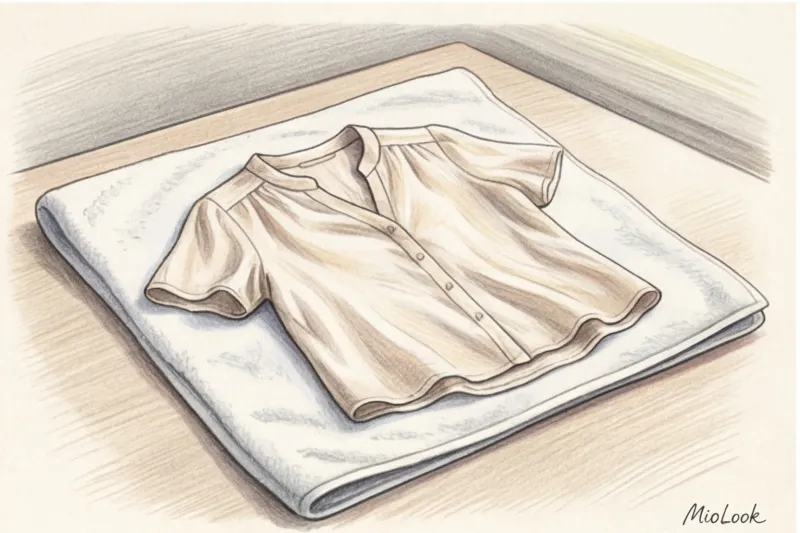
Remember: 90% of complaints about a viscose dress "shrinking two sizes" or "turning into a rag" are due to gross improper care. Since wet viscose loses half its strength, it should be washed more gently than wool.
- Temperature conditions: Wash at temperatures strictly below 30 degrees Celsius. Washing in hot water will transform your luxurious midi dress into a tunic for a ten-year-old.
- Spin: Never wring viscose by hand. When machine washing, set the spin cycle to a maximum of 600 rpm.
- Ironing: Viscose items should be ironed exclusively on the reverse side using the "Silk" setting. If you iron the right side with a hot iron, the fabric will acquire a cheap, shiny sheen that cannot be removed.
Viscose is a stunning, intelligent material, created to save us in the concrete jungle of a scorching city. Now that you know its cooling secrets and stain-concealing techniques, you can utilize its full potential. The key is to choose the right cut and vibrant prints.