I remember five years ago, during a shopping tour at the flagship store, one of my clients literally burst into tears in the fitting room. We were looking for the perfect pantsuit (budget: around €250), and after the sixth fitting, she said in despair, "Katarzyna, let's just take this one, it's a little tight. I don't have the energy to get dressed, go back to the store to get another size, and then undress again." Sound familiar? Physical fatigue from trying on clothes is the main enemy of rational shopping. It's what drives us to buy compromised pieces that then hang in our closets for years with the tags still attached.
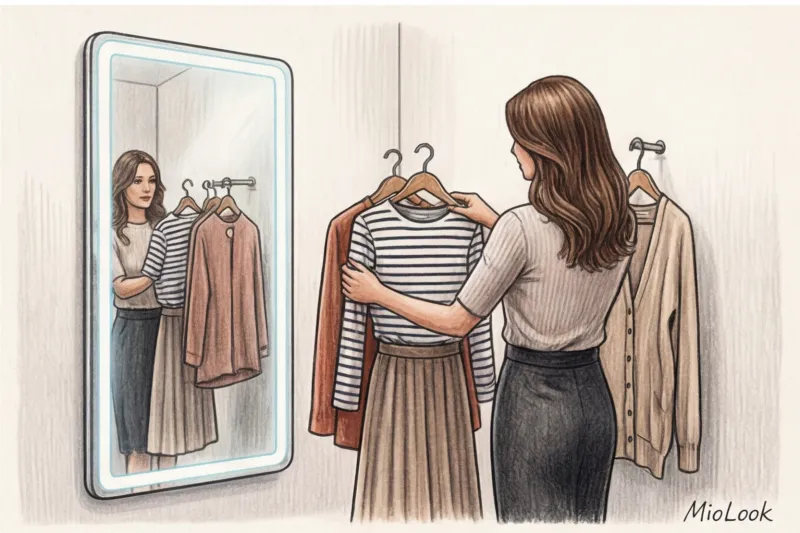
Today, fortunately, the rules of the game have changed. An interactive fitting room isn't just a pretty toy for Generation Z, but a powerful tool that saves you stress, time, and money. We wrote more about the technological side of things in our A complete guide to smart mirrors in stores Today, I invite you to look at this through the eyes of a practicing stylist. We'll explore which European mass-market chains actually use this technology, and where it merely creates the illusion of innovation.
Interactive Fitting Room vs. Regular Screen: How to Spot the Real Technology
Let's get one thing straight: most stores are lying to you. They hang a regular tablet with a product catalog on the wall of a fitting room and proudly call it a "smart mirror." But if you have to manually enter an item's SKU to see if your size is in stock, that's not a smart fitting room. It's simply an online catalog transferred to another screen.
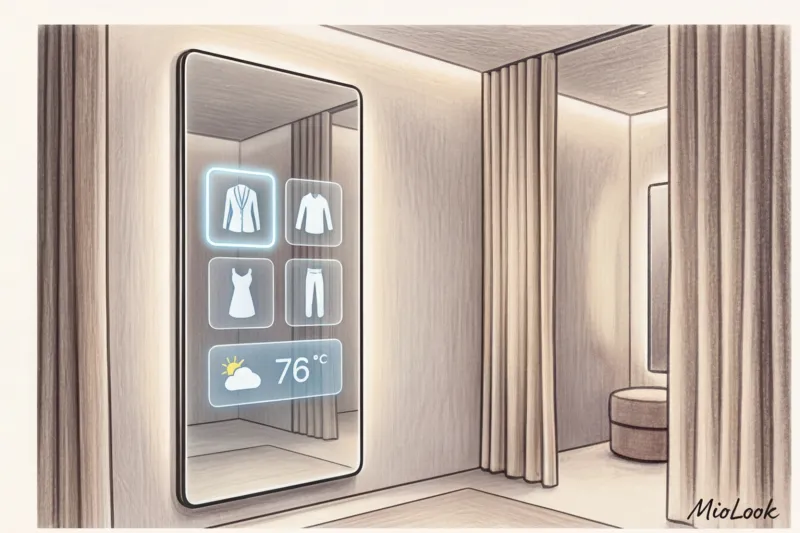
Real interactive fitting room The mirror uses RFID (radio frequency identification) technology. As soon as you step into the booth, sensors instantly read the chips embedded in anti-theft tags or price tags. Before you can even hang your items on the hook, the mirror displays them on the screen: their composition, available colors, size chart, and price.
According to Inditex's 2023 reports, the implementation of RFID tags allows the inventory system to read up to 20 items in 2 seconds, without any manual barcode scanning. For the customer, this means zero delay—the mirror "knows" what you brought in faster than you can remember.
As a stylist, I immediately see the difference. Real AI frees up your hands and mind. You simply select the desired option on the mirror with a single touch. Simulated AI forces you to do the work of a cashier.
Access to MioLook for €0.99 — one-time payment
A smart AI stylist will select the perfect look based on your preferences and body shape.
Get access — €0.99 onceWhere to test: European mass-market brands and their smart mirrors
Integrating such systems is expensive, so it's best to look for them in large flagship stores in capital cities and metropolitan areas (Berlin, London, Madrid, Warsaw). I constantly test these new products while working with clients in Europe, and here's my ranking of chains based on implementation quality.
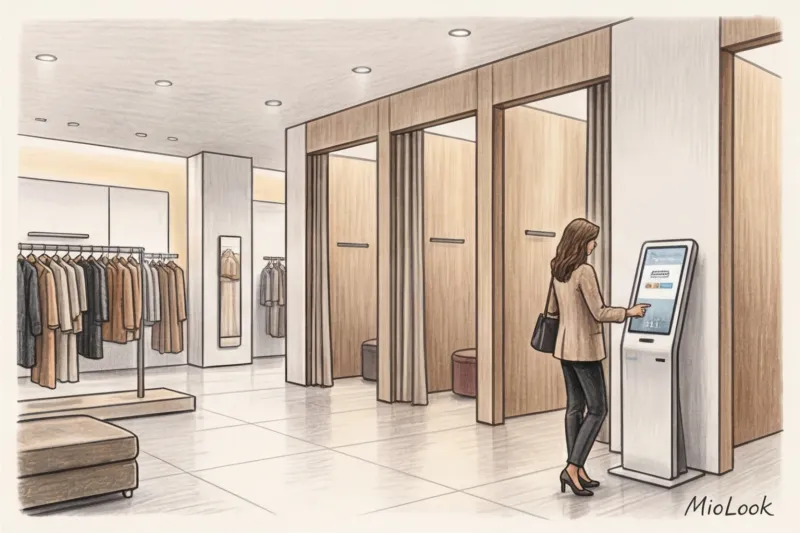
Zara and Massimo Dutti: Pioneers of RFID Fitting Rooms
Inditex has invested heavily in digitalization. At Zara and Massimo Dutti flagship stores (especially the new concept stores), interactive mirrors work flawlessly. You can book a fitting room through the store's app while you're strolling the store, skipping the line. Once inside, your items are already on the screen.
The real magic happens when a basic white shirt (€30 at Zara or €60 at Dutti) turns out to be too small. You tap the "Request size M" button on the screen. A signal sounds on the assistant's device, and within a couple of minutes, the item is handed to you through a special window or a slightly open door. You don't even have to take off your shoes.
H&M and COS: Interactive Recommendations
H&M Group's top locations (especially COS, where the average order value is higher, ranging from €80–€150) have gone beyond simply ordering sizes. Their smart mirrors are integrated with recommendation algorithms.
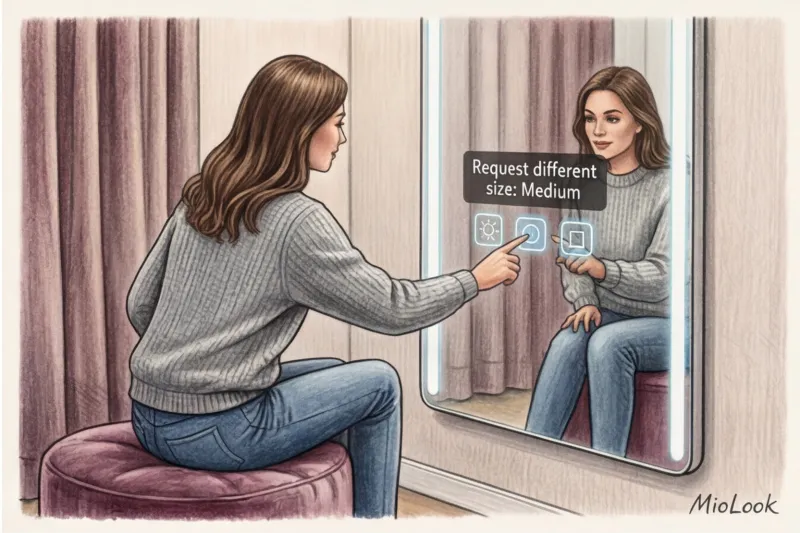
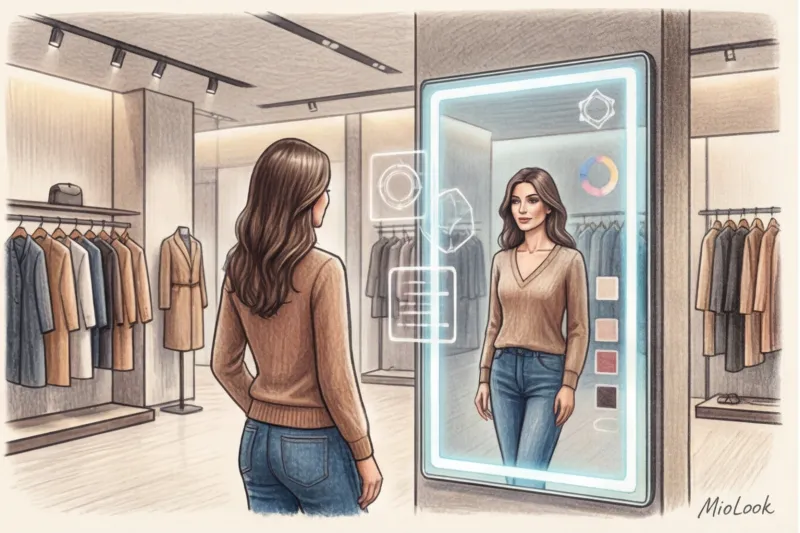
Let's say you brought a bulky wool sweater into the locker. The mirror will not only show you its features but also offer a "What to wear with it" feature. The algorithm analyzes the item's availability in that particular store and displays wide palazzo pants or a midi skirt that would perfectly complement the sweater. Press a button, and the consultant brings you the finished look. For those who find it difficult to put together outfits themselves, this is a lifesaver.
Mango and & Other Stories: Focus on Light and Detail
These brands focus on visual comfort. You know that awful hospital-style lighting in fitting rooms that highlights every imperfection? In Mango and &Other Stories' interactive booths, you can change the lighting scenarios right on the mirror.
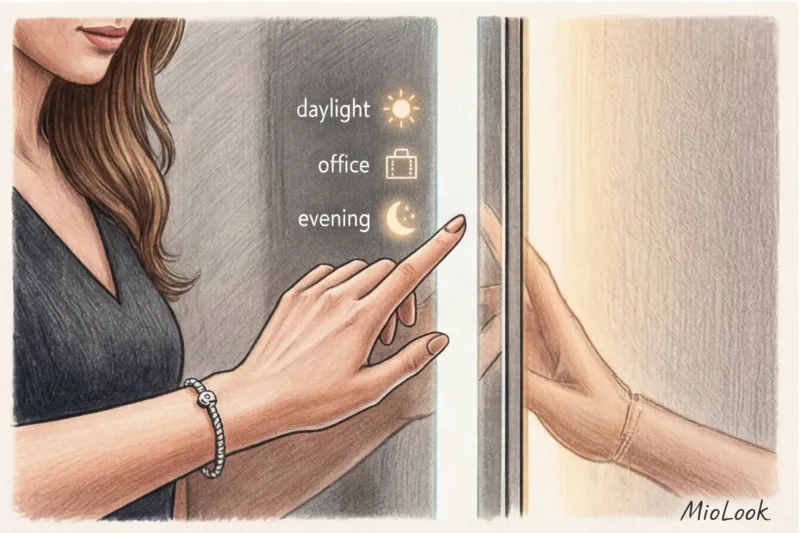
Trying on a formal jacket? Choose the "Office" mode with cool light. A €120 evening dress? Turn on the subdued "Evening Light" mode. This dramatically changes the way the garment looks and reduces the risk of disappointment at home.
How an interactive fitting room saves you from impulse buying
You might be asking, "Katarzyna, so what if I ordered my size online? How does that save me money?" The answer lies in consumer psychology.
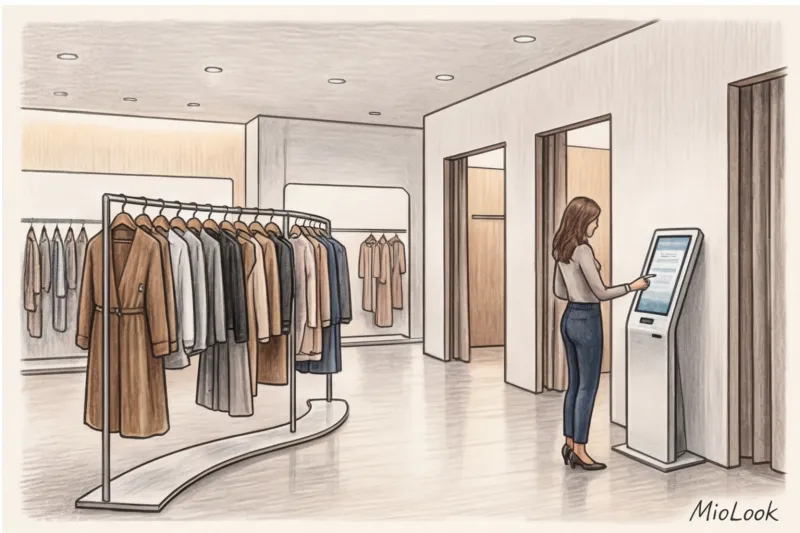
There is a phenomenon "fitting room fatigue" When you've spent 15 minutes taking off your winter boots, tights, and sweater, put on pants, and realized they're too small... Your brain refuses to repeat this cycle. Cortisol levels rise. At this point, 70% of women make one of two mistakes: either they leave without buying anything, feeling disappointed, or they buy something that fits "okay, I'll just tie it with a belt," just to reward themselves for their struggle.
"The McKinsey State of Fashion 2024 study revealed some interesting statistics: stores with smart mirrors reduce the return rate by 12-15%. Shoppers choose the exact size without compromising due to fatigue."
The interactive fitting room removes the barrier of laziness. You remain in a comfortable zone, half-dressed, drink water (if you brought your own), and simply wait two minutes. The absence of direct pressure from sales associates peering behind the curtain asking, "How do you like it?" reinforces your critical thinking. Every item must earn its place in your closet.
Your perfect look starts here
Join thousands of users who look flawless every day with MioLook. Digitize your wardrobe in minutes.
Get access — €0.99 onceA stylist's guide to getting the most out of a smart fitting room
When my clients go shopping on their own, I give them a strict checklist for using smart mirrors.
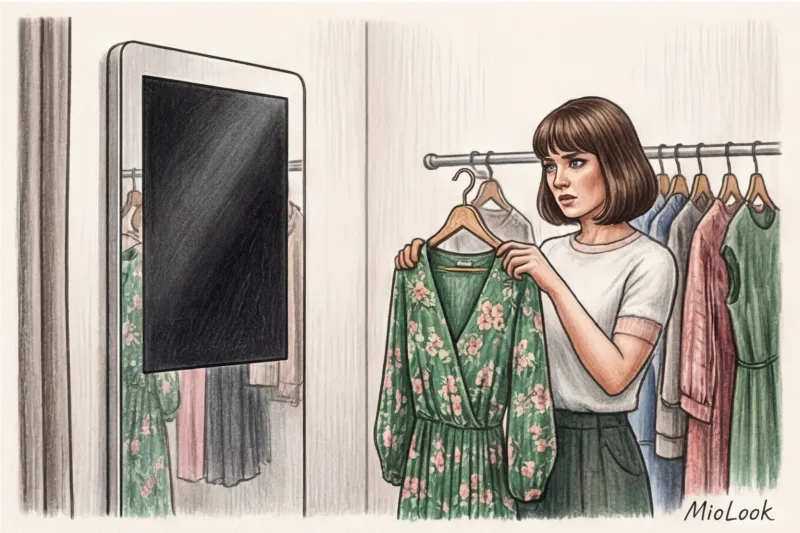
- Step 1: Do not remove items from hangers until you reach the booth. The RFID tag is often located on a hanger or a rigid magnetic clip. If you bring in a large lump of clothes, the mirror may not recognize some of them. Bring everything in carefully.
- Step 2: Set up the light before you begin your fitting. Daylight is often the default setting. Consider where you'll be wearing this item and set the appropriate scenario right away.
- Step 3: Use the "Request Size" button in advance. If you put on pants and realize they're hopelessly tight, don't rush to take them off! First, request a replacement in the mirror. While you're carefully removing the item and putting your own on, a consultant will bring you a replacement.
- Step 4: Test the "What to Wear With" section. Even if you're confident in your taste, check out what AI suggests. Algorithms scan the entire warehouse (including items not on display) and often suggest chic, unexpected color combinations.
The Biggest Mistakes Brands Make: Why Some Smart Fitting Rooms Are Annoying
It would be unfair to talk only about the positives. After 12 years in the fashion industry, I've learned that any brilliant technology is ruined by human error or bad Wi-Fi.
When does this NOT work?
- Dead zones and freezes. Sometimes the mirror just freezes on the brand logo. You wave your blouse in front of it, and all you get is a black screen. In such cases, don't waste time rebooting; call a live person.
- Ignoring notifications. The mirror reliably sends a request for size M. You wait 5 minutes, then 10... It turns out the sales associates in the store simply muted their devices because the store is having a sale and they can't handle the influx. Sadly, smart booths are practically pointless during sales.
- Out of sync with the warehouse. The most annoying thing is that the screen shows the store has only one perfect trench coat left in your size for €150. You order it, wait, and the salesperson shrugs: "It's listed in the system, but in reality, it was stolen or lost."
From the Store to Your Phone: How MioLook Enhances the Offline Experience
Let's say the interactive fitting room has done its job: you've found a stunning pair of full-length trousers that fit perfectly at the waist. What next? Buying just one item, even the most flattering one, doesn't enhance your style if it doesn't fit into your wardrobe.
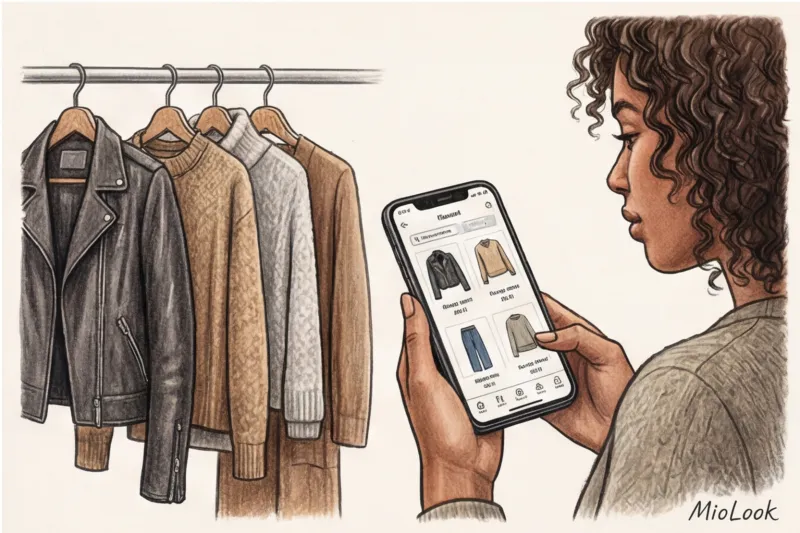
Here comes the stage MioLook's smart wardrobe feature Take a photo of the item right in the fitting room or find it on the brand's website. Add the photo to the app.
Even before you go to the checkout to hand over your €70–90, the MioLook virtual fitting room will show you how those new trousers will pair with your existing turtlenecks, jackets, and shoes. It's one thing to see abstract recommendations on a store's smart mirror (their goal is to sell you more of the brand's clothes), but quite another to synchronize a potential purchase with yours your actual wardrobe. If the app shows that the pants go with at least three of your tops, go ahead and check out.
Ready to get started?
Try the free plan—no commitments required. Upload your items to MioLook and learn how to create dozens of new looks from what's already in your closet.
Get access — €0.99 onceSummary: Is it worth traveling to the other end of the city for a smart mirror?
My answer is yes, especially if you're planning a large seasonal purchase and your budget exceeds €300–400. The savings are enormous.
Use interactive fitting rooms wisely:
- Think of them as a filtering tool, not as entertainment.
- Save your energy: order sizes online without having to re-dress.
- Check the fit in different lighting conditions to simulate the environment in which you will wear the item.
The future of shopping is already here, and it smells not of dusty curtains, but of convenience. Let technology handle the technical stuff (finding your size and color), while you focus on what matters most—how you feel in your new clothes.