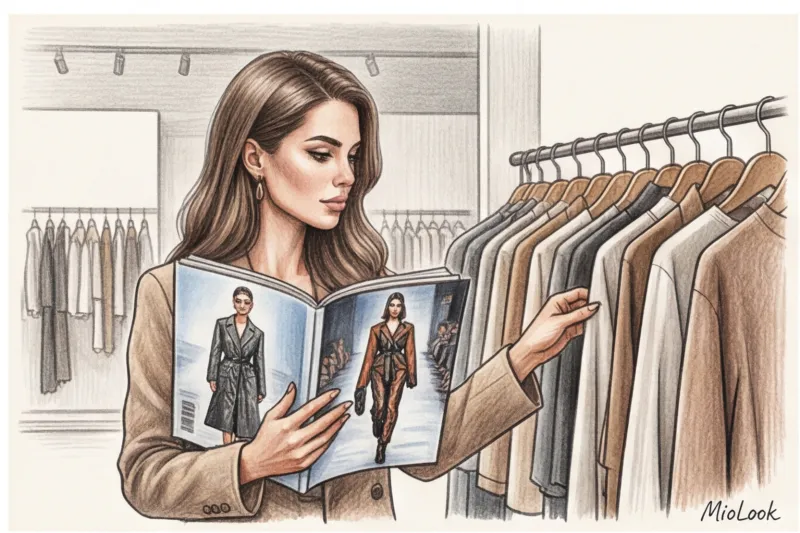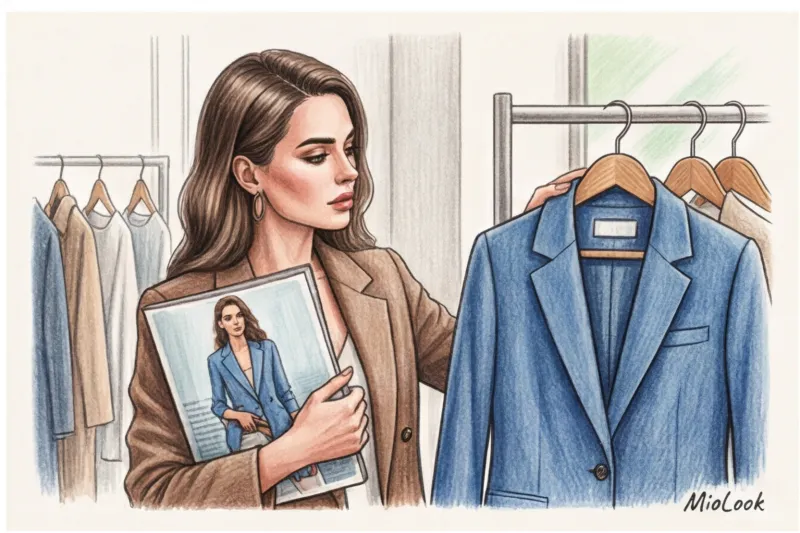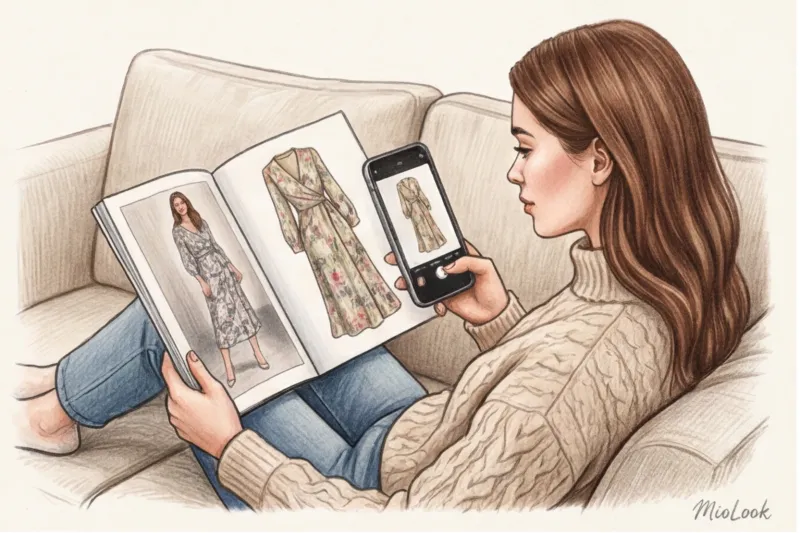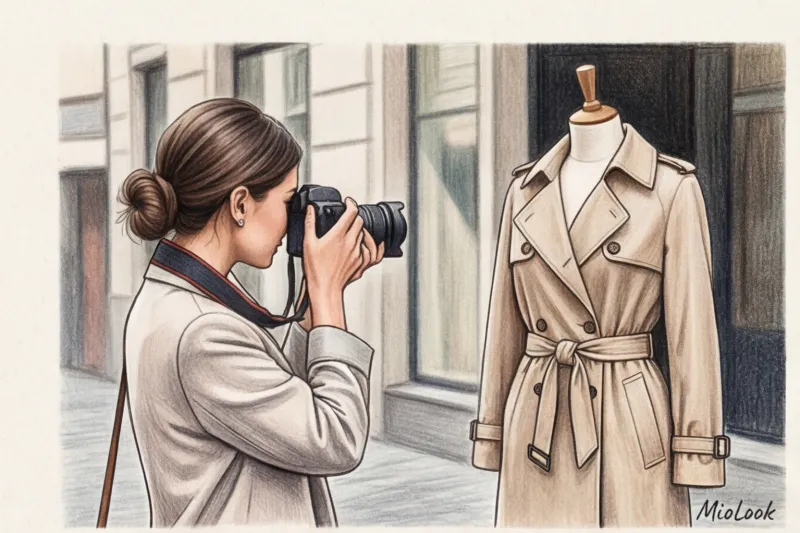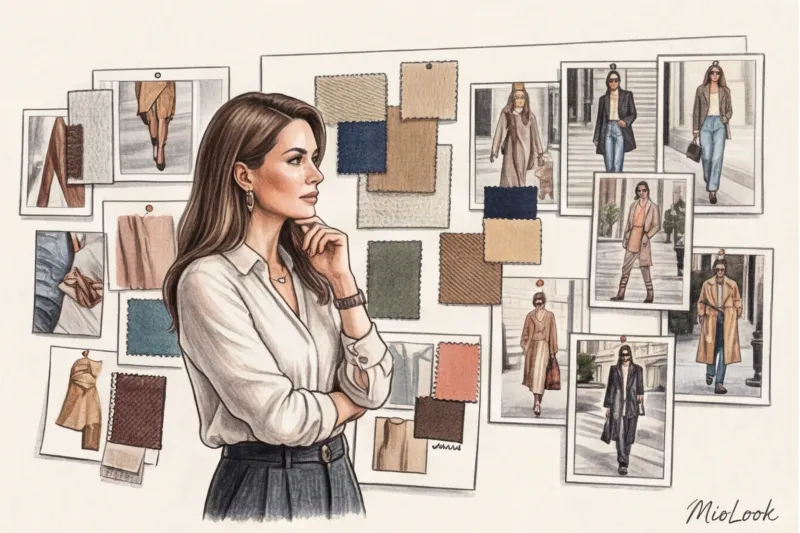
A couple of years ago, a client came to me with a rather typical request for a stylist. She showed me a blurry screenshot from an old French film and said, "Camille, I need this exact jacket." We tried running the image through popular search engines, but the algorithms persistently suggested a mass-market polyester jacket for €50. The smart camera only saw a basic beige silhouette. However, I found this vintage original. Not through AI, but because I recognized the distinctive peak lapel shape and heavy brass button, characteristic of Yves Saint Laurent cuts from the late '80s.
Today Identify a clothing brand from a photo Technology has made it easier, but algorithms are still blind to nuance. In this article, I'll combine machine intelligence with the professional "perceptiveness" of a stylist. We'll explore how to read a garment's anatomy to find originals, not cheap knockoffs. We've already covered the basic tools in more detail in our The Complete Guide to Visually Searching for Clothes , and now let's dive into the details that distinguish an amateur from a fashion insider.
Words Are Powerless: Why Text Search for Clothes Is a Thing of the Past
Try describing the perfect dress. "Red wrap midi dress with draped detailing." Sounds specific, right? But typing that into a search engine will return thousands of options, 99% of which will fit you like a sack. Why? Because we're not buying a bunch of tags. We're buying proportions, the precise depth of color, the way the fabric flows over the body.
According to a large-scale WGSN study (2024), visual search improves the accuracy of matching shoppers' expectations by 37% compared to text-based search. And this makes sense. Text creates a language barrier between you and the retailer. While you might see "dusty rose," a brand's catalog might call it "ash blush" or simply "pink 04."
"Visual AI eliminates the problem of translating emotional language into product naming conventions. You simply show a picture, and the algorithm searches for mathematically matching pixels, skipping words"—this is what I constantly explain to my clients tired of endless scrolling.
How to Identify Clothing Brands from Photos: A Review of the Main Visual AI Tools
When you see someone wearing a stunning coat, your hand instinctively reaches for Google Lens or Yandex Images. These are excellent universal tools, but they have their own specific search results.
Global search engines analyze images head-on. They scan the color scheme, general contours, and look for visually similar images online. Their problem is that they don't understand fashion To Google Lens, a luxurious Max Mara cashmere coat and its acrylic counterpart from H&M are the same belted beige blob.
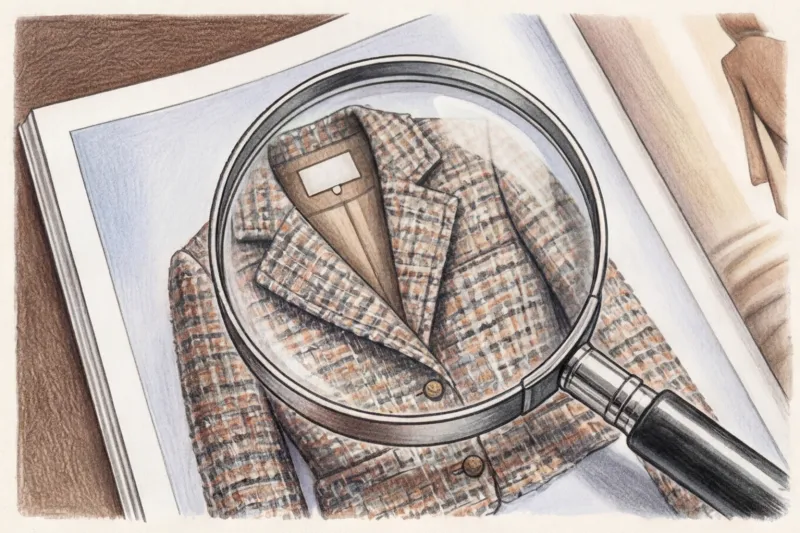
That's why the future lies with specialized fashion-oriented neural networks. Next-generation applications such as MioLook They don't just compare images. They're trained on millions of lookbooks and understand the context of a piece: what style it belongs to, what it can be paired with, and how it fits into your existing wardrobe.
Access to MioLook for €0.99 — one-time payment
A smart AI stylist will create the perfect look and find the right items in seconds.
Get access — €0.99 onceThe Focus Rule: How to Prevent an Algorithm from Making Mistakes
The most common mistake I see is when a woman searches for a full-length photo of an influencer with the Eiffel Tower in the background, hoping the AI will find her exactly the right pair of palazzo pants. Instead, the search returns tickets to Paris, similar bags, or sunglasses.
The algorithm is lazy. It focuses on the most contrasting or largest object in the photo. If you're looking for a specific street style item, always crop the image before uploading. Include only the texture of the fabric, the belt, and the pockets of the pants—cut out the face, background, and shoes. The less visual noise, the more accurate the result.
The Anatomy of Style: How Stylists Recognize Brands Without Logos
Sometimes AI is powerless. That's when professional "observation" comes into play. Over 12 years of attending shows in Paris and Milan, I've learned to read brands' DNA without a single prompt. True luxury rarely shouts its presence with giant monograms—it whispers through details.
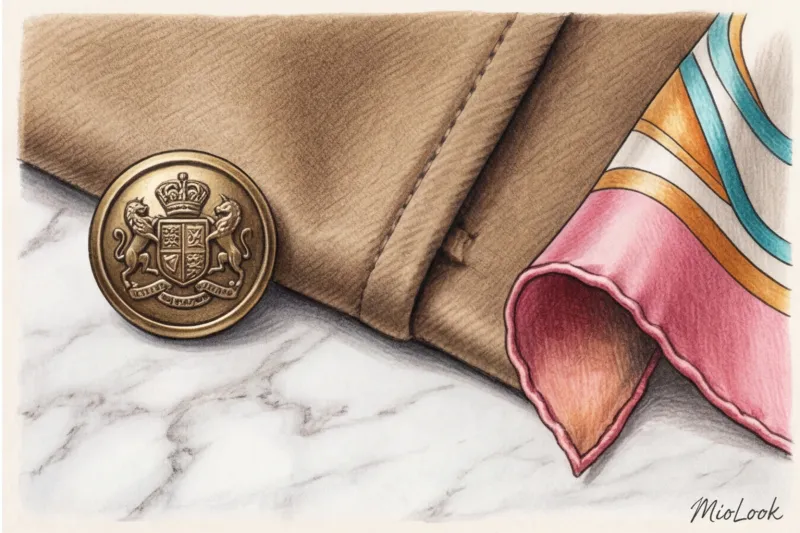
If you want to find an original high-status item, you need to learn to look where the buyers look.
Accessories, seams and cut as a calling card
Every great fashion house has its own technical signatures, which the mass market cannot copy due to the high cost of production:
- Buttons: Balmain uses heavy metal buttons with heraldic emblems (often a lion's head). If a button looks flat and plastic in a photo, it's a fake.
- Shoulder girdle: Saint Laurent is renowned for its sharp, architectural shoulder line, a nod to '80s power dressing.
- Drapery: Jacquemus and Vivienne Westwood create asymmetrical pleats that are held in place by hidden internal corsets. The cheap replica in the photo will always hang limply.
Pay attention to the seams if the photo allows you to see them. In the premium segment, the stitch density is 4-5 per centimeter. In items priced at €30-€80, the machine makes 2-3 sweeping stitches. This is noticeable even in high-quality photographs.
Reading prints, patterns, and fabric textures
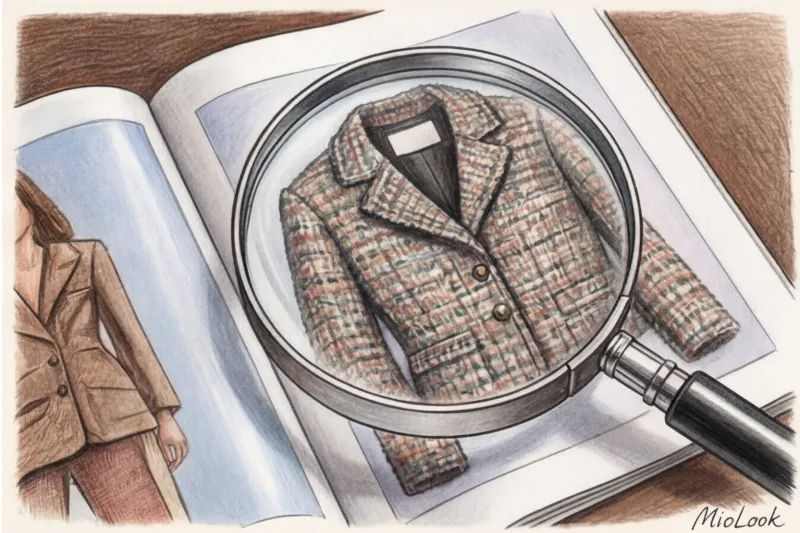
Signature prints are another hallmark. Emilio Pucci's psychedelic swirls, Etro's oriental paisley, Burberry's strict check with perfectly aligned stripes at the seams. If you see a seam in the photo where the pattern doesn't match up to the millimeter, you're definitely not looking at luxury.
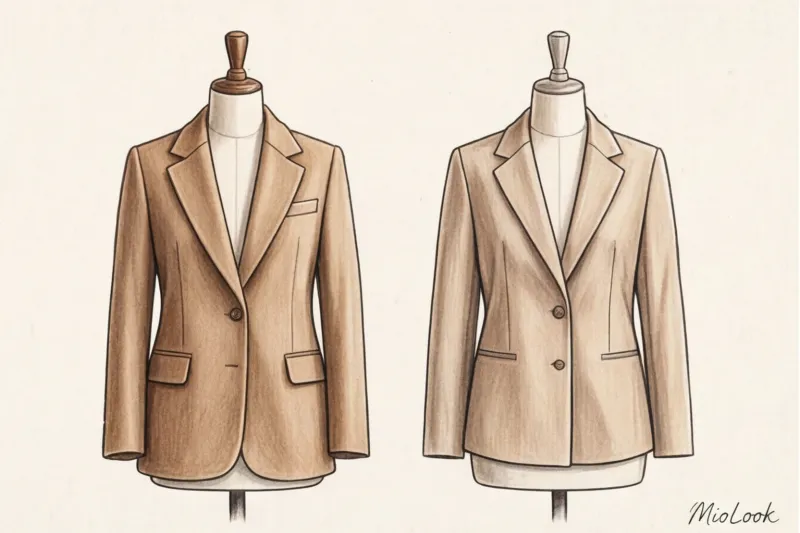
Did you know that your smartphone camera can be used as a fabric detector? In flash photos, natural silk reflects light softly, creating a deep iridescent effect. Polyester and cheap viscose will reflect harsh, cheap white light, making the garment appear flat. It's counterintuitive, but sometimes poor lighting in a photo is your best bet for identifying the fabric's composition.
The Algorithm Trap: What to Do When Search Results Only Reveal Mass-Market Copycats
Here we come to the biggest disappointment of visual shopping. Popular wisdom holds that "a smart camera will find anything in a second." The reality is that 80% of the time, when searching for an expensive coat by photo, algorithms will return visual duplicates (or dupes) made of polyester.
Why does this happen? Because of the phenomenon dupe culture and the commercial benefits of search engines. It's more profitable for platforms to show you 50 links to affordable items for €100 that you're likely to buy right now than one link to a Loro Piana coat for €3,500.
Your perfect look starts here
Join thousands of users who look flawless every day with MioLook's intelligent clothing selection.
Get access — €0.99 onceHow to get around this trap? Use a secret combination method:
- Perform a visual search on the cropped photo.
- Add clarifying terms to the search bar negative keywords and plus words. For example:
+wool +cashmere -acrylic -polyester -zara. - If you're looking for a designer original, don't use Google. Upload your photo directly to the internal search engines of specialized resale platforms like Vestiaire Collective, Grailed, or The RealReal. Their internal AI systems are trained exclusively on luxury archives.
Search for vintage and archival collections using photographs
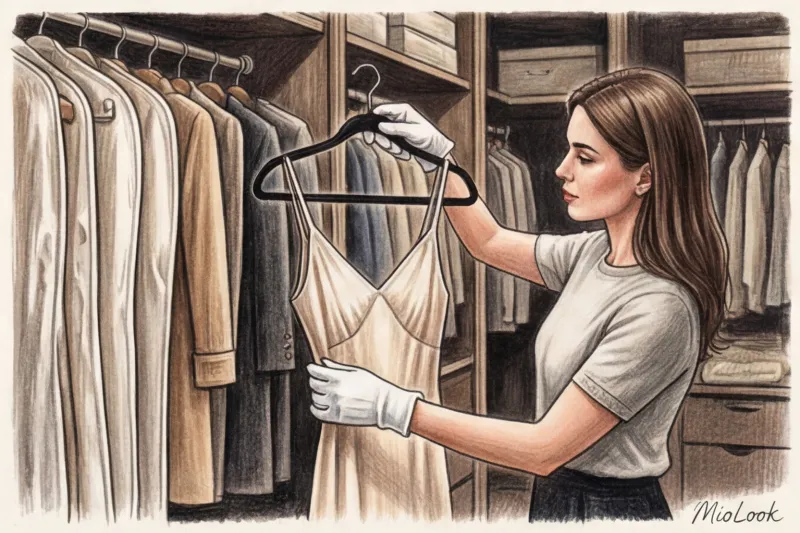
This advice doesn't work for all types of clothing. If you're looking for a vintage dress from the '90s, a visual search will likely fail. Collections released before 2010 have virtually no digital footprint (no high-quality original catalog photos available online).
To find such treasures, I use the Vogue Runway archives. If a piece looks runway-ready, try to identify the decade by the silhouette. Exaggerated shoulders? Look to the '80s. Minimalism and lingerie style? Look to the '90s shows: Calvin Klein or Helmut Lang.
Pay special attention to logos and tags. Brand typography has evolved. The font on the Celine tag with Axane (Céline) indicates that the item was released before Hedi Slimane's arrival in 2018. Macro photos of tags in search results provide much more accurate results than photos of the garment itself.
Checklist: How to Photograph an Item for Accurate Search
If you have something in front of you (for example, in a second-hand store or at a friend's) and you want to find it online, the right photo is 90% of the success.
Three rules that will save your nerves:
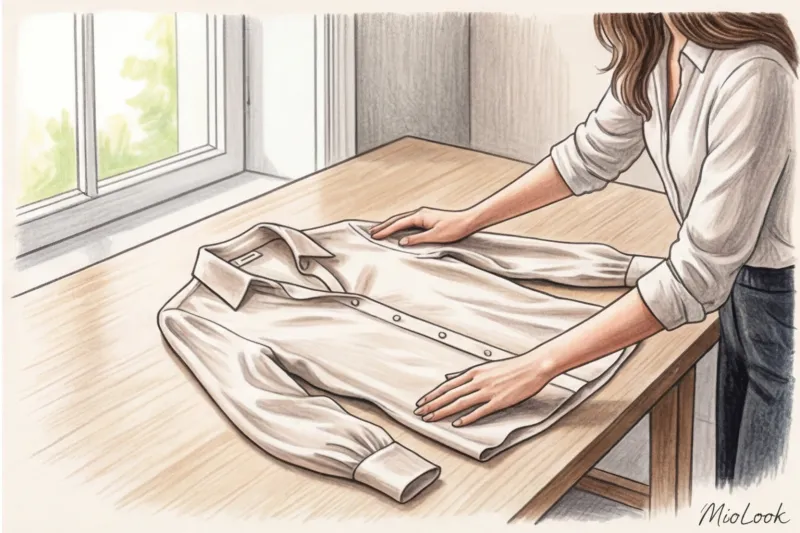
- Lighting decides everything. Never photograph clothes under yellow fitting room lights. Artificial light distorts the white balance. What was a dusty rose shade in real life will appear dirty beige in the photo, and the AI will look for beige items. Move to a window—you need daylight.
- Flat lay angle. Hanging a blouse on a hanger distorts its proportions. Lay the item flat on a flat surface. It's easier for the AI to read the cut geometry on a flat surface.
- Macro photography saves the day. Take a photo of the entire item, then zoom in on the care label or a unique button. Searching for a specific rivet often leads to the original brand faster.
From a random screenshot to a smart wardrobe
Finding your dream item from a photo is an incredible dopamine rush. But in my experience, eight out of ten clients who buy such an item on impulse later don't know what to wear it with. The desire to own it overshadows logic: a chic Jacquemus top for €300 might not pair at all with your favorite jeans.
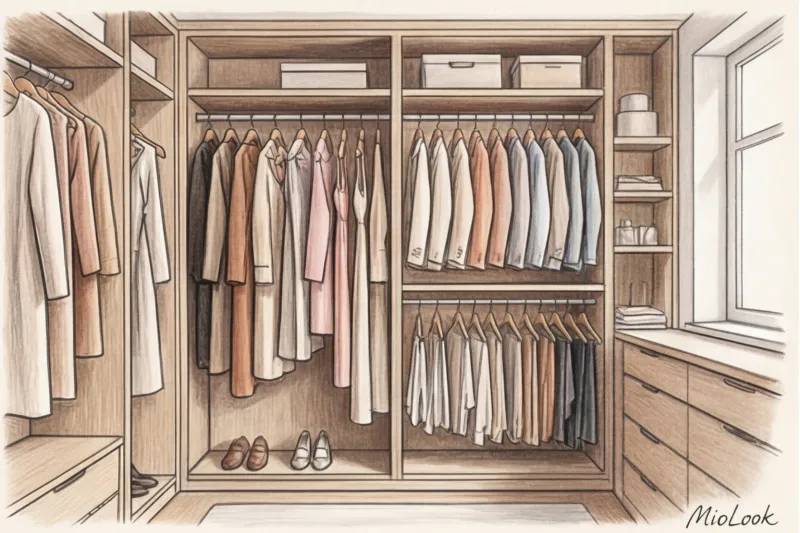
Finding a piece is only half the battle. The true art of style lies in its integration. Before you hit the "buy" button after a successful visual search, analyze your capsule wardrobe. Digital wardrobes are ideal for this. After uploading a found item to personal AI stylist MioLook , you can immediately put together 5-6 looks from what’s already hanging in your closet.
Ready to get started?
Try the MioLook plan for free—no commitments required. Upload your findings and create the perfect capsule.
Get access — €0.99 onceDon't let algorithms force you to compromise with cheap copies, but don't buy the original just for the brand. Smart shopping is when every item found from a photo doesn't just fulfill a specific need, but makes your wardrobe work for you every day.