The Myth of 100% Natural: Why a Quality Sweater Should Include Synthetics
"Darina, I was scammed!" a customer sent a message via messenger along with a photo of the tag on a luxurious, fluffy jumper from a well-known Italian brand. She'd paid a hefty sum for it, only to discover, to her horror, that it contained 30% polyamide. She was about to return it, absolutely certain that if it contained synthetic fibers, it was either a cheap knockoff or the brand's attempt to cut corners on the buyer.
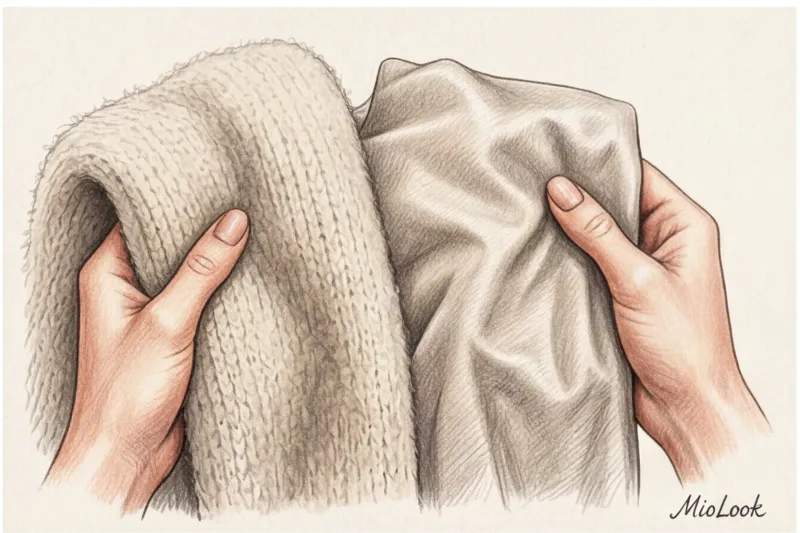
I had to urgently rescue the sweater and explain the basics of textile architecture. The thing is, we're used to demonizing any synthetics. This is a collective trauma of the cheap mass market, where items are 100% made of squeaky acrylic. But among professional buyers and stylists, there's a clear understanding: the composition of a quality sweater does not always have to be 100% natural.
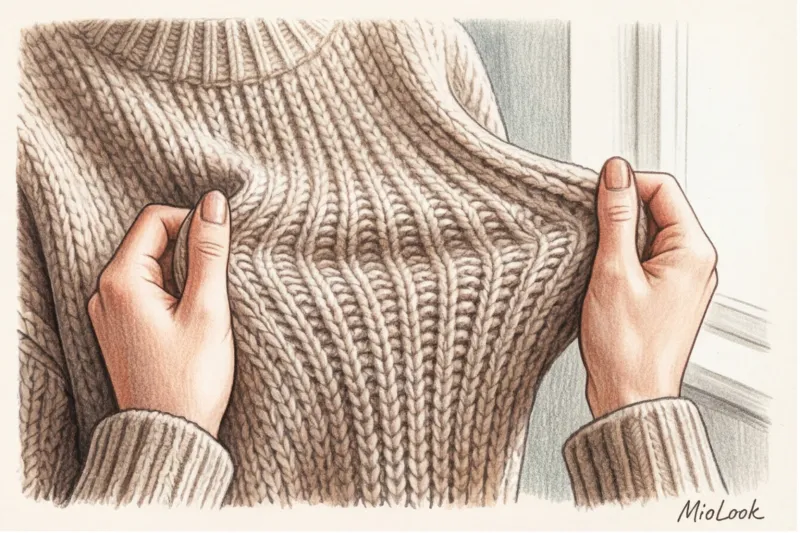
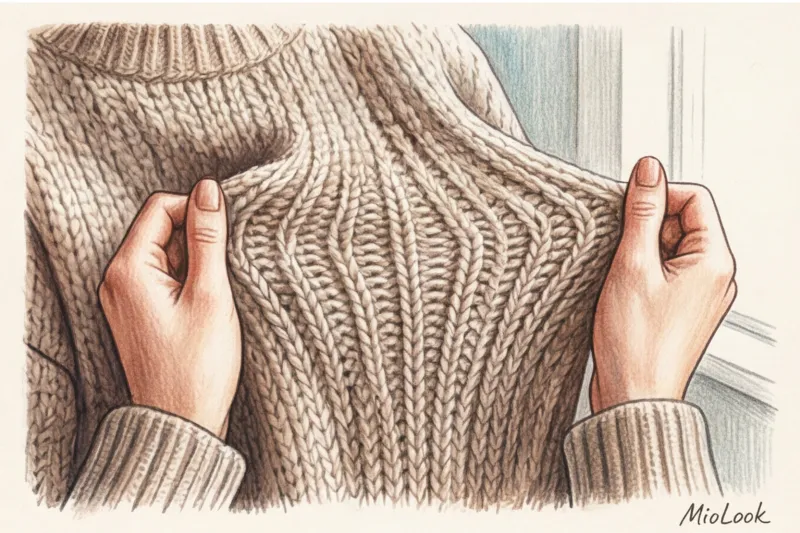
We have already discussed premium down and its properties in more detail in our a complete guide to choosing quality cashmere , but today we'll dig deeper into the anatomy of yarn. Why is 100% wool sometimes a bad idea? Natural fibers have low elasticity. Last winter, I conducted a personal test: I bought two sweaters of similar weights. One was 100% merino, the other a blend: 80% merino, 10% cashmere, and 10% nylon. After just a month of active wear, the 100% merino sweater's elbows had stretched out and its collar had become uneven. The blended sweater, on the other hand, looked like I'd just plucked it off a hanger in a boutique.
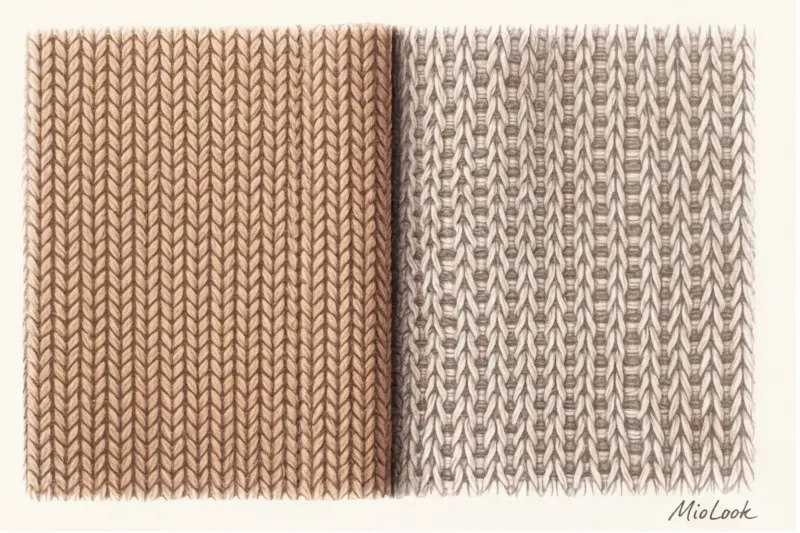
In the right proportions, synthetic fibers act like rebar in concrete. They create an invisible, elastic framework onto which fragile natural fibers are strung. Without this technical backbone, many types of yarn simply cannot survive.
Good and bad synthetics: learning to read labels like a buyer
The main mistake is to lump all non-natural fibers into one basket. In textile materials science, synthetics are divided into those that reduce production costs and those that improve the physical properties of a garment. Let's look at what to look for on the tag. composition of a quality sweater , and why run away without looking back.
Public Enemy Number One: Acrylic and Why You Should Avoid It
Acrylic was created as a cheap imitation of wool. It adds volume, making the garment appear plump and soft at first glance. But that's where the advantages end.
According to a large-scale textile market study by WGSN (2024), acrylic remains the most popular fiber in the fast-fashion segment, but it exhibits the worst thermoregulation properties. Why? Under a microscope, the structure of sheep's hair resembles a scaly cone. These scales trap air, creating a thermal cushion. Acrylic thread is a smooth plastic. It creates a "greenhouse effect": in a heated office, you immediately break out in a sweat, and when you step outside into the cold, you instantly freeze because the moisture has nowhere to evaporate.
Moreover, acrylic is extremely susceptible to pilling. Pilling forms after just a couple of weeks of wear, and it's so hard that trimming it with a machine without damaging the fabric is virtually impossible.
Technological allies: Polyamide, nylon and elastane
While acrylic replaces wool for cost savings, polyamide (aka nylon) is added for technological effectiveness. It acts as the "skeleton."
- Polyamide/Nylon: Gives the thread tensile strength. The finest technical thread holds the short wool fibers in place.
- Elastane (spandex): Just 2–5% elastane in the elastic (on the cuffs and collar) ensures that the sweater won’t turn into a shapeless bell after the first wash.
- Polyester: In microdoses (up to 10%) it is acceptable to increase wear resistance, especially in cardigans that constantly rub against outerwear.
Access to MioLook for €0.99 — one-time payment
A smart AI stylist will select the perfect look based on your wardrobe, taking into account compositions and textures.
Get access — €0.99 onceProportions matter: how much synthetic is acceptable?
Even good technological additives can be harmful if the balance is disrupted. Over 12 years of working as a stylist, I've developed clear rules of proportion that never fail.
For smooth base wool (merino, sheepskin, lambswool) the gold standard is the proportion 80/20 or 70/30 That is, 70-80% natural base and 20-30% high-quality synthetics. This is the ideal compromise between warmth, breathability, and durability.
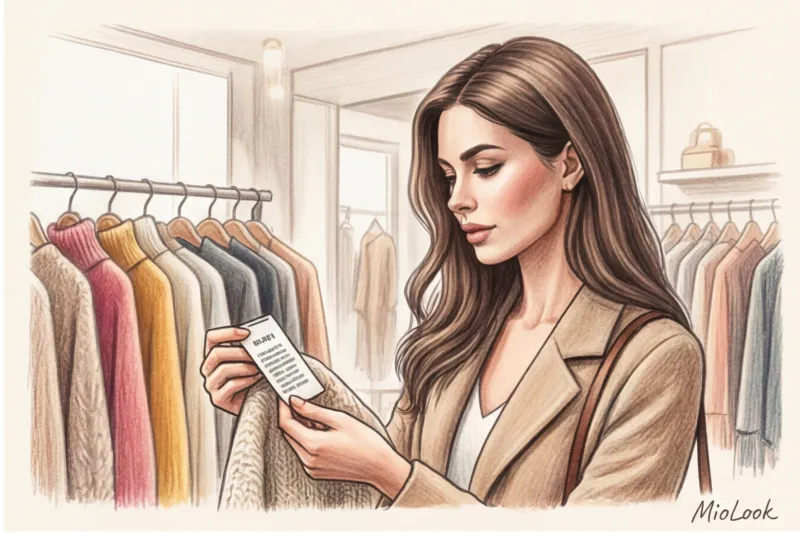
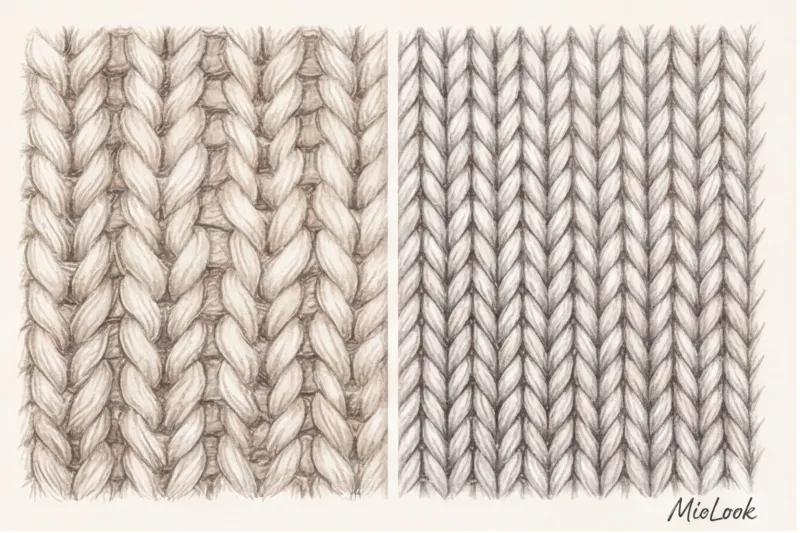
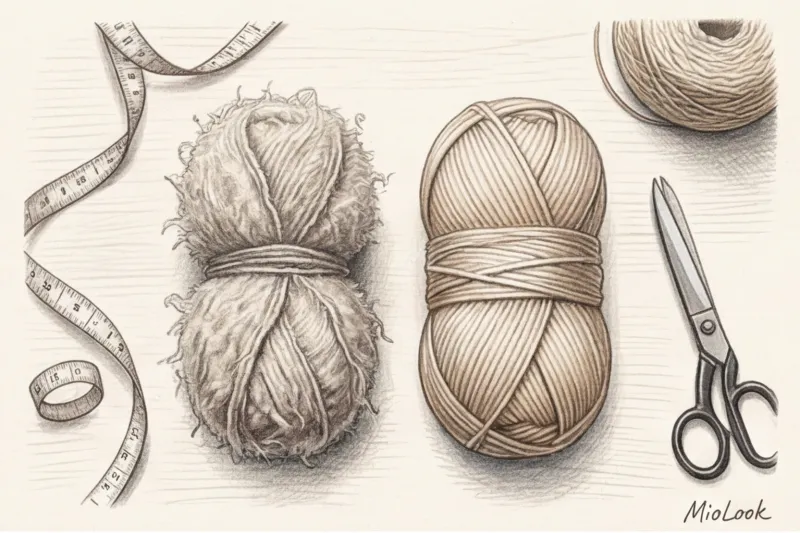
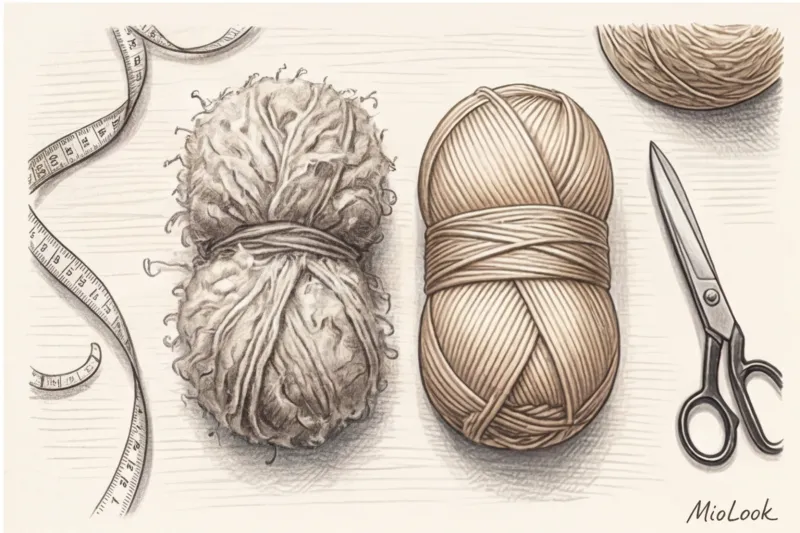
But with fluffy yarn, the rules of the game change. Historic Italian mills always add a synthetic binder to mohair, angora, and suri alpaca. The hair of these animals is long, smooth, and very slippery. If you don't secure it to a polyamide core, you'll leave a woolly residue on every office chair and your coworkers' coats. For fluffy yarn the composition of a quality sweater It can easily contain up to 30–40% polyamide. And this is normal, not a sign of cheapness.
"The line between technological innovation and outright thriftiness is at 50%. If a sweater is more than half synthetic, it automatically falls into the fast-fashion category, regardless of the brand on the tag or the number of zeros on the price tag."
Natural Base: Which Wool to Look for in the Ideal Composition
Having decided on the "skeleton," let's look at the "meat"—the natural base of our sweater. See the appendix. MioLook I often recommend that when digitizing my clients' wardrobes, they immediately specify not only the color but also the type of wool. This makes it incredibly easy to create capsule wardrobes for different weather conditions.
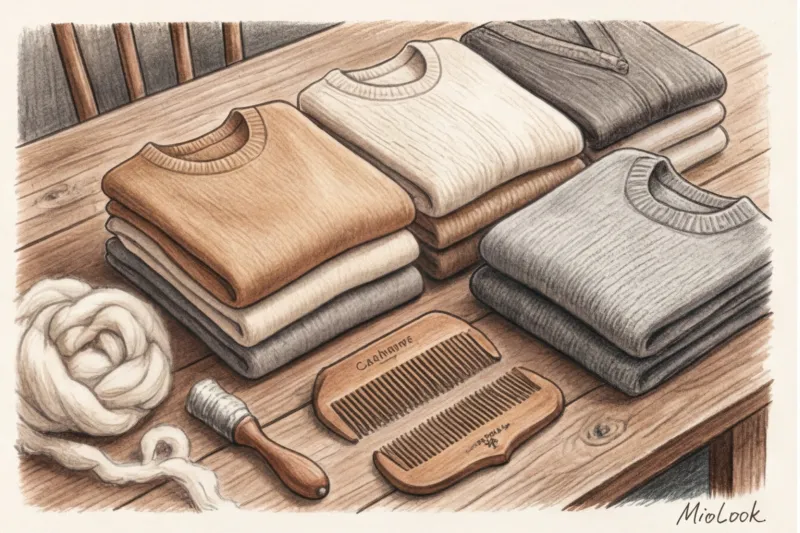
- Merino: A basic workhorse. According to The Woolmark Company's standards, high-quality merino (Extra Fine) has a fiber thickness of no more than 19.5 microns. It's non-itchy, holds its color well, and is ideal for thin turtlenecks worn under jackets.
- Cashmere: Status and absolute warmth without excess bulk. Cashmere is 8 times warmer than sheep's wool at the same weight.
- Alpaca: My personal favorite for those with sensitive skin. Alpaca wool contains no lanolin (animal wax), making it hypoallergenic and almost never itchy.
- Mohair: Designed for textured accents, it doesn't offer the warmth of cashmere, but it's incredibly kinesthetic.
Your perfect look starts here
Join thousands of users who look flawless every day with MioLook. Digitize your sweaters and get ready-made outfits!
Get access — €0.99 onceCotton and Viscose in Winter Sweaters: Hidden Pitfalls
This is where the most insidious misconception lies. Many people see "100% cotton" or a cotton-viscose blend on the tag, rejoice in the naturalness, and buy such a sweater for the winter. This is a mistake I see every season.
This advice doesn't work For a real winter. Cotton has zero temperature regulation in cold weather. Heavy, chunky cotton sweaters look stunning on a hanger in the store. But in practice, cotton is very heavy—it compresses under the weight of a winter down jacket or sheepskin coat, and when washed, it stretches under its own weight, losing its shape.
Viscose has a natural cooling effect. A viscose sweater flows and shines beautifully, but in winter it's physically chilly. However, there is an exception to this rule. If you work in an office with powerful central heating, where the temperature reaches 25°C, a thin jumper made from a blend of cotton (70%) and merino (30%) will be your salvation. You won't look overdressed, but you'll still look winter-appropriate.
Stylist's Checklist: How to Check the Quality of a Sweater Right in the Store
Reading the ingredients is half the battle. The other half is physical testing. As a stylist, I never buy knitwear for clients without conducting three basic tests in the fitting room.
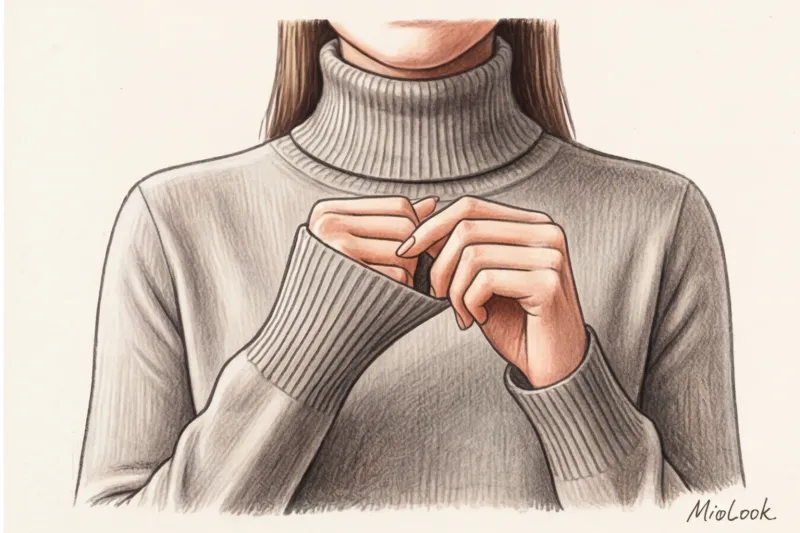
- Elasticity test: Take the cuff or hem of a sweater, stretch it a couple of centimeters, and then release it quickly. A quality item (with the right percentage of polyamide or elastane) should spring back immediately. If the elastic remains loose, put the item away; after the first wash, it will become a rag.
- Translucency test (assessment of knitting density): Lift up a sweater and look through it at a store lamp. If you can clearly see the light source through the stitches of a basic (not lace!) sweater, the manufacturer skimped on yarn. Loose knits won't retain heat and will quickly become misshapen.
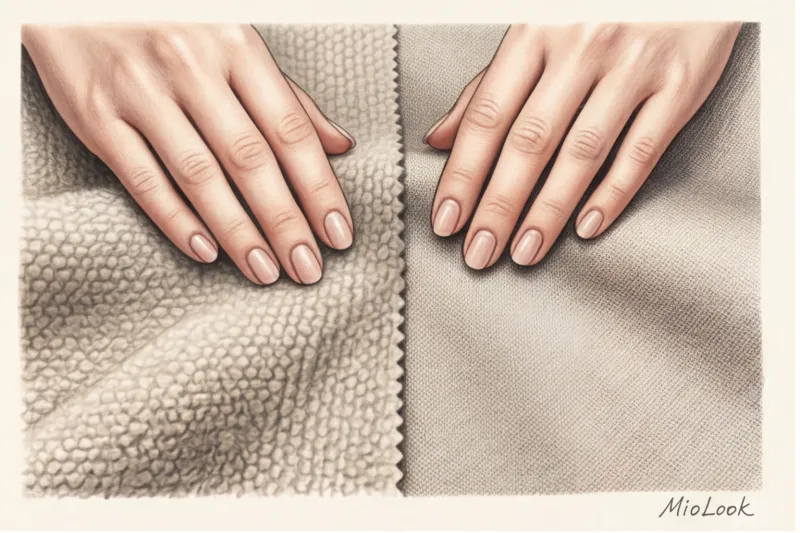
- Tactile test on the neck: Place the sweater not on your hand, but on your neck or the inside of your wrist. Salespeople often say, "Wash it with a special conditioner and it will stop itching." Don't believe them. The fiber structure cannot be changed. If it's itchy now, it will always be itchy.
Summary: The formula for your ideal knitwear investment
Buying quality knitwear is always an investment in your personal brand, comfort, and self-confidence. A neat, well-fitting sweater communicates status far more powerfully than logos on a bag.
Remember the most important counterintuitive rule: don't be afraid of synthetics as long as they make up no more than 30% of the composition and are nylon or polyamide, not acrylic. The 70/30 rule (where 70% is high-quality wool) is your universal guideline in the world of basic knitwear. Read the labels, test for stretch, and your sweaters will last season after season, looking their best.