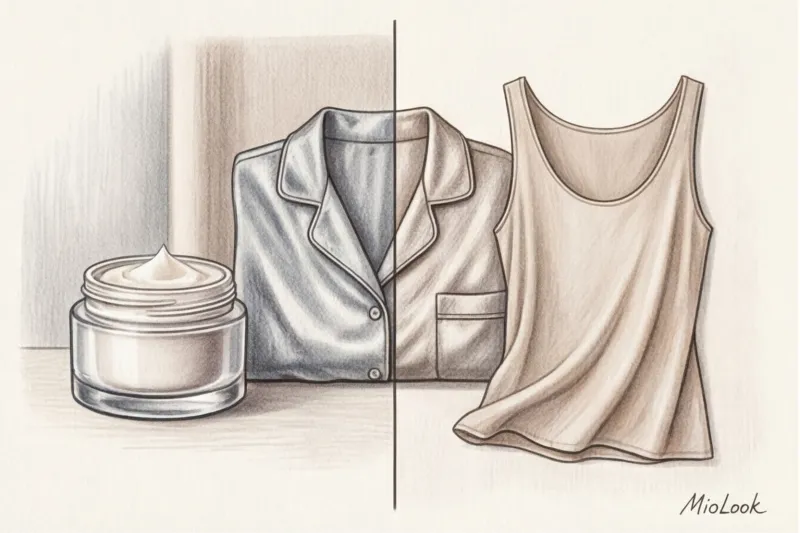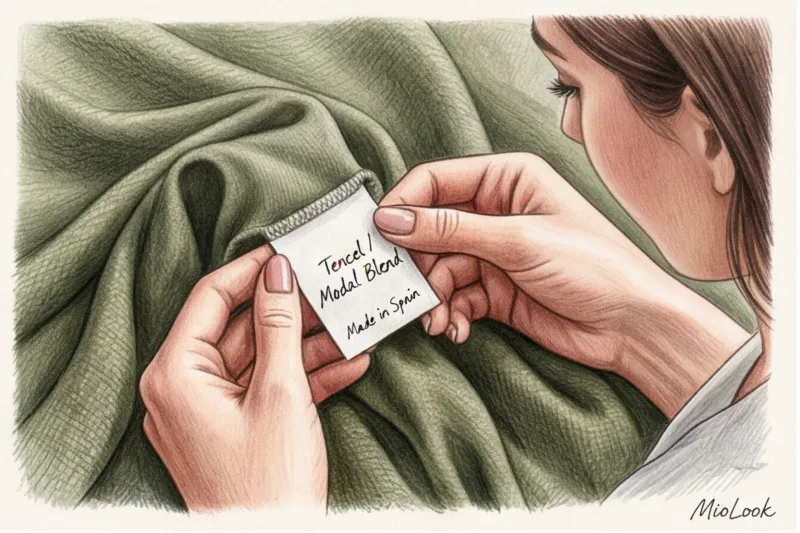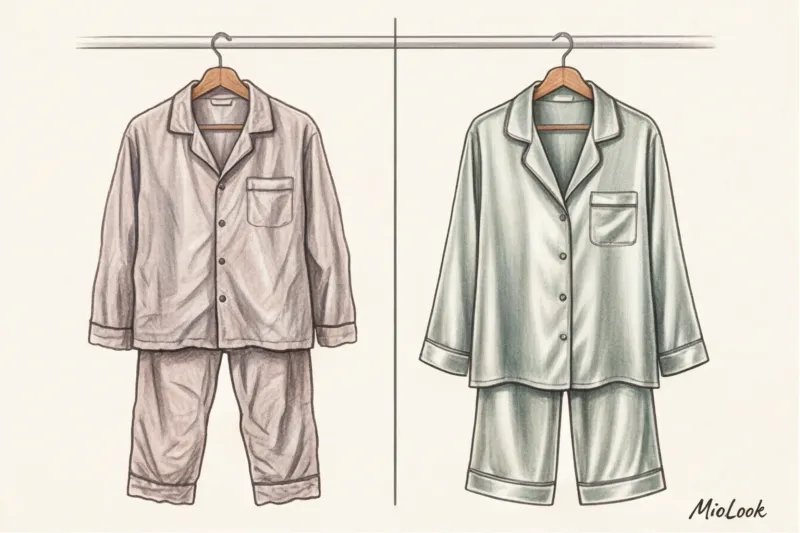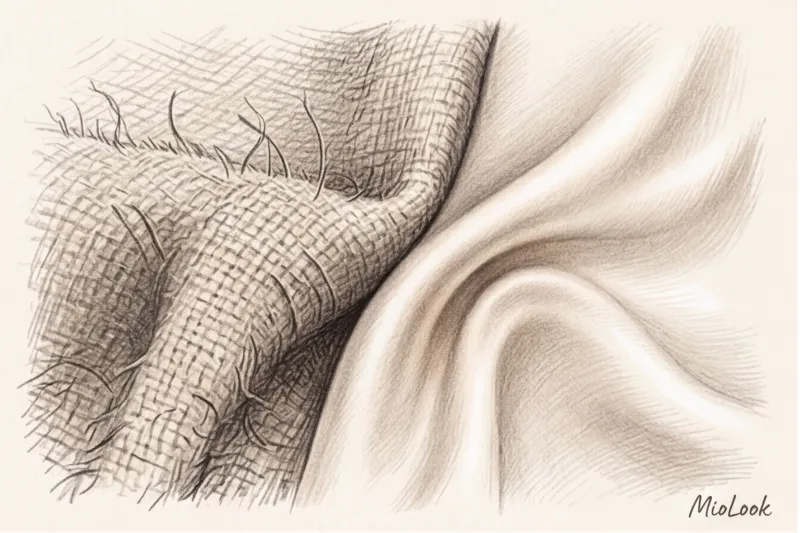
Over 12 years of working as a personal stylist and wardrobe curator, I've handled thousands of items and examined probably over 5,000 sewn-in labels. And do you know what the biggest mistake clients with sensitive skin make? They obsessively search for the coveted "100% cotton" label, fervently believing that natural cotton is the ultimate panacea for itching, redness, and discomfort.
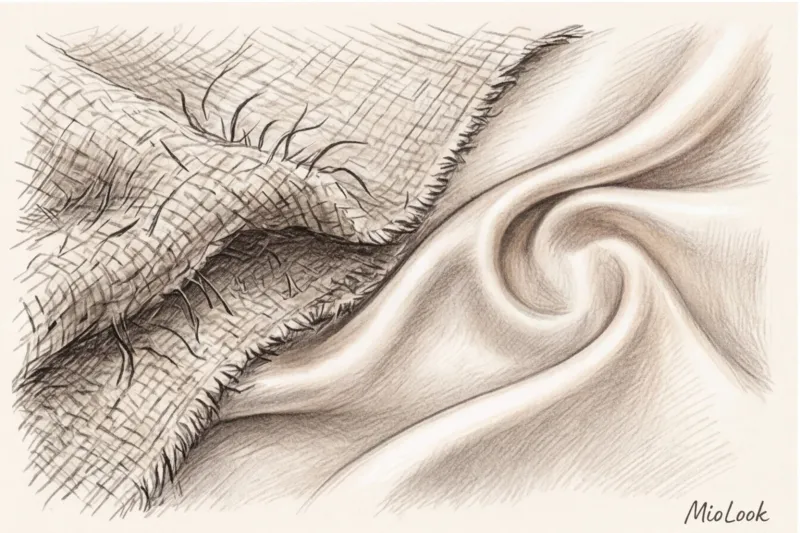
Spoiler alert: in today's mass-market environment, this is no longer the case. If you have atopic dermatitis, eczema, or simply hypersensitive skin that reacts to the slightest friction at the end of a long workday, a regular cotton shirt can act like fine sandpaper. Today, we'll take a look at what's truly hypoallergenic fabrics for clothing and we'll find out why cutting-edge dermatologists are increasingly sending patients not to the pharmacy for ointments, but for basic products made from Tencel and Modal.
We have already talked in more detail about the origin of these amazing materials and the technology of their production in our The complete guide to eco-friendly clothing fabrics: Tencel, modal, and lyocell Now let's take a look at them under a microscope—literally.
Your perfect look starts here
Join thousands of users who look flawless and feel comfortable every day with MioLook.
Get access — €0.99 onceThe Cotton Myth: Why 100% Natural Fabrics Can Harm Sensitive Skin
Sounds like fashionable heresy, right? For decades, we've been taught that cotton allows the skin to breathe, making it the best choice. But let's turn to the physics of textiles and dermatology. The problem lies in the so-called "coefficient of microfriction."
Traditional cotton fibers are short and have a slightly flaky, rough texture at the microscopic level. When you put on a cotton garment, these microscales cling to the top layer of the epidermis with every movement. Healthy skin simply doesn't notice this. But for skin with a compromised lipid barrier (due to dermatitis or psoriasis), this is equivalent to a gentle but continuous exfoliation lasting 8-10 hours.
"One of my clients, a top manager at an IT company, complained that by 5:00 PM she couldn't think about numbers—she literally wanted to rip off her formal office shirt made of thick poplin. We replaced it with a flowing lyocell blouse, and the problem disappeared within the first day."
The second hidden threat is chemical treatment. According to 2023 research by environmental groups, up to 20% of cotton clothing in the mass-market segment (priced under €50) is treated with formaldehyde resins. Why? To reduce wrinkles on store hangers. This chemical doesn't completely wash out even after five washes and is a powerful trigger for contact allergies.
Tencel, modal, and cupra: the best hypoallergenic clothing fabrics, according to dermatologists.
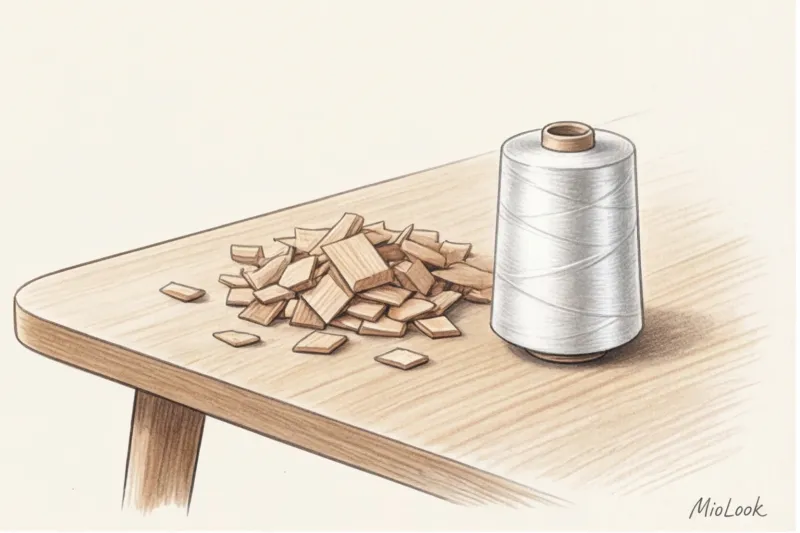
If cotton is losing, what should we wear? The answer lies in new-generation cellulose fibers. Lyocell (and its patented version, Tencel™), modal, and cupra aren't synthetics like polyester, but they're not pure natural fibers either. They're artificial fabrics of natural origin, created from wood pulp from eucalyptus, beech, or cotton linters.
Dermatologists from the National Eczema Association (USA) officially recommend lyocell-based fabrics for patients with severe skin conditions. There are two compelling reasons for this:
- No toxic reagents: Lenzing Group's genuine Tencel production is carried out using closed-loop technology. 99.5% of the organic solvent is reused, meaning aggressive chemicals simply don't come into contact with the final fabric.
- Unique tactility: Try a simple test in the store. Close your eyes and run your hand over a 100% lyocell item. It feels like cool, dense liquid silk. No lint, no stiffness.
If you want to quickly find these items in your closet and separate them from stiff fabrics, I recommend digitizing your items in an app. MioLook The smart wardrobe feature allows you to create a dedicated "Comfort" capsule and plan outfits specifically for soft textures on days when your skin is particularly irritated.
The Anatomy of Comfort: How Eco-Fibres Work at the Micro Level
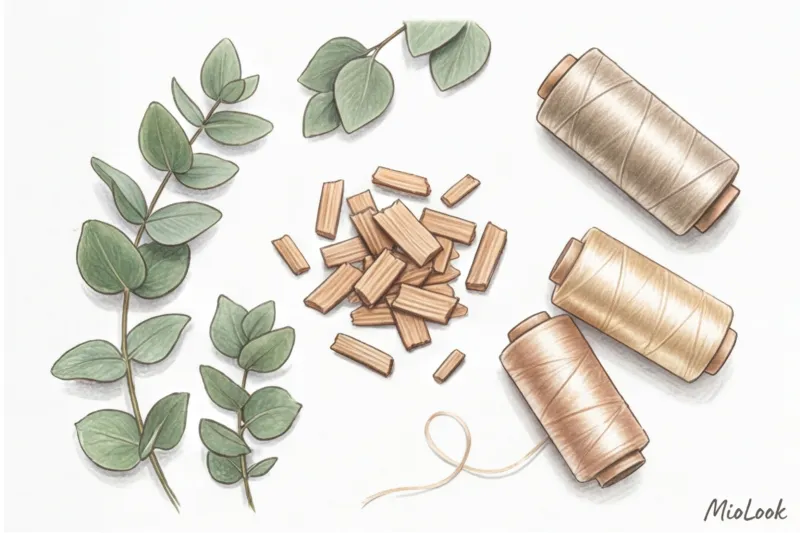
Let's look at the numbers, because I like to rely on data rather than brand marketing claims. Why does eucalyptus fiber relieve itchiness?
Firstly, Tencel absorbs moisture 50% more effectively than regular cotton. This is critically important. Itching and redness often occur due to the "greenhouse effect"—the microclimate between the fabric and the body. When moisture is instantly wicked away and evaporates, bacteria (including those that cause odor) simply have no place to thrive. This is due to the physics of the fiber itself, not the antibacterial chemical treatments often found in sportswear.
Secondly, cupra and lyocell have fantastic temperature regulation. They keep you cool in the summer and comfortable in a heated office in the winter. By the way, if you're concerned about temperature fluctuations during important meetings, I recommend checking out our review. What fabrics don't show sweat stains: A guide for speakers.
Ready to get started?
Try the MioLook plan for free—no commitments required. Create your own capsule wardrobe of comfortable fabrics in just two clicks.
Get access — €0.99 onceBeware of blends! How to read labels to avoid buying a "prickly" counterfeit
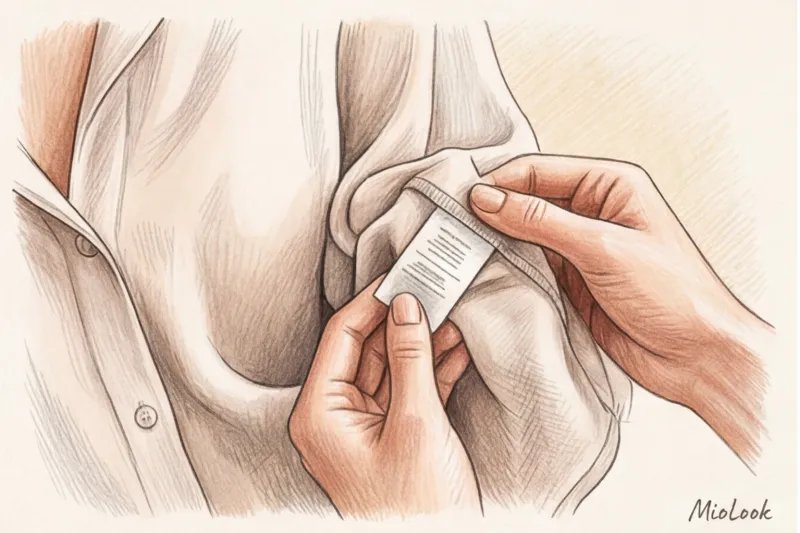
Now let's talk about how the mass market deceives us. You see a pretty tag on a hanger with a green leaf and the large inscription "Tencel Blend." The item costs a tempting €25. You happily take it to the checkout. But if you look at the inside side seam, you'll see the composition: 10% Lyocell, 90% Polyester.
For sensitive skin, this is a disaster. Polyester will create a greenhouse effect, negating all the benefits of eucalyptus fiber. Remember my rule for checking labels:
- Minimum working wage: For hypoallergenic clothing fabrics to really work, there must be a significant amount of cellulose fibers (Lyocell, Modal, Cupro, Viscose Ecovero) at least 50% Ideally, 70–100%.
- Safe Neighbors: What can eco-fibers be mixed with without harming the skin? With natural silk, with organic cotton (softened with lyocell in a 50/50 ratio), and with the highest grade merino wool (Extrafine), which is non-itchy.
- Dangerous parts: Check not only the fabric but also the hardware. Cheap metal buttons and zippers often contain nickel, another strong allergen. Choose items with hardware made from recycled plastic, mother-of-pearl, or hidden fasteners.
Are there any downsides to lyocell? I'll be honest: 100% Tencel wrinkles. Not as much as linen, but noticeably so. If you hate ironing and don't use a steamer, look for safe blends: 70% Tencel + 30% high-quality viscose or organic cotton.
Putting together a "safe" capsule: basic items that don't cause itching
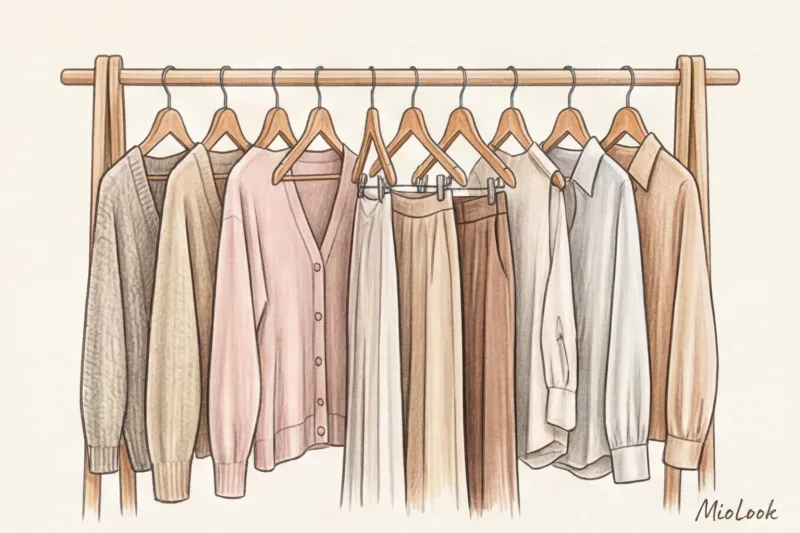
Building a comfortable wardrobe doesn't mean you have to look like you're in pajamas. Incorporating soft textures into an elegant look is entirely possible. We discussed the general principles in the article about creating a capsule wardrobe , and here we will focus on tactile safety.
Base layer: what's closest to the body
Start with the foundation. Whatever sits next to your skin 24/7 should be flawless. Invest in underwear, tank tops, and basic turtlenecks made from MicroModal. This fiber is even finer and softer than standard modal. A quality set of MicroModal underwear will cost around €40–€80, but it's an investment in your health.
For comfort, you'll have to make sacrifices: avoid lace in tight areas (waistbands, straps). Synthetic lace inserts act like micro-saws when rubbed.
Office wear for sensitive skin
Let's return to my client with contact dermatitis. How did we create a formal yet safe wardrobe for her that fits within the dress code of a large corporation?
We've completely eliminated classic, stiff shirts. Instead, we've added ascot collar blouses (with bows) made of dense cupra and lyocell. They look just as classy as silk, but don't clutter and don't require complicated dry cleaning (these blouses in the mid-price range from €80 to €150). We've replaced the tailored wool trousers with polyester lining (a nightmare for the skin on your legs!) with sturdy palazzo pants made of 100% Tencel—they hold their shape perfectly and flow smoothly as you walk, without chafing.
Access to MioLook for €0.99 — one-time payment
A smart AI stylist will select the perfect look from your safe and comfortable everyday items.
Get access — €0.99 onceChecklist: How to Wash and Care for Hypoallergenic Clothing
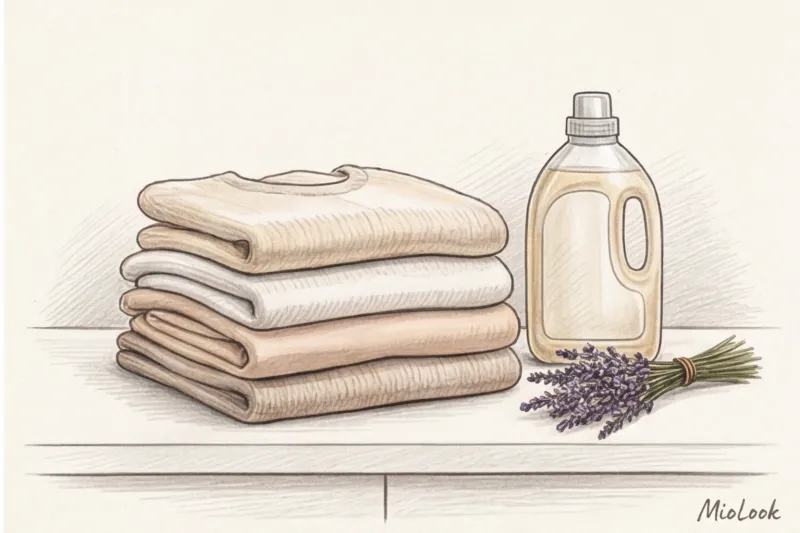
Buying the right item is only half the battle. A single wash can turn silky Tencel into a stiff, irritating mess if you don't follow the care instructions.
Here's how to care for cellulose fibers:
- Temperature conditions: Strictly up to 30 degrees Celsius. In hot water, lyocell shrinks significantly and its fibers become deformed, losing their signature smoothness.
- Product format: Throw away harsh granular laundry detergents. They often don't rinse out completely, settling as microscopic crystals in the fabric fibers. Use only liquid eco-gels for washing delicate fabrics.
- Avoid air conditioners (very important!): Dermatologists are urging patients to stop using fabric softeners. Fabric softeners coat the fabric with an artificial wax/lipid film. This film reduces the breathability of Tencel, traps odors, and contains strong fragrances that trigger eczema.
- Delicate spin: No more than 600 rpm. Strong mechanical friction in the drum causes pilling. Any pilling causes additional friction against your vulnerable skin.
If your wardrobe budget is limited, don't try to replace everything at once. My main advice: invest in the layer of clothing that has the closest and longest contact with your skin. A pair of the right modal turtlenecks and basic Tencel tees will dramatically change the way you feel, proving that fashion can and should be therapeutic.