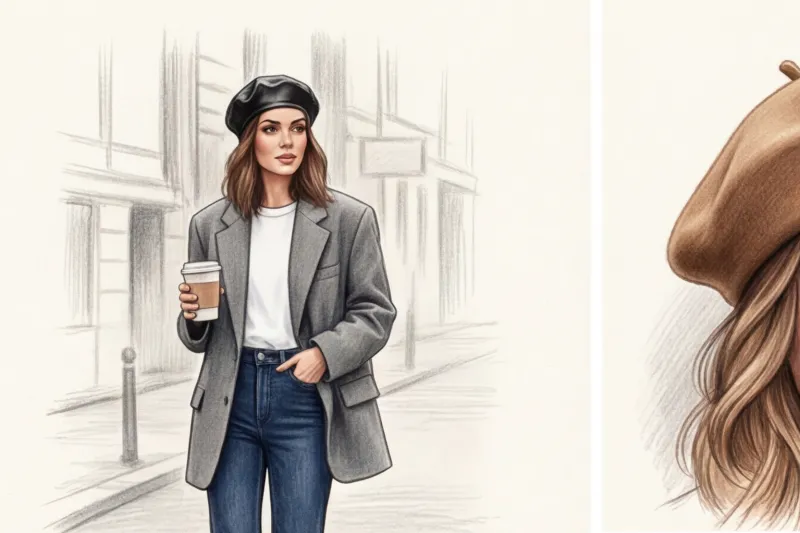
I conducted an experiment: I wore a beret for 30 days straight in a variety of style combinations—from formal business meetings to lazy Sunday brunches. My goal was to understand which formulas work in real life and which are only suitable for pretty Pinterest boards. Spoiler alert: most of the online advice is hopelessly outdated.
If you've ever worn this accessory and felt like you'd just escaped a French-style matinee, the problem isn't your appearance. The issue is, How to wear a beret correctly in terms of geometry, textures, and modern styling techniques. We discussed the basic principles of proportions in more detail in our a complete guide to choosing headwear , and today we'll take a look at this specific, incredibly stylish, but tricky accessory.
Forget Emily in Paris: How to Wear a Beret in Real Life
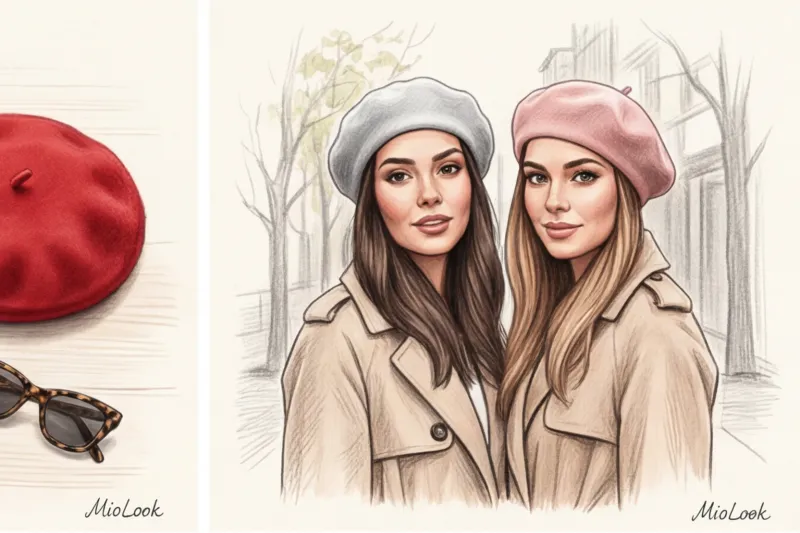
Let's be honest: the stereotypical image of a "Parisienne" with a red beret, striped shirt, trench coat, and baguette tucked under one arm looks comical in a modern metropolis. It turns your everyday outfit into a theatrical costume. True French chic today is built not on a literal retelling of retro style, but on a subtle play of contrasts.
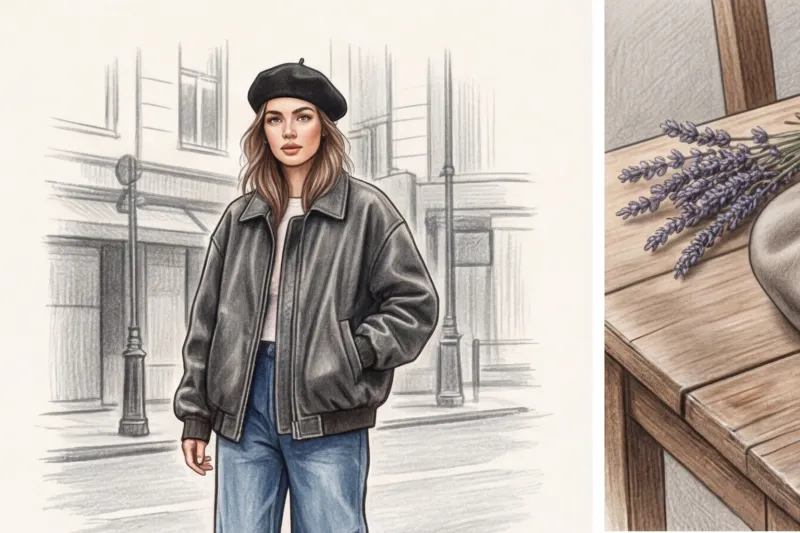
The beret is a romantic, historically charged element. To counteract this overly "dressy" look, it should be integrated into rugged, sporty, or distinctly minimalist looks. Monochrome close to the face can make you look older, but pairing a classic beret with an oversized hoodie or a tailored men's jacket instantly elevates you to street style icon status.
"Wardrobe analytics in the MioLook app for 2024 reveal an interesting trend: our users wear leather berets 45% more often than classic wool ones. The reason is simple—a rugged texture is much easier to incorporate into a modern casual look."
Planting Anatomy: 3 Golden Rules to Avoid Looking Like a Mushroom
Over my 12 years as a stylist, I've heard the phrase hundreds of times: "Hats don't suit me; my face is too round/square/long." It's a myth. Face shape doesn't matter when you master the laws of optical illusion. According to the rules of traditional French millinery, a beret isn't a hat; it's an architectural tool for creating the right frame (framing).
Hairline manipulation and the "bald spot effect"
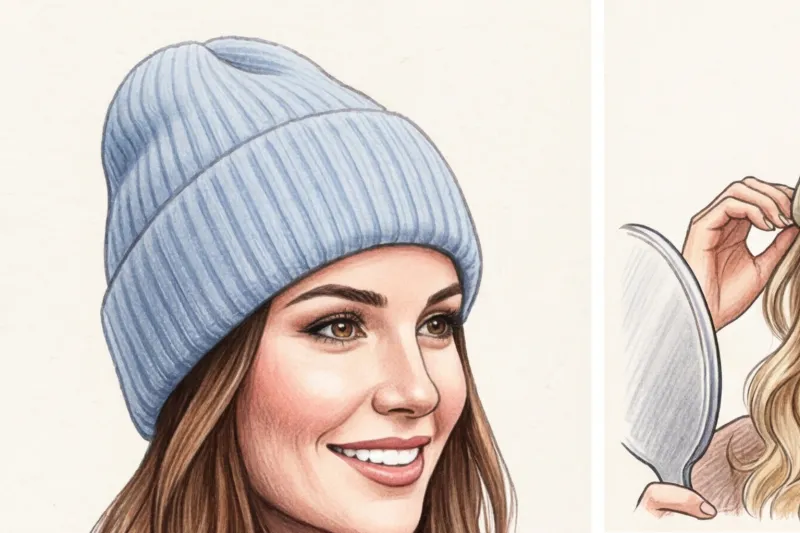
The most fatal mistake is pulling a beret too far down on your forehead, completely hiding your hair. According to our internal fitting statistics, over 80% of hat purchase rejections are due to the "baldness effect."
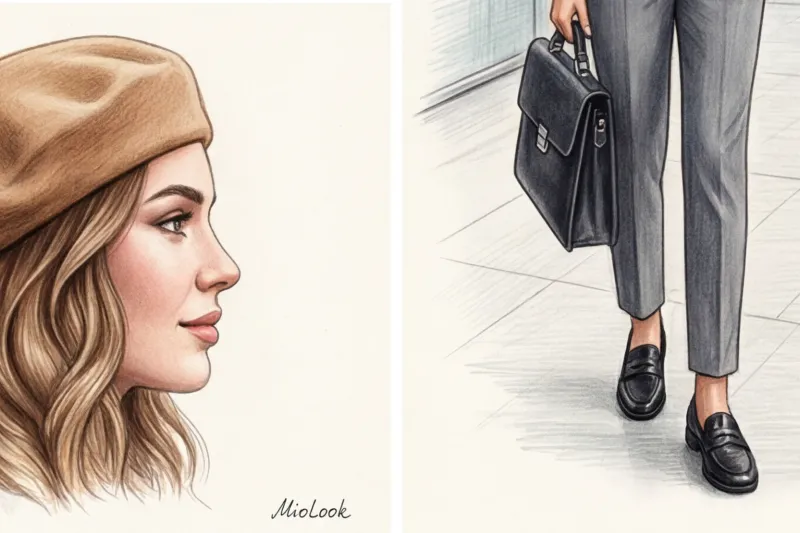
One of my clients was convinced that her beret made her face look huge. We simply adjusted the fit: we moved the brim 2 centimeters above the hairline and left a few loose strands at the cheekbones. This technique visually narrowed her face and added a lighter look. It doesn't work only in one case - if you have a sleek, tight ponytail or bun without a single loose strand near your face.
Tilt Geometry: Asymmetry as a Tool
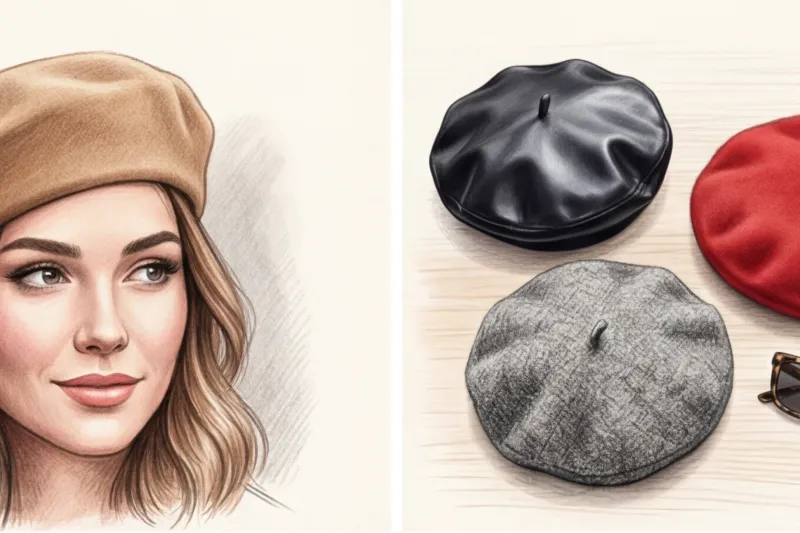
The symmetrical placement of the beret, precisely centered on the head (like a pancake), creates a childish look, reminiscent of a school uniform. A more mature, sophisticated style calls for a slightly casual and asymmetrical look.
- Determine your “working” side of the face (the one you most often show to the camera when taking selfies).
- Tilt the beret in this direction, creating a beautiful fold in the fabric.
- The edge of the accessory should cross the forehead diagonally - this visually lengthens the oval of the face.
The Evolution of Textures: Why Smooth Leather Is Displacing Soft Felt
Classic felted wool is a wonderful material, but it requires impeccable quality. Cheap felt quickly becomes pilled and loses its shape. Today, structured materials like faux leather, denim, and heavy corduroy are gaining popularity.
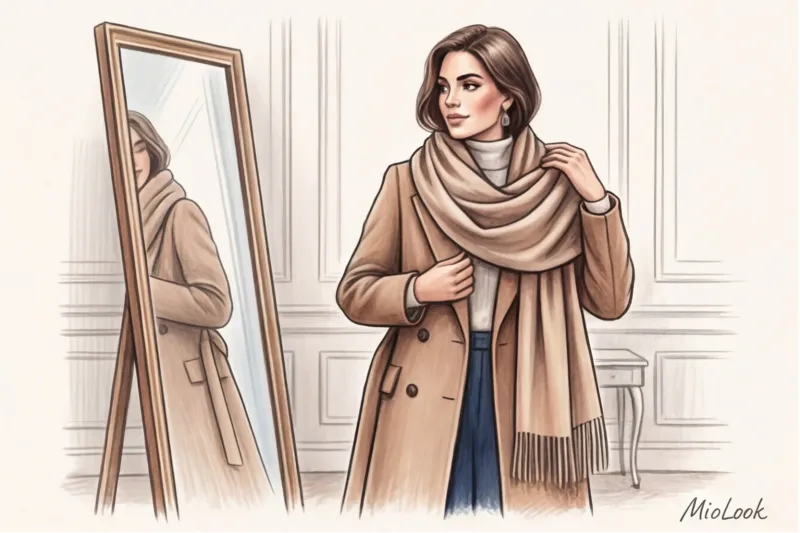
The main rule for a stylist: play with contrasting textures. If your coat is soft and fluffy (for example, alpaca wool), your beret should be stiff and smooth—leather. Conversely, a fluffy angora beret pairs perfectly with a smooth leather trench coat. Changing the texture alone can save a look from becoming too mothballed.
Access to MioLook for €0.99 — one-time payment
A smart AI stylist will select the perfect look based on your preferences and help you integrate new accessories into your existing wardrobe.
Get access — €0.99 onceColor Palette: How the Shade of Your Beret Affects Your Age
Any headdress acts as a photographic reflector. A 2024 study by the global trend agency WGSN found that the difference in a woman's perceived age can be up to five years, solely due to the color temperature of the portrait area.
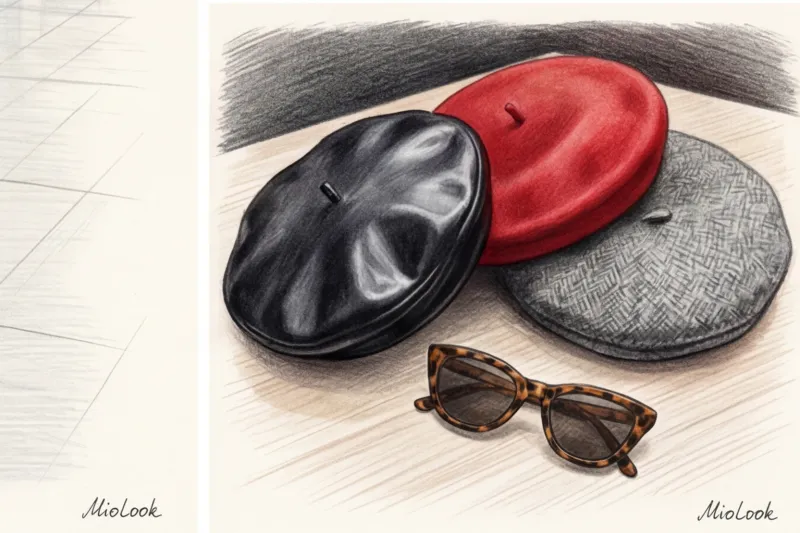
A deep black face paint mercilessly highlights dark circles under the eyes, nasolabial folds, and even the slightest hint of fatigue. Earthy khaki often gives the skin a sickly yellowish undertone. If you haven't had enough sleep, a black beret is your worst enemy.
Swap dramatic black for more complex, highlighting shades:
- Pearl gray or ecru - work as a highlighter for the face.
- Camel and warm caramel — ideal for those with warm skin tones.
- Dusty pink - instantly refreshes and adds blush.
Wardrobe Integration: 3 Fun Look Formulas
Stop saving your accessories for "special occasions." Here are three ready-to-wear, practical "put-it-on-and-go" formulas for busy professionals who value their morning time.
1. Office smart casual
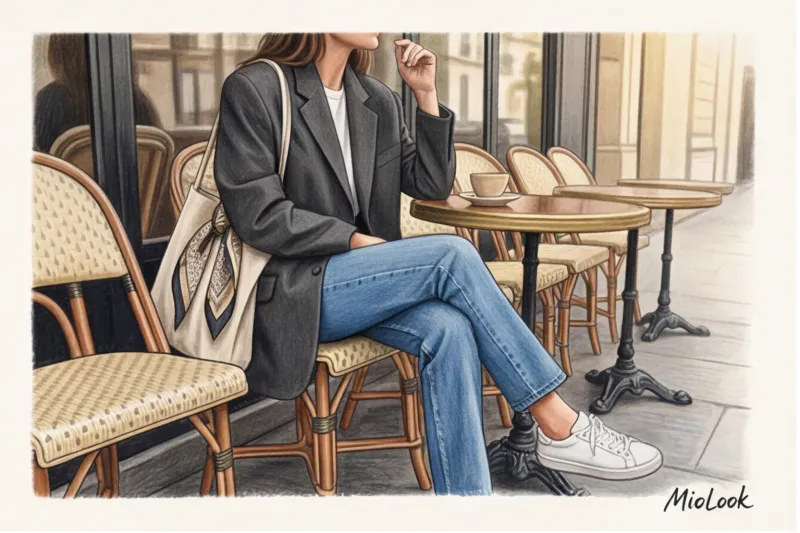
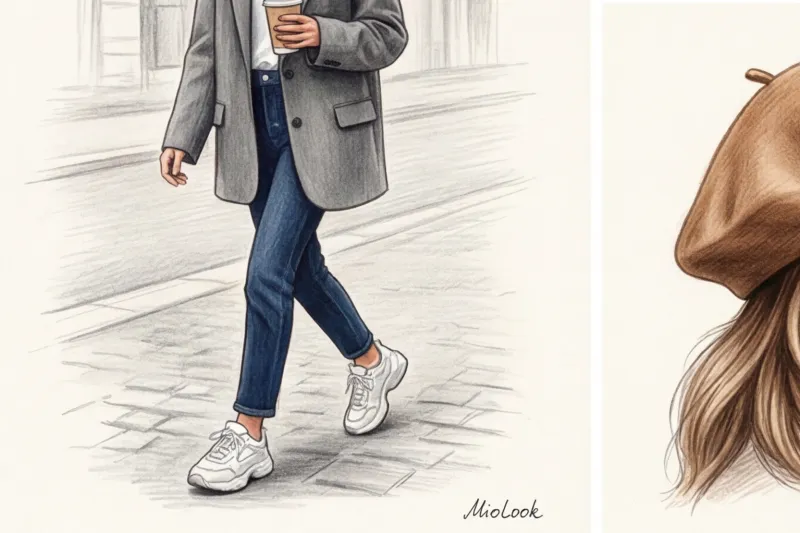
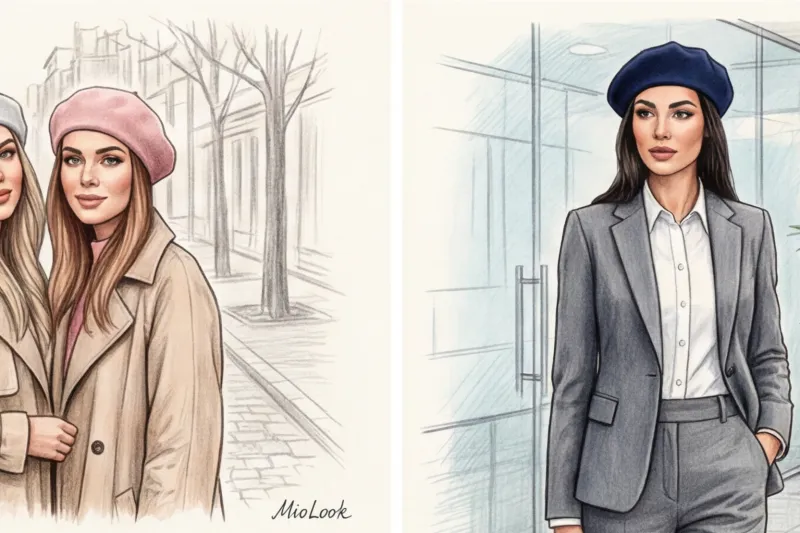
For a Friday dress code or a creative office, take a basic T-shirt (heavyweight cotton, minimum 180 g/m²), throw on a tailored oversized men's blazer, add wide-leg trousers with a crease, leather loafers, and a deep navy beret. It looks put-together, but with a touch of ironic casualness.
2. Scandinavian minimalism
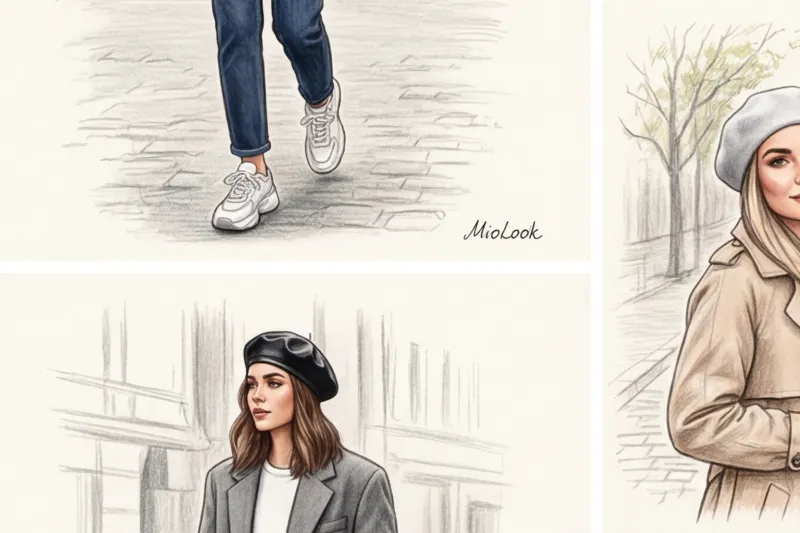
Perfect for the weekend. Wide-leg straight jeans, an oversized chunky knit turtleneck, and a sleek leather beret. The crisp shape of the leather balances the soft, shapeless knit, bringing the look together.
3. Sport-chic (breaking the mold)
My favorite counterintuitive trick: throw on an oversized hoodie, joggers, chunky sneakers, top it off with a classic double-breasted coat, and a classic wool beret. Paired with a sporty staple, the stereotypical accessory loses its pretentiousness and looks ultra-fashionable.
Your perfect look starts here
Join thousands of users who look flawless every day with MioLook. Digitize your wardrobe in just a few clicks.
Get access — €0.99 onceSmart Shopping: A Checklist for Choosing the Perfect Beret
How can you avoid buying something that will gather dust on the shelf for years? When shopping at mass-market brands (Zara, H&M) or mid-market brands (COS, Massimo Dutti), pay attention to the technical assembly details.
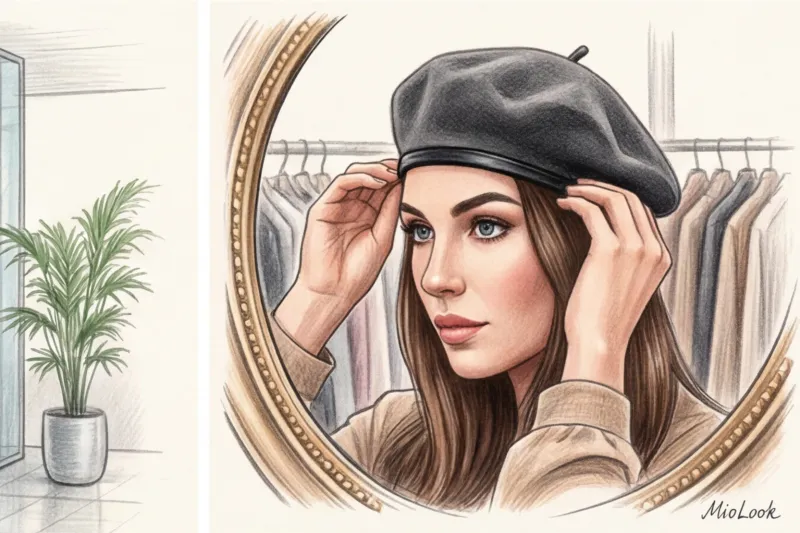
- Pinch test. Take the edge of the beret between two fingers and tug gently. If the fabric stretches like a cheap sock and doesn't bounce back, don't buy it. Quality felt should have some spring.
- Inner rim (cabillou). This is a critical factor. Without a strong, non-elastic band or leather trim inside, the beret will never maintain the desired angle—it will simply slide down over your ears.
- Budget. Basic models made from good 100% wool will cost €30–60, while high-quality structured leather will cost between €80–150. This is a great investment in a capsule collection.
Care instructions: how to maintain shape
Never hang wool berets on narrow hooks in the hallway—they'll stretch out and develop an unsightly bulge. Store them horizontally (on a shelf or in a box). If your felt has developed an unsightly crease, try this stylist's lifehack: hold the beret over a steamer for 15–20 seconds, then shape it with your hands while the material is still warm and damp. Leave it to cool on a flat surface.
The main conclusion I drew from my 30-day experiment: don't try to force yourself to match an accessory, match it to your usual rhythm. Buy a quality leather beret in a basic shade and wear it tomorrow with your most basic, favorite gray hoodie. You'll be surprised how one detail can change the overall look.