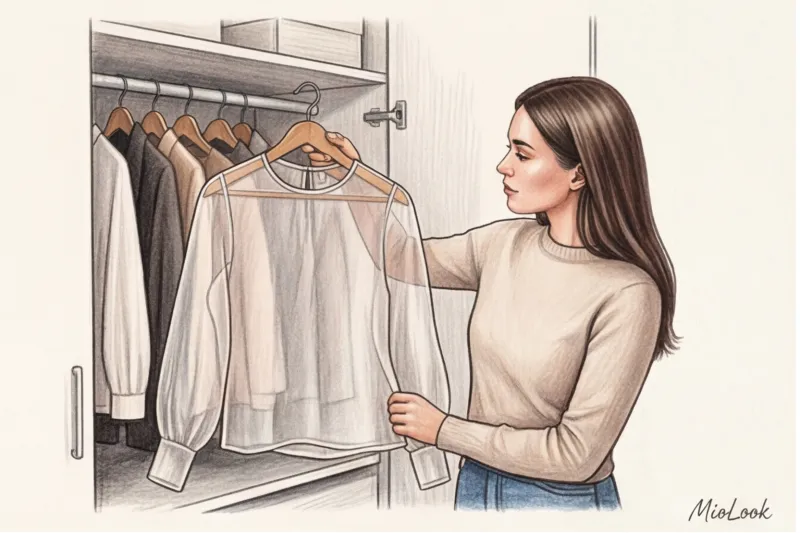
The Transparency Index: Why We're Afraid and How to Wear Sheer Clothes Properly
I've conducted over three hundred wardrobe analyses over the past few years and noticed a striking pattern. Almost every other client has "that one" sheer mesh blouse or dress with luxurious lace inserts hanging in their closet. These items are usually bought on impulse, carefully hung on a hanger, and... never worn. My personal statistics are merciless: 85% of such impulse purchases turn into dead weight due to the simple fear of looking out of place, and the average cost of this "idle" investment in the closet is around €120.
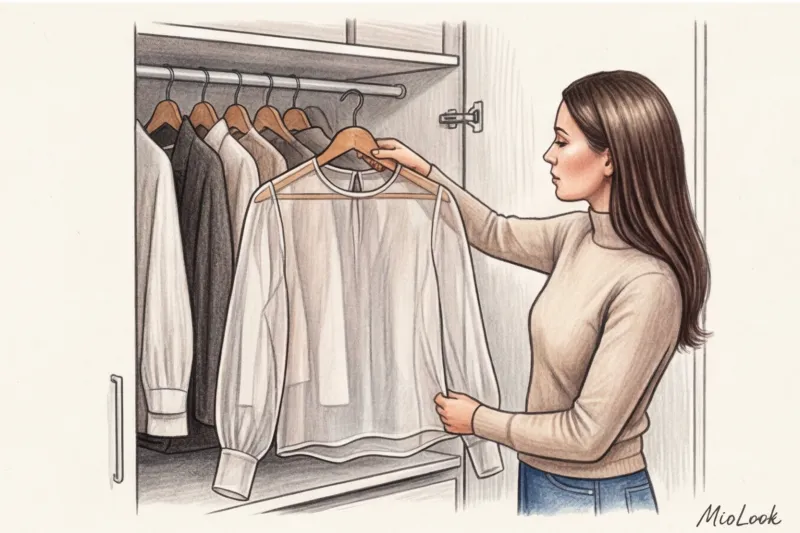
Actually, if you don't know, How to wear sheer clothing , the problem isn't your figure or your courage. The problem is a lack of system. Working with translucent textures follows the same rules of visual weight as working with active patterns. We discussed this in more detail in our a complete guide to fashionable prints in clothing Transparency isn't about sheer provocation; it's about the architecture of the image and the management of layers.
The secret lies in the "transparency index." Stylistic architects don't divide clothing into sheer and opaque. We evaluate the density of the material: the finest 15-denier mesh requires a completely different approach than a stiff, shape-holding silk organza or matte cotton embroidery. As fashion historian Caroline Evans notes in her study of contemporary corporeality (2022), transparency is used today as a layering tool, regulating visual volume, rather than as a means of revealing.
Access to MioLook for €0.99 — one-time payment
A smart AI stylist will select the perfect look for every day and help you incorporate complex pieces into your wardrobe.
Get access — €0.99 onceContrast Formula: The Stylist's Main Secret
The biggest mistake beginners make is trying to pair a sheer garment with a fitted cut or mini length. At that point, the look instantly devolves into cabaret aesthetics. To avoid the "burnt-out theater actress" effect, I always use 20% rule: a transparent element should not take up more than a fifth of the visual volume of your outfit, and the remaining 80% should be compensated for by dense, heavy, closed fabrics.
Masculine and feminine: balance of cut
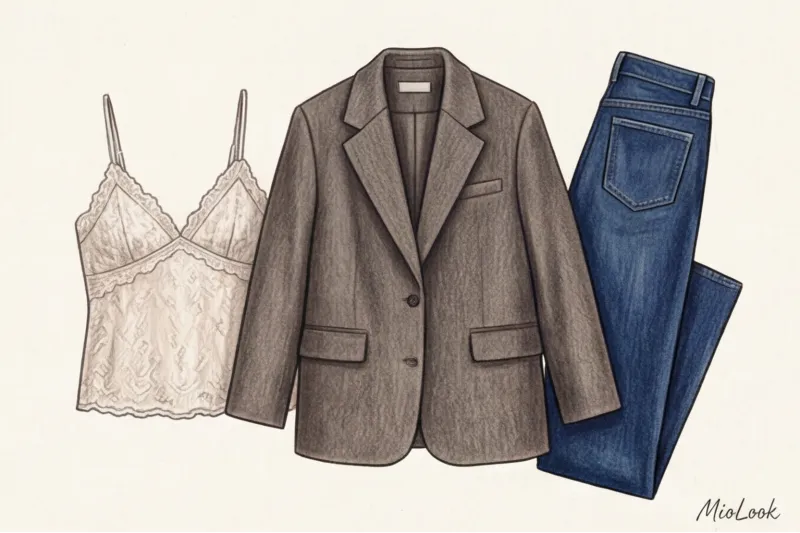
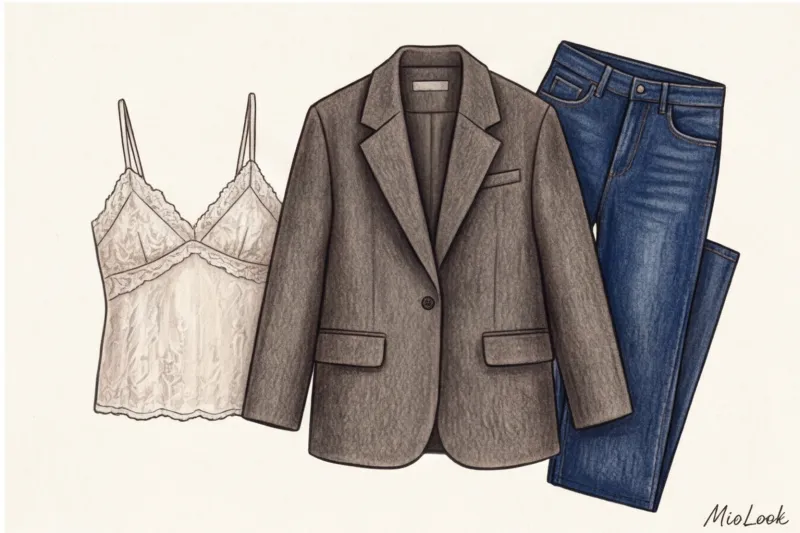
One of my regular clients, the CEO of an IT company, adored Victorian lace turtleneck blouses but was terrified of looking childish at a board meeting. We solved this problem with a masculine cut. We paired a delicate, semi-sheer blouse with a deliberately oversized jacket with a sharp, masculine shoulder and straight, pleated trousers. Rugged, thick-soled loafers were the perfect finishing touch. No stilettos. Grounding the look with heavy shoes and clean lines instantly elevated the lace from "romantic" to "confident, smart-casual."
A play of textures: silk, wool and denim
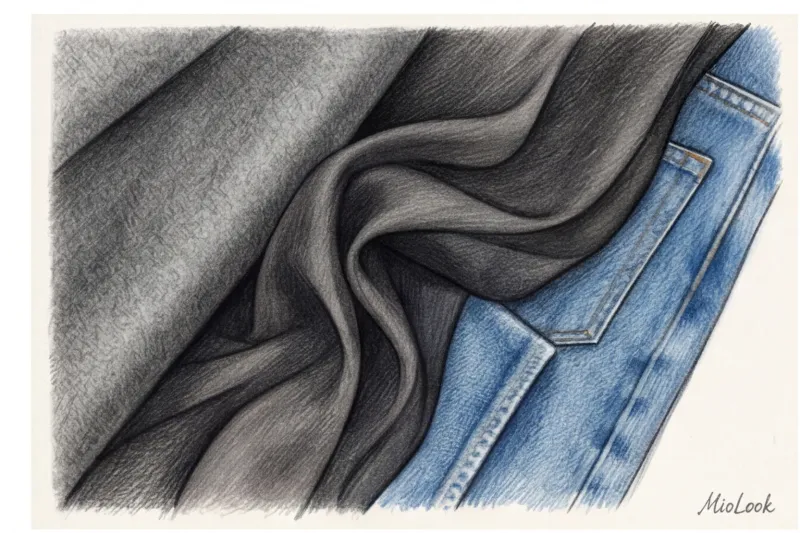
Never wear lace with smooth, fine silk unless you're going to bed. Sheerness requires maximum textural resistance. Ideal pairings for fine mesh include rough, raw denim in 12-14 ounce weights, heavy British tweed, or matte calfskin. Note: the leather must be matte. The combination of patent leather and sheer fabric is too dramatic for daytime wear.
Base Layer Anatomy: What to Wear Underneath
The question "What to wear underneath?" kills more potentially brilliant looks than any anti-trend. Let's get this out of the way: wearing a regular lingerie bra (especially one with lace, bows, or underwire) under a sheer blouse is bad form and ruins the overall look.
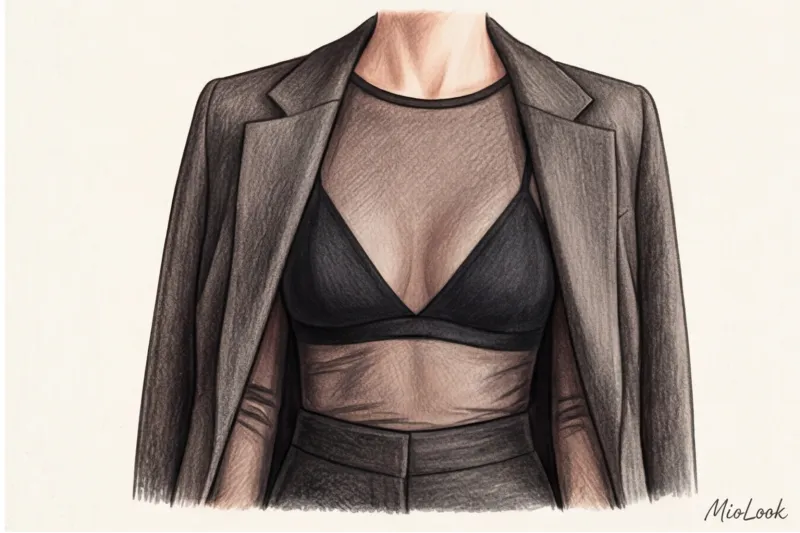
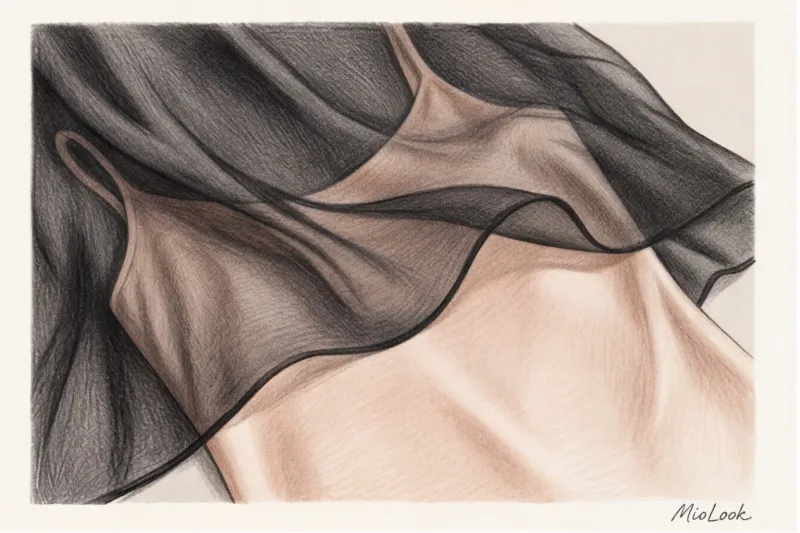
Your ideal companion should be a utilitarian, smooth base layer. Excellent options can be found in essential lines like seamless underwear from COS, Massimo Dutti, or the AIRism series from Uniqlo. These can include opaque bra tops, smooth microfiber sports crop tops, or ribbed tank tops. They create a "second skin" effect, shifting the focus from the underwear to the sheer design itself.
When it comes to color, there are only two viable scenarios. First, the underwear is perfect, tone-on-tone, and matches your skin tone, creating the illusion of emptiness. Second, the underwear matches the sheer garment 100% (a black tight top under black mesh). Save contrasting underwear (a black bra under a white blouse) for 2000s-themed parties—it looks sloppy in a modern wardrobe.
The Biggest Myth About Black Lace (And Why It Often Belies a Lack of Taste)
If you ask ten women where to start when exploring sheer textures, nine of them will confidently answer, "Black lace, of course—it's the safest, classic choice." As a stylist, I'm obligated to debunk this counterintuitive myth. Cheap black lace is the least forgiving of mistakes.
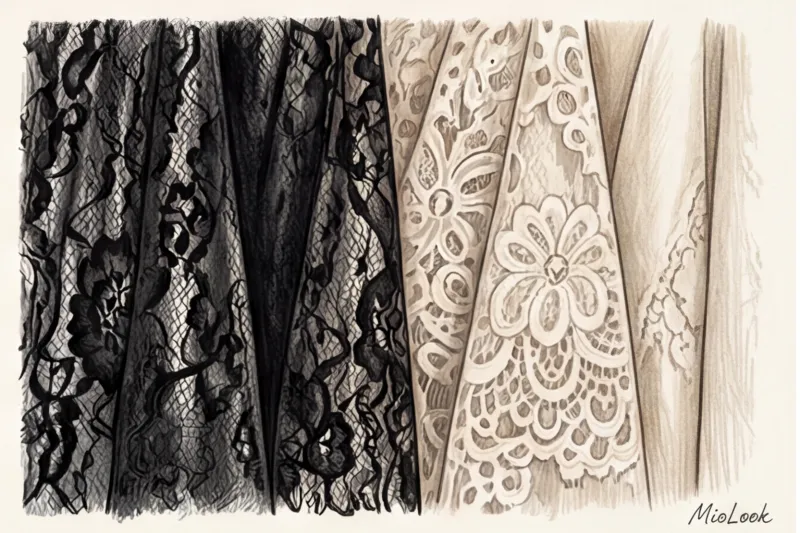
The problem lies in the material. Mass-market lace in the €30–€80 range often uses synthetic cord with added polyester and elastane. On black, this synthetic sheen refracts light, instantly cheapening the entire look. Expensive black lace (such as French Chantilly) is matte and difficult to produce, making it rare in the affordable segment.
Light shades like cream, milky white, and ivory are much more elegant and safer for beginners. Matte cotton embroidery or thick light-colored guipure look elegant even at entry-level prices. And if you absolutely want a dark palette, choose mesh or organza in shades of dark chocolate, deep wine, or emerald. They look far more prestigious than plain black nylon.
Your perfect look starts here
Join thousands of users who look flawless every day with MioLook. AI helps you find the perfect base layer for even the most complex pieces.
Get access — €0.99 onceTransparent items in the office: a breach of etiquette or the new smart casual?
A 2024 corporate style study by WGSN confirms that strict, conservative dress codes have finally given way to "soft tailoring," where textured layers replace rigid shapes. But does this mean you can show up to a meeting in a chiffon shirt? Yes, as long as you control the areas of transparency.
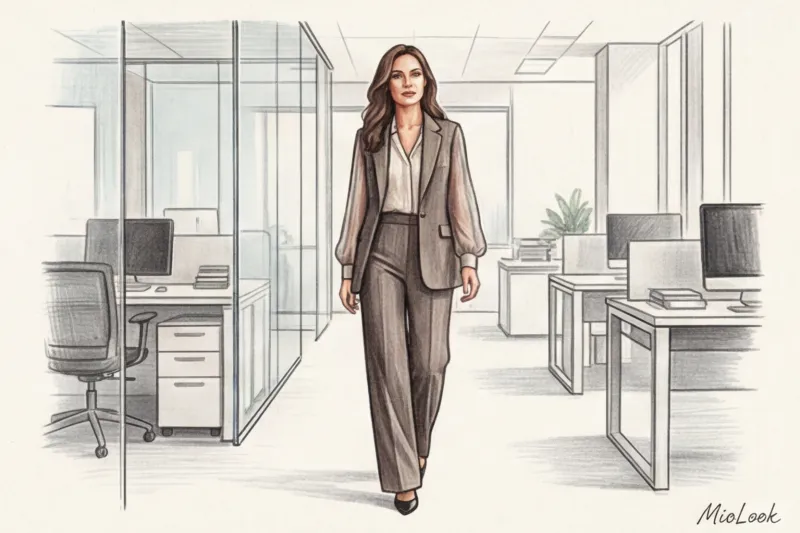
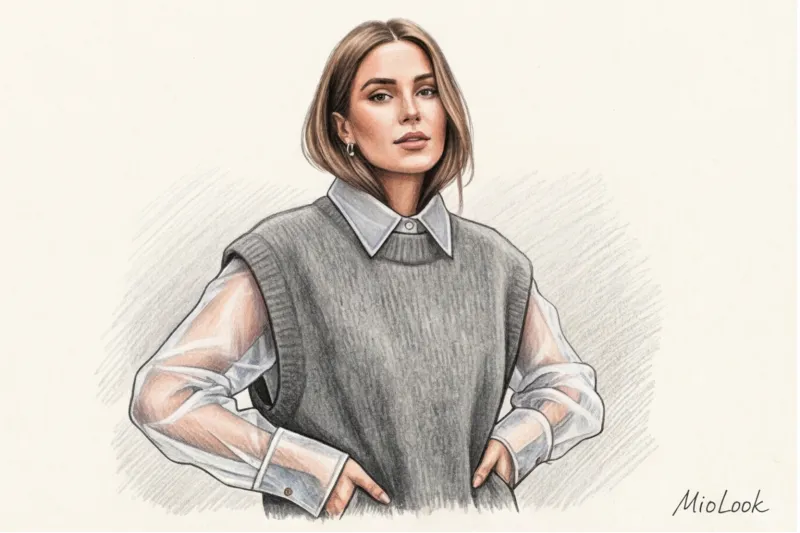
Last winter, I conducted a personal two-week experiment: I wore a thin, sheer, mocha-colored turtleneck as a base layer under tailored, oversized cotton shirts and heavy cashmere vests. Only the translucent turtleneck and prominent cuffs were visible. The result exceeded my expectations: I didn't break any office etiquette rules, but the look was no longer flat and boring.
In a business wardrobe, transparency works only as a micro-addition. Safe zones include the voluminous sleeves of a blouse with a closed bodice, a thin strip of mesh at the hem of a midi skirt, or a stand-up collar peeking out from under a heavy wool blazer.
Checklist: 5 Steps to an Elegant Look with Sheer Fabrics
To avoid standing in front of the mirror in doubt, save this quick image assembly algorithm:
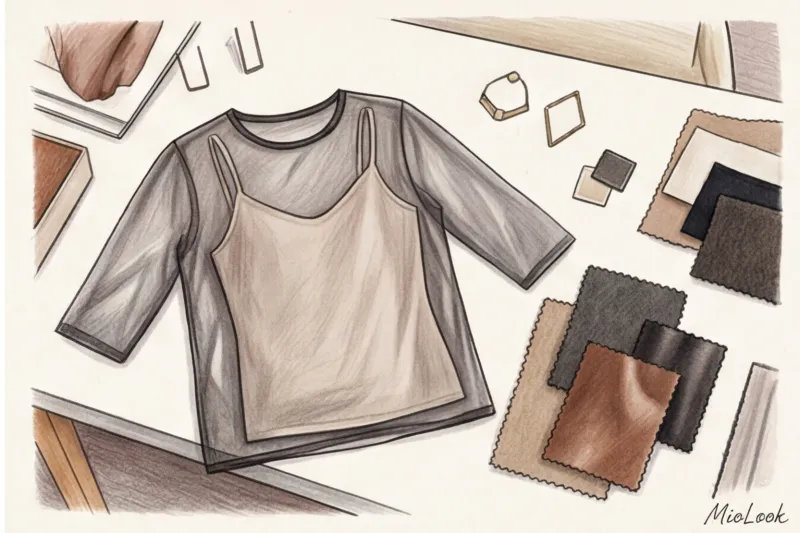
- Estimate the density. Does your garment hold its shape (organza) or flow softly (chiffon, mesh)? Choose softer, denser fabrics (cashmere) for rigid, sheer fabrics, and stiffer fabrics (leather, denim) for flowing fabrics.
- Select a utility base. Wear a sleek sports top or bodysuit. No lace, no front fastenings, no contrasting straps.
- Add contrast. Throw on a mannish jacket or cargo pants. Kill the overly romantic look with a rugged cut.
- Minimize decor. A transparent texture is a powerful accent. Avoid massive necklaces or long earrings in favor of simple geometric pieces.
- Ground yourself with shoes. Choose flat shoes (brogues, loafers) or a stable, chunky heel.
When it does NOT work: I always tell my clients honestly: if you have a pronounced volume imbalance or an area you want to conceal, a sheer garment in that particular spot will act as a magnifying glass. In such cases, we transfer the sheerness to the portrait area (sleeves) or layer it under a jacket.
A Smart Approach: How to Tame Complexity with Technology
The main rule of a rational wardrobe is: any complex, statement piece should have at least 3-4 ready-made wear scenarios, otherwise its Cost Per Wear (cost per outfit) will be off the charts.
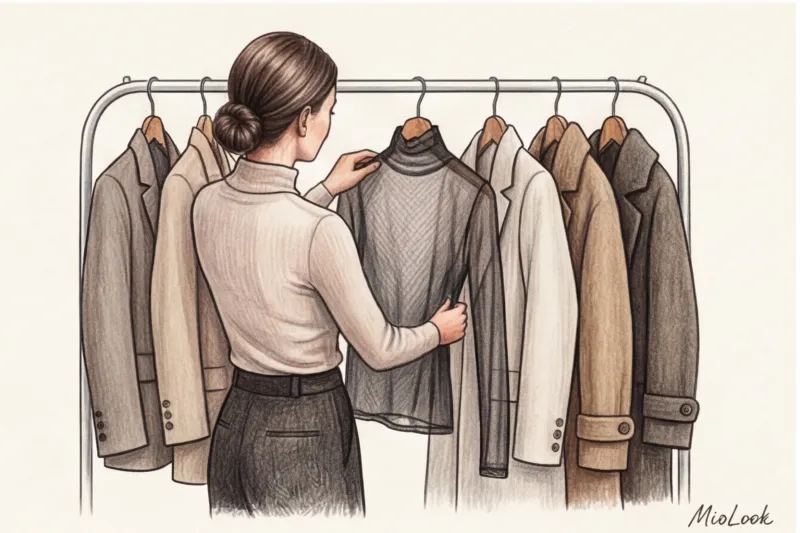
Instead of racking your brains over combinations every morning, use technology. You can upload photos of your items and use the "smart wardrobe" feature in MioLook The algorithm works based on the contrast rules we discussed above. You add that unworn lace blouse, and the AI stylist scans your database and generates unexpected, yet completely safe, combinations with your formal suit or favorite jeans.
Transparency in your wardrobe isn't a social challenge or an attempt to appear more seductive. It's an architectural tool that makes a dense, heavy look more dynamic and vibrant. Your impeccable style isn't measured by how much skin you reveal, but by how skillfully you handle layering and texture.