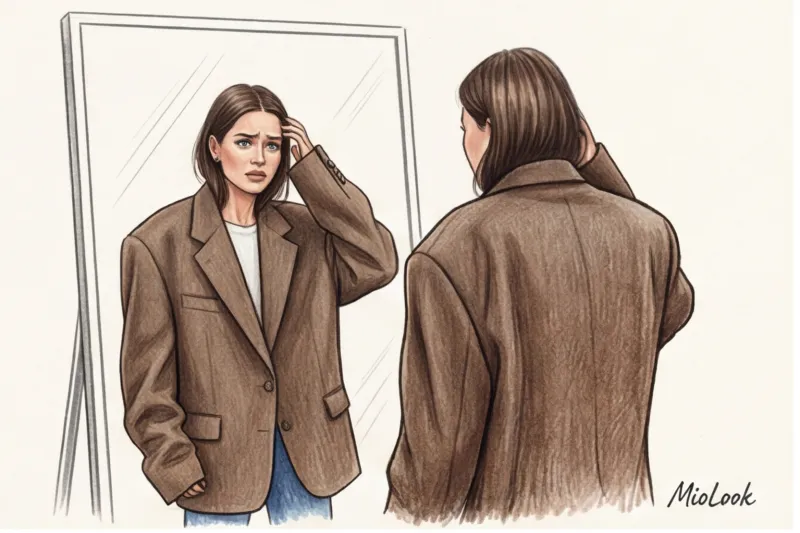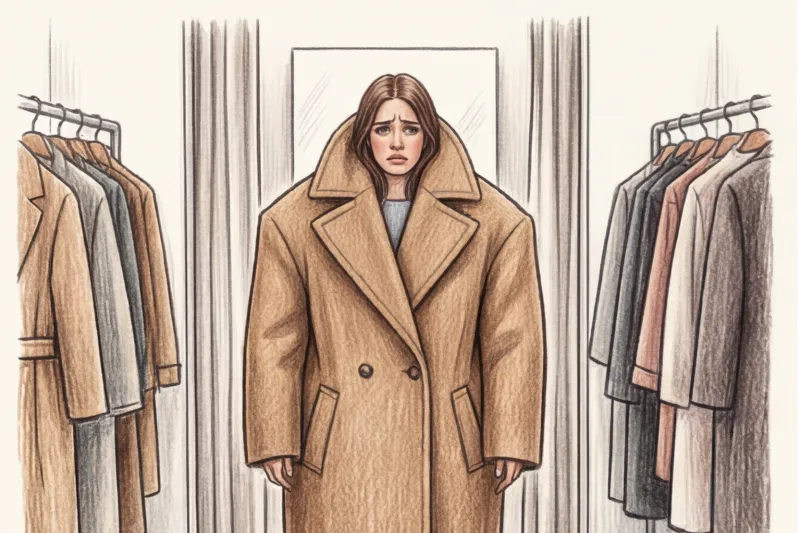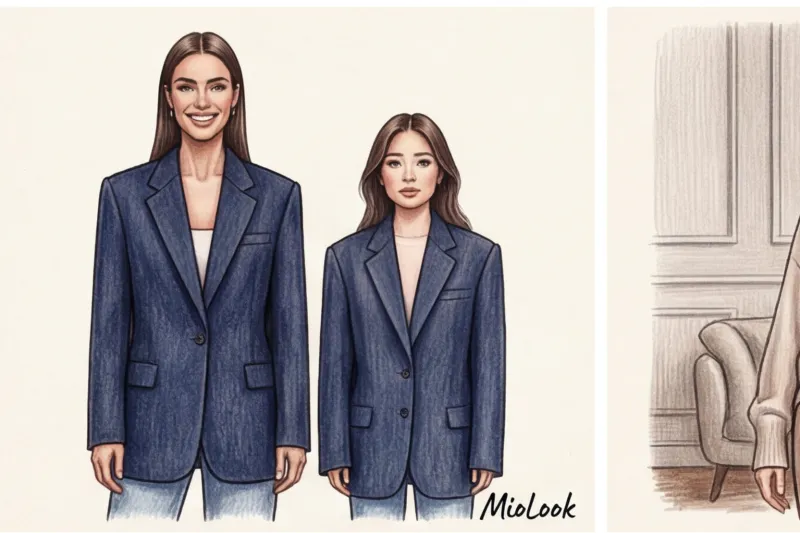
Have you ever bought a luxurious, oversized jacket that looked like a street style hit on an influencer, but on you, it fits like a cardboard refrigerator box? I've seen it hundreds of times. Over 14 years of shopping, I've noticed something striking: almost 80% of my clients' online returns are trendy oversized items that simply "get lost" them.
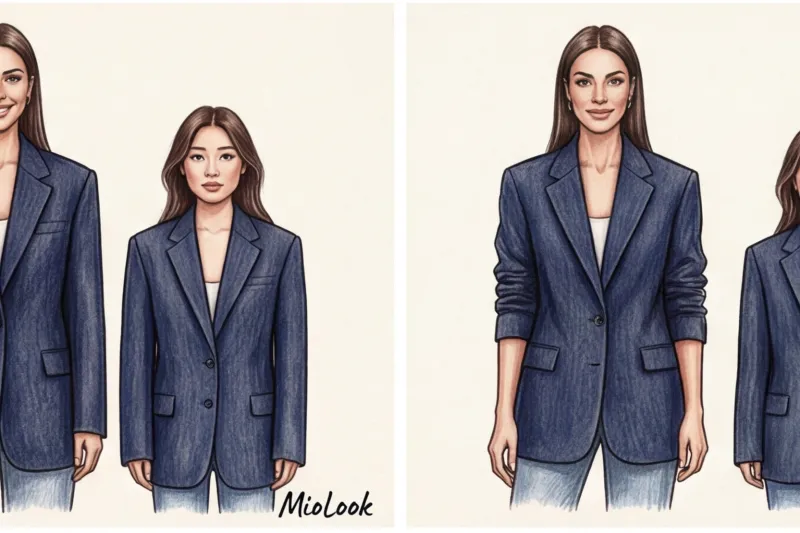
It's not about your weight, height, or the long-outdated "apples and pears" system. Oversized isn't a clothing size, but a complex, architectural cut. And for it to work for you, you need to understand your body geometry. We've already discussed the basic theory in more detail in our The complete guide to Kibbe body types and finding your style based on body lines In this article we will look at how to adapt Kibbe oversized especially for those types for whom the classic volume is historically “contraindicated” - Romantics, Gamines and Classics.
Why classic oversized clothes ruin your figure (and what does Kibbe have to do with it)
Let's be honest: the fashion industry sells us the illusion of versatility. We're told that an oversized hoodie or a mannish jacket suits absolutely everyone, just add heels or a cool bag. But the statistics are relentless: only 20% of women have the bone structure of Naturals and Dramatics, which can withstand and aesthetically "pull out" rigid, hyper-volume figures.
According to David Kibby's theory of accommodation, our appearance is a balance between soft tissue and our skeletal frame. If you have broad shoulders and blunt angles (Natural), excess fabric will drape beautifully over your natural frame. But if you have a delicate bone structure and sloping shoulders (Romantic), stiff cotton with a weight of 180 g/m² or more will simply hang around you like a bell, visually adding 10 kilograms.
Oversize is a volume slider, not an on/off switch. Each body type has its own "acceptable volume," exceeding which turns a stylish look into a sloppy one.
The biggest mistake I see every day is confusing an oversized garment with one that's three sizes too big. A properly fitted oversized garment maintains your size in the shoulder and neckline, adding designer volume only in the body and sleeves.
Kibbe's Oversized Style for Romantics: How to Maintain a Waistline and Avoid Looking Like a Ball
Romantic architecture (including Theatrical Romanticism) is built on soft lines, curves, and a delicate skeletal framework. Your superpower is a feminine silhouette, and your main enemy is straight, harsh lines.
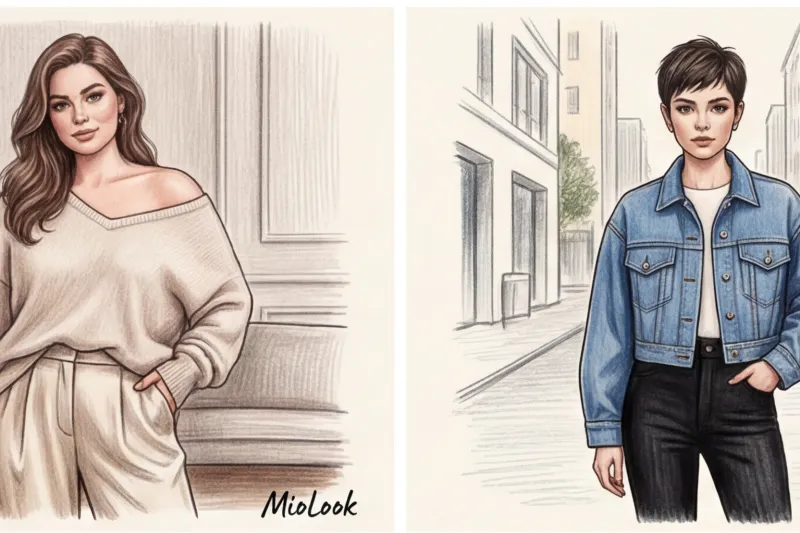
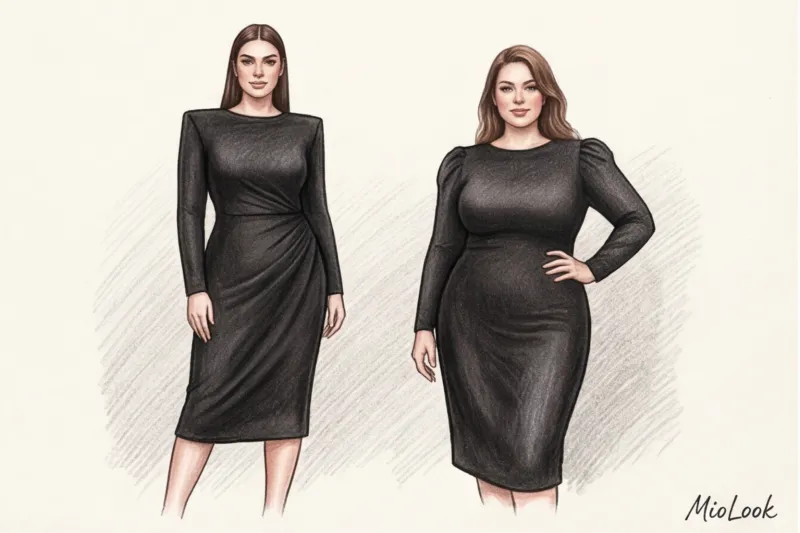
When a Romantic wears a classic, straight, oversized jacket made of thick gabardine, the fabric conceals the waist and falls in a straight line from the widest point of the chest or hips. The result? A bulky figure.
To avoid this, use two proven solutions:
- "Fluid" textures. Forget stiff, thick denim and heavy drape. Your oversized garment should be made from silk, fine cashmere, viscose with elastane, or mohair. The fabric should fall along the body, hugging curves, not bulging.
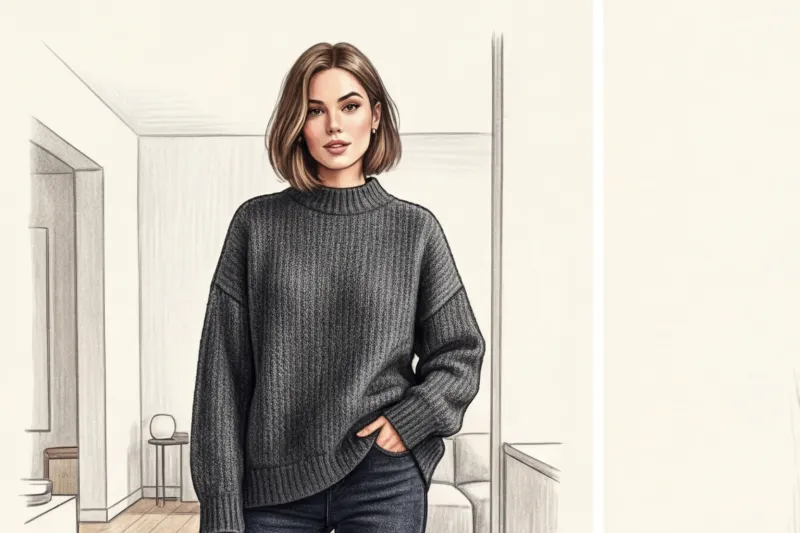
- Mandatory waist fixation. One of my Romantic clients, Anna, wanted to donate a "terrible" oversized cashmere sweater to a thrift store because it made her look too big. We salvaged the garment in two minutes: we French-tucked it into a pair of high-waisted skinny pants and rolled up the sleeves, revealing her slender wrists. A waist appeared, but her fragility returned.
Showing off wrists, collarbones, or ankles for the Romantic in voluminous clothing is a mandatory marker that communicates to others: "I'm actually pretty, it's just an oversized sweater.".
Access to MioLook for €0.99 — one-time payment
A smart AI stylist will select the perfect look based on your individual proportions and body type.
Get access — €0.99 onceGamins and oversized pieces: secrets to oversizing without the "big brother" look
Gamines are a clash of opposites. Compactness, a shortened vertical line, and high contrast. If a gamine wears a trendy oversized ankle-length trench coat or an oversized, thigh-length sweater, they instantly transform into a child wearing daddy's jacket.
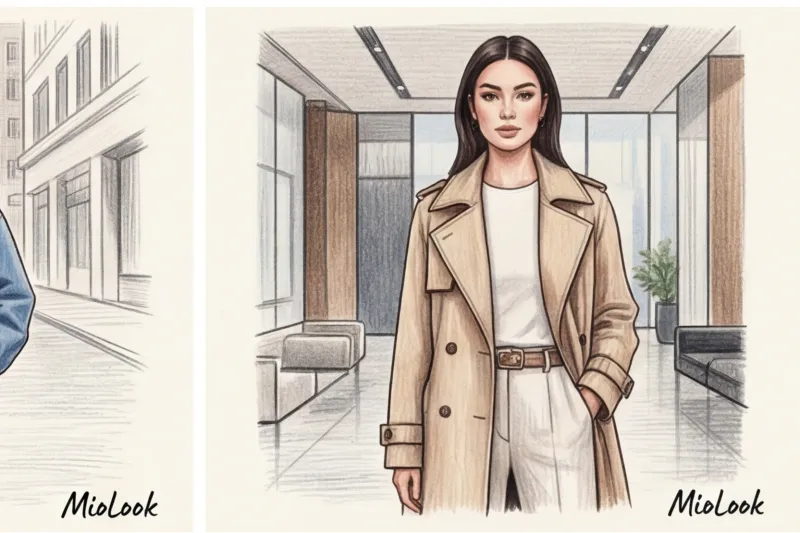
Proportions are everything to you. In my experience, moving the hem of a voluminous sweater up just 5 centimeters often completely changes the geometry of a Gamin look. Your formula for success is cropped oversize.
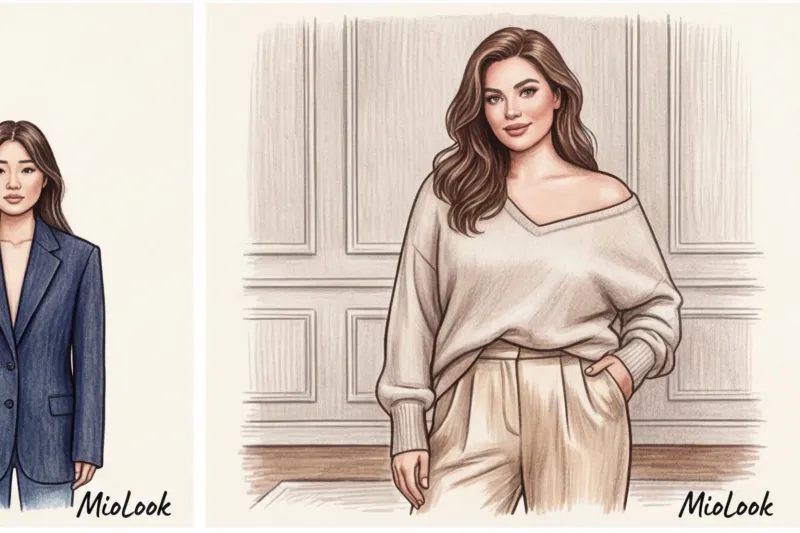
- Correct length: Voluminous, waist-length bomber jackets, boxy cropped jackets, and short puffer coats are all options. The width can be substantial, but the length must be compact.
- Form rigidity: Unlike Romantics, Gamines (especially Vibrant ones) need shape. Oversized clothes should maintain a clear, almost geometric silhouette.
- Contrast rule: If you've chosen a hyper-voluminous top, keep the bottoms as compact as possible. Pair a boxy jacket with skinny jeans, thick tights, or an A-line miniskirt.
Don't try to create a monolithic column from volume, as Dramatics do. Your goal is to break up the silhouette, creating a dynamic rhythm.
Oversized Classics: A Balance Between Trend and Natural Symmetry
Classic architecture is all about absolute symmetry and proportion. It avoids garish extremes: neither extreme softness nor sharp angularity. And that's precisely why radical hyper-volume destroys its nobility, making the image appear sloppy.
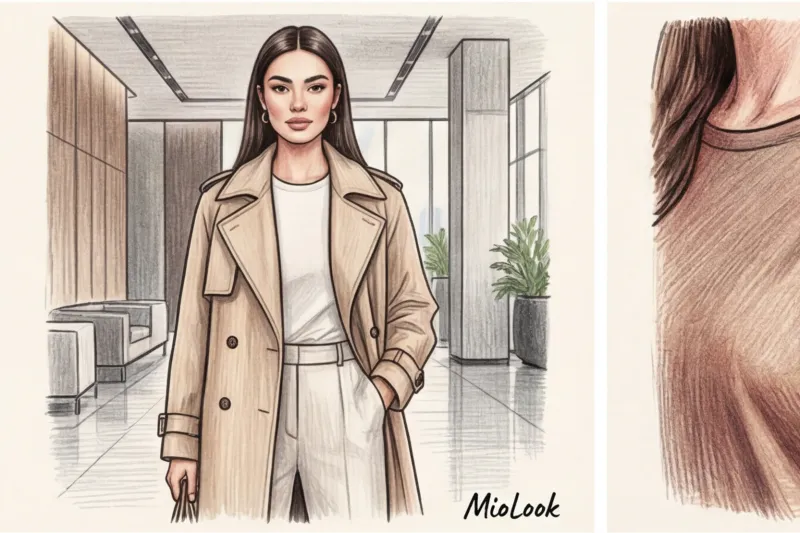
WGSN's 2024 runway trend analysis revealed a global shift from Balenciaga-inspired, grotesque hyper-oversized silhouettes to the smart, relaxed silhouettes masterfully crafted by The Row. This is perfect news for the Classics!
Your oversize should be smart:
- Volume tolerance: A maximum of +15-20% to your actual measurements is enough to look modern without losing symmetry.
- Shoulder line: Forget about a dropped shoulder seam somewhere around the elbow. You want a set-in shoulder line, which can be extended by 1-2 centimeters with a shoulder pad, but it should be clearly defined.
- Smooth textures: Choose premium, smooth fabrics. Heavyweight silk, super 120s suiting wool, high-quality cashmere.
- Monochrome: Using a single color throughout the look (the "quiet luxury" aesthetic) helps to tone down the slight volume and maintain a sense of class. You can read more about how to use color in such looks in our article about Colors in the office dress code without boredom.
Your perfect look starts here
Join thousands of users who look flawless every day with MioLook. Digitize your wardrobe in just a few clicks.
Get access — €0.99 onceThree Fatal Mistakes When Choosing Oversized Clothing (for Any Body Type)
It's time to dispel the biggest myth of mass-market fashion. Buying a basic item from a standard line three sizes too big is the worst way to create an oversized look. Sure, it looks bulky on the hanger, but on the body it's a disaster.
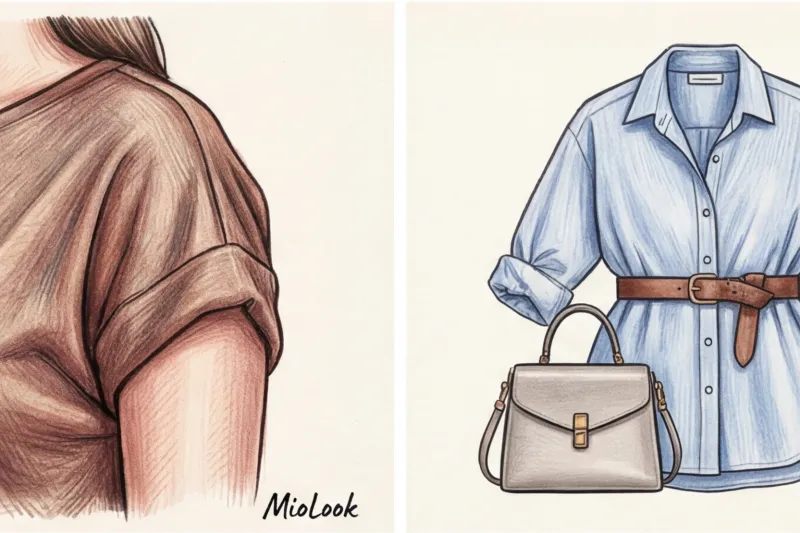
- Mistake 1: Scaling instead of cutting. When you go for an XL on a size S, everything gets bigger: the armholes drop, the collar sticks out hopelessly, and the sleeve length makes you look like Pierrot. A true oversized garment is constructed in your natural size, but with the designer's built-in volume. The collar and shoulder fit remain in place.
- Mistake 2: Dangerous shoulder seam. If the dropped seam of a sweater or jacket ends exactly at the widest point of your bicep, it will visually double the width of your arm (and your entire silhouette). The seam should either fall below the mid-forearm or remain exactly at the anatomical point of the shoulder.
- Error 3: Missing fixation points. Head-to-toe oversize only works on models taller than 180 cm. For anyone else, it's a complete spacesuit. The look should always have at least one "window"—exposed ankles, a deep V-neck, bare wrists, or a belted waist.
Of course, this doesn't work if you're a conceptual artist and your goal is a shocking, deconstructive image a la early Maison Margiela. But for everyday life, the lack of anchor points guarantees lost proportions.
The MioLook Algorithm: A Checklist for Adapting Oversized Clothing
In the appendix MioLook We use a smart algorithm to analyze proportions. I conducted an experiment digitizing the wardrobes of 50 clients: those who began consciously applying the "exposed thin areas" rule began wearing their bulkier clothes three times more often. Here's a checklist you can use to check your look in the mirror today:
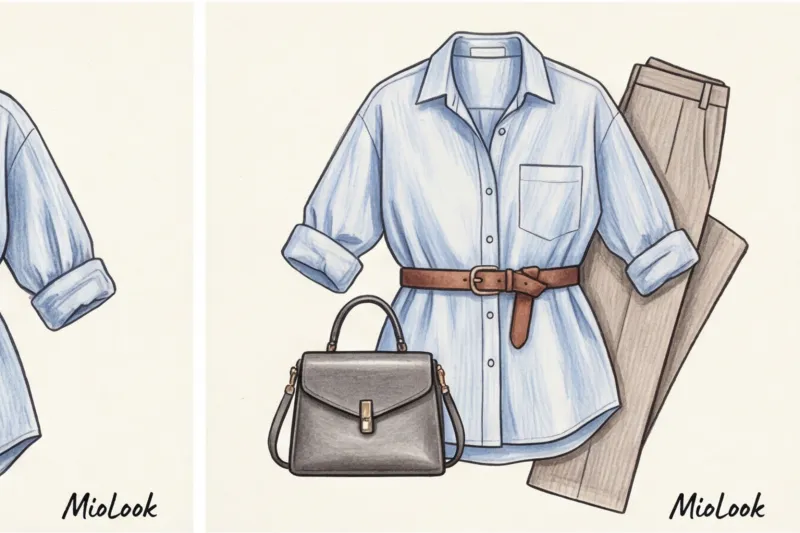
- Step 1: Determine the texture: Does your bone structure require rigid shape retention (Bright Gamin, Dramatic) or does the fabric need to be soft and flowing (Romantic, Soft Natural)?
- Step 2: Find the control point: What will hold the look together? For Romantics, a belt at the waist. For Gamines, a cropped jacket. For Classics, a crisp shoulder line.
- Step 3: Apply the 80/20 rule: Your outfit should be 80% loose and 20% fitted (for example, a chunky top and skinny pants, or a voluminous shirtdress and a tight corset belt).
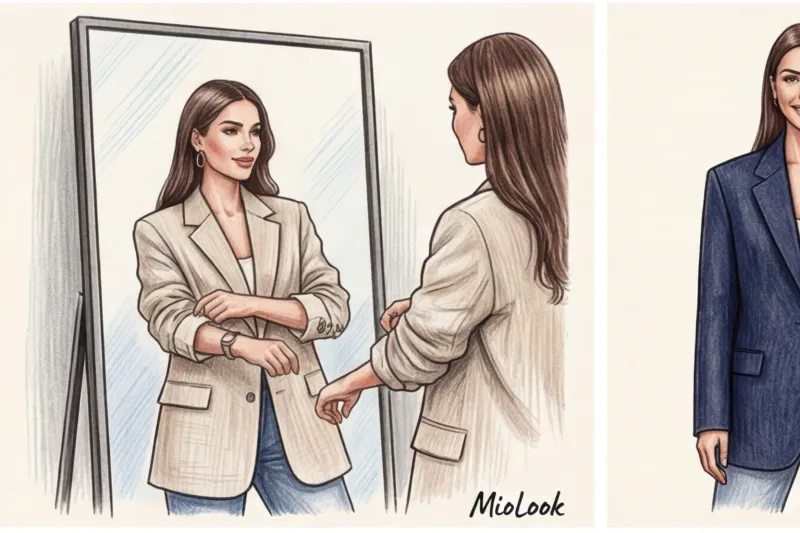
- Step 4: Adjust the sleeves: Simply roll up the sleeves of a voluminous shirt or jacket to the narrowest part of your forearm. This is a versatile styling hack that instantly puts your look together.
Ready to get started?
Try the MioLook free plan—no commitments required. Artificial intelligence will help you style those items that have been gathering dust in your closet.
Get access — €0.99 onceSummary: Managing volumes wisely
Oversized clothing is a great styling tool, not a death sentence for your figure. If a voluminous garment makes you look fat or untidy, it's because you chose the wrong body type, chose the wrong length, or forgot to reveal thinner parts of your body. Knowing your Kibbe type gives you control over any trend, even the most challenging one.
Today, take out that oversized jacket or sweater you thought was a dud. Add a leather belt, roll up the sleeves to your elbows, and layer it with something form-fitting underneath. Chances are, you'll see a completely new, stylish silhouette in the mirror.