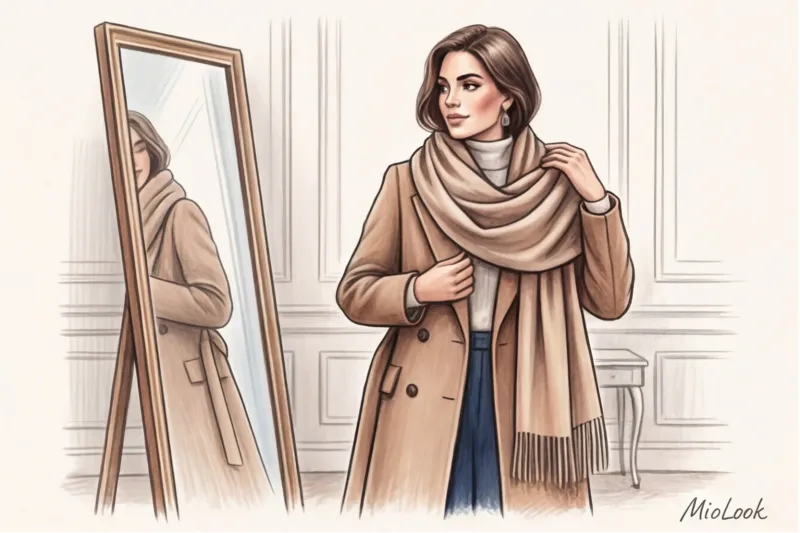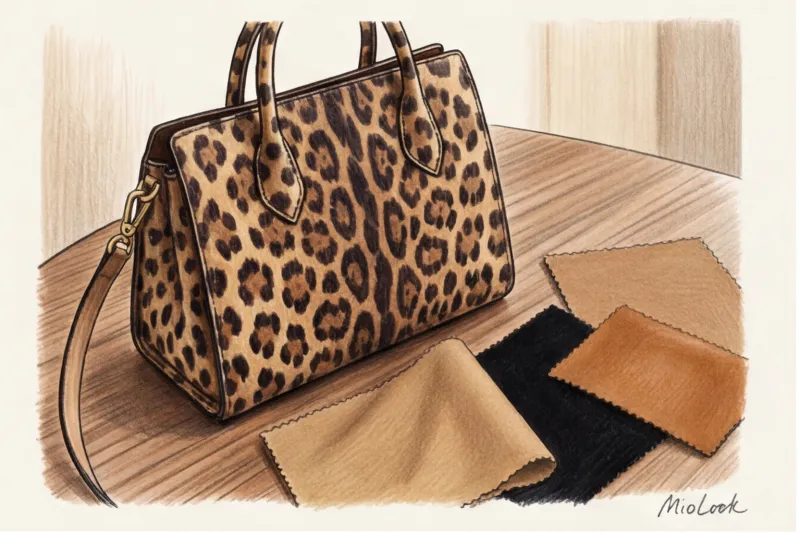
I had a client, a top manager at an IT company, who kept a pair of gorgeous leopard print pumps, bought for €650, in her closet for two years. She'd take them out, try them on in front of the mirror, and then put them back in the box. The reason? A panicky fear of looking vulgar at a morning meeting. We solved this problem in fifteen minutes by simply stopping treating animal print as a "predatory accent" and breaking it down into its mathematical components. We've already discussed the architecture of complex combinations in more detail in our A complete guide to how to combine accessories without overloading , and today we'll talk specifically about animalism.
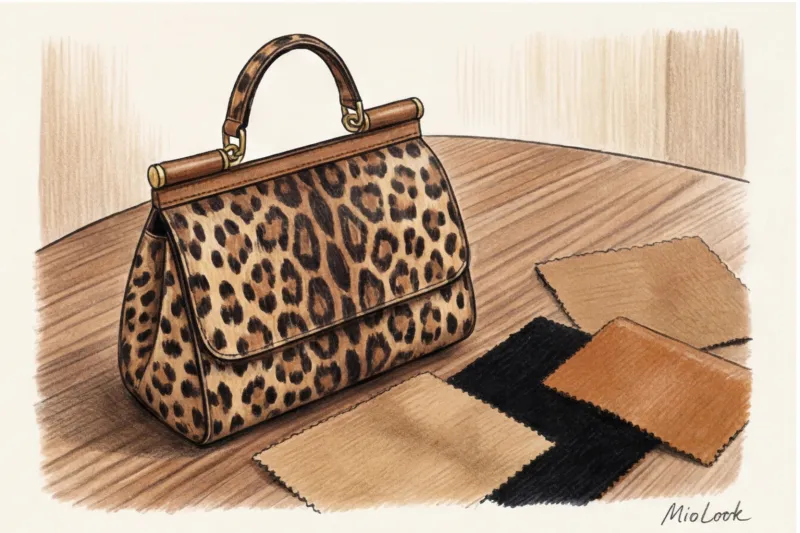
As a certified colorist, I'm not suggesting you simply "thin out the base with leopard." I want to show you how the rules of contrast and scale work. Once you understand these mechanisms, the question of What to wear with leopard print shoes or a zebra-print bag, will transform from a stylistic risk into a predictable attention-grabbing tool.
Psychology and Color: Why Leopard Is the New Beige
The main reason many are afraid of animal prints is the cultural legacy of the 2000s, with its all-out glamour. But let's look at leopard print through the lens of Johannes Itten's color theory. What is classic leopard? It's not a flashy pattern. It's a perfect, natural harmony of basic shades: camel, warm caramel, dark chocolate, and jet black.
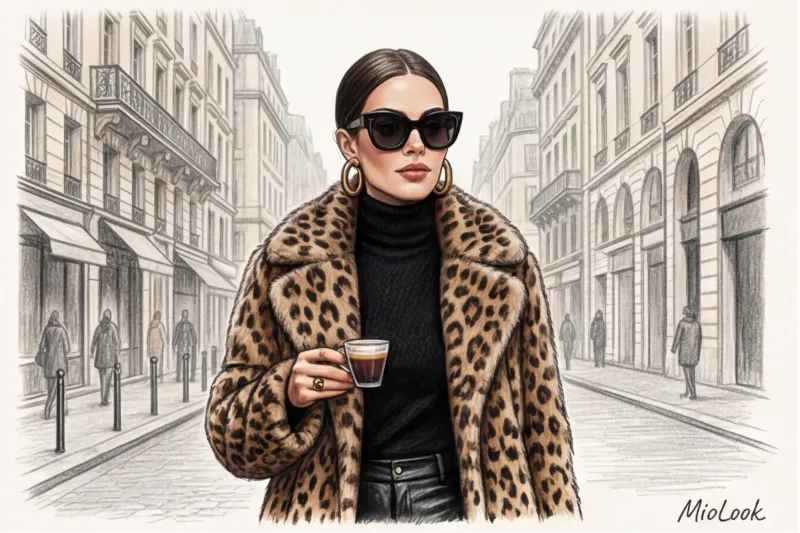
According to the Business of Fashion 2024 analytical report, leopard print has officially moved from the category of "microtrend" to the category of "trend". core neutral (basic neutral). It serves the same purpose as a beige trench coat or black loafers, but adds a dynamic touch to the look.
Statistics from major luxury retailers like Net-a-Porter confirm this shift: animal print accessories are now purchased 30% more often than clothing. Why? Because of the superior ROI (return on investment) of a wardrobe. A single high-quality pair of animal print shoes can elevate dozens of bland outfits.
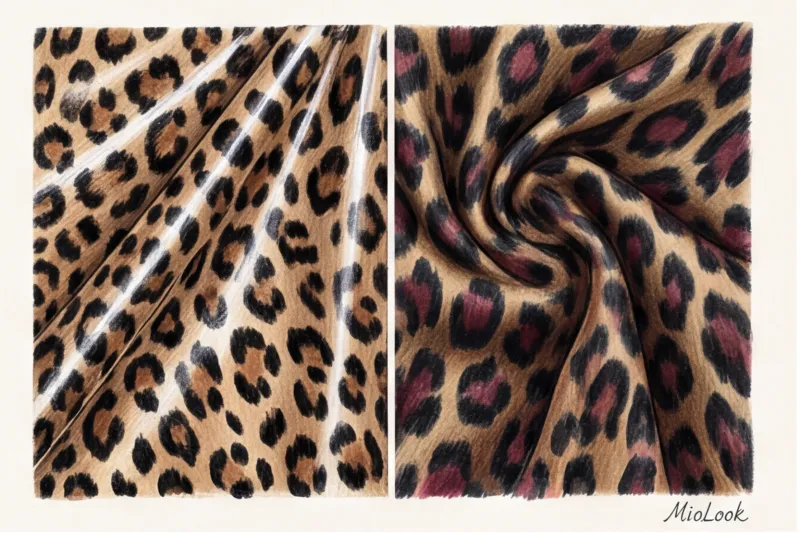
However, there's a strict limitation: leopard print is only perceived as a status item if it's flawlessly crafted. Cheap, shiny synthetics or thin faux leather will kill the magic. Natural matte leather, thick suede, smooth silk, or textured pony skin—that's the foundation upon which this print can truly shine.
Your perfect look starts here
Join thousands of users who look flawless every day with MioLook. The smart AI stylist will find the perfect combinations for any print.
Get access — €0.99 onceThe Mathematics of Proportion: How to Choose the Scale and Rhythm of a Print
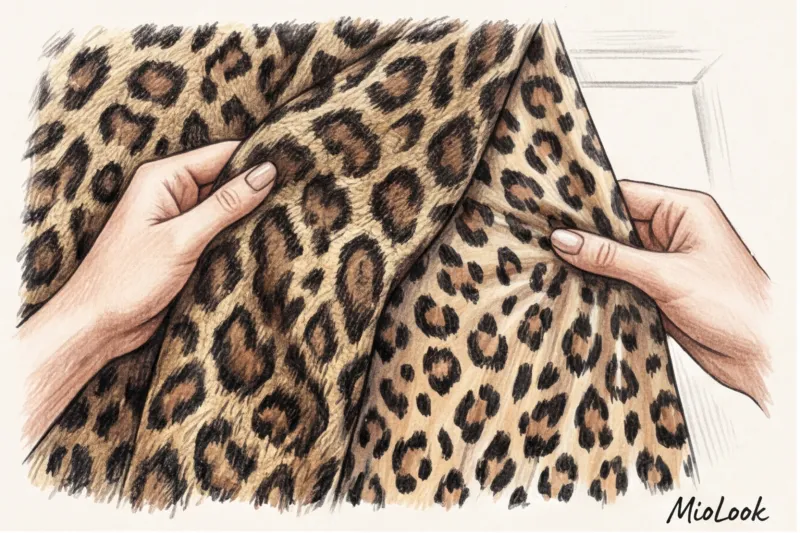
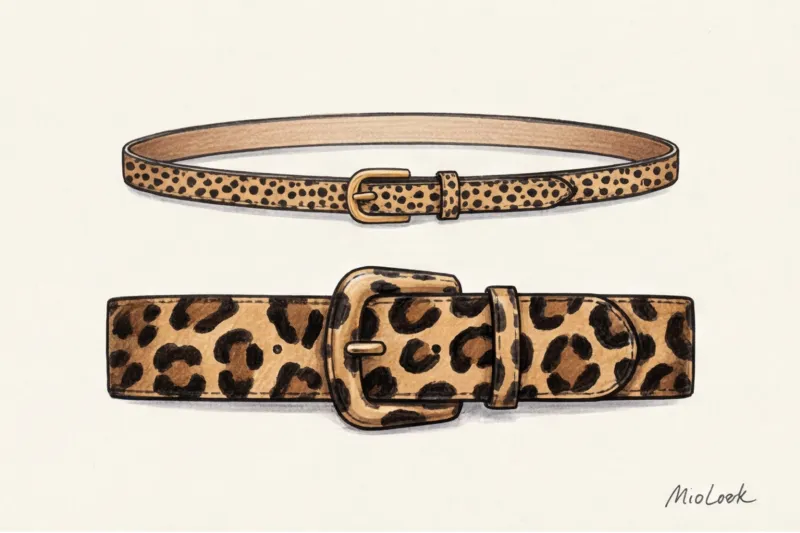
The most common mistake I see on the street is ignoring scale. The size of spots or stripes on your accessories should be proportionate to your natural features. Over 12 years of practicing, I've discovered a clear pattern: if a petite woman (up to 160 cm) carries an oversized shopper with a large, sweeping leopard print, the print visually "cancels" her out. Conversely, on a tall, statuesque woman with expressive features, a micro-print (with small specks) looks fussy and cheapens the look.
The second important factor is the rhythm or contrast of the print. Pay attention to the edges of the spots. A "soapy," washed-out leopard print, where the colors blur into each other, always looks untidy. An expensive print has a clear, graphic outline.
"Texture is everything. When in doubt, choose suede. The matte, fuzzy surface absorbs light, reducing the aggressiveness of the animal print by 50%. Meanwhile, patent leather with a leopard print is an extreme level of styling that requires perfect attention to detail."
That's why when we are in MioLook When we digitize our clients' wardrobes, we always note the texture of accessories. A suede leopard print can be worn even to an office with a relaxed dress code, while a patent leather one is only for evening wear.
What to Wear with Leopard Print Shoes: 4 Mathematically Precise Formulas
Let's get down to business. If you're still Googling "what to wear with leopard print shoes" and getting vague advice like "wear them with a base layer," forget it. Here are four specific formulas that work without fail.
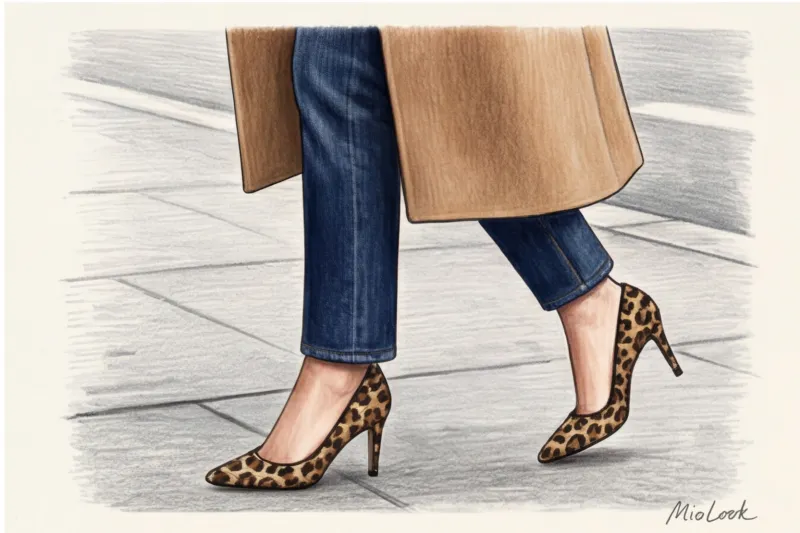
Formula 1: "Color echo". Look at your shoes and find the lightest background shade (usually sand or camel). Match it in a larger piece—for example, a classic wool coat or trench coat. The shoes no longer look like a distracting feature; they become part of the overall color scheme.
Formula 2: Contrast of textures. Leopard doesn't tolerate over-the-top styling. Pair leopard pumps with a perfect sheath dress for a 2010s look. Pair them with straight-leg, 12-ounce denim jeans and an oversized cashmere sweater for a relaxed chic vibe. The print's wild appeal is balanced by the rugged utility of the denim.
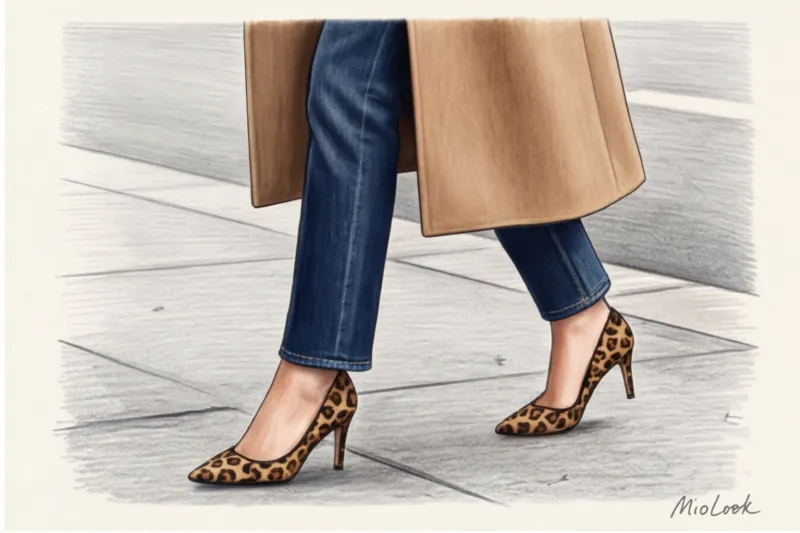
Formula 3: Deep Colors (instead of black). Now forget the popular advice that "leopard should only be worn with black." This is a terrible mistake. Black creates too much of a contrast, making the leopard look cheaper and flatter. The predatory print reveals itself much more elegantly against deep, complex shades: emerald, burgundy, dark chocolate, or navy. Try wearing leopard ankle boots with a khaki suit—you'll be surprised at how "expensive" it looks.
Formula 4: Monochrome base. Use your shoes as the sole focal point. A totally creamy look (cream palazzo pants + cream silk top + cashmere cardigan) paired with leopard-print ballet flats is the epitome of quiet luxury with character.
My personal trick: Want endless legs? Choose a color for your tights or pants that matches the darkest spot on your shoe print. This is often espresso or graphite, not pure black.
Zebra, snake, and crocodile: salvation for cool color types
I have an important confession to make: classic leopard isn't flattering for everyone. As a color type analyst, I constantly see how the warm, tawny print literally wipes out the faces of women with cool undertones (Summer and Winter color types). Even if the leopard is only present on a bag or belt, it can clash with natural coloring.
What should cool types do? Your solution is a zebra.
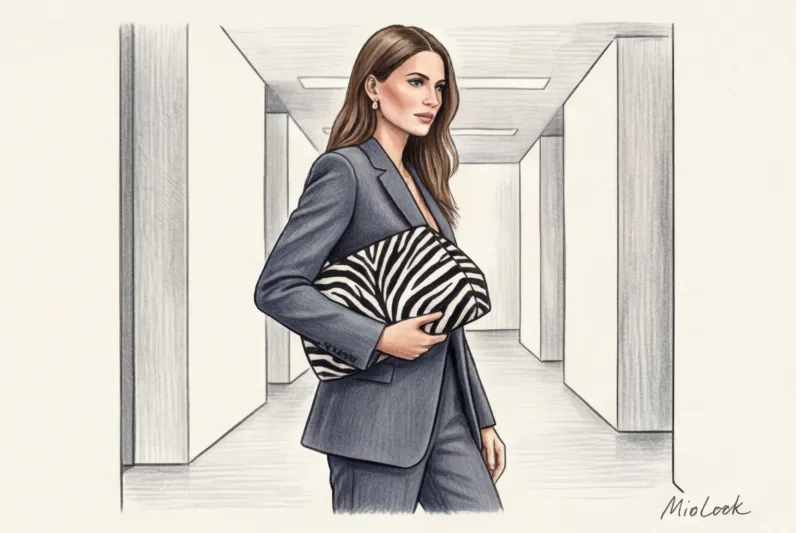
Black and white zebra print offers high graphic contrast without a warm red undertone. It looks phenomenal with cool gray, fuchsia, royal blue, and crisp white. Zebra brings an avant-garde and architectural element to the look, unlike the softness of leopard.
Another smart alternative is snake print (python). In its natural range, it has a complex gray-olive, sometimes taupe, undertone. It's less contrasting and more muted. Python is a choice for looks with a bohemian edge. It pairs beautifully with sophisticated dusty shades: sage, dusty rose, and taupe.
Ready to get started?
Try the MioLook plan for free—no commitments required. Create your perfect capsule based on your skin tone and proportions.
Get access — €0.99 onceDebunking the myth: animal print can't be combined with other patterns
Have you heard the rule "a look should only have one print, especially if it's leopard"? Forget it. This is an outdated rule for those who are afraid of experimentation. In modern styling, mix and match (mixing prints) is a sign of your expertise.
The secret to a successful combination lies in the geometry of the patterns. Leopard is an organic, chaotic form. To balance it, you need strict, mathematical geometry: classic stripes, Prince of Wales checks, or graphic polka dots.
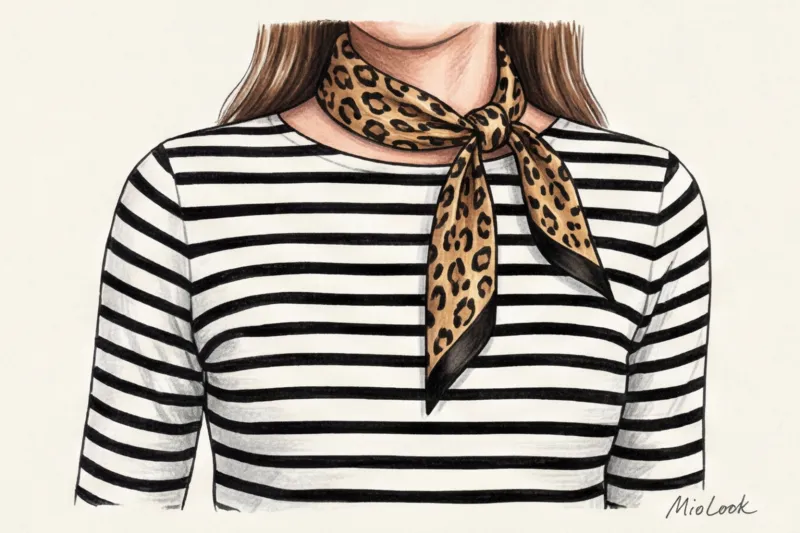
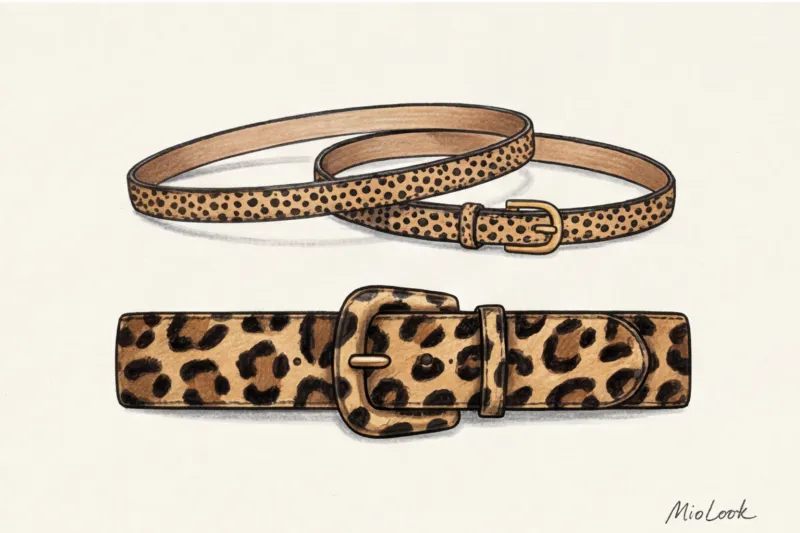
French women have long understood this trick. A Breton striped sailor shirt, basic jeans, and a skinny leopard-print calfskin belt are the quintessence of Parisian chic. Why does it work? Because it triggers the "anchor color" algorithm. The sailor shirt and leopard print share a common thread: a dark color (black or navy blue). If two completely different prints share at least one color in common, your brain perceives them as a single, harmonious system.
But there's a caveat here (and I promised to be honest with you): this trick won't work if both prints are equally large. If you have a wide sailor stripe (5 cm each), the leopard print on the accessory should be small. Play with the difference in scale.
Checklist: 5 Rules for Incorporating Animal Prints to Look Expensive
To summarize, I want to give you a strict but effective algorithm. If you're standing in a store and unsure whether to buy an animal print item, run it through this checklist.
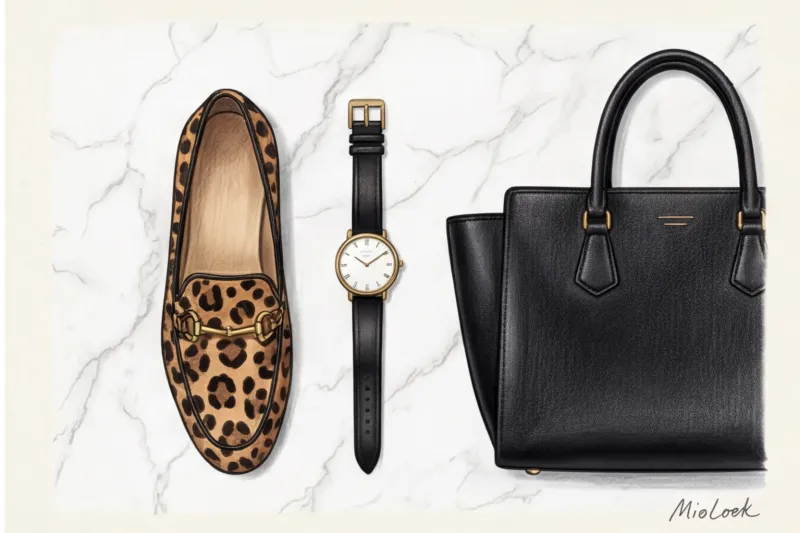
- Follow the 10% rule. Animal print works best as a spice. Whether it's shoes, a belt, a silk scarf on a bag handle, or glasses frames, the print shouldn't exceed 10-15% of the overall look.
- No shiny fittings. The animal print itself is a powerful statement. If a leopard bag or belt has a massive gold buckle, rhinestones, or chains, the accessory instantly becomes tacky. Opt for minimalist, matte, or hidden hardware.
- Look at the ingredients. Avoid shoes and bags made of cheap polyurethane (even if they cost up to €50 – they're a waste of money). Animal print requires a refined texture.
- Only natural colors. Neon pink leopard or acid green zebra are only appropriate for a teenage wardrobe or a themed party. A high-status wardrobe embraces only natural colors.
- Keep an eye on the portrait area. If a print doesn't suit your skin tone (for example, a warm leopard on a cool skin tone), simply tone it down. Buy shoes or a belt instead of a scarf.
Animal print isn't a test of boldness, it's a test of moderation. Choose matte textures, avoid aggressive black backgrounds, and remember the 10% rule. Incorporate at least one pair of leopard print shoes into your fall or spring wardrobe according to these rules, and you'll see how your usual basics take on a completely different look.