Do you know what's the most frustrating feeling for a stylist? When you find the perfect dress, only to have it turn into a washed-out rag after the first wash. That's exactly what happened to my gorgeous emerald COS dress (costing around €150), which I accidentally spilled my morning coffee on. I did what most people do: I vigorously blotted the stain with a damp cloth, then threw it in the washing machine that evening. The result? A whitish, faded stain right across my chest that was beyond repair.
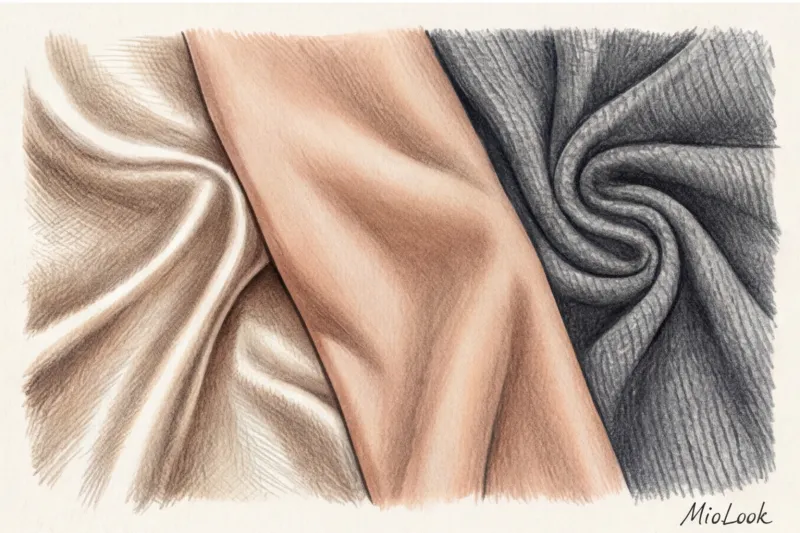
If you're looking for an answer to the question of how to wash Tencel, Modal, or Cupra, you'll have to forget everything you know about caring for cotton or regular synthetics. These fabrics behave completely differently. We've covered more about how these fibers are produced in our article. a complete guide to next-generation eco-friendly materials Today, we'll explore the chemistry and physics of the washing process to ensure your clothes last for years without losing their premium look.
Why do Tencel, Modal, and Cupra require special care? (A Technologist's Secret)
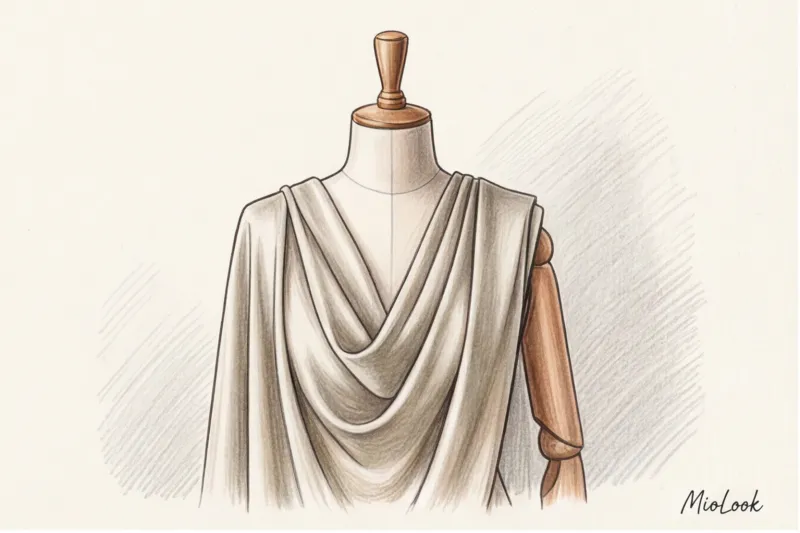
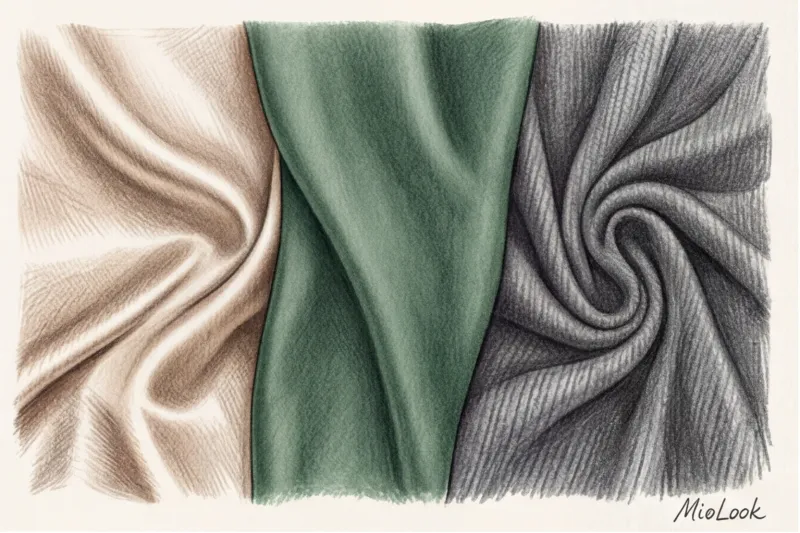
The biggest myth I regularly encounter when reviewing wardrobes is, "Well, it's a synthetic fabric, so it's easy to wash, like polyester." This is a fatal mistake. Tencel (lyocell), modal, and cupra are all synthetic fibers. natural origin. They are made from cellulose (eucalyptus wood, beech wood, or cotton linters). And cellulose has one tricky property: water radically changes its physical structure.
According to technical data from Lenzing (the creator of the patented Tencel™ fiber), lyocell loses up to 15% of its strength when wet. By comparison, regular viscose loses up to 50%! The fabric literally becomes vulnerable.
But the worst enemy of these tissues is the process fibrillation When wet, swollen fibers rub against the drum of a washing machine or the stiff elements of other clothing, their microfibers split. On dark items, this appears as an irreversible whitish film. That faded stain on my dress isn't peeling paint, but rather mechanically damaged fiber structure.
How to wash Tencel and Lyocell: the key rules to prevent your items from becoming "wooden"
Over 12 years of practice, I've seen dozens of premium lyocell suits ruined. Clients would buy luxurious, relaxed sets for €200-€300, only to complain a month later that the fabric had become as stiff as tarpaulin.
To avoid this, follow three ironclad rules:
- Temperature strictly up to 30 degrees. Hot water not only causes shrinkage, it destroys the very smoothness of the fiber.
- No powder. Dry powder acts as a micro-abrasive in water. Undissolved crystals scratch vulnerable damp fabrics. Use only liquid gels for delicate fabrics. strictly enzyme-free (enzymes that break down cellulose).
- Quarantine rule. Never wash lyocell with jeans, zip-up hoodies, or items with rough hardware. The metal zippers in the drum are like sandpaper on Tencel.
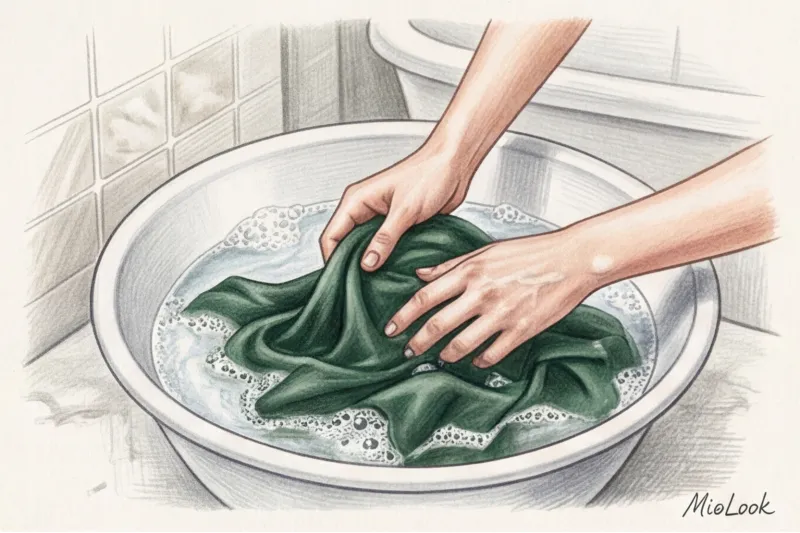
Hand wash vs. machine wash: which to choose?
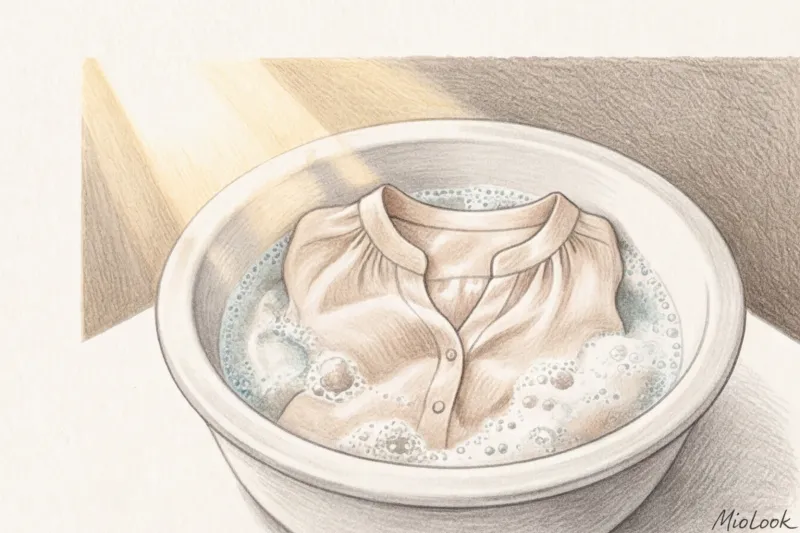
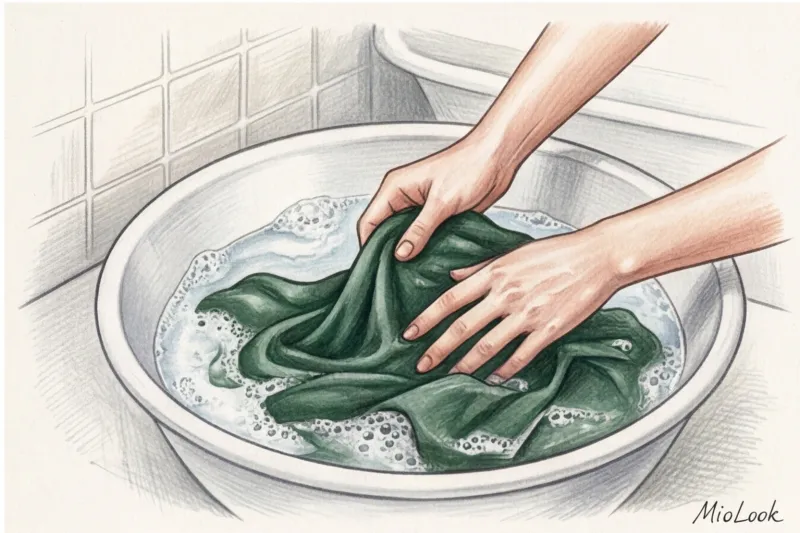
The ideal scenario, of course, is hand washing. We don't rub or wring the item, but rather use gentle, squeezing motions. But let's be realistic: few of us are willing to hand-wash voluminous palazzo pants or long trench coats.
If using a washing machine, select the "Silk" or "Delicate" cycle. The cycle time should not exceed 30-40 minutes, and the spin cycle should be limited to 400 rpm. At 800 rpm, the centrifugal force will simply press the fibers together, creating creases that won't be removed even with an industrial steam generator.
Access to MioLook for €0.99 — one-time payment
A smart AI stylist will select the perfect look based on your wardrobe and suggest how to combine textures.
Get access — €0.99 onceModal Care: Saving Basic Knitwear from Deformation
Modal is an absolute favorite for creating classy casual looks. Brands adore it for its incredible softness. A good basic modal T-shirt (in the €40–€80 range) looks several times more expensive than regular cotton thanks to its subtle silky sheen.
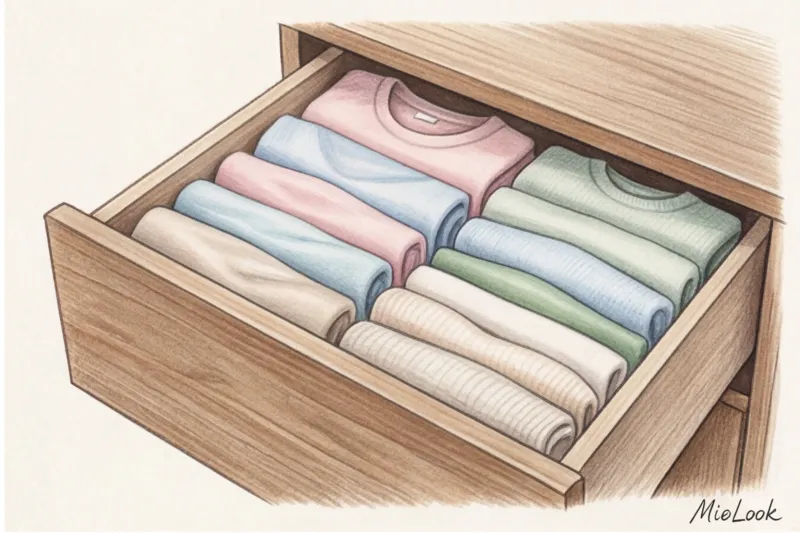
But modal has its Achilles' heel: it absorbs 50% more moisture than cotton. When wet, a turtleneck or T-shirt becomes incredibly heavy. If you take it out of the washing machine and carelessly hang it to dry by the hanger, it will stretch out under its own weight forever, turning into a shapeless sack.
Another problem with modal is pilling. This isn't caused by poor quality yarn, but solely by the friction of the washing machine. Using mesh bags is essential for washing fine modal knits. If you're meticulous about collecting your capsule, I recommend digitizing it. MioLook app - This will help you track how often you wear and wash each base so you can spot wear and tear early.
Capricious Cupra: Washing "Eco-Silk" Without Losing It
Cupro is the softest and most visually luxurious of the cellulose trinity. It's a recycled cotton fiber that's tactilely almost indistinguishable from natural silk. Flowing midi skirts and slip dresses made from cupro have become a staple of summer business wardrobes around the world.
The main risk when working with copper is water stains. A strict rule applies here: if an item has a complex cut, shoulder pads, a stiff collar, or a lining (for example, a summer jacket), dry cleaning only Home washing is guaranteed to deform the duplicating materials.
Simple items (tops, flowing, unlined skirts) can be washed at home. But do it quickly: cupra doesn't tolerate prolonged soaking. Five to seven minutes in a cool, soapy solution is enough to refresh the item from urban dust.
Your perfect look starts here
Join thousands of users who look flawless every day with MioLook, keeping their favorite items in perfect condition.
Get access — €0.99 onceThe main myth: can you spin and dry cellulose fabrics in the washing machine?
I'll now dispel a very common misconception. I often hear: "Eco-fabrics don't shrink because they undergo pre-treatment at the factory." This is only partially true. Research from textile laboratories is unambiguous: tumble drying is the killer of Tencel and Modal. You'll get an item that's a size or two too small, and this shrinkage is irreversible.
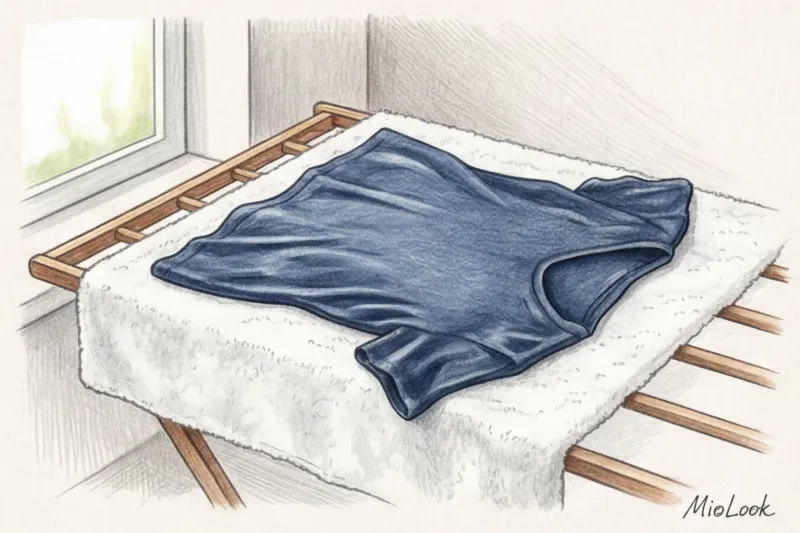
How do you properly remove water if you can't roll an item? I use the "roll" method. Lay the heavy, damp item on a large terry towel, carefully roll the two items together into a tight roll, and apply gentle pressure. The towel will absorb 70% of the excess moisture without damaging the fibers.
Dry such items exclusively flat in a well-ventilated area. Avoid radiators and direct sunlight—harsh heat can cause fibers to become brittle and lose elasticity.
Ironing and steaming: how to restore a premium shine to your clothes
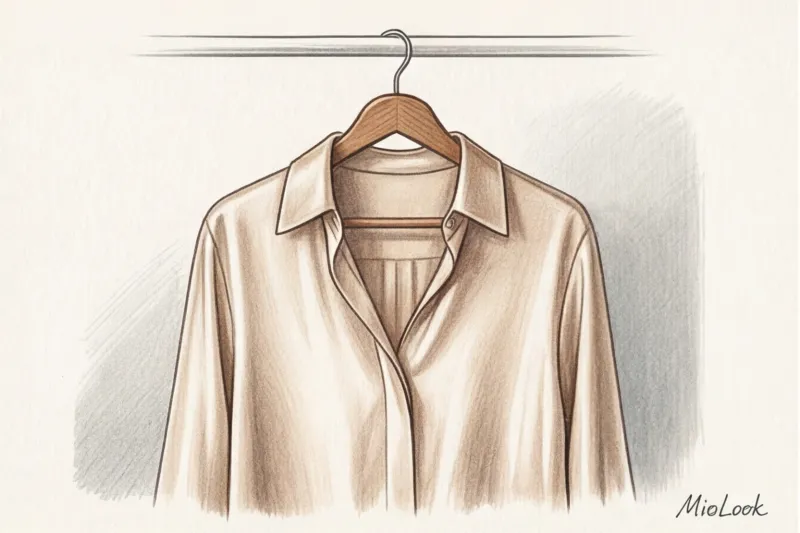
You washed your lyocell shirt according to all the instructions, it dried, and... it became stiff, almost "cardboard-like." Don't panic! This is a completely normal property of cellulose. To restore the fabric's elasticity and that precious matte sheen, it requires a combination of heat and moisture.
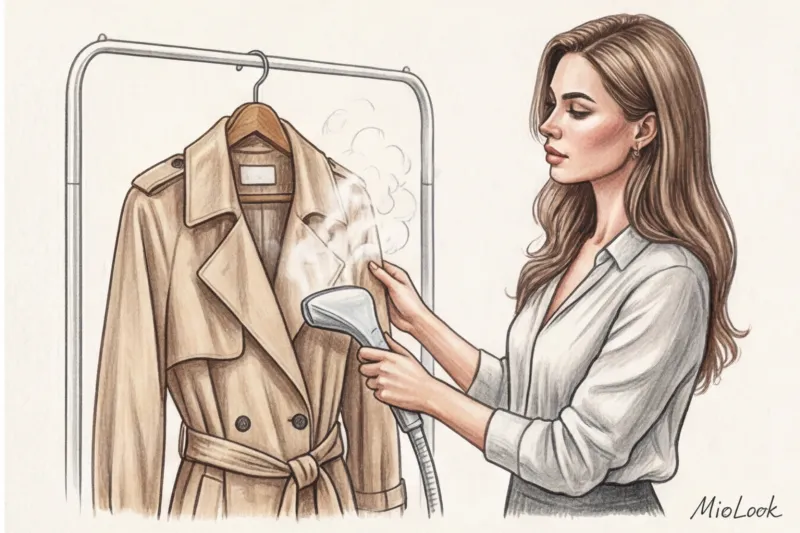
On-set stylists never use an iron on cupra or tencel. Our choice is a good handheld or vertical steamer. The steam instantly relaxes the strands.
A behind-the-scenes lifehack: If a Tencel garment has shrunk slightly after washing, hang it on a hanger and direct a stream of steam while gently pulling the fabric downwards and sideways. Under the influence of hot steam, the lyocell becomes very pliable and easily returns to its original volume.
If you don't have a steamer and an iron is unavoidable, iron strictly from the reverse side, on the "Silk/Delicates" setting, and always use a thin, damp ironing pad (a piece of white cotton fabric). One false stroke of a hot iron on the face of the Tencel will leave a shiny glaze (fiber burn) that is impossible to remove.
Stylist's Checklist: First Aid for Stains on Eco-Fabrics
Let's get back to my story with the ruined dress. What should I have done when I spilled coffee on it? Save this checklist; it will save more than one expensive item in your closet.
- No friction. The golden rule: never spot-wash a stain on Tencel. Rubbing with a wet cloth = instant fibrillation = permanent white stain.
- Blotting. The liquid should be carefully blotted (pressing, not smearing) with a dry paper napkin or white cotton handkerchief.
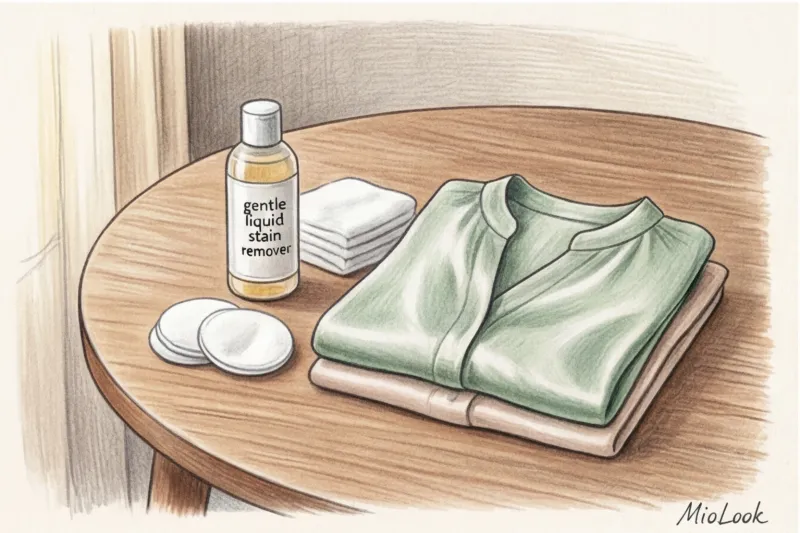
- Soft impact. When you get home, apply a drop of liquid detergent directly to the stain, gently pat it in with your fingertips (not your nails!), leave for 15 minutes, and then wash the item. entirely.
- Refusal to experiment. If you spill oil on your copper skirt, don't try to wash it off with water in a restaurant restroom—it will leave a huge water stain. Simply gently remove the excess oil with a napkin and take the item to the dry cleaner, informing the technician of the origin of the stain.
Caring for modern cellulose fabrics does require a change in old habits. But once you ditch harsh detergents, forget about intense spinning, and embrace the principle of minimal friction, your investment in a basic wardrobe will be well worth it. High-quality Tencel and Modal items can still look their best even after three years of heavy wear—all you need is a little respect.