One of my clients was literally crying over the sink. She'd just taken her new La Perla pajamas (a luxurious emerald set for €350) out of the soapy water, and the flowing fabric had turned into a stiff, dull rag. The reason? A regular eco-friendly laundry detergent that "removes stains perfectly."
We often invest in premium loungewear, forgetting that caring for it isn't a boring household chore, but a true "beauty treatment" for textiles. I discussed in more detail how the right material influences our relaxation in A complete guide to choosing pajamas for healthy sleep and beautiful skin Today, we'll explore the technical side: how to wash, dry, and store silk pajamas so they'll last hundreds of nights without losing their luster.
The Chemistry of Sleep: Why Delicate Pajamas Require "Cosmetic" Care
To understand how to care for silk, you need to be a chemist for a second. Natural silk is composed of fibroin, a protein whose structure is incredibly similar to that of human hair.
You don't wash your hair with laundry detergent, do you? Silk can't stand it either.
Most modern laundry detergents contain enzymes, particularly protease. Protease's job is to break down protein stains (blood, sweat, food residue). The problem is that enzymes can't distinguish between the protein in the stain and the protein in the fabric itself. They literally "eat" the silk fibers. After 3-5 washes with regular detergent, glossy pajamas will lose their shine, become covered in microfibers, and stop wicking away moisture, ruining that ideal sleeping environment.
Instructions: How to wash silk pajamas without damaging the fabric
A basic rule: look for liquid gels labeled "pH-neutral" on the shelves. No bleach, no enzymes. And yes, baby powders aren't suitable either—they're literally chock-full of enzymes to combat tough biological stains.
The second strict rule is temperature shock. According to international textile care standards (ISO 3758), washing silk at temperatures above 30°C causes irreversible dye leaching. The dye molecules simply leave the fibers, which have expanded in the hot water.
Access to MioLook for €0.99 — one-time payment
A smart AI stylist will select the perfect home wardrobe and help track the wear and tear of your favorite items.
Get access — €0.99 onceMachine washing: why it's safer than hand washing
Now let's debunk the biggest myth of home care. A common belief is that silk should only be hand washed. As a practicing stylist, I categorically disagree.
I conducted a personal six-month test: I hand-washed one half of a silk home capsule and machine-washed the other. Spoiler alert: machine-washing preserved the fabric better.
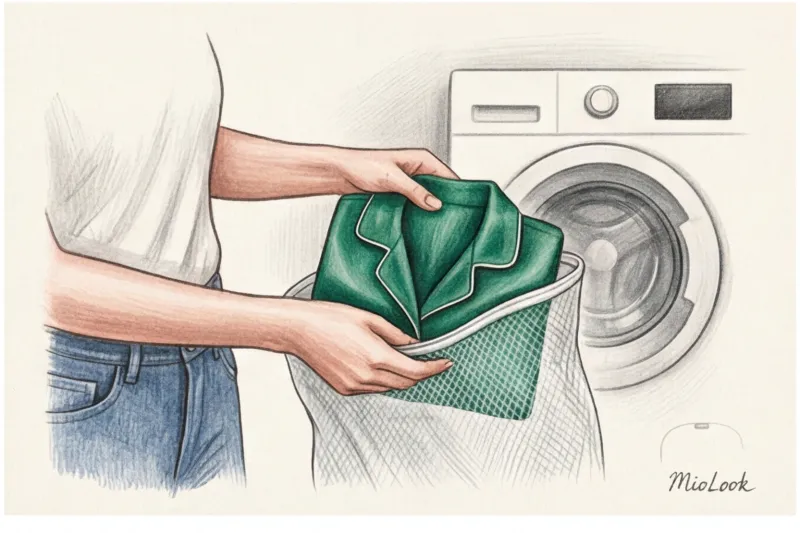
Why? Aggressive hand rubbing and instinctive wringing damage the fibers far more than the drum of a modern washing machine. The key is to follow the proper procedure:
- Equipment: Be sure to use a fine-mesh mesh bag. It absorbs any micro-shocks from the drum's metal.
- Mode: Only "Silk" or "Delicate wash".
- Spin: Turn it off completely or leave it at a maximum of 400 rpm.
- Loading: Fill the drum no more than 1/3 full to allow items to float freely in the water and not rub against each other.
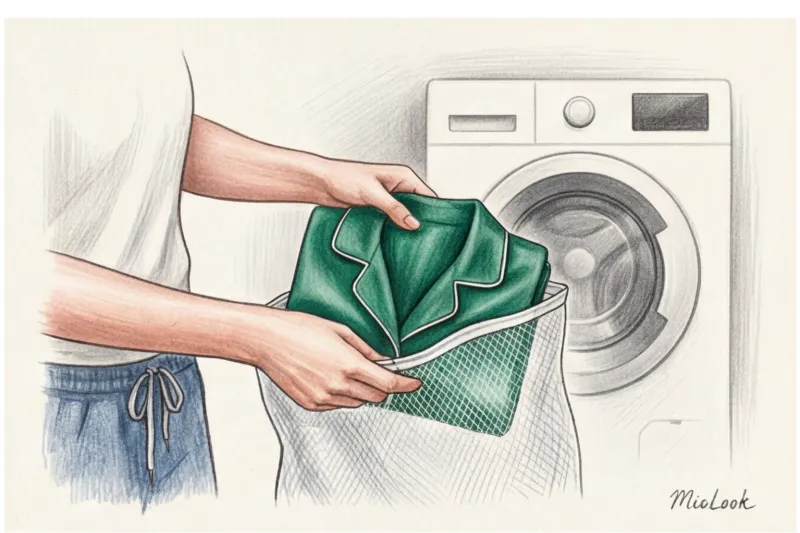
Hand washing: common mistakes
If you don't have a washing machine with the right setting, you'll have to wash by hand. But you have to do it right.
According to The International Silk Union (2023), when wet, silk thread loses up to 20–25% of its tensile strength. At this point, it is as vulnerable as wet paper.
Forget about traditional stain removal methods like rubbing. Use the "press and plunge" technique. Add water, dissolve the gel, submerge the pajamas, and gently press them down with your palms. No twisting.
Life hack: During the final rinse, add a tablespoon of white vinegar or a drop of your regular hair conditioner to the water. The acidic environment will neutralize any remaining alkali and seal the silk scales, restoring its signature glossy shine.
Drying without deformation: the "towel" method
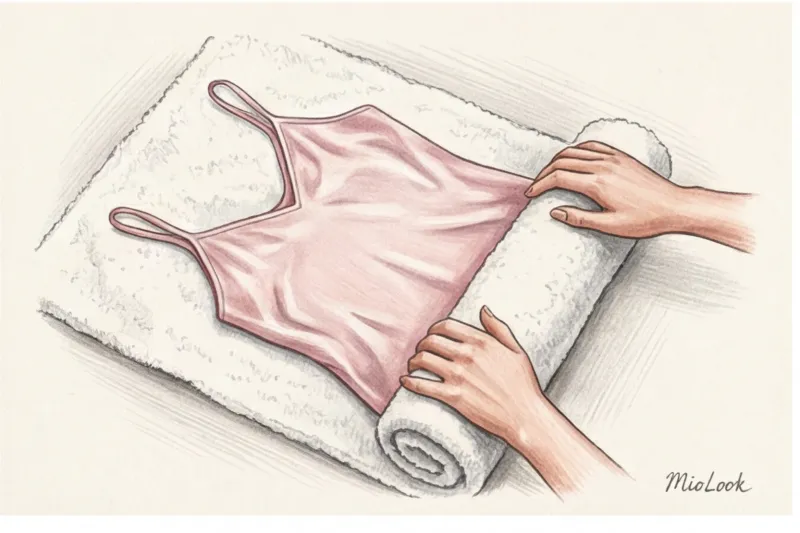
Never wring wet silk. Wringing breaks the threads, creating hard creases that no iron will remove. Use the "dryer roll" method instead.
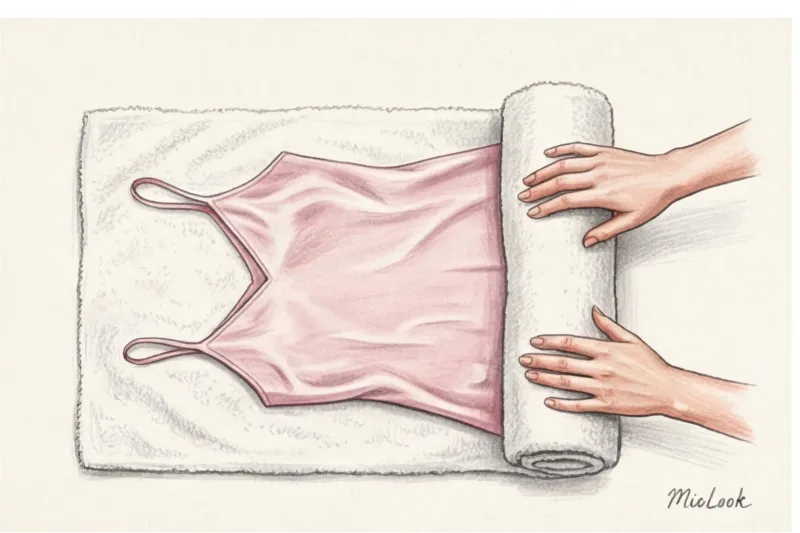
Lay your wet pajamas on a thick terry towel. Roll the towel and pajamas into a tight roll, like sushi, and press gently along the entire length. The terry towel will absorb 80% of the moisture in just a few seconds.
Next, hang them to dry flat in the shade. Don't make the same mistake I did: I once hung wet silk pants on a hanger to dry. The weight of the water caused them to shrink exactly one size. Also, keep pajamas away from radiators and direct sunlight. UV rays make silk brittle and burn the pigment.
Your perfect look starts here
Join thousands of users who look flawless every day with MioLook. Digitize your wardrobe in just a few clicks.
Get access — €0.99 onceIroning and steaming: restoring perfect smoothness
Stylists rarely use irons on delicate fabrics. A handheld steamer is your best friend. Steam straightens the fibers without physical pressure or the risk of scorching.
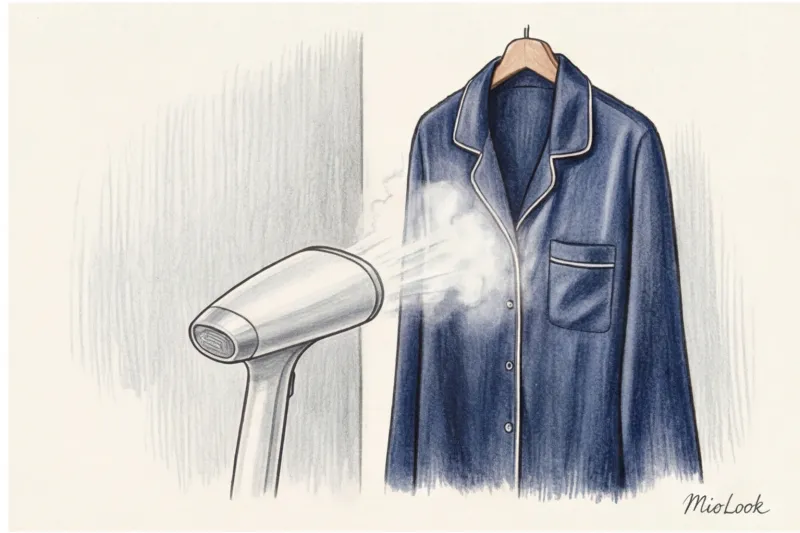
But I must be honest here and mention one limitation. Some types of silk (like crepe de chine) have a natural tendency to shrink slightly after washing, as if contracting like an accordion. This is normal. It's precisely through thorough steaming that they regain their original size and flowing texture.
If you only have an iron, iron your pajamas exclusively from the inside out and only while the fabric is still slightly damp (underdry). And the most important rule: never spray dry silk with water. The natural fabric will immediately absorb the water unevenly, leaving unsightly, clearly defined stains on the pajamas that can only be removed by rewashing.
Caring for Tencel, Cupro, and Viscose (Silk Alternatives)
Modern premium brands are increasingly making home capsules from innovative eco-friendly materials. They're cheaper than silk (ranging from €80 to €150), but their properties sometimes surpass those of their natural counterparts.
Tencel (eucalyptus fiber): It's less sensitive to enzymes and breathes well, but has one drawback: it wrinkles incredibly easily. It needs to be ironed with plenty of steam.
Viscose: It's the most fragile fabric when wet. While silk loses 20% of its strength, viscose loses up to 50%. When wringing viscose pajamas, you need to be extremely gentle, otherwise the fabric will simply unravel at the seams.
Cupro (vegan silk): A stunning material with a peach texture. It's best to wash it inside out to avoid leaving tiny snags on the velvety surface.
Storage and Rotation: A Home Wardrobe Durability Checklist
Loungewear requires the same careful storage as office essentials. I wrote about shelving in detail in the article How to Properly Store Knitwear: A Complete Care Guide , but for delicate pajamas there are some nuances.
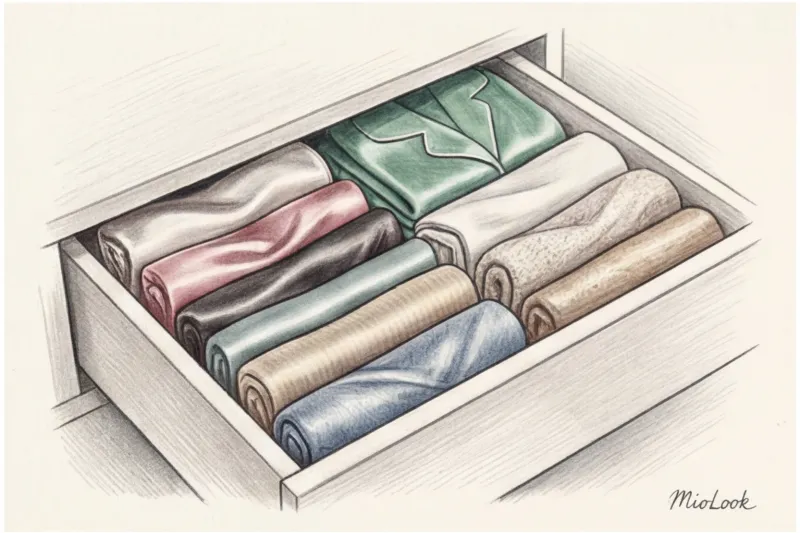
Silk's main enemy during storage is a lack of air. Never place silk sets in plastic bags or vacuum-sealed bags for seasonal storage. Without air circulation, the whites begin to yellow.
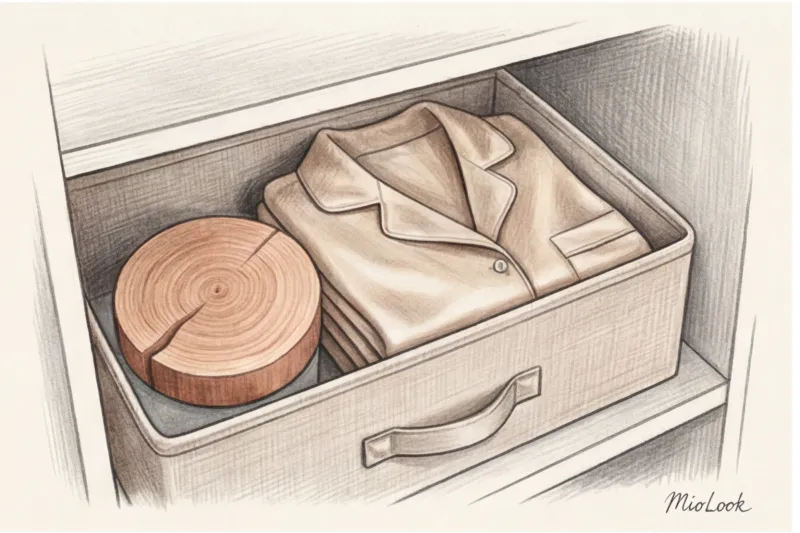
To protect against moths, avoid chemical sprays—they leave oily stains on fabric. Use natural cedar blocks or cotton sachets with dried lavender.
And finally, about rotation. Over 12 years of working as a stylist, I've come up with a formula: to prevent pajamas from wearing out prematurely, they should be changed every 3-4 days. This gives the fibers time to "rest" and regain their shape.
To manage my home capsule efficiently, I use MioLook Digitizing your home wardrobe is a powerful insight. When you see cost-per-wear statistics in an app, you suddenly realize that you spend the most time in clothes that "nobody sees." This completely changes your attitude toward the quality of your home items and how you care for them.
Treat your pajamas the same way you treat your skin before bed, and they'll reward you with impeccable comfort and durability.