How many gorgeous silk blouses are hanging in closets around the world right now, worn perhaps a couple of times a year? In my 12 years as a stylist, I've seen the same thing over and over again: a client invests in a stunning piece and then is afraid to touch it. Fear of ruining expensive fabric drives us to buy disposable polyester, while silk—with the right care—can last for decades.
The question is, How to wash natural silk , is shrouded in so many myths that it's time to write a separate encyclopedia. Most basic instructions found online are either hopelessly outdated or copied from recommendations for cotton. We've already covered the general principles of a mindful approach in more detail in our complete guide to Eco-friendly clothing care: secrets to a long-lasting wardrobe But today I want to talk about delicate fabrics not as a consumer, but as an insider.
We'll explore the chemistry behind the process, dispel the myth that silk is fragile, and discover why blind faith in dry cleaning labels is slowly killing your favorite items.
The Anatomy of Silk: Why It's Stronger Than You Think
The first thing to understand is that natural silk is not brittle. According to research by the International Textile Institute (2023), the tensile strength of a silk thread is equal to that of a steel wire of the same diameter. This incredible property is due to the fiber's protein structure, fibroin, which is held together by the natural adhesive sericin.
Take a look at vintage slip dresses from the 1930s. Many of them survive to this day in excellent condition, even though modern, delicate dry cleaners didn't exist during the Jazz Age. They were hand-washed. Silk's main enemy isn't water itself, but harsh mechanical abrasion and the harsh enzymes in laundry detergents.
This is where the concept comes into play Cost-per-wear (cost per wear). Let's say you bought a high-quality silk shirt for €150. If you're afraid to wear it and wear it only 10 times, its CPW is €15. But if you know how to care for it and wear it regularly for five years (say, 300 times), the cost drops to €0.50 per wear. Proper care directly saves you money.
The Biggest Myth: Why the "Dry Clean Only" Label Often Lies
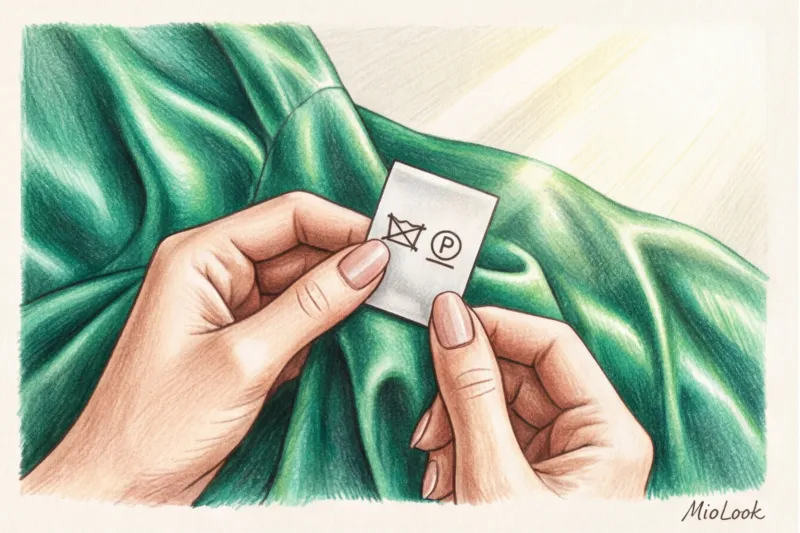
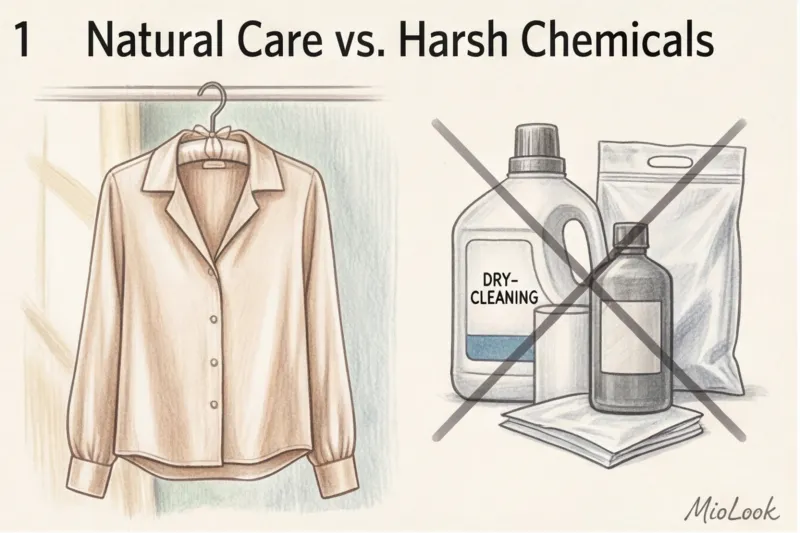
"Dry Clean Only" is a mantra we see on 90% of mid- and premium-priced silk items. But here's a counterintuitive insight you'll rarely hear in boutiques: this label is often a brand's legal defense against claims, rather than a genuine technological necessity.
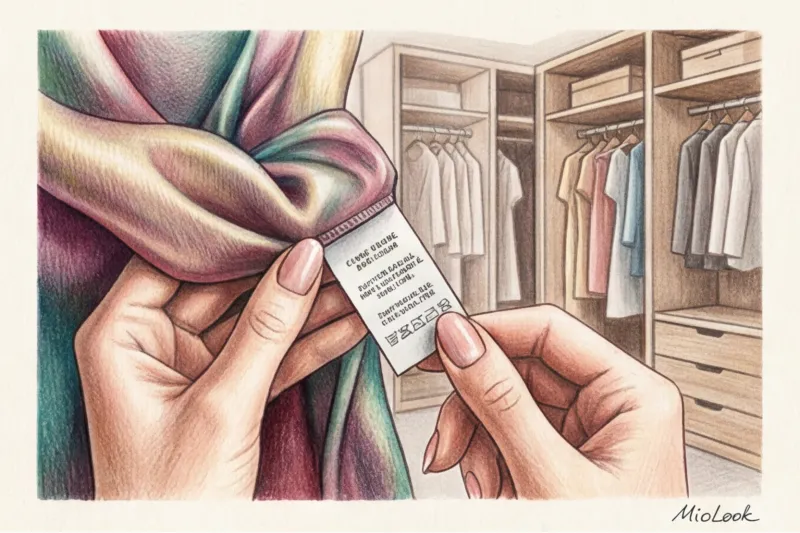
The fact is that the base of traditional dry cleaning is perchloroethylene. This harsh solvent is excellent at cutting grease, but with regular use, it overdries the silk protein fibers, stripping them of their natural oils and signature pearly luster.
"One of my clients brought in an €800 investment blouse from The Row that was literally coming apart at the back seams. It turned out she'd been dry cleaning it after every two wears. The fabric had become as brittle as dry paper in just one season."
But there are situations, When dry cleaning is really necessary (exceptions to the rules):
- Structured items with lining (e.g. silk jackets or coats - water will deform the adhesive interlinings).
- Items with pleats (factory folds may come apart from water).
- Complex, multi-colored prints where dark shades are adjacent to a white background (high risk of fading).
Access to MioLook for €0.99 — one-time payment
A smart AI stylist will select the perfect look based on your wardrobe, helping you wash clothes less often and create new combinations.
Get access — €0.99 onceHow to Wash Natural Silk: A Stylist's Step-by-Step Guide
The golden rule for working with silk: wash as little as possible and air it often. Silk has natural antibacterial properties and absorbs odors poorly. Often, simply hanging a blouse on the balcony (in the shade) overnight is enough to restore its freshness.
If washing is unavoidable, start with dye fastness test Find the hidden inner seam, soak a cotton swab in warm water, and lightly rub the fabric. If even the slightest trace of pigment remains on the cotton swab, stop and take the item to a professional wet cleaner.
Water temperature and choice of product
The internet often recommends washing silk with baby shampoo. As an expert, I strongly advise against this. Baby shampoos contain conditioning additives and lipids intended for human hair. They leave a matte finish on silk threads, making the garment look washed-out and dull.
An even greater danger is the popular bio-powders containing enzymes (proteases). Their job is to break down protein stains (blood, sweat, food). The problem is that silk is also a protein. Enzyme powder literally "eats" your clothes at the microscopic level.
Ideal parameters for washing:
- The water temperature must not exceed 30°C (the water should feel cool to the touch).
- Only liquid products marked “for silk” and with a neutral pH balance (in the range of 5.5–7.0).
Hand washing technique: no twisting
Forget everything you know about hand washing. No rubbing. None. We use only the gentle immersion method.
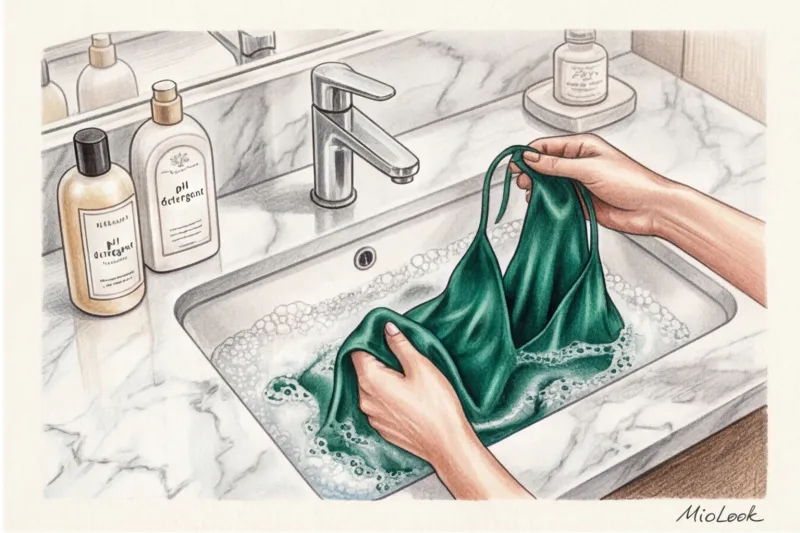
- Dissolve the detergent in water until a light foam forms. to after you lower the item there.
- Submerge the silk in water and gently squeeze the fabric with your hands like a sponge to force the water through the fibers.
- Contact time with water: maximum 5-7 minutes. Prolonged soaking will damage the thread structure.
- Secret stylist life hack: During the final rinse, add a tablespoon of regular white vinegar to the water. It neutralizes any remaining alkali and smoothes the fibroin scales, restoring the silk's original shine.
Drying and ironing: how to avoid burning your investment piece
The most dangerous moment comes after washing. Silk loses up to 20% of its strength when wet. If you wring it out, the fibers will break, leaving permanent micro-creases in the fabric.
Use roulette method Lay the wet item on a thick terry towel, roll them together into a tight roll, and press lightly. The towel will absorb excess moisture. Then lay the item horizontally on a dry surface away from direct sunlight (ultraviolet rays make silk brittle and yellow it).
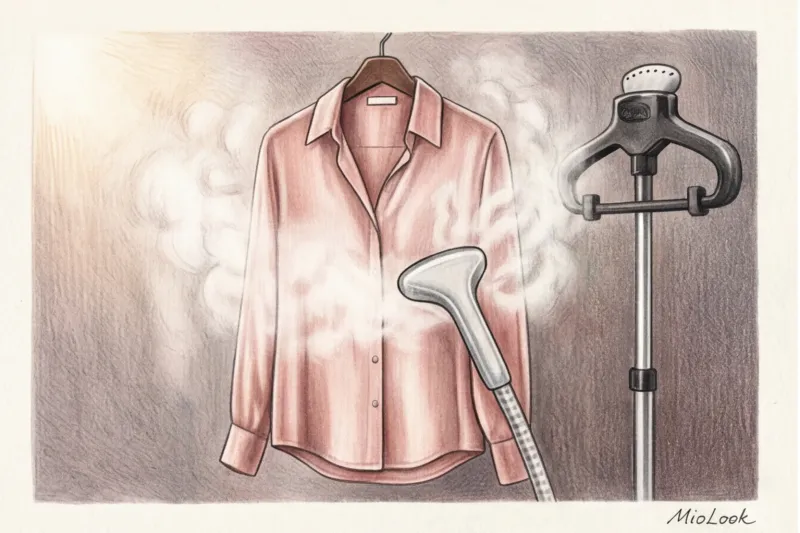
Backstage at Paris Fashion Week, we never use irons to prepare silk looks for the runway. Only professional steamers are used. The hot soleplate of an iron can leave shiny marks or even melt the fibers if the thermostat is off even slightly.
If you don't have a steamer, iron the silk only from the reverse side while it's still slightly damp. Use the "Silk" setting and never Do not press the water spray button on the iron - localized drops will leave stubborn outline stains that will require repeated washing.
SOS Situations: How to Safely Remove Stains from Silk
Stains on delicate fabrics require chemistry knowledge, not panic. The most common problem is sweat stains. The salts and acids in our sweat don't just stain the fabric; they react with the dye, turning the silk yellow and stiff. Prevention is easier than cure: use special cotton underarm pads for heavy silk blouses.
If you planted greasy stain (From restaurant food or foundation), the worst thing you can do is wash it with soap and water. Water will seal the grease into the fibers. Instead, generously dust the fresh stain with talcum powder or regular cornstarch. Let it sit for 10-12 hours. The powder will draw out the grease, after which you can gently brush it off with a soft brush.
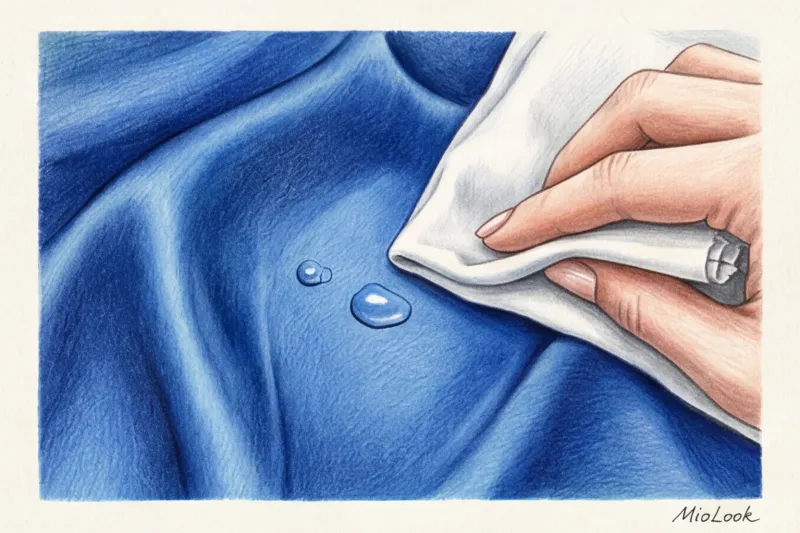
But with coffee or red wine It's more complicated. The internet is full of advice to sprinkle them with salt and pour lemon juice over them. For cotton, it might work. But on silk, salt will act as an abrasive, and citric acid will remove the pigment, leaving a whitish stain. In such cases, you should carefully blot the moisture with a clean, white, lint-free cloth and immediately take the item to a professional dry cleaner.
Delicate alternatives: care for viscose, cupro and modal
The modern mid-market (brands like COS, Massimo Dutti, Zara) rarely uses 100% silk today due to its high cost, replacing it with high-quality artificial fibers of cellulose origin.
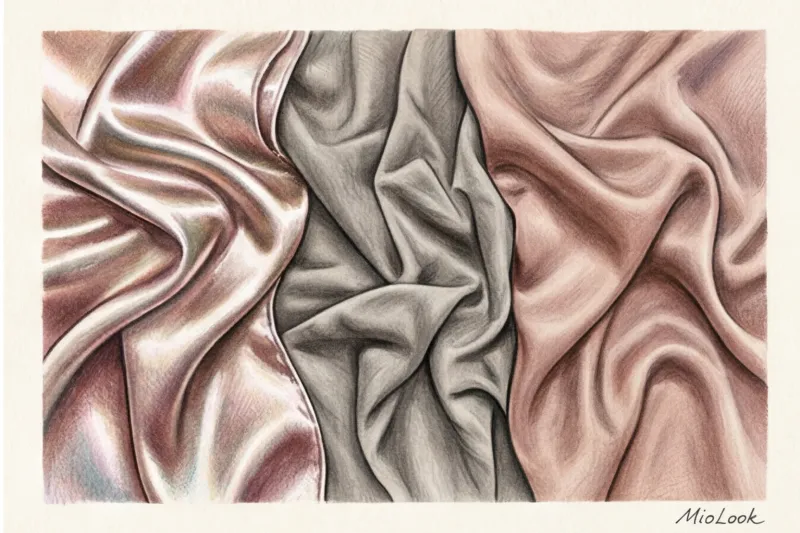
And herein lies the trap. Many people think, "Since it's not natural silk, it's safe to throw in the washing machine." This is a fatal mistake.
- Viscose: When wet, viscose becomes stiff, "stiff," and drastically loses strength (up to 50%). Washing it in hot water with a high spin cycle can cause a viscose shirt to shrink up to two sizes.
- Cupro (vegan silk): Made from cotton fluff, it's incredibly beautiful and tactilely reminiscent of a peach, but it's extremely sensitive to mechanical friction. Spinning at over 600 rpm causes whitish creases to appear on the surface, which are impossible to iron out.
A general rule for all these blended and synthetic fabrics: machine wash only in a special mesh bag, on the "Delicate/Hand Wash" cycle, at 20-30°C, and with a spin speed no higher than 400 rpm. A spin speed of 1000 rpm will ruin the flowing texture of the &OtherStories blouse after the first wash.
Your perfect look starts here
Join thousands of users who look flawless every day with MioLook. Add your silk pieces to your digital wardrobe and plan your looks in advance.
Get access — €0.99 onceStylist's Checklist: Storing Silk in Your Closet
Your efforts to wash clothes properly will be wasted if you hang them incorrectly. Proper storage is the final touch that separates a well-kept wardrobe from a chaotic one.
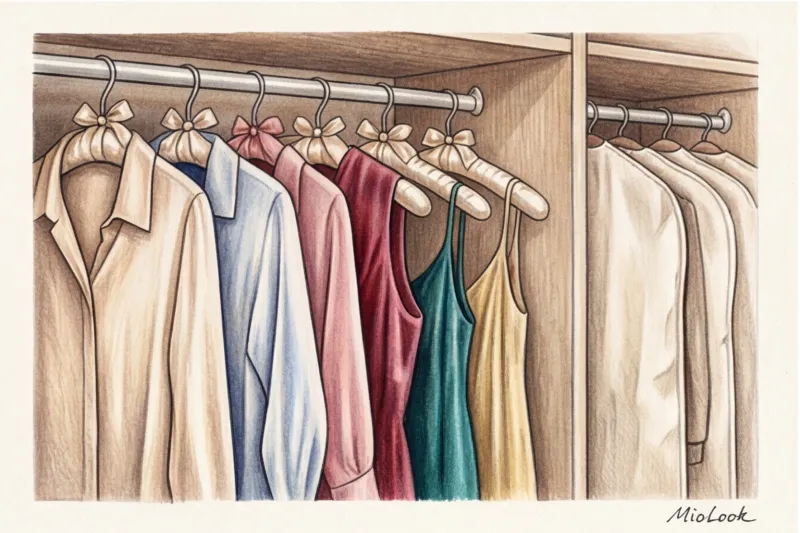
- No plastic. Never store silk in plastic dry cleaner bags. They create a greenhouse effect, trapping residual moisture and chemicals, which is guaranteed to cause yellowing due to aging. Use only breathable bags made of undyed cotton or linen.
- Selection of hangers. Stiff wooden hangers will make delicate silk shoulders look like bubbles. Opt for soft satin or fine velvet hangers (they prevent slipping).
- Protection from moths. Moths love natural proteins (silk and wool). Forget mothballs—their smell will permanently etch into fabrics. Place natural cedar balls or sachets of dried lavender on your shelves, remembering to replace them every six months.
Ultimately, gentle care isn't a burdensome chore. It's an investment of time in your flawless appearance. By understanding the chemistry and physics of these processes, you'll stop fearing your most beautiful pieces and start wearing them with the confidence they deserve.