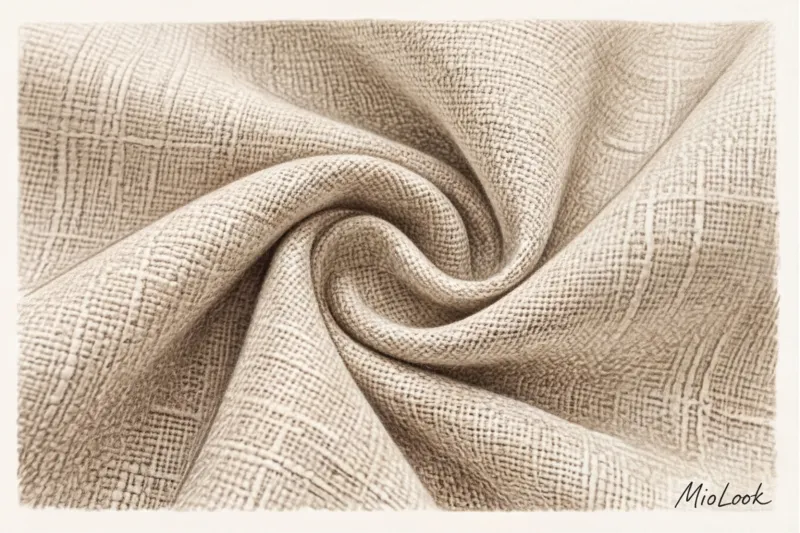
Over 12 years of working as a personal stylist, I've heard the same phrase hundreds of times: "I love linen, but I absolutely hate caring for it." Most of my clients viewed washing linen clothes as a game of Russian roulette, with their favorite summer dress at stake, potentially turning into a stiff, teenage-sized rag.
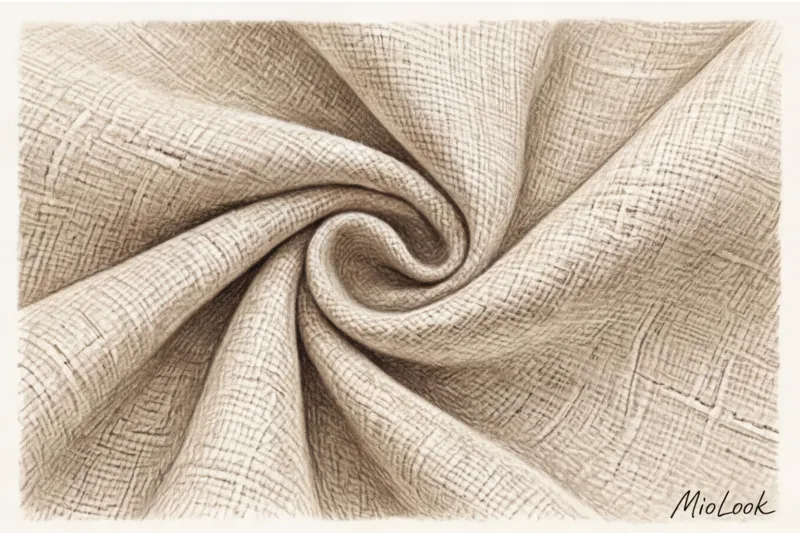
But let's be honest. The problem isn't the fabric. The problem is that we apply the same care protocols to this ancient organic fiber as we do to mass-market synthetics. This guide isn't just a collection of household tips. It's a true wardrobe longevity protocol. We'll break it down. How to wash linen items from a fiber physics perspective, so they not only survive, but become your best investment in climate-controlled summer looks.
We have discussed the properties of this and other natural textures in more detail in our The complete guide to the best fabrics for summer clothing In the meantime, let's save your flax capsule.
Why Linen Shrinks and Becomes Stiff: The Physics of Fabric
To understand why linen is so sensitive to water, you need to examine it under a microscope. Linen fiber is three times stronger than cotton when wet, yet it's completely devoid of elasticity. Imagine a bundle of thin glass tubes: they're incredibly tensile, but if you bend them sharply, they'll break. This is exactly what happens to the fabric when you take a creased, "wooden" shirt out of the washing machine.
According to the European Flax and Hemp Confederation (CELC), the typical shrinkage of natural linen during the first few washes is 4-5%. This is due to the physics of the material. However, if water temperatures exceed 40°C, the fibers experience thermal shock, and shrinkage can reach a catastrophic 10-12%.
"Linen isn't afraid of water, but it's afraid of mechanical friction and temperature changes. Every hard crease after washing is a microtrauma to the fiber, which over time will lead to fabric failure."
The main reason for shape loss isn't even temperature, but mechanical friction. When the washing machine drum is full, linen items rub against each other due to a lack of water. The result? The destruction of the surface fibers and that "terry" look that cheapens the look.
How to Wash Linen: A Detailed Checklist for Machine and Hand Washing
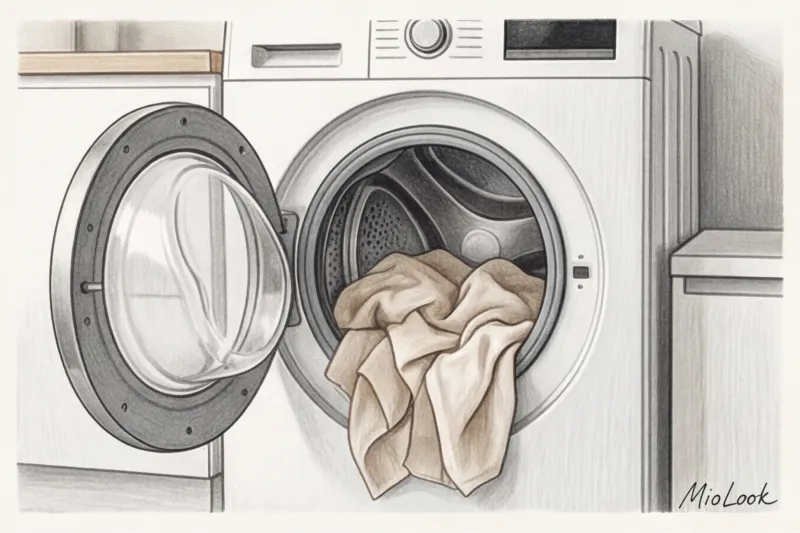
Let's bust the biggest myth right away: linen doesn't necessarily need to be washed by hand, rubbing your fingers raw. Modern washing machines with a delicate cycle handle this task more gently than hand-wringing. But there's one golden rule of stylists that shouldn't be broken.
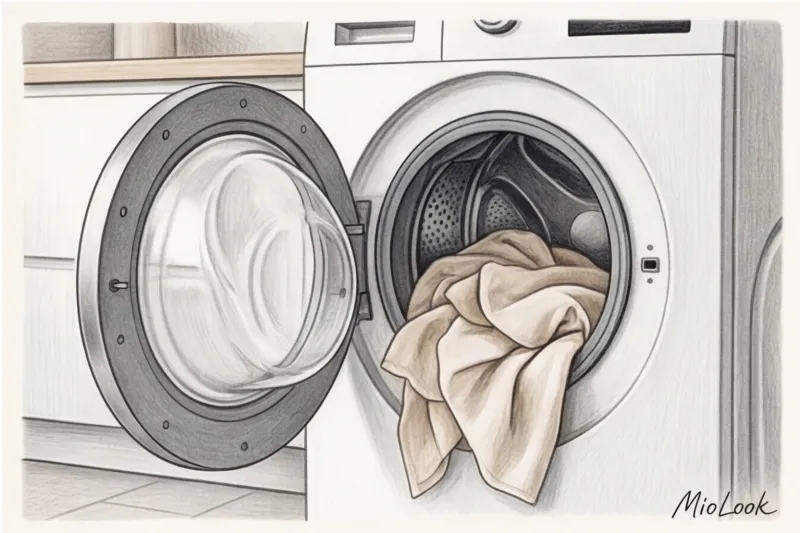
50% occupancy rule: More space in the drum = less ironing. If you want to remove an item that can be easily straightened by hand, load the drum no more than halfway. The fabric should float freely in the water, not be compressed into a tight ball.
Access to MioLook for €0.99 — one-time payment
A smart AI stylist will select the perfect look and help you plan a capsule wardrobe.
Get access — €0.99 onceTemperature and spin settings
Your washing machine settings are your control panel for the life of your clothes. Here are the precise settings that will save your clothes:
- Temperature: Strictly 30-40°C. At higher temperatures, the plant pectins that hold the fibers together begin to break down.
- Spin: 400, maximum 600 rpm. Speeds above 800 rpm are literally a death sentence for fabric. The centrifugal force presses creases so deeply that even an industrial steam generator won't remove them.
- Machine drying: A definite no. Hot air in the drum is guaranteed to shrink an item by 1-2 sizes.
What chemicals to use (and why powder is flax's enemy)
Eco-friendly detergent technologists confirm that dry laundry detergents are the worst thing you can offer to the porous structure of linen. Undissolved powder granules become lodged in the microcracks of the fibers. This causes the fabric to become scratchy after drying and cause itching in hot weather.
Your laundry arsenal should consist exclusively of liquid gels for delicate laundry (ideally with a neutral pH) or products designed for baby clothes. And forget about chlorine bleaches, even if you have a pristine white linen dress. Chlorine reacts with residual proteins in the fiber, permanently turning the crystal-white linen a dirty yellow. If you need to refresh your whites, use oxygen-based stain removers.
Dry Cleaning Myth: Why Luxury Linen Is Better to Wash at Home
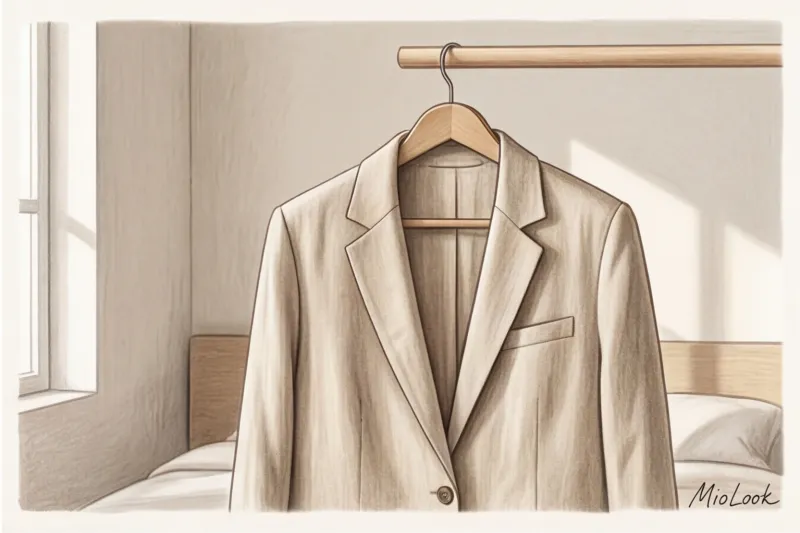
Here we come to a counterintuitive fact that often surprises my clients: Dry cleaning is the enemy of natural linen. Many people think that by taking an expensive item to the professionals, they're extending its life. But dry cleaning uses perchloroethylene (PERC), an aggressive solvent that leaches the natural oils and pectins from linen.
Linen has a unique superpower—a natural aging process. With each proper wash, the fibers become polished, softer, and acquire a refined sheen. Vintage linen flows like heavy silk. Dry cleaning, however, leaves the fabric brittle and dull.
But there is one strict exception. One of my clients decided to machine-wash a luxurious, structured Max Mara jacket for €400, arguing that "the tag says 100% linen." The jacket survived. But the backing materials (the fusible interfacing, shoulder pads, and lining) did not. The garment was irreparably deformed.
The rule is simple: Relaxed shirts, dresses, and wide-leg trousers without creases are washed at home. Tailored tailoring (jackets, trousers with a stiff waistband) is eco-cleaned.
Colored and black linen: how to maintain the vibrancy of the pigment
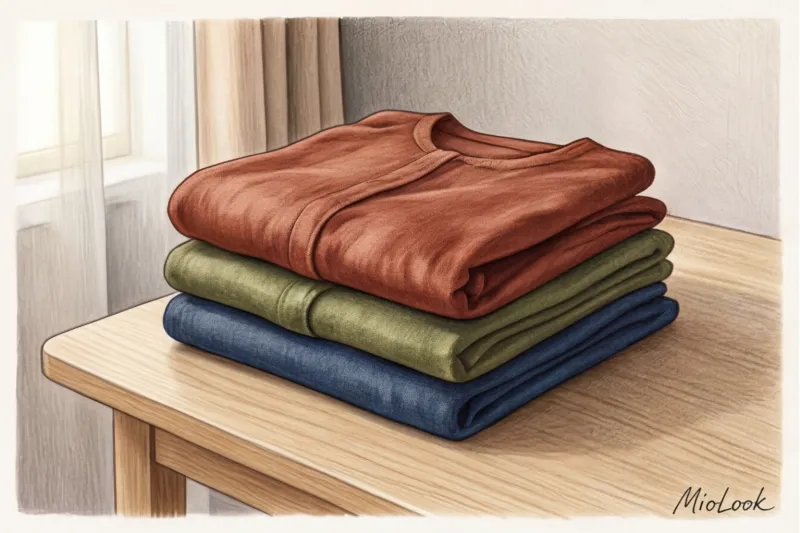
Linen looks stunning in natural shades, but it has a technological weakness: it doesn't hold dark dyes very well. The smooth surface of the fiber doesn't allow the pigment to adhere as securely as on napped cotton.
Faded black linen instantly takes a piece from the category of "elegant minimalism" to the category of "worn-out country house wear." To avoid this, follow these three rules:
- Always turn inside out. The friction of the drum will be on the back side, keeping the front side intact.
- Life hack with vinegar. This is an old but effective chemical fixation method: add half a cup of white vinegar to the fabric softener compartment the first time you wash a new, brightly colored item. The acidic environment "seals" the fiber scales.
- Keep out of the sun. UV light burns the pigment out of wet linen within a couple of hours. Dry colored items only in deep shade or a well-ventilated area.
Your perfect look starts here
Join thousands of users who look flawless every day with MioLook. Digitize your wardrobe in just a few clicks.
Get access — €0.99 onceDrying without the "wooden" effect: stylist tricks
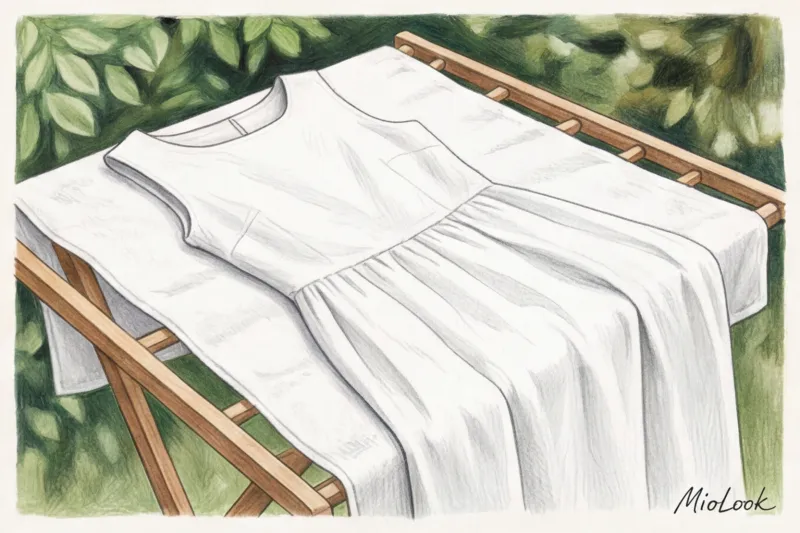
How you dry linen determines 80% of how it looks the next day. Never wring linen by hand. Wringing causes micro-tears in the wet fibers.
If you've hand-washed the item, use the "sandwich" method: lay the item on a thick terry towel, cover it with a second one, and gently roll it into a roll, applying gentle pressure. The towels will absorb excess water without deforming the fabric.
The technique of "straightening the seams": This is my favorite trick. After removing a damp garment from the machine, give it a good shake. Then lay it out on a flat surface and gently tug all the main seams with your hands: the side seams, the shoulder seams, and the button placket. You're literally setting the fibers in the right direction. For casual looks, this step replaces 50% of the time spent ironing.
Dry heavy dresses and trousers flat to prevent them from stretching under the weight of the water. Light shirts can be hung on wide hangers (avoid thin metal hangers, as they will leave unsightly bubbles on the shoulders).
Perfect Ironing: How to Steam Linen Without Damaging the Texture
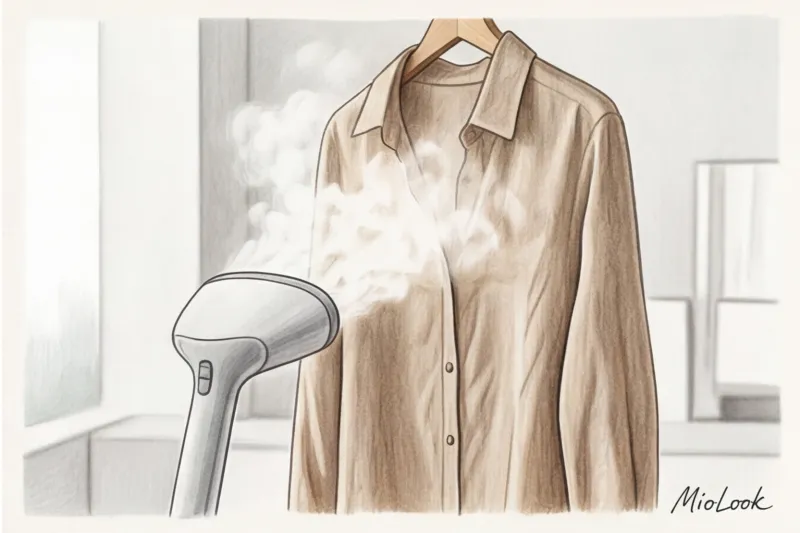
The main secret to perfect linen sounds counterintuitive: never try to iron it dry. Linen should ONLY be ironed when damp. If the item is too dry, the only solution is to generously spray it 10 minutes before ironing to allow the moisture to penetrate the fiber.
Although the iron can be heated up to 200°C, it should be ironed only from the reverse side. A hot iron soleplate leaves unsightly shiny marks on the right side of the garment that are impossible to remove.
Personally, a few years ago, I completely abandoned the iron in favor of a powerful floor steamer (at least 35 g/min of steam). Hot steam doesn't flatten the fibers, but rather causes them to swell and relax. The fabric retains its natural, voluminous texture.
There is a wonderful term in Italian style - sprezzatura It's the art of looking perfect, but as if you didn't put any effort into it. A slight, natural wrinkle in linen at the elbows isn't sloppiness; it's status and relaxation. Perfect the collar, cuffs, and button placket, and let the rest take its course.
Checklist and action plan: a summer linen capsule care routine
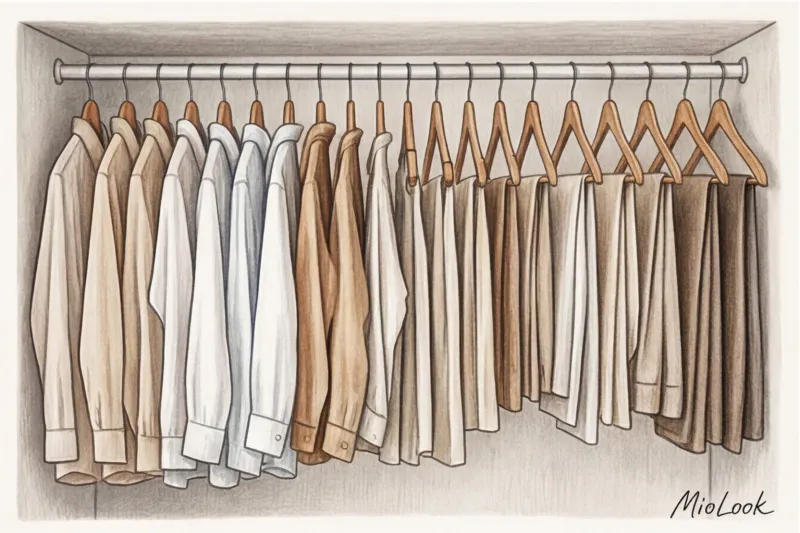
Do you know what the most common sin in summer wardrobe care is? We wash clothes too often. Linen is unique in that it absorbs up to 20% of its weight in moisture before becoming damp to the touch, and it has natural antibacterial properties. It doesn't need to be washed after every wear unless it's visibly soiled.
In the appendix MioLook I use the wear tracking feature for my summer capsule wardrobe. It turns out that refreshing linen pants with a special antibacterial textile spray based on alcohol and essential oils is enough, increasing the interval between washes to 3-4 wears. This significantly extends the life of the items.
Summary of care rules in 5 steps:
- Fill the machine drum no more than 50%.
- Wash with liquid gel at a temperature of up to 40°C and spin at 400-600 rpm.
- Never tumble dry.
- Straighten the seams with your hands while still damp.
- Steam your clothes, leaving a light, noble carelessness.
When summer ends, don't vacuum-seal your linen items—the natural fibers need oxygen, otherwise they'll suffocate and turn yellow. Use breathable linen bags made of cotton or spunbond. If you implement at least half of these habits, your linen clothes will outlast most modern trends, only becoming more beautiful with each season.